Adhyaya 117
जामदग्न्यस्य विलापः, प्रतिज्ञा, क्षत्रिय-निग्रहः, दानयज्ञश्च (Jāmadagnya Rāma’s Lament, Vow, Kṣatriya Suppression, and Gifts)
Upa-parva: Jāmadagnya–Rāma Upākhyāna (Episode of Paraśurāma and the Kṣatriyas)
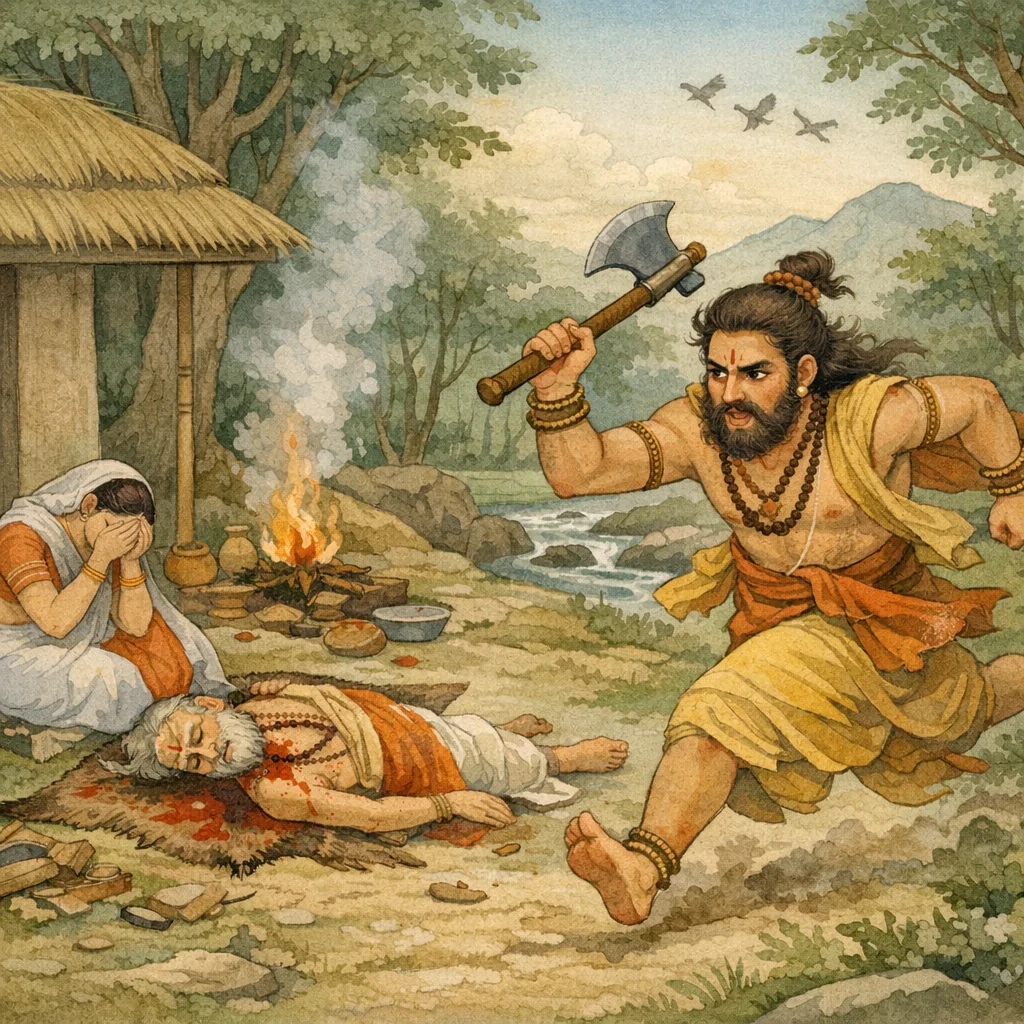
The chapter opens with Rāma Jāmadagnya addressing his father (Jamadagni) in lament, attributing the death to his own fault and condemning the act as the killing of a dharma-knowing, blameless ascetic who was not fighting. He questions the perpetrators’ moral standing and their ability to justify the deed before advisors and allies. The narration then shifts to his completion of pretakārya (funerary rites) and cremation. Rāma makes a vow of retributive action against the kṣatriya lineages connected to Kārtavīrya’s descendants, depicted as extensive and repeated. The account includes the tradition of Samantapañcaka and blood-filled pits as a memory-site of the campaign. Thereafter, the narrative introduces a turn toward ritual and redistribution: he performs a great yajña, satisfies Indra and the officiants, donates the earth/land, and gives a golden altar to Kaśyapa with specified dimensions; Brahmins divide it, becoming known by a derived lineage-name. The chapter closes with continued residence on Mahendra mountain and an encounter in which Carcīka is said to restrain Rāma, followed by a calendrical note (caturdaśī) and honor shown to brahmins and to Dharmarāja (Yudhiṣṭhira) with his brothers.
Chapter Arc: लोमश ऋषि तीर्थयात्रा के प्रसंग में कार्तवीर्योपाख्यान को आगे बढ़ाते हैं—जमदग्नि जैसे धर्मनिष्ठ, तपस्वी और निरपराध महर्षि का वध कैसे हुआ, और उस अधर्म का प्रतिकार किस रूप में प्रकट हुआ। → श्लोकों में प्रश्न-प्रतिप्रश्न की तीव्रता बढ़ती है: ‘धर्मज्ञ, सत्पथगामी, अनागस’ वृद्ध तपस्वी को शरशतों से मारने वालों ने कौन-सा पाप नहीं किया? यह आक्रोश केवल हत्या पर नहीं, बल्कि उस सामाजिक-नैतिक पतन पर है जिसमें असहाय ब्राह्मण-तपस्वी पर हिंसा संभव हुई। → परशुराम का क्रोध ज्वालामुखी बनकर फूटता है—वे शस्त्र उठाकर रण में कार्तवीर्य अर्जुन के पुत्रों का संहार करते हैं, और प्रतिशोध को ‘धर्म-प्रतिष्ठा’ के रूप में स्थापित करते हैं। → प्रतापी जामदग्न्य (परशुराम) महान यज्ञ द्वारा देवेन्द्र को तृप्त करते हैं, ऋत्विजों को दान देते हैं और पृथ्वी का दान/वितरण करते हैं—क्रोध से उठी हिंसा का अंत एक वैदिक-यज्ञीय शमन और दान-धर्म की ओर मुड़ता है। इसके बाद युधिष्ठिर अपने भाइयों सहित परशुराम का पूजन-सत्कार करते हैं; परशुराम भी सम्मान पाकर दक्षिण दिशा की ओर प्रस्थान करते हैं।
Shlokas
Verse 1
छः. “5 (>>) 2५.3 #25: > यहाँ कुछ प्रतियोंमें 'देवान' की जगह 'वेदान” पाठ मिलता है। उस दशामें यह अर्थ होगा कि “वेदोंको वशमें कर लिया।” परंतु वेदोंको वशमें करनेकी बात असंगत-सी लगती है। देवताओंको वशमें करना ही सुसंगत जान पड़ता है, इसलिये हमने “देवान” यही पाठ रखा है। काश्मीरकी देवनागरी लिपिवाली हस्तलिखित पुस्तकमें यहाँ तीन श्लोक अधिक मिलते हैं। उनसे भी “देवान” पाठका ही समर्थन होता है। वे श्लोक इस प्रकार हैं-- तं तप्यमानं ब्रह्मर्षिमूचुदेवा: सबान्धवा: । किमर्थ तप्यसे ब्रह्मन् कः काम: प्रार्थितस्तव ।। एवमुक्तः: प्रत्युवाच देवान् ब्रह्मर्षिसत्तम: । स्वर्गहेतोस्तपस्तप्ये लोकाश्र स्युर्ममाक्षया: ।। तच्छुत्वा वचन तस्य तदा देवास्तमूचिरे । नासंततेर्भवेल्लोकः कृत्वा धर्मशतान्यपि ।। स श्रुत्वा वचन तेषां त्रिदशानां कुरूद्वह ।। इन श्लोकोंद्वारा देवताओंके प्रकट होकर वरदान देनेका प्रसंग सूचित होता है, अतः ““““ततो देवान् नियमाद् वशमानयत्” यही पाठ ठीक है। सप्तदशाधिकशततमो< ध्याय: परशुरामजीका पिताके लिये विलाप और पृथ्वीको इक्कीस बार निःक्षत्रिय करना एवं महाराज युधिष्ठिरके द्वारा परशुरामजीका पूजन राम उवाच ममापराधात् तै: क्षुद्रैर्हतस्त्वं तात बालिशै: । कार्तवीर्यस्य दायादैर्वने मृग इवेषुभि:,परशुरामजी बोले--हा तात! मेरे अपराधका बदला लेनेके लिये कार्तवीर्यके उन नीच और पामर पुत्रोंने वनमें बाणोंद्वारा मारे जानेवाले मृगकी भाँति आपकी हत्या की है
Rama (Paraśurāma) said: “Alas, Father! Because of my own fault, you have been slain by those petty, foolish men—the heirs of Kārtavīrya—here in the forest, like a deer brought down by arrows.”
Verse 2
धर्मज्ञस्य कथं तात वर्तमानस्य सत्पथे । मृत्युरेवंविधो युक्त: सर्वभूतेष्वनागस:,पिताजी! आप तो धर्मज्ञ होनेके साथ ही सन्मार्गपर चलनेवाले थे, कभी किसी भी प्राणीके प्रति कोई अपराध नहीं करते थे, फिर आपकी ऐसी मृत्यु कैसे उचित हो सकती है?
Rāma said: “Father, how can such a death be fitting for one who knows dharma and walks the true path—one who is blameless toward all beings? How could this be just?”
Verse 3
कि नु तैर्न कृतं पापं यैर्भवांस्तपसि स्थित: । अयुध्यमानो वृद्ध: सन् हतः शरशतै: शितै:,आप तपस्यामें संलग्न, युद्धसे विरत और वृद्ध थे तो भी जिन्होंने सैकड़ों तीखे बाणोंद्वारा आपकी हत्या की है, उन्होंने कौन-सा पाप नहीं किया?
Rāma said: “What sin have those men not committed—those who, even though you were absorbed in austerity, refrained from fighting, and were an aged man, still slew you with hundreds of sharp arrows?”
Verse 4
॥। । ह ॥॥ )! ४ सर ५ 7//($22 ४५.७ ४८८४४ ८ २४ 6: को “९2६४ छः ४ | रह कं १. (..%. ४ बनने नई] कि नु ते तत्र वक्ष्यन्ति सचिवेषु सुहृत्सु च । अयुध्यमानं धर्मज्ञमेकं हत्वानपत्रपा:,वे निर्लज्ज राजकुमार युद्धसे दूर रहनेवाले आप-जैसे धर्मज्ञ एवं असहाय पुरुषको मारकर अपने सुहृदों और मन्त्रियोंके सामने क्या कहेंगे?
Rāma said: “What will they say there, in the presence of their ministers and their friends, after killing a single man—one who does not fight back, who knows dharma—without even a trace of shame? By striking down a righteous, helpless person who stands apart from battle, they will earn only disgrace, not honor.”
Verse 5
विलप्यैवं सकरुणं बहु नानाविध॑ नृप । प्रेतकार्याणि सर्वाणि पितुश्नक्रे महातपा:,राजन! इस प्रकार भाँति-भाँतिसे अत्यन्त करुणा-जनक विलाप करके शत्रुओंकी राजधानीपर विजय पानेवाले महातपस्वी परशुरामजीने अपने पिताके समस्त प्रेतकर्म किये। भारत! पहले तो उन्होंने विधिपूर्वक अग्निमें पिताका दाह-संस्कार किया, तत्पश्चात् सम्पूर्ण क्षत्रियोंके वधकी प्रतिज्ञा की
Rāma said: “O king, after lamenting at length in many ways, with deep compassion, the great ascetic performed all the funerary rites for his father. Having duly consigned his father’s body to the fire, he then vowed the destruction of the Kṣatriyas.”
Verse 6
ददाह पितरं चाग्नौ राम: परपुरंजय: । प्रतिजज्ञे वधं चापि सर्वक्षत्रस्य भारत,राजन! इस प्रकार भाँति-भाँतिसे अत्यन्त करुणा-जनक विलाप करके शत्रुओंकी राजधानीपर विजय पानेवाले महातपस्वी परशुरामजीने अपने पिताके समस्त प्रेतकर्म किये। भारत! पहले तो उन्होंने विधिपूर्वक अग्निमें पिताका दाह-संस्कार किया, तत्पश्चात् सम्पूर्ण क्षत्रियोंके वधकी प्रतिज्ञा की
Rama (Paraśurāma), conqueror of enemy strongholds, performed his father’s funeral rites by consigning him to the fire. Then, O Bhārata, O King, he vowed the slaughter of the entire warrior class (the Kṣatriyas).
Verse 7
संक्रुद्धोइतिबल: संख्ये शस्त्रमादाय वीर्यवान् | जघ्निवान् कार्तवीर्यस्य सुतानेकी5न्तकोपम:,अत्यन्त बलवान् एवं पराक्रमी परशुरामजी क्रोधके आवेशमें साक्षात् यमराजके समान हो गये। उन्होंने युद्धमें शस्त्र लेकर अकेले ही कार्तवीर्यके सब पुत्रोंकोी मार डाला
Then Paraśurāma, mighty and valorous, was seized by wrath, like Yamarāja himself. Taking up his weapon in battle, he single-handedly slew all the sons of Kārtavīrya.
Verse 8
तेषां चानुगता ये च क्षत्रिया: क्षत्रियर्षभ । तांश्व सर्वानवामृद्नाद् राम: प्रहरतां वर:,क्षत्रियशिरोमणे! उस समय जिन-जिन क्षत्रियोंने उनका साथ दिया, उन सबको भी योद्धाओंमें श्रेष्ठ परशुरामजीने मिट्टीमें मिला दिया
Rāma said: “O bull among kṣatriyas, and crest-jewel of warriors! Those kṣatriyas who followed and supported them as allies—Rāma (Paraśurāma), the foremost among those who strike in battle, crushed all of them as well, reducing them to dust.”
Verse 9
त्रि:सप्तकृत्व: पृथिवीं कृत्वा नि:क्षत्रियां प्रभु: । समनतपज्चके पञ्च चकार रुधिरद्ददान्,इस प्रकार भगवान् परशुरामने इस पृथ्वीको इक्कीस बार क्षत्रियोंसे सूनी करके उनके रक्तसे समन्तपञ्चक क्षेत्रमें पाँच रुधिर-कुण्ड भर दिये
Rāma said: The mighty Lord Paraśurāma made the earth bereft of kṣatriyas twenty-one times; and at Samantapañcaka he caused five pools of blood to be formed.
Verse 10
स तेषु तर्पयामास भृगून् भगुकुलोद्वह: । साक्षाद् ददर्श चर्चीक॑ स च राम॑ न्यवारयत्,भगुकुलभूषण रामने उन कुण्डोंमें भूगुवंशी पितरोंका तर्पण किया और उस समय साक्षात् प्रकट हुए महर्षि ऋचीकको देखा। उन्होंने परशुरामको इस घोर कर्मसे रोका
Rāma said: “There, the foremost of the Bhṛgu lineage performed the ancestral libations, satisfying the Bhṛgus. At that very time he beheld the sage Ṛcīka manifest before him, and Ṛcīka restrained Rāma from that dreadful course of action.”
Verse 11
ततो यज्ञेन महता जामदग्न्य: प्रतापवान् | तर्पयामास देवेन्द्रमृत्विग्भ्य: प्रददौ महीम्,तदनन्तर प्रतापी जमदग्निकुमारने एक महान् यज्ञ करके देवराज इन्द्रको तृप्त किया तथा ऋत्विजोंको दक्षिणारूपमें भूमि दी
Then the mighty Jāmadagnya (Paraśurāma), radiant with prowess, performed a great sacrifice and thereby satisfied Indra, the lord of the gods; and as the sacrificial fee (dakṣiṇā) he granted land to the officiating priests (ṛtvij).
Verse 12
वेदीं चाप्पयददद्धैमीं कश्यपाय महात्मने । दशव्यामायतां कृत्वा नवोत्सेधां विशाम्पते,युधिष्ठिर! उन्होंने महात्मा कश्यपको एक सोनेकी वेदी प्रदान की, जिसकी लम्बाई- चौड़ाई दस-दस व्याम (चालीस-चालीस हाथ)-की थी। ऊँचाईमें भी वह वेदी नौ व्याम (छत्तीस हाथ)-की थी
Rama said: “O lord of the people, Yudhiṣṭhira, he presented to the great-souled Kaśyapa a golden sacrificial altar—made ten vyāmas in length and breadth, and raised to a height of nine vyāmas.”
Verse 13
तां कश्यपस्यानुमते ब्राह्मणा: खण्डशस्तदा । व्यभजंस्ते तदा राजन् प्रख्याता: खाण्डवायना:,राजन! उस समय कश्यपजीकी आज्ञासे ब्राह्मणोंने उस स्वर्णवेदीको खण्ड-खण्ड करके बाँट लिया, अत: वे खाण्डवायन नामसे प्रसिद्ध हुए
With Kaśyapa’s consent, the Brahmins at that time broke that golden altar into pieces and divided it among themselves. Therefore, O king, they became renowned by the name Khāṇḍavāyana.
Verse 14
स प्रदाय महीं तस्मै कश्यपाय महात्मने । अस्मिन् महेन्द्रे शैलेन्द्रे वसत्यमितविक्रम:,इस प्रकार सारी पृथ्वी महात्मा कश्यपको देकर अमित पराक्रमी परशुरामजी इस पर्वतराज महेन्द्रपर निवास करते हैं
Having bestowed the entire earth upon the great-souled Kaśyapa, the hero of immeasurable prowess (Paraśurāma) dwells upon this lordly mountain, Mahendra.
Verse 15
एवं वैरमभूत् तस्य क्षत्रियैलोकवासिभि: । पृथिवी चापि विजिता रामेणामिततेजसा,इस तरह उनका सम्पूर्ण जगतके क्षत्रियोंक साथ वैर हुआ था और उसी समय अमित तेजस्वी परशुरामजीने सारी पृथ्वी जीती थी
Thus he came to be in enmity with the Kṣatriyas dwelling throughout the world; and at that very time the entire earth, too, was conquered by Rāma (Paraśurāma) of immeasurable splendor.
Verse 16
वैशम्पायन उवाच ततश्षतुर्दशी राम: समयेन महामना: । दर्शयामास तान् विप्रान् धर्मराजं च सानुजम्,वैशम्पायनजी कहते हैं--जनमेजय! तदनन्तर चतुर्दशी तिथिको निश्चित समयपर महामना परशुरामजीने उस पर्वतपर रहनेवाले उन ब्राह्मणों तथा भाइयोंसहित युधिष्ठिरको दर्शन दिया
Vaiśampāyana said: Then, on the fourteenth lunar day, at the appointed time, the great-souled Rāma (Paraśurāma) appeared before those brāhmaṇas and also before Dharmarāja Yudhiṣṭhira together with his younger brothers.
Verse 17
स तमानर्च राजेन्द्र भ्रातृभि: सहित: प्रभु: । द्विजानां च परां पूजां चक्रे नृपतिसत्तम:,राजेन्द्र! उस समय प्रभावशाली नृपश्रेष्ठ युधिष्ठिरने भाइयोंके साथ श्रद्धापूर्वक भगवान् परशुरामजीकी पूजा की तथा अन्य ब्राह्मणोंका भी बहुत आदर-सत्कार किया
Vaiśampāyana said: O king, then the mighty lord Yudhiṣṭhira, accompanied by his brothers, reverently worshipped Bhagavān Paraśurāma; and that best of rulers also offered the highest honor and hospitality to the Brahmins.
Verse 18
अर्चित्वा जामदग्न्यं स पूजितस्तेन चोदित: । महेन्द्र उष्य तां रात्रि प्रययौ दक्षिणामुख:,जमदग्निनन्दन परशुरामजीकी पूजा करके स्वयं भी उनके द्वारा सम्मानित हो वे उन्हींकी आज्ञासे उस रातको महेन्द्रपर्वतपर ही रहे, फिर सबेरे उठकर दक्षिण दिशाकी ओर चल दिये
Vaiśampāyana said: Having worshipped Jāmadagnya (Paraśurāma), and being honoured by him and instructed by his command, he spent that night on Mount Mahendra; then, rising in the morning, he set out facing south.
Verse 116
इस प्रकार श्रीमहाभारत वनपर्वके अन्तर्गत तीर्थयात्रापर्चमें लोमशतीर्थयात्राके प्रसंगनें कार्तवीर्योपाख्यानमें जमदग्निवधविषयक एक सौ सोलहवाँ अध्याय पूरा हुआ
Thus, in the Śrī Mahābhārata, within the Vana Parva—specifically the Tīrtha-yātrā section—during the episode of Lomāśa’s pilgrimage, the Kārtavīrya narrative reaches the close of its one-hundred-and-sixteenth chapter, dealing with the slaying of Jamadagni.
Verse 117
इति श्रीमहाभारते वनपर्वणि तीर्थयात्रापर्वणि लोमशतीर्थयात्रायां कार्तवीर्योपाख्याने सप्तदशाधिकशततमो<ध्याय:
Thus ends the one-hundred-and-seventeenth chapter in the Śrī Mahābhārata, within the Vana Parva, in the section on the pilgrimage to sacred fords (Tīrthayātrā Parva), in the account of Lomaśa’s pilgrimage, in the episode concerning Kārtavīrya.
Frequently Asked Questions
The chapter frames the killing of an unarmed, tapas-engaged, dharma-knowing elder as a categorical breach, then juxtaposes that breach with the retaliator’s dilemma: how to pursue justice without perpetuating morally unbounded harm.
The narrative models a twofold ethic: condemnation of illegitimate violence and recognition that even justified anger requires containment through rites, offerings, and redistribution—suggesting that social-moral repair is not achieved by force alone.
No explicit phalaśruti formula is stated here; instead, meta-commentary is implicit through the narrator’s structuring of events, where ritual acts (yajña, dāna) function as the chapter’s interpretive frame for understanding the karmic and social weight of retribution.