Adhyaya 114
Vaitaraṇī-tīrtha and the Devayāna Path (Kaliṅga Episode)
Upa-parva: Tīrtha-yātrā Parva (Pilgrimage Cycle with Lomāśa)
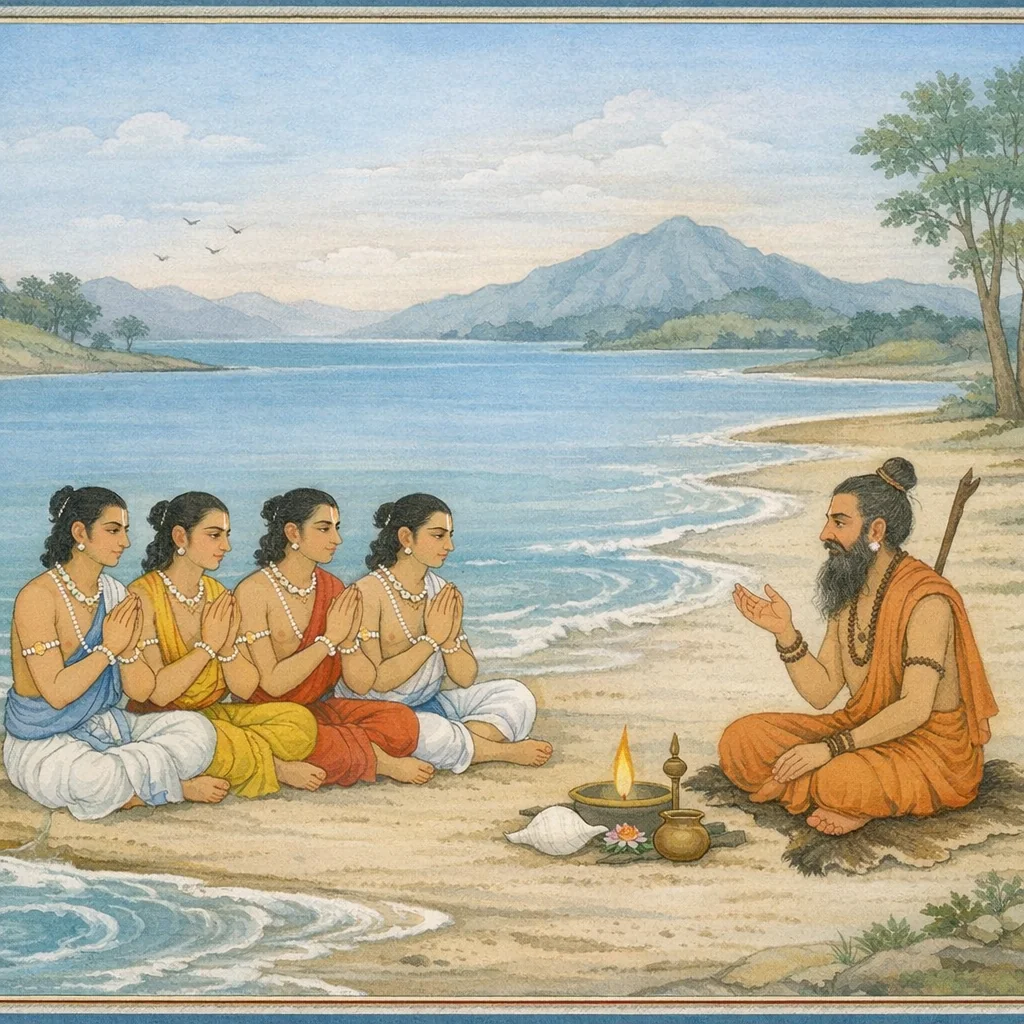
Vaiśaṃpāyana reports the Pandavas’ onward movement from the Kauśikī region to coastal confluences and toward Kaliṅga. Lomāśa identifies Kaliṅga as the region of the Vaitaraṇī river and describes its northern bank as a rishi-frequented, yajña-suited terrain associated with ascent by the devayāna path. A mythic-ritual vignette follows: Rudra takes a sacrificial animal, asserts it as his allotted share, and is then pacified by the gods through auspicious speech, offerings, and honor; an ‘anuvaṃśa’ (traditional account) and a gāthā are referenced, with a stated benefit that singing it while touching the waters clarifies one’s devayāna path and perception. The Pandavas and Draupadī descend into the Vaitaraṇī and perform ancestral libations. Yudhiṣṭhira reports an altered perception—seeing multiple worlds and hearing the recitation of Vaikhānasa ascetics—prompting Lomāśa to indicate a vast sacred forest of Svayaṃbhu (Brahmā) where Viśvakarmā performed a yajña. The narrative recounts the earth being given as dakṣiṇā to Kaśyapa, the earth’s protest and descent, Kaśyapa’s appeasement, and the earth’s re-emergence as a vedi-shaped formation. Lomāśa prescribes a svastyayana rite so Yudhiṣṭhira may mount this ‘vedī’ which, when touched by a mortal, enters the ocean. The chapter closes with Yudhiṣṭhira performing the rite, proceeding toward the sea, and resting near Mahendra.
Chapter Arc: समुद्र-तट की ओर बढ़ते हुए युधिष्ठिर का तीर्थ-मार्ग कौशिकी, गंगासागर और वैतरणी की स्मृतियों से भर उठता है—जहाँ हर लहर किसी देवकथा का संकेत देती है। → लोमश समुद्र की दिव्यता और मर्यादा का विधान सुनाते हैं—देवाधिष्ठान महोदधि को तुच्छ भाव से, यहाँ तक कि कुशाग्र से भी, स्पर्श नहीं करना चाहिए; तीर्थ-यात्रा अब केवल यात्रा नहीं, अनुशासन की परीक्षा बन जाती है। → पाण्डव सागर-संगम पर ‘समाप्लव’ (पवित्र स्नान/आचमन-विधि) करते हैं; रुद्र-सम्बन्धी प्रसंग में यज्ञ-स्थल पर पशु-ग्रहण, स्तुति और देवयान-मार्ग का संकेत आता है—समुद्र-तट पर देव-नियम और मानव-श्रद्धा का साक्षात् मिलन। → युधिष्ठिर लोमश के उपदेश को स्वीकार कर ‘कृतस्वस्त्ययन’ होकर सागर के निकट जाते हैं और फिर महेन्द्राचल की ओर प्रस्थान कर रात्रि-विश्राम करते हैं—यात्रा विधि-पूर्वक आगे बढ़ती है। → महेन्द्राचल पर आगे कौन-सा तीर्थ-वैभव और कौन-सी देवकथा पाण्डवों की प्रतीक्षा कर रही है?
Shlokas
Verse 1
(दाक्षिणात्य अधिक पाठका आधा श्लोक मिलाकर कुल २५६ श्लोक हैं) हब. “(9 #2५:..# #2:५::.१ चतुर्दशाधिकशततमो< ध्याय: युधिष्ठिरका कौशिकी, गंगासागर एवं वैतरणी नदी होते हुए महेन्द्रपर्वतपर गमन वैशम्पायन उवाच ततः प्रयात: कौशिक्या: पाण्डवो जनमेजय । आनुपूर्व्येण सर्वाणि जगामायतनान्यथ,वैशम्पायनजी कहते हैं--जनमेजय! तदनन्तर पाण्डुनन्दन युधिष्ठिरने कौशिकी नदीके तटवर्ती सभी तीर्थों और मन्दिरोंकी क्रमश: यात्रा की। राजन! उन्होंने गंगा- सागरसंगमतीर्थमें समुद्रतटपर पहुँचकर पाँच सौ नदियोंके जलमें स्नान किया
Vaiśampāyana said: “O Janamejaya, thereafter the Pāṇḍava (Yudhiṣṭhira) set out from the Kauśikī. Proceeding in due order, he visited all the sacred abodes—tīrthas and shrines—along the way.”
Verse 2
स सागरं समासाद्य गड़ाया: संगमे नृप । नदीशतानां पज्चानां मध्ये चक्रे समाप्लवम्,वैशम्पायनजी कहते हैं--जनमेजय! तदनन्तर पाण्डुनन्दन युधिष्ठिरने कौशिकी नदीके तटवर्ती सभी तीर्थों और मन्दिरोंकी क्रमश: यात्रा की। राजन! उन्होंने गंगा- सागरसंगमतीर्थमें समुद्रतटपर पहुँचकर पाँच सौ नदियोंके जलमें स्नान किया
Vaiśampāyana said: “O king, having reached the ocean at the confluence of the Gaṅgā, he performed the prescribed ablution there—immersing himself amid the waters of five hundred rivers.”
Verse 3
ततः: समुद्रतीरेण जगाम वसुधाधिप: । भ्रातृभि: सहितो वीर: कलिड्रान् प्रति भारत,भारत! तत्पश्चात् वीर भूपाल युधिष्ठिर अपने भाइयोंके साथ कलिंगदेश (उड़ीसा) में गये
Then the heroic lord of the earth, Yudhiṣṭhira, accompanied by his brothers, proceeded along the seashore, O Bhārata, heading toward the land of Kaliṅga.
Verse 4
लोगमश उवाच एते कलिज्जा: कौन्तेय यत्र वैतरणी नदी । यत्रायजत धर्मोडपि देवाउ्छरणमेत्य वै,तब लोमशजीने कहा--कुन्तीकुमार! यह कलिंग देश है, जिसमें वैतरणी नदी बहती है। जहाँ धर्मने भी देवताओंकी शरणमें जाकर यज्ञ किया था
Lomaśa said: “O son of Kuntī, this is the land of the Kaliṅgas, where the river Vaitaraṇī flows. Here even Dharma, seeking refuge with the gods, performed a sacrifice.”
Verse 5
ऋषिभि: समुपायुक्त यज्ञियं गिरिशोभितम् । उत्तरं तीरमेतद्धि सततं द्विजसेवितम्,यह पर्वतमालाओंसे सुशोभित वैतरणीका वही उत्तर तट है जहाँ यज्ञका आयोजन किया गया था। बहुत-से ऋषि तथा ब्राह्मणलोग सदा इस उत्तर तटका सेवन करते आये हैं
Lomaśa said: “This is indeed the northern bank—fit for sacrificial rites, adorned by mountains, and long frequented by sages and twice-born Brahmins.”
Verse 6
समान देवयानेन पथा स्वर्गमुपेयुष: । अत्र वै ऋषयो<न्न्येडपि पुरा क्रतुभिरीजिरे,स्वर्गलोककी प्राप्ति करनेवाले पुण्यात्मा मनुष्यके लिये यह स्थान 'देवयान” मार्गके समान है। प्राचीन कालमें ऋषियों तथा अन्य लोगोंने भी यहाँ बहुत-से यज्ञोंका अनुष्ठान किया था
For the meritorious who seek to attain the heavenly world, this place is like the path of Devayāna. In ancient times, sages and others too performed many sacrifices here.
Verse 7
अन्नैव रुद्रो राजेन्द्र पशुमादत्तवान् मखे । पशुमादाय राजेन्द्र भागोडयमिति चाब्रवीत्,राजेन्द्र! यहीं रुद्रदेवने यज्ञमें पशुको ग्रहण कर लिया था। उस पशुको ग्रहण करके उन्होंने कहा--“यह तो मेरा हिस्सा है”
Lomaśa said: “O king, in that sacrifice Rudra took the animal as his very share. Having seized the victim, he declared, ‘This is my portion.’”
Verse 8
ह्ृते पशौ तदा देवास्तमूचुर्भरतर्षभ । मा परस्वमभिद्रोग्धा मा धर्मानू सकलान् वशी:,भरतश्रेष्ठी] पशुका अपहरण हो जानेपर देवताओंने उनसे कहा--“आप दूसरोंके धनसे द्रोह न करें (दूसरोंके हिस्सेको न लें) धर्मके साधनभूत समस्त यज्ञभागोंको लेनेकी इच्छा न करें!
When the sacrificial animal had been taken away, the gods addressed him: “O bull among the Bharatas, do not commit hostility toward another’s property—do not seize what belongs to others. Do not, out of self-will, desire to appropriate all the ritual shares that serve as the means of dharma.”
Verse 9
ततः कल्याणरूपाभिववग्भिस्ते रुद्रमस्तुवन् । इष्ट्या चैनं तर्पयित्वा मानयांचक्रिरे तदा,यों कहकर उन्होंने कल्याणमय वचनोंद्वारा भगवान् रुद्रका स्तवन किया और इष्टिद्वारा उन्हें तृप्त करके उस समय उनका विशेष सम्मान किया
Then, with auspicious and gracious words, they praised Rudra. Having satisfied him through a proper sacrificial offering, they showed him special honor at that time.
Verse 10
ततः स पशुमुत्सृज्य देवयानेन जग्मिवान् । तत्रानुवंशो रुद्रस्य तं निबोध युधिछिर,तब वे उस पशुको वहीं छोड़कर देवयान मार्गसे चले गये। युधिष्ठिर! यज्ञमें भगवान् रुद्रकी भागपरम्पराका बोधक एक श्लोक है, उसे बताता हूँ, सुनो--
Then he released the animal and proceeded by the Devayāna path. There, O Yudhiṣṭhira, I shall relate to you the traditional succession of Rudra’s share in sacrifice; understand it well and listen.
Verse 11
अयातयामं सर्वेभ्यो भागेभ्यो भागमुत्तमम् । देवा: संकल्पयामासुर्भयाद् रुद्रस्य शाश्वतम्,'देवताओंने रुद्रदेवके भयसे उनके लिये शीघ्र ही सब भागोंकी अपेक्षा उत्तम एवं सनातन भाग देनेका संकल्प किया”
Lomaśa said: Out of fear of Rudra, the gods resolved to grant him at once a share that was superior to all other portions—an everlasting, preeminent allotment.
Verse 12
इमां गाथामत्र गायन्नपः स्मृशति यो नर: । देवयानो<स्य पन्थाश्च चक्षुषाभिप्रकाशते,जो मनुष्य यहाँ इस गाथाका गान करते हुए वैतरणीके जलका स्पर्श करता है उसकी दृष्टिमें देवयान मार्ग प्रकाशित हो जाता है
Lomaśa said: Whoever, while singing this very verse here, touches the waters, for him the ‘path of the gods’ becomes manifest to his sight—his vision is illumined to perceive the divine way.
Verse 13
वैशम्पायन उवाच ततो वैतरणीं सर्वे पाण्डवा द्रौपदी तथा । अवतीर्य महाभागास्तर्पयांचक्रिरे पितृन्ू,वैशम्पायनजी कहते हैं--राजन्! तदनन्तर महान् भाग्यशाली समस्त पाण्डवों और द्रौपदीने वैतरणीके जलमें उतरकर अपने पितरोंका तर्पण किया
Vaiśampāyana said: Then all the Pāṇḍavas, and Draupadī as well—those greatly fortunate ones—descended into the Vaitaraṇī and performed libations to satisfy their ancestors.
Verse 14
युधिछिर उवाच उपस्पृश्येह विधिवदस्यां नद्यां तपोबलात् । मानुषादस्मि विषयादपेत: पश्य लोमश,उस समय युधिष्ठिर बोले--लोमशजी! देखिये, इस वैतरणी नदीमें विधिपूर्वक स्नान करनेसे मुझे तपोबल प्राप्त हुआ है, जिसके प्रभावसे मैं मानवीय विषयोंसे दूर हो गया हूँ
Yudhiṣṭhira said: “Having performed the prescribed purificatory bathing here in this river, I have gained the strength born of austerity. By its power I have become detached from human sense-objects. See, O Lomaśa.”
Verse 15
सर्वाल्लोकान् प्रपश्यामि प्रसादात् तव सुव्रत । वैखानसानां जपतामेष शब्दो महात्मनाम्,सुव्रत! आपकी कृपासे इस समय मुझे सम्पूर्ण लोकोंका दर्शन हो रहा है। यह जप और स्वाध्यायमें लगे हुए महात्मा वैखानस ऋषियोंका शब्द है
Yudhiṣṭhira said: “By your gracious favor, O you of excellent vows, I am now beholding all the worlds. And this sound that is heard—this is the sacred utterance of the great-souled Vaikhānasa sages, absorbed in japa and Vedic recitation.”
Verse 16
लोमश उवाच त्रिशतं वै सहस्नाणि योजनानां युधिष्ठिर । यत्र ध्वनिं शृणोष्येनं तृष्णीमास्स्व विशाम्पते,लोमशजीने कहा--राजा युधिष्ठिर! जहाँसे आती हुई इस ध्वनिको तुम सुन रहे हो वह स्थान यहाँसे तीन लाख योजन दूर है; अत: अब चुप रहो
Lomaśa said: “O Yudhiṣṭhira, the place from which you are hearing this sound lies three hundred thousand yojanas away. Therefore, O lord of the people, remain silent now.”
Verse 17
एतत् स्वयम्भुवो राजन् वन दिव्यं प्रकाशते । यत्रायजत राजेन्द्र विश्वकर्मा प्रतापवान्,राजन! यह ब्रह्माजीका दिव्य वन प्रकाशित हो रहा है; राजेन्द्र! यहीं प्रतापी विश्वकर्मानि यज्ञ किया है
Lomaśa said: “O King, this is the radiant, divine forest of Svayambhū (Brahmā) that is now being revealed. O best of kings, it was here that the mighty Viśvakarmā once performed a sacrificial rite.”
Verse 18
यस्मिन् यज्ञे हि भूर्दत्ता कश्यपाय महात्मने | सपर्वतवनोद्देशा दक्षिणार्थे स्वयम्भुवा,उस यज्ञमें ब्रह्माजीने पर्वत और वनप्रान्तसहित यह सारी पृथ्वी महात्मा कश्यपको दक्षिणारूपमें दे दी थी
Lomaśa said: “In that sacrifice, the Self-born Brahmā bestowed the entire earth—together with its mountains, forests, and regions—as the sacrificial fee (dakṣiṇā) upon the great-souled Kaśyapa. The episode underscores the sanctity of gifts made in a rite and the immense responsibility borne by both giver and recipient when wealth and sovereignty are transferred through dharmic means.”
Verse 19
अवासीदच्च कौन्तेय दत्तमात्रा मही तदा । उवाच चापि कुपिता लोकेश्वरमिदं प्रभुम्,कुन्तीकुमार! उनके द्वारा अपना दान होते ही पृथ्वी बहुत दुःखी हो गयी और कुपित हो लोकनाथ प्रभु ब्रह्मासे इस प्रकार बोली--“भगवन्! आप मुझे किसी मनुष्यको न सौँपें। यदि मुझे मनुष्यको सौंपेंगे तो वह व्यर्थ होगा, क्योंकि मैं अभी रसातलको चली जाऊँगी'
Lomaśa said: “O son of Kuntī, at that very moment—no sooner had she been given away—the Earth became deeply distressed. Angered, she addressed the Lord of the worlds, that supreme Master, saying in effect: ‘Blessed Lord, do not hand me over to any mortal. If you entrust me to a human being, it will be futile, for I shall sink down to the nether regions.’”
Verse 20
न मां मर्त्याय भगवन् कस्मैचिद् दातुम्हसि । प्रदानं मोघधमेतत् ते यास्याम्येषा रसातलम्,कुन्तीकुमार! उनके द्वारा अपना दान होते ही पृथ्वी बहुत दुःखी हो गयी और कुपित हो लोकनाथ प्रभु ब्रह्मासे इस प्रकार बोली--“भगवन्! आप मुझे किसी मनुष्यको न सौँपें। यदि मुझे मनुष्यको सौंपेंगे तो वह व्यर्थ होगा, क्योंकि मैं अभी रसातलको चली जाऊँगी'
Lomaśa said: “O Blessed Lord, you should not hand me over to any mortal. If you give me to a human, your gift will become futile, for I shall at once descend to Rasātala.” Thus, when she was given away, the Earth became deeply distressed; and, angered, she addressed Lord Brahmā, the protector of the worlds, in these words—pleading not to be entrusted to human possession, since such ‘ownership’ would violate the proper order and render the divine act meaningless.
Verse 21
विषीदन्तीं तु तां दृष्टवा कश्यपो भगवानृषि: । प्रसादयाम्बभूवाथ ततो भूमिं विशाम्पते,राजन! पृथ्वी देवीको विषाद करती देख महर्षि भगवान् कश्यपने प्रार्थनाद्वारा उन्हें प्रसन्न किया
Seeing the Earth-goddess sunk in grief, the venerable sage Kaśyapa sought to soothe and gladden her through conciliatory words and supplication. Then, O lord of men—O King—he addressed Bhūmi, aiming to restore her composure and set right what had caused her distress.
Verse 22
ततः प्रसन्ना पृथिवी तपसा तस्य पाण्डव । पुनरुन्नह्ा सलिलाद् वेदीरूपा स्थिता बभौ
Then, O Pāṇḍava, the Earth—pleased by his austerity—rose up again from the waters and appeared standing in the form of an altar. The episode underscores how disciplined tapas, when aligned with righteousness, is believed to restore order and stability to the world.
Verse 23
पाण्डुनन्दन! उनकी तपस्यासे प्रसन्न हुई पृथ्वी पुन जलसे ऊपर उठकर वेदीके रूपमें स्थित हो गयी ।। सैषा प्रकाशते राजन् वेदी संस्थानलक्षणा । आरुद्मात्र महाराज वीर्यवान् वै भविष्यसि,राजन! वह पृथ्वी देवी ही यहाँ इस मिट्टीकी वेदीके रूपमें प्रकाशित हो रही है। महाराज! इसपर आरुढ़ होकर तुम बल-पराक्रमसे सम्पन्न हो जाओगे
Lomasha said: “O son of Pāṇḍu! Pleased by her austerities, the Earth rose again above the waters and stood established in the form of a sacrificial altar. O king, she is visible here—marked by the very shape of an altar. Great king, the moment you ascend this altar, you will become endowed with strength and heroic power.”
Verse 24
सैषा सागरमासाद्य राजन् वेदी समाश्रिता | एतामारुहा[ भद्रें ते त्वमेकस्तर सागरम्,युधिष्ठिर! वही यह वेदीस्वरूपा पृथ्वी समुद्रका आश्रय लेकर स्थित है; तुम्हारा कल्याण हो। तुम अकेले ही इसपर चढ़कर समुद्रको पार करो
Lomaśa said: “O King, this earth—like a sacred altar—has reached the ocean and now rests upon it. May you be blessed. Mount this (altar-like ground) and, all by yourself, cross over the sea.”
Verse 25
अहं च ते स्वस्त्ययन प्रयोक्ष्ये यथा त्वमेनामधिरोहसेड्द्य । स्पृष्टा हि मर्त्येन ततः समुद्र- मेषा वेदी प्रविशत्याजमीढ,मैं तुम्हारे लिये स्वस्तिवाचन करूँगा, जिससे तुम आज इस वेदीपर चढ़ सको; अजमीढकुलनन्दन! नहीं तो मनुष्यके द्वारा स्पर्श हो जानेपर यह वेदी समुद्रमें प्रवेश कर जाती है
Lomaśa said: “I shall recite for you the auspicious benediction, so that you may mount this altar today. For, O descendant of Ajamīḍha, if this sacred platform is touched by a mortal without the proper rite, it will at once sink away and pass into the sea.”
Verse 26
३० नमो विश्वगुप्ताय नमो विश्वपराय ते | सांनिध्यं कुरु देवेश सागरे लवणाम्भसि,(समुद्रमें स्नान करते समय उसकी प्रार्थनाके लिये निम्नांकित मन्त्रका उच्चारण करना चाहिये--) जिनमें यह सम्पूर्ण विश्व लीन होता है तथा जो सबसे श्रेष्ठ हैं, उन भगवान् विष्णुको नमस्कार है। देवेश्वर! आप खारे समुद्रमें निवास करें
Lomaśa said: “Homage to you, the Protector of the whole world; homage to you, the Supreme beyond the world. O Lord of the gods, be present and near—abide within the salt ocean.”
Verse 27
अन्निर्मित्रो योनिरापो5थ देव्यो विष्णो रेतस्त्वममृतस्य नाभि: । एवं ब्रुवन् पाण्डव सत्यवाक्यं वेदीमिमां त्वं तरसाधिरोह,हे समुद्र! अग्नि, मित्र (सूर्य) और दिव्य जल--ये सब तुम्हारी योनि (उत्पत्ति-कारण) हैं। तुम सर्वव्यापी परमात्माके रेतस् (वीर्य या शक्ति) हो और तुम्हीं अमृतकी उत्पत्तिके स्थान हो।” पाण्डुनन्दन! इस सत्य वाक्यका उच्चारण करते हुए तुम शीघ्रतापूर्वक इस वेदीपर आरूढ़ हो जाओ
Lomaśa said: “O Ocean, Agni and Mitra (the Sun), and the divine waters are your womb—your sources. You are the seed-power of Viṣṇu, all-pervading, and you are the very navel, the generative center, of immortality. Speaking this truth, O son of Pāṇḍu, mount this altar swiftly.”
Verse 28
अभ्निश्च ते योनिरिडा च देहो रेतोधा विष्णोरमृतस्य नाभि: । एवं जपन् पाण्डव सत्यवाक्यं ततो<5वगाहेत पतिं नदीनाम्,“हे महासागर! अग्नि तुम्हारी योनि (कारण) है और यज्ञ शरीर है, तुम भगवान् विष्णुकी शक्तिके आधार और मोक्षके साधन हो।/' पाण्डुपुत्र! इस सत्य वचनको बोलते हुए नदियोंके स्वामी समुद्रमें स्नान करना चाहिये
Lomaśa said: “Fire is your womb (source), and the sacrifice is your body; you are the support of Viṣṇu’s potency and the navel of immortality. O son of Pāṇḍu, reciting this truthfully as a sacred formula, one should then enter and bathe in the Ocean, the lord of rivers.”
Verse 29
अन्यथा हि कुरुश्रेष्ठ देवयोनिरपां पति: । कुशाग्रेणापि कौन्तेय न स्प्रष्टव्यो महोदधि:,कुरुश्रेष्ठ! जलका स्वामी समुद्र देवताओंका अधिष्ठान है। कुन्तीनन्दन! ऊपर बतायी हुई रीतिके सिवा दूसरे किसी प्रकारसे इस महासागरका कुशके अग्रभागद्वारा भी स्पर्श नहीं करना चाहिये
Otherwise, O best of the Kurus, the great ocean, lord of the waters, is a divine abode. O son of Kuntī, except in the manner described above, this vast sea should not be touched—even with the tip of a kuśa blade.
Verse 30
वैशम्पायन उवाच ततः कृतस्वस्त्ययनो महात्मा युधिष्ठिर: सागरमभ्यगच्छत् । कृत्वा च तच्छासनमस्य सर्व महेन्द्रमासाद्य निशामुवास,वैशम्पायनजी कहते हैं--जनमेजय! तदनन्तर लोमशजीके स्वस्तिवाचन करनेके पश्चात् महात्मा राजा युधिष्ठिरने उनकी बतायी हुई सारी विधियोंका पालन करते हुए समुद्रमें स्नान करनेके लिये प्रवेश किया। इसके बाद महेन्द्रपर्वतपर जाकर रात्रि बितायी
Vaiśampāyana said: Then, after the auspicious rites and benedictions had been performed, the noble Yudhiṣṭhira proceeded to the ocean. Having carried out in full the instructions given to him, he reached Mount Mahendra and spent the night there.
Verse 114
इति श्रीमहाभारते वनपर्वणि तीर्थयात्रापर्वणि लोमशतीर्थयात्रायां महेन्द्राचलगमने चतुर्दशाधिकशततमो<ध्याय:
Thus ends the one-hundred-and-fourteenth chapter of the Vana Parva of the Śrī Mahābhārata, within the section on pilgrimage (Tīrthayātrā-parvan): the account of Lomāśa’s pilgrimage, culminating in the journey to Mount Mahendra.
Frequently Asked Questions
The episode frames how sacrificial order is maintained when Rudra asserts a claim over the offering: the tension is resolved through acknowledgment of rightful ‘bhāga’ and pacification via proper rites and respectful speech.
Sacred geography is treated as moral pedagogy: correct ritual action (touching waters, ancestral offerings, svastyayana) and attentive listening to rishi-guidance are depicted as stabilizing perception, conduct, and spiritual orientation.
Yes: the text attributes a benefit to singing the referenced gāthā while touching the waters—one’s devayāna path and vision (cakṣu) are said to become clear/illuminated.