Adhyaya 109
Hemakūṭa’s Marvels and Lomaśa’s Account of Ṛṣabha at Ṛṣabhakūṭa (Nandā–Kauśikī Tīrtha Passage)
Upa-parva: Tīrtha-yātrā and Sacred-Topography Episode: Hemakūṭa–Nandā–Kauśikī Circuit (R̥ṣabhakūṭa Tradition)
Vaiśaṃpāyana reports that the Pāṇḍava leader proceeds in sequence to the rivers Nandā and Aparanandā, described as dispelling fear of sin through bathing. Reaching the healthy, auspicious Hemakūṭa mountain, he observes extraordinary conditions: speech becoming clouded, showers of stones, persistent wind and rain, and the appearance of Havyavāhana (Agni) at dawn and dusk. Yudhiṣṭhira questions the sage Lomaśa, who offers a received tradition: at Ṛṣabhakūṭa lived the long-lived, irascible ascetic Ṛṣabha, whose prohibitions and acts—stemming from anger—caused speech to be checked by clouds and utterances to be met with stones. A further explanation attributes the region’s inaccessibility to the gods (led by Śakra) who, not wishing to be seen, made the terrain a fortified obstacle; thus ordinary humans cannot see or ascend it without austerity. Lomaśa notes continuing ritual markers—grass and ground resembling prepared sacrificial space, trees like yūpa-posts—and affirms that gods and sages still dwell there, with Agni visible morning and evening. He prescribes bathing at Nandā for immediate cleansing of impurity and directs the party onward to the sacred Kauśikī, associated with Viśvāmitra’s severe tapas. The chapter closes with the group bathing and proceeding to Kauśikī’s auspicious waters.
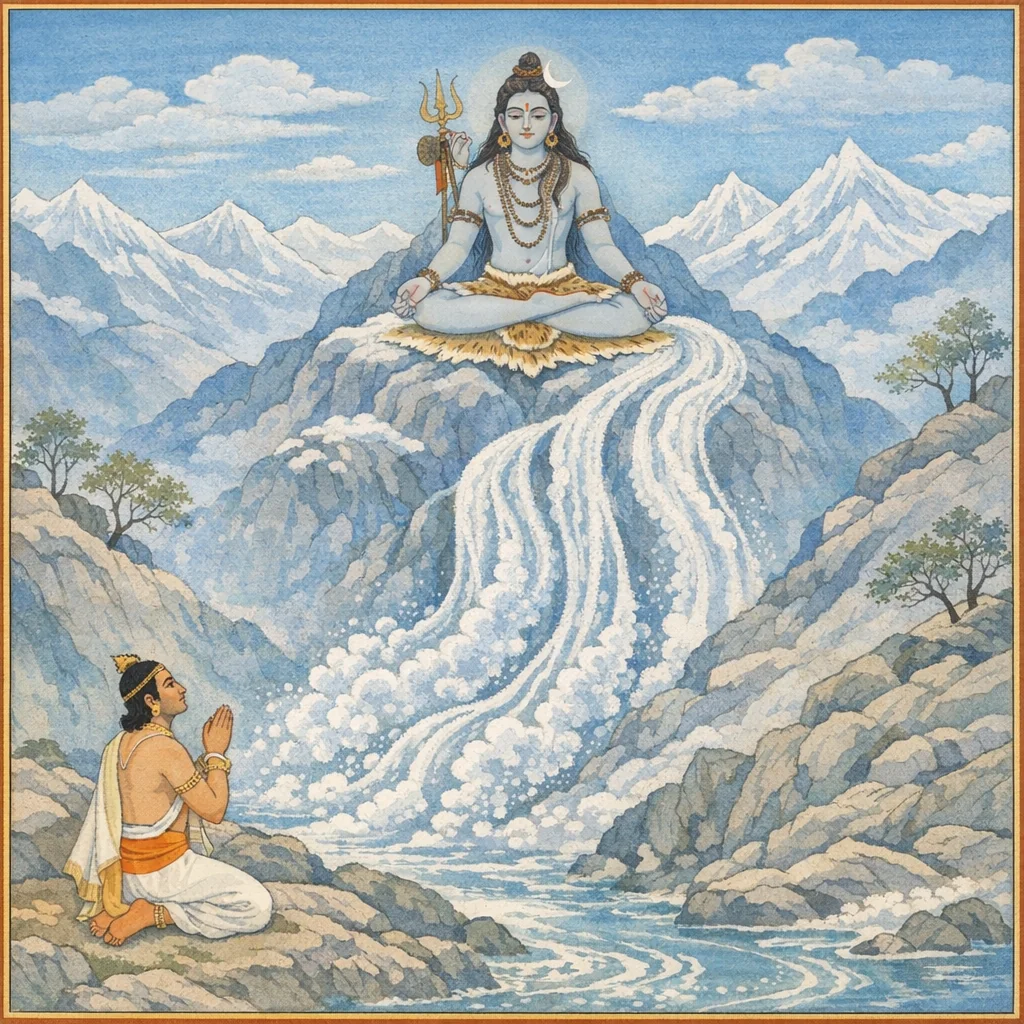
Chapter Arc: लोमश ऋषि युधिष्ठिर को उस अद्भुत प्रसंग में ले जाते हैं जहाँ पृथ्वी गंगा के अवतरण की प्रतीक्षा में तप और प्रतिज्ञा का भार सँभाले खड़ी है—क्या स्वर्ग की नदी धरती का दुःख धो पाएगी? → राजा भगीरथ की कठोर तपस्या और प्रार्थना के उत्तर में शिव का वचन आता है—वे गगन से प्रच्युत दिव्य देवनदी को धारण करेंगे, पर उसका वेग असह्य है; यदि उसे सँभाला न गया तो पृथ्वी विदीर्ण हो सकती है। शिव अपने पार्षदों और आयुधधारी गणों सहित हिमालय की ओर प्रस्थान करते हैं; भगीरथ एकाग्रचित्त होकर गंगा-आह्वान और मार्ग-चिन्तन में स्थित होता है। → गंगा का महावेग से अवतरण—फेनपुञ्जाकुल जल, हंस-पंक्तियों-सी धाराएँ, त्रिधा विभक्त प्रवाह—और शिव द्वारा उसे जटाओं/शिर पर धारण कर नियंत्रित करना; फिर वही नियंत्रित धारा वेग से समुद्र (वरुणालय) को भरती हुई आगे बढ़ती है। → गंगा का प्रवाह पृथ्वी पर स्थिर होकर समुद्र तक पहुँचता है; भगीरथ अपने उद्देश्य की ओर बढ़ते हैं—जहाँ सगरपुत्रों के शरीर पड़े हैं, वहाँ पुण्यसलिल से उन्हें प्लावित/पावन करने का संकल्प पूर्ण होने लगता है। → गंगा के जल से सगरपुत्रों का उद्धार किस प्रकार सिद्ध होता है, और इस तीर्थ-माहात्म्य का अगला प्रसंग (अगस्त्य-माहात्म्य की कड़ी) आगे कैसे खुलता है—कथा अगले अध्याय की ओर मुड़ती है।
Shlokas
Verse 1
(दाक्षिणात्य अधिक पाठका १ श्लोक मिलाकर कुल २८ श्लोक हैं) नस आञज () अपन आओ नवाधिकशततमो<्ध्याय: पृथ्वीपर गंगाजीके उतरने और समुद्रको जलसे भरनेका विवरण तथा सगरपुत्रोंका उद्धार लोगश उवाच भगीरथवच: श्रुत्वा प्रियार्थ च दिवौकसाम् | एवमस्त्विति राजानं भगवान् प्रत्यभाषत,लोमशजी कहते हैं--राजन्! राजा भगीरथकी बात सुनकर देवताओंका प्रिय करनेके लिये भगवान् शिवने कहा--'एवमस्तु” महाभाग! मैं तुम्हारे लिये आकाशसे गिरती हुई कल्याणमयी पुण्यस्वरूपा दिव्य देवनदी गंगाको अवश्य धारण करूँगा”
Lomaśa said: Hearing King Bhagiratha’s words, and wishing to do what would please the gods, the Blessed Lord (Śiva) replied to the king, “So be it.” By this assent he undertook to bear the sacred, auspicious Gaṅgā as she descends from the heavens, for the welfare of the world and the deliverance sought by Bhagiratha.
Verse 2
धारयिष्ये महाभाग गगनात् प्रच्युतां शिवाम् । दिव्यां देवनदीं पुण्यां त्वत्कृते नृपसत्तम,लोमशजी कहते हैं--राजन्! राजा भगीरथकी बात सुनकर देवताओंका प्रिय करनेके लिये भगवान् शिवने कहा--'एवमस्तु” महाभाग! मैं तुम्हारे लिये आकाशसे गिरती हुई कल्याणमयी पुण्यस्वरूपा दिव्य देवनदी गंगाको अवश्य धारण करूँगा”
Lomaśa said: “O noble one, O best of kings, for your sake I shall bear upon my head the auspicious, divine, and holy river of the gods as she falls from the sky.”
Verse 3
एवमुक््त्वा महाबाहो हिमवन्तमुपागमत् | वृतः पारिषदैघेरैन्नानाप्रहरणोद्यतै:,महाबाहो! ऐसा कहकर भगवान् शिव भाँति-भाँतिके अस्त्र-शस्त्रोंसे सुसज्जित अपने भयंकर पार्षदोंसे घिरे हुए हिमालयपर आये
Having spoken thus, O mighty-armed one, he went to Himavat (the Himalaya). He was surrounded by Shiva’s formidable attendants, all armed and ready with weapons of many kinds.
Verse 4
तत्र स्थित्वा नरश्रेष्ठ भगीरथमुवाच ह । प्रयाचस्व महाबाहो शैलराजसुतां नदीम्
Having stayed there, O best of men, he addressed Bhagiratha: “O mighty-armed one, beseech the river who is the daughter of the king of mountains.”
Verse 5
एतच्छुत्वा वचो राजा शर्वेण समुदाह्मतम्,भगवान् शंकरकी कही हुई यह बात सुनकर राजा भगीरथने एकाग्रचित्त हो प्रणाम करके गंगाजीका चिन्तन किया। राजाके चिन्तन करनेपर भगवान् शंकरको खड़ा हुआ देख पुण्यसलिला रमणीय नदी गंगा सहसा आकाशशसे नीचे गिरीं। उन्हें गिरती देख दर्शनके लिये उत्सुक हो महर्षियोंसहित देवता, गन्धर्व, नाग और यक्ष वहाँ आ गये। तदनन्तर हिमालयनन्दिनी गंगा आकाशसे वहाँ आ गिरी
Lomaśa said: Hearing the words spoken by Śarva (Śiva), King Bhagiratha, with a focused mind, bowed in reverence and meditated upon the river Gaṅgā. As he contemplated, he beheld Lord Śaṅkara standing ready; and the holy, beautiful river Gaṅgā suddenly descended from the sky. Seeing her fall, the gods—along with sages—together with Gandharvas, Nāgas, and Yakṣas, hurried there, eager for the sight. Thereafter the daughter of Himālaya, Gaṅgā, came down from the heavens and fell upon that place.
Verse 6
प्रयत: प्रणतो भूत्वा गड़ां समनुचिन्तयत् । ततः पुण्यजला रम्या राज्ञा समनुचिन्तिता,भगवान् शंकरकी कही हुई यह बात सुनकर राजा भगीरथने एकाग्रचित्त हो प्रणाम करके गंगाजीका चिन्तन किया। राजाके चिन्तन करनेपर भगवान् शंकरको खड़ा हुआ देख पुण्यसलिला रमणीय नदी गंगा सहसा आकाशशसे नीचे गिरीं। उन्हें गिरती देख दर्शनके लिये उत्सुक हो महर्षियोंसहित देवता, गन्धर्व, नाग और यक्ष वहाँ आ गये। तदनन्तर हिमालयनन्दिनी गंगा आकाशसे वहाँ आ गिरी
Having become disciplined and humble, the king bowed in reverence and fixed his mind upon the river Gaṅgā. As he contemplated her with single-pointed devotion, the lovely river—whose waters are holy—was drawn forth by that meditation and descended from the sky, while Śaṅkara stood ready to receive her. Seeing her fall, gods, Gandharvas, Nāgas, and Yakṣas, along with great sages, gathered there, eager for the sight. Thus the daughter of Himālaya, Gaṅgā, came down from heaven to that place.
Verse 7
ईशानं च स्थितं दृष्टवा गगनात् सहसा च्युता । तां प्रच्युतामथो दृष्टवा देवा: सार्थ महर्षिभि:,भगवान् शंकरकी कही हुई यह बात सुनकर राजा भगीरथने एकाग्रचित्त हो प्रणाम करके गंगाजीका चिन्तन किया। राजाके चिन्तन करनेपर भगवान् शंकरको खड़ा हुआ देख पुण्यसलिला रमणीय नदी गंगा सहसा आकाशशसे नीचे गिरीं। उन्हें गिरती देख दर्शनके लिये उत्सुक हो महर्षियोंसहित देवता, गन्धर्व, नाग और यक्ष वहाँ आ गये। तदनन्तर हिमालयनन्दिनी गंगा आकाशसे वहाँ आ गिरी
Seeing Īśāna (Śiva) standing ready, the Gaṅgā suddenly descended from the sky. When the gods, together with the great seers, beheld her falling, they gathered there—eager for the auspicious sight. The episode underscores the power of steadfast devotion and the need for divine restraint to channel overwhelming forces for the welfare of the world.
Verse 8
गन्धर्वोरगयक्षाश्न॒ समाजम्मुर्दिदृक्षव: । ततः पपात गगनाद् गड़ा हिमवतः सुता,भगवान् शंकरकी कही हुई यह बात सुनकर राजा भगीरथने एकाग्रचित्त हो प्रणाम करके गंगाजीका चिन्तन किया। राजाके चिन्तन करनेपर भगवान् शंकरको खड़ा हुआ देख पुण्यसलिला रमणीय नदी गंगा सहसा आकाशशसे नीचे गिरीं। उन्हें गिरती देख दर्शनके लिये उत्सुक हो महर्षियोंसहित देवता, गन्धर्व, नाग और यक्ष वहाँ आ गये। तदनन्तर हिमालयनन्दिनी गंगा आकाशसे वहाँ आ गिरी
Eager to behold the wondrous descent, Gandharvas, Nāgas, and Yakṣas gathered there in an assembly. Then Gaṅgā, the daughter of Himavat, fell down from the sky. The scene underscores a moral vision of sacred purpose: Bhagiratha’s disciplined devotion draws divine cooperation, and the river’s descent becomes a public, cosmic event witnessed by many orders of beings.
Verse 9
समुद्धृतमहावर्ता मीनग्राहसमाकुला | तां दधार हरो राजन् गड़ां गगनमेखलाम्
Churned into mighty whirlpools and crowded with fish and crocodiles, that river—O King—was borne aloft by Hara, lifted like a great mace whose girdle was the sky. The image underscores divine power restraining chaos and protecting the cosmic order when the natural world turns perilous.
Verse 10
सा बभूव विसर्पन्ती त्रिधा राजन् समुद्रगा,महाराज! नीचे गिरती हुई फेनपुञ्जसे व्याप्त हुए जलवाली समुद्रगामिनी गंगा तीन धाराओंमें बँटकर हंसोंकी पंक्तियोंके समान सुशोभित होने लगी। वह मतवाली स्त्रीकी भाँति इस प्रकार आयी कि कहीं तो सर्प-शरीरकी भाँति कुटिल गतिसे बहती थी और कहीं-कहीं ऊँचेसे नीचे गिरकर चट्टानोंसे टकराती जाती थी एवं श्वेत वस्त्रोंके समान प्रतीत होनेवाले फेनपुंज उसे आच्छादित किये हुए थे। कहीं-कहीं वह जलके कल-कल नादसे उत्तम संगीत-सा गा रही थी। इस प्रकार अनेक रूप धारण करनेवाली गंगा आकाशसे गिरी और भूतलपर पहुँचकर राजा भगीरथसे बोली---
O King, the Gaṅgā—destined for the ocean—came coursing down and split into three streams, shining like orderly rows of swans. As she descended, she appeared in many forms: in places she flowed with a serpentine, winding motion; elsewhere she plunged from heights, striking against rocks, while white masses of foam, like garments, covered her. In some stretches her rippling sound became like fine music. Thus, taking on manifold shapes, Gaṅgā fell from the sky, reached the earth, and then spoke to King Bhagīratha.
Verse 11
फेनपुञज्जाकुलजला हंसानामिव पडुक्तय: । क्वचिदाभोगकुटिला प्रस्खलन्ती क्वचित् क्वचित्,महाराज! नीचे गिरती हुई फेनपुञ्जसे व्याप्त हुए जलवाली समुद्रगामिनी गंगा तीन धाराओंमें बँटकर हंसोंकी पंक्तियोंके समान सुशोभित होने लगी। वह मतवाली स्त्रीकी भाँति इस प्रकार आयी कि कहीं तो सर्प-शरीरकी भाँति कुटिल गतिसे बहती थी और कहीं-कहीं ऊँचेसे नीचे गिरकर चट्टानोंसे टकराती जाती थी एवं श्वेत वस्त्रोंके समान प्रतीत होनेवाले फेनपुंज उसे आच्छादित किये हुए थे। कहीं-कहीं वह जलके कल-कल नादसे उत्तम संगीत-सा गा रही थी। इस प्रकार अनेक रूप धारण करनेवाली गंगा आकाशसे गिरी और भूतलपर पहुँचकर राजा भगीरथसे बोली---
Lomaśa said: “O king, the Gaṅgā, whose waters were thick with heaps of foam as she rushed toward the sea, split into three streams and appeared like rows of swans. Like an intoxicated woman she advanced in varied ways—here winding in broad, serpentine curves, and there and again plunging from heights, striking against rocks as she fell. White masses of foam, like garments, covered her; and in places the murmuring of her waters sounded like fine music. Thus, assuming many forms, Gaṅgā descended from the sky and, reaching the earth, spoke to King Bhagīratha.”
Verse 12
सा फेनपटसंवीता मत्तेव प्रमदाव्रजत् | क्वचित् सा तोयनिनदैर्नदन्ती नादमुत्तमम्,महाराज! नीचे गिरती हुई फेनपुञ्जसे व्याप्त हुए जलवाली समुद्रगामिनी गंगा तीन धाराओंमें बँटकर हंसोंकी पंक्तियोंके समान सुशोभित होने लगी। वह मतवाली स्त्रीकी भाँति इस प्रकार आयी कि कहीं तो सर्प-शरीरकी भाँति कुटिल गतिसे बहती थी और कहीं-कहीं ऊँचेसे नीचे गिरकर चट्टानोंसे टकराती जाती थी एवं श्वेत वस्त्रोंके समान प्रतीत होनेवाले फेनपुंज उसे आच्छादित किये हुए थे। कहीं-कहीं वह जलके कल-कल नादसे उत्तम संगीत-सा गा रही थी। इस प्रकार अनेक रूप धारण करनेवाली गंगा आकाशसे गिरी और भूतलपर पहुँचकर राजा भगीरथसे बोली---
Lomaśa said: “Clad, as it were, in a covering of foamy cloth, she advanced like an intoxicated woman. In some places she seemed to ‘sing’ an excellent music through the murmuring resonance of her waters, O king.”
Verse 13
एवंप्रकारान् सुबहून् कुर्वती गगनाच्च्युता । पृथिवीतलमासाद्य भगीरथमथाब्रवीत्,महाराज! नीचे गिरती हुई फेनपुञ्जसे व्याप्त हुए जलवाली समुद्रगामिनी गंगा तीन धाराओंमें बँटकर हंसोंकी पंक्तियोंके समान सुशोभित होने लगी। वह मतवाली स्त्रीकी भाँति इस प्रकार आयी कि कहीं तो सर्प-शरीरकी भाँति कुटिल गतिसे बहती थी और कहीं-कहीं ऊँचेसे नीचे गिरकर चट्टानोंसे टकराती जाती थी एवं श्वेत वस्त्रोंके समान प्रतीत होनेवाले फेनपुंज उसे आच्छादित किये हुए थे। कहीं-कहीं वह जलके कल-कल नादसे उत्तम संगीत-सा गा रही थी। इस प्रकार अनेक रूप धारण करनेवाली गंगा आकाशसे गिरी और भूतलपर पहुँचकर राजा भगीरथसे बोली---
Assuming many such wondrous forms as she fell from the sky, Gaṅgā reached the surface of the earth and then addressed King Bhagīratha: “O great king!”
Verse 14
दर्शयस्व महाराज मार्ग केन व्रजाम्यहम् । त्वदर्थमवतीर्णास्मि पृथिवीं पृथिवीपते,“महाराज! रास्ता दिखाओ मैं किस मार्गसे चलूँ? पृथ्वीपते! तुम्हारे लिये ही मैं इस भूतलपर उतरी हूँ!
“O great king, show me the way—by which path am I to proceed? O lord of the earth, I have descended upon this world for your sake alone.”
Verse 15
एतच्छुत्वा वचो राजा प्रातिष्ठत भगीरथ: । यत्र तानि शरीराणि सागराणां महात्मनाम्
Hearing these words, King Bhagīratha set out at once, proceeding to the place where lay the bodies of the great-souled sons of Sagara.
Verse 16
गड्जाया धारणं कृत्वा हटो लोकनमस्कृत:,विश्ववन्दित भगवान् शंकर गंगाजीको सिरपर धारण करके देवताओंके साथ पर्वतश्रेष्ठ कैलासको चले गये। राजा भगीरथने गंगाजीके साथ समुद्रतटपर जाकर वरुणालय समुद्रको बड़े वेगसे भर दिया और गंगाजीको अपनी पुत्री बना लिया
The Blessed Lord Śaṅkara—honoured by the world and praised by all—received the descent of the Gaṅgā upon his head and, accompanied by the gods, departed for Mount Kailāsa, the foremost of mountains. Then King Bhagīratha, going with the Gaṅgā to the seashore, filled the ocean—Varuṇa’s abode—with her mighty current, and accepted the Gaṅgā as his own daughter. The episode highlights disciplined power: divine restraint makes a force safe for the world, and royal responsibility channels that force toward ancestral duty and the common good.
Verse 17
कैलासं पर्वतश्रेष्ठं जगाम त्रिदशै: सह । समासाद्य समुद्र च गड़या सहितो नृप:,विश्ववन्दित भगवान् शंकर गंगाजीको सिरपर धारण करके देवताओंके साथ पर्वतश्रेष्ठ कैलासको चले गये। राजा भगीरथने गंगाजीके साथ समुद्रतटपर जाकर वरुणालय समुद्रको बड़े वेगसे भर दिया और गंगाजीको अपनी पुत्री बना लिया
The Blessed Lord Śaṅkara, revered by the whole world, bearing the river Gaṅgā upon his head, set out with the gods to Kailāsa, the foremost of mountains. Then the king Bhagīratha, accompanied by Gaṅgā, reached the ocean and caused it to be filled with her mighty current—thereby establishing Gaṅgā’s descent as a boon for the world and a sanctifying gift to the ancestors.
Verse 18
पूरयामास वेगेन समुद्रं वरुणालयम् । दुहितृत्वे च नूपतिर्गड्रां समनुकल्पयत्,विश्ववन्दित भगवान् शंकर गंगाजीको सिरपर धारण करके देवताओंके साथ पर्वतश्रेष्ठ कैलासको चले गये। राजा भगीरथने गंगाजीके साथ समुद्रतटपर जाकर वरुणालय समुद्रको बड़े वेगसे भर दिया और गंगाजीको अपनी पुत्री बना लिया
With mighty force she filled the ocean, the abode of Varuṇa. Thereupon the king (Bhagīratha) formally accepted Gaṅgā as his daughter—thus integrating the river’s descent into the moral and social order through rightful acknowledgment and stewardship.
Verse 19
पितृणां चोदकं तत्र ददौ पूर्णमनोरथ: । एतत् ते सर्वमाख्यातं गड़ा त्रिपथगा यथा,तत्पश्चात् वहाँ उन्होंने पितरोंके लिये जलदान किया और पितरोंका उद्धार होनेसे वे सफल मनोरथ हो गये। युधिष्ठिर! जिस प्रकार गंगा त्रिपथगा (स्वर्ग, पाताल और पृथ्वीपर गमन करनेवाली) हुई, वह सब प्रसंग मैंने तुम्हें सुना दिया
There he offered the libation of water to the Pitṛs (ancestral spirits); with their deliverance accomplished, he became one whose purpose was fulfilled. O Yudhiṣṭhira, I have thus narrated to you the entire account of how the Gaṅgā came to be ‘Tripathagā’—the river whose course extends through heaven, the netherworld, and the earth—underscoring the dharmic power of filial rites and sacred waters to aid one’s forebears.
Verse 20
पूरणार्थ समुद्रस्य पृथिवीमवतारिता । (कालेयाश्न यथा राजंस्त्रिदशैर्विनिपातिता:) समुद्रश्न यथा पीत: कारणार्थ महात्मना,महाराज! समुद्रको भरनेके लिये ही गंगा पृथ्वीपर उतारी गयी थी। राजन्! देवताओं ने कालेय नामक दैत्योंको जिस प्रकार मार गिराया और कारणवश महात्मा अगस्त्यने जिस प्रकार समुद्र पी लिया तथा उन्होंने ब्राह्मणोंकी हत्या करनेवाले वातापि नामक दैत्यको जिस प्रकार नष्ट किया, वह सब प्रसंग, जिसके विषयमें तुमने पूछा था, मैंने बता दिया
Lomaśa said: “O King, the Gaṅgā was brought down to the earth for the purpose of replenishing the ocean. And, O Rājan, I have also told you—as you asked—how the gods struck down the Kāleya demons, and how, for a specific cause, the great-souled sage Agastya drank up the ocean.”
Verse 21
वातापिश्न यथा नीत: क्षयं स ब्रह्म॒हा प्रभो । अगस्त्येन महाराज यन्मां त्वं परिपृच्छसि,महाराज! समुद्रको भरनेके लिये ही गंगा पृथ्वीपर उतारी गयी थी। राजन्! देवताओं ने कालेय नामक दैत्योंको जिस प्रकार मार गिराया और कारणवश महात्मा अगस्त्यने जिस प्रकार समुद्र पी लिया तथा उन्होंने ब्राह्मणोंकी हत्या करनेवाले वातापि नामक दैत्यको जिस प्रकार नष्ट किया, वह सब प्रसंग, जिसके विषयमें तुमने पूछा था, मैंने बता दिया
Lomaśa said: “O lord, O great king, I have told you exactly as you asked—how Vātāpi, the slayer of brahmins (brahma-han), was brought to destruction by Agastya. The tale also recalls how the gods struck down the Kāleya demons, how Agastya, for a compelling cause, drank up the ocean, and how he destroyed Vātāpi who had been killing brahmins. It shows that extraordinary power, when guided by righteous purpose, becomes a means to protect dharma and restrain those who violate sacred law.”
Verse 43
(पितृणां पावनार्थ ते तामहं मनुजाधिप ।) पतमानां सरिच्छेष्ठां धारयिष्ये त्रिविष्टपात् वहाँ ठहरकर उन्होंने नरश्रेष्ठ भगीरथसे कहा--“महाबाहो! गिरिराजनन्दिनी महानदी गंगासे भूतलपर उतरनेके लिये प्रार्थना करो। नरेश्वर! मैं तुम्हारे पितरोंको पवित्र करनेके लिये स्वर्गसे उतरती हुई सरिताओंमें श्रेष्ठ गड़ाको सिरपर धारण करूँगा”
Lokeśa said: “O lord of men, for the purification of your ancestors I shall bear upon my head the best of rivers as she descends from the heavenly realm. Therefore, O mighty-armed one, pray to Gaṅgā—the daughter of the king of mountains—to come down to the earth.”
Verse 93
ललाटदेशे पतितां मालां मुक्तामयीमिव । उस समय उनके जलमें बड़ी-बड़ी भँवरें और तरंगे उठ रही थीं। मत्स्य और ग्राह भरे हुए थे। राजन! आकाशकी मेखलारूप गंगाको भगवान् शिवने अपने ललाटदेशमें पड़ी हुई मोतियोंकी मालाकी भाँति धारण कर लिया
Lomaśa said: “(The Gaṅgā) lay upon (Śiva’s) forehead like a garland made of pearls.” The river is shown as vast and fearsome—its waters churning with great whirlpools and waves, teeming with fish and crocodiles—yet Śiva bears that mighty, sky-girdling Gaṅgā as effortlessly as an ornament. The undertone is of divine restraint and protection: what overwhelms beings is held in check by the Lord for the welfare of the world.
Verse 109
इति श्रीमहाभारते वनपर्वणि तीर्थयात्रापर्वणि लोमशतीर्थयात्रायामगस्त्यमाहात्म्यकथने नवाधिकशततमो<ध्याय:
Thus, in the Śrī Mahābhārata, within the Vana Parva, in the Tīrtha-yātrā Parva (the section on pilgrimage to sacred fords), in the account of Lomaśa’s pilgrimage, in the narration of the greatness of Agastya, ends the one-hundred-and-ninth chapter.
Verse 156
प्लावनार्थ नरश्रेष्ठ पुण्येन सलिलेन च । यह सुनकर राजा भगीरथ जहाँ महात्मा सगरपुत्रोंके शरीर पड़े थे, वहाँ गंगाजीके पावन जलसे उन शरीरोंको प्लावित करनेके लिये उस स्थानसे प्रस्थित हुए
Lomaśa said: “O best of men, for the purpose of bathing and purifying them with sacred water.” Hearing this, King Bhagīratha set out from that place to where the bodies of the great sons of Sagara lay, intending to wash and sanctify them with the holy waters of the Gaṅgā—an act of filial duty and compassionate righteousness toward the departed.
Frequently Asked Questions
The implicit dilemma concerns conduct in a sacred, power-charged space: whether ordinary human impulses—especially unregulated speech and reactive anger—should be expressed when tradition frames the landscape as governed by ascetic prohibitions and divine boundaries.
Access to higher domains (physical or spiritual) is portrayed as conditioned by tapas and restraint; disciplined speech and controlled affect are presented as practical instruments for safely navigating sacred geographies and their inherited rules.
A direct phalaśruti formula is not stated; however, the chapter embeds a benefit-claim typical of tīrtha discourse: bathing at Nandā is said to remove impurity immediately, positioning the episode as a ritual-ethical instruction within the pilgrimage sequence.