Adhyaya 105
Sagara’s Aśvamedha Horse Lost; The Sixty-Thousand Sons Begin the Subterranean Search (Kapila Introduced)
Upa-parva: Tīrtha-yātrā / Purāṇic-Ākhyāna Cycle: The Sagara–Kapila Episode (Lomāśa Narration)
Lomāśa reports that, after an aerial directive is heard, the king complies with what was enjoined. King Sagara, empowered through Rudra’s favor, is said to have sixty-thousand sons of formidable energy who, through overconfidence, harass devas, gandharvas, rākṣasas, and other beings. The afflicted worlds seek refuge in Brahmā, who instructs them to return, foretelling that the Sagaras will soon meet a severe destruction as a consequence of their own deeds. After time passes, Sagara is consecrated for an Aśvamedha; the sacrificial horse, though guarded, disappears near the sea. The sons report the loss and are ordered to search again without returning until the horse is found. They re-scout the entire earth, then discover a rent and begin digging—effectively ‘excavating the ocean’—causing widespread suffering and destruction among subterranean beings. After prolonged effort, in the northeastern region they break into Pātāla, see the horse moving there, and behold the great ascetic Kapila, radiant with tapas, like fire surrounded by flames—closing the chapter on the threshold of the decisive confrontation.
Chapter Arc: Lomasha, guiding Yudhishthira through sacred places, turns the king’s gaze to the ocean-shore and begins the astonishing tale of Agastya—how a single rishi, for the welfare of the worlds, resolved to drink Varuṇa’s abode itself. → Agastya declares his intent openly—he will drink the sea for loka-hita, and commands the gods to swiftly do what must follow. The ocean, vast and inviolable, becomes the stage for a cosmic test: can dharma be served by an act that seems to violate nature’s order? → Before all beings, the unerring son of Mitra and Varuṇa, roused to wrath, drinks the ocean—its waters vanishing as the worlds watch—exposing the hidden terror within and enabling the destruction of the cruel, mighty Kālēyas. → The gods, relieved, praise Agastya: by his grace the worlds gain great happiness and by his radiance the Kālēyas are slain. Yet when they ask for the sea to be restored, Agastya answers with disarming finality: the waters are already digested; another means must be devised. The devas, astonished and downcast, bow and depart; all beings return as they came, and the gods, with Viṣṇu, go to Pitāmaha Brahmā to deliberate the refilling of the ocean. → With the ocean emptied and Agastya unable to return what he has consumed, the devas approach Brahmā—leaving the question hanging: by what new ordinance will the sea be made whole again?
Shlokas
Verse 1
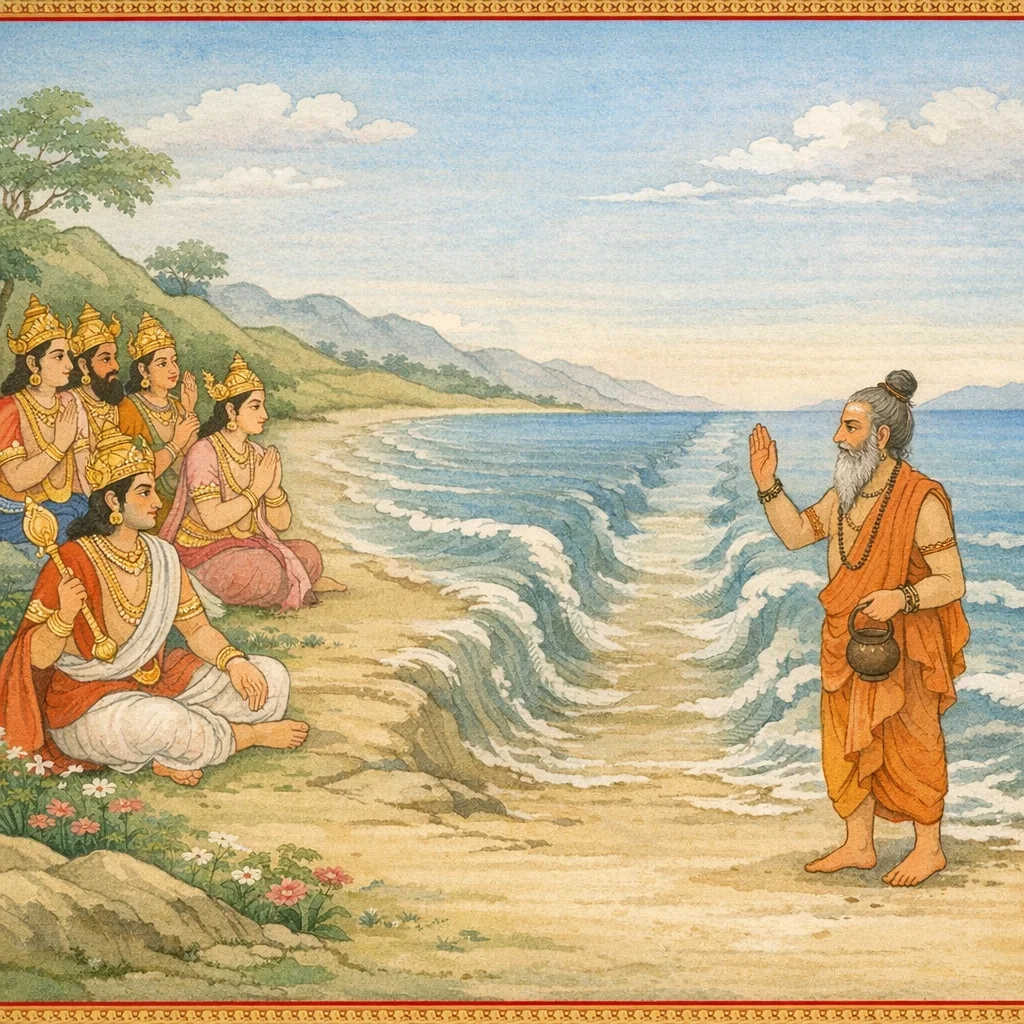
/ (दाक्षिणात्य अधिक पाठका ३ *लोक मिलाकर कुल २४ ३ “लोक हैं) 3 #ासल ९) अपन अभल पञ्चाधिकशततमोब< ध्याय: अगस्त्यजीके द्वारा समुद्रपान और देवताओंका कालेय देत्योंका वध करके ब्रह्माजीसे समुद्रको पुनः भरनेका उपाय पूछना लोगश उवाच समुद्रं स समासाद्य वारुणिर्भगवानृषि: । उवाच सहितान् देवानृषींश्वैव समागतान्,लोमशजी कहते हैं--राजन! समुद्रके तटपर जाकर मित्रावरुण-नन्दन भगवान् अगस्त्यमुनि वहाँ एकत्र हुए देवताओं तथा समागत ऋषियोंसे बोले--“मैं लोकहितके लिये समुद्रका जल पी लेता हूँ। फिर आपलोगोंको जो कार्य करना हो उसे शीघ्र पूरा कर लें!
Lomaśa said: “O King, having reached the seashore, the blessed sage Agastya—son of Mitra and Varuṇa—addressed the assembled gods and the gathered seers.”
Verse 2
अहं लोकहितार्थ वै पिबामि वरुणालयम् । भवद्धिर्यदनुछ्ठेयं तच्छीच्रं संविधीयताम्,लोमशजी कहते हैं--राजन! समुद्रके तटपर जाकर मित्रावरुण-नन्दन भगवान् अगस्त्यमुनि वहाँ एकत्र हुए देवताओं तथा समागत ऋषियोंसे बोले--“मैं लोकहितके लिये समुद्रका जल पी लेता हूँ। फिर आपलोगोंको जो कार्य करना हो उसे शीघ्र पूरा कर लें!
“For the welfare of the world, I shall indeed drink up the ocean, the abode of Varuṇa. Therefore, whatever task you all must accomplish—see that it is carried out quickly.”
Verse 3
एतावदुक्त्वा वचन मैत्रावरुणिरच्युत: । समुद्रमपिबत् क्रुद्ध: सर्वलोकस्य पश्यत:,अपनी मर्यादासे कभी च्युत न होनेवाले मित्रा-वरुण-कुमार अगस्त्यजी कुपित हो सब लोगोंके देखते-देखते समुद्रको पीने लगे
Having spoken only this much, the steadfast son of Mitra and Varuṇa—Agastya, who never swerves from his ordained bounds—became wrathful and, before the very eyes of all beings, began to drink up the ocean.
Verse 4
पीयमानं समुद्र तं दृष्टवा सेन्द्रास्तदामरा: । विस्मयं परमं जग्मु: स्तुतिभिश्चाप्पपूजयन्,उन्हें समुद्र-पान करते देख इन्द्रसहित सम्पूर्ण देवता बड़े विस्मित हुए और स्तुतियोंद्वारा उनका समादर करने लगे
Seeing him drinking up the ocean, the immortals—together with Indra—were struck with the greatest astonishment, and they began to honor him with hymns of praise.
Verse 5
त्वं नस्त्राता विधाता च लोकानां लोकभावन । त्वत्प्रसादात् समुच्छेद॑ न गच्छेत् सामरं जगत्,“लोकभावन महर्षे! आप हमारे रक्षक तथा सम्पूर्ण लोकोंके विधाता हैं। आपकी कृपासे अब देवताओंसहित सम्पूर्ण जगत् विनाशको नहीं प्राप्त होगा'
“You are our protector and the ordainer of all worlds, O nurturer of beings. By your gracious favor, this entire universe—together with the gods—will not fall into total destruction.”
Verse 6
स पूज्यमानत्त्रिदशैर्महात्मा गन्धर्वतूर्येषु नदत्सु सर्वश: । दिव्यैश्व पुष्पैरवकीर्यमाणो महार्णवं नि:सलिलं चकार,इस प्रकार जब देवता महात्मा अगस्त्यकी प्रशंसा कर रहे थे, सब ओर गन्धर्वोंके वाद्योंकी ध्वनि फैल रही थी और अगस्त्यजी पर दिव्य फूलोंकी बौछार हो रही थी, उसी समय अगस्त्यजीने सम्पूर्ण महासागरको जलशून्य कर दिया
As the great-souled Agastya was honored by the gods, while the music of the Gandharvas’ instruments resounded on every side and celestial flowers were showered upon him, at that very moment he made the vast ocean bereft of water.
Verse 7
दृष्टवा कृतं निः:सलिलं महार्णवं सुरा: समस्ता: परमप्रहृष्टा: । प्रगृह्य दिव्यानि वरायुधानि तान् दानवाञ्जघ्नुरदीनसत्त्वा:,उस महासमुद्रको निर्जल हुआ देख सब देवता बड़े प्रसन्न हुए। उन्होंने अपने दिव्य एवं श्रेष्ठ आयुध लेकर अत्यन्त उत्साहसे सम्पन्न हो दानवोंपर आक्रमण किया
Seeing the vast ocean rendered waterless, all the gods were filled with supreme joy. Taking up their divine and excellent weapons, and with undaunted courage, they struck down the Dānavas.
Verse 8
ते वध्यमानास्त्रिदशैर्महात्मभि- महाबलैवेंगिभिरुन्नदद्धि: । न सेहिरे वेगवतां महात्मनां वेगं तदा धारयितुं दिवौकसाम्,महान् बलवान् वेगशाली और महाबुद्धिमान् देवता जब सिंहगर्जना करते हुए दैत्योंको मारने लगे उस समय वे उन वेगवान् महामना देवताओंका वेग न सह सके
When the mighty, swift, and wise gods—great-souled and roaring like lions—began to slay the Daityas, they could not then endure the onrush of those high-minded, impetuous dwellers of heaven.
Verse 9
ते वध्यमानास्त्रिदशैर्दानवा भीमनि:स्वना: । चक्रुः सुतुमुलं युद्ध मुहूर्तमिव भारत,भरतनन्दन! देवताओंकी मार पड़नेपर दानवोंने भी भयंकर गर्जना करते हुए दो घड़ीतक उनके साथ घोर युद्ध किया
Struck down by the gods, the Dānavas—raising terrifying roars—waged a most tumultuous battle with them, as if it lasted but a moment, O Bhārata, delight of the Bharatas.
Verse 10
ते पूर्व तपसा दग्धा मुनिभिर्भावितात्मभि: । यतमाना: परं शक्त्या त्रिदशैर्विनिषूदिता:,उन दैत्योंको शुद्ध अन्तःकरणवाले मुनियोंने अपनी तपस्याद्वारा पहलेसे ही दग्ध-सा कर रखा था, अतः पूरी शक्ति लगाकर अधिक-से-अधिक प्रयास करनेपर भी देवताओंद्वारा वे मार डाले गये
Those Daityas had already been, as it were, scorched beforehand by the austerity (tapas) of the sages whose hearts were purified; therefore, even striving with all their might, they were slain by the gods.
Verse 11
ते हेमनिष्काभरणा: कुण्डलाड्भदधारिण: । निहता बह्नशोभन्त पुष्पिता इव किंशुका:,सोनेकी मोहरोंकी मालाओंसे भूषित तथा कुण्डल एवं बाजूबंदधारी दैत्य वहाँ मारे जाकर खिले हुए पलाशके वृक्षोंकी भाँति अधिक शोभा पा रहे थे
Those demons, adorned with golden necklaces and ornaments, wearing earrings and armlets, lay slain there; yet even in their fall they looked striking—like kiṃśuka trees in full bloom.
Verse 12
हतशेषास्तत: केचित् कालेया मनुजोत्तम । विदार्य वसुधां देवीं पातालतलमास्थिता:,नरश्रेष्ठ! मरनेसे बचे हुए कुछ कालेय दैत्य वसुन्धरा देवीको विदीर्ण करके पातालमें चले गये
O best of men, some of the Kāleya demons who survived the slaughter then tore open the divine Earth and took refuge in the netherworld, Pātāla.
Verse 13
निहतान् दानवान् दृष्ट्वा त्रिदशा मुनिपुड्रवम् | तुष्टवुर्विविधैर्वाक्यैरिदं वचनमन्नरुवन्,सब दानवोंको मारा गया देख देवताओंने नाना प्रकारके वचनोंद्वारा मुनिवर अगस्त्यजीका स्तवन किया और यह बात कही--
Seeing that the Dānavas had been slain, the gods beheld the foremost of sages and, pleased at heart, praised him with many kinds of words. Then they addressed him with this statement—
Verse 14
त्वत्प्रसादान्महाभाग लोकै: प्राप्त महत् सुखम् । त्वत्तेजसा च निहता: कालेया: क्रूरविक्रमा:,“महाभाग! आपकी कृपासे समस्त लोकोंने महान् सुख प्राप्त किया है; क्योंकि क्रूरतापूर्ण पराक्रम दिखानेवाले कालेय दैत्य आपके तेजसे दग्ध हो गये
O noble one, through your gracious favor all the worlds have attained great relief and happiness; for by the power of your radiance the Kāleya demons—fierce in their violent prowess—have been slain.
Verse 15
पूरयस्व महाबाहो समुद्र लोकभावन । यत् त्वया सलिल॑ पीत॑ तदस्मिन् पुनरुत्सूज,“मुने! आपकी बाँहें बड़ी हैं। आप नूतन संसारकी सृष्टि करनेमें समर्थ हैं। अब आप समुद्रको फिर भर दीजिये। आपने जो इसका जल पी लिया है उसे फिर इसीमें छोड़ दीजिये”
Lomaśa said: “O mighty-armed one, O sustainer of the worlds, fill the ocean again. The water you have drunk—release it back into this very sea.”
Verse 16
एवमुक्त: प्रत्युवाच भगवान् मुनिपुड्भव: । (तांस्तदा सहितान् देवानगस्त्य: सपुरन्दरान् ।) जीर्ण तद्धि मया तोयमुपायो<न्य:प्रचिन्त्यताम्,उनके ऐसा कहनेपर मुनिप्रवर भगवान् अगस्त्यने वहाँ एकत्र हुए इन्द्र आदि समस्त देवताओंसे उस समय यों कहा--'देवगण! वह जल तो मैंने पचा लिया, अतः समुद्रको भरनेके लिये सतत प्रयत्नशील रहकर आपलोग कोई दूसरा ही उपाय सोचें।” शुद्ध अन्तःकरणवाले महर्षिका यह वचन सुनकर सब देवता बड़े विस्मित हो गये; उनके मनमें विषाद छा गया। वे आपसमें सलाह करके मुनिवर अगस्त्यजीको प्रणाम कर वहाँसे चल दिये
When they had spoken thus, the venerable sage Agastya, foremost among ascetics, replied to the assembled gods—Indra included: “Indeed, I have already digested that water. Therefore, if the ocean is to be refilled, you must remain steadfast in your effort and devise some other means.” Hearing this astonishing statement from the pure-hearted great seer, the gods were struck with wonder and a shadow of dejection fell upon them. After consulting among themselves, they bowed to Agastya and departed.
Verse 17
पूरणार्थ समुद्रस्य भवद्धिर्यत्नमास्थितै: । एतच्छुत्वा तु वचन महर्षेभावितात्मन:,उनके ऐसा कहनेपर मुनिप्रवर भगवान् अगस्त्यने वहाँ एकत्र हुए इन्द्र आदि समस्त देवताओंसे उस समय यों कहा--'देवगण! वह जल तो मैंने पचा लिया, अतः समुद्रको भरनेके लिये सतत प्रयत्नशील रहकर आपलोग कोई दूसरा ही उपाय सोचें।” शुद्ध अन्तःकरणवाले महर्षिका यह वचन सुनकर सब देवता बड़े विस्मित हो गये; उनके मनमें विषाद छा गया। वे आपसमें सलाह करके मुनिवर अगस्त्यजीको प्रणाम कर वहाँसे चल दिये
Lomaśa said: “Since you have undertaken this effort to refill the ocean, you should continue striving—but now devise some other means.” Hearing these words of the great sage, whose inner self was purified and disciplined, the gods were struck with astonishment and fell into dejection. After consulting among themselves, they bowed to the venerable Agastya and departed.
Verse 18
विस्मिताश्न विषण्णाश्न बभूवु: सहिता: सुरा: । परस्परमनुज्ञाप्य प्रणम्य मुनिपुजड्रवम्,उनके ऐसा कहनेपर मुनिप्रवर भगवान् अगस्त्यने वहाँ एकत्र हुए इन्द्र आदि समस्त देवताओंसे उस समय यों कहा--'देवगण! वह जल तो मैंने पचा लिया, अतः समुद्रको भरनेके लिये सतत प्रयत्नशील रहकर आपलोग कोई दूसरा ही उपाय सोचें।” शुद्ध अन्तःकरणवाले महर्षिका यह वचन सुनकर सब देवता बड़े विस्मित हो गये; उनके मनमें विषाद छा गया। वे आपसमें सलाह करके मुनिवर अगस्त्यजीको प्रणाम कर वहाँसे चल दिये
Amazed and then cast into dejection, the assembled gods became unsettled. After consulting one another and taking leave among themselves, they bowed to the foremost of sages (Agastya) and departed.
Verse 19
प्रजा: सर्वा महाराज विप्रजग्मुर्यथागतम् । त्रिदशा विष्णुना सार्थमुपजग्मु: पितामहम्,महाराज! फिर सारी प्रजा जैसे आयी थी, वैसे ही लौट गयी। देवतालोग भगवान् विष्णुके साथ ब्रह्माजीके पास गये
O King, all the people departed, returning just as they had come. The gods, accompanied by Lord Viṣṇu, then went to Pitāmaha Brahmā.
Verse 20
पूरणार्थ समुद्रस्य मन्त्रयित्वा पुन: पुन: । (ते धातारमुपागम्य त्रिदशा: सह विष्णुना ।) ऊचुः प्राज्जलय: सर्वे सागरस्थाभिपूरणम्,समुद्रको भरनेके उद्देश्यसे बार-बार आपसमें सलाह करके श्रीविष्णुसहित सब देवता ब्रह्माजीके निकट जा हाथ जोड़कर यह पूछने लगे कि *समुद्रको पुनः भरनेके लिये क्या उपाय किया जाय”
With the aim of replenishing the ocean, the gods repeatedly deliberated among themselves. Then, accompanied by Viṣṇu, all the deities approached Dhātṛ (Brahmā) and, with hands folded in reverence, asked what means should be adopted to fill the ocean again.
Verse 104
इस प्रकार श्रीमहाभारत वनपर्वके अन्तर्गत तीर्थयात्रापर्वमें लोमशती र्थयात्राके प्रस॑ंगमें अगस्त्यका समुद्रतटटपर गमनविषयक एक सौ चारवाँ अध्याय पूरा हुआ
Thus ends the one-hundred-and-fourth chapter of the Vana Parva of the Śrī Mahābhārata, within the Tīrthayātrā Parva, in the context of Lomāśa’s pilgrimage narrative—describing Agastya’s journey to the seashore. The colophon signals a transition: the sacred travel account continues, framing the events as part of a larger ethical and purificatory itinerary rather than mere geography.
Verse 105
इति श्रीमहाभारते वनपर्वणि तीर्थयात्रापर्वणि लोमशतीर्थयात्रायामगस्त्योपाख्याने पजञ्चाधिकशततमो<ध्याय:
Thus, in the Śrī Mahābhārata, within the Vana Parva, in the section on the pilgrimage to sacred fords (Tīrthayātrā Parva), in Lomaśa’s pilgrimage narrative, in the episode concerning Agastya, ends the one-hundred-and-fifth chapter. This closing colophon frames the teaching as part of a larger ethical journey: sacred travel is presented not merely as movement through places, but as a disciplined progression through exemplary stories that refine conduct and understanding of dharma.
Frequently Asked Questions
Whether royal duty to protect ritual legitimacy (recovering the Aśvamedha horse) can justify unbounded coercive action; the narrative frames the sons’ escalation as a failure of proportionality and discernment.
That harm generated by arrogance and indiscriminate force rebounds upon its agents: karmic consequence is depicted as intrinsic to action, not merely as external punishment.
No explicit phalaśruti is stated here; the chapter functions as a causal prologue, positioning Kapila’s tapas as the moral counterweight to violent exertion and preparing the listener for the ensuing resolution.