Adhyaya 7
वसुदेव–अर्जुन संवादः (Vasudeva–Arjuna Dialogue in the Aftermath of Dvārakā)
Upa-parva: Dvārakā-vilāpa and Vasudeva–Arjuna Saṃvāda (Mausala Parva Episode)
Vaiśaṃpāyana narrates Arjuna’s encounter with Vasudeva lying grief-stricken, his eyes filled with tears. Arjuna approaches in heightened distress and takes Vasudeva’s feet; Vasudeva embraces him and laments the loss of sons, brothers, grandsons, and companions. Vasudeva recalls the former martial and political successes of the Vṛṣṇis and of Kṛṣṇa, then frames the present annihilation as driven not by personal blame but by śāpa (curse) and kāla. He identifies Pradyumna and Yuyudhāna as prominent among the fallen and states that Arjuna and Kṛṣṇa stood as pivotal agents at the ‘front’ of the Vṛṣṇi destiny. Vasudeva reports Kṛṣṇa’s prior instructions: Arjuna will assume responsibility for the women and children and perform aurdhvadehika (funerary rites). A further prognostication is given: once Arjuna departs, the sea will inundate the fortified city of Dvārakā. Vasudeva declares his own intent to undertake a final observance with Balarāma and, exhausted by grief, transfers practical authority—kingdom, women, and treasures—into Arjuna’s custodianship, urging him to execute Kṛṣṇa’s words without remainder.
Chapter Arc: यादव-विनाश के बाद शोकाकुल अर्जुन वसुदेव के साथ मृत यादवों का अन्त्येष्टि-संस्कार कराता है और द्वारका के स्त्री-पुरुषों को हस्तिनापुर ले चलने का भार अपने ऊपर लेता है—पर भीतर ही भीतर वह कृष्ण-विहीन पृथ्वी को देखने में असमर्थ होने की बात कह उठता है। → द्वारका-त्याग की तैयारी के साथ ही पाण्डवों में यह बोध गहराता है कि अब उनका भी ‘संक्रमण-काल’ आ पहुँचा है; युधिष्ठिर, भीम, नकुल, सहदेव, द्रौपदी और अर्जुन—सब एक मन होकर आगामी त्याग-यात्रा की ओर झुकते हैं। अर्जुन द्वारकावासियों को बहुमूल्य रथों में बाहर निकालता है, पर नगर के लोगों के मन में दैव-प्रेरित भय और विस्मय फैलता जाता है। → यात्रा के बीच दस्युओं का आक्रमण होता है; अर्जुन शोक से दबा हुआ भी प्रतिरोध करता है, पर बाण समाप्त हो जाते हैं और उसका पराक्रम जैसे क्षीण पड़ जाता है—धनुष वश में नहीं रहता, अस्त्र-ज्ञान लुप्त-सा हो जाता है, और वह धनुष की कोटि से ही दस्युओं को मारने को विवश होता है। → अर्जुन समयोचित व्यवस्था करके, आँसुओं से भरी आँखों के साथ, व्यास के आश्रम में पहुँचता है; वहाँ उसे अपने तेज के क्षय और दैव-गति का अर्थ समझने की दिशा मिलती है—कि कृष्ण-सम्बन्धित सामर्थ्य का अवसान अब नियति का संकेत है। → व्यास-दर्शन के बाद अर्जुन के सामने यह प्रश्न खड़ा रहता है कि अब पाण्डवों का अगला कदम क्या होगा—राज्य-त्याग और महाप्रस्थान की घड़ी कितनी निकट है?
Shlokas
Verse 1
ऑपन-माज बछ। अकाल सप्तमो<्ध्याय: वसुदेवजी तथा मौसलयुद्धमें मरे हुए यादवोंका अन्त्येष्टि संस्कार करके अर्जुनका द्वारकावासी स्त्री-पुरुषोंको अपने साथ ले जाना, समुद्रका द्वारकाको डुबो देना और मार्गमें अर्जुनपर डाकुओंका आक्रमण, अवशिष्ट यादवोंको अपनी राजधानीमें बसा देना वैशम्पायन उवाच एवमुक्त: स बीभत्सुर्मातुलेन परंतप । दुर्मना दीनवदनो वसुदेवमुवाच ह,वैशम्पायनजी कहते है--परंतप! अपने मामा वसुदेवजीके ऐसा कहनेपर अर्जुन मन-ही-मन बहुत दुखी हुए। उनका मुख मलिन हो गया। वे वसुदेवजीसे इस प्रकार बोले --
Vaiśampāyana said: When his maternal uncle spoke to him in this way, Arjuna—scorcher of foes—became inwardly distressed. With a downcast, sorrowful face, he then addressed Vasudeva as follows—
Verse 2
नाहं वृष्णिप्रवीरेण बन्धुभिश्वैव मातुल । विहीनां पृथिवीं द्रष्ट शक्यामीह कथंचन,“मामाजी! वृष्णिवंशके प्रमुख वीर भगवान् श्रीकृष्ण तथा अपने भाइयोंसे हीन हुई यह पृथ्वी मुझसे अब किसी तरह देखी नहीं जा सकेगी
Vaiśampāyana said: “O maternal uncle, I cannot, in any way, bear to look upon this earth when it is bereft of the foremost hero of the Vṛṣṇis and of my own kinsmen. A world emptied of Kṛṣṇa and the Yādava line has become morally and emotionally unendurable to me.”
Verse 3
राजा च भीमसेनश्न सहदेवश्नू पाण्डव: । नकुलो याज्ञसेनी च षडेकमनसो वयम्,“राजा युधिष्ठिर, भीमसेन, पाण्डव सहदेव, नकुल, द्रौपदी तथा मैं--ये छः: व्यक्ति एक ही हृदय रखते हैं (इनमेंसे कोई भी अब यहाँ रहना नहीं चाहेगा)
Vaiśampāyana said: “King Yudhiṣṭhira, Bhīmasena, Sahadeva the Pāṇḍava, Nakula, and Yājñasenī (Draupadī)—and I as well: we six are of one mind and one heart. None of us now wishes to remain here.”
Verse 4
राज्ञ: संक्रमणे चापि कालो<यं वर्तते ध्रुवम् | तमिमं विद्धि सम्प्राप्तं काल॑ं कालविदां वर,“राजा युधिष्ठिरके भी परलोक-गमनका समय निश्चय ही आ गया है। कालज्ञोंमें श्रेष्ठ मामाजी! यह वही काल प्राप्त हुआ है--ऐसा समझें
Vaiśampāyana said: “For the king’s departure as well, this time has certainly arrived. O best among those who know Time, understand that this very destined moment has now come.”
Verse 5
सर्वथा वृष्णिदारास्तु बाल॑ वृद्ध तथैव च । नयिष्ये परिगृह्माहमिन्द्रप्रस्थमरिंदम,'शत्रुदमन! अब मैं वृष्णिवंशकी स्त्रियों, बालकों और बूढ़ोंको अपने साथ ले जाकर इन्द्रप्रस्थ पहुँचाऊँगा'
Vaiśampāyana said: “In every way, I will take the women of the Vṛṣṇi line—along with the children and the aged—gathering them under my protection and escorting them to Indraprastha, O subduer of foes.”
Verse 6
इस प्रकार श्रीमह्याभारत मौसलपर्वनें अर्जुन और वयुदेवका संवादविषयक छठा अध्याय पूरा हुआ,इत्युक्त्वा दारुकमिदं वाक्यमाह धनंजय: । अमात्यान् वृष्णिवीराणां द्रष्टमेच्छामि मा चिरम् मामासे यों कहकर अर्जुनने दारुकसे कहा--“अब मैं वृष्णिवंशी वीरोंके मन्त्रियोंसे शीघ्र मिलना चाहता हूँ
Having said this, Dhanañjaya (Arjuna) addressed Dāruka with these words: “I wish to see—without delay—the ministers and leading men among the Vṛṣṇi heroes.”
Verse 7
इत्येवमुक्त्वा वचन सुधर्मा यादवीं सभाम् | प्रविवेशार्जुन: शूर: शोचमानो महारथान्,ऐसा कहकर शूरवीर अर्जुन यादव महारथियोंके लिये शोक करते हुए यादवोंकी सुधर्मा नामक सभामें प्रविष्ट हुए इति श्रीमहाभारते मौसलपर्वणि वृष्णिकलत्राद्यानयने सप्तमोडध्याय:
Having spoken these words, the heroic Arjuna entered the Yādavas’ assembly hall named Sudharmā, grieving for the great chariot-warriors.
Verse 8
तमासनगतं तत्र सर्वा: प्रकृतयस्तथा । ब्राह्मणा नैगमास्तत्र परिवार्योपतस्थिरे,वहाँ एक सिंहासनपर बैठे हुए अर्जुनके पास मन्त्री आदि समस्त प्रकृतिवर्गके लोग तथा वेदवेत्ता ब्राह्मण आये और उन्हें सब ओरसे घेरकर पास ही बैठ गये
There, as Arjuna sat upon a seat of honor, all the leading men of the realm—ministers and other representatives of the state—along with Veda-knowing Brāhmaṇas, gathered around him and stood by in attendance.
Verse 9
तान् दीनमनस: सर्वान् विमूढान् गतचेतस: । उवाचेदं वच: काले पार्थो दीनतरस्तथा
Seeing them all—downcast in heart, bewildered, and as if bereft of clear resolve—Pārtha (Arjuna), himself even more distressed, spoke these words at that critical moment.
Verse 10
उन सबके मनमें दीनता छा गयी थी। सभी किंकर्तव्यविमूढ़ एवं अचेत हो रहे थे। अर्जुनकी दशा तो उनसे भी अधिक दयनीय थी। वे उन सभासदोंसे समयोचित वचन बोले -- ९ || शक्रप्रस्थमहं नेष्ये वृष्ण्यन्धकजनं स्वयम् । इदं तु नगरं सर्व समुद्र: प्लावयिष्यति
Vaiśampāyana said: “I myself will lead the people of the Vṛṣṇis and Andhakas to Śakraprastha. But as for this entire city—the ocean will soon inundate it.”
Verse 11
सज्जीकुरुत यानानि रत्नानि विविधानि च । वज्रोडयं भवतां राजा शक्रप्रस्थे भविष्यति
Vaiśampāyana said: “Make the vehicles ready, and also the many kinds of jewels. Your king Vajroḍaya will be established at Śakraprastha.”
Verse 12
“मन्त्रियो! मैं वृष्णि और अन्धकवंशके लोगोंको अपने साथ इन्द्रप्रस्थ ले जाऊँगा; क्योंकि समुद्र अब इस सारे नगरको डुबो देगा; अतः तुमलोग तरह-तरहके वाहन और रत्न लेकर तैयार हो जाओ। इन्द्रप्रस्थमें चलनेपर ये श्रीकृष्ण-पौत्र वज्ध तुमलोगोंके राजा बनाये जायाँगे ।। सप्तमे दिवसे चैव रवौ विमल उदगते । बहिर्वत्स्यामहे सर्वे सज्जी भवत मा चिरम्,“आजके सातवें दिन निर्मल सूर्योदय होते ही हम सब लोग इस नगरसे बाहर हो जायँगे। इसलिये सब लोग शीघ्र तैयार हो जाओ, विलम्ब न करो'
Vaiśampāyana said: “Ministers! I shall take the people of the Vṛṣṇi and Andhaka lineages with me to Indraprastha, for the sea will soon inundate this entire city. Therefore, make yourselves ready at once—gathering various vehicles and precious treasures. When you have gone to Indraprastha, Vajra, the grandson of Śrī Kṛṣṇa, will be installed as your king. On the seventh day, as the spotless sun rises, we shall all depart from this city; so prepare quickly—do not delay.”
Verse 13
इत्युक्तास्तेन ते सर्वे पार्थेनाक्लिष्टकर्मणा । सज्जमाशु तततश्नक्रुः स्वसिद्धयर्थ समुत्सुका:,अनायास ही महान् कर्म करनेवाले अर्जुनके इस प्रकार आज्ञा देनेपर समस्त मन्त्रियोंने अपनी अभीष्ट-सिद्धिके लिये अत्यन्त उत्सुक होकर शीघ्र ही तैयारी आरम्भ कर दी
Thus commanded by Pārtha (Arjuna), whose great deeds were accomplished without strain, all the ministers—eager for the fulfillment of their aims—quickly began their preparations in every quarter.
Verse 14
तां रात्रिमवसत् पार्थ: केशवस्य निवेशने । महता शोकमोहेन सहसाभिपरिप्लुत:,अर्जुनने भगवान् श्रीकृष्णके महलमें ही उस रातको निवास किया। वे वहाँ पहुँचते ही सहसा महान् शोक और मोहमें डूब गये
Vaiśampāyana said: That night Pārtha (Arjuna) stayed in Keśava’s residence. As soon as he arrived there, he was suddenly overwhelmed—flooded by intense grief and bewilderment.
Verse 15
श्वोभूतेडथ तत: शौरियव॑सुदेव: प्रतापवान् । युक्त्वा55त्मानं महातेजा जगाम गतिमुत्तमाम्,सबेरा होते ही महातेजस्वी शूरनन्दन प्रतापी वसुदेवजीने अपने चित्तको परमात्मामें लगाकर योगके द्वारा उत्तम गति प्राप्त की
When the next morning came, the valiant Vasudeva—son of Śūra and a man of great splendor—collected his mind in Yoga, fixing it upon the Supreme Self, and through that disciplined union attained the highest state.
Verse 16
तत: शब्दों महानासीद् वसुदेवनिवेशने । दारुण: क्रोशतीनां च रुदतीनां च योषिताम्,फिर तो वसुदेवजीके महलमें बड़ा भारी कुहराम मचा। रोती-चिल्लाती हुई स्त्रियोंका आर्तनाद बड़ा भयंकर प्रतीत होता था
Then a great uproar arose within Vasudeva’s residence. The harsh, terrifying sound was the lamentation of women—crying aloud and weeping.
Verse 17
प्रकीर्णमूर्थजा: सर्वा विमुक्ताभरणस्रज: । उरांसि पाणिभिष्ध्नन्त्यो व्यलपन् करुणं स्त्रिय:,उन सबके बाल खुले हुए थे। उन्होंने आभूषण और मालाएँ तोड़कर फेंक दी थीं और वे सारी स्त्रियाँ अपने हाथोंसे छाती पीटती हुई करुणाजनक विलाप कर रही थीं
Vaiśampāyana said: All the women had their hair dishevelled; they had cast off their ornaments and garlands. Striking their breasts with their hands, they wailed piteously—an outward sign of overwhelming grief and the collapse of household order in the wake of calamity.
Verse 18
त॑ं देवकी च भद्रा च रोहिणी मदिरा तथा । अन्वारोहन्त च तदा भर्तारे योषितां वरा:,युवतियोंमें श्रेष्ठ देवकी, भद्रा, रोहिणी तथा मदिरा--ये सब-की-सब अपने पतिके साथ चितापर आरूढ़ होनेको उद्यत हो गयीं
Vaiśampāyana said: Then Devakī, Bhadrā, Rohiṇī, and Madirā—foremost among women—resolved to ascend the funeral pyre together with their husbands. The passage portrays the widows’ intense marital fidelity and the era’s ideal of wifely devotion, while also reflecting the grave, irreversible cost of the Yādava catastrophe that leaves even the household’s leading women facing death as a chosen act of loyalty.
Verse 19
ततः शौरिं नृयुक्तेन बहुमूल्येन भारत । यानेन महता पार्थो बहिर्निष्क्रामयत् तदा
Then, O Bhārata, Pārtha (Arjuna) had Śauri (Kṛṣṇa) brought out at that time in a great, richly valued conveyance drawn by men—acting with solemn care as one would in honoring a revered elder and fulfilling one’s duty amid the sorrowful aftermath.
Verse 20
भारत! तदनन्तर अर्जुनने एक बहुमूल्य विमान सजाकर उसपर वसुदेवजीके शवको सुलाया और मनुष्योंके कंधोंपर उठवाकर वे उसे नगरसे बाहर ले गये ।। तमन्वयुस्तत्र तत्र दुःखशोकसमन्विता: । द्वारकावासिन: सर्वे पौरजानपदा हिता:,उस समय समस्त द्वारकावासी तथा आनर्त जनपदके लोग जो यादवोंके हितैषी थे, वहाँ दुःख-शोकमें मग्न होकर वसुदेवजीके शवके पीछे-पीछे गये
O Bhārata, thereafter Arjuna had a richly adorned, precious bier prepared, laid Vasudeva’s body upon it, and—having it borne on the shoulders of men—took it out of the city. All the residents of Dvārakā, along with the townspeople and the folk of the Ānarta countryside who were well-wishers of the Yādavas, followed behind the body, overwhelmed everywhere by grief and sorrow.
Verse 21
तस्याश्वमेधिकं छत्र॑ दीप्यमानाश्ष॒ पावका: । पुरस्तात् तस्य यानस्य याजकाश्न ततो ययु:,उनकी अरथीके आगे-आगे अश्वमेध-यज्ञमें उपयोग किया हुआ छत्र तथा अग्निहोत्रकी प्रज्वलित अग्नि लिये याजक ब्राह्मण चल रहे थे
Vaiśampāyana said: In front of that conveyance went the sacrificial priests, bearing the parasol that had been used in the Aśvamedha rite and carrying the sacred fires blazing brightly. The scene underscores the continued honoring of Vedic ritual and royal dignity even amid the somber movement of a funeral procession, where outward symbols of sovereignty and sacrifice accompany the departed as a final act of reverence.
Verse 22
अनुजम्मुश्न त॑ वीरं देव्यस्ता वै स्वलंकृता: । स्त्रीसहस्रै: परिवृता वधूभिश्न सहस्रश:
Vaiśampāyana said: Those splendidly adorned ladies then carried off the hero’s younger brother, surrounding him with thousands of women and with brides in their thousands. The scene underscores the collapse of restraint and order in the aftermath of the Yādava catastrophe, where desire and opportunism replace dharmic protection of persons and kin.
Verse 23
वीर वसुदेवजीकी पत्नियाँ वस्त्र और आभूषणोंसे सज-धजकर हजारों पुत्रवधुओं तथा अन्य स्त्रियोंके साथ अपने पतिकी अरथीके पीछे-पीछे जा रही थीं ।। यस्तु देश: प्रियस्तस्य जीवतो5भून्महात्मन: । तत्रैनमुपसंकल्प्य पितृमेध॑ प्रचक्रिरे,महात्मा वसुदेवजीको अपने जीवनकालमें जो स्थान विशेष प्रिय था, वहीं ले जाकर अर्जुन आदिने उनका पितृमेधकर्म (दाह-संस्कार) किया
Vaiśampāyana said: The noble Vasudeva’s wives, adorned with garments and ornaments, followed behind their husband’s funeral bier along with thousands of daughters-in-law and other women. Then Arjuna and the others carried him to the very place that had been especially dear to that great-souled man while he lived, and there they performed his pitṛmedha—the final funeral rite of cremation—honouring him with due propriety and remembrance.
Verse 24
तं॑ चिताग्निगतं वीरं शूरपुत्रं वराड़ना: । ततोअ<न्वारुरुहुः पत्न्यशक्षतसत्र: पतिलोकगा:,चिताकी प्रज्वलित अग्निमें सोये हुए वीर शूरपुत्र वसुदेवजीके साथ उनकी पूर्वोक्त चारों पत्नियाँ भी चितापर जा बैठीं और उन्हींके साथ भस्म हो पतिलोकको प्राप्त हुईं
Vaiśampāyana said: When that heroic son of Śūra (Vasudeva) had entered the fire of the funeral pyre, the noble women—his four wives—then mounted the pyre after him. Consumed together with him, they attained the world of their husband. The passage presents a stark ideal of wifely fidelity as understood in the epic’s narrative frame, while also underscoring the tragic finality that follows the Yādava destruction in the Mausala Parva.
Verse 25
त॑ वै चतसृभि: स्त्रीभिरन्वितं पाण्डुनन्दन: । अदाहयच्चन्दनैश्न गन्धैरुच्चावचैरपि,चारों पत्नियोंसे संयुक्त हुए वसुदेवजीके शवका पाण्डुनन्दन अर्जुनने चन्दनकी लकड़ियों तथा नाना प्रकारके सुगन्धित पदार्थोंद्वारा दाह किया
Vaiśampāyana said: Then Pāṇḍu’s son Arjuna cremated the body of Vasudeva, attended by his four wives, using sandalwood and various kinds of fragrant substances. The passage underscores the dharmic duty of honoring the dead with proper rites, even amid the collapse of a dynasty, and highlights Arjuna’s continued commitment to respectful conduct and familial responsibility.
Verse 26
ततः प्रादुरभूच्छब्द: समिद्धस्य विभावसो: । सामगानां च निर्घोषो नराणां रुदतामपि,उस समय प्रज्वलित अग्निका चट-चट शब्द, सामगान करनेवाले ब्राह्मणोंके वेदमन्त्रोच्चारणका गम्भीर घोष तथा रोते हुए मनुष्योंका आर्तनाद एक साथ ही प्रकट हुआ
Then, all at once, there arose the crackling roar of the blazing fire, the deep reverberation of Sāma-chanting, and the anguished cries of men who were weeping—sounds that together marked a moment of collective upheaval, where ritual solemnity and human grief collided in the aftermath of ruin.
Verse 27
ततो वज्प्रधानास्ते वृष्ण्यन्धककुमारका: । सर्वे चैवोदकं चक्कुः स्त्रियश्नैव महात्मन:
Then the young men of the Vṛṣṇis and Andhakas, armed chiefly with clubs hard as thunderbolts, all rushed toward the water; and the women too—the wives of the great-souled heroes—followed.
Verse 28
इसके बाद वज्र आदि वृष्णि और अन्धकवंशके कुमारों तथा स्त्रियोंने महात्मा वसुदेवजीको जलांजलि दी ।। अलुप्तधर्मस्तं धर्म कारयित्वा स फाल्गुन: । जगाम वृष्णयो यत्र विनष्टा भरतर्षभ,भरतश्रेष्ठ! अर्जुनने कभी धर्मका लोप नहीं किया था। वह धर्मकृत्य पूर्ण कराकर अर्जुन उस स्थानपर गये जहाँ वृष्णियोंका संहार हुआ था
Vaiśampāyana said: Thereafter Vajra and the other youths and women of the Vṛṣṇi and Andhaka line offered a libation of water to the great-souled Vasudeva. Arjuna—ever unwavering in dharma—having ensured that the prescribed rites were duly performed, went, O bull among the Bhāratas, to the place where the Vṛṣṇis had been destroyed.
Verse 29
स तान् दृष्टवा निपतितान् कदने भृशदु:खित: । बभूवातीव कौरव्य: प्राप्तकालं चकार ह,उस भीषण मारकाटमें मरकर धराशायी हुए यादवोंको देखकर कुरुकुलनन्दन अर्जुनको बड़ा भारी दुःख हुआ। उन्होंने ब्रह्मशापके कारण एरकासे उत्पन्न हुए मूसलोंद्वारा मारे गये यदुवंशी वीरोंके बड़े-छोटेके क्रमसे सारे समयोचित कार्य (अन्त्येष्टि कर्म) सम्पन्न किये
Seeing those men fallen in the dreadful slaughter, the Kuru prince Arjuna was overwhelmed with intense grief. Then, as the proper time demanded, he duly performed the fitting rites—carrying out the timely funeral duties in due order for the Yādava heroes, great and small, who had been slain by the iron clubs born of the eraka reed through the force of a brāhmaṇa’s curse.
Verse 30
यथा प्रधानतश्चैव चक्रे सर्वास्तथा क्रिया: । ये हता ब्रह्मशापेन मुसलैरेरकोद्धवै:,उस भीषण मारकाटमें मरकर धराशायी हुए यादवोंको देखकर कुरुकुलनन्दन अर्जुनको बड़ा भारी दुःख हुआ। उन्होंने ब्रह्मशापके कारण एरकासे उत्पन्न हुए मूसलोंद्वारा मारे गये यदुवंशी वीरोंके बड़े-छोटेके क्रमसे सारे समयोचित कार्य (अन्त्येष्टि कर्म) सम्पन्न किये
Vaiśampāyana said: Just as was proper and in due order, he performed all the rites. Seeing the Yādavas lying fallen after that dreadful slaughter—killed by clubs that had arisen from the eraka reed through the force of a brāhmaṇa’s curse—Arjuna, the delight of the Kuru line, was overwhelmed with grief and carried out the timely funeral duties for those heroes, according to seniority and propriety.
Verse 31
ततः शरीरे रामस्य वासुदेवस्य चोभयो: । अन्विष्य दाहयामास पुरुषैराप्तकारिभि:,तदनन्तर विश्वस्त पुरुषोंद्वारा बलराम तथा वसुदेव-नन्दन श्रीकृष्ण दोनोंके शरीरोंकी खोज कराकर अर्जुनने उनका भी दाह-संस्कार किया
Vaiśampāyana said: Thereafter, having the bodies of both Rāma (Balarāma) and Vāsudeva (Kṛṣṇa) searched for, he caused their cremation to be performed by trusted men who carried out what was required.
Verse 32
स तेषां विधिवत् कृत्वा प्रेतकार्याणि पाण्डव: । सप्तमे दिवसे प्रायाद् रथमारुह्ु सत्वर:,पाण्डुनन्दन अर्जुन उन सबके प्रेतकर्म विधिपूर्वक सम्पन्न करके तुरन्त रथपर आरूढ़ हो सातवें दिन द्वारकासे चल दिये
Vaiśampāyana said: Having duly performed their funerary rites according to the prescribed rule, the Pāṇḍava Arjuna, son of Pāṇḍu, swiftly mounted his chariot and, on the seventh day, set out from Dvārakā.
Verse 33
अश्वयुक्ते रथैश्वापि गोखरोष्टयुतैरपि । स्त्रियस्ता वृष्णिवीराणां रुदत्य: शोककर्शिता:
Vaiśampāyana said: Those women of the Vṛṣṇi heroes—worn down by grief and weeping—set out in vehicles: in chariots yoked with horses, and also in carts drawn by oxen, donkeys, and camels.
Verse 34
भृत्याश्चान्धकवृष्णीनां सादिनो रथिनश्न ये,अर्जुनकी आज्ञासे अन्धकों और वृष्णियोंके नौकर, घुड़सवार, रथी तथा नगर और प्रान्तके लोग बूढ़े और बालकोंसे युक्त विधवा स्त्रियोंको चारों ओरसे घेरकर चलने लगे
Vaiśampāyana said: At Arjuna’s command, the servants of the Andhakas and Vṛṣṇis—together with their cavalry and chariot-warriors, and the people of the towns and countryside—set out, surrounding on all sides the widowed women who were accompanied by the old and the young.
Verse 35
वीरहीनं वृद्धबालं पौरजानपदास्तथा । ययुस्ते परिवार्याथ कलत्नत्रं पार्थशासनात्,अर्जुनकी आज्ञासे अन्धकों और वृष्णियोंके नौकर, घुड़सवार, रथी तथा नगर और प्रान्तके लोग बूढ़े और बालकोंसे युक्त विधवा स्त्रियोंको चारों ओरसे घेरकर चलने लगे
Vaiśampāyana said: Deprived of their warriors and accompanied by the old and the young, the townspeople and the countryside folk moved on, surrounding the women on every side, in obedience to Arjuna’s command.
Verse 36
कुण्जरैश्व॒ गजारोहा ययु: शैलनिभैस्तथा । सपादरक्षै: संयुक्ता: सान्तरायुधिका ययु:,हाथीसवार पर्वताकार हाथियोंद्वारा गुप्तरूपसे अस्त्र-शस्त्र धारण किये यात्रा करने लगे। उनके साथ हाथियोंके पादरक्षक भी थे
Vaiśampāyana said: Mounted on elephants—huge as mountains—they set out. They went accompanied by the elephants’ foot-guards, and they traveled with weapons kept ready and concealed, signaling a guarded, martial movement even amid outward procession.
Verse 37
पुत्राश्नान्धकवृष्णीनां सर्वे पार्थमनुव्रता: । ब्राह्मणा: क्षत्रिया वैश्या: शूद्राश्वैव महाधना:,अन्धक और वृष्णिवंशके समस्त बालक अर्जुनके प्रति श्रद्धा रखनेवाले थे। वे तथा ब्राह्मण, क्षत्रिय, वैश्य, महाधनी शूद्र और भगवान् श्रीकृष्णकी सोलह हजार स्त्रियाँ--ये सब-की-सब बुद्धिमान श्रीकृष्णके पौत्र वज़्को आगे करके चल रहे थे
Vaiśampāyana said: The sons of the Andhakas and Vṛṣṇis—all of them—were devoted followers of Pārtha (Arjuna). With them went brāhmaṇas, kṣatriyas, vaiśyas, and even wealthy śūdras. Thus a broad host, bound by loyalty, moved behind Arjuna after the calamity that struck Kṛṣṇa’s line, showing how dharma-grounded leadership can draw support across the bounds of varṇa.
Verse 38
दश षट् च सहस्राणि वासुदेवावरोधनम् । पुरस्कृत्य ययुर्वज्॑ पौत्रं कृष्णस्य धीमत:,अन्धक और वृष्णिवंशके समस्त बालक अर्जुनके प्रति श्रद्धा रखनेवाले थे। वे तथा ब्राह्मण, क्षत्रिय, वैश्य, महाधनी शूद्र और भगवान् श्रीकृष्णकी सोलह हजार स्त्रियाँ--ये सब-की-सब बुद्धिमान श्रीकृष्णके पौत्र वज़्को आगे करके चल रहे थे
Vaiśampāyana said: Ten and six thousand—the women of Vāsudeva’s inner household—set out, placing Vajra, the wise Kṛṣṇa’s grandson, at their head. The passage marks a community in transition after Kṛṣṇa’s departure: the vulnerable are gathered and protected under a legitimate heir, and the march is ordered by loyalty and care for dependents.
Verse 39
बहूनि च सहस्राणि प्रयुतान्यर्बुदानि च । भोजवृष्ण्यन्धकस्त्रीणां हतनाथानि निर्ययु:,भोज, वृष्णि और अन्धक कुलकी अनाथ स्त्रियोंकी संख्या कई हजारों, लाखों और अर्वुदोंतक पहुँच गयी थी। वे सब द्वारकापुरीसे बाहर निकलीं। वृष्णियोंका वह महान् समृद्धिशाली मण्डल महासागरके समान जान पड़ता था। शत्रुनगरीपर विजय पानेवाले रथियोंमें श्रेष्ठ अर्जुन उसे अपने साथ लेकर चले
Vaiśampāyana said: Many thousands—indeed tens of thousands and even crores—of the women of the Bhojas, Vṛṣṇis, and Andhakas, now bereft of protectors, came forth from Dvārakā. That once-prosperous Vṛṣṇi host appeared vast like the great ocean. Arjuna, foremost among chariot-warriors and conqueror of enemy cities, set out taking them under his protection—an image of the heavy moral duty that remains after a clan’s fall: to safeguard the vulnerable when power and splendor have collapsed.
Verse 40
तत्सागरसमप्रख्यं वृष्णिचक्रं महर्थिमत् । उवाह रथिनां श्रेष्ठ: पार्थ: परपुरंजय:,भोज, वृष्णि और अन्धक कुलकी अनाथ स्त्रियोंकी संख्या कई हजारों, लाखों और अर्वुदोंतक पहुँच गयी थी। वे सब द्वारकापुरीसे बाहर निकलीं। वृष्णियोंका वह महान् समृद्धिशाली मण्डल महासागरके समान जान पड़ता था। शत्रुनगरीपर विजय पानेवाले रथियोंमें श्रेष्ठ अर्जुन उसे अपने साथ लेकर चले
Vaiśampāyana said: That mighty host of the Vṛṣṇis, vast as the ocean and rich in power and resources, was escorted onward by Pārtha Arjuna—foremost among chariot-warriors, the conqueror of enemy strongholds. After the Yādava catastrophe, countless women of the Bhoja, Vṛṣṇi, and Andhaka clans, now without protectors, had come out from Dvārakā; and their great encampment appeared like a sea as Arjuna led them away.
Verse 41
नियति तु जने तस्मिन् सागरो मकरालय: । द्वारकां रत्नसम्पूर्णा जलेनाप्लावयत् तदा,उस जनसमुदायके निकलते ही मगरों और घड़ियालोंके निवासस्थान समुद्रने रत्नोंसे भरी-पूरी द्वारका नगरीको जलसे डुबो दिया
Vaiśampāyana said: As that people departed—driven by niyati (fate)—the ocean, the abode of makaras, then flooded Dvārakā, the city filled with treasures, submerging it in its waters. The verse underscores the irresistible force of destiny, by which even the most splendid human works are brought to dissolution.
Verse 42
यद् यद्धि पुरुषव्याप्रो भूमेस्तस्या व्यमुड्चत । तत् तत् सम्प्लावयामास सलिलेन स सागर:,पुरुषसिंह अर्जुनने उस नगरका जो-जो भाग छोड़ा, उसे समुद्रने अपने जलसे आप्लावित कर दिया
Vaiśampāyana said: Whatever portion of that land the lion among men, Arjuna, relinquished, the ocean at once flooded—submerging each such part with its waters.
Verse 43
तददभुतमभ्िप्रेक्ष्य द्वारकावासिनो जना: । तूर्णात् तूर्णतरं जग्मुरहो दैवमिति ब्रुवन्,यह अदभुत दृश्य देखकर द्वारकावासी मनुष्य बड़ी तेजीसे चलने लगे। उस समय उनके मुखसे बारंबार यही निकलता था कि “दैवकी लीला विचित्र है”
Seeing that astonishing portent, the people dwelling in Dvārakā hurried away—faster than fast—repeatedly exclaiming, “Ah! How strange and irresistible is the working of fate.”
Verse 44
काननेषु च रम्येषु पर्वतेषु नदीषु च । निवसन्नानयामास वृष्णिदारान् धनंजय:
Vaiśampāyana said: Dwelling among delightful forests, mountains, and rivers, Dhanañjaya (Arjuna) brought the women and dependents of the Vṛṣṇis along with him—seeking to lead them to safety.
Verse 45
अर्जुन रमणीय काननों, पर्वतों और नदियोंके तटपर निवास करते हुए वृष्णिवंशकी स्त्रियोंको ले जा रहे थे ।। स पञ्चनदमासाद्य धीमानतिसमृद्धिमत् । देशो गोपशुधान्याढ्ये निवासमकरोत् प्रभु:,चलते-चलते बुद्धिमान् एवं सामर्थ्यशाली अर्जुनने अत्यन्त समृद्धिशाली पंचनद देशमें पहुँचकर जो गौ, पशु तथा धन-धान्यसे सम्पन्न था, ऐसे प्रदेशमें पड़ाव डाला
Vaiśampāyana said: As Arjuna proceeded—dwelling along delightful forests, mountains, and riverbanks while escorting the women of the Vṛṣṇi lineage—he reached the exceedingly prosperous land of Pañcanada. There, in a region rich with cowherds, livestock, and abundant grain, the mighty Arjuna made camp.
Verse 46
ततो लोभ: समभवद् दस्यूनां निहतेश्वरा: । दृष्टवा स्त्रियो नीयमाना: पार्थेनेकेन भारत,भरतनन्दन! एकमात्र अर्जुनके संरक्षणमें ले जायी जाती हुई इतनी अनाथ स्त्रियोंको देखकर वहाँ रहने-वाले लुटेरोंके मनमें लोभ पैदा हुआ
Then greed arose in the hearts of the bandits, now left without their former leaders. Seeing those women being escorted away by a single Pārtha (Arjuna), O Bhārata, they were seized by covetousness.
Verse 47
ततस्ते पापकर्माणो लोभोपहतचेतस: । आभीरा मन्त्रयामासु: समेत्याशुभदर्शना:,लोभसे उनके चित्तकी विवेकशक्ति नष्ट हो गयी। उन अशुभदर्शी पापाचारी आभीरोंने परस्पर मिलकर सलाह की
Then those men of sinful deeds, their minds overpowered by greed and their discernment ruined—the Ābhīras, ill-omened in outlook—gathered together and began to confer among themselves.
Verse 48
अयमेकोडर्जुनो धन्वी वृद्धबालं हतेश्वरम् । नयत्यस्मानतिक्रम्य योधाक्षेमे हतौजस:,'भाइयो! देखो, यह अकेला धनुर्धर अर्जुन और ये हतोत्साह सैनिक हमलोगोंको लाँघकर वृद्धों और बालकोंके इस अनाथ समुदायको लिये जा रहे हैं (अत: इनपर आक्रमण करना चाहिये)”
They said: “Look—this lone archer Arjuna is passing beyond us, taking away this helpless company of old men and children, now bereft of protectors. And these warriors are dispirited, their strength broken. Therefore, we should attack.”
Verse 49
ततो यष्टिप्रहरणा दस्यवस्ते सहस्रश: । अभ्यधावन्त वृष्णीनां तं जन॑ लोप्नरहारिण:,ऐसा निश्चय करके लूटका माल उड़ानेवाले वे लट्ठधारी लुटेरे वृष्णिवंशियोंके उस समुदायपर हजारोंकी संख्यामें टूट पड़े
Then thousands of bandits armed with clubs—resolved to seize and carry off plunder—rushed upon that gathering of the Vṛṣṇis.
Verse 50
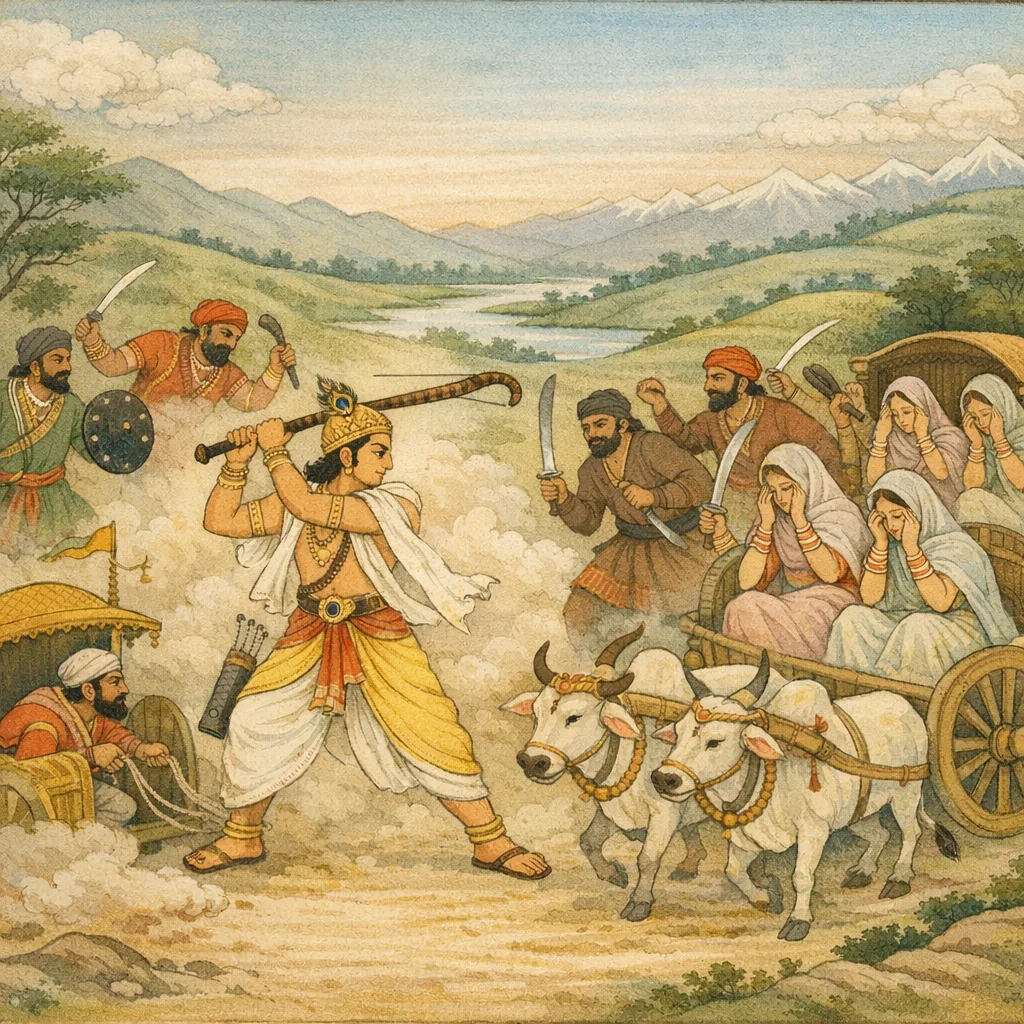
महता सिंहनादेन त्रासयन्त: पृथग्जनम् | अभिपेतुर्वधार्थ ते कालपर्यायचोदिता:,समयके उलट-फेरसे प्रेरणा पाकर वे लुटेरे उन सबके वधके लिये उतारू हो अपने महान् सिंहनादसे साधारण लोगोंको डराते हुए उनकी ओर दौड़े
With a great lion-like roar, terrifying the common people, they rushed forward intent on killing—driven on by the turning of time and the compulsion of fate.
Verse 51
ततो निवृत्त: कौन्तेय:ः सहसा सपदानुग: । उवाच तान् महाबाहुरर्जुन: प्रहसन्निव,आक्रमणकारियोंको पीकछेकी ओरसे धावा करते देख कुन्तीकुमार महाबाहु अर्जुन सेवकोंसहित सहसा लौट पड़े और उनसे हँसते हुए-से-बोले--
Then the son of Kuntī, Arjuna of mighty arms, abruptly turned back at once along with his attendants. Seeing the attackers rushing from behind, he addressed them with words that seemed almost smiling.
Verse 52
निवर्तध्वमधर्मज्ञा यदि जीवितुमिच्छथ । इदानीं शरनिर्भिन्ना: शोचध्वं निहता मया,“धर्मको न जाननेवाले पापियो! यदि जीवित रहना चाहते हो तो लौट जाओ; नहीं तो मेरे द्वारा मारे जाकर या मेरे बाणोंसे विदीर्ण होकर इस समय तुम बड़े शोकमें पड़ जाओगे”
Vaiśampāyana said: “Turn back, you who are ignorant of dharma, if you wish to live. Otherwise, struck down by me—pierced through by arrows—this very moment you will fall into grief.”
Verse 53
तथोक्तास्तेन वीरेण कदर्थीकृत्य तद्वच: । अभिपेतुर्जनं मूढा वार्यमाणा: पुन: पुन:,वीरवर अर्जुनके ऐसा कहनेपर उनकी बातोंकी अवहेलना करके वे मूर्ख अहीर उनके बारंबार मना करनेपर भी उस जनसमुदायपर टूट पड़े
Thus addressed by that hero, those deluded men, scorning his words, rushed upon the crowd—again and again—despite being repeatedly restrained.
Verse 54
ततोडर्जुनो धर्नुर्दिव्यं गाण्डीवमजरं महत् | आरोपयितुमारेभे यत्नादिव कथंचन
Then Arjuna set himself to string his divine bow, the mighty, ageless Gāṇḍīva. Yet, despite earnest effort, he could scarcely manage to raise and fit it.
Verse 55
तब अर्जुनने अपने दिव्य एवं कभी जीर्ण न होनेवाले विशाल धनुष गाण्डीवको चढ़ाना आस्मभ किया और बड़े प्रयत्नसे किसी तरह उसे चढ़ा दिया ।। चकार सज्जं कृच्छेण सम्भ्रमे तुमुले सति | चिन्तयामास शस्त्राणि न च सस्मार तान्यपि,भयंकर मार-काट छिड़नेपर बड़ी कठिनाईसे उन्होंने धनुषपर प्रत्यञज्चा तो चढ़ा दी; परंतु जब वे अपने अस्त्र-शस्त्रोंका चिन्तन करने लगे तब उन्हें उनकी याद बिलकुल नहीं आयी
Vaiśampāyana said: In the midst of that tumultuous panic, Arjuna, with great difficulty, managed to make his bow ready. Yet when he tried to recollect his weapons and missiles, he could not remember them at all.
Verse 56
वैकृतं तन्महद् दृष्टवा भुजवीर्ये तथा युधि । दिव्यानां च महास्त्राणां विनाशाद् व्रीडितो5भवत्,युद्धके अवसरपर अपने बाहुबलमें यह महान् विकार आया देख और महान् दिव्यास्त्रोंका विस्मरण हुआ जान वे लज्जित हो गये
Vaiśampāyana said: Seeing that great perversion arise in his own arm-strength in the very midst of fighting—and realizing the loss and failure of his mighty divine weapons—he became ashamed.
Verse 57
वृष्णियोधाश्ष ते सर्वे गजाश्वरथयोधिन: । न शेकुरावर्तयितुं ह्वियमाणं च तं जनम्,हाथी, घोड़े और रथपर बैठकर युद्ध करनेवाले समस्त वृष्णिसैनिक भी उन डाकुओंके हाथमें पड़े हुए अपने मनुष्योंको लौटा न सके
Vaiśampāyana said: All those Vṛṣṇi warriors—fighters on elephants, horses, and chariots—were unable to recover their own people who were being carried off.
Verse 58
कल्रत्रस्य बहुत्वाद्धि सम्पतत्सु ततस्ततः । प्रयत्नमकरोत् पार्थों जनस्य परिरक्षणे
Vaiśampāyana said: Because there were many women, and as they kept falling into danger here and there, Pārtha exerted himself with all effort to protect the people.
Verse 59
उस समुदायमें स्त्रियोंकी संख्या बहुत थी; इसलिये डाकू कई ओरसे उनपर धावा करने लगे तो भी अर्जुन उनकी रक्षाका यथासाध्य प्रयत्न करते रहे ।। मिषतां सर्वयोधानां ततस्ता: प्रमदोत्तमा: | समन्ततो<वकृष्यन्त कामाच्चान्या: प्रवव्रजु:,सब योद्धाओंके देखते-देखते वे डाकू उन सुन्दरी स्त्रियोंको चारों ओरसे खींच-खींचकर ले जाने लगे। दूसरी स्त्रियाँ उनके स्पर्शके भयसे उनकी इच्छाके अनुसार चुपचाप उनके साथ चली गयीं
Vaiśampāyana said: There were many women in that company; so even as the bandits rushed in from every side, Arjuna strove as best he could to protect them. Yet before all the warriors’ eyes, the bandits dragged away those foremost of women from all directions. Other women, terrified of their touch, submitted and went along in silence, according to the attackers’ will.
Verse 60
ततो गाण्डीवनिर्मुक्ति: शरै: पार्थो धनंजय: । जधान दस्यून् सोद्ठेगो वृष्णिभृत्यै: सहस्रश:,तब कुन्तीकुमार अर्जुन उद्विग्न होकर सहस्रों वृष्णिसैनिकोंको साथ ले गाण्डीव धनुषसे छूटे हुए बाणोंद्वारा उन लुटेरोंके प्राण लेने लगे
Then Pārtha Dhanañjaya (Arjuna), his arrows released from the Gāṇḍīva, struck down the bandits in great numbers. Agitated and alarmed, he fought alongside thousands of the Vṛṣṇi retainers.
Verse 61
क्षणेन तस्य ते राजन् क्षयं जग्मुरजिह्यागा: । अक्षया हि पुरा भूत्वा क्षीणा: क्षमजभोजना:,राजन! अर्जुनके सीधे जानेवाले बाण क्षणभरमें क्षीण हो गये। जो रक्तभोगी बाण पहले अक्षय थे वे ही उस समय सर्वथा क्षयको प्राप्त हो गये
Vaiśampāyana said: O King, in a single moment those unfailing arrows of his came to exhaustion. Though they had formerly been inexhaustible, those blood-drinking missiles now became wholly spent.
Verse 62
स शरक्षयमासाद्य दुःखशोकसमाहत: । धनुष्कोट्या तदा दस्यूनवधीत् पाकशासनि:,बाणोंके समाप्त हो जानेपर दुःख और शोकके आघात सहते हुए इन्द्रकुमार अर्जुन धनुषकी नोकसे ही उन डाकुओंका वध करने लगे
Vaiśampāyana said: When his arrows were exhausted, Arjuna—struck and shaken by grief and sorrow—then began to slay the bandits with the very tip of his bow. The scene lays bare a bitter reversal of fortune: even a famed protector, defending the helpless, is driven to improvised violence as his former power and divine support seem to wane.
Verse 63
प्रेक्षतस्त्वेव पार्थस्य वृष्ण्यन्धकवरस्त्रिय: । जग्मुरादाय ते म्लेच्छा: समन््ताज्जनमेजय,जनमेजय! अर्जुन देखते ही रह गये और वे म्लेच्छ डाकू सब ओरसे वृष्णि और अन्धकवंशकी सुन्दरी स्त्रियोंको लूट ले गये
Vaiśaṃpāyana said: Even as Pārtha (Arjuna) looked on, the noble women of the Vṛṣṇis and Andhakas were seized and carried off by those mleccha raiders who came from every side—O Janamejaya. The scene underscores the bitter aftermath of the Yādava destruction: when protective power and collective order collapse, the vulnerable suffer, and even a great hero’s presence cannot prevent the consequences of time and destiny.
Verse 64
धनंजयस्तु दैव॑ तन्मनसा5चिन्तयत् प्रभु: । दुःखशोकसमाविष्टो नि:श्वासपरमो5भवत्,प्रभावशाली अर्जुनने मन-ही-मन इसे दैवका विधान समझा और दु:ःख-शोकमें डूबकर वे लंबी साँस लेने लगे
Vaiśampāyana said: But Dhanañjaya (Arjuna), the mighty one, reflected inwardly that this was the working of fate. Overwhelmed by grief and sorrow, he fell into deep, heavy sighs—accepting the event as inevitable even as his heart was weighed down by anguish.
Verse 65
आस्त्राणां च प्रणाशेन बाहुवीर्यस्य संक्षयात् । धनुषश्चाविधेयत्वाच्छराणां संक्षयेण च
Vaiśampāyana said: “Because the celestial weapons had been destroyed, because the strength of the arms had been exhausted, because the bow no longer obeyed the will, and because the arrows had run out as well.”
Verse 66
न्यवर्तत ततो राजन् नेदमस्तीति चाब्रवीत्,राजन! तदनन्तर अर्जुन युद्धसे निवृत्त हो गये और बोले--“यह अस्त्रज्ञान आदि कुछ भी नित्य नहीं है”
Vaiśampāyana said: Then, O King, he desisted and declared, “This is not here.” In context, Arjuna turns back from relying on his former martial and astral mastery, recognizing the impermanence of acquired powers and the ethical necessity of accepting change rather than clinging to past prowess.
Verse 67
तत: शेषं समादाय कलत्रस्य महामति: । हृतभूयिष्ठरत्नस्य कुरुक्षेत्रमवातरत्,फिर अपहरणसे बची हुई स्त्रियों और जिनका अधिक भाग लूट लिया गया था ऐसे बचे-खुचे रत्नोंको साथ लेकर परम बुद्धिमान् अर्जुन कुरुक्षेत्रमें उतरे
Then Arjuna, the great-minded one, taking with him what remained of the womenfolk and the few valuables left after most had been plundered, descended into Kurukṣetra—bearing the moral weight of protecting the vulnerable amid the collapse of order after the Yādavas’ end.
Verse 68
एवं कलत्रमानीय वृष्णीनां हृतशेषितम् । न्यवेशयत कौरव्यस्तत्र तत्र धनंजय:,इस प्रकार अपहरणसे बची हुई वृष्णिवंशकी स्त्रियोंको ले आकर कुरुनन्दन अर्जुनने उनको जहाँ-तहाँ बसा दिया
Vaiśaṃpāyana said: Having brought the women of the Vṛṣṇis who remained after the abductions, Dhanaṃjaya Arjuna, the Kuru prince, settled them in various places. The verse underscores a post-catastrophe duty: protecting and rehabilitating the vulnerable survivors when social order has collapsed.
Verse 69
हार्दिक्यतनयं पार्थों नगरे मार्तिकावते । भोजराजकतल्नत्रं च हृतशेषं नरोत्तम:,कृतवमकि पुत्रको और भोजराजके परिवारकी अपहरणसे बची हुई स्त्रियोंको नरश्रेष्ठ अर्जुनने मार्तिकावत नगरमें बसा दिया
Vaiśampāyana said: Arjuna, the son of Pṛthā, the best of men, resettled in the city of Mārtikāvata the son of Hārdikya, and also the remaining women of the Bhoja royal household who had survived after being carried off. In the aftermath of calamity, Arjuna’s act reflects the kṣatriya duty of protection and restoration of social order—providing refuge and stability to those left vulnerable.
Verse 70
ततो वृद्धांश्व बालांश्व॒ स्त्रियश्चञादाय पाण्डव: | वीरैविंहीनान् सर्वास्तान् शक्रप्रस्थे न्यवेशयत्,तत्पश्चात् वीरविहीन समस्त वृद्धों, बालकों तथा अन्य स्त्रियोंको साथ लेकर वे इन्द्रप्रस्थ आये और उन सबको वहाँका निवासी बना दिया
Vaiśaṃpāyana said: Then the Pāṇḍava, taking with him the aged, the children, and the women—all now bereft of their heroes—brought them to Indraprastha and settled them there. In the wake of ruin, he assumes the ethical burden of protection and resettlement, ensuring that the vulnerable are not left without shelter or social order.
Verse 71
यौयुधानिं सरस्वत्यां पुत्रं सात्यकिन: प्रियम् न्यवेशयत धर्मात्मा वृद्धबालपुरस्कृतम्
Vaiśaṃpāyana said: The righteous one laid Yauyudhāna—Sātyaki’s beloved son—to rest on the bank of the Sarasvatī, giving precedence to the elders and the young in the rites, in keeping with dharma.
Verse 72
धर्मात्मा अर्जुनने सात्यकिके प्रिय पुत्र यौयुधानिको सरस्वतीके तटवर्ती देशका अधिकारी एवं निवासी बना दिया और वृद्धों तथा बालकोंको उसके साथ कर दिया ।। इन्द्रप्रस्थे ददौ राज्यं वज्ञाय परवीरहा । वज्रेणाक्रूरदारास्तु वार्यमाणा: प्रवव्रजु:
Vaiśampāyana said: The righteous Arjuna appointed Sātyaki’s dear son, Yuyudhānika, as the governor and resident authority over the region along the banks of the Sarasvatī, and placed the elders and children under his protection. In Indraprastha, the slayer of enemy-heroes entrusted the kingship to Vajra; yet the wives of Akrūra, though being restrained, set out nonetheless.
Verse 73
इसके बाद शत्रुवीरोंका संहार करनेवाले अर्जुनने व्रजको इन्द्रप्रस्थका राज्य दे दिया। अक्रूरजीकी स्त्रियाँ वज्ञके बहुत रोकनेपर भी वनमें तपस्या करनेके लिये चली गयीं ।। रुक्मिणी त्वथ गान्धारी शैव्या हैमवतीत्यपि । देवी जाम्बवती चैव विविशुर्जातवेदसम्
Thereafter Arjuna, the slayer of enemy-heroes, bestowed upon Vajra the kingship of Indraprastha. The wives of Akrūra, though Vajra strove greatly to restrain them, went forth into the forest to practice austerity. Rukmiṇī, Gāndhārī, Śaivyā, Haimavatī, and the goddess Jāmbavatī entered the Fire, Jātavedas.
Verse 74
, रुक्मिणी, गान्धारी, शैव्या, हैमवती तथा जाम्बवती देवीने पतिलोककी प्राप्तिके लिये अग्निमें प्रवेश किया ।। सत्यभामा तथैवान्या देव्य: कृष्णस्य सम्मता: । वन॑ प्रविविशू राज॑स्तापस्ये कृतनिश्चया:,राजन! श्रीकृष्णप्रिया सत्यभामा तथा अन्य देवियाँ तपस्याका निश्चय करके वनमें चलीं गयीं
Vaiśampāyana said: Rukmiṇī, Gāndhārī, Śaivyā, Haimavatī, and the goddess Jāmbavatī entered the fire in order to attain the world of their husband. O king, Satyabhāmā and the other revered wives of Kṛṣṇa, resolved upon a life of austerity, went into the forest.
Verse 75
द्वारकावासिनो ये तु पुरुषा: पार्थमभ्ययु: । यथाहँ संविभज्यैनान् वज्रे पर्यददज्जय:,जो-जो द्वारकावासी मनुष्य पार्थके साथ आये थे, उन सबका यथायोग्य विभाग करके अर्जुनने उन्हें वज्ञको सौंप दिया
Vaiśampāyana said: Those men of Dvārakā who came to Arjuna—after arranging and allotting them appropriately—Arjuna, the conqueror, duly entrusted them to Vajra.
Verse 76
स तत् कृत्वा प्राप्तकालं बाष्पेणापिहितो<र्जुन: । कृष्णद्वैपायनं व्यासं ददर्शासीनमाश्रमे,इस प्रकार समयोचित व्यवस्था करके अर्जुन नेत्रोंसे आँसू बहाते हुए महर्षि व्यासके आश्रमपर गये और वहाँ बैठे हुए महर्षिका उन्होंने दर्शन किया
Having made the arrangements appropriate to the moment, Arjuna—his eyes veiled with tears—went to the hermitage of Kṛṣṇa-Dvaipāyana Vyāsa and beheld the sage seated there.
Verse 336
अनुजममुर्महात्मानं पाण्डुपुत्रं धनंजयम् । उनके साथ घोड़े, बैल, गधे और ऊँटोंसे जुते हुए रथोंपर बैठकर शोकसे दुर्बल हुई वृष्णिवंशी वीरोंकी पत्नियाँ रोती हुई चलीं। उन सबने पाण्डुपुत्र महात्मा अर्जुनका अनुगमन किया
Vaiśampāyana said: The wives of the Vṛṣṇi heroes—broken by grief—set out weeping, seated in carts and chariots drawn by horses, bulls, donkeys, and camels. All of them accompanied and followed the Pāṇḍu prince, the great-souled Dhanañjaya Arjuna, as the survivors moved on in the wake of the clan’s destruction.
Verse 656
बभूव विमना: पार्थों दैवमित्यनुचिन्तयन् । अस्त्र-शस्त्रोंका ज्ञान लुप्त हो गया। भुजाओंका बल भी घट गया। धनुष भी काबूके बाहर हो गया और अक्षयबाणोंका भी क्षय हो गया। इन सब बातोंसे अर्जुनका मन उदास हो गया। वे इन सब घटनाओंको दैवका विधान मानने लगे
Vaiśampāyana said: Arjuna, the son of Pṛthā, became despondent, reflecting, “This is fate.” His mastery of weapons and missiles seemed to vanish; the strength of his arms declined; even his bow slipped beyond his control; and his once-inexhaustible arrows were spent. Seeing these reversals, Arjuna’s heart sank, and he began to accept them as the decree of destiny.
Frequently Asked Questions
Arjuna faces the dilemma of agency versus inevitability: whether to interpret the catastrophe as personal failure or as śāpa-kāla causality, while still accepting immediate duties—protection, governance, and rites—without paralysis by grief.
The chapter teaches that catastrophic outcomes may unfold through larger causal structures (kāla/śāpa), yet dharma persists as actionable obligation: care for survivors, completion of rites, and orderly stewardship despite impermanence.
No explicit phalaśruti is stated; the chapter’s meta-function is archival and transitional—authorizing Arjuna’s custodial role and marking Dvārakā’s impending submergence as a narrative hinge toward the epic’s renunciatory closure.