Adhyaya 5
Chapter 5: Dāruka’s Mission, Balarāma’s Yogic Departure, and Kṛṣṇa’s Niṣkramaṇa
Upa-parva: Mausala-parva (Dvārakā-praveśa, Rāma-yoga, and Kṛṣṇa-niṣkramaṇa episode)
Vaiśaṃpāyana reports that Dāruka, Kṛṣṇa, and Babhru approach Balarāma (Rāma) seated alone in contemplation. Kṛṣṇa instructs Dāruka to go swiftly to the Kurus and inform Arjuna of the Yādavas’ death caused by a brahminical curse, urging Arjuna to come immediately. After Dāruka departs, Kṛṣṇa directs Babhru to escort and protect the women, warning that bandits may attack out of greed; Babhru, distressed and intoxicated, leaves but is suddenly killed by the divinely fated iron club associated with the hunter (lubdhaka). Kṛṣṇa returns to Dvārakā, tells Vasudeva to safeguard the women while awaiting Arjuna, and states his intent to undertake tapas with Rāma. Amid loud lamentation in the city, Kṛṣṇa reassures the women that Arjuna will arrive to relieve their distress. He then goes back to the forest and sees Balarāma in yoga releasing a great white serpent (nāga) from his mouth; the ocean and eminent nāgas, rivers, and Varuṇa receive and honor him. After Balarāma’s departure, Kṛṣṇa, aware through divine insight, recalls prior curse-threads (including Gandhārī’s words and the Durvāsas episode), reflects on the destruction of the Vṛṣṇis/Andhakas and the Kurus, recognizes the time for transition, restrains his senses, and enters deep yogic absorption. The hunter Jarā, mistaking him for game, shoots Kṛṣṇa in the foot; realizing the error, Jarā seeks forgiveness, and Kṛṣṇa consoles him. Kṛṣṇa then ascends to his own transcendent station as Nārāyaṇa, honored by gods, sages, siddhas, gandharvas, and apsarases.
Chapter Arc: दारुक के कुरुओं के पास जाकर समाचार देने के बाद, वृष्णि-भोज-अन्धक-कुकुर वीरों के विनाश का वज्र-समाचार पाण्डवों तक पहुँचता है; शोक और भय एक साथ उठते हैं। → अर्जुन, केशव का प्रिय सखा, भाइयों से अनुमति लेकर द्वारका की ओर निकलता है—मन में आशंका कि जहाँ कभी ‘नाथवती’ नगरी थी, वहाँ अब अनाथता का सन्नाटा होगा। → अर्जुन द्वारका पहुँचकर उसे ‘मृतनाथा’—स्वामी-विहीन—देखता है; और कृष्ण की रानियों को देखकर आँसू रोक नहीं पाता, भूमि पर गिर पड़ता है। → रुक्मिणी, सत्यभामा आदि रानियाँ दौड़कर अर्जुन को घेर लेती हैं, विलाप करती हैं; वे उसे उठाकर स्वर्ण-पीठ पर बैठाती हैं। अर्जुन गोविन्द की स्तुति करता है और स्त्रियों को आश्वासन देकर आगे (मातुल/संबंधी से भेंट हेतु) बढ़ता है। → द्वारका के भीतर शेष बचे जनों और कृष्ण-पत्नियों के भविष्य—रक्षा, प्रस्थान और अनाथ नगर की नियति—अभी अनिश्चित है।
Shlokas
Verse 1
हि 7 बछ। हा पञठ्चमो<ध्याय: अर्जुनका द्वारकामें आना और द्वारका तथा श्रीकृष्ण- पत्नियोंकी दशा देखकर दुखी होना वैशम्पायन उवाच दारुको5पि कुरून् गत्वा दृष्टवा पार्थान् महारथान् । आचष्ट मौसले वृष्णीनन्योन्येनोपसंहृतान्,वैशम्पायनजी कहते हैं--जनमेजय! दारुकने भी कुरुदेशमें जाकर महारथी कुन्तीकुमारोंका दर्शन किया और उन्हें यह बताया कि समस्त वृष्णिवंशी मौसलयुद्धमें एक- दूसरेके द्वारा मार डाले गये
Vaiśampāyana said: “Dāruka too went to the land of the Kurus. After meeting the Pārthas, those great chariot-warriors, he reported to them that in the club-fight the Vṛṣṇis had brought about their own destruction, slain by one another.”
Verse 2
श्रुत्वा विनष्टान् वार्ष्णेयान्ू सभोजान्धककौकुरान् । पाण्डवा: शोकसंतप्ता वित्रस्तमनसो5भवन्,वृष्णि, भोज, अन्धक और कुकुरवंशके वीरोंका विनाश हुआ सुनकर समस्त पाण्डव शोकसे संतप्त हो उठे। वे मन-ही-मन संत्रस्त हो गये
Vaiśampāyana said: “Hearing that the Vārṣṇeya heroes—together with the Bhojas, Andhakas, and Kaukuras—had been destroyed, the Pāṇḍavas were scorched by grief and became inwardly shaken with fear.”
Verse 3
ततोडर्जुनस्तानामन्त्रय केशवस्य प्रिय: सखा । प्रययौ मातुल द्रष्ट नेदमस्तीति चाब्रवीत्,तत्पश्चात् श्रीकृष्णके प्रिय सखा अर्जुन अपने भाइयोंसे पूछकर मामासे मिलनेके लिये चल दिये और बोले--'ऐसा नहीं हुआ होगा (समस्त यदुवंशियोंका एक साथ विनाश असम्भव है)”
Then Arjuna, the beloved friend of Keśava, took leave of them and set out to see his maternal uncle. As he departed, he said, “This cannot be so”—refusing at first to accept that the entire Yadu line could have perished together.
Verse 4
इस प्रकार श्रीमह्याभारत मौसलपर्वमें श्रीकृष्णका परमधामगमनविषयक चौथा अध्याय पूरा हुआ,स वृष्णिनिलयं गत्वा दारुकेण सह प्रभो । ददर्श द्वारकां वीरो मृतनाथामिव स्त्रियम् प्रभो! दारुकके साथ वृष्णियोंके निवासस्थानपर पहुँचकर वीर अर्जुनने देखा कि द्वारका नगरी विधवा स्त्रीकी भाँति श्रीहीन हो गयी है
Then the heroic Arjuna, accompanied by Dāruka, reached the dwelling-place of the Vṛṣṇis. There he beheld Dvārakā—bereft of its lord and glory—like a woman made a widow, its splendor dimmed and its safety undone.
Verse 5
या: सम ता लोकनाथेन नाथवत्य: पुराभवन् । तास्त्वनाथास्तदा नाथ पार्थ दृष्टवा विचुक्रुशु:,इति श्रीमहाभारते मौसलपर्वणि अर्जुनागमने पञ्चमो<5थध्याय:
Vaiśampāyana said: Those women who once lived secure, with the Lord of the world as their guardian, now became bereft of protection. Seeing you then, O Pārtha—once their refuge—they cried out in anguish.
Verse 6
षोडशस्त्रीसहस्राणि वासुदेवपरिग्रह: । पूर्वकालमें लोकनाथ श्रीकृष्णके द्वारा सुरक्षित होनेके कारण जो सबसे अधिक सनाथा थीं, वे ही भगवान् श्रीकृष्णकी सोलह हजार अनाथा स्त्रियाँ अर्जुनको रक्षकके रूपमें आया देख उच्चस्वरसे करुण क्रन्दन करने लगीं ।। तासामासीन्महान् नादो दृष्टवैवार्जुनमागतम्,वहाँ पधारे हुए अर्जुनको देखते ही उन स्त्रियोंका आर्तनाद बहुत बढ़ गया। उन सबपर दृष्टि पड़ते ही अर्जुनकी आँखोंमें आँसू भर आये। पुत्रों और श्रीकृष्णसे हीन हुई उन अनाथ अबलाओंकी ओर उनसे देखा नहीं गया
Vaiśampāyana said: The sixteen thousand women who had once lived under the protection of Vāsudeva—when Śrī Kṛṣṇa, the Lord of the world, was present, they were the most secure—now became truly bereft. Seeing Arjuna arrive as their would‑be protector, those sixteen thousand widowed and unguarded women raised a loud, pitiful wail. Their cry swelled the moment they beheld Arjuna approaching; and when Arjuna’s eyes fell upon them, tears filled his own. Deprived of their sons and of Śrī Kṛṣṇa, those helpless women were so sorrowful that Arjuna could scarcely bear to look at them.
Verse 7
तास्तु दृष्टवैव कौरव्यो बाष्पेणापिहितेक्षण: । हीना: कृष्णेन पुत्रैश्ननाशकत् सो$भिवीक्षितुम्,वहाँ पधारे हुए अर्जुनको देखते ही उन स्त्रियोंका आर्तनाद बहुत बढ़ गया। उन सबपर दृष्टि पड़ते ही अर्जुनकी आँखोंमें आँसू भर आये। पुत्रों और श्रीकृष्णसे हीन हुई उन अनाथ अबलाओंकी ओर उनसे देखा नहीं गया
As soon as the Kuru women saw him, their lamentation swelled in grief. And when Arjuna beheld them, his eyes were veiled with tears. Deprived of Kṛṣṇa and of their sons, those helpless, unprotected women were in a condition so unbearable that Arjuna could not bring himself to look upon them.
Verse 8
सतां वृष्ण्यन्धकजलां हयमीनां रथोडुपाम् । वादित्ररथघोषौधां वेश्मतीर्थमहाह्ददाम्,द्वारकापुरी एक नदीके समान थी। वृष्णि और अन्धकवंशके लोग उसके भीतर जलके समान थे। घोड़े मछलीके समान थे। रथ नावका काम करते थे। वाद्योंकी ध्वनि और रथकी घरघराहट मानो उस नदीके बहते हुए जलका कलकल नाद थी। लोगोंके घर ही तीर्थ एवं बड़े-बड़े जलाशय थे। रत्नोंकी राशि ही वहाँ सेवारसमूहके समान शोभा पाती थी। वच्ध नामक मणिकी बनी हुई चहारदीवारी ही उसकी तटपंक्ति थी। सड़कें और गलियाँ उसमें जलके सोते और भँवरें थीं, चौराहे मानो उसके स्थिर जलवाले तालाब थे। बलराम और श्रीकृष्ण उसके भीतर दो बड़े-बड़े ग्राह थे। कालपाश ही उसमें मगर और घड़ियालके समान था। ऐसी द्वारकारूपी नदीको बुद्धिमान् अर्जुनने वृष्णिवीरोंसे रहित हो जानेके कारण वैतरणीके समान भयानक देखा। वह शिशिर कालकी कमलिनीके समान श्रीहीन तथा आनन्दशून्य जान पड़ती थी
Vaiśampāyana said: Dvārakā seemed like a single great river. The Sātvatas—Vṛṣṇis and Andhakas—were like its waters; the horses were like fish; the chariots served as boats. The blare of instruments and the rumble of chariots were like the river’s continuous murmuring. The very houses appeared as sacred fords and vast reservoirs. But when Arjuna, wise and clear-sighted, saw that river-like Dvārakā emptied of the Vṛṣṇi heroes, he found it dreadful like the Vaitaraṇī—bereft of splendor and joy, like a lotus-pond in winter.
Verse 9
रत्नशैवलसंघातां वज्रप्राकारमालिनीम् | रथ्यास्रोतोजलावर्ता चत्वरस्तिमितह्ददाम्,द्वारकापुरी एक नदीके समान थी। वृष्णि और अन्धकवंशके लोग उसके भीतर जलके समान थे। घोड़े मछलीके समान थे। रथ नावका काम करते थे। वाद्योंकी ध्वनि और रथकी घरघराहट मानो उस नदीके बहते हुए जलका कलकल नाद थी। लोगोंके घर ही तीर्थ एवं बड़े-बड़े जलाशय थे। रत्नोंकी राशि ही वहाँ सेवारसमूहके समान शोभा पाती थी। वच्ध नामक मणिकी बनी हुई चहारदीवारी ही उसकी तटपंक्ति थी। सड़कें और गलियाँ उसमें जलके सोते और भँवरें थीं, चौराहे मानो उसके स्थिर जलवाले तालाब थे। बलराम और श्रीकृष्ण उसके भीतर दो बड़े-बड़े ग्राह थे। कालपाश ही उसमें मगर और घड़ियालके समान था। ऐसी द्वारकारूपी नदीको बुद्धिमान् अर्जुनने वृष्णिवीरोंसे रहित हो जानेके कारण वैतरणीके समान भयानक देखा। वह शिशिर कालकी कमलिनीके समान श्रीहीन तथा आनन्दशून्य जान पड़ती थी
Vaiśampāyana said: Dvārakā appeared like a river—its masses of jewels like banks of shining algae, its encircling walls like a hard, adamantine embankment. Its streets and lanes were like currents and whirlpools, and its crossroads like still pools. Once filled with the Vṛṣṇis and Andhakas as water fills a river, with horses like fish and chariots serving as boats, it had resounded with instruments and the rumble of chariots like the murmur of flowing water. Its houses themselves were like sacred fords and great reservoirs, and heaps of gems shone like clusters of foam. But now, bereft of the Vṛṣṇi heroes, the wise Arjuna beheld that river-like Dvārakā as dreadful as the Vaitaraṇī—stripped of splendor and joy, like a lotus-pond in winter.
Verse 10
रामकृष्णमहाग्राहां द्वारकां सरितं तदा । कालपाशग्रहां भीमां नदीं वैतरणीमिव,द्वारकापुरी एक नदीके समान थी। वृष्णि और अन्धकवंशके लोग उसके भीतर जलके समान थे। घोड़े मछलीके समान थे। रथ नावका काम करते थे। वाद्योंकी ध्वनि और रथकी घरघराहट मानो उस नदीके बहते हुए जलका कलकल नाद थी। लोगोंके घर ही तीर्थ एवं बड़े-बड़े जलाशय थे। रत्नोंकी राशि ही वहाँ सेवारसमूहके समान शोभा पाती थी। वच्ध नामक मणिकी बनी हुई चहारदीवारी ही उसकी तटपंक्ति थी। सड़कें और गलियाँ उसमें जलके सोते और भँवरें थीं, चौराहे मानो उसके स्थिर जलवाले तालाब थे। बलराम और श्रीकृष्ण उसके भीतर दो बड़े-बड़े ग्राह थे। कालपाश ही उसमें मगर और घड़ियालके समान था। ऐसी द्वारकारूपी नदीको बुद्धिमान् अर्जुनने वृष्णिवीरोंसे रहित हो जानेके कारण वैतरणीके समान भयानक देखा। वह शिशिर कालकी कमलिनीके समान श्रीहीन तथा आनन्दशून्य जान पड़ती थी
Vaiśampāyana said: At that time Dvārakā appeared like a river whose mighty crocodiles were Balarāma and Kṛṣṇa; dreadful, as though seized by the noose of Time, it resembled the Vaitaraṇī. Seeing the city emptied of the Vṛṣṇi heroes, the wise Arjuna beheld it as terrifying and desolate—its former splendor gone, like a lotus-pond in winter, bereft of joy.
Verse 11
ददर्श वासविर्धीमान् विहीनां वृष्णिपुड़वै: । गतश्रियं निरानन्दां पद्मिनीं शिशिरे यथा,द्वारकापुरी एक नदीके समान थी। वृष्णि और अन्धकवंशके लोग उसके भीतर जलके समान थे। घोड़े मछलीके समान थे। रथ नावका काम करते थे। वाद्योंकी ध्वनि और रथकी घरघराहट मानो उस नदीके बहते हुए जलका कलकल नाद थी। लोगोंके घर ही तीर्थ एवं बड़े-बड़े जलाशय थे। रत्नोंकी राशि ही वहाँ सेवारसमूहके समान शोभा पाती थी। वच्ध नामक मणिकी बनी हुई चहारदीवारी ही उसकी तटपंक्ति थी। सड़कें और गलियाँ उसमें जलके सोते और भँवरें थीं, चौराहे मानो उसके स्थिर जलवाले तालाब थे। बलराम और श्रीकृष्ण उसके भीतर दो बड़े-बड़े ग्राह थे। कालपाश ही उसमें मगर और घड़ियालके समान था। ऐसी द्वारकारूपी नदीको बुद्धिमान् अर्जुनने वृष्णिवीरोंसे रहित हो जानेके कारण वैतरणीके समान भयानक देखा। वह शिशिर कालकी कमलिनीके समान श्रीहीन तथा आनन्दशून्य जान पड़ती थी
Vaiśampāyana said: The wise Arjuna, son of Vāsavī (Indra’s daughter), beheld Dvārakā bereft of the foremost Vṛṣṇi heroes. Its splendor had departed and its joy was gone—like a lotus-pond in the cold season.
Verse 12
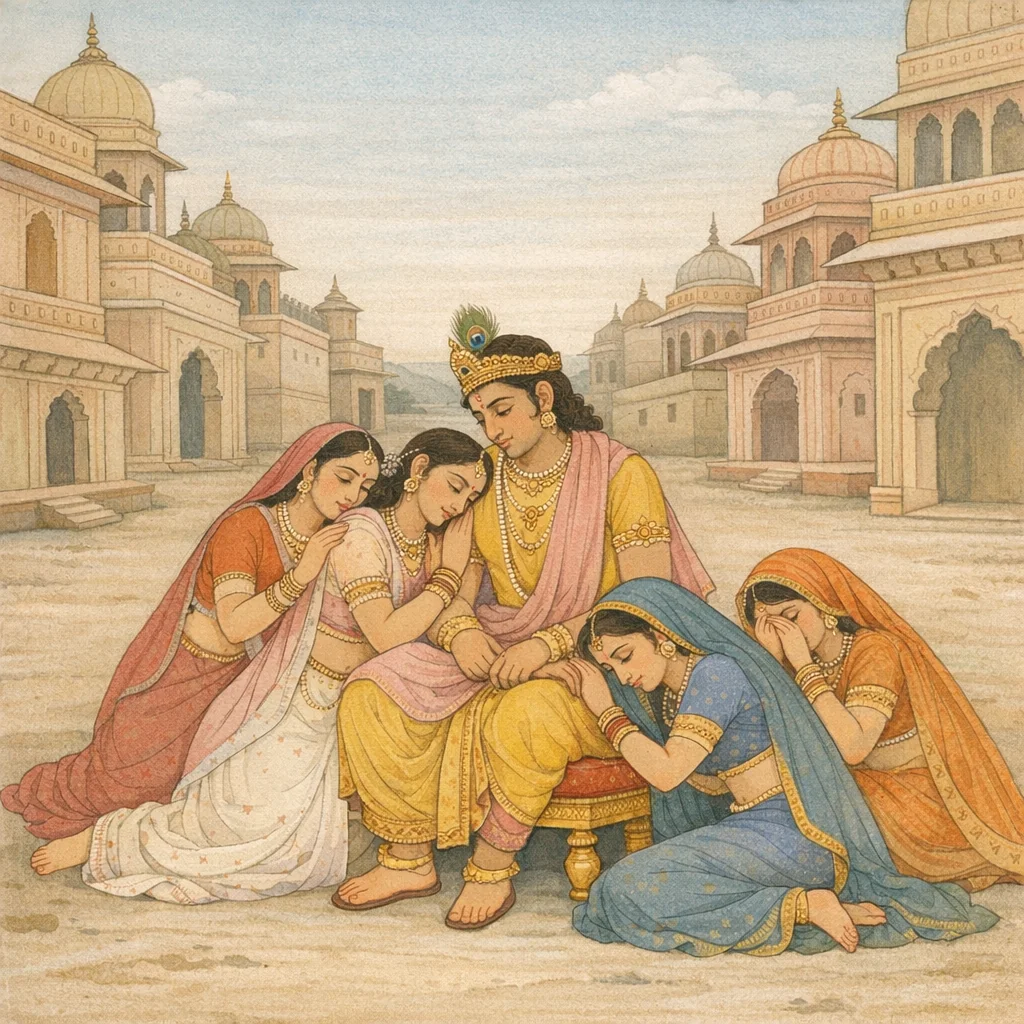
तां दृष्टवा द्वारकां पार्थस्ताश्न कृष्णस्य योषित: । सस्वन बाष्पमुत्सूज्य निपपात महीतले,वैसी द्वारकाको और उन श्रीकृष्णकी पत्नियोंको देखकर अर्जुन आँसू बहाते हुए फूट- फ़ूटकर रोने लगे और मूर्च्छित होकर पृथ्वीपर गिर पड़े
Vaiśampāyana said: Seeing that Dvārakā and also the wives of Kṛṣṇa, Pārtha (Arjuna) let his tears flow with audible sobbing; overwhelmed by grief, he collapsed senseless upon the earth.
Verse 13
सात्राजिती ततः सत्या रुक्मिणी च विशाम्पते । अभिपत्य प्ररुरुदु: परिवार्य धनंजयम्,प्रजानाथ! तब सत्राजितकी पुत्री सत्यभामा तथा रुक्मिणी आदि रानियाँ वहाँ दौड़ी आयीं और अर्जुनको घेरकर उच्च स्वरसे विलाप करने लगीं
Vaiśampāyana said: Then Satyabhāmā, the daughter of Satrājit, and Rukmiṇī as well, O lord of the people, rushed forward; surrounding Dhanañjaya (Arjuna), they burst into loud lamentation.
Verse 14
ततस्तं काउ्चने पीठे समुत्थाप्योपवेश्य च । अनब्रुवन्त्यो महात्मानं परिवार्योपतस्थिरे,तदनन्तर अर्जुनको उठाकर उन्होंने सोनेकी चौकीपर बिठाया और उन महात्माको घेरकर बिना कुछ बोले उनके पास बैठ गयीं
Then they lifted him up and seated him upon a golden stool. Surrounding that great-souled man, they remained close by him in attendance, saying nothing—reverence, restraint, and grief held within silence.
Verse 15
ततः संस्तूय गोविन्द कथयित्वा च पाण्डव: । आश्रचास्य ताः स्त्रियश्वापि मातुल॑ द्रष्टमभ्यगात्,उस समय अर्जुनने भगवान् श्रीकृष्णकी स्तुति करते हुए उनकी कथा कही और उन रानियोंको आश्वासन देकर वे अपने मामासे मिलनेके लिये गये
Then the Pāṇḍava (Arjuna), having praised Govinda and recounted the account of events, reassured those women as well. After giving them comfort and confidence, he set out to meet his maternal uncle—acting with responsibility and compassion amid the aftermath of calamity.
Frequently Asked Questions
The chapter presents a governance-and-compassion dilemma under collapse: how to prioritize protection of vulnerable dependents while acknowledging that catastrophic outcomes are already set in motion by earlier śāpa and accumulated karma.
Even the most capable agents must operate within kāla and moral causality; the text emphasizes disciplined action (delegation, protection, truthful communication) alongside detachment and yogic composure when outcomes cannot be reversed.
No explicit phalāśruti is stated here; the meta-function is structural and soteriological: it frames Kṛṣṇa’s departure as a yogic transition to his own station, integrating political history with a mokṣa-oriented narrative closure.