Adhyaya 4
अध्याय ४ — द्वारकानिमित्तानि, प्रभासगमनम्, मौसलप्रारम्भः (Omens in Dvārakā, Journey to Prabhāsa, and the Musala Outbreak)
Upa-parva: Prabhāsa-tīrthayātrā and the Musala Prelude (Dvārakā Nimitta → Prabhāsa Assembly)
Vaiśaṃpāyana reports a chain of portents in Dvārakā: a dark female apparition with pale teeth appears at night, laughing and roaming, disturbing women’s dreams; valuables and martial regalia seem carried off by unseen, fearsome agents. Kṛṣṇa’s Agni-given cakra ascends to the heavens, and his divine chariot and horses depart from Dāruka’s sight; celestial banners (Tāla and Suparṇa) are praised, and voices urge pilgrimage. The Vṛṣṇi–Andhaka leaders proceed with their households to Prabhāsa, provisioning abundant food, drink, meat, and spirits; intoxication spreads. Uddhava, discerning the impending destruction, takes leave at the seashore; Hari does not prevent him, knowing the destined end. In the Prabhāsa assembly, Yuyudhāna (Sātyaki), inflamed by drink, publicly insults Kṛtavarmā over past wartime conduct; Kṛtavarmā counters by recalling Bhūriśravā’s death. Further provocations invoke the Syamantaka narrative, prompting Satyabhāmā’s agitation. Sātyaki vows retribution for the sleeping-slayings in the Sauptika episode and beheads Kṛtavarmā. Attempts to restrain the violence fail; factions converge and strike Sātyaki with leftover vessels. Pradyumna intervenes and is killed alongside Sātyaki amid the melee. Kṛṣṇa, witnessing the collapse, seizes a handful of eraka reeds that become a vajra-like musala; as others grasp reeds, they too become weapon-like, and the clans kill one another—father against son—under kāla, described as brahma-daṇḍa. Seeing close kin fallen (including Sāmba, Cārudeṣṇa, Pradyumna, Aniruddha, and Gada), Kṛṣṇa intensifies the annihilation. Babhru and Dāruka finally address Kṛṣṇa, urging him to seek Balarāma’s whereabouts and depart to where he is.
Chapter Arc: यदुवंश के संहार के बाद शोकाकुल द्वारका में श्रीकृष्ण दारुक को बुलाकर कठोर आदेश देते हैं—हस्तिनापुर जाकर अर्जुन को सब समाचार कहो, ताकि वह शीघ्र आकर स्त्रियों और शेष जनों की रक्षा कर सके। → दारुक के प्रस्थान के बाद कृष्ण बभ्रु को निकट बुलाते हैं और चेताते हैं कि धन-लोभी दस्यु अब निर्बल पड़े यदुवंश पर टूट पड़ेंगे; सुरक्षा और प्रस्थान की तैयारी अनिवार्य है। बभ्रु, मदातुर और ज्ञातिवध से विदीर्ण, कृष्ण की आज्ञा लेकर निकलता है—पर नियति उसके पीछे चलती है। → लुब्धक के हाथों ब्रह्म-शाप से उत्पन्न कूट-युक्त मुसल द्वारा बभ्रु का वध हो जाता है; कृष्ण उस निहत देह को देखकर उग्रतेजस्वी अग्रज बलराम को संबोधित करते हैं—यह संकेत है कि यदुवंश का अवशेष भी अब काल के मुख में जा रहा है। → इसके पश्चात दिव्य लोकों का द्वार खुलता है—देव, ऋषि, चारण, गन्धर्व, अप्सराएँ, सिद्ध-साध्य आदि कृष्ण की ओर समागत होकर स्तुति-पूजन करते हैं; नागराजों (कर्कोटक, वासुकि, तक्षक आदि) और वरुण आदि का उल्लेख उस विराट् ब्रह्माण्डीय साक्ष्य को पुष्ट करता है कि अवतार-कार्य पूर्ण हुआ और परमधाम-गमन का समय उपस्थित है। → दारुक अर्जुन को क्या-क्या बताएगा, और अर्जुन द्वारका पहुँचकर स्त्रियों व शेष जनों को दस्युओं से कैसे बचाएगा—यह प्रश्न अगले प्रसंग पर टिका रहता है।
Shlokas
Verse 1
अत--छक+ चतुथों5 ध्याय: दारुकका अर्जुनको सूचना देनेके लिये हस्तिनापुर जाना, बभ्रुका देहावसान एवं बलराम और श्रीकृष्णका परमधाम- गमन वैशम्पायन उवाच ततो ययुर्दारुक: केशवश्व बश्रुश्न॒ रामस्य पद पतन्तः । अथापश्यन् राममनन्तवीर्य॑ वृक्षे स्थितं चिन्तयानं विविक्ते,वैशम्पायनजी कहते हैं--राजन्! तदनन्तर दारुक, बभ्रु और भगवान् श्रीकृष्ण तीनों ही बलरामजीके चरणचिह्न देखते हुए वहाँसे चल दिये। थोड़ी ही देर बाद उन्होंने अनन्त पराक्रमी बलरामजीको एक वृक्षके नीचे विराजमान देखा, जो एकान्तमें बैठकर ध्यान कर रहे थे
Vaiśampāyana said: Then Dāruka, Keśava (Kṛṣṇa), and Babhru set out, following the footprints of Rāma (Balarāma). Before long they saw the infinitely valiant Rāma seated beneath a tree in a secluded place, absorbed in silent contemplation. The scene signals a transition from worldly turmoil to inward withdrawal, as the Yādava era closes and the divine brothers prepare to depart from the human stage.
Verse 2
ततः समासाद्य महानुभावं कृष्णस्तदा दारुकमन्वशासत् । गत्वा कुरून् सर्वमिमं महान्तं पार्थाय शंसस्व वध्ध॑ यदूनाम्,उन महानुभावके पास पहुँचकर श्रीकृष्णने तत्काल दारुकको आज्ञा दी कि तुम शीघ्र ही कुरुदेशकी राजधानी हस्तिनापुरमें जाकर अर्जुनको यादवोंके इस महासंहारका सारा समाचार कह सुनाओ
Vaiśampāyana said: Then, approaching the noble Dāruka, Kṛṣṇa at once instructed him: “Go to the Kurus and report this entire great calamity to Pārtha—tell him of the destruction of the Yādavas.” The command underscores the ethical urgency of truthful communication in the wake of collective ruin, so that rightful leaders may respond with clarity and restraint.
Verse 3
इस प्रकार श्रीमह्याभारत मौसलपर्वमें कृतवर्मा आदि समस्त यादवोंका संद्यारविषयक तीसरा अध्याय पूरा हुआ,ततोड्र्जुन: क्षिप्रमिहोपयातु श्रुत्वा मृतान् यादवान् ब्रह्मबशापात् । इत्येवमुक्त: स ययौ रथेन कुरूंस्तदा दारुको नष्टचेता: “ब्राह्मणोंके शापसे यदुवंशियोंकी मृत्युका समाचार पाकर अर्जुन शीघ्र ही द्वारका चले आवें।' श्रीकृष्णके इस प्रकार आज्ञा देनेपर दारुक रथपर सवार हो तत्काल कुरुदेशको चला गया। वह भी इस महान् शोकसे अचेत-सा हो रहा था
Then Śrī Kṛṣṇa said: “Let Arjuna come here quickly, having heard that the Yādavas have perished under the force of a brāhmaṇa’s curse.” Thus instructed, Dāruka at once set out by chariot toward the land of the Kurus—his mind overwhelmed and unsteady with immense grief.
Verse 4
ततो गते दारुके केशवो5थ दृष्टवान्तिके बश्रुमुवाच वाक्यम् । स्त्रियो भवान् रक्षितुं यातु शीघ्र नैता हिंस्युर्दस्यवो वित्तलोभात्,दारुकके चले जानेपर भगवान् श्रीकृष्णने अपने निकट खड़े हुए बभ्ुसे कहा--“आप स्त्रियोंकी रक्षाके लिय शीघ्र ही द्वारकाको चले जाइये। कहीं ऐसा न हो कि डाकू धनकी लालचसे उनकी हत्या कर डालें” इति श्रीमहाभारते मौसलपर्वणि श्रीकृष्णस्य स्वलोकगमने चतुर्थोडध्याय:
When Dāruka had departed, Keśava, seeing Babhru standing nearby, said: “Go quickly to Dvārakā to protect the women. Let it not happen that bandits, driven by greed for wealth, harm them.”
Verse 5
स प्रस्थित: केशवेनानुशिष्टो मदातुरो ज्ञातिवधार्दितश्न । तं॑ विश्रान्तं संनिधौ केशवस्य दुरन्तमेक॑ सहसैव बश्चुम्,श्रीकृष्णकी आज्ञा पाकर बश्रु वहाँसे प्रस्थित हुए। वे मदिराके मदसे आतुर थे ही, भाई- बन्धुओंके वधसे भी अत्यन्त शोकपीड़ित थे। वे श्रीकृष्णके निकट अभी विश्राम कर ही रहे थे कि ब्राह्मणोंके शापके प्रभावसे उत्पन्न हुआ एक महान दुर्धर्ष मूसल किसी व्याधके बाणसे लगा हुआ सहसा उनके ऊपर आकर गिरा। उसने तुरंत ही उनके प्राण ले लिये। बश्रुको मारा गया देख उग्र तेजस्वी श्रीकृष्णने अपने बड़े भाईसे कहा--
Vaiśampāyana said: Thus instructed by Keśava, he set out—still shaken by intoxication and deeply afflicted by grief over the slaughter of his own kinsmen. While he was resting near Keśava, a single, formidable iron club—born of the brāhmaṇas’ curse—suddenly struck him, as if propelled by fate. It fell upon him and swiftly took his life.
Verse 6
ब्रह्मानुशप्तमवधीन्महद् वै कूटे युक्त मुसलं लुब्धकस्य । ततो दृष्टवा निहतं बभ्रुमाह कृष्णो5ग्रजं भ्रातरमुग्रतेजा:,श्रीकृष्णकी आज्ञा पाकर बश्रु वहाँसे प्रस्थित हुए। वे मदिराके मदसे आतुर थे ही, भाई- बन्धुओंके वधसे भी अत्यन्त शोकपीड़ित थे। वे श्रीकृष्णके निकट अभी विश्राम कर ही रहे थे कि ब्राह्मणोंके शापके प्रभावसे उत्पन्न हुआ एक महान दुर्धर्ष मूसल किसी व्याधके बाणसे लगा हुआ सहसा उनके ऊपर आकर गिरा। उसने तुरंत ही उनके प्राण ले लिये। बश्रुको मारा गया देख उग्र तेजस्वी श्रीकृष्णने अपने बड़े भाईसे कहा-- ध !/] 0 * अ्ण डे है / क ५ ३५ नी + : >> पे 20
Vaiśampāyana said: A great iron club—fashioned at its tip and brought into being by the force of the brāhmaṇas’ curse—became the death of the hunter. Then, seeing Babhru slain, Kṛṣṇa, blazing with fierce energy, spoke to his elder brother.
Verse 7
इह्ठैव त्वं मां प्रतीक्षस्व राम यावत् स्त्रियों ज्ञातिवशा: करोमि । ततः पुरीं द्वारवतीं प्रविश्य जनार्दन: पितरं प्राह वाक्यम्,'भैया बलराम! आप यहीं रहकर मेरी प्रतीक्षा करें। जबतक मैं स्त्रियोंको कुट॒म्बी जनोंके संरक्षणमें सौंप आता हूँ।' यों कहकर श्रीकृष्ण द्वारिकापुरीमें गये और वहाँ अपने पिता वसुदेवजीसे बोले--
Vaiśampāyana said: “Rāma, wait here for me until I place the women under the protection and care of their kinsmen.” Then, entering the city of Dvāravatī, Janārdana spoke these words to his father.
Verse 8
। ९ |! | स्त्रियो भवान् रक्षतु न: समग्रा धनजञ्जयस्यागमनं प्रतीक्षन् | रामो वनान्ते प्रतिपालयन्मा- मास्तेडद्याहं तेन समागमिष्ये,“तात! आप अर्जुनके आगमनकी प्रतीक्षा करते हुए हमारे कुलकी समस्त स्त्रियोंकी रक्षा करें। इस समय बलरामजी मेरी राह देखते हुए वनके भीतर बैठे हैं। मैं आज ही वहाँ जाकर उनसे मिलूँगा
“While awaiting Dhanañjaya (Arjuna)’s return, please protect all the women of our clan without exception. Balarāma is now staying at the forest’s edge, watching for me; I shall go today itself and meet him.”
Verse 9
दृष्टं मयेदं निधन यदूनां राज्ञां च पूर्व कुरुपुड्रवानाम् नाहं विना यदुभियदवानां पुरीमिमामशकं द्रष्टमद्य,“मैंने इस समय यह यदुवंशियोंका विनाश देखा है और पूर्वकालमें कुरुकुलके श्रेष्ठ राजाओंका भी संहार देख चुका हूँ। अब मैं उन यादव वीरोंके बिना उनकी इस पुरीको देखनेमें भी असमर्थ हूँ
Vaiśampāyana said: “I have now witnessed the destruction of the Yadus, and earlier I had also seen the slaughter of the foremost kings of the Kurus and the Puṇḍras. Today, without those Yādava heroes, I find myself unable even to look upon this city of theirs.”
Verse 10
तपश्चरिष्यामि निबोध तन्मे रामेण सार्धथ वनमभ्युपेत्य । इतीदमुक्त्वा शिरसा च पादौ संस्पृश्य कृष्णस्त्वरितो जगाम,“अब मुझे क्या करना है, यह सुन लीजिए। वनमें जाकर मैं बलरामजीके साथ तपस्या करूँगा।” ऐसा कहकर उन्होंने अपने सिरसे पिताके चरणोंका स्पर्श किया। फिर वे भगवान् श्रीकृष्ण वहाँसे तुरंत चल दिये
Vaiśampāyana said: “Understand what I intend to do: going to the forest together with Rāma, I shall undertake austerities.” Having spoken thus, Kṛṣṇa bowed his head and touched his father’s feet in reverence, and then departed from there at once in haste.
Verse 11
ततो महान् निनद: प्रादुरासीत् सस्त्रीकुमारस्य पुरस्य तस्य । अथाब्रवीत् केशव: संनिवर्त्य शब्दं श्रुत्वा योषितां क्रोशतीनाम्,इतनेहीमें उस नगरकी स्त्रियों और बालकोंके रोनेका महान् आर्तनाद सुनायी पड़ा। विलाप करती हुई उन युवतियोंके करुणक्रन्दन सुनकर श्रीकृष्ण पुन: लौट आये और उन्हें सान्त्वना देते हुए बोले--
Then a great tumult arose from that city, filled with women and children. Hearing the cries of the wailing women, Keśava turned back, and, seeking to calm them, began to speak—
Verse 12
पुरीमिमामेष्यति सव्यसाची स वो दुःखान्मोचयिता नराग्र्य: । ततो गत्वा केशवस्तं ददर्श रामं॑ वने स्थितमेकं विविक्ते,“देखिये! नरश्रेष्ठ अर्जुन शीघ्र ही इस नगरमें आनेवाले हैं। वे तुम्हें संकटसे बचायेंगे।' यह कहकर वे चले गये। वहाँ जाकर श्रीकृष्णने वनके एकान्त प्रदेशमें बैठे हुए बलरामजीका दर्शन किया
Vaiśaṃpāyana said: “The ambidextrous archer Arjuna will soon come to this city; that foremost of men will free you from your distress.” Having spoken thus, they departed. Then Keśava went on and beheld Rāma (Balarāma), alone and secluded, staying in a solitary part of the forest.
Verse 13
अथापश्यद् योगयुक्तस्य तस्य नागं मुखान्निश्चरन्तं महान्तम् | श्वेतं ययौ स ततः: प्रेक्ष्यमाणो महार्णवो येन महानुभाव:,बलरामजी योगयुक्त हो समाधि लगाये बैठे थे। श्रीकृष्णने उनके मुखसे एक श्वेत वर्णके विशालकाय सर्पको निकलते देखा। उनसे देखा जाता हुआ वह महानुभाव नाग जिस ओर महासागर था उसी मार्गपर चल दिया
Vaiśaṃpāyana said: Then he beheld, from the mouth of that one absorbed in yoga, a mighty serpent emerging. White in hue, that great-souled Nāga—while being watched—moved away along the very path that led to the great ocean. The scene marks the yogic departure of Balarāma: life-breath and embodied presence are relinquished without agitation, and the being returns to its cosmic source, underscoring the ideal of self-mastery at life’s end.
Verse 14
सहस्रशीर्ष: पर्वता भोगवर्ष्मा रक्ताननः स्वां तनुं तां विमुच्य । सम्यक् च त॑ सागर: प्रत्यगृह्ना- न्ञागा दिव्या: सरितश्वैव पुण्या:,/४ (२४५, ४४ षे ५ । टी ७७/४ज३४ ४-2 भ्क 3 ४] न्यू वह अपने पूर्व शरीरको त्यागकर इस रूपमें प्रकट हुआ था। उसके सहस्रों मस्तक थे। उसका विशाल शरीर पर्वतके विस्तार-सा जान पड़ता था। उसके मुखकी कान्ति लाल रंगकी थी। समुद्रने स्वयं प्रकट होकर उस नागका--साक्षात् भगवान् अनन्तका भलीभाँति स्वागत किया। दिव्य नागों और पवित्र सरिताओंने भी उनका सत्कार किया
Vaiśampāyana said: Casting off his former body, he manifested in that new form—thousand-headed, with a vast, coiling frame like the spread of a mountain, and a face glowing red. The Ocean rose forth and duly received that Nāga—Ananta himself—as did the divine serpents and the holy rivers, offering him reverent welcome. The scene underscores a cosmic order in which even the great elements and sacred waters honor the divine presence when it is revealed.
Verse 15
कर्कोटको वासुकिस्तक्षकश्न पृथुश्रवा अरुण: कुज्जरश्न । मिश्री शड्ख: कुमुद: पुण्डरीक- स्तथा नागो धृतराष्ट्रो महात्मा,राजन्! कर्कोटक, वासुकि, तक्षक, पृथुश्रवा, अरुण, कुज्जर, मिश्री, शंख, कुमुद, पुण्डरीक, महामना धुृतराष्ट्र, हाद, क्राथ, शितिकण्ठ, उम्रतेजा, चक्रमन्द, अतिषण्ड, नागप्रवर दुर्मुख, अम्बरीष, और स्वयं राजा वरुणने भी उनका स्वागत किया
Vaiśampāyana said: “O King, the great nāgas—Karkoṭaka, Vāsuki, Takṣaka, Pṛthuśravā, Aruṇa, Kujjara, Miśrī, Śaṅkha, Kumuda, Puṇḍarīka, and the noble Dhṛtarāṣṭra—(were present).” In the narrative flow of the Mausala Parva, this is part of the formal listing of eminent serpent-lords, underscoring the breadth of beings who participate in receiving and honoring guests, and highlighting the ethic of hospitality and recognition of rank even amid the larger atmosphere of impending dissolution.
Verse 16
ह्राद: क्राथ: शितिकण्ठोग्रतेजा- स्तथा नागौ चक्रमन्दातिषण्डौ | नागश्रेष्ठो दुर्मुख श्चाम्बरीष: स्वयं राजा वरुणश्लापि राजन्,राजन्! कर्कोटक, वासुकि, तक्षक, पृथुश्रवा, अरुण, कुज्जर, मिश्री, शंख, कुमुद, पुण्डरीक, महामना धुृतराष्ट्र, हाद, क्राथ, शितिकण्ठ, उम्रतेजा, चक्रमन्द, अतिषण्ड, नागप्रवर दुर्मुख, अम्बरीष, और स्वयं राजा वरुणने भी उनका स्वागत किया
Vaiśampāyana said: Hrāda and Krātha, and Śitikaṇṭha of fierce splendor, as well as the two nāgas Cakramanda and Atiṣaṇḍa; the foremost serpent Durmukha and Ambharīṣa; and even King Varuṇa himself, O King—these too came forward to receive them with honor. The scene underscores how, after the devastation among the Yādavas, the remaining heroes are met with formal hospitality even in the nāga-world, reflecting the continuing force of royal etiquette and the duty to honor worthy guests despite the surrounding ruin.
Verse 17
प्रत्युद्गम्प स्वागतेनाभ्यनन्दं- स्ते5पूजयं श्वार्ध्यपाद्यक्रियाभि: । ततो गते भ्रातरि वासुदेवो जानन् सर्वा गतयो दिव्यदृष्टि:,उपर्युक्त सब लोगोंने आगे बढ़कर उनकी अगवानी की, स्वागतपूर्वक अभिनन्दन किया और अर्घ्य-पाद्य आदि उपचारोंद्वारा उनकी पूजा सम्पन्न की। भाई बलरामके परम धाम पधारनेके पश्चात् सम्पूर्ण गतियोंको जाननेवाले दिव्यदर्शी भगवान् श्रीकृष्ण कुछ सोचते- विचारते हुए उस सूने वनमें विचरने लगे। फिर वे श्रेष्ठ तेजवाले भगवान् पृथ्वीपर बैठ गये। सबसे पहले उन्होंने वहाँ उस समय उन सारी बातोंको स्मरण किया, जिन्हें पूर्वकालमें गान्धारी देवीने कहा था
Vaiśampāyana said: They went forward to meet him, welcomed him with respectful greetings, and honored him with the customary rites of offering arghya and water for the feet. After his brother had departed to the supreme abode, Vāsudeva—endowed with divine sight and knowing the courses of all beings—wandered thoughtfully in that now-desolate forest. He then sat upon the earth, and first of all recalled, at that time, the words once spoken by the noble lady Gāndhārī.
Verse 18
वने शून्ये विचरंश्विन्तयानो भूमौ चाथ संविवेशाग्र्यतेजा: । सर्व तेन प्राक्तदा वित्तमासीद् गान्धार्या यद् वाक्यमुक्त: स पूर्वम्,उपर्युक्त सब लोगोंने आगे बढ़कर उनकी अगवानी की, स्वागतपूर्वक अभिनन्दन किया और अर्घ्य-पाद्य आदि उपचारोंद्वारा उनकी पूजा सम्पन्न की। भाई बलरामके परम धाम पधारनेके पश्चात् सम्पूर्ण गतियोंको जाननेवाले दिव्यदर्शी भगवान् श्रीकृष्ण कुछ सोचते- विचारते हुए उस सूने वनमें विचरने लगे। फिर वे श्रेष्ठ तेजवाले भगवान् पृथ्वीपर बैठ गये। सबसे पहले उन्होंने वहाँ उस समय उन सारी बातोंको स्मरण किया, जिन्हें पूर्वकालमें गान्धारी देवीने कहा था
Vaiśampāyana said: After wandering thoughtfully in that deserted forest, the Lord of supreme radiance sat down upon the earth. There, at that moment, he first recalled in full the words once spoken by Queen Gāndhārī—words earlier addressed to him, now returning with the weight of dharma as the consequences of past deeds unfolded.
Verse 19
दुर्वाससा पायसोच्छिष्टलिप्ते यच्चाप्युक्ते तच्च सस्मार वाक्यम् | स चिन्तयन्नन्धकवृष्णिनाशं कुरुक्षयं चैव महानुभाव:,जूठी खीरको शरीरमें लगानेके समय दुर्वासाने जो बात कही थी उसका भी उन्हें स्मरण हो आया। फिर वे महानुभाव श्रीकृष्ण अन्धक, वृष्णि और कुरुकुलके विनाशकी बात सोचने लगे
Vaiśampāyana said: When the remnants of the milk-rice had been smeared upon his body, he recalled the words that Durvāsas had spoken on that occasion. Then that great-souled Śrī Kṛṣṇa, reflecting deeply, began to contemplate the impending destruction of the Andhakas and Vṛṣṇis, and also the ruin of the Kuru line—recognizing how a seemingly small act, bound to a sage’s utterance, can unfold into vast moral and historical consequence.
Verse 20
मेने ततः संक्रमणस्य कालं॑ ततश्नकारेन्द्रियसंनिरोधम् । तथा च लोकत्रयपालनार्थ- मात्रेयवाक्यप्रतिपालनाय,तत्पश्चात् उन्होंने तीनों लोकोंकी रक्षा तथा दुर्वासाके वचनका पालन करनेके लिये अपने परम धाम पधारनेका उपयुक्त समय प्राप्त हुआ समझा तथा इसी उद्देश्यसे अपनी सम्पूर्ण इन्द्रिय-वृत्तियोंका निरोध किया
Vaiśampāyana said: Then he understood that the proper time for his departure had arrived. Thereafter he restrained the activities of his senses, intending thereby to safeguard the three worlds and to fulfill the word of Mātreya (Durvāsā).
Verse 21
देवो5पि सन् देहविमो क्षहेतो- निमित्तमैच्छत् सकलार्थतत्त्ववित् । स संनिरुद्धेन्द्रियवाड्मनास्तु शिश्ये महायोगमुपेत्य कृष्ण:,भगवान् श्रीकृष्ण सम्पूर्ण अर्थोंके तत्त्ववेत्ता और अविनाशी देवता हैं। तो भी उस समय उन्होंने देहमोक्ष या ऐहलौकिक लीलाका संवरण करनेके लिये किसी निमित्तके प्राप्त होनेकी इच्छा की। फिर वे मन, वाणी और इन्द्रियोंका निरोध करके महायोग (समाधि)-का आश्रय ले पृथ्वीपर लेट गये
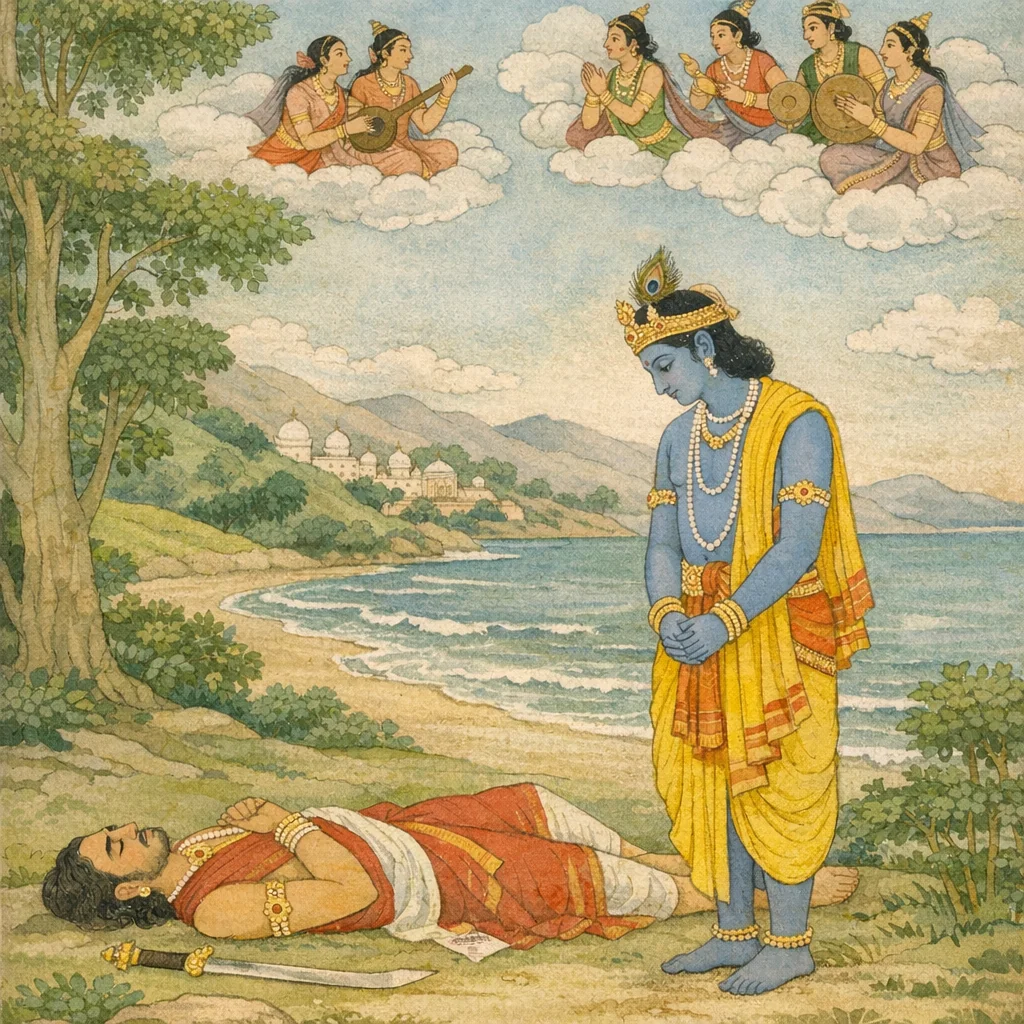
Vaiśampāyana said: Though he was the imperishable Lord and the knower of the truth of all aims, Kṛṣṇa still wished for an outward occasion by which his release from the body—his withdrawal from worldly manifestation—might be accomplished. Then, restraining his senses, speech, and mind, he entered the great yogic absorption and lay down upon the earth.
Verse 22
जराथ त॑ देशमुपाजगाम लुब्धस्तदानीं मृगलिप्सुरुग्र: । स केशवं योगयुक्तं शयानं मृगासक्तो लुब्धक: सायकेन,उसी समय जरानामक एक भयंकर व्याध मृगोंकों मार ले जानेकी इच्छासे उस स्थानपर आया। उस समय श्रीकृष्ण योगयुक्त होकर सो रहे थे। मृगोंमें आसक्त हुए उस व्याधने श्रीकृष्णको भी मृग ही समझा और बड़ी उतावलीके साथ बाण मारकर उनके पैरके तलवेमें घाव कर दिया। फिर उस मृगको पकड़नेके लिये जब वह निकट आया तब योगमें स्थित, चार भुजावाले, पीताम्बरधारी पुरुष भगवान् श्रीकृष्पपर उसकी दृष्टि पड़ी
Vaiśaṃpāyana said: At that time the fierce hunter named Jarā came to that place, driven by greed and eager to take deer. Seeing Keśava lying in yogic absorption, the hunter—his mind fixed on game—mistook him for a deer and struck him with an arrow.
Verse 23
जराविध्यत् पादतले त्वरावां- स््तं चाभितस्तज्जिघृक्षुर्जगाम । अथापश्यत् पुरुष योगयुक्तं पीताम्बरं लुब्धको&नेका बाहुम्ू,उसी समय जरानामक एक भयंकर व्याध मृगोंकों मार ले जानेकी इच्छासे उस स्थानपर आया। उस समय श्रीकृष्ण योगयुक्त होकर सो रहे थे। मृगोंमें आसक्त हुए उस व्याधने श्रीकृष्णको भी मृग ही समझा और बड़ी उतावलीके साथ बाण मारकर उनके पैरके तलवेमें घाव कर दिया। फिर उस मृगको पकड़नेके लिये जब वह निकट आया तब योगमें स्थित, चार भुजावाले, पीताम्बरधारी पुरुष भगवान् श्रीकृष्पपर उसकी दृष्टि पड़ी
Vaiśampāyana said: The hunter named Jarā, in his haste, struck the sole of the foot with an arrow. Eager to seize what he thought he had hit, he hurried toward that spot. Then he beheld a Person absorbed in yogic composure, clad in yellow garments, and possessing four arms. The episode shows how delusion and heedless desire can lead to grave wrongdoing, while the divine remains steady and self-possessed even amid injury.
Verse 24
मत्वा55त्मानं त्वपराद्धं स तस्य पादौ जरा जगृहे शंकितात्मा | आश्चासयंस्तं महात्मा तदानीं गच्छन्ूर्थध्व रोदसी व्याप्य लक्ष्म्या,अब तो जरा अपनेको अपराधी मानकर मन-ही-मन बहुत डर गया। उसने भगवान् श्रीकृष्णके दोनों पैर पकड़ लिये। तब महात्मा श्रीकृष्णने उसे आश्वासन दिया और अपनी कान्तिसे पृथ्वी एवं आकाशको व्याप्त करते हुए वे ऊर्ध्वलोकमें (अपने परमधामको) चले गये
Thinking himself to have committed an offence, Jarā—his mind filled with fear—clasped the feet of Śrī Kṛṣṇa. Then the great-souled Kṛṣṇa reassured him; and, suffusing earth and sky with his radiance and majesty, he departed upward to the higher world—his supreme abode. Ethically, the passage highlights remorse and surrender on the one side, and compassionate absolution and transcendence on the other.
Verse 25
दिवं प्राप्त वासवो5थाश्चिनौ च रुद्रादित्या वसवश्चाथ विश्वे । प्रत्युद्ययुर्मुनय श्वापि सिद्धा गन्धर्वमुख्याश्व॒ सहाप्सरोभि:,अन्तरिक्षमें पहुँचनेपर इन्द्र, अश्विनीकुमार, रुद्र, आदित्य, वसु, विश्वेदेव, मुनि, सिद्ध, अप्सराओंसहित मुख्य-मुख्य गन्धर्वोने आगे बढ़कर भगवान्का स्वागत किया
Vaiśampāyana said: When he had reached the heavenly realm, Indra, the two Aśvins, the Rudras, the Ādityas, the Vasus, and the Viśvedevas—along with sages and perfected beings, and the foremost Gandharvas accompanied by Apsarases—came forward to greet and welcome him. The scene underscores the cosmic recognition granted to one who has completed his earthly course and is received with honor by the divine orders.
Verse 26
ततो राजन् भगवानुग्रतेजा नारायण: प्रभवश्चाव्ययश्व । योगाचार्यो रोदसी व्याप्य लक्ष्म्या स्थान प्राप स्वं महात्माप्रमेयम्,राजन! तत्पश्चात् जगत्की उत्पत्तिके कारणरूप, उग्रतेजस्वी, अविनाशी, योगाचार्य महात्मा भगवान् नारायण अपनी प्रभासे पृथ्वी और आकाशको प्रकाशमान करते हुए अपने अप्रमेयधामको प्राप्त हो गये
Then, O King, the Blessed Lord Nārāyaṇa—of fierce splendor, the source of all, and imperishable—who is the supreme master of yoga, pervaded earth and heaven with his radiance and attained his own immeasurable, transcendent abode. The narrative underscores that even after the collapse of dynasties and the exhaustion of worldly power, the ultimate refuge and final ground of reality is the imperishable Lord, beyond loss and change.
Verse 27
ततो देवैर््रषिभिश्नापि कृष्ण: समागतकश्चारणैश्नैव राजन । गन्धर्वाग्र्यैरप्सरोभिववराभि: सिद्धेः साध्यैश्ञानतै: पूज्यमान:,नरेश्वर! तदनन्तर भगवान् श्रीकृष्ण श्रेष्ठ गन्धर्वों, सुन्दरी अप्सराओं, सिद्धों और साध्योंद्वारा विनीत भावसे पूजित हो देवताओं, ऋषियों तथा चारणोंसे भी मिले
Vaiśampāyana said: Then, O king, Kṛṣṇa was met also by the gods and the seers, and likewise by the Cāraṇas. O lord of men, thereafter the Blessed Śrī Kṛṣṇa—reverently worshipped with humility by the foremost Gandharvas, by excellent Apsarases, and by the Siddhas and Sādhyas who bowed in homage—was duly honored by the assembled celestial orders. The passage underscores that true greatness is recognized not by force but by reverence grounded in virtue and divine stature.
Verse 28
त॑ वै देवा: प्रत्यनन्दन्त राजन् मुनिश्रेष्ठा ऋग्भिरानर्चुरीशम् । तं॑ गन्धर्वाश्वापि तस्थु: स्तुवन्तः प्रीत्या चैनं पुरुहृतो5भ्यनन्दत्,राजन! देवताओंने भगवानका अभिनन्दन किया। श्रेष्ठ महर्षियोंने ऋग्वेदकी ऋचाओंद्वारा उनकी पूजा की। गन्धर्व स्तुति करते हुए खड़े रहे तथा इन्द्रने भी प्रेमवश उनका अभिनन्दन किया
Vaiśampāyana said: “O King, the gods welcomed and rejoiced in that Lord. The foremost sages worshipped Him with hymns from the Ṛgveda. The Gandharvas stood praising Him, and Indra too—out of affection—offered Him his joyful homage.”
Verse 56
०४७ : ४४००१ बट ० 7 22 29 , 708: 50 २ १
The provided line does not contain a readable Sanskrit verse; it appears to be a catalog/printing or reference code rather than the actual śloka text. Without the authentic verse wording from Mausala Parva 4.56 (Gita Press), a faithful translation and philological enrichment cannot be produced.
Frequently Asked Questions
The dilemma is whether leaders can restrain retaliatory honor-claims rooted in earlier wartime actions; intoxication and public shaming convert unresolved ethical disputes into immediate violence, overriding kinship and civic order.
The chapter frames social collapse as the convergence of kāla with accumulated moral causes: when discipline, truthful reconciliation, and restraint fail, even a powerful lineage becomes vulnerable to self-generated destruction.
No explicit phalaśruti is stated here; the meta-commentary is implicit in the narrator’s causal language—events are repeatedly marked as kāla-paryāya and brahma-daṇḍa—positioning the episode as a doctrinal illustration of moral causality within Itihāsa.