Adhyaya 3
उत्पातदर्शनम् — Portents and Kāla among the Vṛṣṇis
Upa-parva: Upapātadarśana (Portents in the Vṛṣṇi-Andhaka Settlement)
Vaiśaṃpāyana reports a sustained cycle of ominous phenomena in the Vṛṣṇi-Andhaka settlement. Kāla is personified as a frightening, bald, dark-hued figure who surveys their houses and vanishes (1–2). Natural and urban disturbances proliferate: severe winds, uncanny animal sounds, increased vermin, persistent inauspicious noises, and abnormal interspecies behavior (3–7). Ethical and social deterioration appears alongside these signs: shameless wrongdoing, hostility toward brāhmaṇas, ancestors, and deities, contempt for teachers (with an explicit exception for Balarāma and Kṛṣṇa), and mutual spousal disparagement (8–9). Cosmic and ritual anomalies follow: fire flares with irregular coloration and direction, the sun appears encircled by headless forms, worms appear in prepared food, and unseen runners are heard during auspicious recitations (10–13). Astral disorder is described as planets striking stars, while donkeys bray around the sounding of Pāñcajanya (14–15). Observing these convergences, Kṛṣṇa identifies a decisive amāvāsyā and interprets it as a time of depletion, recalling earlier foretellings (Gāndhārī’s grief-utterance; Yudhiṣṭhira’s prior observation of omens) and then orders a sea tīrtha-yātrā to be announced to the community (16–22).
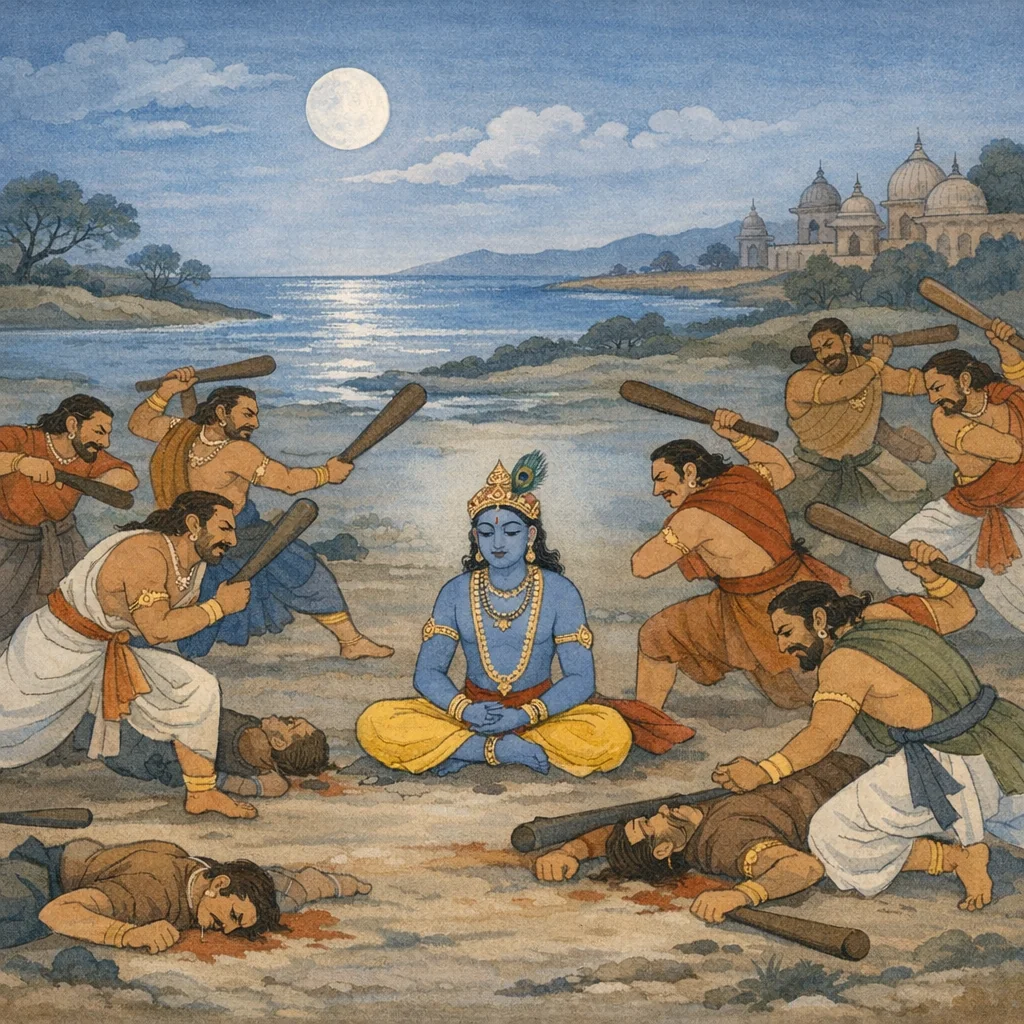
Chapter Arc: रात्रि के स्वप्नों में काली स्त्री का पाण्डुर दन्तों सहित हँसना, गृध्रों का गृहों में उतर आना, और राक्षसों का आभूषण-ध्वजा-कवच चुराकर भागना—यादवों के भाग्य पर मृत्यु की मुहर लगा देता है। → द्वारका और प्रभास-तीर्थ के वातावरण में अपशकुन सघन होते जाते हैं; मन अशान्त, वाणी कटु, और मदिरा-उन्माद से यदुवंशी परस्पर अविश्वास में जल उठते हैं। दारुक के देखते-देखते दिव्य रथ और आदित्यवर्ण अश्वों का हर लिया जाना भी संकेत देता है कि देव-रक्षा हट चुकी है। → कृतवर्मा के क्रोध से आरम्भ हुई तकरार (सव्य हस्त से अवज्ञा-भरा संकेत) क्षण में सामूहिक उन्माद बन जाती है; ‘मुसल’ (लोहे की गदा/दण्ड) हाथों में उठते हैं और वृष्णि-आन्धक-भोज-शैनेय एक-दूसरे पर टूट पड़ते हैं। श्रीकृष्ण के सामने ही शैनेय और यदुनन्दन के प्रियजन धराशायी होते हैं; मधुसूदन मुसल सँभालकर खड़े होते हैं, पर कालचक्र के आगे यह रोक भी केवल साक्षी-भाव बन जाती है। → संहार निरवशेष होता जाता है—शार्ङ्गधनुष, चक्र और गदा धारण कर कृष्ण शेष बचे उन्मत्त योद्धाओं का दमन करते हैं, पर यह विजय नहीं, नियति की पूर्णता है। अंततः दारुक और बलराम (बशु) कृष्ण से निवेदन/वृत्तान्त कहते हैं—यादव-कुल का दीप बुझ चुका है। → दारुक और बलराम द्वारा कृष्ण को सुनाई गई बातों के बाद प्रश्न शेष रहता है: अब द्वारका, शेष बचे जन, और स्वयं कृष्ण का आगे का मार्ग क्या होगा?
Shlokas
Verse 1
अकाल तृतीयो<थध्याय: कृतवर्मा आदि समस्त यादवोंका परस्पर संहार वैशम्पायन उवाच काली स्त्री पाण्ड्रैर्दन्तै: प्रविश्य हसती निशि । स्त्रिय: स्वप्नेषु मुष्णन्ती द्वारकां परिधावति,वैशम्पायनजी कहते हैं--जनमेजय! द्वारकाके लोग रातको स्वप्रोंमें देखते थे कि एक काले रंगकी स्त्री अपने सफेद दाँतोंको दिखा-दिखाकर हँसती हुई आयी है और घरोंमें प्रवेश करके स्त्रियोंका सौभाग्य-चिह्न लूटती हुई सारी द्वारकामें दौड़ लगा रही है
Vaiśampāyana said: “O Janamejaya, the people of Dvārakā, in the night, beheld in dreams a dark woman who, baring her white teeth, laughed as she entered their homes. Snatching away the auspicious marks of married women, she ran about through all of Dvārakā.”
Verse 2
इस प्रकार श्रीमहाभारत मौसलपर्वमें उत्पातदर्शनविषयक दूसरा अध्याय पूरा हुआ,अग्निहोत्रनिकेतेषु वास्तुमध्येषु वेश्मसु । वृष्ण्यन्धकानखादन्त स्वप्ने गृध्रा भयानका: अग्निहोत्रगृहोंमें जिनके मध्यभागमें वास्तुकी पूजा-प्रतिष्ठा हुई है, ऐसे घरोंमें भयंकर गृध्र आकर वृष्णि और अन्धकवंशके मनुष्योंको पकड़-पकड़कर खा रहे हैं। यह भी स्वप्रमें दिखायी देता था
Vaiśampāyana said: In dreams, terrifying vultures were seen entering the houses where the sacred fire was kept—homes whose central space had been ritually consecrated for Vāstu—and there they were seizing and devouring men of the Vṛṣṇi and Andhaka clans.
Verse 3
अलंकाराक्ष छत्रं च ध्वजाक्षु कवचानि च । ह्वियमाणान्यदृश्यन्त रक्षोभि: सुभयानकै:,अत्यन्त भयानक राक्षस उनके आभूषण, छत्र, ध्वजा और कवच चुराकर भागते देखे जाते थे इति श्रीमहाभारते मौसलपर्वणि कृतवर्मादीनां परस्परहनने तृतीयो5ध्याय:
Vaiśampāyana said: Their ornaments, umbrellas, banner-staffs, and armours were seen being snatched away—carried off amid rising cries—by rākṣasas of utmost terror. The sight made plain that when adharma and mutual slaughter rule, even the emblems of royal dignity and protection become prey to forces of fear and disorder.
Verse 4
तच्चाग्निदत्तं कृष्णस्य वज्ञनाभमयोमयम् । दिवमाचक्रमे चक्र वृष्णीनां पश्यतां तदा,जिसकी नाभिमें वज्धर लगा हुआ था जो सब-का-सब लोहेका ही बना था, वह अग्निदेवका दिया हुआ श्रीविष्णुका चक्र वृष्णिवंशियोंके देखते-देखते दिव्य लोकमें चला गया
Vaiśampāyana said: Then that discus of Kṛṣṇa—given by Agni, wrought wholly of iron, with a thunderbolt-like hub—rose to the heavenly realm before the very eyes of the Vṛṣṇis. The sight signaled the withdrawal of divine supports from the Yādava line, and the closing of an age in which sacred power had upheld worldly order.
Verse 5
युक्त रथं दिव्यमादित्यवर्ण हया हरन् पश्यतो दारुकस्य । ते सागरस्योपरिष्टादवर्तन् मनोजवाश्नतुरो वाजिमुख्या:,भगवानका जो सूर्यके समान तेजस्वी और जुता हुआ दिव्य रथ था, उसे दारुकके देखते-देखते घोड़े उड़ा ले गये। वे मनके समान वेगशाली चारों श्रेष्ठ घोड़े समुद्रके जलके ऊपर-ऊपरसे ही चले गये
Vaiśampāyana said: Before Dāruka’s very eyes, the four superb horses—swift as thought—carried off that divine chariot, radiant like the sun, already yoked. They moved along over the surface of the ocean’s waters, as though the sea itself could not hinder what had been consecrated to the Lord’s purpose. The scene underscores the divine withdrawal from the human realm after the Yādavas’ end, and the helplessness of even the faithful attendant when kāla, cosmic time, turns.
Verse 6
ताल: सुपर्णश्व महाध्वजौ तौ सुपूजितौ रामजनार्दनाभ्याम् । उच्चैर्जहुरप्सरसो दिवानिशं वाचश्नोचुर्गम्यतां तीर्थयात्रा,बलराम और श्रीकृष्ण जिनकी सदा पूजा करते थे, उन ताल और गरुड़के चिह्नसे युक्त दोनों विशाल ध्वजोंको अप्सराएँ ऊँचे उठा ले गयीं और दिन-रात लोगोंसे यह बात कहने लगीं कि “अब तुमलोग तीर्थ-यात्राके लिये निकलो”
Vaiśampāyana said: Those two great banners—marked with the palm-tree emblem and with Garuḍa and the horse—long honored by Balarāma and Janārdana (Kṛṣṇa), were suddenly lifted high and carried away by apsarases. Day and night they proclaimed to the people: “Now set forth on pilgrimage to the sacred fords, the tīrthas (tīrtha-yātrā).” The sign bespoke a decisive turning of the age: when divine supports withdraw, one is urged toward purification, restraint, and dharmic reorientation through pilgrimage.
Verse 7
ततो जिगमिषलन्तस्ते वृष्ण्यन्धकमहारथा: । सान्तः:पुरास्तदा तीर्थयात्रामैच्छन् नरर्षभा:,तदनन्तर पुरुषश्रेष्ठ वृष्णि और अन्धक महारथियोंने अपनी स्त्रियोंके साथ उस समय तीर्थयात्रा करनेका विचार किया। अब उनमें द्वारका छोड़कर अन्यत्र जानेकी इच्छा हो गयी थी
Then the great chariot-warriors of the Vṛṣṇis and Andhakas—bulls among men—when they were minded to depart, desired at that time to undertake a tīrtha-yātrā, a pilgrimage, together with the women of their households. A longing had arisen in them to leave Dvārakā and go elsewhere.
Verse 8
ततो भोज्यं च भक्ष्यं च पेयं चान्धकवृष्णय: । बहु नानाविध॑ चक्कुर्मद्य मांसमनेकश:,तब अन्धकों और वृष्णियोंने नाना प्रकारके भनक्ष्य, भोज्य, पेय, मद्य और भाँति- भाँतिके मांस तैयार कराये
Then the Andhakas and the Vṛṣṇis had many kinds of prepared foods and delicacies made, along with drinks—indeed, abundant liquor and various sorts of meat.
Verse 9
ततः सैनिकवर्गश्चि निर्ययुर्नगराद् बहि: । यानैरश्वैर्गजैश्वैव श्रीमन्तस्तिग्मतेजस:,इसके बाद सैनिकोंके समुदाय, जो शोभासम्पन्न और प्रचण्ड तेजस्वी थे, रथ, घोड़े और हाथियोंपर सवार होकर नगरसे बाहर निकले
Then the body of soldiers—splendid in appearance and fierce in energy—went out beyond the city, mounted on vehicles, horses, and elephants.
Verse 10
ततः प्रभासे न्यवसन् यथोद्दिष्टं यथागृहम् | प्रभूतभक्ष्यपेयास्ते सदारा यादवास्तदा,उस समय स्त्रियोंसहित समस्त यदुवंशी प्रभासक्षेत्रमें पहुँचकर अपने-अपने अनुकूल घरोंमें ठहर गये। उनके साथ खाने-पीनेकी बहुत-सी सामग्री थी
Vaiśampāyana said: Then, at Prabhāsa, the Yādavas settled down as previously arranged, each in his own allotted dwelling. At that time they were accompanied by their wives and had abundant provisions of food and drink.
Verse 11
निविष्टांस्तान् निशम्याथ समुद्रान्ते स योगवित् । जगामामन्त्रय तान् वीरानुद्धवो<5र्थविशारद:,परमार्थ ज्ञानमें कुशल और योगवेत्ता उद्धवजीने देखा कि समस्त वीर यदुवंशी समुद्रतटपर डेरा डाले बैठे हैं। तब वे उन सबसे पूछकर--विदा लेकर वहाँसे चल दिये
Vaiśampāyana said: Seeing that those heroes were encamped on the seashore, Uddhava—skilled in yoga and discerning in true purpose—took leave of them after addressing them, and then departed.
Verse 12
त॑ प्रस्थितं महात्मानमभिवाद्य कृताज्जलिम् । जाननू् विनाशं वृष्णीनां नैच्छद् वारयितुं हरि:,महात्मा उद्धव भगवान् श्रीकृष्णको हाथ जोड़कर प्रणाम करके जब वहाँसे प्रस्थित हुए तब श्रीकृष्णने उन्हें वहाँ रोकनेकी इच्छा नहीं की; क्योंकि वे जानते थे कि यहाँ ठहरे हुए वृष्णिवंशियोंका विनाश होनेवाला है
Vaiśampāyana said: Having bowed to that great-souled one who was setting out, with hands joined in reverence, Hari (Śrī Kṛṣṇa) did not wish to restrain him. For Kṛṣṇa knew that the destruction of the Vṛṣṇis was destined to occur even if they remained there—an ethical acceptance of inevitable time (kāla) rather than interference born of attachment.
Verse 13
ततः कालपरीतास्ते वृष्ण्यन्धकमहारथा: । अपश्थयन्नुद्धवं यान्तं तेजसा5<वृत्य रोदसी,कालसे घिरे हुए वृष्णि और अन्धक महारथियोंने देखा कि उद्धव अपने तेजसे पृथ्वी और आकाशको व्याप्त करके यहाँसे चले जा रहे हैं
Then those great chariot-warriors of the Vṛṣṇis and Andhakas, now overtaken by Time’s decree, saw Uddhava departing from that place—his radiance spreading so as to fill both earth and sky.
Verse 14
ब्राह्मणार्थेषु यत् सिद्धमन्नं तेषां महात्मनाम् । तद् वानरेभ्य: प्रददु: सुरागन्धसमन्वितम्,उन महामनस्वी यादवोंके यहाँ ब्राह्मणोंको जिमानेके लिये जो अन्न तैयार किया गया था उसमें मदिरा मिलाकर उसकी गन्धसे युक्त हुए उस भोजनको उन्होंने वानरोंकों बाँट दिया
Vaiśampāyana said: The food that had been prepared for the purpose of feeding the brāhmaṇas in the house of those high-souled men was then given away to the monkeys—food now tainted with the smell of liquor.
Verse 15
ततस्तूर्यशताकीर्ण नटनर्तकसंकुलम् । अवर्तत महापानं प्रभासे तिग्मतेजसाम्,तदनन्तर वहाँ सैकड़ों प्रकारके बाजे बजने लगे। सब ओर नटों और नर्तकोंका नृत्य होने लगा। इस प्रकार प्रभासक्षेत्रमें प्रचण्ड तेजस्वी यादवोंका वह महापान आरम्भ हुआ
Vaiśampāyana said: Then, amid the blare of hundreds of musical instruments and thronged with actors and dancers, a great drinking bout began at Prabhāsa for those Yādavas of fierce splendor.
Verse 16
कृष्णस्य संनिधौ राम: सहित: कृतवर्मणा । अपिबद् युयुधानश्न गदो बभ्रुस्तथैव च,श्रीकृष्णके पास ही कृतवर्मासहित बलराम, सात्यकि, गद और बश्रु पीने लगे
In Kṛṣṇa’s very presence, Balarāma—accompanied by Kṛtavarman—began to drink; and so too did Yuyudhāna (Sātyaki), Gada, and Babhru.
Verse 17
ततः परिषदो मध्ये युयुधानो मदोत्कट: । अब्रवीत् कृतवर्माणमवहास्यावमन्य च,पीते-पीते सात्यकि मदसे उन्मत्त हो उठे और यादवोंकी उस सभामें कृतवर्माका उपहास तथा अपमान करते हुए इस प्रकार बोले--
Then, in the midst of the assembly, Yuyudhāna (Sātyaki), inflamed with drunken arrogance, addressed Kṛtavarmā—mocking him and treating him with contempt.
Verse 18
कः क्षत्रियो5हन्यमान: सुप्तान् हन्यान्मृतानिव । तन्न मृष्यन्ति हार्दिक्य यादवा यत् त्वया कृतम्
Vaiśampāyana said: “What kṣatriya, when attacked, would strike down men who are asleep, as though they were already dead? O Hārdikya, the Yādavas cannot endure what you have done.”
Verse 19
हार्दिक्य! तेरे सिवा दूसरा कौन ऐसा क्षत्रिय होगा जो अपने ऊपर आघात न होते हुए भी रातमें मुर्दोके समान अचेत पड़े हुए मनुष्योंकी हत्या करेगा। तूने जो अन्याय किया है उसे यदुवंशी कभी क्षमा नहीं करेंगे” ।। इत्युक्ते युयुधानेन पूजयामास तद्वच: । प्रद्युम्नो रथिनां श्रेष्ठो हार्दिक्यमवमन्य च,सात्यकिके ऐसा कहनेपर रथियोंमें श्रेष्ठ प्रद्युम्नने कृतवर्माका तिरस्कार करके सात्यकिके उपर्युक्त वचनकी प्रशंसा एवं अनुमोदन किया
Vaiśampāyana said: “O Hārdikya (Kṛtavarman)! Apart from you, what other kṣatriya could there be who would slaughter men at night—men lying senseless like the dead—when he himself has not even been struck? The injustice you have done will never be forgiven by the Yādavas.” When Yuyudhāna (Sātyaki) spoke thus, Pradyumna, foremost among charioteers, praised and endorsed those words, while scorning Hārdikya.
Verse 20
ततः परमसंक्रुद्ध: कृतवर्मा तमब्रवीत् । निर्दिशन्निव सावज्ञं तदा सव्येन पाणिना,यह सुनकर कृतवर्मा अत्यन्त कुपित हो उठा और बायें हाथसे अंगुलिका इशारा करके सात्यकिका अपमान करता हुआ बोला--
Then Kṛtavarmā, inflamed with extreme anger, addressed him. Pointing as if to single him out, and with a contemptuous air, he spoke while gesturing with his left hand—an act meant to insult and demean.
Verse 21
भूरिश्रवाश्छिन्नबाहुर्युद्धे प्रायगतस्त्वया । वधेन सुनृशंसेन कथं वीरेण पातित:,“अरे! युद्धमें भूरिश्रवाकी बाँह कट गयी थी और वे मरणान्त उपवासका निश्चय करके पृथ्वीपर बैठ गये थे, उस अवस्थामें तूने वीर कहलाकर भी उनकी क्रूरतापूर्ण हत्या क्यों की?”
Vaiśampāyana said: “In the battle, Bhūriśravas had his arm cut off and, having resolved to die by fasting, sat down upon the earth. How, then, could you—who are called a hero—strike him down with such ruthless killing?”
Verse 22
इति तस्य वच: श्रुत्वा केशव: परवीरहा । तिर्यक्सरोषया दृष्ट्या वीक्षांचक्रे स मन्युमान्,कृतवर्माकी यह बात सुनकर शत्रुवीरोंका संहार करनेवाले भगवान् श्रीकृष्णको क्रोध आ गया। उन्होंने रोषपूर्ण टेढ़ी दृष्टिसि उसकी ओर देखा
Vaiśampāyana said: Hearing those words, Keśava—slayer of hostile champions—was seized by anger. With a sidelong glance charged with wrath, the indignant Lord fixed his gaze upon him, signaling moral censure and the gathering storm of consequence.
Verse 23
मणि: स्यमन्तकश्नैव यः: स सत्राजितो5भवत् । तां कथां श्रावयामास सात्यकिर्मधुसूदनम्,उस समय सात्यकिने मधुसूदनको सत्राजितके पास जो स्यमन्तकमणि थी उसकी कथा कह सुनायी (अर्थात् यह बताया कि कृतवमने ही मणिके लोभसे सत्राजितका वध करवाया था)
Vaiśampāyana said: “That jewel—indeed the Syamantaka—belonged to Satrājit. Sātyaki then recounted the whole matter to Madhusūdana (Kṛṣṇa), explaining how greed for the jewel brought about Satrājit’s death.”
Verse 24
तच्छुत्वा केशवस्याड्कमगमद् रुदती तदा । सत्यभामा प्रकुपिता कोपयन्ती जनार्दनम्,यह सुनकर सत्यभामाके क्रोधकी सीमा न रही। वह श्रीकृष्णका क्रोध बढ़ाती और रोती हुई उनके अड्कमें चली गयी
Hearing those words, Satyabhāmā—overwhelmed and in tears—went at once into Keśava’s lap. Enraged beyond measure, her words and deeds only stoked Janārdana’s anger.
Verse 25
तत उत्थाय सक्रोध: सात्यकिर्वाक्यमब्रवीत् | पज्चानां द्रौपदेयानां धृष्टद्युम्मशिखण्डिनो:,तब क्रोधमें भरे हुए सात्यकि उठे और इस प्रकार बोले--'सुमध्यमे! यह देखो, मैं द्रौपदीके पाँचों पुत्रोंके, धृष्टद्यम्मके और शिखण्डीके मार्गपर चलता हूँ, अर्थात् उनके मारनेका बदला लेता हूँ और सत्यकी शपथ खाकर कहता हूँ कि जिस पापी दुरात्मा कृतवमनि द्रोणपुत्रका सहायक बनकर रातमें सोते समय उन वीरोंका वध किया था आज उसकी भी आयु और यशका अन्त हो गया”
Then Sātyaki, rising in anger, spoke: “O slender-waisted lady, behold: I follow the path of Draupadī’s five sons, and of Dhṛṣṭadyumna and Śikhaṇḍin—meaning I seek retribution for their slaughter. Swearing by truth, I declare that the sinful Kṛtavarman, accomplice of Droṇa’s son, who killed those heroes at night as they slept, shall this very day reach the end of his life and his fame.”
Verse 26
एष गच्छामि पदवीं सत्येन च तथा शपे । सौप्तिके ये च निहता: सुप्ता येन दुरात्मना,तब क्रोधमें भरे हुए सात्यकि उठे और इस प्रकार बोले--'सुमध्यमे! यह देखो, मैं द्रौपदीके पाँचों पुत्रोंके, धृष्टद्यम्मके और शिखण्डीके मार्गपर चलता हूँ, अर्थात् उनके मारनेका बदला लेता हूँ और सत्यकी शपथ खाकर कहता हूँ कि जिस पापी दुरात्मा कृतवमनि द्रोणपुत्रका सहायक बनकर रातमें सोते समय उन वीरोंका वध किया था आज उसकी भी आयु और यशका अन्त हो गया”
Vaiśampāyana said: “I now follow that very path—indeed, I swear it upon truth—the path of those slain in the night-raid, those heroes killed in their sleep by that wicked-souled man.”
Verse 27
द्रोणपुत्रसहायेन पापेन कृतवर्मणा । समाप्तमायुरस्याद्य यशश्वैव सुमध्यमे,तब क्रोधमें भरे हुए सात्यकि उठे और इस प्रकार बोले--'सुमध्यमे! यह देखो, मैं द्रौपदीके पाँचों पुत्रोंके, धृष्टद्यम्मके और शिखण्डीके मार्गपर चलता हूँ, अर्थात् उनके मारनेका बदला लेता हूँ और सत्यकी शपथ खाकर कहता हूँ कि जिस पापी दुरात्मा कृतवमनि द्रोणपुत्रका सहायक बनकर रातमें सोते समय उन वीरोंका वध किया था आज उसकी भी आयु और यशका अन्त हो गया”
Vaiśampāyana said: “O slender-waisted lady, today the life and fame of that sinful Kṛtavarman—who, as the accomplice of Droṇa’s son, committed wickedness—have come to an end.”
Verse 28
इत्येवमुक्त्वा खड्गेन केशवस्य समीपत: । अभिद्रुत्य शिर: क्रुद्धश्चिच्छेद कृतवर्मण:,ऐसा कहकर कुपित हुए सात्यकिने श्रीकृष्णके पाससे दौड़कर तलवारसे कृतवर्माका सिर काट लिया
Having spoken thus, Sātyaki—seized by anger—rushed from near Keśava and, with his sword, severed Kṛtavarman’s head.
Verse 29
तथान्यानपि निध्नन्तं युयुधानं समन्ततः । अभ्यधावद्धृषीकेशो विनिवारयितुं तदा,फिर वे दूसरे-दूसरे लोगोंका भी सब ओर घूमकर वध करने लगे। यह देख भगवान् श्रीकृष्ण उन्हें रोकनेके लिये दौड़े
Then, as Yuyudhāna went about on every side, striking down even others as well, Hṛṣīkeśa (Kṛṣṇa) rushed forward at that moment to restrain him.
Verse 30
एकीभूतास्तत: सर्वे कालपर्यायचोदिता: । भोजान्धका महाराज शैनेयं पर्यवारयन्,महाराज! इतनेहीमें कालकी प्रेरणासे भोज और अन्धकवंशके समस्त वीरोंने एकमत होकर सात्यकिको चारों ओरसे घेर लिया
Vaiśampāyana said: Then, driven by the turning of Time, all of them—Bhojas and Andhakas—became of one mind, O king, and surrounded Śaineya (Sātyaki) on every side.
Verse 31
तान् दृष्टवा पततस्तूर्णमभिक्रुद्धान् जनार्दन: । न चुक्रोध महातेजा जानन् कालस्य पर्ययम्,उन्हें कुपित होकर तुरंत धावा करते देख महातेजस्वी श्रीकृष्ण कालके उलट-फेरको जाननेके कारण कुपित नहीं हुए
Seeing them rushing swiftly in anger, Janārdana—though possessed of great splendor—did not become wrathful, for he understood the turning of Time.
Verse 32
ते तु पानमदाविष्टाश्नोदिता: कालधर्मणा । युयुधानमथाभ्यधघ्नन्नुच्छिष्टिर्भाजनैस्तदा,वे सब-के-सब मदिरापानजनित मदके आवेशसे उन्मत्त हो उठे थे। इधर कालधर्मा मृत्यु भी उन्हें प्रेरित कर रहा था। इसलिये वे जूठे बरतनोंसे सात्यकिपर आघात करने लगे
But they, seized by the intoxication born of drinking, were driven on by the law of Time—Death itself urging them. In that frenzy, they began striking Yuyudhāna (Sātyaki) with the leftover, unclean vessels at hand.
Verse 33
हन्यमाने तु शैनेये क्रुद्धो रुक्मिणिनन्दन: । तदनन्तरमागच्छन्मोक्षयिष्यन् शिने: सुतम्,जब सात्यकि इस प्रकार मारे जाने लगे तब क्रोधमें भरे हुए रुक्मिणीनन्दन प्रद्युम्न उन्हें संकटसे बचानेके लिये स्वयं उनके और आक्रमणकारियोंके बीचमें कूद पड़े
As Śaineya (Sātyaki) was being cut down, Pradyumna, the son of Rukmiṇī, blazing with wrath, rushed in and leapt between him and the attackers, intent on rescuing Śini’s son from peril.
Verse 34
स भोजै: सह संयुक्त: सात्यकिश्नान्धकै:ः सह । व्यायच्छमानौ तौ वीरौ बाहुद्रविणशालिनौ,प्रद्यम्न भोजोंसे भिड़ गये और सात्यकि अन्धकोंके साथ जूझने लगे। अपनी भुजाओंके बलसे सुशोभित होनेवाले वे दोनों वीर बड़े परिश्रमके साथ विरोधियोंका सामना करते रहे
Vaiśampāyana said: Pradyumna engaged the Bhojas in combat, while Sātyaki fought alongside the Andhakas. Those two heroes, splendid through the wealth of their arms—strength and prowess—strove intensely and continued to withstand their opponents in the clash.
Verse 35
बहुत्वान्निहतौ तत्र उभौ कृष्णस्य पश्यत: । हतं॑ दृष्टवा च शैनेयं पुत्रं च यदुनन्दन:
There, amid the great slaughter, both of them were slain while Kṛṣṇa looked on. And when the Yadu hero saw Śaineya lying dead—along with his own son—he was struck by the full weight of the calamity.
Verse 36
तदभून्मुसलं घोरं वज़कल्पमयोमयम्
Vaiśampāyana said: Then there came into being a dreadful club—iron-made, and like a thunderbolt in its destructive power.
Verse 37
ततो<न्धकाश्न भोजाश्च शैनेया वृष्णयस्तथा
Then the Andhakas and the Bhojas, and likewise the Śaineyas and the Vṛṣṇis—those clans of the Yādavas—assembled together.
Verse 38
यस्तेषामेरकां कश्चिज्जग्राह कुपितो नूप
Vaiśampāyana said: Then, in a surge of anger, one among them seized an eraka-reed—an act that, though seemingly small, became the spark for further wrongdoing and the unraveling of restraint.
Verse 39
तृणं च मुसलीभूतमपि तत्र व्यदृश्यत
And there, even blades of grass were seen transformed into clubs—an ominous sign that ordinary things had become instruments of ruin, as if fate itself had turned the harmless into the harmful.
Verse 40
अविध्यान् विध्यते राजन प्रक्षिपन्ति सम यत् तृणम्
Vaiśampāyana said: “O King, through ignorance they strike at what should not be struck; in their frenzy they hurl about even ordinary grass as if it were a weapon.”
Verse 41
तद् वज्रभूतं मुसलं व्यदृश्यत तदा दृढम् | राजन्! वे जिस किसी भी तृणका प्रहार करते वह अभेद्य वस्तुका भी भेदन कर डालता था और व्रजमय मूसलके समान सुदृढ़ दिखायी देता था || ४० $ || अवधीत् पितरं पुत्र: पिता पुत्रं च भारत,भरतनन्दन! उस मूसलसे पिताने पुत्रको और पुत्रने पिताको मार डाला। जैसे पतिंगे अतामें कूद पड़ते हैं, उसी प्रकार कुकुर और अन्धकवंशके लोग परस्पर जूझते हुए एक दूसरेपर मतवाले होकर टूटते थे
Vaiśampāyana said: Then that club appeared as hard as a thunderbolt. O King, whomever it struck—even with a mere blade of grass in hand—it could pierce what was otherwise impenetrable, standing firm like a club made of adamant. In that frenzy, son slew father and father slew son, O Bhārata. With that club the father killed the son, and the son killed the father. Like moths rushing into fire, the men of the Kukura and Andhaka line, intoxicated with rage, grappled and crashed upon one another in mutual combat.
Verse 42
मत्ता: परिपतन्ति सम योधयन्त: परस्परम् | पतड्जा इव चाग्नौ ते निपेतु: कुकुरान्धका:,भरतनन्दन! उस मूसलसे पिताने पुत्रको और पुत्रने पिताको मार डाला। जैसे पतिंगे अतामें कूद पड़ते हैं, उसी प्रकार कुकुर और अन्धकवंशके लोग परस्पर जूझते हुए एक दूसरेपर मतवाले होकर टूटते थे
Vaiśampāyana said: Intoxicated and out of control, they kept rushing upon one another, fighting each other. Like moths that plunge into a blazing fire, the men of the Kukura and Andhaka clans fell upon each other in their frenzy—so that, by that very club, fathers slew sons and sons slew fathers.
Verse 43
नासीत् पलाय-ने बुद्धिर्वध्यमानस्य कस्यचित् । तत्रापश्यन्महाबाहुर्जानन् कालस्य पर्ययम्
Vaiśampāyana said: In that slaughter, none who were being struck down had the presence of mind to flee. There, the mighty-armed one looked on, knowing it to be the turning of Kāla—Time’s wheel—an inevitable reversal wrought by destiny.
Verse 44
साम्बं च निहतं दृष्टवा चारुदेष्णं च माधव:
Vaiśampāyana said: Seeing Sāmba slain, and Cārudeṣṇā too fallen, Mādhava (Kṛṣṇa) beheld the ruin of his own kin—showing that even the mighty cannot avert fate’s ripening when dharma is violated and restraint cast aside.
Verse 45
प्रद्युम्नं चानिरुद्धं च ततश्लुक्रोध भारत | भारत! श्रीकृष्ण जब अपने पुत्र साम्ब, चारुदेष्ण और प्रद्युम्मको तथा पोते अनिरुद्धको भी मारा गया देखा तब उनकी क्रोधाग्नि प्रजजलित हो उठी ।। ४४ $ ।। गदं वीक्ष्य शयानं च भृशं॑ कोपसमन्वित:
Vaiśampāyana said: “O Bhārata, when he saw Pradyumna and Aniruddha slain—and beheld the mace lying there—he was seized by fierce wrath. In this grim aftermath of fratricidal ruin, anger flares not as righteous punishment but as the tragic, human response to the collapse of kinship and restraint.”
Verse 46
तन्निघ्नन्तं महातेजा बभ्रु: परपुरञ्जय:
Vaiśampāyana said: As he was striking down his opponent, the mighty and radiant Babhru—conqueror of enemy strongholds—was seen in that very act. The line drives home the grim momentum of violence: even a hero praised for power and victory is shown killing, foreshadowing the moral collapse and self-destruction that shape the Mausala tale.
Verse 47
भगवन् निहताः सर्वे त्वया भूयिष्ठशो नरा: । रामस्य पदमन्विच्छ तत्र गच्छाम यत्र सः,'भगवन्! अब सबका विनाश हो गया। इनमेंसे अधिकांश तो आपके हाथों मारे गये हैं। अब बलरामजीका पता लगाइये। अब हम तीनों उधर ही चलें, जिधर बलरामजी गये हैं!
Vaiśampāyana said: “O Blessed One, all have been slain; indeed, most of these men have fallen by your hand. Now seek out the whereabouts of Rāma (Balarāma). Let us three go there—wherever he has gone.”
Verse 353
एरकानां ततो मुष्टिं कोपाज्जग्राह केशव: । परंतु विपक्षियोंकी संख्या बहुत अधिक थी; इसलिये वे दोनों श्रीकृष्णके देखते-देखते उनके हाथसे मार डाले गये। सात्यकि तथा अपने पुत्रको मारा गया देख यदुनन्दन श्रीकृष्णने कुपित होकर एक मुट्ठी एएका उखाड़ ली
Vaiśampāyana said: Then Keśava, seized by anger, grasped a fistful of the eraka reeds. The scene shows that as violence swelled and restraint collapsed, even the Lord’s composure gave way to wrath, while the Yādavas rushed toward mutual destruction.
Verse 366
जघान कृष्णस्तांस्तेन ये ये प्रमुखतो 5 भवन् । उनके हाथमें आते ही वह घास वज्रके समान भयंकर लोहेका मूसल बन गयी। फिर तो जो-जो सामने आये उन सबको श्रीकृष्णने उसीसे मार गिराया
Vaiśampāyana said: With that very weapon, Kṛṣṇa struck down all who came forward against him. The grass that reached their hands had turned into a dreadful iron club (musala), hard as a thunderbolt; and whoever approached in front was felled by Kṛṣṇa with it—an ominous unfolding of fate, where violence once unleashed consumes even its own kin.
Verse 376
जघ्नुरन्योन्यमाक्रन्दे मुसलै: कालचोदिता: । उस समय कालसे प्रेरित हुए अन्धक, भोज, शिनि और वृष्णिवंशके लोगोंने उस भीषण मारकाटमें उन्हीं मूसलोंसे एक-दूसरेको मारना आरम्भ किया
Vaiśampāyana said: Driven onward by Time (kāla), they began to slay one another amid cries of distress, using the very iron clubs (musala) that had become the instruments of their doom. The scene shows how, when destiny ripens and self-restraint collapses, a mighty lineage can turn its strength inward and destroy itself.
Verse 383
वज्जभूतेव सा राजन्नदृश्यत तदा विभो । नरेश्वर! उनमेंसे जो कोई भी क्रोधमें आकर एरका नामक घास लेता, उसीके हाथमें वह वज्रके समान दिखायी देने लगती थी
Vaiśampāyana said: O King, mighty lord—at that time it appeared like a thunderbolt. O ruler of men, whoever among them, seized by anger, took up the grass called eraka, found that very grass in his hand taking on the appearance and power of a thunderbolt. Thus wrath turned an ordinary reed into a weapon, and the curse ripened into inevitable destruction.
Verse 393
ब्रह्मदण्डकृतं सर्वमिति तद् विद्धि पार्थिव । पृथ्वीनाथ! एक साधारण तिनका भी मूसल होकर दिखायी देता था; यह सब ब्राह्मणोंके शापका ही प्रभाव समझो
Vaiśampāyana said: “Know this for certain, O king: all of this has been wrought by the Brahman’s rod of chastisement, the Brahma-daṇḍa. O lord of the earth, even an ordinary blade of grass appeared as a club. Understand it all as the irresistible consequence of the Brahmins’ curse.”
Verse 433
मुसलं समवष्ट भ्य तस्थौ स मधुसूदन: । वहाँ मारे जानेवाले किसी योद्धाके मनमें वहाँसे भाग जानेका विचार नहीं होता था। कालचक्रके इस परिवर्तनको जानते हुए महाबाहु मधुसूदन वहाँ चुपचाप सब कुछ देखते रहे और मूसलका सहारा लेकर खड़े रहे
Vaiśampāyana said: Madhusūdana (Kṛṣṇa), bracing himself upon a musala (club), stood firm. In that place, those marked for death found no impulse to flee; knowing the turning of the wheel of Time, the mighty-armed Lord remained silent, witnessing all as destiny unfolded.
Verse 456
स नि:शेषं तदा चक्रे शार्चक्रगदाधर: । अपने छोटे भाई गदको रणशय्यापर पड़ा देख वे अत्यन्त रोषसे आगबबूला हो उठे; फिर तो शार्ज्रधनुष, चक्र और गदा धारण करनेवाले श्रीकृष्णने उस समय शेष बचे हुए समस्त यादवोंका संहार कर डाला
Vaiśampāyana said: Then Śrī Kṛṣṇa—bearer of the Śārṅga bow, the discus, and the mace—made an end of them without remainder. Seeing his younger brother Gada lying on the battlefield like one fallen upon a warrior’s deathbed, he blazed with wrath; and in that moment he destroyed all the remaining Yādavas, bringing their self-wrought ruin to completion.
Verse 4636
दारुकश्लैव दाशार्हमूचतुर्यन्निबोध तत् । शत्रुओंकी नगरीपर विजय पानेवाले महातेजस्वी बश्ु और दारुकने उस समय यादवोंका संहार करते हुए श्रीकृष्णसे जो कुछ कहा, उसे सुनो
Vaiśampāyana said: Listen to this. At that time, the mighty Babhru and Dāruka—heroes fit to win victory even over the cities of enemies—spoke to Śrī Kṛṣṇa as he was bringing about the destruction of the Yādavas. Hear what they said. The narration frames the calamity not as mere violence but as a fated unraveling of a clan’s destiny, witnessed by loyal attendants who still appeal to Kṛṣṇa in the midst of collapse.
Frequently Asked Questions
The dilemma is collective: whether a community experiencing ethical erosion (disrespect, hostility toward sacred and social authorities, domestic discord) can avert decline through action, or whether their condition has already aligned with an irreversible kāla-paryaya.
The text links external disorder to internal discipline: omens are narrative indicators that social restraint and reverence are failing, and that prosperity without ethical governance becomes unstable under the pressure of time and accumulated consequence.
No explicit phalaśruti is stated here; instead, the meta-commentary is structural—Kṛṣṇa’s recognition of calendrical and cosmic signs functions as interpretive framing that this episode is a threshold leading into the community’s impending dissolution.