Adhyaya 75
गोप्रदानविधिः (Gopradāna-vidhi) — Procedure and Praise of Cow-Gifting
Upa-parva: Dāna-dharma (Gopradāna-vidhi) — Instruction on the Rite of Cow-Gifting
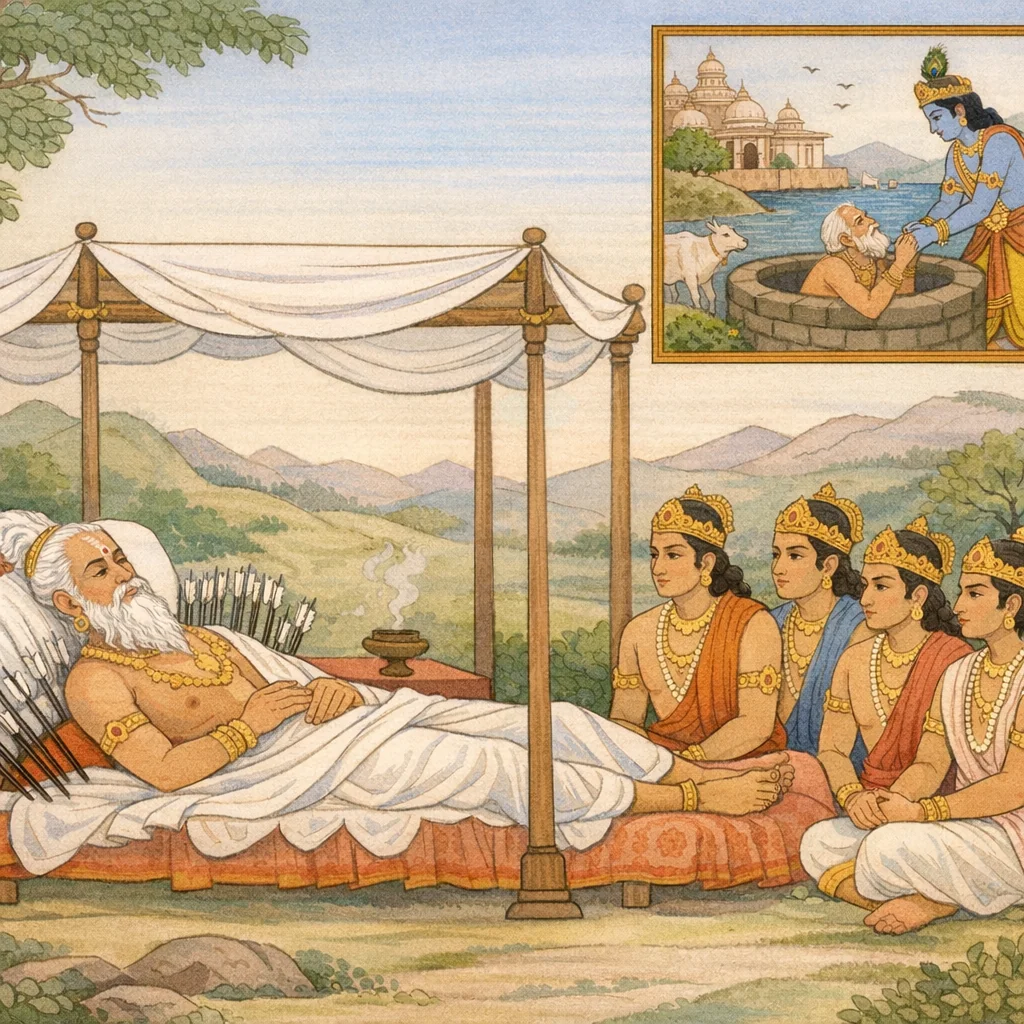
Yudhiṣṭhira requests a precise account of the rite (vidhi) of gifting cows as a means to attain enduring worlds. Bhīṣma replies that no gift surpasses go-dāna when given through rightful means, asserting its immediate salvific value for a lineage. He then relays an archaic precedent: Bṛhaspati’s response to Māndhātṛ, which outlines a structured procedure—honoring a dvijāti, announcing the time, observing restraint, entering among the cows, and reciting formal declarations that sacralize the cow as mother and the bull as father. The chapter details overnight association with the herd as a purificatory observance, specifies the morning transfer (with calf and bull released/associated), and prescribes a triad of utterances: arthavāda (eulogistic valuation), āśiṣ (benediction), and stava (praise). A call-and-response structure is indicated between donor and recipient. Further instructions address accompanying gifts (arghya, cloth, wealth), naming conventions, and enumerated fruits (phala) and status-gains. Post-gift observances (govrata) and dietary austerities are described, while cautions are given against improper recipients and casual dissemination. The chapter concludes with a catalogue of royal exemplars credited with attaining superior realms through gopradāna and notes Yudhiṣṭhira’s compliance with Bhīṣma’s guidance.
Chapter Arc: युधिष्ठिर, भीष्म के मुख से गोदान का माहात्म्य और नृग-राजा की एक अज्ञानजन्य भूल से उपजे महादुःख का प्रसंग सुनकर, ‘गोलोक’ और गोदान के फल के विषय में अपने भीतर उठे संदेह को प्रकट करते हैं। → वे प्रश्नों की शृंखला रखते हैं—गौओं का लोक वास्तव में कैसा है, गोदान कहाँ और कैसे फलित होता है, बहुत-सी और थोड़ी-सी गौओं के दान में भेद क्या है, और बिना प्रत्यक्ष गोदान किए भी ‘गोप्रदाता’ कहलाने का आधार क्या हो सकता है। नृग की कथा और द्वारका-स्थापन के समय कृष्ण द्वारा उनके उद्धार का स्मरण इस जिज्ञासा को और तीव्र कर देता है। → युधिष्ठिर का निर्णायक प्रश्न उभरता है—‘गोप्रदान में कौन-सी दक्षिणा विशेष श्रेष्ठ मानी जाती है?’—यही बिंदु दान के बाह्य परिमाण से हटकर उसके विधि, नीयत और पूर्णता (दक्षिणा सहित) की ओर अध्याय को मोड़ देता है। → अध्याय का स्वर प्रश्नोत्तरात्मक है: युधिष्ठिर अपनी जिज्ञासा को स्पष्ट, क्रमबद्ध और ‘तत्त्वतः’ जानने की आकांक्षा के साथ स्थापित करते हैं, जिससे आगे के उपदेश के लिए भूमि तैयार होती है—गोदान का फल, गोलोक का स्वरूप, और दान की शुद्धि के मानदंड। → भीष्म से अपेक्षित उत्तर—गोलोक का तत्त्व, गोदान की गणना (अल्प/बहु), और श्रेष्ठ दक्षिणा का निर्णायक विधान—अगले प्रसंग/अध्याय में विस्तार से आने हेतु शेष रह जाता है।
Shlokas
Verse 1
द्विसप्ततितमो< ध्याय: गौओंके लोक और गोदानविषयक युधिषछिर और इन्द्रके प्रश्न युधिछिर उवाच उक्त ते गोप्रदानं वै नाचिकेतमृषिं प्रति । माहात्म्यमपि चैवोक्तमुद्देशेन गवां प्रभो,युधिष्ठिरने पूछा--प्रभो! आपने नाचिकेत ऋषिके प्रति किये गये गोदानसम्बन्धी उपदेशकी चर्चा की और गौओंके माहात्म्यका भी संक्षेपसे वर्णन किया
Yudhiṣṭhira said: “O Lord, you have spoken of the gift of cows as it was enjoined in relation to the sage Nāciketa, and you have also briefly described the greatness of cows.”
Verse 2
नृगेण च महह्ुुःखमनुभूतं महात्मना | एकापराधादज्ञानात् पितामह महामते,महामते पितामह! महात्मा राजा नृगने अनजानमें किये हुए एकमात्र अपराधके कारण महान् दुःख भोगा था
Yudhiṣṭhira said: “O grandsire, O wise one—King Nṛga, though a great-souled ruler, endured intense suffering because of a single wrongdoing committed in ignorance.”
Verse 3
द्वारवत्यां यथा चासौ निविशन्त्यां समुद्धृत: । मोक्षहेतुरभूत् कृष्णस्तदप्यवधृतं मया,जब द्वारकापुरी बसने लगी थी, उस समय उनका उद्धार हुआ और उनके उस उद्धारमें हेतु हुए भगवान् श्रीकृष्ण। ये सारी बातें मैंने ध्यानसे सुनी और समझी हैं
“I have also clearly understood how he was rescued when Dvāravatī was being settled, and that Śrī Kṛṣṇa was the decisive cause of that deliverance. I listened attentively and grasped their meaning.”
Verse 4
कि त्वस्ति मम संदेहो गवां लोकं प्रति प्रभो । तत्त्वतः श्रोतुमिच्छामि गोदा यत्र वसन्त्युत,परन्तु प्रभो! मुझे गोलोकके सम्बन्धमें कुछ संदेह है; अतः गोदान करनेवाले मनुष्य जिस लोकमें निवास करते हैं, उसका मैं यथार्थ वर्णन सुनना चाहता हूँ
Yudhiṣṭhira said: “O Lord, I still have a doubt concerning the world of the cows (Goloka). I wish to hear, in accordance with the truth, a clear account of that realm in which those who give cows in charity dwell.”
Verse 5
भीष्म उवाच अत्राप्युदाहरन्तीममितिहासं पुरातनम् । यथापृच्छत् पद्मयोनिमेतदेव शतक्रतु:,भीष्मजीने कहा--युधिष्ठिर! इस विषयमें जानकार लोग एक प्राचीन इतिहासका उदाहरण दिया करते हैं। जैसा कि इन्द्रने किसी समय ब्रह्माजीसे यही प्रश्न किया था
Bhishma said: “On this very subject, the learned cite an ancient precedent. Just as Śatakratu (Indra) once put this same question to Padmayoni (Brahmā), so too is it relevant here.”
Verse 6
शक्र उवाच स्वर्लोकवासिनां लक्ष्मीमभिभूय स्वयार्चिषा । गोलोकवासिन: पश्ये वब्रजत: संशयो<त्र मे,9-4 इन्द्रने पूछा--भगवन्! मैं देखता हूँ कि गोलोक-निवासी पुरुष अपने तेजसे स्वर्गवासियोंकी कान्ति फीकी करते हुए उन्हें लाँधघकर चले जाते हैं; अतः मेरे मनमें यहाँ यह संदेह होता है
Śakra (Indra) said: “O Lord, with their own radiance surpassing the splendor of the dwellers of Svarga, I see the inhabitants of Goloka passing beyond them. Therefore, a doubt arises in my mind here.”
Verse 7
धयच9०>--- ््ध्न्य्ड 5५०63 ३ खरे &>->७त>शएछर बे 6 श ०» इन्द्रका ब्रह्माजीके साथ गौओंके सम्बन्धमें प्रश्नोत्तर कीदृशा भगवँल्लोका गवां तद् ब्रूहि मेडनघ । यानावसन्ति दातार एतदिच्छामि वेदितुम्,भगवन्! गौओंके लोक कैसे हैं? अनघ! यह मुझे बताइये। गोदान करनेवाले लोग जिन लोकोंमें निवास करते हैं, उनके विषयमें निम्नांकित बातें जानना चाहता हूँ
Śakra (Indra) said: “O Blessed One, tell me—what are the worlds of the cows like? O sinless one, explain this to me. I wish to know, O Lord, in what realms those who give cows as gifts come to dwell.”
Verse 8
कीदृशा: किंफला: किंस्वित् परमस्तत्र को गुण: । कथं च पुरुषास्तत्र गच्छन्ति विगतज्वरा:,वे लोक कैसे हैं? वहाँ क्या फल मिलता है? वहाँका सबसे महान् गुण क्या है? गोदान करनेवाले मनुष्य सब चिन्ताओंसे मुक्त होकर वहाँ किस प्रकार पहुँचते हैं?
Śakra (Indra) asks: “What are those worlds like? What fruits do they yield? What is the highest excellence found there? And how do men—freed from feverish anxiety and distress—reach those realms?”
Verse 9
कियत्कालं प्रदानस्य दाता च फलमश्ुते । कं बहुविध॑ दानं स्यादल्पमपि वा कथम्,दाताको गोदानका फल वहाँ कितने समयतक भोगनेको मिलता है? अनेक प्रकारका दान कैसे किया जाता है? अथवा थोड़ा-सा भी दान किस प्रकार सम्भव होता है?
Śakra said: “For how long does a giver enjoy the fruit of a gift? What kind of giving is considered manifold (of many forms)? And how can even a small gift become truly possible and meaningful?”
Verse 10
बद्दीनां कीदृशं दानमल्पानां वापि कीदृशम् । अदत्त्वा गोप्रदा: सन्ति केन वा तच्च शंस मे,बहुत-सी गौओंका दान कैसा होता है? अथवा थोड़ी-सी गौओंका दान कैसा माना जाता है? गोदान न करके भी लोग किस उपायसे गोदान करनेवालोंके समान हो जाते हैं? यह मुझे बताइये
Śakra said: “What kind of gift is it when one donates many cows, and what kind is it when one donates only a few? And by what means do people, even without actually giving cows, come to be regarded as equal to those who give cows? Tell me this.”
Verse 11
कथं वा बहुदाता स्यादल्पदात्रा सम: प्रभो । अल्पप्रदाता बहुद: कथं स्वित् स्यादिहेश्वर,प्रभो! बहुत दान करनेवाला पुरुष अल्प दान करनेवालेके समान कैसे हो जाता है? तथा सुरेश्वर! अल्प दान करनेवाला पुरुष बहुत दान करनेवालेके तुल्य किस प्रकार हो जाता है?
Śakra said: “O Lord, how can a person who gives much become equal to one who gives little? And, O sovereign of this world, how can one who gives only a little become comparable here to a great giver? Explain this to me, O Lord.”
Verse 12
कीदृशी दक्षिणा चैव गोप्रदाने विशिष्यते । एतत् तथ्येन भगवन् मम शंसितुमहसि
Śakra said: “When one makes a gift of cows, what kind of dakṣiṇā—honorarium or accompanying gift—is held to be especially fitting? O venerable one, tell me this truthfully.”
Verse 71
इस प्रकार श्रीमह्याभारत अनुशासनपर्वके अन्तर्गत दानधर्मपर्वमें यमराजका वाक्य नामक इकह्तत्तवाँ अध्याय पूरा हुआ
Thus, in the Śrī Mahābhārata, within the Anuśāsana Parva—specifically in the Dāna-dharma Parva, the section on the dharma of giving—the seventy-first chapter, entitled “Yama’s Discourse,” comes to its close. This colophon marks the completion of a teaching unit, emphasizing ethical instruction through Yama’s authoritative words on righteous conduct and generosity.
Verse 72
भगवन्! गोदानमें कैसी दक्षिणा श्रेष्ठ मानी जाती है? यह सब यथार्थरूपसे मुझे बतानेकी कृपा करें ।। इति श्रीमहा भारते अनुशासनपर्वणि दानधर्मपर्वणि गोप्रदानिके द्विसप्ततितमो<5ध्याय:
Śakra said: “O venerable one, in the gift of a cow, what kind of dakṣiṇā is regarded as the best? Please tell me all this truthfully and in proper detail.”
Frequently Asked Questions
It presents go-dāna as a high-merit gift when performed with rightful acquisition, disciplined procedure, and suitable recipient selection, integrating ritual speech and observance into the act’s ethical meaning.
Key elements include honoring a dvija, scheduling the gift, entering the herd, reciting formal declarations, completing a donor–recipient verbal exchange, transferring the cow at sunrise, and observing a govrata-like discipline afterward.
Yes; it labels the dharma as ‘guhya’ and restricts giving and instruction to qualified, faithful recipients, framing ethical efficacy as dependent on both procedural integrity and the moral capacity of participants.