Adhyaya 93
Āpava (Vasiṣṭha) and the Vasus: the Kāmadhenu Theft and the Curse (Śaṃtanu–Gaṅgā Saṃvāda)
Upa-parva: Sambhava Upa-Parva (Genealogies and Origins)
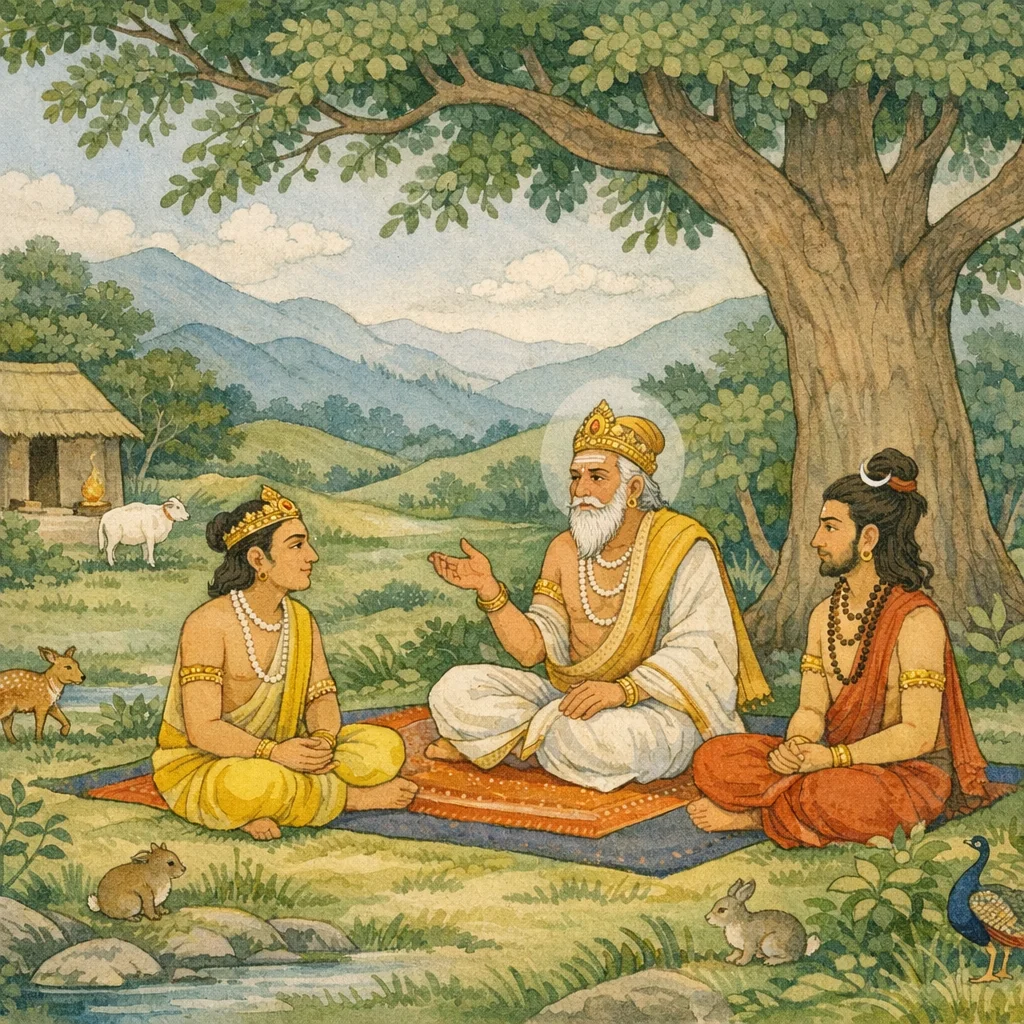
Śaṃtanu questions Gaṅgā about the identity of Āpava, the wrongdoing of the Vasus, and the act that causes one child to remain among humans. Vaiśaṃpāyana reports Gaṅgā’s account: Āpava is Vasiṣṭha, son of Varuṇa, whose hermitage near Meru contains a wish-fulfilling cow (a homa-dhenu) descended from Surabhī. The Vasus visit the forest with their spouses; one Vasu’s wife, motivated by devotion to a human friend (Jinavatī), requests the cow so her friend may drink its milk and remain free from aging and disease. Dyau, urged by his wife and accompanied by the other Vasus, takes the cow without weighing the ascetic’s severe tapas. Vasiṣṭha discovers the loss, searches, and, recognizing the divine perpetrators, curses all eight Vasus to be born as humans. When they seek appeasement, he mitigates the curse for seven (release within a year) but assigns Dyau a prolonged human life without progeny, forecasting a dharmic, learned, self-restrained figure devoted to his father’s welfare. Gaṅgā explains that she enacted the Vasus’ release by casting the newborns into the Gaṅgā, and identifies the surviving child as Devavrata (Gāṅgeya), whose excellence surpasses Śaṃtanu’s. The chapter closes by transitioning toward Śaṃtanu’s return to the capital and the broader Bharata narrative scope.
Chapter Arc: अष्टक जिज्ञासा करता है—देवमार्ग में पहले कौन जाता है: गृहस्थ के बीच रहकर संयमित भिक्षु, या दीर्घायु पाकर भी विषयों में फँसकर तप करने वाला वानप्रस्थ? इसी प्रश्न से ‘उत्तर-ययाति’ का धर्म-विवेचन आरम्भ होता है। → ययाति जीवन-आश्रमों के बाह्य रूप से नहीं, अंतःकरण की वृत्ति से धर्म का निर्णय करता है—कामवृत्ति, अनर्थबुद्धि, असत्य और नृशंसता को वह अधर्म की जड़ बताता है; साथ ही राजधर्म में ‘आर्जव’ (सरलता), ‘समाधि’ (स्थिर बुद्धि) और ‘आर्य’ आचरण को प्रतिष्ठित करता है। → प्रतर्दन अपने लोकों (स्वर्ग/अंतरिक्ष) की स्थिति पूछता है; ययाति निर्णायक वाणी में कहता है कि पृथ्वी पर गो-आश्रय, वन्य-पशु, पर्वत-वन आदि जितना ‘विहित’ (धर्मसम्मत) है, उसी के अनुरूप दिव्य लोकों की स्थापना है—और राजा को दैव-आपद में भी नृशंसता/अधर्म का आश्रय नहीं लेना चाहिए। → ययाति राजधर्म का निष्कर्ष देता है: धर्म-अधर्म का सम्यक् निर्णय कर, कार्य-अकार्य में प्रमादरहित होकर, यशस्वी धर्ममार्ग पर चलते हुए ‘अपूर्व’ सत्कर्म करना चाहिए; और वह दूसरों के दिये पुण्य/श्रेय को अपने ऊपर लेने की प्रवृत्ति को तुच्छ मानकर अस्वीकार करता है—स्वकृत कर्म ही वास्तविक आधार है।
Shlokas
Verse 1
अत-#-#क+ द्विनवतितमो<ध्याय: अष्टक-ययाति-संवाद और ययातिद्वारा दूसरोंके दिये हुए पुण्यदानको अस्वीकार करना जटद्टक उवाच कतरस्त्वनयो: पूर्व देवानामेति सात्मताम् | उभयोर्धावतो राजन् सूर्याचन्द्रमसोरिव,अष्टकने पूछा--राजन्! सूर्य और चन्द्रमाकी तरह अपने-अपने लक्ष्यकी ओर दौड़ते हुए वानप्रस्थ और संन्यासी इन दोनोंमेंसे पहले कौन-सा देवताओंके आत्मभाव (ब्रह्म)-को प्राप्त होता है?
Jaḍa Aṣṭaka asked: “O King, of these two—the forest-dweller (vānaprastha) and the renunciant (saṁnyāsin)—which one reaches first the divine state, union with the Self, Brahman? For both hasten toward their goal, like the sun and the moon moving on their courses.”
Verse 2
ययातिरुवाच अनिकेतो गृहस्थेषु कामवृत्तेषु संयत: । ग्राम एव वसनू् भिक्षुस्तयो: पूर्वतरं गत:,ययाति बोले--कामवृत्तिवाले गृहस्थोंके बीच ग्राममें ही वास करते हुए भी जो जितेन्द्रिय और गृहरहित संन्यासी है, वही उन दोनों प्रकारके मुनियोंमें पहले ब्रह्मभावको प्राप्त होता है
Yayāti said: “The homeless mendicant renunciant, who restrains his senses—even while dwelling in a village among householders given to desire—he, of the two, reaches the state of Brahman first.”
Verse 3
अवाप्य दीर्घमायुस्तु यः प्राप्तो विकृतिं चरेत् तप्यते यदि तत् कृत्वा चरेत् सो5न्यत् तपस्तत:,जो वानप्रस्थ बड़ी आयु पाकर भी विषयोंके प्राप्त होनेपर उनसे विकृत हो उन्हींमें विचरने लगता है, उसे यदि विषयोपभोगके अनन्तर पश्चात्ताप होता है तो उसे मोक्षके लिये पुन: तपका अनुष्ठान करना चाहिये
Even after attaining a long life, if a person—having come into contact with sense-objects—becomes morally distorted and lives absorbed in them, then, if after indulging he is scorched by remorse, he should undertake further austerity thereafter, aiming at liberation.
Verse 4
पापानां कर्मणां नित्यं बिभियाद् यस्तु मानव: । सुखमप्याचरन् नित्यं सो>त्यन्तं सुखमेधते,किंतु जो वानप्रस्थ मनुष्य पापकर्मोंसे नित्य भय करता है और सदा अपने धर्मका आचरण करता है, वह अत्यन्त सुखरूप मोक्षको अनायास ही प्राप्त कर लेता है
A person who is constantly afraid of sinful deeds, and who continually practices what is wholesome and righteous—even while living amid ordinary comforts—grows into the highest happiness.
Verse 5
तद् वै नृशंसं तदसत्यमाहु- ्य: सेवते<धर्ममनर्थबुद्धि: । अर्थोउप्यनीशस्य तथैव राजं- स्तदार्जवं स समाधिस्तदार्यम्,राजन! जो पापबुद्धिवाला मनुष्य अधर्मका आचरण करता है, उसका वह आचरण नृशंस (पापमय) और असत्य कहा गया है एवं उस अजितेन्द्रियका धन भी वैसा ही पापमय और अस्त्य है। परंतु वानप्रस्थ मुनिका जो धर्मपालन है, वही सरलता है, वही समाधि है और वही श्रेष्ठ आचरण है
O king, they declare that conduct to be cruel and untrue when a man of perverse understanding practices adharma. Even the wealth of one who lacks self-mastery is of the same tainted kind. But the dharma-observance of a forest-dwelling sage—his disciplined way of life—is itself straightforwardness; it is itself concentration of mind; it is itself noble conduct.
Verse 6
अष्टक उवाच केनासि हूतः प्रहितोडसि राजन् युवा ख्रग्वी दर्शनीय: सुवर्चा: । कुत आयात: कतरस्यां दिशि त्व- मुताहोस्वित् पार्थिवं स्थानमस्ति,अष्टकने पूछा--राजन्! आपको यहाँ किसने बुलाया? किसने भेजा है? आप अवस्थामें तरुण, फूलोंकी मालासे सुशोभित, दर्शनीय तथा उत्तम तेजसे उद्धासित जान पड़ते हैं। आप कहाँसे आये हैं? किस दिशामें भेजे गये हैं? अथवा क्या आपके लिये इस पृथ्वीपर कोई उत्तम स्थान है?
Aṣṭaka said: “O king, by whom have you been summoned, and by whom dispatched? You appear youthful, adorned with a garland, pleasing to behold, and radiant with excellent splendor. From where have you come, and to which direction are you being sent? Or is there some fitting earthly abode appointed for you?”
Verse 7
ययातिरुवाच इमं भौम॑ नरकं क्षीणपुण्य: प्रवेष्टमुर्वी गगनाद् विप्रहीण: । उतक्त्वाहं व: प्रपतिष्याम्यनन्तरं त्वरन्ति मां लोकपा ब्रह्मणो ये,ययातिने कहा--मैं अपने पुण्यका क्षय होनेसे भौम नरकमें प्रवेश करनेके लिये आकाशसे गिर रहा हूँ। ब्रह्माजीके जो लोकपाल हैं, वे मुझे गिरनेके लिये जल्दी मचा रहे हैं; अतः आपलोगोंसे पूछकर विदा लेकर इस पृथ्वीपर गिरूँगा
Yayāti said: “My merit is exhausted, and I am falling from the sky, bereft of the privilege of the higher worlds, to enter this earthly hell. The guardians of the worlds who serve Brahmā are pressing me on—hastening my descent. Therefore, after taking leave of you and asking your consent, I shall fall to the earth at once.”
Verse 8
सतां सकाशे तु वृतः प्रपात- स्ते संगता गुणवन्तस्तु सर्वे । शक्राच्च लब्धो हि वरो मयैष पतिष्यता भूमितल नरेन्द्र,नरेन्द्र! मैं जब इस पृथ्वीतलपर गिरनेवाला था, उस समय मैंने इन्द्रसे यह वर माँगा था कि मैं साधु पुरुषोंके समीप गिरूँ। वह वर मुझे मिला, जिसके कारण आप सब सदगुणी संतोंका संग प्राप्त हुआ
O king, when I was about to fall upon the earth, I chose this boon: that my fall should be in the presence of the virtuous. Indra granted it to me; therefore I have come into the company of you all—saintly men endowed with good qualities.
Verse 9
अष्टक उवाच पृच्छामि त्वां मा प्रपत प्रपात॑ यदि लोकाः: पार्थिव सन्ति मेअत्र । यद्यन्तरिक्षे यदि वा दिवि स्थिता: क्षेत्रज्ञ त्वां तस्य धर्मस्य मनन््ये,अष्टक बोले--महाराज! मेरा विश्वास है कि आप पारलौकिक धर्मके ज्ञाता हैं। मैं आपसे एक बात पूछता हूँ--क्या अन्तरिक्ष या स्वर्गलोकमें मुझे प्राप्त होनेवाले पुण्यलोक भी हैं? यदि हों तो (उनके प्रभावसे) आप नीचे न गिरें, आपका पतन न हो
Aṣṭaka said: “I ask you—do not fall, do not slip into downfall—if there are any worlds of merit for me here among mortals. And if such worlds for me are established in the mid-region or in heaven, then I regard you as one who truly knows the inner knower (kṣetrajña) and the law of that otherworldly dharma. Tell me: do I have such earned realms awaiting me in the sky or in heaven?”
Verse 10
ययातिरुवाच यावत् पृथिव्यां विहित॑ं गवाश्र॑ सहारण्यै: पशुभि: पार्वतैश्न । तावल्लोका दिवि ते संस्थिता वै तथा विजानीहि नरेन्द्रसिंह,ययातिने कहा--नरेन्द्रसिंह! इस पृथ्वीपर जंगली और पर्वतीय पशुओंके साथ जितने गाय, घोड़े आदि पशु रहते हैं, स्वर्गमें तुम्हारे लिये उतने ही लोक विद्यमान हैं। तुम इसे निश्चय जानो
Yayāti said: “O lion among kings, know this for certain: as many cattle and horses as are found upon the earth—together with the wild and mountain-dwelling beasts—so many heavenly realms are established for you in the sky.”
Verse 11
अष्टक उवाच तांस्ते ददामि मा प्रपत प्रपात॑ ये मे लोका दिवि राजेन्द्र सन्ति । यद्यन्तरिक्षे यदि वा दिवि श्रिता- स्तानाक्रम क्षिप्रमपेतमोह:,अष्टक बोले--राजेन्द्र! स्वर्गमें मेरे लिये जो लोक विद्यमान हैं, वे सब आपको देता हूँ; परंतु आपका पतन न हो। अन्तरिक्ष या द्युलोकमें मेरे लिये जो स्थान हैं, उनमें आप शीघ्र ही मोहरहित होकर चले जाया
Aṣṭaka said: “I give you those realms that are mine in heaven, O king; only—do not fall into ruin. Whether they are stationed in the mid-region or established in the celestial world, ascend to them at once, freed quickly from delusion.”
Verse 12
ययातिरुवाच नास्मद्विधो ब्राह्मणो ब्रह्मविच्च प्रतिग्रहे वर्तते राजमुख्य । यथा प्रदेयं सतत द्विजेभ्य- स्तथाददं पूर्वमहं नरेन्द्र,ययातिने कहा--नृपश्रेष्ठ! ब्रह्मवेत्ता ब्राह्मण ही प्रतिग्रह लेता है। मेरे-जैसा क्षत्रिय कदापि नहीं। नरेन्द्र! जैसे दान करना चाहिये, उस विधिसे पहले मैंने भी सदा उत्तम ब्राह्मणोंको बहुत दान दिये हैं
Yayāti said: “O foremost of kings, a Brahmin—one who knows Brahman—may properly live by accepting gifts; but a Kshatriya like me should never do so. O ruler, just as gifts ought always to be given to the twice-born, so in former times I too continually gave, in due manner, abundant gifts to excellent Brahmins.”
Verse 13
नाब्राह्मण: कृपणो जातु जीवेद् याच्ञापि स्याद् ब्राह्मणी वीरपत्नी । सो<हं नैवाकृतपूर्व चरेय॑ विधित्समान: किमु तत्र साधु,जो ब्राह्मण नहीं है, उसे दीन याचक बनकर कभी जीवन नहीं बिताना चाहिये। याचना तो विद्यासे दिग्विजय करनेवाले विद्वान ब्राह्मणकी पत्नी है अर्थात ब्रह्मवेत्ता ब्राह्मणको ही याचना करनेका अधिकार है। मुझे उत्तम सत्कर्म करनेकी इच्छा है; अतः ऐसा कोई कार्य कैसे कर सकता हूँ, जो पहले कभी नहीं किया हो
Aṣṭaka said: “One who is not a brāhmaṇa should never live as a wretched beggar. Begging, as a way of life, belongs to the brāhmaṇa’s household—indeed, to the wife of a heroic, learned brāhmaṇa—because only a knower of Brahman is entitled to such a discipline. I desire to perform what is truly good and right; how, then, could I undertake an act that I have never practiced before?”
Verse 14
प्रतर्दन उवाच पृच्छामि त्वां स्पृहणीयरूप प्रतर्दनो5हं यदि मे सन्ति लोका: । यद्यन्तरिक्षे यदि वा दिवि श्रिता: क्षेत्रज्ञ त्वां तस्य धर्मस्य मन््ये,प्रतर्दन बोले--वांछनीय रूपवाले श्रेष्ठ पुरुष! मैं प्रतर्दन हूँ और आपसे पूछता हूँ, यदि अन्तरिक्ष अथवा स्वर्गमें मेरे भी लोक हों तो बताइये। मैं आपको पारलौकिक धर्मका ज्ञाता मानता हूँ
Pratardana said: “I ask you, O one of desirable form, O excellent person. I am Pratardana—tell me whether there are worlds reserved for me, whether they lie in the mid-region (antarikṣa) or are established in heaven. I regard you as a knower of the dharma that governs the other world.”
Verse 15
ययातिरुवाच सन्ति लोका बहवस्ते नरेन्द्र अप्येकैक: सप्तसप्ताप्यहानि । मधुच्युतो घृतपृक्ता विशोका- स्ते नानतवन्त: प्रतिपालयन्ति,ययातिने कहा--नरेन्द्र! आपके तो बहुत लोक हैं, यदि एक-एक लोकमें सात-सात दिन रहा जाय तो भी उनका अन्त नहीं है। वे सब-के-सब अमृतके झरने बहाते हैं एवं घृत (तेज)-से युक्त हैं। उनमें शोकका सर्वथा अभाव है। वे सभी लोक आपकी प्रतीक्षा कर रहे हैं
Yayāti said: “O king, many worlds are yours. Even if one were to dwell in each single world for seven days and seven days again, their limit would still not be reached. They drip with honey-like nectar and are suffused with ghee-like radiance; in them there is no sorrow at all. Those endless worlds are waiting to receive you.”
Verse 16
प्रतर्दन उवाच तांस्ते ददानि मा प्रपत प्रपात॑ ये मे लोकास्तव ते वै भवन्तु | यद्यन्तरिक्षे यदि वा दिवि श्रिता- स्तानाक्रम क्षिप्रमपेतमोह:,प्रतर्दन बोले--महाराज! वे सभी लोक मैं आपको देता हूँ, आप नीचे न गिरें। जो मेरे लोक हैं वे सब आपके हो जायाँ। वे अन्तरिक्षमें हों या स्वर्गमें, आप शीघ्र मोहरहित होकर उनमें चले जाइये
Pratardana said: “I grant you those realms—do not fall into the abyss. The worlds that are mine shall indeed become yours. Whether they abide in the mid-region or are established in heaven, step into them at once, swiftly, with delusion cast away.”
Verse 17
ययातिरुवाच न तुल्यतेजा: सुकृतं कामयेत योगक्षेम॑ पार्थिव पार्थिव: सन् | दैवादेशादापदं प्राप्य विद्वां- श्वरेन्रृशंसं न हि जातु राजा,ययातिने कहा--राजन्! कोई भी राजा समान तेजस्वी होकर दूसरेसे पुण्य तथा योग- क्षेमकी इच्छा न करे। विद्वान राजा दैववश भारी आपत्तिमें पड़ जानेपर भी कोई पापमय कार्य न करे
Yayāti said: “O king, a ruler who is equal in prowess should not covet another’s merit, nor seek to appropriate another’s welfare and security. Even if, by the decree of fate, a wise king falls into severe calamity, he must never commit a cruel or sinful act.”
Verse 18
धर्म्य मार्ग यतमानो यशस्यं कुर्यान्नपो धर्ममवेक्षमाण: । न मद्विधो धर्मबुद्धि: प्रजानन् कुयदिवं कृपणं मां यथा55तथ,धर्मपर दृष्टि रखनेवाले राजाको उचित है कि वह प्रयत्नपूर्वक धर्म और यशके मार्गपर ही चले। जिसकी बुद्धि धर्ममें लगी हो उस मेरे-जैसे मनुष्यको जान-बूझकर ऐसा दीनतापूर्ण कार्य नहीं करना चाहिये, जिसके लिये आप मुझसे कह रहे हैं
Pratardana said: “A king who keeps his gaze on dharma should strive to act only along the righteous path that also brings lasting renown. One like me, whose understanding is set on dharma, should not knowingly perform a wretched, self-degrading deed—of the sort you are urging upon me.”
Verse 19
कुर्यादपूर्व न कृतं यदन्यै- विंधित्समान: किमु तत्र साधु । (धर्माधर्मो सुविनिश्चित्य सम्यक् कार्याकार्येष्वप्रमत्तश्नरेद् यः । स वै धीमान् सत्यसन्ध: कृतात्मा राजा भवेल्लोकपालो महिम्ना ।। यदा भवेत् संशयो धर्मकार्ये कामार्थे वा यत्र विन्दन्ति सम्यक् । कार्य तत्र प्रथमं धर्मकार्य न तौ कुर्यादर्थकामौ स धर्म: ।।) ब्रुवाणमेनं नृपतिं ययातिं नृपोत्तमो वसुमानब्रवीत् तम्,जो शुभ कर्म करनेकी इच्छा रखता है, वह ऐसा काम नहीं कर सकता, जिसे अन्य राजाओंने नहीं किया हो। जो धर्म और अधर्मका भलीभाँति निश्चय करके कर्तव्य और अकर्तव्यके विषयमें सावधान होकर विचरता है, वही राजा बुद्धिमान, सत्यप्रतिज्ञ और मनस्वी है। वह अपनी महिमासे लोकपाल होता है। जब धर्मकार्यमें संशय हो अथवा जहाँ न्यायत: काम और अर्थ दोनों आकर प्राप्त हों, वहाँ पहले धर्मकार्यका ही सम्पादन करना चाहिये, अर्थ और कामका नहीं। यही धर्म है। इस प्रकारकी बातें कहनेवाले राजा ययातिसे नृपश्रेष्ठ वसुमान् बोले
Pratardana said: “One who seeks what is truly good should not chase novelty for its own sake—attempting deeds never done by other kings, what real virtue lies in that? The wise king is he who, after clearly discerning dharma and adharma, moves about vigilant regarding what ought to be done and what ought not to be done. Such a ruler—steadfast in truth and self-governed—becomes, by his very majesty, a protector of the world. And when doubt arises about a duty, or when a situation presents both pleasure and profit as seemingly justified options, one should first accomplish the act of dharma; one should not pursue profit and pleasure ahead of it. That is dharma.” While these words were being spoken to King Yayāti, the foremost of kings, Vasumān addressed him.
Verse 92
इति श्रीमहाभारते आदिपर्वणि सम्भवपर्वणि उत्तरयायाते द्विनवतितमो< ध्याय: ।। ९२ || इस प्रकार श्रीमह्योा भारत आदिपव॑के अन्तर्गत सम्भवपर्वमें उत्तरयायातविषयक बानबेवाँ अध्याय पूरा हुआ
Thus ends the ninety-second chapter in the Sambhava section of the Ādi Parva of the Śrī Mahābhārata, dealing with the episode of Uttara-yāyāta. The colophon marks the formal completion of the chapter, signaling a transition in the genealogy-and-origins narrative that frames later ethical and dynastic developments.
Frequently Asked Questions
The dilemma concerns whether a desired benefaction (securing life-extending milk for a friend) can justify taking sacred property from an ascetic hermitage; the narrative treats the act as a breach of dharma regardless of status or intention.
Power and privilege do not exempt agents from ethical constraint: tapas-backed moral authority enforces social order, and consequences are both just (accountability) and nuanced (mitigation for repentance and relative culpability).
A direct phalaśruti is not stated; however, the chapter functions as meta-commentary by grounding Devavrata’s later stature in a prior moral-causal framework, signaling how origin narratives explain character destiny within the epic’s dharma–karma logic.