Adhyaya 78
ययाति-देवयानी-शर्मिष्ठा विवादः — Śukra’s Curse and the Disclosure of Lineage
Upa-parva: Sambhava Upa-Parva (Genealogies and Dynastic Origins)
Vaiśaṃpāyana narrates Devayānī’s distress upon learning that Śarmiṣṭhā has borne a child. Devayānī confronts Śarmiṣṭhā, who asserts that a dharmic-seeming r̥ṣi fathered the child and that she did not act unlawfully; Devayānī requests identifying details (gotra/name), but Śarmiṣṭhā claims the ascetic’s radiance prevented questioning. Devayānī later encounters multiple boys in the forest; their gestures reveal Yayāti as father and Śarmiṣṭhā as mother, exposing concealed relationships. Devayānī condemns the breach of hierarchy and dependency, then departs in anger to her father Śukra (Uśanas). Before Śukra, Devayānī frames the situation as dharma overturned by adharma and reports that Śarmiṣṭhā has three sons while she has two. Śukra censures Yayāti for crossing limits and pronounces a curse of immediate old age. Yayāti argues a counter-duty: refusing a woman’s request in season is condemned by dharma-discourse; acting from fear of adharma, he approached Śarmiṣṭhā. Śukra maintains the sanction but allows a conditional mitigation: Yayāti may transfer old age to another willing person. The chapter closes with the stipulation that a son who grants youth will become king and gain longevity, fame, and progeny—linking ethical exchange to political succession.
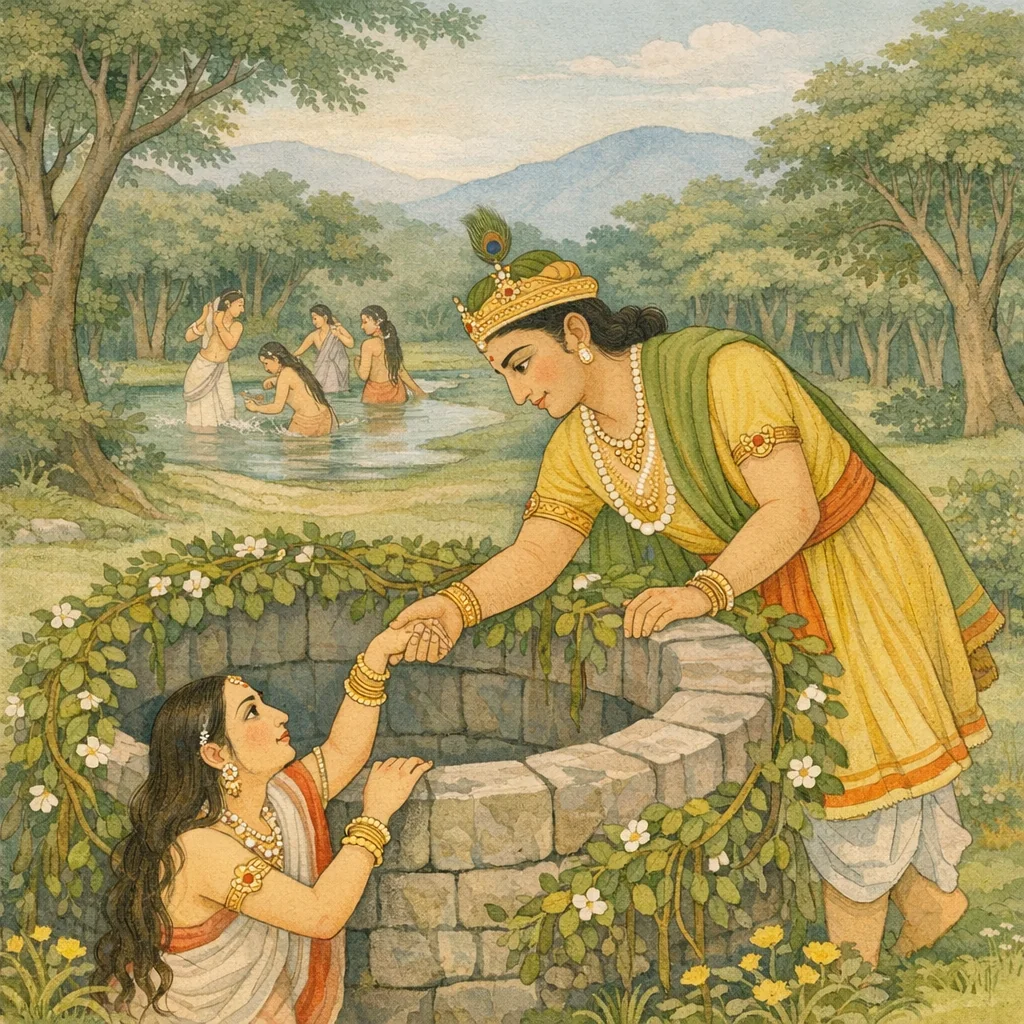
Chapter Arc: देवताओं की सभा में इन्द्र को पराक्रम के लिए उकसाया जाता है; उसी समय पृथ्वी पर असुर-राज वृषपर्वा की कन्याओं के बीच एक साधारण स्नान-स्थल पर भाग्य एक बड़ा कलह रच देता है। → देवयानी (शुक्राचार्य की पुत्री) और शर्मिष्ठा (वृषपर्वा की पुत्री) वन में सहेलियों संग स्नान करती हैं। वस्त्रों की अदला-बदली/भ्रम से अहंकार और वर्ग-गर्व भड़क उठता है; शर्मिष्ठा क्रोध में देवयानी को तृण-लताओं से ढके कुएँ में धकेल देती है और बिना पीछे देखे लौट जाती है। → कुएँ में पड़ी देवयानी सहायता के लिए पुकारती है। नहुषनन्दन ययाति वहाँ आता है; देवयानी अपना दाहिना हाथ बढ़ाकर कहती है कि उसे पकड़कर बाहर निकालो—ययाति उसे कुएँ से उबारता है, और यह स्पर्श/उद्धार आगे के बंधन का बीज बन जाता है। → देवयानी अपनी पहचान बताती है—वह संजीवनी-विद्या वाले शुक्राचार्य की पुत्री है—और अपमान का वृत्तांत कहती है। वह दासी घूर्णिका को संदेश देकर पिता को बुलवाती है और घोषणा करती है कि अब वह वृषपर्वा के नगर में प्रवेश नहीं करेगी। → देवयानी का कठोर संकल्प और शुक्राचार्य को भेजा गया संदेश—अब असुर-राज के कुल पर क्या दण्ड/प्रायश्चित्त आएगा, और ययाति-देवयानी का यह संयोग किस परिणति तक जाएगा?
Shlokas
Verse 1
ऑपन-माजल बछ। डे अष्टसप्ततितमोब< ध्याय: देवयानी और शर्मिष्ठाका कलह
Vaiśampāyana said: O bull among the Bharatas, when Kaca returned having mastered the reviving knowledge, the gods were filled with joy. Having learned that very science from Kaca, they felt their purpose fulfilled.
Verse 2
सर्व एव समागम्य शतक्रतुमथाब्रुवन् । कालस्ते विक्रमस्याद्य जहि शत्रून् पुरन्दर,फिर सबने मिलकर इन्द्रसे कहा--'पुरन्दर! अब आपके लिये पराक्रम करनेका समय आ गया है, अपने शत्रुओंका संहार कीजिये”
Then all of them assembled together and addressed Śatakratu (Indra): “Purandara, now is the time for your valor. Strike down your enemies.”
Verse 3
एवमुक्तस्तु सहितैस्त्रिदशैर्मघवांस्तदा । तथेत्युक्त्वा प्रचक्राम सोडपश्यत वने स्त्रिय:
Vaiśampāyana said: Thus addressed by the assembled gods, Maghavān (Indra) replied then, “So be it,” and set forth to the world of mortals. There, in a forest, he beheld many women.
Verse 4
क्रीडन्तीनां तु कन्यानां वने चैत्ररथोपमे । वायुभूत: स वस्त्राणि सर्वाण्येव व्यमिश्रयत्
Vaiśampāyana said: In a forest delightful like the celestial Caitraratha grove, while the young maidens were sporting, he—having assumed the form of the wind—thoroughly mixed up all their garments.
Verse 5
ततो जलात् समुत्तीर्य कन्यास्ता: सहितास्तदा । वस्त्राणि जगृहुस्तानि यथासन्नान्यनेकश:
Then those maidens, all together, came up out of the water. Each began taking up the many garments that had been placed nearby. In the ensuing mix-up, Śarmiṣṭhā took Devayānī’s garment—Śarmiṣṭhā, the daughter of Vṛṣaparvan—without realizing that their clothes had been confused.
Verse 6
तत्र वासो देवयान्या: शर्मिष्ठा जगृहे तदा । व्यतिमिश्रमजानन्ती दुहिता वृषपर्वण:
There, at that time, Śarmiṣṭhā took the garment belonging to Devayānī. The daughter of Vṛṣaparvan did so unknowingly, not realizing that the clothes had become mixed up.
Verse 7
ततस्तयोर्मिथस्तत्र विरोध: समजायत । देवयान्याश् राजेन्द्र शर्मिष्ठाया श्ष॒ तत्कृते,राजेन्द्र! उस समय वस्त्रोंकी अदला-बदलीको लेकर देवयानी और शर्मिष्ठा दोनोंमें वहाँ परस्पर बड़ा भारी विरोध खड़ा हो गया
Then, O king, a serious quarrel arose there between the two of them. Because of that matter, Devayānī and Śarmiṣṭhā came into sharp mutual conflict.
Verse 8
देवयान्युवाच कस्माद गृह्नासि मे वस्त्र शिष्या भूत्वा ममासुरि | समुदाचारहीनाया न ते साधु भविष्यति
Devayānī said: “O Asura girl, how can you take my garment after becoming my pupil? You are devoid of the refined conduct upheld by the virtuous; therefore, no good will come to you.”
Verse 9
शर्मिष्टोवाच आसीनं च शयानं च पिता ते पितरं मम । स्तौति वन्दीव चाभीक्ष्णं नीचे: स्थित्वा विनीतवत्
Śarmiṣṭhā said: “Whether my father is seated or lying down, your father stands below like a humble attendant and, like a court-bard, repeatedly praises my father.”
Verse 10
याचतत्त्वं हि दुहिता स्तुवतः प्रतिगृह्नतः । सुताहं स्तूयमानस्य ददतो<प्रतिगृह्नतः
Vaiśampāyana said: “You are the daughter of one who begs—of one who praises in order to receive. But I am the daughter of one who is praised, who gives to others, and who does not accept gifts in return.”
Verse 11
आदुन्वस्व विदुन्वस्व द्रह्म कुप्पस्व याचकि । अनायुधा सायुधाया रिक्ता क्षुभ्यसि भिक्षुकि । लप्स्यसे प्रतियोद्धारं न हि त्वां गणयाम्पयहम्
Vaiśampāyana said: “Shake yourself, tremble if you will; rage on, O begging woman. Weaponless yourself, you flare up against one who is armed—empty-handed, you seethe in vain. If you truly seek combat, you will find an opponent ready to meet you; but I do not count you as worthy of regard.”
Verse 12
(प्रतिकूलं वदसि चेदितः प्रभृति याचकि । आकृष्य मम दासीक्िि: प्रस्थाप्यसि बहिर्बहि: ।।
“Beggar-girl! If from this day onward you speak anything against me, I will have my maidservants drag you and drive you out—out from here.” Vaiśampāyana said: Seeing Devayānī swollen with pride, having asserted her superiority, and clinging to Śarmiṣṭhā’s garment, Śarmiṣṭhā, seized by sinful intent, pushed her into a well. Thinking, “Now she must be dead,” Śarmiṣṭhā returned to the city.
Verse 13
शर्मिष्ठा प्राक्षिपत् कूपे ततः स्वपुरमागमत् | हतेयमिति विज्ञाय शर्मिष्ठा पापनिश्षया
Vaiśampāyana said: Śarmiṣṭhā hurled her into a well and then returned to her own city. Concluding, “She must be dead,” Śarmiṣṭhā—fixed in a sinful resolve—went back home.
Verse 14
अनवेक्ष्य ययौ वेश्म क्रोधवेगपरायणा । अथ तं देशमभ्यागाद् ययातिर्नहुषात्मज:,वह क्रोधके आवेशमें थी, अतः देवयानीकी ओर देखे बिना ही घर लौट गयी। तदनन्तर नहुषपुत्र ययाति उस स्थानपर आये
Overpowered by a surge of anger, she went back to the house without even looking toward Devayānī. Soon after, Yayāti, the son of Nahuṣa, arrived at that very place.
Verse 15
श्रान्तयुग्य: श्रान्तहयो मृगलिप्सु: पिपासित: । स नाहुष: प्रेक्षमाण उदपानं गतोदकम्
Vaiśampāyana said: Worn out in his draught-animals and with his horses exhausted, Nahuṣa—having pursued game in the desire to seize it—was tormented by thirst. Looking about, he came upon a well whose water had run dry.
Verse 16
ददर्श राजा तां तत्र कन्यामग्निशिखामिव । तामपृच्छत् स दृष्टवैव कन्याममरवर्णिनीम्
Vaiśampāyana said: There the king beheld a maiden, radiant like a tongue of fire, and beautiful as a celestial nymph. The moment his eyes fell upon her, he questioned her.
Verse 17
सान्त्वयित्वा नृपश्रेष्ठ: साम्ना परमवल्गुना । का त्वं ताम्रनखी श्यामा सुमृष्टमणिकुण्डला
Having soothed her, the best of kings addressed her with exceedingly gentle and conciliatory words: “Who are you—dark-hued, with copper-red nails, and with exquisitely polished, jewel-studded earrings?”
Verse 18
दीर्घ ध्यायसि चात्यर्थ कस्माच्छोचसि चातुरा । कथं च पतितास्यस्मिन् कूपे वीरुत्तणावृते
Vaiśampāyana said: “You brood for a long time, and you grieve excessively—why, O wise one? And how did you come to fall into this well, covered over with creepers and grass?”
Verse 19
देवयान्युवाच योअसौ देवै्हतान् दैत्यानुत्थापयति विद्यया
Devayānī said: “That man there, by his knowledge, is reviving the Daityas who were slain by the gods.”
Verse 20
(पृच्छसे मां कस्त्वमसि रूपवीर्यबलान्वित: । ब्रूह्मत्रागमनं किं वा श्रोतुमिच्छामि तत्त्वत: ।।
Vaiśampāyana said: “You ask me who I am—who are you, endowed with beauty, prowess, and strength? Tell me why you have come here; I wish to hear the truth exactly.” Yayāti said: “O noble lady, I am Yayāti, son of King Nahuṣa. Today I wandered here seeking game; weary and thirsty, I came to this place, and in this well covered with grass I caught sight of you.” (He then begins to say:) “O king, this is my right hand, with coppery nails and fingers …”
Verse 21
समुद्धर गृहीत्वा मां कुलीनस्त्वं हि मे मतः । जानामि त्वां हि संशान्तं वीर्यवन्तं यशस्विनम्
“Lift me up and take me with you; for I regard you as a man of noble lineage. Indeed, I know you to be self-controlled and tranquil, endowed with valor and possessed of good repute.”
Verse 22
तस्मान्मां पतितामस्मात् कूपादुद्धर्तुमहसि । (देवयानी बोली--) महाराज! लाल नख और अंगुलियोंसे युक्त यह मेरा दाहिना हाथ है। इसे पकड़कर आप इस कुएँसे मेरा उद्धार कीजिये। मैं जानती हूँ
Therefore, you ought to lift me out of this well, fallen as I am.
Verse 23
गृहीत्वा दक्षिणे पाणावुज्जहार ततोडवटात् । उद्धृत्य चैनां तरसा तस्मात् कूपान्नराधिप:
Taking her in his right hand, the king lifted her up from the pit. Then, with swift force, the lord of men drew her out from that well—an act of decisive protection that upholds the duty of a ruler to rescue the vulnerable.
Verse 24
(गच्छ भद्रे यथाकामं न भयं विद्यते तव । इत्युच्यमाना नृपतिं देवयानी तमुत्तरम् ।।
Vaiśampāyana said: “Go, noble lady, wherever you wish; there is no danger for you.” When the king spoke thus, Devayānī replied: “Take me with you at once, for you are dear to me. You have taken my hand; therefore you shall be my husband.” Hearing this, the king—born in the Kṣatriya line—answered: “Noble lady, you are a Brāhmaṇa maiden; therefore you are not fit to unite with me. Kāvya (Śukra) is the preceptor of all the worlds, and you are indeed his daughter; for that reason I fear him even now. Auspicious one, you are not suited to a man like me.” Devayānī said: “If today, despite my request, you do not wish to take me with you, then I will choose you through my father; afterwards you will recognize (the propriety) and you will take me.”
Verse 25
(क्वचिदार्ता च रुदती वृक्षमाश्रित्य तिष्ठति । ततश्चिरायमाणायां दुहितर्याह भार्गव: ।।
Vaiśampāyana said: Somewhere, Devayānī—distressed and weeping—stood leaning against a tree. When his daughter delayed in returning, Bhārgava (Śukrācārya) said to the nurse: “Nurse, quickly bring Devayānī of the pure smile.” No sooner had he spoken than the nurse hurried off to summon her. Tracing her footprints wherever she had gone with her companions, the nurse found Devayānī just as described—wretched, exhausted, and standing there in tears. The nurse said: “O good lady, what has happened to you? Tell me quickly; your father is calling you.” Devayānī then drew the nurse close and reported the wrongdoing committed by Śarmiṣṭhā. Grief-stricken, she spoke to Ghūrṇikā who had come before her: “Go at once, Ghūrṇikā; quickly tell my father.”
Verse 26
वैशम्पायन उवाच सा तत्र त्वरितं गत्वा घूर्णिकासुरमन्दिरम्
Vaiśampāyana said: She quickly went there, to the dwelling of the demon Ghūrṇikāsura.
Verse 27
दृष्टवा काव्यमुवाचेदं सम्भ्रमाविष्टचेतना । आचचक्षे महाप्राज्ञं देवयानीं वने हताम्
Seeing the grievous scene, her mind seized by agitation, she spoke these words. She reported to the very wise one that Devayānī had been slain in the forest—an utterance charged with alarm and moral shock at the violation of safety and propriety in a place that should have offered refuge.
Verse 28
शर्मिष्ठया महाभाग दुद्ित्रा वृषपर्वण: । श्र॒त्वा दुहितरं काव्यस्तत्र शर्मिछ्ठया हताम्
Vaiśampāyana said: “O noble one, when Kāvya (Śukrācārya) heard that the daughter of Vṛṣaparvan had been struck down there by Śarmiṣṭhā, he was deeply shaken and marked that wrongdoing.”
Verse 29
त्वरया निर्ययौ दुःखान्मार्गमाण: सुतां वने | दृष्टवा दुहितरं काव्यो देवयानीं ततो वने
Vaiśampāyana said: “In haste and in distress, Kāvya (Śukrācārya) set out, searching for his daughter in the forest. There in the woods he caught sight of his daughter Devayānī.”
Verse 30
बाहुभ्यां सम्परिष्वज्य दु:खितो वाक्यमब्रवीत् | आत्मदोषैर्नियच्छन्ति सर्वे दु:खसुखे जना:
Embracing her with both arms, he spoke in grief: “All people are bound to sorrow and joy by their own faults.”
Verse 31
मन्ये दुश्चरितं ते5स्ति यस्येयं निष्कृति: कृता । वैशम्पायनजी कहते हैं--जनमेजय! देवयानीकी बात सुनकर घूर्णिका तुरंत असुरराजके महलमें गयी और वहाँ शुक्राचार्यको देखकर सम्भ्रमपूर्ण चित्तसे वह बात बतला दी। महाभाग! उसने महाप्राज्ञ शुक्राचार्यको यह बताया कि “*वृषपर्वाकी पुत्री शर्मिष्ठाके द्वारा देवयानी वनमें मृततुल्य कर दी गयी है।' अपनी पुत्रीको शर्मिष्ठा-द्वारा मृततुल्य की गयी सुनकर शुक्राचार्य बड़ी उतावलीके साथ निकले और दुःखी होकर उसे वनमें ढूँढ़ने लगे। तदनन्तर वनमें अपनी बेटी देवयानीको देखकर शुक्राचार्यने दोनों भुजाओंसे उठाकर उसे हृदयसे लगा लिया और दुःखी होकर कहा--“बेटी! सब लोग अपने ही दोष और गुणोंसे--अशुभ या शुभ कर्मोसे दुःख एवं सुखमें पड़ते हैं। मालूम होता है
Vaiśampāyana said: “I think you have committed some wrongful deed, for which this expiation (or consequence) has come to pass.”
Verse 32
शर्मिष्ठया यदुक्तास्मि दुह्तित्रा वृषपर्वण: । सत्यं किलैतत् सा प्राह दैत्यानामसि गायन:
Vaiśampāyana said: “Is what I was told by Śarmiṣṭhā, the daughter of Vṛṣaparvan, truly so? She says, ‘You are like a bard, singing the praises of the Daityas.’”
Verse 33
एवं हि मे कथयति शर्मिष्ठा वार्षपर्वणी । वचन तीक्षणपरुषं क्रोधरक्तेक्षणा भृशम्,वृषपर्वाकी लाड़िली शर्मिष्ठा क्रोध8े लाल आँखें करके आज मुझसे इस प्रकार अत्यन्त तीखे और कठोर वचन कह रही थी--
Vaiśaṃpāyana said: “Thus did Śarmiṣṭhā, the daughter of Vṛṣaparvan, speak to me—her eyes reddened with anger—uttering words exceedingly sharp and harsh.”
Verse 34
स्तुवतो दुहिता नित्यं याचत: प्रतिगृह्नत: । अहं तु स्तूयमानस्य ददतो<प्रतिगृह्नतः
Vaishampayana said: “You are the daughter of one who continually praises others, who is ever begging, and who accepts gifts. But I am the daughter of a king whom your father praises—one who gives generously and does not accept even the smallest gift.”
Verse 35
इदं मामाह शर्मिष्ठा दुहिता वृषपर्वण: । क्रोधसंरक्तनयना दर्पपूर्णा पुनः पुन:
Vaiśampāyana said: “Śarmiṣṭhā, the daughter of Vṛṣaparvan, spoke these words to me. Her eyes were reddened with anger, she was filled with pride, and she repeated the same harsh point again and again.”
Verse 36
यद्यहं स्तुवतस्तात दुहिता प्रतिगृह्नतः । प्रसादयिष्ये शर्मिष्ठामित्युक्ता तु सखी मया
Vaiśaṃpāyana said: “Father, if I truly am the daughter of one who praises and one who accepts gifts, then I will win Śarmiṣṭhā’s goodwill through my service.” Thus I had spoken to my friend, O father.
Verse 37
(उक्ताप्येवं भृशं क्रुद्धा मां गृह विजने वने । कूपे प्रक्षेपयामास प्रक्षिप्यैव गृहं ययौ ।।
Even after I spoke thus, Śarmiṣṭhā—seized by fierce anger—caught me in that lonely forest near the dwelling and hurled me into a well; having thrown me in, she went back home. Then Śukra said: “Devayānī, you are not the daughter of one who flatters, begs, or accepts gifts. You are the daughter of a pure brāhmaṇa who does not praise others for gain, and whom all people praise.”
Verse 38
वृषपर्वैव तद् वेद शक्रो राजा च नाहुष: । अचिन्त्य ब्रह्म निर्टन्ड्मैश्वरं हि बल॑ मम,इस बातको वृषपर्वा, देवराज इन्द्र तथा राजा ययाति जानते हैं। निर्दधन्द्र अचिन्त्य ब्रह्म ही मेरा ऐश्वर्ययुक्त बल है
Śukra said: “Vṛṣaparvan alone knows this—along with Śakra (Indra) and King Nāhuṣa. For my strength, endowed with sovereign power, is the inconceivable, non-dual Brahman itself.”
Verse 39
यच्च किंचित् सर्वगतं भूमौ वा यदि वा दिवि | तस्याहमीश्वरो नित्य तुष्टेनोक्त: स्वयम्भुवा
Śukra said: “Whatever exists anywhere—whether on the earth or in heaven, indeed whatever is found among all beings—I am forever its lord. Such was the boon declared to me by Svayambhū (Brahmā) when he was pleased.”
Verse 40
अहं जलं विमुज्चामि प्रजानां हितकाम्यया । पुष्णाम्योषधय: सर्वा इति सत्यं ब्रवीमि ते,मैं ही प्रजाओंके हितके लिये पानी बरसाता हूँ और मैं ही सम्पूर्ण ओषधियोंका पोषण करता हूँ, यह तुमसे सच्ची बात कह रहा हूँ
Śukra said: “For the welfare of living beings, I release the waters as rain. I also nourish all medicinal herbs and plants. This is the truth I declare to you.”
Verse 41
वैशम्पायन उवाच एवं विषादमापचन्नां मन्युना सम्प्रपीडिताम् । वरचनैर्मधुरै: श्लक्षणै: सान्त्वयामास तां पिता
Vaiśampāyana said: Seeing Devayānī thus fallen into despair and severely oppressed by anger, her father consoled her with gentle, sweet, and well-chosen words—seeking to calm her turmoil and restore steadiness of mind.
Verse 77
इस प्रकार श्रीमहाभारत आदिपर्वके अन्तर्गत सम्भवपर्वमें ययात्युपाख्यानविषयक सतहत्तरवाँ अध्याय पूरा हुआ
Thus ends the seventy-seventh chapter of the Yayāti episode within the Sambhava section of the Ādi Parva of the Śrī Mahābhārata.
Verse 78
इति श्रीमहा भारते आदिपर्वणि सम्भवपर्वणि ययात्युपाख्याने5ष्टसप्ततितमो 5 ध्याय:,इस प्रकार श्रीमहाभारत आदिपर्वके अन्तर्गत सम्भवपर्वमें ययात्युपाख्यानविषयक अठहत्तरवाँ अध्याय पूरा हुआ
Thus, in the Śrī Mahābhārata, within the Ādi Parva—specifically the Sambhava Parva—ends the seventy-eighth chapter of the Yayāti episode. Here the narration makes its formal close, sealing the section that recounts Yayāti’s story and its moral import.
Verse 183
दुहिता चैव कस्य त्वं वद सत्यं सुमध्यमे । “तुम किसी अत्यन्त घोर चिन्तामें पड़ी हो। आतुर होकर शोक क्यों कर रही हो? तृण और लताओंसे ढके हुए इस कुएँमें कैसे गिर पड़ी? तुम किसकी पुत्री हो? सुमध्यमे! ठीक- ठीक बताओ'
Vaiśampāyana said: “And whose daughter are you? Speak the truth, O slender-waisted one.” (He asks in anxious, moral urgency, pressing the distressed woman to name herself truthfully so that due protection and right action may follow.)
Verse 196
तस्य शुक्रस्य कन्याहं स मां नूनं न बुध्यते । देवयानी बोली--जो देवताओंद्वारा मारे गये दैत्योंको अपनी विद्याके बलसे जिलाया करते हैं
“I am the daughter of Śukra; surely he does not yet know that I have fallen into this wretched condition.” (Devayānī implies: Śukrācārya, who by the power of his knowledge restores to life the Dānavas slain by the gods, is her father—yet he may not know of her suffering.)
Verse 253
नेदानीं सम्प्रवेक्ष्यामि नगरं वृषपर्वण: । देवयानीने कहा--घूर्णिके! तुम वेगपूर्वक जाओ और शीघ्र मेरे पिताजीसे कह दो --“अब मैं वृषपर्वाके नगरमें पैर नहीं रखूँगी'
Vaiśampāyana said: Devayānī declared, “Ghūrṇikā, go at once with all speed and quickly tell my father: ‘From now on I will not set foot in King Vṛṣaparvan’s city.’”
Frequently Asked Questions
The dilemma is competing dharma-claims: Devayānī frames Yayāti’s conduct as a breach of marital and dependency norms, while Yayāti frames compliance with a woman’s seasonal request as a dharmic necessity; the text stages a conflict between social hierarchy and a duty-based sexual ethic.
Actions justified as “necessary” still require accountability to legitimate authority and transparent conduct; when private exceptions become concealed practices, they destabilize trust and succession, inviting corrective sanctions.
A functional phala-style assurance appears in Śukra’s condition: the son who donates youth will obtain kingship and auspicious outcomes (longevity, fame, many offspring), emphasizing that ethical exchange directly structures political legitimacy.
Read Mahabharata in the Vedapath app
Scan the QR code to open this directly in the app, with audio, word-by-word meanings, and more.