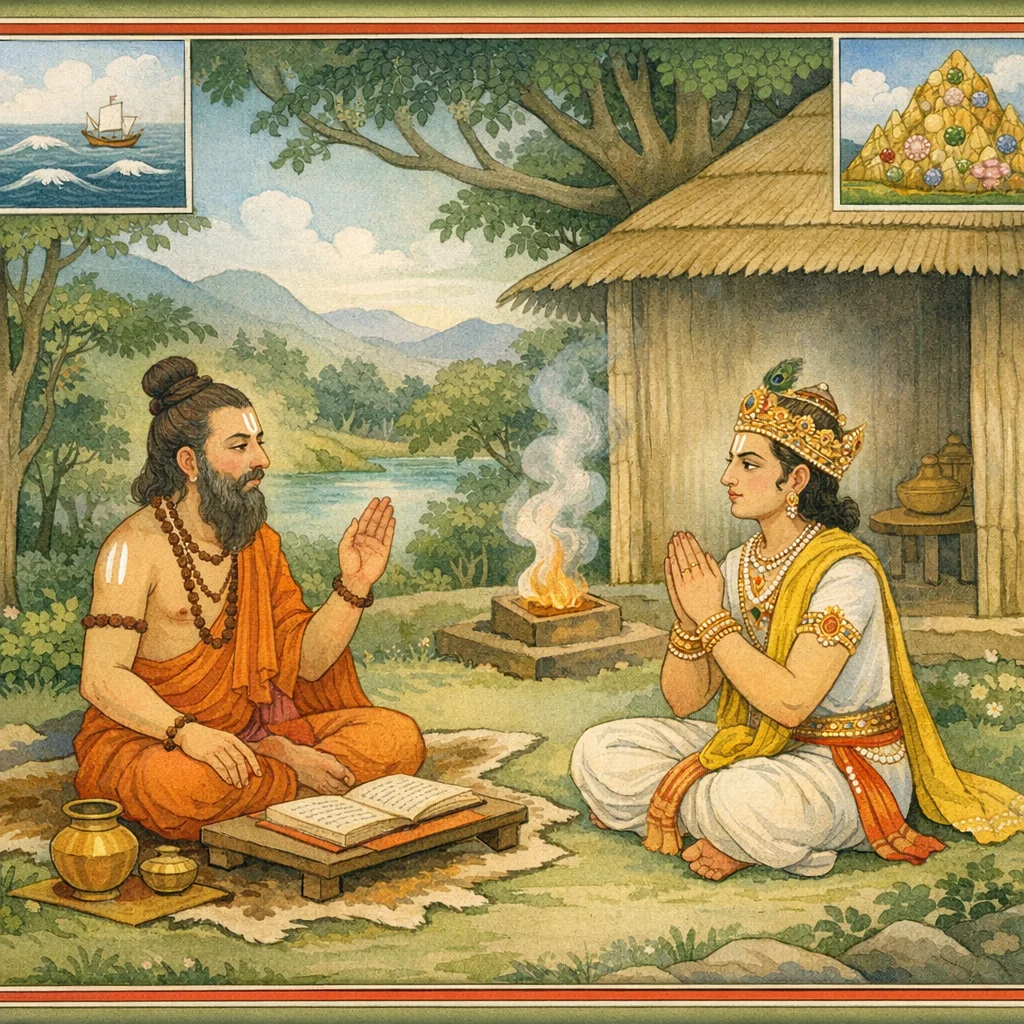
Adhyaya 62
कुरुवंशप्रश्नः—दुःषन्तस्य राजधर्मवर्णनम् (Kuru Lineage Inquiry and the Portrait of King Duḥṣanta’s Rule)
Upa-parva: Paurava–Kuru Vaṃśa-Prasaṅga (Genealogical Account of the Pauravas and Kurus)
The chapter opens with Janamejaya requesting that the Kuru genealogy be narrated anew from its beginnings, in the presence of assembled sages. Vaiśaṃpāyana responds by positioning Duḥṣanta as a foundational Paurava ruler and then provides a concentrated description of his reign: extensive territorial protection, subjugation of hostile groups, and maintenance of social coherence. The discourse emphasizes governance outcomes—absence of varṇa-mixture as social disruption, minimal wrongdoing, and a populace oriented to dharma and artha. Public security is depicted through the absence of fear (theft, hunger, disease), and prosperity is linked to seasonal regularity (timely rains), fertility of crops, and abundance of resources. The chapter also uses comparative similes to characterize the king’s capacities (strength, radiance, steadiness, endurance), presenting an archetype of ideal kingship as an ethical and administrative equilibrium rather than a mere martial profile.
Chapter Arc: जनमेजय, वैषम्पायन से संक्षेप में कही गयी कथा से तृप्त न होकर, ‘चित्रार्था’ महाभारत-कथा को विस्तार से सुनने की उत्कंठा प्रकट करता है—क्योंकि पूर्वजों का यह महान् वृत्तान्त सुनते-सुनते भी मन नहीं भरता। → राजा प्रश्न को तीखा करता है: जिन धर्मज्ञ पाण्डवों की सर्वत्र प्रशंसा होती है, वे कैसे ‘अवध्य’ (जिनका वध न होना चाहिए) जनों का संहार करने तक पहुँचे? वह प्रत्येक स्थल पर महारथियों के कृत्यों का ‘यथावृत्त’ विवरण माँगता है। → अध्याय का शिखर कथा-घटना नहीं, ग्रन्थ-स्तुति है: महाभारत को समुद्र और मेरु के समान रत्ननिधि कहा जाता है; और निर्णायक वाक्य उभरता है—धर्म, अर्थ, काम, मोक्ष के विषय में ‘जो यहाँ है, वह अन्यत्र भी है; जो यहाँ नहीं, वह कहीं नहीं’। → महाभारत-श्रवण के फल का प्रतिपादन होता है—जो इसे सुनता है, वह शरीर, वाणी और मन से किये पापों का शीघ्र परित्याग/क्षय करता है; साथ ही व्यास के तप, नित्य प्रातः-उत्थान और अद्भुत रचना-परिश्रम का स्मरण कर ग्रन्थ की प्रामाणिकता स्थापित होती है। → जनमेजय की ‘विस्तरश्रवण’ की माँग कथा को अगले अध्यायों में विस्तृत प्रवाह की ओर धकेलती है—अब वैषम्पायन को घटनाओं का क्रमशः, स्थल-स्थल पर, विस्तार से कहना है।
Shlokas
Verse 1
(दाक्षिणात्य अधिक पाठके २ श्लोक मिलाकर कुल ५५ श्लोक हैं) द्विषष्टितमो5 ध्याय: महाभारतकी महत्ता जनमेजय उवाच कथितं वै समासेन त्वया सर्व द्विजोत्तम । महाभारतमाख्यानं कुरूणां चरितं महत्,जनमेजयने कहा--द्विजश्रेष्ठ! आपने कुरुवंशियोंके चरित्ररूप महान् महाभारत नामक सम्पूर्ण इतिहासका बहुत संक्षेपसे वर्णन किया है
Janamejaya said: “O best of the twice-born, you have indeed narrated—briefly yet completely—the great account called the Mahābhārata, the vast and weighty history of the deeds and destinies of the Kurus.”
Verse 2
कथां त्वनघ चित्रार्था कथयस्व तपोधन । विस्तरश्रवणे जातं कौतूहलमतीव मे,निष्पाप तपोधन! अब उस विचित्र अर्थवाली कथाको विस्तारके साथ कहिये; क्योंकि उसे विस्तारपूर्वक सुननेके लिये मेरे मनमें बड़ा कौतूहल हो रहा है
O blameless one, O treasure of austerity, please recount that tale of wondrous import in full detail. A keen curiosity has arisen in me to hear it completely.
Verse 3
स भवान् विस्तरेणेमां पुनराख्यातुम्हति । न हि तृप्यामि पूर्वेषां शृण्वानश्वरितं महत्,विप्रवर! आप पुन: पूरे विस्तारके साथ यह कथा सुनावें। मैं अपने पूर्वजोंके इस महान् चरित्रको सुनते-सुनते तृप्त नहीं हो रहा हूँ
O venerable one, recount this tale again in full detail. For I do not grow satiated while hearing of the great and wondrous deeds of my forefathers, O best of Brahmins.
Verse 4
न तत् कारणमल्पं वै धर्मज्ञा यत्र पाण्डवा: | अवध्यान् सर्वशो जघ्नु: प्रशस्यन्ते च मानवै:,सब मनुष्योंद्वारा जिनकी प्रशंसा की जाती है, उन धर्मज्ञ पाण्डवोंने जो युद्धभूमिमें समस्त अवध्य सैनिकोंका भी वध किया था, इसका कोई छोटा या साधारण कारण नहीं हो सकता
Janamejaya said: “Surely the cause behind this cannot be small—when the Pandavas, renowned as knowers of dharma and praised by people, nevertheless slew on the battlefield even those who were deemed ‘not to be slain’ in every respect.”
Verse 5
किमर्थ ते नरव्याप्रा: शक्ता: सन््तो हनागस: । प्रयुज्यमानान् संक्लेशान् क्षान्तवन्तो दुरात्मनाम्,नरश्रेष्ठ पाण्डव शक्तिशाली और निरपराध थे तो भी उन्होंने दुरात्मा कौरवोंके दिये हुए महान् क्लेशोंको कैसे चुपचाप सहन कर लिया?
Janamejaya asked: “For what reason did the Pāṇḍavas—men of great capability, powerful and yet without fault—patiently endure the grievous hardships imposed upon them by the wicked Kauravas? Why did they bear those afflictions in silence?”
Verse 6
कथं नागायुतप्राणो बाहुशाली वृकोदर: । परिक्लिश्यन्नपि क्रोधं धृतवान् वै द्विजोत्तम,द्विजोत्तम! अपनी विशाल भुजाओंसे सुशोभित होनेवाले भीमसेनमें तो दस हजार हाथियोंका बल था। फिर उन्होंने क्लेश उठाते हुए भी क्रोधको किसलिये रोक रखा था?
Janamejaya said: “O best of twice-born sages, how did Vṛkodara—Bhīma of mighty arms, whose strength was like that of ten thousand elephants—still restrain his anger, even while suffering hardship? What ethical resolve or consideration made him hold it back?”
Verse 7
कथं सा द्रौपदी कृष्णा क्लिश्यमाना दुरात्मभि: | शक्ता सती धार्तराष्ट्रानू नादहत् क्रोधचक्षुषा,द्रपदकुमारी कृष्णा भी सब कुछ करनेमें समर्थ, सती-साध्वी देवी थीं। धृतराष्ट्रके दुरात्मा पुत्रोंद्वारा सतायी जानेपर भी उन्होंने अपनी क्रोधपूर्ण दृष्टिसि उन सबको जलाकर भस्म क्यों नहीं कर दिया?
Janamejaya said: “How was it that Draupadī, called Kṛṣṇā—though tormented by wicked men—did not, despite being capable, burn the sons of Dhṛtarāṣṭra to ashes with her wrathful gaze?”
Verse 8
कथं व्यसनिन द्ूुते पार्थो माद्रीसुतोौ तदा । अन्वयुस्ते नरव्याप्रा बाध्यमाना दुरात्मभि:,कुन्तीके दोनों पुत्र भीमसेन और अर्जुन तथा माद्री-नन्दन नकुल और सहदेव भी उस समय दुष्ट कौरवोंद्वारा अकारण सताये गये थे। उन चारों भाइयोंने जुएके दुर्व्यसनमें फँसे हुए राजा युधिष्ठिरका साथ क्यों दिया?
Janamejaya asked: “How was it that, at that time, when Yudhiṣṭhira—son of Pṛthā—had fallen into the ruinous addiction of dice, and when the sons of Mādrī (Nakula and Sahadeva) along with the other brothers were being harassed by wicked men, those active and capable princes still chose to follow and stand by him? What ethical bond or duty made them support their elder brother despite his destructive vice?”
Verse 9
कथं धर्मभृतां श्रेष्ठ: सुतो धर्मस्य धर्मवित् । अनर्ह: परमं क्लेशं सोढवान् स युधिषछ्िर:,धर्मात्माओंमें श्रेष्ठ धर्मपुत्र युधिष्ठिर धर्मके ज्ञाता थे, महान् क्लेशमें पड़नेयोग्य कदापि नहीं थे, तो भी उन्होंने वह सब कैसे सहन कर लिया?
Janamejaya said: “How did Yudhiṣṭhira—foremost among the upholders of dharma, the son of Dharma himself, and a knower of righteousness—endure the highest affliction, though he was in no way deserving of such suffering?”
Verse 10
कथं च बहुला: सेना: पाण्डव: कृष्णसारथि: । अस्यन्नेको5नयत् सर्वा: पितृलोक॑ धनंजय:,भगवान् श्रीकृष्ण जिनके सारथि थे, उन पाण्डुनन्दन अर्जुनने अकेले ही बाणोंकी वर्षा करके समस्त सेनाओंको, जिनकी संख्या बहुत बड़ी थी, किस प्रकार यमलोक पहुँचा दिया?
Janamejaya said: “How did Dhanañjaya (Arjuna)—the son of Pāṇḍu, with Śrī Kṛṣṇa as his charioteer—single-handedly, by showering arrows, send all those armies, though exceedingly numerous, to the world of the departed?”
Verse 11
एतदाचक्ष्व मे सर्व यथावृत्तं तपोधन । यद् यच्च कृतवन्तस्ते तत्र तत्र महारथा:,तपोधन! यह सब वृत्तान्त आप ठीक-ठीक मुझे बताइये। उन महारथी वीरोंने विभिन्न स्थानों और अवसरोंमें जो-जो कर्म किये थे, वह सब सुनाइये
Janamejaya said: “O treasure of austerity, recount to me all of this exactly as it happened. Tell me, in each place and on each occasion, what deeds those great chariot-warriors performed.”
Verse 12
वैशम्पायन उवाच क्षणं कुरु महाराज विपुलोडयमनुक्रम: । पुण्याख्यानस्य वक्तव्य: कृष्णद्वैपायनेरित:,वैशम्पायनजी बोले--महाराज! इसके लिये कुछ समय नियत कीजिये; क्योंकि इस पवित्र आख्यानका श्रीव्यासजीके द्वारा जो क्रमानुसार वर्णन किया गया है, वह बहुत विस्तृत है और वह सब आपके समक्ष कहकर सुनाना है
Vaiśampāyana said: “O great king, please set aside a little time; for this ordered narration is vast. I must relate to you this sacred account, as it was set in motion and arranged by Kṛṣṇa Dvaipāyana (Vyāsa).”
Verse 13
महर्षे: सर्वलोकेषु पूजितस्य महात्मन: । प्रवक्ष्यामि मतं कृत्स्नं व्यासस्थामिततेजस:,सर्वलोकपूजित अमित तेजस्वी महामना महर्षि व्यासजीके सम्पूर्ण मतका यहाँ वर्णन करूँगा
Vaiśampāyana said: “I shall now set forth in full the considered view of the great sage Vyāsa—high-souled, revered in all the worlds, and of undiminished spiritual radiance.”
Verse 14
इदं शतसहस्रं हि श्लोकानां पुण्यकर्मणाम् | सत्यवत्यात्मजेनेह व्याख्यातममितौजसा,असीम प्रभावशाली सत्यवतीनन्दन व्यासजीने पुण्यात्मा पाण्डवोंकी यह कथा एक लाख श्लोकोंमें कही है
Vaiśaṃpāyana said: “This sacred narrative—composed of one hundred thousand verses and filled with meritorious deeds—was here expounded by the son of Satyavatī, the immeasurably powerful Vyāsa.”
Verse 15
य इदं श्रावयेद् विद्वान् ये चेदं शृणुयुर्नरा: । ते ब्रह्मण: स्थानमेत्य प्राप्रुयुर्देवतुल्यताम्,जो विद्वान् इस आख्यानको सुनाता है और जो मनुष्य सुनते हैं, वे ब्रह्मतोकमें जाकर देवताओंके समान हो जाते हैं
Vaiśampāyana said: The learned person who recites this sacred narrative, and the men who listen to it, attain the abode of Brahmā and become equal to the gods.
Verse 16
इदं हि वेदैः समितं पवित्रमपि चोत्तमम् | भ्राव्याणामुत्तमं चेदं॑ पुराणमृषिसंस्तुतम्,यह ऋषियोंद्वारा प्रशंसित पुरातन इतिहास श्रवण करनेयोग्य सब ग्रन्थोंमें श्रेष्ठ है। यह वेदोंके समान ही पवित्र तथा उत्तम है
Vaiśampāyana said: “For this account is in harmony with the Vedas; it is pure and also supreme. Among all that is fit to be heard, this Purāṇa—this ancient sacred history—stands foremost, praised and affirmed by the seers.”
Verse 17
अम्मिन्नर्थश्न धर्मश्ष निखिलेनोपदिश्यते । इतिहासे महापुण्ये बुद्धिश्व परिनैष्ठिकी,इसमें अर्थ और धर्मका भी पूर्णरूपसे उपदेश किया जाता है। इस परम पावन इतिहाससे मोक्षबुद्धि प्राप्त होती है। जिनका स्वभाव अथवा विचार खोटा नहीं है, जो दानशील, सत्यवादी और आस्तिक हैं, ऐसे लोगोंको व्यासद्वारा विरचित वेदस्वरूप इस महाभारतका जो श्रवण कराता है, वह विद्वान अभीष्ट अर्थको प्राप्त कर लेता है
In this sacred and supremely meritorious history, both worldly welfare (artha) and righteousness (dharma) are taught in full. From it arises a settled, final wisdom—an orientation of the mind toward liberation (mokṣa).
Verse 18
अक्षुद्रान् दानशीलांश्व॒ सत्यशीलाननास्तिकान् । कार्ष्ण वेदमिमं विद्वाञ्छावयित्वार्थमश्वुते,इसमें अर्थ और धर्मका भी पूर्णरूपसे उपदेश किया जाता है। इस परम पावन इतिहाससे मोक्षबुद्धि प्राप्त होती है। जिनका स्वभाव अथवा विचार खोटा नहीं है, जो दानशील, सत्यवादी और आस्तिक हैं, ऐसे लोगोंको व्यासद्वारा विरचित वेदस्वरूप इस महाभारतका जो श्रवण कराता है, वह विद्वान अभीष्ट अर्थको प्राप्त कर लेता है
Vaiśampāyana said: A learned man who causes this Mahābhārata—Veda-like and composed by Vyāsa—to be heard by people of uncorrupted disposition, who are charitable, truthful, and faithful, attains the desired benefit.
Verse 19
भ्रूणहत्याकृतं चापि पापं जह्मादसंशयम् । इतिहासमिमं श्रुत्वा पुरुषोषपि सुदारुण:,साथ ही वह भ्रूणहत्या-जैसे पापको भी नष्ट कर देता है, इसमें संशय नहीं है। इस इतिहासको श्रवण करके अत्यन्त क्रूर मनुष्य भी राहुसे छूटे हुए चन्द्रमाकी भाँति सब पापोंसे मुक्त हो जाता है। यह “जय” नामक इतिहास विजयकी इच्छावाले पुरुषको अवश्य सुनना चाहिये
Vaiśampāyana said: “Even the sin incurred by the killing of an embryo is certainly destroyed by this hearing, without doubt. Having heard this sacred history, even a man of exceedingly cruel disposition is freed from all sins—like the moon released from Rāhu’s grasp. Therefore this itihāsa called ‘Jaya’ should surely be listened to by one who seeks victory.”
Verse 20
मुच्यते सर्वपापेभ्यो राहुणा चन्द्रमा यथा । जयो नामेतिहासो<यं श्रोतव्यो विजिगीषुणा,साथ ही वह भ्रूणहत्या-जैसे पापको भी नष्ट कर देता है, इसमें संशय नहीं है। इस इतिहासको श्रवण करके अत्यन्त क्रूर मनुष्य भी राहुसे छूटे हुए चन्द्रमाकी भाँति सब पापोंसे मुक्त हो जाता है। यह “जय” नामक इतिहास विजयकी इच्छावाले पुरुषको अवश्य सुनना चाहिये
Vaiśampāyana said: “As the Moon is released from Rāhu’s grasp, so is one freed from all sins. This narrative called ‘Jaya’ should certainly be listened to by one who seeks victory; by hearing this itihāsa, even a very cruel person becomes purified and released from sin.”
Verse 21
महीं विजयते राजा शत्रूंश्षापि पराजयेत् । इदं पुंसवन श्रेष्ठमिदं स्वस्त्ययनं महत्,इसका श्रवण करनेवाला राजा भूमिपर विजय पाता और सब शत्रुओंको परास्त कर देता है। यह पुत्रकी प्राप्ति करानेवाला और महान् मंगलकारी श्रेष्ठ साधन है
Vaiśampāyana said: “By hearing this, a king gains victory over the earth and also defeats his enemies. This is the finest rite for begetting a son, and it is a great, auspicious means of well-being.”
Verse 22
महिषीयुवराजाभ्यां श्रोतव्यं बहुशस्तथा । वीरं जनयते पुत्र कन्यां वा राज्यभागिनीम्,युवराज तथा रानीको बारम्बार इसका श्रवण करते रहना चाहिये, इससे वह वीर पुत्र अथवा राज्यसिंहासनपर बैठनेवाली कन्याको जन्म देती है
Vaiśampāyana said: “This should be heard repeatedly by both the chief queen and the crown prince. By such attentive listening, a woman gives birth either to a heroic son or to a daughter worthy to share in sovereignty—fit to sit upon the royal throne.”
Verse 23
धर्मशास्त्रमिदं पुण्यमर्थशास्त्रमिदं परम् मोक्षशास्त्रमिदं प्रोक्तं व्यासेनामितबुद्धिना,अमित मेधावी व्यासजीने इसे पुण्यमय धर्मशास्त्र, उत्तम अर्थशास्त्र तथा सर्वोत्तम मोक्षशास्त्र भी कहा है
Vaiśampāyana said: “This sacred work is a pure treatise on dharma; it is also an excellent guide to artha (rightful worldly welfare and governance); and it has been declared a teaching of mokṣa (liberation) by Vyāsa, whose intellect is immeasurable.”
Verse 24
सम्प्रत्याचक्षते चेदं तथा श्रोष्यन्ति चापरे । पुत्रा: शुश्रूषव: सन्ति प्रेष्याश्व॒ प्रियकारिण:,जो वर्तमानकालमें इसका पाठ करते हैं तथा जो भविष्यमें इसे सुनेंगे, उनके पुत्र सेवापरायण और सेवक स्वामीका प्रिय करनेवाले होंगे
Those who recite this now, and those others who will hear it in times to come—among them there will be sons devoted to attentive service, and servants who act to please their masters.
Verse 25
शरीरेण कृतं पापं वाचा च मनसैव च । सर्व संत्यजति क्षिप्रं य इदं शृणुयात्नर:,जो मानव इस महाभारतको सुनता है, वह शरीर, वाणी और मनके द्वारा किये हुए सम्पूर्ण पापोंको त्याग देता है
Vaiśampāyana said: Whoever listens to this (Mahābhārata) quickly casts off all sins committed through the body, through speech, and through the mind.
Verse 26
भरतानां महज्जन्म शृण्वतामनसूयताम् । नास्ति व्याधिभयं तेषां परलोकभयं कुत:,जो दूसरोंके दोष न देखनेवाले भरतवंशियोंके महान् जन्म-वृत्तान्तरूप महाभारतका श्रवण करते हैं, उन्हें इस लोकमें भी रोग-व्याधिका भय नहीं होता, फिर परलोकमें तो हो ही कैसे सकता है?
For those who, free of malice, listen to the great account of the Bhāratas’ noble origins, there is no fear of illness in this world; how, then, could there be fear of the world to come?
Verse 27
धन्यं यशस्यमायुष्यं पुण्य॑ं स्वर्ग्य तथैव च । कृष्णद्वैपायनेनेदं कृतं पुण्यचिकीर्षुणा,लोकमें जिनके महान् कर्म विख्यात हैं, जो सम्पूर्ण विद्याओंके ज्ञानद्वारा उद्धासित होते थे और जिनके धन एवं तेज महान् थे, ऐसे महामना पाण्डवों तथा अन्य क्षत्रियोंकी उज्ज्वल कीर्तिको लोकमें फैलानेवाले और पुण्यकर्मके इच्छुक श्रीकृष्णद्वैपायन वेदव्यासने इस पुण्यमय महाभारत ग्रन्थका निर्माण किया है। यह धन, यश, आयु, पुण्य तथा स्वर्गकी प्राप्ति करानेवाला है। जो मानव इस लोकमें पुण्यके लिये पवित्र ब्राह्मणोंको इस परम पुण्यमय ग्रन्थका श्रवण कराता है, उसे शाश्वत धर्मकी प्राप्ति होती है। जो सदा कौरवोंके इस विख्यात वंशका कीर्तन करता है, वह पवित्र हो जाता है
Vaiśampāyana said: This work is auspicious, fame-giving, life-enhancing, meritorious, and a means to heaven. It was composed by Kṛṣṇa Dvaipāyana (Vyāsa), who desired to accomplish merit—so that the bright renown of the great-souled Pāṇḍavas and other kṣatriyas, famed in the world for their great deeds, might be spread among people.
Verse 28
कीर्ति प्रथणता लोके पाण्डवानां महात्मनाम् | अन््येषां क्षत्रियाणां च भूरिद्रविणतेजसाम्,लोकमें जिनके महान् कर्म विख्यात हैं, जो सम्पूर्ण विद्याओंके ज्ञानद्वारा उद्धासित होते थे और जिनके धन एवं तेज महान् थे, ऐसे महामना पाण्डवों तथा अन्य क्षत्रियोंकी उज्ज्वल कीर्तिको लोकमें फैलानेवाले और पुण्यकर्मके इच्छुक श्रीकृष्णद्वैपायन वेदव्यासने इस पुण्यमय महाभारत ग्रन्थका निर्माण किया है। यह धन, यश, आयु, पुण्य तथा स्वर्गकी प्राप्ति करानेवाला है। जो मानव इस लोकमें पुण्यके लिये पवित्र ब्राह्मणोंको इस परम पुण्यमय ग्रन्थका श्रवण कराता है, उसे शाश्वत धर्मकी प्राप्ति होती है। जो सदा कौरवोंके इस विख्यात वंशका कीर्तन करता है, वह पवित्र हो जाता है
Vaiśaṃpāyana said: In order that the fame of the great-souled Pāṇḍavas—and of other kṣatriyas endowed with abundant wealth and splendor—might spread through the world, the sage Kṛṣṇa Dvaipāyana Vedavyāsa, intent on merit, composed this supremely meritorious Mahābhārata. It bestows wealth, renown, longevity, virtue, and heaven; and whoever, for the sake of dharma, causes pure brāhmaṇas to recite and have this sacred work heard in this world attains enduring dharma and is purified by celebrating the renowned Kaurava lineage.
Verse 29
सर्वविद्यावदातानां लोके प्रथितकर्मणाम् | य इदं मानवो लोके पुण्यार्थे ब्राह्मणाउछुचीन्,लोकमें जिनके महान् कर्म विख्यात हैं, जो सम्पूर्ण विद्याओंके ज्ञानद्वारा उद्धासित होते थे और जिनके धन एवं तेज महान् थे, ऐसे महामना पाण्डवों तथा अन्य क्षत्रियोंकी उज्ज्वल कीर्तिको लोकमें फैलानेवाले और पुण्यकर्मके इच्छुक श्रीकृष्णद्वैपायन वेदव्यासने इस पुण्यमय महाभारत ग्रन्थका निर्माण किया है। यह धन, यश, आयु, पुण्य तथा स्वर्गकी प्राप्ति करानेवाला है। जो मानव इस लोकमें पुण्यके लिये पवित्र ब्राह्मणोंको इस परम पुण्यमय ग्रन्थका श्रवण कराता है, उसे शाश्वत धर्मकी प्राप्ति होती है। जो सदा कौरवोंके इस विख्यात वंशका कीर्तन करता है, वह पवित्र हो जाता है
Vaiśampāyana said: Vyāsa—Śrī Kṛṣṇa Dvaipāyana—who sought the increase of merit and who spread in the world the bright fame of the high-souled Pāṇḍavas and other kṣatriyas, renowned for great deeds and illumined by mastery of all branches of knowledge, composed this supremely meritorious Mahābhārata. It bestows wealth, fame, long life, merit, and heaven. Whoever, in this world, causes pure brāhmaṇas to hear this most holy text for the sake of merit attains the eternal dharma; and whoever continually recites the celebrated lineage of the Kauravas becomes purified.
Verse 30
श्रावयेत महापुण्यं तस्य धर्म: सनातन: । कुरूणां प्रथितं वंशं कीर्तयन् सततं शुचि:,लोकमें जिनके महान् कर्म विख्यात हैं, जो सम्पूर्ण विद्याओंके ज्ञानद्वारा उद्धासित होते थे और जिनके धन एवं तेज महान् थे, ऐसे महामना पाण्डवों तथा अन्य क्षत्रियोंकी उज्ज्वल कीर्तिको लोकमें फैलानेवाले और पुण्यकर्मके इच्छुक श्रीकृष्णद्वैपायन वेदव्यासने इस पुण्यमय महाभारत ग्रन्थका निर्माण किया है। यह धन, यश, आयु, पुण्य तथा स्वर्गकी प्राप्ति करानेवाला है। जो मानव इस लोकमें पुण्यके लिये पवित्र ब्राह्मणोंको इस परम पुण्यमय ग्रन्थका श्रवण कराता है, उसे शाश्वत धर्मकी प्राप्ति होती है। जो सदा कौरवोंके इस विख्यात वंशका कीर्तन करता है, वह पवित्र हो जाता है
Vaiśampāyana said: “Whoever causes this supremely meritorious (Mahābhārata) to be recited and heard attains the eternal dharma. And one who continually proclaims the renowned lineage of the Kurus becomes purified.”
Verse 31
वंशमाप्रोति विपुलं लोके पूज्यतमो भवेत् । यो<थीते भारतं पुण्यं ब्राह्मणो नियतव्रत:,इसके सिवा, उसे विपुल वंशकी प्राप्ति होती है और वह लोकमें अत्यन्त पूजनीय होता है। जो ब्राह्मण नियमपूर्वक ब्रह्मचर्यव्रतका पालन करते हुए वर्षके चार महीनेतक निरन्तर इस पुण्यप्रद महाभारतका पाठ करता है, वह सब पापोंसे मुक्त हो जाता है। जो महाभारतका पाठ करता है, उसे सम्पूर्ण वेदोंका पारंगत विद्वान् जानना चाहिये
Vaiśampāyana said: “A disciplined brāhmaṇa who studies this sacred Bhārata attains a flourishing lineage and becomes most worthy of honor in the world. The recitation and study of the Mahābhārata, undertaken with self-restraint, is praised as a purifying act that elevates one’s standing and supports the continuity of dharma through learning.”
Verse 32
चतुरो वार्षिकान् मासान् सर्वपापै: प्रमुच्यते । विज्ञेय:ः स च वेदानां पारगो भारतं पठन्,इसके सिवा, उसे विपुल वंशकी प्राप्ति होती है और वह लोकमें अत्यन्त पूजनीय होता है। जो ब्राह्मण नियमपूर्वक ब्रह्मचर्यव्रतका पालन करते हुए वर्षके चार महीनेतक निरन्तर इस पुण्यप्रद महाभारतका पाठ करता है, वह सब पापोंसे मुक्त हो जाता है। जो महाभारतका पाठ करता है, उसे सम्पूर्ण वेदोंका पारंगत विद्वान् जानना चाहिये
Vaiśampāyana said: “He who recites the Bhārata continuously for four months is released from all sins. Such a reciter should be recognized as one who has crossed to the far shore of the Vedas—truly a master of Vedic knowledge.”
Verse 33
देवा राजर्षयो ह्वात्र पुण्या ब्रह्मर्षयस्तथा । कीर्त्यन्ते धूतपाप्मान: कीर्त्यते केशवस्तथा,इसमें देवताओं, राजर्षियों तथा पुण्यात्मा ब्रह्मर्षियोंके, जिन्होंने अपने सब पाप धो दिये हैं, चरित्रका वर्णन किया गया है। इसके सिवा इस ग्रन्थमें भगवान् श्रीकृष्णकी महिमाका भी कीर्तन किया जाता है
Vaiśampāyana said: “Herein are celebrated the gods, the royal seers, and likewise the holy brahmarṣis—sages who have washed away their sins. In this very work, Keśava (Śrī Kṛṣṇa) too is praised and his glory is sung.”
Verse 34
भगवांक्षापि देवेशो यत्र देवी च कीर्त्यते | अनेकजननो यत्र कार्तिकेयस्य सम्भव:,देवेश्वर भगवान् शिव और देवी पार्वतीका भी इसमें वर्णन है तथा अनेक माताओंसे उत्पन्न होनेवाले कार्तिकेय-जीके जन्मका प्रसंग भी इसमें कहा गया है
Therein is also celebrated the Blessed Lord, the Lord of the gods—Śiva—and the Goddess Pārvatī; and there too is recounted the episode of the birth of Kārtikeya, who is said to have been brought forth through many mothers. The verse signals the epic’s inclusive scope: it honors divine origins and sacred narratives that ground later events in cosmic order and reverence.
Verse 35
ब्राह्मणानां गवां चैव माहात्म्य॑ यत्र कीर्त्यते । सर्वश्रुतिसमूहो5यं श्रोतव्यो धर्मबुद्धिभि:,ब्राह्मणों तथा गौओंके माहात्म्यका निरूपण भी इस ग्रन्थमें किया गया है। इस प्रकार यह महाभारत सम्पूर्ण श्रुतियोंका समूह है। धर्मात्मा पुरुषोंको सदा इसका श्रवण करना चाहिये
Herein the greatness of Brahmins and of cows is also proclaimed. Indeed, this Mahābhārata is a compendium of all sacred teachings; therefore, those whose understanding is grounded in dharma should listen to it continually.
Verse 36
य इदं श्रावयेद् विद्वान् ब्राह्मणानिह पर्वसु । धूतपाप्मा जितस्वर्गो ब्रह्म गच्छति शाश्वतम्,जो विद्वान पर्वके दिन ब्राह्मणोंको इसका श्रवण कराता है, उसके सब पाप धुल जाते हैं और वह स्वर्गगलोकको जीतकर सनातन ब्रह्मको प्राप्त कर लेता है
Vaiśampāyana said: A learned person who, on the sacred festival occasions, causes Brahmins to hear this recitation is cleansed of sin. Having won the rewards of heaven, he attains the eternal Brahman. The verse frames the public transmission of sacred narrative as an ethical act: teaching and facilitating hearing (śravaṇa) is itself meritorious, purifying the doer and orienting him toward the highest goal beyond mere heavenly enjoyment.
Verse 37
(यस्तु राजा शृूणोतीदमखिलाम श्लुते महीम् । प्रसूते गर्भिणी पुत्र॑ कन्या चाशु प्रदीयते ।। वणिज: सिद्धयात्रा: स्युर्वीरा विजयमाप्नुयु: । आस्तिकाउलूवसयेन्नित्यं ब्राह्यगाननसूयकान् ।। वेदविद्याव्रतस्नातान् क्षत्रियाउ्जयमास्थितान् । स्वधर्मनित्यान् वैश्यांश्व श्रावयेत् क्षत्रसंश्रितान् ।।) जो राजा इस महाभारतको सुनता है, वह सारी पृथ्वीके राज्यका उपभोग करता है। गर्भवती स्त्री इसका श्रवण करे तो वह पुत्रको जन्म देती है। कुमारी कन्या इसे सुने तो उसका शीघ्र विवाह हो जाता है। व्यापारी वैश्य यदि महाभारत श्रवण करें तो उनकी व्यापारके लिये की हुई यात्रा सफल होती है। शूरवीर सैनिक इसे सुननेसे युद्धमें विजय पाते हैं। जो आस्तिक और दोषदृष्टिसे रहित हों, उन ब्राह्मणोंको नित्य इसका श्रवण कराना चाहिये। वेद-विद्याका अध्ययन एवं ब्रह्मचर्यव्रत पूर्ण करके जो स्नातक हो चुके हैं, उन विजयी क्षत्रियोंको और क्षत्रियोंके अधीन रहनेवाले स्वधर्म-परायण वैश्योंको भी महाभारत श्रवण कराना चाहिये। (एष धर्म: पुरा दृष्ट: सर्वधर्मेषु भारत | ब्राह्मणाच्छुवणं राजन् विशेषेण विधीयते ।। भूयो वा य: पठेन्नित्यं स गच्छेत् परमां गतिम् । श्लोकं वाप्यनु गृह्नीत तथार्धश्लोकमेव वा ।। अपि पादं पठेन्नित्यं न च निर्भारतो भवेत् ।) भारत! सब धर्मोमें यह महाभारत-श्रवणरूप श्रेष्ठ धर्म पूर्वकालसे ही देखा गया है। राजन! विशेषतः ब्राह्मणके मुखसे इसे सुननेका विधान है। जो बारम्बार अथवा प्रतिदिन इसका पाठ करता है, वह परम गतिको प्राप्त होता है। प्रतिदिन चाहे एक श्लोक या आधे श्लोक अथवा श्लोकके एक चरणका ही पाठ कर ले, किंतु महाभारतके अध्ययनसे शून्य कभी नहीं रहना चाहिये। (इह नैकाश्रयं जन्म राजर्षीणां महात्मनाम् ।। इह मन्त्रपदं युक्त धर्म चानेकदर्शनम् । इह युद्धानि चित्राणि राज्ञां वृद्धिरिहैव च ।। ऋषीणां च कथास्तात इह गन्धर्वरक्षसाम् | इह तत् तत् समासाद्य विहितो वाक्यविस्तर: ।। तीर्थानां नाम पुण्यानां देशानां चेह कीर्तनम् । वनानां पर्वतानां च नदीनां सागरस्य च ।।) इस महाभारतमें महात्मा राजर्षियोंके विभिन्न प्रकारके जन्म-वृत्तान्तोंका वर्णन है। इसमें मन्त्र-पदोंका प्रयोग है। अनेक दृष्टियों (मतों)-के अनुसार धर्मके स्वरूपका विवेचन किया गया है। इस ग्रन्थमें विचित्र युद्धोंका वर्णन तथा राजाओंके अभ्युदयकी कथा है। तात! इस महाभारतमें ऋषियों तथा गन्धर्वों एवं राक्षसोंकी भी कथाएँ हैं। इसमें विभिन्न प्रसंगोंको लेकर विस्तारपूर्वक वाक्यरचना की गयी है। इसमें पुण्यतीर्थों, पवित्र देशों, वनों, पर्वतों, नदियों और समुद्रके भी माहात्म्यका प्रतिपादन किया गया है। (देशानां चैव पुण्यानां पुराणां चैव कीर्तनम् उपचारस्तथैवाग्रयो वीर्यमप्पतिमानुषम् ।। इह सत्कारयोगश्न भारते परमर्षिणा । रथाश्ववारणेन्द्राणां कल्पना युद्धकौशलम् ।। वाक्यजातिरनेका च सर्वमस्मिन् समर्पितम् ।) पुण्यप्रदेशों तथा नगरोंका भी वर्णन किया गया है। श्रेष्ठ उपचार और अलौकिक पराक्रमका भी वर्णन है। इस महाभारतमें महर्षि व्यासने सत्कार-योग (स्वागत-सत्कारके विविध प्रकार)-का निरूपण किया है तथा रथसेना, अश्वसेना और गजसेनाकी व्यूहरचना तथा युद्धकौशलका वर्णन किया है। इसमें अनेक शैलीकी वाक्ययोजना--कथोपकथनका समावेश हुआ है। सारांश यह कि इस ग्रन्थमें सभी विषयोंका वर्णन है। श्रावयेद् ब्राह्मणाञ्छाद्धे यश्चलेमं पादमन्ततः । अक्षय्यं तस्य तच्छाद्धमुपावर्तेत् पितृनिह,जो श्राद्ध करते समय अन्तमें ब्राह्मणोंको महाभारतके श्लोकका एक चतुर्थाश भी सुना देता है, उसका किया हुआ वह श्राद्ध अक्षय होकर पितरोंको अवश्य प्राप्त हो जाता है
Vaiśampāyana said: “A king who listens to this (Mahābhārata) is said to enjoy sovereignty over the whole earth. If a pregnant woman hears it, she gives birth to a son; if an unmarried maiden hears it, she is soon given in marriage. Merchants find their journeys successful, and warriors attain victory in battle. Therefore, one should regularly have this recited to Brahmins who are faithful and free from fault-finding; also to Kṣatriyas who have completed Vedic study and vows and stand firm in victory, and to Vaiśyas devoted to their own duty and living under Kṣatriya protection.”
Verse 38
अह्वा यदेन: क्रियते इन्द्रियर्मनसापि वा । ज्ञानादज्ञानतो वापि प्रकरोति नरश्न यत्,दिनमें इन्द्रियों अथवा मनके द्वारा जो पाप बन जाता है अथवा मनुष्य जानकर या अनजानमें जो पाप कर बैठता है, वह सब महाभारतकी कथा सुनते ही नष्ट हो जाता है। इसमें भरतवंशियोंके महान् जन्म-वृत्तान्तका वर्णन है, इसलिये इसको “महाभारत” कहते हैं
Vaiśampāyana said: Whatever sin is committed—whether through the senses or even by the mind, whether knowingly or unknowingly—of whatever kind a person may perpetrate, all of it is destroyed the moment one hears the narrative of the Mahābhārata. Because it contains the great account of the birth and lineage of the Bharatas, it is therefore called “Mahābhārata.”
Verse 39
तन्महाभारताख्यान श्रुत्वैव प्रविलीयते । भरतानां महज्जन्म महाभारतमुच्यते,दिनमें इन्द्रियों अथवा मनके द्वारा जो पाप बन जाता है अथवा मनुष्य जानकर या अनजानमें जो पाप कर बैठता है, वह सब महाभारतकी कथा सुनते ही नष्ट हो जाता है। इसमें भरतवंशियोंके महान् जन्म-वृत्तान्तका वर्णन है, इसलिये इसको “महाभारत” कहते हैं
Vaiśaṃpāyana said: Merely by hearing this great narrative called the Mahābhārata, sin dissolves away. Because it sets forth the mighty birth and lineage-history of the Bharatas, it is therefore called “Mahābhārata.”
Verse 40
निरुक्तमस्य यो वेद सर्वपापै: प्रमुच्यते । भरतानां यतश्नायमितिहासो महाद्भुत:,जो महाभारत नामका यह निरुक्त (व्युत्पत्तियुक्त अर्थ) जानता है, वह सब पापोंसे मुक्त हो जाता है। यह भरतवंशी क्षत्रियोंका महान् और अद्भुत इतिहास है। अतः निरन्तर पाठ करनेपर मनुष्योंको बड़े-से-बड़े पापसे छुड़ा देता है। शक्तिशाली आप्तकाम मुनिवर श्रीकृष्णद्वैपायन व्यासजी प्रतिदिन प्रातःकाल उठकर स्नान-संध्या आदिसे शुद्ध हो आदिसे ही महाभारतकी रचना करते थे। महर्षिने तपस्या और नियमका आश्रय लेकर तीन वर्षोमें इस ग्रन्थको पूरा किया है। इसलिये ब्राह्मणोंको भी नियममें स्थित होकर ही इस कथाका श्रवण करना चाहिये। जो ब्राह्मण श्रीव्यासजीकी कही हुई इस पुण्यदायिनी उत्तम भारती कथाका श्रवण करायेंगे और जो मनुष्य इसे सुनेंगे, वे सब प्रकारकी चेष्टा करते हुए भी इस बातके लिये शोक करने योग्य नहीं हैं कि उन्होंने अमुक कर्म क्यों किया और अमुक कर्म क्यों नहीं किया
Vaiśampāyana said: Whoever understands the etymological sense (nirukta) of this work is released from all sins. For this is the great and wondrous history of the Bharatas; therefore, when it is recited continually, it frees people even from the gravest wrongdoing.
Verse 41
महतो होनसो मर्त्यान् मोचयेदनुकीर्तित: । त्रिभिर्वर्षलब्धकाम: कृष्णद्वैपायनो मुनि:,जो महाभारत नामका यह निरुक्त (व्युत्पत्तियुक्त अर्थ) जानता है, वह सब पापोंसे मुक्त हो जाता है। यह भरतवंशी क्षत्रियोंका महान् और अद्भुत इतिहास है। अतः निरन्तर पाठ करनेपर मनुष्योंको बड़े-से-बड़े पापसे छुड़ा देता है। शक्तिशाली आप्तकाम मुनिवर श्रीकृष्णद्वैपायन व्यासजी प्रतिदिन प्रातःकाल उठकर स्नान-संध्या आदिसे शुद्ध हो आदिसे ही महाभारतकी रचना करते थे। महर्षिने तपस्या और नियमका आश्रय लेकर तीन वर्षोमें इस ग्रन्थको पूरा किया है। इसलिये ब्राह्मणोंको भी नियममें स्थित होकर ही इस कथाका श्रवण करना चाहिये। जो ब्राह्मण श्रीव्यासजीकी कही हुई इस पुण्यदायिनी उत्तम भारती कथाका श्रवण करायेंगे और जो मनुष्य इसे सुनेंगे, वे सब प्रकारकी चेष्टा करते हुए भी इस बातके लिये शोक करने योग्य नहीं हैं कि उन्होंने अमुक कर्म क्यों किया और अमुक कर्म क्यों नहीं किया
Vaiśampāyana said: “When this (great narrative) is recited and celebrated, it releases mortals even from very great sin. The sage Kṛṣṇa-Dvaipāyana (Vyāsa), whose purpose was fulfilled after three years, brought this work to completion.”
Verse 42
नित्योत्थित: शुचि: शक्तो महाभारतमादित: । तपो नियममास्थाय कृतमेतन्महर्षिणा,जो महाभारत नामका यह निरुक्त (व्युत्पत्तियुक्त अर्थ) जानता है, वह सब पापोंसे मुक्त हो जाता है। यह भरतवंशी क्षत्रियोंका महान् और अद्भुत इतिहास है। अतः निरन्तर पाठ करनेपर मनुष्योंको बड़े-से-बड़े पापसे छुड़ा देता है। शक्तिशाली आप्तकाम मुनिवर श्रीकृष्णद्वैपायन व्यासजी प्रतिदिन प्रातःकाल उठकर स्नान-संध्या आदिसे शुद्ध हो आदिसे ही महाभारतकी रचना करते थे। महर्षिने तपस्या और नियमका आश्रय लेकर तीन वर्षोमें इस ग्रन्थको पूरा किया है। इसलिये ब्राह्मणोंको भी नियममें स्थित होकर ही इस कथाका श्रवण करना चाहिये। जो ब्राह्मण श्रीव्यासजीकी कही हुई इस पुण्यदायिनी उत्तम भारती कथाका श्रवण करायेंगे और जो मनुष्य इसे सुनेंगे, वे सब प्रकारकी चेष्टा करते हुए भी इस बातके लिये शोक करने योग्य नहीं हैं कि उन्होंने अमुक कर्म क्यों किया और अमुक कर्म क्यों नहीं किया
Vaiśampāyana said: “Ever rising early, pure, and capable, the great sage began the Mahābhārata from the very outset. Having taken refuge in austerity and disciplined observance, this work was composed by the seer.”
Verse 43
तस्मान्नियमसंयुक्तै: श्रोतव्य॑ ब्राह्मणैरिदम् । कृष्णप्रोक्तामिमां पुण्यां भारतीमुत्तमां कथाम्,जो महाभारत नामका यह निरुक्त (व्युत्पत्तियुक्त अर्थ) जानता है, वह सब पापोंसे मुक्त हो जाता है। यह भरतवंशी क्षत्रियोंका महान् और अद्भुत इतिहास है। अतः निरन्तर पाठ करनेपर मनुष्योंको बड़े-से-बड़े पापसे छुड़ा देता है। शक्तिशाली आप्तकाम मुनिवर श्रीकृष्णद्वैपायन व्यासजी प्रतिदिन प्रातःकाल उठकर स्नान-संध्या आदिसे शुद्ध हो आदिसे ही महाभारतकी रचना करते थे। महर्षिने तपस्या और नियमका आश्रय लेकर तीन वर्षोमें इस ग्रन्थको पूरा किया है। इसलिये ब्राह्मणोंको भी नियममें स्थित होकर ही इस कथाका श्रवण करना चाहिये। जो ब्राह्मण श्रीव्यासजीकी कही हुई इस पुण्यदायिनी उत्तम भारती कथाका श्रवण करायेंगे और जो मनुष्य इसे सुनेंगे, वे सब प्रकारकी चेष्टा करते हुए भी इस बातके लिये शोक करने योग्य नहीं हैं कि उन्होंने अमुक कर्म क्यों किया और अमुक कर्म क्यों नहीं किया
Vaiśampāyana said: Therefore, Brahmins who are disciplined in religious observances should listen to this—this supremely excellent and meritorious Bhārata narrative, spoken by Kṛṣṇa (Vyāsa). Knowing its true derivation and meaning, one is freed from sins; and through steady recitation and attentive hearing, people are released even from great wrongdoing and are no longer tormented by regret over what they did or failed to do.
Verse 44
श्रावयिष्यन्ति ये विप्रा ये च श्रोष्यन्ति मानवा: । सर्वथा वर्तमाना वै न ते शोच्या: कृताकृतैः,जो महाभारत नामका यह निरुक्त (व्युत्पत्तियुक्त अर्थ) जानता है, वह सब पापोंसे मुक्त हो जाता है। यह भरतवंशी क्षत्रियोंका महान् और अद्भुत इतिहास है। अतः निरन्तर पाठ करनेपर मनुष्योंको बड़े-से-बड़े पापसे छुड़ा देता है। शक्तिशाली आप्तकाम मुनिवर श्रीकृष्णद्वैपायन व्यासजी प्रतिदिन प्रातःकाल उठकर स्नान-संध्या आदिसे शुद्ध हो आदिसे ही महाभारतकी रचना करते थे। महर्षिने तपस्या और नियमका आश्रय लेकर तीन वर्षोमें इस ग्रन्थको पूरा किया है। इसलिये ब्राह्मणोंको भी नियममें स्थित होकर ही इस कथाका श्रवण करना चाहिये। जो ब्राह्मण श्रीव्यासजीकी कही हुई इस पुण्यदायिनी उत्तम भारती कथाका श्रवण करायेंगे और जो मनुष्य इसे सुनेंगे, वे सब प्रकारकी चेष्टा करते हुए भी इस बातके लिये शोक करने योग्य नहीं हैं कि उन्होंने अमुक कर्म क्यों किया और अमुक कर्म क्यों नहीं किया
Vaiśampāyana said: “Those brāhmaṇas who will recite this account, and those people who will listen to it—however they may be engaged in worldly activity—are not to be lamented over with thoughts of ‘done’ and ‘not done.’”
Verse 45
नरेण धर्मकामेन सर्व: श्रोतव्य इत्यपि । निखिलेनेतिहासो5यं ततः सिद्धिमवाप्रुयात्,धर्मकी इच्छा रखनेवाले मनुष्यके द्वारा यह सारा महाभारत इतिहास पूर्णरूपसे श्रवण करनेयोग्य है। ऐसा करनेसे मनुष्य सिद्धिको प्राप्त कर लेता है
Vaiśampāyana said: Even so, this entire Mahābhārata—this complete historical narrative—should be listened to in full by a person who desires dharma. By hearing it wholly, one attains spiritual fulfillment and success in life’s highest aims.
Verse 46
नतां स्वर्गगतिं प्राप्य तुष्टिं प्राप्रोति मानव: । यां श्रुत्वैव महापुण्यमितिहासमुपा श्वुते,इस महान् पुण्यदायक इतिहासको सुननेमात्रसे ही मनुष्यको जो संतोष प्राप्त होता है, वह स्वर्गलोक प्राप्त कर लेनेसे भी नहीं मिलता
Vaiśampāyana said: A human being does not attain the same inner contentment even after reaching the heavenly state as the satisfaction that arises merely from hearing this supremely meritorious sacred history.
Verse 47
शृण्वज्छाद्ध: पुण्यशील: श्रावयंश्वेदमद्भुतम् । नर: फलमवाप्रोति राजसूयाश्ब॒मेधयो:,जो पुण्यात्मा मनुष्य श्रद्धापूर्वक इस अद्भुत इतिहासको सुनता और सुनाता है, वह राजसूय तथा अश्वमेध यज्ञका फल पाता है
Vaiśampāyana said: A person who, with faith and a virtuous disposition, listens to this wondrous sacred history and also recites it for others, attains the merit equal to that of the Rājasūya and Aśvamedha sacrifices.
Verse 48
यथा समुद्रो भगवान् यथा मेरुमहागिरि: | उभौ ख्यातौ रत्ननिधी तथा भारतमुच्यते,जैसे ऐश्वर्यपूर्ण समुद्र और महान् पर्वत मेरु दोनों रत्नोंकी खान कहे गये हैं, वैसे ही महाभारत रत्नस्वरूप कथाओं और उपदेशोंका भण्डार कहा जाता है
Vaiśampāyana said: “Just as the majestic ocean and the great mountain Meru are both renowned as treasuries of jewels, so too the Mahābhārata is spoken of as a storehouse of jewel-like narratives and teachings.”
Verse 49
इदं हि वेद: समितं पवित्रमपि चोत्तमम् | श्रव्यं श्रुतिसुखं चैव पावनं शीलवर्धनम्,यह महाभारत वेदोंके समान पवित्र और उत्तम है। यह सुननेयोग्य तो है ही, सुनते समय कानोंको सुख देनेवाला भी है। इसके श्रवणसे अन्तःकरण पवित्र होता और उत्तम शील-स्वभावकी वृद्धि होती है
This Mahābhārata is indeed a Veda brought together—pure and supreme. It is worthy to be heard, and in the hearing it delights the ear. By listening to it, the inner heart is purified, and noble conduct and character are increased.
Verse 50
य इदं भारतं राजन् वाचकाय प्रयच्छति । तेन सर्वा मही दत्ता भवेत् सागरमेखला,राजन्! जो वाचकको यह महाभारत दान करता है, उसके द्वारा समुद्रसे घिरी हुई सम्पूर्ण पृथ्वीका दान सम्पन्न हो जाता है
Vaiśampāyana said: “O King, whoever gives this Mahābhārata to a reciter—one who publicly reads and expounds it—by that act it is as though he has gifted the entire earth, girdled by the ocean.”
Verse 51
पारिक्षितकथां दिव्यां पुण्याय विजयाय च । कथ्यमानां मया कृत्स्नां शृणु हर्षकरीमिमाम्,जनमेजय! मेरे द्वारा कही हुई इस आनन्ददायिनी दिव्य कथाको तुम पुण्य और विजयकी प्राप्तिके लिये पूर्णरूपसे सुनो
Vaiśampāyana said: “O Janamejaya, listen in full to this delightful, divine account of Parīkṣit as I relate it—an account that brings merit and is conducive to victory.”
Verse 52
त्रिभिववर्ष: सदोत्थायी कृष्णद्वैपायनो मुनि: । महाभारतमाख्यानं कृतवानिदमद्धुतम्,प्रतिदिन प्रातःकाल उठकर इस ग्रन्थका निर्माण करनेवाले महामुनि श्रीकृष्णद्वैपायनने महाभारत नामक इस अदभुत इतिहासको तीन वर्षोमें पूर्ण किया है
Vaiśampāyana said: “The sage Kṛṣṇa Dvaipāyana (Vyāsa), rising early each day, composed this wondrous narrative called the Mahābhārata, completing it within three years.”
Verse 53
धर्मे चार्थे च कामे च मोक्षे च भरतर्षभ । यदिहास्ति तदन्यत्र यन्नेहास्ति न तत् क्वचित्,भरतश्रेष्ठ! धर्म, अर्थ, काम और मोक्षके सम्बन्धमें जो बात इस ग्रन्थमें है, वही अन्यत्र भी है। जो इसमें नहीं है, वह कहीं भी नहीं है
O bull among the Bharatas, whatever is found here concerning dharma, material welfare (artha), desire (kāma), and liberation (mokṣa) is found elsewhere as well; but what is not found here is not found anywhere at all.
Verse 62
इति श्रीमहाभारते आदिपर्वणि अंशावतरणपर्वणि महाभारतप्रशंसायां द्विषष्टितमो5 ध्याय:,इस प्रकार श्रीमहाभारत आदिपर्वके अन्तर्गत अंशावतरणपर्वमें महाभारतप्रशंसाविषयक बासठवाँ अध्याय पूरा हुआ
Thus, in the Śrī Mahābhārata, within the Ādi Parva, in the section called the Aṃśāvataraṇa Parva, the sixty-second chapter—devoted to the praise of the Mahābhārata—comes to an end. This closing formula affirms the work’s self-presentation as a sacred, ethically instructive narrative, marking the completion of a unit meant to awaken reverence for the epic and its dharmic teaching.
Frequently Asked Questions
Rather than a single dramatic dilemma, the chapter frames a governance dilemma implicitly: how a ruler balances expansion and security with restraint and justice so that social order and public welfare are preserved without generating systemic harm.
The chapter’s upadeśa is that legitimate authority is measured by outcomes aligned with dharma—fearlessness, low wrongdoing, and shared prosperity—indicating that political power is ethically accountable to social stability and welfare.
No explicit phalaśruti is stated in these verses; the meta-function is archival and didactic, using an idealized reign as a normative benchmark for evaluating later dynastic and ethical deterioration in the epic.