Adhyaya 61
Aṃśāvataraṇa-kathana (Catalog of Divine/Asuric Portions in Human Births) — Chapter 61
Upa-parva: Aṃśāvataraṇa (Incarnation-by-Portions) Episode
Janamejaya requests a precise account of the births and deeds of devas, dānavas/daityas, yakṣas, rākṣasas, and other beings as they appear among humans. Vaiśaṃpāyana responds with a structured catalogue that pairs earlier non-human identities with their later human manifestations, emphasizing political figures and warrior-kings. The chapter enumerates multiple correspondences (e.g., Vipracitti → Jarāsaṃdha; Hiraṇyakaśipu → Śiśupāla; Saṃhrāda → Śalya; and many other asuric lineages becoming terrestrial rulers), then transitions to major epic protagonists and their aṃśa-identities (e.g., the Pāṇḍavas associated with Dharma, Vāyu, Indra, and the Aśvins; Karṇa with Sūrya; Vāsudeva with Nārāyaṇa; Baladeva with Śeṣa). It also notes figures such as Droṇa (linked to Bṛhaspati’s lineage), Aśvatthāmā, Bhīṣma among the Vasus, and frames Duryodhana as arising from Kali’s portion. The chapter closes with a meta-commentary (phalānuśaṃsā/benefit statement): hearing and understanding this aṃśāvataraṇa account supports composure and insight into origins and dissolution (prabhava–apyaya), especially under adversity.
Chapter Arc: वैशम्पायन गुरु-व्यास को प्रणाम कर जनमेजय के सामने ‘भारत’ के महावृत्तान्त का सूत्ररूप उद्घोष करते हैं—यह कथा स्वयं गुरु-वक्त्र की प्रेरणा से बहने लगती है। → सूत्र-शैली में घटनाएँ तेज़ी से जुड़ती हैं: शकुनि की सम्मति पर दुर्योधन राज्य-लोभ से पाण्डवों को विविध उपायों से पीड़ित करता है; जतु-गृह का षड्यन्त्र, वन-प्रस्थान, संकटों में भटकन—और फिर भी पाण्डवों का धैर्य। → भीम का बन्धन तोड़कर उठ खड़ा होना और राक्षस-वध—यह संकेत बनता है कि अन्याय की गाँठें बल-धर्म से टूटेंगी; साथ ही द्रौपदी-स्वयंवर की ओर कथा का तीव्र मोड़ पाण्डव-भाग्य को निर्णायक दिशा देता है। → सूत्र में आगे की कड़ियाँ भी रख दी जाती हैं: द्रौपदी-प्राप्ति के बाद पाण्डवों का (एक वर्ष के उपरान्त) हस्तिनापुर की ओर लौटना; और आगे चलकर खाण्डवप्रस्थ में अर्जुन का वासुदेव के साथ रहकर अग्नि को तृप्त करना—यानी पाण्डव-पक्ष का दैवी-सहयोग और सामर्थ्य-निर्माण। → यह ‘भारतसूत्र’ अध्याय पूर्ण कथा नहीं, बल्कि भविष्य के महायुद्ध की अनिवार्यता का संकेत है—फूट की जड़ें पड़ चुकी हैं; अब प्रश्न यह है कि यह वैर किस मोड़ पर खुला युद्ध बनेगा।
Shlokas
Verse 1
अपन बछ। है २ 2 एकषेष्टितमो< ध्याय: कौरव-पाण्डवोंमें फूट और युद्ध होनेके वृत्तान्तका सूत्ररूपमें निर्देश वैशम्पायन उवाच गुरवे प्राड़नमस्कृत्य मनोबुद्धिसमाधिभि: । सम्पूज्य च द्विजान् सर्वास्तथान्यान् विदुषो जनान्,वैशम्पायनजीने कहा--राजन! मैं सबसे पहले श्रद्धा-भक्तिपूर्वक एकाग्रचित्तसे अपने गुरुदेव श्रीव्यासजी महाराजको साष्टांग नमस्कार करके सम्पूर्ण द्विजों तथा अन्यान्य विद्वानोंका समादर करते हुए यहाँ सम्पूर्ण लोकोंमें विख्यात महर्षि एवं महात्मा इन परम बुद्धिमान् व्यासजीके मतका पूर्णरूपसे वर्णन करता हूँ
Vaiśampāyana said: Having first bowed in full reverence to my teacher, with mind and intellect gathered in steady concentration, and having duly honored all the twice-born and other learned men as well, I shall now set forth in full the view of that supremely wise sage Vyāsa—renowned throughout the worlds—introducing, in concise outline, the course of events that led to the rupture between the Kauravas and the Pāṇḍavas and to the war.
Verse 2
महर्षेविश्रुतस्येह सर्वलोकेषु धीमत:ः । प्रवक्ष्यामि मतं कृत्स्नं व्यासस्यास्य महात्मन:,वैशम्पायनजीने कहा--राजन! मैं सबसे पहले श्रद्धा-भक्तिपूर्वक एकाग्रचित्तसे अपने गुरुदेव श्रीव्यासजी महाराजको साष्टांग नमस्कार करके सम्पूर्ण द्विजों तथा अन्यान्य विद्वानोंका समादर करते हुए यहाँ सम्पूर्ण लोकोंमें विख्यात महर्षि एवं महात्मा इन परम बुद्धिमान् व्यासजीके मतका पूर्णरूपसे वर्णन करता हूँ
Vaiśampāyana said: “Now I shall set forth in full the considered view of this great-souled Vyāsa—this wise sage whose renown is spread throughout all the worlds.”
Verse 3
श्रीतुं पात्र च राजंस्त्वं प्राप्पेमां भारतीं कथाम् । गुरोर्वक्त्रपरिस्पन्दो मन: प्रोत्साहतीव मे,जनमेजय! तुम इस महाभारतकी कथाको सुननेके लिये उत्तम पात्र हो और मुझे यह कथा उपलब्ध है तथा श्रीगुरुजीके मुखारविन्दसे मुझे यह आदेश मिल गया है कि मैं तुम्हें कथा सुनाऊँ, इससे मेरे मनको बड़ा उत्साह प्राप्त होता है
Vaiśampāyana said: “O King Janamejaya, you are a worthy recipient to hear this Bhārata narrative, and I have now obtained the occasion to recount it. The very prompting that has arisen from my teacher’s lips fills my mind with renewed zeal to narrate it to you.”
Verse 4
शृणु राजन् यथा भेद: कुरुपाण्डवयोरभूत् । राज्यार्थे द्यूतसम्भूतो वनवासस्तथैव च,राजन्! जिस प्रकार कौरव और पाण्डवोंमें फ़ूट पड़ी, वह प्रसंग सुनो। राज्यके लिये जो जुआ खेला गया, उससे उनमें फूट हुई और उसीके कारण पाण्डवोंका वनवास हुआ। भरतश्रेष्ठ फिर जिस प्रकार पृथ्वीके वीरोंका विनाश करनेवाला महाभारत-युद्ध हुआ, वह तुम्हारे प्रश्नंके अनुसार तुमसे कहता हूँ, सुनो
Vaiśampāyana said: “Listen, O King, to how the rupture arose between the Kurus and the Pāṇḍavas. It was born from the dice-game played for the sake of sovereignty, and from that very cause came the Pāṇḍavas’ exile to the forest as well.”
Verse 5
यथा च युद्धम भवत् पृथिवीक्षयकारकम् । तत् ते5हं कथयिष्यामि पृच्छते भरतर्षभ,राजन्! जिस प्रकार कौरव और पाण्डवोंमें फ़ूट पड़ी, वह प्रसंग सुनो। राज्यके लिये जो जुआ खेला गया, उससे उनमें फूट हुई और उसीके कारण पाण्डवोंका वनवास हुआ। भरतश्रेष्ठ फिर जिस प्रकार पृथ्वीके वीरोंका विनाश करनेवाला महाभारत-युद्ध हुआ, वह तुम्हारे प्रश्नंके अनुसार तुमसे कहता हूँ, सुनो
Vaiśampāyana said: “How that war came to pass—the war that brought about the destruction of the earth’s warriors—I shall now recount to you, since you ask, O bull among the Bharatas. Listen as I explain the chain of events by which a rupture arose between the Kauravas and the Pāṇḍavas, and how, driven by the hunger for kingship and the fatal game of dice, the Pāṇḍavas were sent to the forest, culminating in the great war that consumed the heroes of the world.”
Verse 6
मृते पितरि ते वीरा वनादेत्य स्वमन्दिरम् । नचिरादेव विद्वांसो वेदे धनुषि चाभवन्,अपने पिता महाराज पाण्डुके स्वर्गवासी हो जानेपर वे वीर पाण्डव वनसे अपने राजभवनमें आकर रहने लगे। वहाँ थोड़े ही दिनोंमें वे वेद तथा धरनुर्वेदके पूरे पण्डित हो गये
Vaiśampāyana said: “After their father had died, those heroic sons returned from the forest to their own residence. Before long, they became learned—well-versed in the Vedas and skilled in the science of the bow.”
Verse 7
तांस्तथा सत्त्ववीर्यौज: सम्पन्नान् पौरसम्मतान् | नामृष्यन् कुरवो दृष्टवा पाण्डवाउछीयशोभूत:,सत्त्व (धैर्य और उत्साह), वीर्य (पराक्रम) तथा ओज (देहबल)-से सम्पन्न होनेके कारण पाण्डवलोग पुरवासियोंके प्रेम और सम्मानके पात्र थे। उनके धन, सम्पत्ति और यशकी वृद्धि होने लगी। यह सब देखकर कौरव उनके उत्कर्षको सहन न कर सके
Vaiśampāyana said: “Seeing the Pāṇḍavas—endowed with steadfast courage, heroic prowess, and bodily vigor, and therefore beloved and honored by the citizens—rise in wealth, prosperity, and fame, the Kauravas could not bear their growing eminence.”
Verse 8
ततो दुर्योधन: क्रूर: कर्णश्ष सहसौबल: । तेषां निग्रहनिर्वासान् विविधांस्ते समारभन्,तब क्रूर दुर्योधन, कर्ण और शकुनि तीनोंने मिलकर पाण्डवोंको वशमें करने या देशसे निकाल देनेके लिये नाना प्रकारके यत्न आरम्भ किये
Then the cruel Duryodhana—together with Karṇa and Śakuni, the son of Suvala—set in motion many kinds of schemes aimed at subduing the Pāṇḍavas or driving them out.
Verse 9
ततो दुर्योधन: शूर: कुलिड्रस्य मते स्थित: । पाण्डवान् विविधोपायै राज्यहेतोरपीडयत्,शकुनिकी सम्मतिसे चलनेवाले शूरवीर दुर्योधनने राज्यके लिये भाँति-भाँतिके उपाय करके पाण्डवोंको पीड़ा दी
Then the valiant Duryodhana, acting in accordance with Śakuni’s counsel, harassed the Pāṇḍavas by many stratagems, driven by the motive of securing the kingdom.
Verse 10
ददावथ विषं पापो भीमाय धृतराष्ट्रज: । जरयामास तद् वीर: सहान्तेन वृकोदर:,उस पापी धृतराष्ट्रपुत्ने भीमसेनको विष दे दिया, किंतु वीरवर भीमसेनने भोजनके साथ उस विषको भी पचा लिया
Vaiśampāyana said: The wicked son of Dhṛtarāṣṭra gave poison to Bhīma; yet that heroic Vṛkodara digested it along with his food.
Verse 11
प्रमाणकोट्यां संसुप्तं पुनर्बद्ध्वा वृकोदरम् । तोयेषु भीम॑ गंगाया: प्रक्षिप्प पुरमाव्रजत्,फिर दुर्योधनने गंगाके प्रमाणकोटि नामक तीर्थपर सोये हुए भीमसेनको बाँधकर गंगाजीके गहरे जलमें डाल दिया और स्वयं चुपचाप नगरमें लौट आया
Vaiśampāyana said: Finding Vṛkodara (Bhīma) asleep at Pramāṇakoṭī, he bound him again and cast Bhīma into the deep waters of the Gaṅgā; then he returned silently to the city.
Verse 12
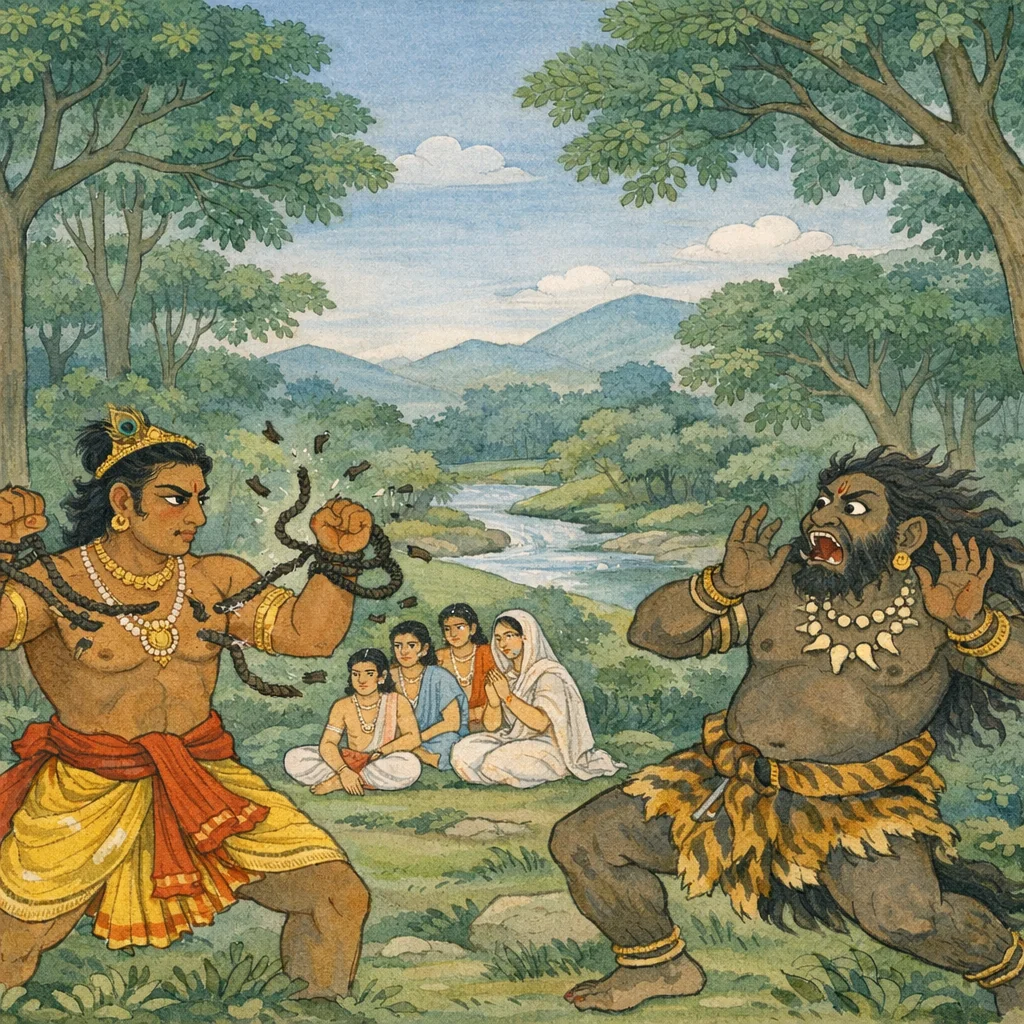
यदा विबुद्ध: कौन्तेयस्तदा संछिद्य बन्धनम् । उदतिष्ठन्महाबाहुर्भीमसेनो गतव्यथ:,जब कुन्तीनन्दन महाबाहु भीमकी आँख खुली, तब वे सारा बन्धन तोड़कर बिना किसी पीड़ाके उठ खड़े हुए
Vaiśampāyana said: When the son of Kuntī (Bhīmasena) regained consciousness, he tore apart his bonds and rose up—mighty-armed and free from pain.
Verse 13
आशीविषै: कृष्णसर्प: सुप्तं चैनमदंशयत् | सर्वेष्वेवाड्गदेशेषु न ममार च शत्रुहा,एक दिन दुर्योधनने भीमसेनको सोते समय उनके सम्पूर्ण अंग-प्रत्यंगोंमें काले साँपोंसे डँसवा दिया, किंतु शत्रुधाती भीम मर न सके
Vaiśampāyana said: Duryodhana had Bhīmasena, while he lay asleep, bitten by venomous black serpents over all parts of his body. Yet Bhīma—the slayer of foes—did not die.
Verse 14
तेषां तु विप्रकारेषु तेषु तेषु महामति: । मोक्षणे प्रतिकारे च विदुरोडवहितो5भवत्,कौरवोंके द्वारा किये हुए उन सभी अपकारोंके समय पाण्डवोंको उनसे छुड़ाने अथवा उनका प्रतीकार करनेके लिये परम बुद्धिमान् विदुरजी सदा सावधान रहते थे
But whenever those various wrongs were committed against them, the great-minded Vidura remained constantly vigilant—intent on rescuing the Pāṇḍavas from such harms or, when needed, arranging a fitting countermeasure.
Verse 15
स्वर्गस्थो जीवलोकस्य यथा शक्र: सुखावह: । पाण्डवानां तथा नित्यं विदुरोडपि सुखावह:,जैसे स्वर्गलोकमें निवास करनेवाले इन्द्र सम्पूर्ण जीव-जगत्को सुख पहुँचाते रहते हैं, उसी प्रकार विदुरजी भी सदा पाण्डवोंको सुख दिया करते थे
Vaiśampāyana said: Just as Śakra (Indra), abiding in heaven, brings well-being to the world of living beings, so too did Vidura—constantly and without fail—bring comfort and benefit to the Pāṇḍavas.
Verse 16
यदा तु विविधोपायै: संवृतैर्विवृतैरपि । नाशकद् विनिहन्तुं तान् दैवभाव्यर्थरक्षितान्,भविष्यमें जो घटना घटित होनेवाली थी, उसके लिये मानो दैव ही पाण्डवोंकी रक्षा कर रहा था। जब छिपकर या प्रकटरूपमें किये हुए अनेक उपायोंसे भी दुर्योधन पाण्डवोंका नाश न कर सका, तब उसने कर्ण और दुःशासन आदि मन्त्रियोंसे सलाह करके धृतराष्ट्रकी आज्ञासे वारणावत नगरमें एक लाहका घर बनानेकी आज्ञा दी
Vaiśampāyana said: When, despite employing many stratagems—both covert and overt—Duryodhana could not destroy them, for they were protected as if by destiny for what was yet to come, he then, after consulting with Karṇa, Duḥśāsana, and other advisers, and acting under Dhṛtarāṣṭra’s authority, ordered that a house of lac be built in the city of Vāraṇāvata.
Verse 17
ततः सम्मन्त्रय सचिवैर्वृषदुःशासनादिशभि: । धृतराष्ट्रमनुज्ञाप्य जातुषं गृहमादिशत्,भविष्यमें जो घटना घटित होनेवाली थी, उसके लिये मानो दैव ही पाण्डवोंकी रक्षा कर रहा था। जब छिपकर या प्रकटरूपमें किये हुए अनेक उपायोंसे भी दुर्योधन पाण्डवोंका नाश न कर सका, तब उसने कर्ण और दुःशासन आदि मन्त्रियोंसे सलाह करके धृतराष्ट्रकी आज्ञासे वारणावत नगरमें एक लाहका घर बनानेकी आज्ञा दी
Vaiśampāyana said: Then, after consulting with his ministers—Vṛṣa (Karna), Duḥśāsana, and others—and having obtained Dhṛtarāṣṭra’s permission, he ordered the construction of a house made of lac.
Verse 18
सुतप्रियैषी तान् राजा पाण्डवानम्बिकासुत: । ततो विवासयामास राज्यभोगबुभुक्षया,अम्बिकानन्दन धृतराष्ट्र अपने पुत्रका प्रिय चाहनेवाले थे। अतः उन्होंने राज्यभोगकी इच्छासे पाण्डवोंको हस्तिनापुर छोड़कर वारणावतके लाक्षागृहमें रहनेकी आज्ञा दे दी
Vaiśampāyana said: King Dhṛtarāṣṭra, the son of Ambikā, seeking what was dear to his own sons, then caused the Pāṇḍavas to be sent away, driven by a desire to enjoy the pleasures of kingship.
Verse 19
ते प्रातिष्ठन्त सहिता नगराजन्नागसाह्दयात् । प्रस्थाने चाभवन्मन्त्री क्षत्ता तेषां महात्मनाम्
Vaiśampāyana said: United together, they set out from Nāgarāja’s city, moved by the goodwill and affection of the Nāgas. And at the time of their departure, the kṣattā (Vidura), a wise counselor, became the minister for those noble-souled men.
Verse 20
ततः सम्प्राप्प कौन्तेया नगरं वारणावतम्,धृतराष्ट्रकी आज्ञासे शत्रुओंका दमन करनेवाले कुन्तीकुमार महात्मा पाण्डव वारणावत नगरमें आकर लाक्षागृहमें अपनी माताके साथ रहने लगे। पुरोचनसे सुरक्षित हो सदा सजग रहकर उन्होंने एक वर्षतक वहाँ निवास किया। फिर विदुरकी प्रेरणा (विदुरके भेजे हुए आदमियों)-से पाण्डवोंने एक सुरंग खुदवायी। तत्पश्चात् वे शत्रुसंतापी पाण्डव उस लाक्षागृहमें आग लगा पुरोचनको दग्ध करके भयसे व्याकुल हो मातासहित सुरंगद्वारा वहाँसे निकल भागे
Then the sons of Kuntī reached the city of Vāraṇāvata by Dhṛtarāṣṭra’s command. There, the great-souled Pāṇḍavas—ever intent on subduing their foes—took up residence with their mother in the house made of lac. Guarded by Purocana and remaining constantly vigilant, they lived there for a year. Afterwards, at Vidura’s prompting (through men sent by him), the Pāṇḍavas had a tunnel dug. Then those tormentors of their enemies set fire to the lac-house, burned Purocana, and, shaken with fear, escaped from that place with their mother through the tunnel.
Verse 21
न्यवसन्त महात्मानो मात्रा सह परंतपा: । धृतराष्ट्रेण चाज्ञप्ता उषिता जातुषे गृहे,धृतराष्ट्रकी आज्ञासे शत्रुओंका दमन करनेवाले कुन्तीकुमार महात्मा पाण्डव वारणावत नगरमें आकर लाक्षागृहमें अपनी माताके साथ रहने लगे। पुरोचनसे सुरक्षित हो सदा सजग रहकर उन्होंने एक वर्षतक वहाँ निवास किया। फिर विदुरकी प्रेरणा (विदुरके भेजे हुए आदमियों)-से पाण्डवोंने एक सुरंग खुदवायी। तत्पश्चात् वे शत्रुसंतापी पाण्डव उस लाक्षागृहमें आग लगा पुरोचनको दग्ध करके भयसे व्याकुल हो मातासहित सुरंगद्वारा वहाँसे निकल भागे
Vaiśampāyana said: Commanded by Dhṛtarāṣṭra, the high-souled Pāṇḍavas—scorchers of their foes—took up residence together with their mother in the house made of lac. The episode frames a moral tension: royal authority is invoked to mask a lethal plot, while the Pāṇḍavas respond with vigilance and restraint, seeking survival without abandoning dharma amid deception and political hostility.
Verse 22
पुरोचनाद् रक्षमाणा: संवत्सरमतन्द्रिता: । सुरुड़ां कारयित्वा तु विदुरेण प्रचोदिता:,धृतराष्ट्रकी आज्ञासे शत्रुओंका दमन करनेवाले कुन्तीकुमार महात्मा पाण्डव वारणावत नगरमें आकर लाक्षागृहमें अपनी माताके साथ रहने लगे। पुरोचनसे सुरक्षित हो सदा सजग रहकर उन्होंने एक वर्षतक वहाँ निवास किया। फिर विदुरकी प्रेरणा (विदुरके भेजे हुए आदमियों)-से पाण्डवोंने एक सुरंग खुदवायी। तत्पश्चात् वे शत्रुसंतापी पाण्डव उस लाक्षागृहमें आग लगा पुरोचनको दग्ध करके भयसे व्याकुल हो मातासहित सुरंगद्वारा वहाँसे निकल भागे
Vaiśampāyana said: Remaining constantly vigilant while being ‘protected’ by Purocana, they stayed there for a full year. Then, urged on by Vidura, they had a tunnel dug—an act of foresight and righteous self-preservation against a hidden plot. This verse marks the Pandavas’ ethical strategy: they do not initiate treachery, yet they employ prudent means to escape an unjust attempt on their lives.
Verse 23
आदीप्य जातुषं वेश्म दग्ध्वा चैव पुरोचनम् प्राद्रवन्ू भयसंविग्ना मात्रा सह परंतपा:,धृतराष्ट्रकी आज्ञासे शत्रुओंका दमन करनेवाले कुन्तीकुमार महात्मा पाण्डव वारणावत नगरमें आकर लाक्षागृहमें अपनी माताके साथ रहने लगे। पुरोचनसे सुरक्षित हो सदा सजग रहकर उन्होंने एक वर्षतक वहाँ निवास किया। फिर विदुरकी प्रेरणा (विदुरके भेजे हुए आदमियों)-से पाण्डवोंने एक सुरंग खुदवायी। तत्पश्चात् वे शत्रुसंतापी पाण्डव उस लाक्षागृहमें आग लगा पुरोचनको दग्ध करके भयसे व्याकुल हो मातासहित सुरंगद्वारा वहाँसे निकल भागे
Vaiśampāyana said: Having set the house of lac ablaze and having burned Purocana as well, the Pandavas—scorchers of foes—fled in haste, shaken with fear, together with their mother. In the wider narrative, this is the moment where the brothers, targeted by a deceitful plot, preserve their lives through vigilance and timely counsel, showing that protecting oneself and one’s dependents against treachery is consistent with dharma when done without cruelty for its own sake.
Verse 24
ददृशुर्दारुणं रक्षो हिडिम्बं वननिर्झरे । हत्वा च त॑ राक्षसेन्द्रे भीता: समवबोधनात्,तत्पश्चात् वनमें एक झरनेके पास उन्होंने एक भयंकर राक्षसको देखा, जिसका नाम हिडिम्ब था। राक्षसराज हिडिम्बको मारकर पाण्डवलोग प्रकट होनेके भयसे रातमें ही वहाँसे दूर निकल गये। उस समय उन्हें धृतराष्ट्रके पुत्रोंका भय सता रहा था। हिडिम्ब-वधके पश्चात् भीमको हिडिम्बा नामकी राक्षसी पत्नीरूपमें प्राप्त हुई, जिसके गर्भसे घटोत्कचका जन्म हुआ
Vaiśampāyana said: Near a forest stream they saw the dreadful rākṣasa Hiḍimba. After slaying that lord of rākṣasas, the Pāṇḍavas—fearful of being discovered—departed from that place under cover of night, still haunted by the threat posed by Dhṛtarāṣṭra’s sons. In the aftermath of Hiḍimba’s death, Bhīma gained the rākṣasī Hiḍimbā as a wife, and from her was born Ghaṭotkaca.
Verse 25
निशि सम्प्राद्रवन् पार्था धार्तराष्ट्र भयाददिता: । प्राप्ता हिडिम्बा भीमेन यत्र जातो घटोत्कच:,तत्पश्चात् वनमें एक झरनेके पास उन्होंने एक भयंकर राक्षसको देखा, जिसका नाम हिडिम्ब था। राक्षसराज हिडिम्बको मारकर पाण्डवलोग प्रकट होनेके भयसे रातमें ही वहाँसे दूर निकल गये। उस समय उन्हें धृतराष्ट्रके पुत्रोंका भय सता रहा था। हिडिम्ब-वधके पश्चात् भीमको हिडिम्बा नामकी राक्षसी पत्नीरूपमें प्राप्त हुई, जिसके गर्भसे घटोत्कचका जन्म हुआ
Vaiśaṃpāyana said: Driven by fear of Dhṛtarāṣṭra’s sons, the Pāṇḍavas fled by night. Thereafter, Bhīma gained the rākṣasī Hiḍimbā as his wife; from her was born Ghaṭotkaca. Thus, a desperate flight for survival was followed by an unexpected bond of protection that would later strengthen the Pāṇḍavas in their struggle for dharma.
Verse 26
एकचक्रां ततो गत्वा पाण्डवा: संशितव्रता: । वेदाध्ययनसम्पन्नास्ते5भवन् ब्रह्मचारिण:,तदनन्तर कठोर व्रतका पालन करनेवाले पाण्डव एकचक्रा नगरीमें जाकर वेदाध्ययनपरायण ब्रह्मचारी बन गये
Vaiśaṃpāyana said: Thereafter the Pāṇḍavas, steadfast in their austere vows, went to the city of Ekacakrā. There they lived as disciplined brahmacārins, devoted to Vedic study—choosing restraint and learning as their refuge while they remained in hiding.
Verse 27
ते तत्र नियता: काल कंचिदृषुर्नरर्षभा: । मात्रा सहैकचक्रायां ब्राह्मणस्य निवेशने,उस एकचक्रा नगरीमें वे नरश्रेष्ठ पाण्डव अपनी माताके साथ एक ब्राह्मणके घरमें कुछ कालतक टिके रहे
Vaiśaṃpāyana said: There, the Pāṇḍavas—bull-like among heroes—lived for some time in restraint and concealment, staying with their mother in the dwelling of a brāhmaṇa in the city of Ekacakrā. The episode highlights prudent self-control and reliance on righteous hospitality while they remained in hiding.
Verse 28
तत्राससाद क्षुधितं पुरुषादं वृकोदर: । भीमसेनो महाबाहुर्बक॑ नाम महाबलम्,उस नगरके समीप एक मनुष्यभक्षी राक्षस रहता था, जिसका नाम था बक। एक दिन महाबाहु भीमसेन उस क्षुधातुर महाबली राक्षस बकके समीप गये
Vaiśaṃpāyana said: There, the mighty-armed Bhīmasena—known as Vṛkodara—approached the ravenous man-eating rākṣasa named Baka, a being of great strength. The scene sets forth Bhīma’s resolve to confront predatory violence and protect the vulnerable in the name of dharma.
Verse 29
त॑ चापि पुरुषव्याप्रो बाहुवीयेण पाण्डव: । निहत्य तरसा वीरो नागरान् पर्यसान्त्वयत्,नरश्रेष्ठ पाण्डुनन्दन वीरवर भीमने अपने बाहुबलसे उस राक्षसको वेगपूर्वक मारकर वहाँके नगरनिवासियोंको धैर्य बँधाया
Vaiśaṃpāyana said: That Pāṇḍava hero, a tiger among men, slew the rākṣasa with the sheer strength of his arms, striking swiftly; and afterward he reassured the townspeople—restoring their courage and sense of safety after the terror.
Verse 30
ततस्ते शुश्रुव॒ु: कृष्णां पञ्चालेषु स्वयंवराम् | श्रुत्वा चैवा भ्यगच्छन्त गत्वा चैवालभन्त ताम्,वहीं सुननेमें आया कि पांचाल देशकी राजकुमारी कृष्णाका स्वयंवर होनेवाला है। यह सुनकर पाण्डव वहाँ गये और जाकर उन्होंने राजकुमारीको प्राप्त कर लिया। द्रौपदीको प्राप्त करनेके बाद पहचान लिये जानेपर भी वे एक वर्षतक पांचाल देशमें ही रहे। फिर वे शत्रुदमन पाण्डव पुन: हस्तिनापुर लौट आये
Vaiśaṃpāyana said: Then they heard that Kṛṣṇā (Draupadī), the princess of the Pāñcālas, was to hold her svayaṃvara. On hearing this, the Pāṇḍavas went there, and having gone, they won her. Even after they were recognized following Draupadī’s attainment, they stayed in the land of the Pāñcālas for a year; thereafter those foe-subduing Pāṇḍavas returned again to Hastināpura.
Verse 31
ते तत्र द्रौपदी लब्ध्वा परिसंवत्सरोषिता: । विदिता हास्तिनपुरं प्रत्याजग्मुररिंदमा:,वहीं सुननेमें आया कि पांचाल देशकी राजकुमारी कृष्णाका स्वयंवर होनेवाला है। यह सुनकर पाण्डव वहाँ गये और जाकर उन्होंने राजकुमारीको प्राप्त कर लिया। द्रौपदीको प्राप्त करनेके बाद पहचान लिये जानेपर भी वे एक वर्षतक पांचाल देशमें ही रहे। फिर वे शत्रुदमन पाण्डव पुन: हस्तिनापुर लौट आये
Vaiśaṃpāyana said: Having obtained Draupadī there, the Pāṇḍavas stayed on for about a year. Though their identity had become known, those subduers of foes then returned again to Hāstinapura.
Verse 32
ते उक्ता धृतराष्ट्रेण राज्ञा शान्तनवेन च । भ्रातृभिविंग्रहस्तात कथं वो न भवेदिति
Vaiśaṃpāyana said: Thus were they addressed by King Dhṛtarāṣṭra, the son of Śantanu: “Dear one, when there is contention among brothers, how could it not arise for you as well?”
Verse 33
अस्माभि: खाण्डवप्रस्थे युष्मद्वासो 5नुचिन्तित: । तस्माज्जनपदोपेतं सुविभक्तमहापथम्
Vaiśaṃpāyana said: “We have thoughtfully arranged for your residence at Khāṇḍavaprastha. Therefore, it is a well-populated region, with great highways properly laid out and clearly divided—fit for orderly settlement and governance.”
Verse 34
वासाय खाण्डवप्रस्थं व्रजध्वं गतमत्सरा: । तयोस्ते वचनाज्जग्मु: सह सर्व: सुहृज्जनै:
Vaiśaṃpāyana said: “Go to Khāṇḍavaprastha to take up residence there, free from jealousy.” At the word of those two, they departed, accompanied by all their well-wishing friends and kinsmen.
Verse 35
नगरं खाण्डवप्रस्थं रत्नान्यादाय सर्वश: । तत्र ते न््यवसन् पार्था: संवत्सरगणान् बहून्
Vaiśampāyana said: Taking with them all manner of treasures, the Pārthas went to the city of Khāṇḍavaprastha. There they settled and lived for many years, establishing their household and rule in that region.
Verse 36
वशे शस्त्रप्रतापेन कुर्वन्तो5न्यान् महीभूत: । एवं धर्मप्रधानास्ते सत्यव्रतपरायणा:
By the sheer might and splendor of their weapons, those kings brought others under their control. Yet they were foremost in dharma—steadfast in vows of truth and devoted to righteous conduct.
Verse 37
अप्रमत्तोत्थिता: क्षान्ता: प्रतपन््तो5हितान् बहून् । वहाँ आनेपर राजा धुृतराष्ट्र तथा शान्तनुनन्दन भीष्मजीने उनसे कहा--“तात! तुम्हें अपने भाई कौरवोंके साथ लड़ने-झगड़नेका अवसर न प्राप्त हो इसके लिये हमने विचार किया है कि तुमलोग खाण्डवप्रस्थमें रहो। वहाँ अनेक जनपद उससे जुड़े हुए हैं। वहाँ सुन्दर विभागपूर्वक बड़ी-बड़ी सड़कें बनी हुई हैं। अत: तुमलोग ईर्ष्याका त्याग करके खाण्डवप्रस्थमें रहनेके लिये जाओ।” उन दोनोंके इस प्रकार आज्ञा देनेपर सब पाण्डव अपने समस्त सुहृदोंके साथ सब प्रकारके रत्न लेकर खाण्डवप्रस्थको चले गये। वहाँ वे कुन्तीपुत्र अपने अस्त्र-शस्त्रोंके प्रतापसे अन्यान्य राजाओंको अपने वशमें करते हुए बहुत वर्षोतक निवास करते रहे। इस प्रकार धर्मको प्रधानता देनेवाले, सत्यव्रतके पालनमें तत्पर, सदा सावधान एवं सजग रहनेवाले, क्षमाशील पाण्डव वीर बहुत-से शत्रुओंको संतप्त करते हुए वहाँ निवास करने लगे || ३२--३६ ह ।। अजयदू भीमसेनस्तु दिशं प्राचीं महायशा:,महायशस्वी भीमसेनने पूर्व दिशापर विजय पायी। वीर अर्जुनने उत्तर, नकुलने पश्चिम और शत्रु वीरोंका संहार करनेवाले सहदेवने दक्षिण दिशापर विजय प्राप्त की
Vaiśampāyana said: Ever vigilant, resolute, and forbearing, the Pāṇḍavas dwelt there, scorching many hostile foes. In the surrounding narrative, Dhṛtarāṣṭra and Bhīṣma (son of Śāntanu) instruct the Pāṇḍavas to reside at Khāṇḍavaprastha so that conflict with their Kaurava brothers may be avoided. The Pāṇḍavas depart with their well-wishers and treasures, establish themselves there, and by the prowess of their weapons bring neighboring rulers under control—yet the ethical emphasis remains on restraint, patience, truthfulness, and alertness while upholding dharma.
Verse 38
उदीचीमर्जुनो वीर: प्रतीचीं नकुलस्तथा । दक्षिणां सहदेवस्तु विजिग्ये परवीरहा,महायशस्वी भीमसेनने पूर्व दिशापर विजय पायी। वीर अर्जुनने उत्तर, नकुलने पश्चिम और शत्रु वीरोंका संहार करनेवाले सहदेवने दक्षिण दिशापर विजय प्राप्त की
Vaiśampāyana said: The heroic Arjuna conquered the northern quarter; Nakula likewise subdued the western. Sahadeva—slayer of enemy champions—won the southern region. And the greatly renowned Bhīmasena gained victory in the eastern direction. Thus the Pāṇḍava brothers, dividing the quarters among themselves, extended their righteous dominion by overcoming hostile powers.
Verse 39
एवं चक्कुरिमां सर्वे वशे कृत्स्नां वसुन्धराम् । पज्चभि: सूर्यसंकाशै: सूर्येण च विराजता,इस तरह सब पाण्डवोंने समूची पृथ्वीको अपने वशमें कर लिया। वे पाँचों भाई सूर्यके समान तेजस्वी थे और आकाशकमें नित्य उदित होनेवाले सूर्य तो प्रकाशित थे ही; इस तरह सत्यपराक्रमी पाण्डवोंके होनेसे यह पृथ्वी मानो छः सूर्योसे प्रकाशित होनेवाली बन गयी। तदनन्तर कोई निमित्त बन जानेके कारण सत्यपराक्रमी तेजस्वी धर्मराज युधिष्ठिरने अपने प्राणोंसे भी अत्यन्त प्रिय, स्थिर-बुद्धि तथा सदगुणयुक्त भाई नरश्रेष्ठ सव्यसाची अर्जुनको वनमें भेज दिया। अर्जुन अपने धैर्य, सत्य, धर्म और विजयशीलताके कारण भाइयोंको अधिक प्रिय थे। उन्होंने अपने बड़े भाईकी आज्ञाका कभी उल्लंघन नहीं किया था। वे पूरे बारह वर्ष और एक मासतक वनमें रहे
Thus all of them brought the entire earth under their control. The five brothers shone like suns, and with the sun itself blazing in the sky, the world seemed illuminated by six suns—such was the radiance born of the Pāṇḍavas’ truthful valor.
Verse 40
षट्सूर्येवाभवत् पृथ्वी पाण्डवै: सत्यविक्रमै: । ततो निमित्ते कम्मिंश्षिद् धर्मराजो युधिष्ठिर:,इस तरह सब पाण्डवोंने समूची पृथ्वीको अपने वशमें कर लिया। वे पाँचों भाई सूर्यके समान तेजस्वी थे और आकाशकमें नित्य उदित होनेवाले सूर्य तो प्रकाशित थे ही; इस तरह सत्यपराक्रमी पाण्डवोंके होनेसे यह पृथ्वी मानो छः सूर्योसे प्रकाशित होनेवाली बन गयी। तदनन्तर कोई निमित्त बन जानेके कारण सत्यपराक्रमी तेजस्वी धर्मराज युधिष्ठिरने अपने प्राणोंसे भी अत्यन्त प्रिय, स्थिर-बुद्धि तथा सदगुणयुक्त भाई नरश्रेष्ठ सव्यसाची अर्जुनको वनमें भेज दिया। अर्जुन अपने धैर्य, सत्य, धर्म और विजयशीलताके कारण भाइयोंको अधिक प्रिय थे। उन्होंने अपने बड़े भाईकी आज्ञाका कभी उल्लंघन नहीं किया था। वे पूरे बारह वर्ष और एक मासतक वनमें रहे
Vaiśampāyana said: Because of the Pāṇḍavas—whose valor was true and unwavering—the earth seemed as though lit by six suns. Then, when a certain occasion arose as an omen or dharmic pretext, King Yudhiṣṭhira, steadfast in dharma, sent his brother Arjuna, Savyasācin—dearer to him than life, best of men, firm in judgment and rich in virtues—away to the forest.
Verse 41
वन॑ प्रस्थापयामास तेजस्वी सत्यविक्रम: । प्राणेभ्योडपि प्रियतरं भ्रातरं सव्यसाचिनम्,इस तरह सब पाण्डवोंने समूची पृथ्वीको अपने वशमें कर लिया। वे पाँचों भाई सूर्यके समान तेजस्वी थे और आकाशकमें नित्य उदित होनेवाले सूर्य तो प्रकाशित थे ही; इस तरह सत्यपराक्रमी पाण्डवोंके होनेसे यह पृथ्वी मानो छः सूर्योसे प्रकाशित होनेवाली बन गयी। तदनन्तर कोई निमित्त बन जानेके कारण सत्यपराक्रमी तेजस्वी धर्मराज युधिष्ठिरने अपने प्राणोंसे भी अत्यन्त प्रिय, स्थिर-बुद्धि तथा सदगुणयुक्त भाई नरश्रेष्ठ सव्यसाची अर्जुनको वनमें भेज दिया। अर्जुन अपने धैर्य, सत्य, धर्म और विजयशीलताके कारण भाइयोंको अधिक प्रिय थे। उन्होंने अपने बड़े भाईकी आज्ञाका कभी उल्लंघन नहीं किया था। वे पूरे बारह वर्ष और एक मासतक वनमें रहे
Vaiśampāyana said: Then the radiant, truly valorous (Yudhiṣṭhira) sent his brother Savyasācin (Arjuna) to the forest—dearer to him even than his own life.
Verse 42
अर्जुन पुरुषव्याप्रं स्थिरात्मानं गुणैर्युतम् । (धैर्यात् सत्याच्च धर्माच्च विजयाच्चाधिकप्रिय: । अर्जुनो क्रातरं ज्येष्ठ॑ नात्यवर्तत जातुचित् ।।) स वै संवत्सरं पूर्ण मासं चैक॑ वने वसन्,इस तरह सब पाण्डवोंने समूची पृथ्वीको अपने वशमें कर लिया। वे पाँचों भाई सूर्यके समान तेजस्वी थे और आकाशकमें नित्य उदित होनेवाले सूर्य तो प्रकाशित थे ही; इस तरह सत्यपराक्रमी पाण्डवोंके होनेसे यह पृथ्वी मानो छः सूर्योसे प्रकाशित होनेवाली बन गयी। तदनन्तर कोई निमित्त बन जानेके कारण सत्यपराक्रमी तेजस्वी धर्मराज युधिष्ठिरने अपने प्राणोंसे भी अत्यन्त प्रिय, स्थिर-बुद्धि तथा सदगुणयुक्त भाई नरश्रेष्ठ सव्यसाची अर्जुनको वनमें भेज दिया। अर्जुन अपने धैर्य, सत्य, धर्म और विजयशीलताके कारण भाइयोंको अधिक प्रिय थे। उन्होंने अपने बड़े भाईकी आज्ञाका कभी उल्लंघन नहीं किया था। वे पूरे बारह वर्ष और एक मासतक वनमें रहे
Vaiśaṃpāyana said: Arjuna—best among men, steady in mind and endowed with virtues—was especially dear to his brothers for his courage, truthfulness, righteousness, and constant victory. He never at any time transgressed the command of his eldest brother. Thus he dwelt in the forest for a full year and one additional month.
Verse 43
(तीर्थयात्रां च कृतवान् नागकन्यामवाप्य च । पाण्ड्यस्य तनयां लब्ध्वा तत्र ताभ्यां सहोषित: ।।) ततो5गच्छद्धृषीकेशं द्वारवत्यां कदाचन । लब्धवांस्तत्र बी भत्सुर्भार्या राजीवलोचनाम्
Vaiśampāyana said: Having made a pilgrimage to the sacred fords (tīrthas), and having obtained a Nāga maiden, and also having won the daughter of the Pāṇḍya king, he lived there for a time with those two. Then, on a certain occasion, he went to Hṛṣīkeśa in Dvāravatī; and there the formidable Bībhatsu obtained as his wife the lotus-eyed princess.
Verse 44
अनुजां वासुदेवस्य सुभद्रां भद्रभाषिणीम् | सा शचीव महेन्द्रेण श्री: कृष्णेनेव संगता
Vaiśampāyana said: Subhadrā, the younger sister of Vāsudeva (Kṛṣṇa), gentle and auspicious in speech, was united with him—just as Śacī is with great Indra, and as Śrī (Lakṣmī) is with Kṛṣṇa.
Verse 45
सुभद्रा युयुजे प्रीत्या पाण्डवेनार्जुनेन ह । उसी समय उन्होंने निर्मल तीर्थोकी यात्रा की और नागकन्या उलूपीको पाकर पाण्ड्यदेशीय नरेश चित्रवाहनकी पुत्री चित्रांगदाको भी प्राप्त किया और उन-उन स्थानोंमें उन दोनोंके साथ कुछ कालतक निवास किया। तत्पश्चात् वे किसी समय द्वारकामें भगवान् श्रीकृष्णके पास गये। वहाँ अर्जुनने मंगलमय वचन बोलनेवाली कमललोचना सुभद्राको, जो वसुदेवनन्दन श्रीकृष्णकी छोटी बहिन थी, पत्नीरूपमें प्राप्त किया। जैसे इन्द्रसे शच्ची और भगवान् विष्णुसे लक्ष्मी संयुक्त हुई हैं, उसी प्रकार सुभद्रा बड़े प्रेमसे पाण्डुनन्दन अर्जुनसे मिली || ४३-४४ $ || अतर्पयच्च कौन्तेय: खाण्डवे हव्यवाहनम्,व्यवसायसहायस्य विष्णो: शत्रुवधेष्विव । तत्पश्चात् कुन्तीकुमार अर्जुनने खाण्डवप्रस्थमें भगवान् वासुदेवके साथ रहकर अग्निदेवको तृप्त किया। नृपश्रेष्ठ जनमेजय! भगवान् श्रीकृष्णका साथ होनेसे अर्जुनको इस कार्यमें ठीक उसी तरह अधिक परिश्रम या भारका अनुभव नहीं हुआ, जैसे दृढ़ निश्चयको सहायक बनाकर देवशत्रुओंका वध करते समय भगवान् विष्णुको भार या परिश्रमकी प्रतीति नहीं होती है
Vaiśaṃpāyana said: Subhadrā, with loving joy, was united in marriage with Arjuna of the Pāṇḍavas. The line underscores a dharmic union grounded in mutual affection and rightful alliance, marking Arjuna’s transition from wandering exploits to household responsibility and sanctioned kinship with Kṛṣṇa’s family.
Verse 46
बीभत्सुर्वासुदेवेन सहितो नृपसत्तम । नातिभारो हि पार्थस्य केशवेन सहाभवत्
Vaiśampāyana said: O best of kings, Arjuna (Bībhatsu), accompanied by Vāsudeva (Kṛṣṇa), did not feel the task to be overly burdensome; for with Keśava at his side, the weight upon Pārtha was not excessive.
Verse 47
पार्थायानिनिर्ददी चापि गाण्डीवं धनुरुत्तमम्,तदनन्तर अग्निदेवने संतुष्ट हो अर्जुनको उत्तम गाण्डीव धनुष, अक्षय बाणोंसे भरे हुए दो तूणीर और एक कपिध्वज रथ प्रदान किया। उसी समय अर्जुनने महान् असुर मयको खाण्डव वनमें जलनेसे बचाया था
Vaiśaṃpāyana said: Then, for Pārtha (Arjuna), there was also bestowed the supreme bow Gāṇḍīva. Thereafter, pleased with him, the Fire-god granted Arjuna the excellent Gāṇḍīva bow, two quivers filled with inexhaustible arrows, and a chariot bearing the banner marked with a monkey. At that very time, Arjuna also saved the great asura Maya from being consumed in the burning of the Khāṇḍava forest—showing that even amid a destructive rite, protection of one who seeks refuge can stand as a counterweight of dharma.
Verse 48
इषुधी चाक्षयैर्बाणै रथं च कपिलक्षणम् | मोक्षयामास बीभत्सुर्मयं यत्र महासुरम्,तदनन्तर अग्निदेवने संतुष्ट हो अर्जुनको उत्तम गाण्डीव धनुष, अक्षय बाणोंसे भरे हुए दो तूणीर और एक कपिध्वज रथ प्रदान किया। उसी समय अर्जुनने महान् असुर मयको खाण्डव वनमें जलनेसे बचाया था
Vaiśampāyana said: Arjuna (Bībhatsu) bestowed upon him two quivers filled with inexhaustible arrows and a chariot marked with the emblem of a monkey. Thereafter, in the Khāṇḍava forest, Arjuna rescued the great Asura Maya from being consumed by the fire—an act that frames martial power as legitimate when joined to gratitude, protection of the supplicant, and restraint amid destruction.
Verse 49
स चकार सभा दिव्यां सर्वरत्नसमाचिताम् | तस्यां दुर्योधनो मन्दो लोभ॑ चक्रे सुदुर्मति:,इससे संतुष्ट होकर उसने अर्जुनके लिये एक दिव्य सभाभवनका निर्माण किया, जो सब प्रकारके रत्नोंसे सुशोभित था। खोटी बुद्धिवाले मूर्ख दुर्योधनके मनमें उस सभाको ले लेनेके लिये लोभ पैदा हुआ
He caused a wondrous assembly-hall to be built, adorned with every kind of jewel. Seeing that hall, dull-witted Duryodhana—of perverse understanding—was seized by greed, desiring to appropriate it for himself.
Verse 50
ततोऊक्षैर्वज्चयित्वा च सौबलेन युधिष्ठिरम् । वन॑ प्रस्थापयामास सप्त वर्षाणि पजच च,तब उसने शकुनिकी सहायतासे कपटपूर्ण जुएके द्वारा युधिष्ठिरको ठग लिया और उन्हें बारह वर्षतक वनमें और तेरहवें वर्ष एक राष्ट्रमें अज्ञात-रूपसे वास करनेके लिये भेज दिया। इसके बाद चौदहवें वर्षमें पाण्डवोंने लौटकर अपना राज्य और धन माँगा
Vaiśampāyana said: Then, with the aid of Śakuni of Subala’s line, Yudhiṣṭhira was deceived through the game of dice. Thus cheated, he was sent to dwell in the forest for twelve years and thereafter to live incognito for a further year. The episode shows how adharma—fraud, manipulation, and the abuse of another’s weakness—can overturn rightful order and drive the righteous into exile, setting the stage for a later demand for justice and restoration.
Verse 51
अज्ञातमेकं राष्ट्रे च ततो वर्ष त्रयोदशम् | ततश्षतुर्दशे वर्षे याचमाना: स्वकं वसु,तब उसने शकुनिकी सहायतासे कपटपूर्ण जुएके द्वारा युधिष्ठिरको ठग लिया और उन्हें बारह वर्षतक वनमें और तेरहवें वर्ष एक राष्ट्रमें अज्ञात-रूपसे वास करनेके लिये भेज दिया। इसके बाद चौदहवें वर्षमें पाण्डवोंने लौटकर अपना राज्य और धन माँगा
Vaiśampāyana said: After that, they were to live for one year in concealment within a kingdom, thus completing the thirteenth year. Then, in the fourteenth year, the Pāṇḍavas returned and demanded back their own wealth and rightful possessions. The passage underscores that deceitful loss yields no moral legitimacy, but instead renews a claim grounded in dharma and rightful ownership.
Verse 52
नालभन्त महाराज ततो युद्धमवर्तत । ततस्ते क्षत्रमुत्साद्य हत्वा दुर्योधनं नृपम्,महाराज! जब इस प्रकार न्यायपूर्वक माँगनेपर भी उन्हें राज्य नहीं मिला, तब दोनों दलोंमें युद्ध छिड़ गया। फिर तो पाण्डव-वीरोंने क्षत्रियकुलका संहार करके राजा दुर्योधनको भी मार डाला और अपने राज्यको, जिसका अधिकांश भाग उजाड़ हो गया था, पुनः अपने अधिकारमें कर लिया। विजयी वीरोंमें श्रेष्ठ जनममेजय! अनायास महान् कर्म करनेवाले पाण्डवोंका यही पुरातन इतिहास है। इस प्रकार राज्यके विनाशके लिये उनमें फ़ूट पड़ी और युद्धके बाद उन्हें विजय प्राप्त हुई
Vaiśampāyana said: “O King, when they did not obtain the kingdom even after making a rightful demand, war broke out between the two sides. Then, after devastating the Kṣatriya host, they slew King Duryodhana and regained their own sovereignty—though the realm was left largely desolate. O Janamejaya, this is the ancient account of the Pāṇḍavas, heroes who accomplished great deeds with seeming ease: division arose among them leading to the ruin of the kingdom, and after the war they attained victory.”
Verse 53
राज्यं विहतभूयिष्ठं प्रत्यपद्यन्त पाण्डवा: । एवमेतत् पुरावृत्तं तेषामक्लिष्टकर्मणाम् | भेदो राज्यविनाशाय जयशक्ष जयतां वर,महाराज! जब इस प्रकार न्यायपूर्वक माँगनेपर भी उन्हें राज्य नहीं मिला, तब दोनों दलोंमें युद्ध छिड़ गया। फिर तो पाण्डव-वीरोंने क्षत्रियकुलका संहार करके राजा दुर्योधनको भी मार डाला और अपने राज्यको, जिसका अधिकांश भाग उजाड़ हो गया था, पुनः अपने अधिकारमें कर लिया। विजयी वीरोंमें श्रेष्ठ जनममेजय! अनायास महान् कर्म करनेवाले पाण्डवोंका यही पुरातन इतिहास है। इस प्रकार राज्यके विनाशके लिये उनमें फ़ूट पड़ी और युद्धके बाद उन्हें विजय प्राप्त हुई
Vaiśampāyana said: The Pāṇḍavas regained their kingdom, though most of it had been laid waste. Such is the ancient account of those heroes whose deeds were accomplished without faltering. O Janamejaya, best among the victorious and capable of triumph, this is how a rupture arose among them that led to the ruin of the realm; yet after the war they attained victory and recovered sovereignty.
Verse 61
इति श्रीमहा भारते आदिपर्वणि अंशावतरणपर्वणि भारतसूत्रं नामैकषष्टितमो<5 ध्याय:,इस प्रकार श्रीमह्या भारत आदिपर्वके अन्तर्गत अंशावतरणपर्वमें भारतसूत्र नामक इकसठवाँ अध्याय पूरा हुआ
Thus, in the revered Mahābhārata, within the Ādi Parva and specifically the Aṃśāvataraṇa section, the sixty-first chapter—entitled “Bhārata-sūtra”—comes to its close. This colophon signals a formal completion of the chapter and frames the narrative as part of a divinely ordered unfolding of events.
Verse 193
तेन मुक्ता जतुगृहान्निशी थे प्राद्रवन् वनम् । मातासहित पाँचों पाण्डव एक साथ हस्तिनापुरसे प्रस्थित हुए। उन महात्मा पाण्डवोंके प्रस्थानकालमें विदुरजी सलाह देनेवाले हुए। उन्हींकी सलाह एवं सहायतासे पाण्डवलोग लाक्षागृहले बचकर आधीरातके समय वनमें भाग निकले थे
Thus freed from the peril of the lac-house, they fled at midnight into the forest. The five Pāṇḍavas, together with their mother, set out from Hastināpura as one. At the hour of those great-souled Pāṇḍavas’ departure, Vidura stood as their counsellor; by his advice and aid they were saved from the lac-house and escaped into the woods in the middle of the night.
Verse 466
व्यवसायसहायस्य विष्णो: शत्रुवधेष्विव । तत्पश्चात् कुन्तीकुमार अर्जुनने खाण्डवप्रस्थमें भगवान् वासुदेवके साथ रहकर अग्निदेवको तृप्त किया। नृपश्रेष्ठ जनमेजय! भगवान् श्रीकृष्णका साथ होनेसे अर्जुनको इस कार्यमें ठीक उसी तरह अधिक परिश्रम या भारका अनुभव नहीं हुआ, जैसे दृढ़ निश्चयको सहायक बनाकर देवशत्रुओंका वध करते समय भगवान् विष्णुको भार या परिश्रमकी प्रतीति नहीं होती है
Vaiśampāyana said: Thereafter, Arjuna, the son of Kuntī, dwelling at Khāṇḍavaprastha together with the Blessed Vāsudeva, satisfied Agni. O best of kings, Janamejaya, because Śrī Kṛṣṇa stood with him, Arjuna felt no excessive strain or burden in that undertaking—just as Lord Viṣṇu, aided by unwavering resolve, feels no weight or fatigue when slaying the enemies of the gods.
Frequently Asked Questions
The chapter poses an interpretive dilemma: whether to read political conduct as merely personal choice or as intensified ethical agency shaped by lineage and cosmic ‘portions’; it implicitly challenges rulers to act responsibly despite predispositions and power.
Understanding prabhava–apyaya (origins and dissolution) and the aṃśa-framework encourages ethical vigilance: actions in governance and conflict have transpersonal consequences, so discernment and restraint remain central even amid inherited tendencies.
Yes. The closing verses state that hearing this aṃśāvataraṇa account is auspicious and instructive; the informed listener who understands origins and dissolution does not collapse under hardships, indicating a stabilizing, reflective benefit.