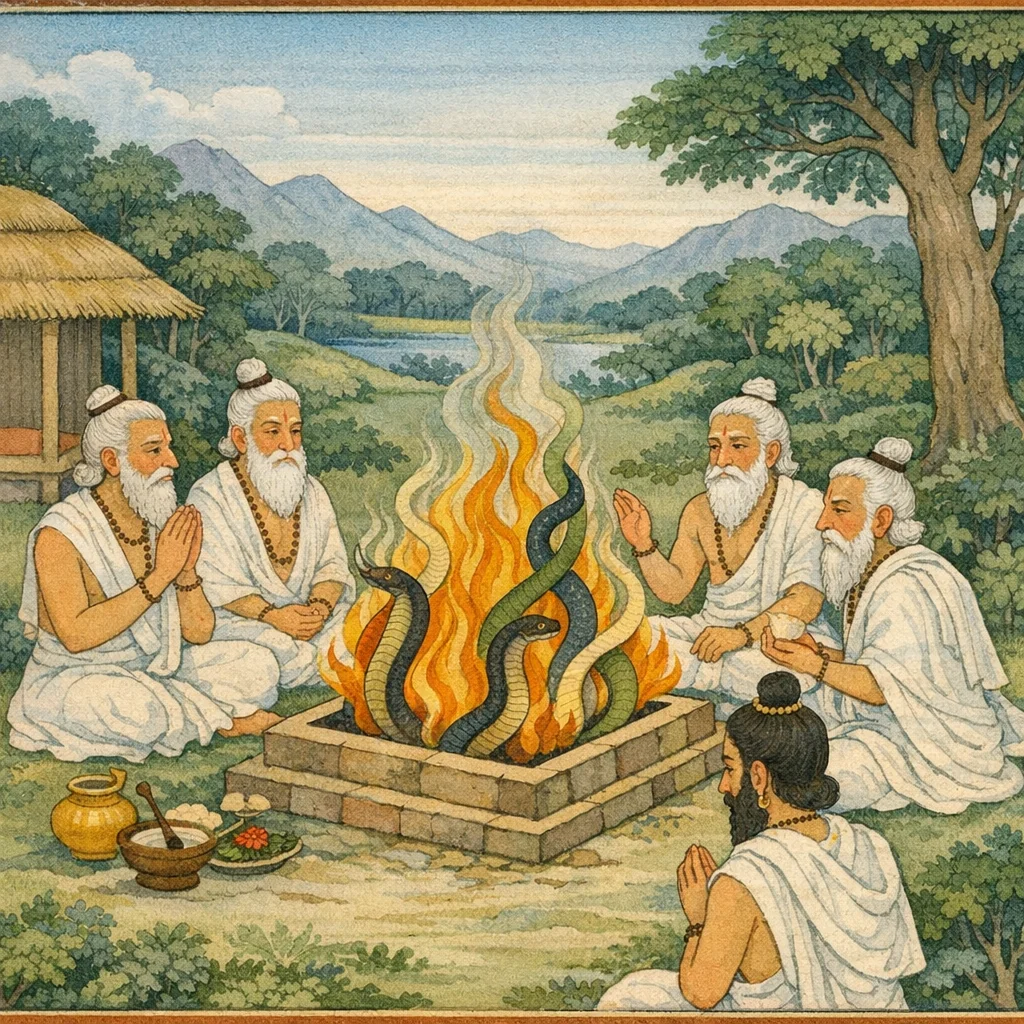
Adhyaya 57
अध्याय ५७ — राजोपरिचरवसोः धर्मोपदेशः, सत्यवत्याः उत्पत्तिः, व्यासजन्म च (Adhyāya 57: Indra’s Counsel to King Vasu; Origin of Satyavatī; Birth of Vyāsa)
Upa-parva: Ādi Parva — Vaṃśa–utpatti & Dharmarāja Vasu (Rājoparicara) Episode
Vaiśaṃpāyana narrates the career of King Vasu (Rājoparicara), portrayed as dharma-committed and chosen to govern the fertile Cedi realm under Indra’s instruction. Indra dissuades him from ascetic withdrawal, prescribing lokadharma and promising prosperity, divine conveyance (vimāna), and protective insignia (Vaijayantī/Indramālā). Vasu institutes Śakra-oriented royal rites and festivals, presented as enduring political-religious customs with promised benefits for rulers and polities. The narrative then shifts to etiological genealogy: a mountain (Kolāhala) obstructs the Śuktimatī river; Vasu strikes it, releasing the river, which yields a human pair—Vasu appoints the male as general and marries the female (Girikā). On a day of Girikā’s fertility, Vasu obeys ancestral injunction to hunt; an involuntary emission is preserved and entrusted to a hawk for delivery, but it falls into the Yamunā during an aerial conflict. The cursed apsaras Adrikā, in fish-form, receives it; fishermen later extract twin human infants from the fish, one male taken by Vasu (Matsya) and one female given to a fisher-chief, becoming Satyavatī (initially matsya-gandhinī). Parāśara encounters Satyavatī while she ferries a boat; at her request he creates concealing mist, grants her the boon of lasting virginity and a superior fragrance (Yojanagandhā/Gandhavatī), and begets Kṛṣṇa Dvaipāyana (Vyāsa) on an island. The chapter closes by situating Vyāsa’s later role in arranging the Vedas and disseminating the Bhārata through disciples, and by listing further notable births that structure the epic’s broader historical field.
Chapter Arc: शौनक ऋषि पूछते हैं—सर्पसत्र में अग्नि में गिरे वे प्रधान-प्रधान नाग कौन थे, जिनके नाम सुनकर ही यज्ञ की भयावहता का अनुमान हो? → सौति (उग्रश्रव) बताते हैं कि संख्या असंख्य है—सहस्रों, प्रयुतों, अर्बुदों तक; फिर भी स्मृति के आधार पर वे ‘मुख्य’ नागों के नाम क्रमशः गिनाने लगते हैं। नामों की लम्बी धारा स्वयं एक ‘गणना-यंत्र’ बनकर यज्ञ की निरंतरता और अग्नि की अतृप्ति को बढ़ाती जाती है। → विविध कुलों—विशेषतः वासुकि-वंश, धृतराष्ट्र-वंश, ऐरावत-वंश और कौरव्य-कुल—के महाकाय, महावेग, अत्यन्त विषैले नागों का एक-एक कर ‘हव्यवाहन’ में प्रविष्ट होना वर्णित होता है; ‘कालानल-विष’ जैसे विशेषणों के साथ यह दृश्य नरसंहार-सा तीव्र हो उठता है। → अध्याय का स्वर ‘कथा-घटना’ से अधिक ‘सूची-उद्घोष’ का है—सौति नामों का कीर्तन कर शौनक की जिज्ञासा को तृप्त करते हैं और यह स्थापित करते हैं कि यज्ञ में अनेक कुलों के नाग भस्म हुए। → अग्नि में गिरते नागों की यह गणना आगे भी चलने का संकेत देती है—क्या यह विनाश अनवरत रहेगा, या कोई धर्म-रक्षक हस्तक्षेप करेगा?
Shlokas
Verse 1
ऑपनआक्रात बछ। अर: सप्तपजञ्चाशत्तमो<ध्याय: सर्पयज्ञमें दग्ध हुए प्रधान-प्रधान सर्पोके नाम शौनक उवाच ये सर्पाः सर्पसत्रेडस्मिन् पतिता हव्यवाहने । तेषां नामानि सर्वेषां श्रोतुमिच्छामि सूतज,शौनकजीने पूछा--सूतनन्दन! इस सर्पसत्रकी धधकती हुई आगमें जो-जो सर्प गिरे थे, उन सबके नाम मैं सुनना चाहता हूँ
Śaunaka said: “O son of the Sūta, I wish to hear the names of all those serpents who fell into the serpent-sacrifice, consumed by the blazing fire. Tell me who they were.”
Verse 2
सौतिर्वाच सहस्राणि बहून्यस्मिन् प्रयुतान्यर्बुदानि च न शक््यं परिसंख्यातुं बहुत्वाद् द्विजसत्तम,उग्रश्रवाजीने कहा--द्विजश्रेष्ठ। इस यज्ञमें सहस्रों, लाखों एवं अरबों सर्प गिरे थे, उनकी संख्या बहुत होनेके कारण गणना नहीं की जा सकती
Ugraśravas, the son of Sūta, said: “O best of twice-born sages, in this sacrifice thousands upon thousands—indeed tens of thousands and even crores—of serpents fell in. Because they were so many, their number cannot be fully counted.”
Verse 3
यथास्मृति तु नामानि पन्नगानां निबोध मे । उच्यमानानि मुख्यानां हुतानां जातवेदसि,परंतु सर्पयज्ञकी अग्निमें जिन प्रधान-प्रधान नागोंकी आहुति दी गयी थी, उन सबके नाम अपनी स्मृतिके अनुसार बता रहा हूँ, सुनो
Śaunaka said: “Now, according to what I remember, learn from me the names of the serpents. I shall recite the names of those foremost ones who were offered into Jātavedas—the sacrificial fire—during the serpent-sacrifice.”
Verse 4
वासुके: कुलजातांस्तु प्राधान्येन निबोध मे । नीलरक्तान् सितान् घोरान् महाकायान् विषोल्बणान्,पहले वासुकिके कुलमें उत्पन्न हुए मुख्य-मुख्य सर्पोके नाम सुनो--वे सब-के-सब नीले, लाल, सफेद और भयानक थे। उनके शरीर विशाल और विष अत्यन्त भयंकर थे
Śaunaka said: “Now hear from me, in their principal order, the foremost serpents born in the lineage of Vāsuki—some dark-blue, some red, some white, and some dreadful in aspect; vast in body and terrible in the potency of their venom.”
Verse 5
अवशानू् मातृवाग्दण्डपीडिताम् कृपणान् हुतान् कोटिशो मानस: पूर्ण: शलः: पालो हलीमक:,वे बेचारे सर्प माताके शापसे पीड़ित हो विवशतापूर्वक सर्पयज्ञकी आगमें होम दिये गये थे। उनके नाम इस प्रकार हैं--कोटिश, मानस, पूर्ण, शल, पाल, हलीमक, पिच्छल, कौणप, चक्र, कालवेग, प्रकालन, हिरण्यबाहु, शरण, कक्षक और कालदन्तक
Śaunaka said: “Helpless and wretched, tormented by the punitive force of their mother’s spoken curse, these serpents were cast as oblations into the fire of the serpent-sacrifice. Their names were: Koṭiśa, Mānasa, Pūrṇa, Śala, Pāla, Halīmaka, Picchala, Kauṇapa, Cakra, Kāla-vega, Prakālana, Hiraṇya-bāhu, Śaraṇa, Kakṣaka, and Kāla-dantaka.”
Verse 6
पिच्छल: कौणपकश्चुक्र: कालवेग: प्रकालन: । हिरण्यबाहु: शरण: कक्षक: कालदन्तक:,वे बेचारे सर्प माताके शापसे पीड़ित हो विवशतापूर्वक सर्पयज्ञकी आगमें होम दिये गये थे। उनके नाम इस प्रकार हैं--कोटिश, मानस, पूर्ण, शल, पाल, हलीमक, पिच्छल, कौणप, चक्र, कालवेग, प्रकालन, हिरण्यबाहु, शरण, कक्षक और कालदन्तक
Śaunaka said: “(Among those serpents were) Picchala, Kauṇapaka, Cukra, Kālavega, Prakālana, Hiraṇyabāhu, Śaraṇa, Kakṣaka, and Kāladantaka.”
Verse 7
एते वासुकिजा नागा: प्रविष्टा हव्यवाहने । अन्ये च बहवो विप्र तथा वै कुलसम्भवा: । प्रदीप्ताग्नौ हुता: सर्वे घोररूपा महाबला:,ये वासुकिके वंशज नाग थे, जिन्हें अग्निमें प्रवेश करना पड़ा। विप्रवर! ऐसे ही दूसरे भी बहुत-से महाबली और भयंकर सर्प थे, जो उसी कुलमें उत्पन्न हुए थे। वे सब-के-सब सर्पसत्रकी प्रज्वलित अग्निमें आहुति बन गये थे
Śaunaka said: “These serpents, born of Vāsuki’s line, were forced to enter the fire that bears the oblations. And many others too, O brāhmaṇa—born in that same clan—terrible in form and mighty in strength, were all consumed as offerings in the blazing sacrificial fire.”
Verse 8
आस्तीकने तक्षकको अग्निकुण्डमें गिरनेसे रोक दिया तक्षकस्य कुले जातानू् प्रवक्ष्यामि निबोध तान् | पुच्छाण्डको मण्डलक: पिण्डसेक्ता रभेणक:,अब तक्षकके कुलमें उत्पन्न नागोंका वर्णन करूँगा, उनके नाम सुनो--पुच्छाण्डक, मण्डलक, पिण्डसेक्ता, रभेणक, उच्छिख, शरभ, भंग, बिल्वतेजा, विरोहण, शिली, शलकर, मूक, सुकुमार, प्रवेपन, मुदूगर, शिशुरोमा, सुरोमा और महाहनु--ये तक्षकके वंशज नाग थे, जो सर्पसत्रकी आगमें समा गये
Śaunaka said: “Takṣaka was prevented by Āstīka from falling into the sacrificial fire. Now I shall recount the serpents born in Takṣaka’s lineage—listen to their names: Pucchāṇḍaka, Maṇḍalaka, Piṇḍasektā, Rabheṇaka, Ucchikha, Śarabhā, Bhaṅga, Bilvatejā, Virohaṇa, Śilī, Śalaka, Mūka, Sukumāra, Pravepana, Mudūgara, Śiśuromā, Suromā, and Mahāhanu. These were descendants of Takṣaka who were consumed in the fire of the serpent-sacrifice.”
Verse 9
उच्छिख: शरभो भड़ो बिल्वतेजा विरोहण: । शिली शलकरो मूक: सुकुमार: प्रवेपन:,अब तक्षकके कुलमें उत्पन्न नागोंका वर्णन करूँगा, उनके नाम सुनो--पुच्छाण्डक, मण्डलक, पिण्डसेक्ता, रभेणक, उच्छिख, शरभ, भंग, बिल्वतेजा, विरोहण, शिली, शलकर, मूक, सुकुमार, प्रवेपन, मुदूगर, शिशुरोमा, सुरोमा और महाहनु--ये तक्षकके वंशज नाग थे, जो सर्पसत्रकी आगमें समा गये
Śaunaka said: “Now I shall describe the serpents born in the lineage of Takṣaka; listen to their names—Ucchikha, Śarabha, Bhaṅga, Bilvatejā, Virohaṇa, Śilī, Śalakara, Mūka, Sukumāra, and Pravepana.”
Verse 10
मुद्गर: शिशुरोमा च सुरोमा च महाहनु: । एते तक्षकजा नागा: प्रविष्टा हव्यवाहनम्,अब तक्षकके कुलमें उत्पन्न नागोंका वर्णन करूँगा, उनके नाम सुनो--पुच्छाण्डक, मण्डलक, पिण्डसेक्ता, रभेणक, उच्छिख, शरभ, भंग, बिल्वतेजा, विरोहण, शिली, शलकर, मूक, सुकुमार, प्रवेपन, मुदूगर, शिशुरोमा, सुरोमा और महाहनु--ये तक्षकके वंशज नाग थे, जो सर्पसत्रकी आगमें समा गये
Śaunaka said: “Mudgara, Śiśuromā, Suromā, and Mahāhanu—these were serpents born in the lineage of Takṣaka. They were drawn into the sacrificial fire and consumed.”
Verse 12
कौरव्यकुलजान् नागाउल्ूणु मे त्वं द्विजोत्तम,द्विजश्रेष्ठत अब तुम मुझसे कौरव्यके कुलमें उत्पन्न हुए नागोंके नाम सुनो
Śaunaka said: “O best of the twice-born, tell me the names of the Nāgas who were born in the Kaurava lineage.”
Verse 13
पारावत: पारिजात: पाण्डरो हरिण: कृश: । विहड़: शरभो मेद: प्रमोद: संहतापन:,एरक: कुण्डलो वेणी वेणीस्कन्ध: कुमारक: । बाहुकः शंगवेरश्व धूर्तक: प्रातरातकौ
Śaunaka said: “Among them were Pārāvata, Pārijāta, Pāṇḍara, Hariṇa, and Kṛśa; also Vihaḍa, Śarabha, Meda, Pramoda, and Saṃhatāpana; likewise Eraka, Kuṇḍala, Veṇī, Veṇīskandha, and Kumāraka; and Bāhuka, Śaṅgaverāśva, Dhūrtaka, and the two named Prātarāta.”
Verse 14
धृतराष्ट्रकुले जाताउछूणु नागान् यथातथम्,ब्रह्मन! अब धृतराष्ट्रके कुलमें उत्पन्न नागोंके नामोंका मुझसे यथावत् वर्णन सुनो। वे वायुके समान वेगशाली और अत्यन्त विषैले थे। (उनके नाम इस प्रकार हैं--) शंकुकर्ण, पिठरक, कुठार, मुखसेचक, पूर्णांगद, पूर्णमुख, प्रहास, शकुनि, दरि, अमाहठ, कामठक, सुषेण, मानस, अव्यय, भैरव, मुण्डवेदांग, पिशंग, उद्रपारक, ऋषभ, वेगवान् नाग, पिण्डारक, महाहनु, रक्तांग, सर्वसारंग, समृद्ध, पटवासक, वराहक, वीरणक, सुचित्र, चित्रवेगिक, पराशर, तरुणक, मणि, स्कन््ध और आरुणि--([ये सभी धूृतराष्ट्रवंशी नाग सर्पसत्रकी आगमें जलकर भस्म हो गये थे।) ब्रह्मन! इस प्रकार मैंने अपने कुलकी कीर्ति बढ़ानेवाले मुख्य-मुख्य नागोंका वर्णन किया है। उनकी संख्या बहुत है, इसलिये सबका नामोल्लेख नहीं किया गया है। इन सबकी संतानोंकी और संतानोंकी संततिकी, जो प्रज्वलित अग्निमें जल मरी थीं, गणना नहीं की जा सकती। किसीके तीन सिर थे तो किसीके सात तथा कितने ही दस-दस सिरवाले नाग थे
Śaunaka said: “O Brahmin, hear from me, in due order, the names of the serpents born in the line of Dhṛtarāṣṭra. They were swift as the wind and exceedingly venomous. These are their names: Śaṅkukarṇa, Piṭharaka, Kuṭhāra, Mukhasecaka, Pūrṇāṅgada, Pūrṇamukha, Prahāsa, Śakuni, Dari, Amāhaṭha, Kāmaṭhaka, Suṣeṇa, Mānasa, Avyaya, Bhairava, Muṇḍavedāṅga, Piśaṅga, Udrapāraka, Ṛṣabha, Vegavān, Piṇḍāraka, Mahāhanu, Raktāṅga, Sarvasāraṅga, Samṛddha, Paṭavāsaka, Varāhaka, Vīraṇaka, Sucitra, Citravegika, Parāśara, Taruṇaka, Maṇi, Skandha, and Āruṇi.”
Verse 15
कीर्त्यमानान् मया ब्रह्म॒न् वातवेगान् विषोल्बणान् । शड्कुकर्ण: पिठरक: कुठारमुखसेचकौ,ब्रह्मन! अब धृतराष्ट्रके कुलमें उत्पन्न नागोंके नामोंका मुझसे यथावत् वर्णन सुनो। वे वायुके समान वेगशाली और अत्यन्त विषैले थे। (उनके नाम इस प्रकार हैं--) शंकुकर्ण, पिठरक, कुठार, मुखसेचक, पूर्णांगद, पूर्णमुख, प्रहास, शकुनि, दरि, अमाहठ, कामठक, सुषेण, मानस, अव्यय, भैरव, मुण्डवेदांग, पिशंग, उद्रपारक, ऋषभ, वेगवान् नाग, पिण्डारक, महाहनु, रक्तांग, सर्वसारंग, समृद्ध, पटवासक, वराहक, वीरणक, सुचित्र, चित्रवेगिक, पराशर, तरुणक, मणि, स्कन््ध और आरुणि--([ये सभी धूृतराष्ट्रवंशी नाग सर्पसत्रकी आगमें जलकर भस्म हो गये थे।) ब्रह्मन! इस प्रकार मैंने अपने कुलकी कीर्ति बढ़ानेवाले मुख्य-मुख्य नागोंका वर्णन किया है। उनकी संख्या बहुत है, इसलिये सबका नामोल्लेख नहीं किया गया है। इन सबकी संतानोंकी और संतानोंकी संततिकी, जो प्रज्वलित अग्निमें जल मरी थीं, गणना नहीं की जा सकती। किसीके तीन सिर थे तो किसीके सात तथा कितने ही दस-दस सिरवाले नाग थे
Śaunaka said: “O Brahmin, as I recount them, hear of those serpents—swift as the wind and exceedingly venomous—born in the lineage of Dhṛtarāṣṭra. (Among them were) Śaṅkukarṇa, Piṭharaka, Kuṭhāra, and Mukhasecaka.”
Verse 16
पूर्णाड्भद: पूर्णमुख: प्रहास: शकुनिर्दरि: । अमाहठ: कामठक: सुषेणो मानसोडव्यय:,ब्रह्मन! अब धृतराष्ट्रके कुलमें उत्पन्न नागोंके नामोंका मुझसे यथावत् वर्णन सुनो। वे वायुके समान वेगशाली और अत्यन्त विषैले थे। (उनके नाम इस प्रकार हैं--) शंकुकर्ण, पिठरक, कुठार, मुखसेचक, पूर्णांगद, पूर्णमुख, प्रहास, शकुनि, दरि, अमाहठ, कामठक, सुषेण, मानस, अव्यय, भैरव, मुण्डवेदांग, पिशंग, उद्रपारक, ऋषभ, वेगवान् नाग, पिण्डारक, महाहनु, रक्तांग, सर्वसारंग, समृद्ध, पटवासक, वराहक, वीरणक, सुचित्र, चित्रवेगिक, पराशर, तरुणक, मणि, स्कन््ध और आरुणि--([ये सभी धूृतराष्ट्रवंशी नाग सर्पसत्रकी आगमें जलकर भस्म हो गये थे।) ब्रह्मन! इस प्रकार मैंने अपने कुलकी कीर्ति बढ़ानेवाले मुख्य-मुख्य नागोंका वर्णन किया है। उनकी संख्या बहुत है, इसलिये सबका नामोल्लेख नहीं किया गया है। इन सबकी संतानोंकी और संतानोंकी संततिकी, जो प्रज्वलित अग्निमें जल मरी थीं, गणना नहीं की जा सकती। किसीके तीन सिर थे तो किसीके सात तथा कितने ही दस-दस सिरवाले नाग थे
Śaunaka said: “O Brāhmaṇa, now hear from me, in due order, the names of the serpents born in the lineage of Dhṛtarāṣṭra. They were swift as the wind and exceedingly venomous. Among them were Pūrṇāṅgada, Pūrṇamukha, Prahāsa, Śakuni, Dari, Amāhaṭha, Kāmaṭhaka, Suṣeṇa, Mānasa, and Avyaya.”
Verse 17
भैरवो मुण्डवेदाड़: पिशज्रश्चोद्रपारक: । ऋषभो वेगवान् नाग: पिण्डारकमहाहनू,ब्रह्मन! अब धृतराष्ट्रके कुलमें उत्पन्न नागोंके नामोंका मुझसे यथावत् वर्णन सुनो। वे वायुके समान वेगशाली और अत्यन्त विषैले थे। (उनके नाम इस प्रकार हैं--) शंकुकर्ण, पिठरक, कुठार, मुखसेचक, पूर्णांगद, पूर्णमुख, प्रहास, शकुनि, दरि, अमाहठ, कामठक, सुषेण, मानस, अव्यय, भैरव, मुण्डवेदांग, पिशंग, उद्रपारक, ऋषभ, वेगवान् नाग, पिण्डारक, महाहनु, रक्तांग, सर्वसारंग, समृद्ध, पटवासक, वराहक, वीरणक, सुचित्र, चित्रवेगिक, पराशर, तरुणक, मणि, स्कन््ध और आरुणि--([ये सभी धूृतराष्ट्रवंशी नाग सर्पसत्रकी आगमें जलकर भस्म हो गये थे।) ब्रह्मन! इस प्रकार मैंने अपने कुलकी कीर्ति बढ़ानेवाले मुख्य-मुख्य नागोंका वर्णन किया है। उनकी संख्या बहुत है, इसलिये सबका नामोल्लेख नहीं किया गया है। इन सबकी संतानोंकी और संतानोंकी संततिकी, जो प्रज्वलित अग्निमें जल मरी थीं, गणना नहीं की जा सकती। किसीके तीन सिर थे तो किसीके सात तथा कितने ही दस-दस सिरवाले नाग थे
Śaunaka said: “Bhairava, Muṇḍavedāṅga, Piśaṅga, and Udrapāraka; Ṛṣabha, the swift serpent Vegavān, Piṇḍāraka, and Mahāhanu—these are among the nāgas born in Dhṛtarāṣṭra’s lineage. They were as fast as the wind and exceedingly venomous.”
Verse 18
रक्ताड़: सर्वसारड्र: समृद्धपटवासकौ । वराहको वीरणक: सुचित्रश्नित्रवेगिक:,ब्रह्मन! अब धृतराष्ट्रके कुलमें उत्पन्न नागोंके नामोंका मुझसे यथावत् वर्णन सुनो। वे वायुके समान वेगशाली और अत्यन्त विषैले थे। (उनके नाम इस प्रकार हैं--) शंकुकर्ण, पिठरक, कुठार, मुखसेचक, पूर्णांगद, पूर्णमुख, प्रहास, शकुनि, दरि, अमाहठ, कामठक, सुषेण, मानस, अव्यय, भैरव, मुण्डवेदांग, पिशंग, उद्रपारक, ऋषभ, वेगवान् नाग, पिण्डारक, महाहनु, रक्तांग, सर्वसारंग, समृद्ध, पटवासक, वराहक, वीरणक, सुचित्र, चित्रवेगिक, पराशर, तरुणक, मणि, स्कन््ध और आरुणि--([ये सभी धूृतराष्ट्रवंशी नाग सर्पसत्रकी आगमें जलकर भस्म हो गये थे।) ब्रह्मन! इस प्रकार मैंने अपने कुलकी कीर्ति बढ़ानेवाले मुख्य-मुख्य नागोंका वर्णन किया है। उनकी संख्या बहुत है, इसलिये सबका नामोल्लेख नहीं किया गया है। इन सबकी संतानोंकी और संतानोंकी संततिकी, जो प्रज्वलित अग्निमें जल मरी थीं, गणना नहीं की जा सकती। किसीके तीन सिर थे तो किसीके सात तथा कितने ही दस-दस सिरवाले नाग थे
Śaunaka said: “O Brahmin, now hear from me, in due order, the names of the serpents born in the lineage of Dhṛtarāṣṭra—swift as the wind and exceedingly venomous. They were: Śaṅkukarṇa, Piṭharaka, Kuṭhāra, Mukha-secaka, Pūrṇāṅgada, Pūrṇamukha, Prahāsa, Śakuni, Dari, Amāhaṭha, Kāmaṭhaka, Suṣeṇa, Mānasa, Avyaya, Bhairava, Muṇḍavedāṅga, Piśaṅga, Udrapāraka, Ṛṣabha, Vegavān, Piṇḍāraka, Mahāhanu, Raktāṅga, Sarvasāraṅga, Samṛddha, Paṭavāsaka, Varāhaka, Vīraṇaka, Sucitra, Citravegika, Parāśara, Taruṇaka, Maṇi, Skandha, and Āruṇi. Many more there were; but because they are countless, not all are named. Their offspring and further descendants—consumed in the blazing fire of the serpent-sacrifice—cannot be reckoned; some had three heads, some seven, and many even ten.”
Verse 19
पराशरस्तरुणको मणि: स्कन्धस्तथारुणि: । इति नागा मया ब्रद्यन् कीर्तिता: कीर्तिवर्धना:,ब्रह्मन! अब धृतराष्ट्रके कुलमें उत्पन्न नागोंके नामोंका मुझसे यथावत् वर्णन सुनो। वे वायुके समान वेगशाली और अत्यन्त विषैले थे। (उनके नाम इस प्रकार हैं--) शंकुकर्ण, पिठरक, कुठार, मुखसेचक, पूर्णांगद, पूर्णमुख, प्रहास, शकुनि, दरि, अमाहठ, कामठक, सुषेण, मानस, अव्यय, भैरव, मुण्डवेदांग, पिशंग, उद्रपारक, ऋषभ, वेगवान् नाग, पिण्डारक, महाहनु, रक्तांग, सर्वसारंग, समृद्ध, पटवासक, वराहक, वीरणक, सुचित्र, चित्रवेगिक, पराशर, तरुणक, मणि, स्कन््ध और आरुणि--([ये सभी धूृतराष्ट्रवंशी नाग सर्पसत्रकी आगमें जलकर भस्म हो गये थे।) ब्रह्मन! इस प्रकार मैंने अपने कुलकी कीर्ति बढ़ानेवाले मुख्य-मुख्य नागोंका वर्णन किया है। उनकी संख्या बहुत है, इसलिये सबका नामोल्लेख नहीं किया गया है। इन सबकी संतानोंकी और संतानोंकी संततिकी, जो प्रज्वलित अग्निमें जल मरी थीं, गणना नहीं की जा सकती। किसीके तीन सिर थे तो किसीके सात तथा कितने ही दस-दस सिरवाले नाग थे
Śaunaka said: “Parāśara, Taruṇaka, Maṇi, Skandha, and likewise Aruṇi—these nāgas have been named by me, O brāhmaṇa, as enhancers of renown. Now hear from me, in due order, the names of the serpents born in Dhṛtarāṣṭra’s lineage—swift as the wind and exceedingly venomous.” In context, this verse forms part of a longer catalogue of Dhṛtarāṣṭra-vaṃśa nāgas, many of whom perished in the blazing fire of Janamejaya’s serpent-sacrifice; the ethical undertone is the tragic consequence of inherited enmity and ritual violence, set against the narrator’s duty to preserve lineage-memory through accurate naming.
Verse 20
प्राधान्येन बहुत्वात् तु न सर्वे परिकीर्तिता: । एतेषां प्रसवो यश्न प्रसवस्य च संतति:,ब्रह्मन! अब धृतराष्ट्रके कुलमें उत्पन्न नागोंके नामोंका मुझसे यथावत् वर्णन सुनो। वे वायुके समान वेगशाली और अत्यन्त विषैले थे। (उनके नाम इस प्रकार हैं--) शंकुकर्ण, पिठरक, कुठार, मुखसेचक, पूर्णांगद, पूर्णमुख, प्रहास, शकुनि, दरि, अमाहठ, कामठक, सुषेण, मानस, अव्यय, भैरव, मुण्डवेदांग, पिशंग, उद्रपारक, ऋषभ, वेगवान् नाग, पिण्डारक, महाहनु, रक्तांग, सर्वसारंग, समृद्ध, पटवासक, वराहक, वीरणक, सुचित्र, चित्रवेगिक, पराशर, तरुणक, मणि, स्कन््ध और आरुणि--([ये सभी धूृतराष्ट्रवंशी नाग सर्पसत्रकी आगमें जलकर भस्म हो गये थे।) ब्रह्मन! इस प्रकार मैंने अपने कुलकी कीर्ति बढ़ानेवाले मुख्य-मुख्य नागोंका वर्णन किया है। उनकी संख्या बहुत है, इसलिये सबका नामोल्लेख नहीं किया गया है। इन सबकी संतानोंकी और संतानोंकी संततिकी, जो प्रज्वलित अग्निमें जल मरी थीं, गणना नहीं की जा सकती। किसीके तीन सिर थे तो किसीके सात तथा कितने ही दस-दस सिरवाले नाग थे
Śaunaka said: “Because they are so numerous, only the principal ones have been mentioned, not all. The offspring of these, and the further descendants born from those offspring, are beyond complete enumeration.”
Verse 21
ब्रह्मन! अब धृतराष्ट्रके कुलमें उत्पन्न नागोंके नामोंका मुझसे यथावत् वर्णन सुनो। वे वायुके समान वेगशाली और अत्यन्त विषैले थे। (उनके नाम इस प्रकार हैं--) शंकुकर्ण, पिठरक, कुठार, मुखसेचक, पूर्णांगद, पूर्णमुख, प्रहास, शकुनि, दरि, अमाहठ, कामठक, सुषेण, मानस, अव्यय, भैरव, मुण्डवेदांग, पिशंग, उद्रपारक, ऋषभ, वेगवान् नाग, पिण्डारक, महाहनु, रक्तांग, सर्वसारंग, समृद्ध, पटवासक, वराहक, वीरणक, सुचित्र, चित्रवेगिक, पराशर, तरुणक, मणि, स्कन््ध और आरुणि--([ये सभी धूृतराष्ट्रवंशी नाग सर्पसत्रकी आगमें जलकर भस्म हो गये थे।) ब्रह्मन! इस प्रकार मैंने अपने कुलकी कीर्ति बढ़ानेवाले मुख्य-मुख्य नागोंका वर्णन किया है। उनकी संख्या बहुत है, इसलिये सबका नामोल्लेख नहीं किया गया है। इन सबकी संतानोंकी और संतानोंकी संततिकी, जो प्रज्वलित अग्निमें जल मरी थीं, गणना नहीं की जा सकती। किसीके तीन सिर थे तो किसीके सात तथा कितने ही दस-दस सिरवाले नाग थे
Śaunaka said: “O Brahmin, now hear from me, in due order, the names of the serpents born in the lineage of Dhṛtarāṣṭra. They were swift as the wind and exceedingly venomous. Their names were: Śaṅkukarṇa, Piṭharaka, Kuṭhāra, Mukhasecaka, Pūrṇāṅgada, Pūrṇamukha, Prahāsa, Śakuni, Dari, Amāhaṭha, Kāmaṭhaka, Suṣeṇa, Mānasa, Avyaya, Bhairava, Muṇḍavedāṅga, Piśaṅga, Udrapāraka, Ṛṣabha, the serpent named Vegavān, Piṇḍāraka, Mahāhanu, Raktāṅga, Sarvasāraṅga, Samṛddha, Paṭavāsaka, Varāhaka, Vīraṇaka, Sucitra, Citravegika, Parāśara, Taruṇaka, Maṇi, Skandha, and Āruṇi. All these serpents of Dhṛtarāṣṭra’s line were burned to ashes in the fire of the serpent-sacrifice. Thus have I recounted the chief serpents who enhanced the fame of my lineage. Their number is vast, and so not all names are mentioned. The descendants and further progeny of these—who perished in the blazing fire—cannot be counted. Some had three heads, some seven, and many had ten heads.”
Verse 22
कालानलविषा घोरा हुताः: शतसहसत्रश: । महाकाया महावेगा: शैलशृज्गसमुच्छुया:,उनके विष प्रलयाग्निके समान दाहक थे। वे नाग बड़े ही भयंकर थे। उनके शरीर विशाल और वेग महान् थे। वे ऊँचे तो ऐसे थे, मानो पर्वतके शिखर हों। ऐसे नाग लाखोंकी संख्यामें यज्ञाग्निकी आहुति बन गये
Śaunaka said: “Terrible serpents, whose venom burned like the fire of cosmic dissolution, were offered into the sacrificial blaze by the hundreds of thousands. Vast-bodied and of tremendous speed, they rose up like mountain peaks—yet even such Nāgas were consumed as oblations in the rite.”
Verse 23
न शक््यं परिसंख्यातुं ये दीप्तं पावकं॑ गता: । त्रिशीर्षा: सप्तशीर्षाशक्षु दशशीर्षास्तथापरे,योजनायामविस्तारा द्वियोजनसमायता: । कामरूपा: कामबला दीप्तानलविषोल्बणा: उनकी लम्बाई-चौड़ाई एक-एक, दो-दो योजनतककी थी। वे इच्छानुसार रूप धारण करनेवाले तथा इच्छानुरूप बल-पराक्रमसे सम्पन्न थे। वे सब-के-सब धधकती हुई आगके समान भयंकर विषसे भरे थे। माताके शापरूपी ब्रह्मदण्डसे पीड़ित होनेके कारण वे उस महासत्रमें जलकर भस्म हो गये
Śaunaka said: “It is impossible to count those who went into the blazing fire. Some were three-headed, some seven-headed, and others ten-headed. Their length and breadth extended for a yojana, and their girth reached two yojanas. Able to assume forms at will and endowed with strength as they desired, they were all laden with venom, terrible like a roaring flame. Struck by their mother’s curse—like a Brahmanical rod of chastisement—they were burned to ashes in that great sacrificial session.”
Verse 24
दग्धास्तत्र महासत्रे ब्रह्मदण्डनिपीडिता:,उनकी लम्बाई-चौड़ाई एक-एक, दो-दो योजनतककी थी। वे इच्छानुसार रूप धारण करनेवाले तथा इच्छानुरूप बल-पराक्रमसे सम्पन्न थे। वे सब-के-सब धधकती हुई आगके समान भयंकर विषसे भरे थे। माताके शापरूपी ब्रह्मदण्डसे पीड़ित होनेके कारण वे उस महासत्रमें जलकर भस्म हो गये
Śaunaka said: “There, in that great sacrificial session, they were burned to ashes—crushed under the ‘rod of Brahman,’ the inexorable force of a brahminical curse. Overpowered by that curse-born restraint, they perished in the very rite meant to uphold cosmic order, showing how even mighty beings fall when adharma ripens into unavoidable consequence.”
Verse 56
इस प्रकार श्रीमहाभारत आदिपव॑के अन्तर्गत आस्तीकपव॑रमें आस्तीकको वरप्रदान नामक छप्पनवाँ अध्याय पूरा हुआ
Thus ends the fifty-sixth chapter of the Āstīka section within the Ādi Parva of the Śrī Mahābhārata, entitled “The Granting of a Boon to Āstīka.” This closing colophon marks the completion of the episode in which Āstīka’s righteous intervention and timely speech lead to a boon that upholds restraint and protects life, emphasizing the ethical power of dharma-guided counsel over destructive momentum.
Verse 57
इति श्रीमहाभारते आदिपर्वणि आस्तीकपर्वणि सर्पनामक थने सप्तपञ्चाशत्तमो<ध्याय:
Thus, in the Śrī Mahābhārata, within the Ādi Parva, in the Āstīka section, in the episode concerning the naming of the serpents, ends the fifty-seventh chapter.
Verse 116
ऐरावतकुलादेते प्रविष्टा हव्यवाहनम् । पारावत, पारिजात, पाण्डर, हरिण, कृश, विहंग, शरभ, मेद, प्रमोद और संहतापन--ये ऐरावतके कुलसे आकर आगमें आहुति बन गये थे
Śaunaka said: “These beings, born of the lineage of Airāvata, entered Havyavāhana (the Fire) and became offerings. Pārāvata, Pārijāta, Pāṇḍara, Hariṇa, Kṛśa, Vihaṅga, Śarabha, Meda, Pramoda, and Saṃhatāpana—having come from Airāvata’s clan—were consumed in the sacrificial blaze.” In the wider narrative of the Ādi Parva, this underscores the terrible moral cost of uncontrolled wrath and mass destruction: even distinguished lineages are reduced to ‘oblations’ when violence is ritualized and allowed to run unchecked.
Verse 133
कौरव्यकुलजास्त्वेते प्रविष्टा हव्यवाहनम् । एरक, कुण्डल, वेणी, वेणीस्कन्ध, कुमारक, बाहुक, शंगवेर, धूर्तक, प्रातर और आतक --ये कौरव्य-कुलके नाग यज्ञाग्निमें जल मरे थे
Śaunaka said: “These serpents, born in the Kauravya line, entered the sacrificial fire. Eraka, Kuṇḍala, Veṇī, Veṇīskandha, Kumāraka, Bāhuka, Śaṅgavera, Dhūrtaka, Prātara, and Ātaka—these Nāgas of the Kauravya clan were burned to death in the blazing fire of the sacrifice.”
Frequently Asked Questions
The central dilemma is whether a king should prioritize personal asceticism (tapas) or remain in worldly office to uphold lokadharma. Indra frames withdrawal as a risk to social order, arguing that the king’s ethical duty is to protect and stabilize the realm through sustained governance.
The chapter teaches that dharma is not only private virtue but a public structure requiring custodianship. Kingship is presented as a dharmic instrument: when exercised with discipline and truthfulness, it supports prosperity, social coherence, and merit, integrating ritual practice with political responsibility.
A functional phalāśruti appears in Indra’s assurances: those who conduct Śakra’s festival and associated observances are said to gain śrī (prosperity), victory, and a flourishing, contented populace. The chapter also provides meta-commentary by linking these origin-events to Vyāsa’s later textual role, positioning genealogy and narrative transmission as foundational to understanding the epic.