Adhyaya 56
Janamejaya’s Request for Expansion; Vaiśampāyana’s Authorization and Phalāśruti of the Mahābhārata (Jaya)
Upa-parva: Anukramaṇikā / Parva-saṅgraha (Frame: Janamejaya–Vaiśampāyana)
The chapter opens with Janamejaya addressing the Brahmin narrator with a request: having heard the Mahābhārata in brief, he seeks the detailed account and expresses sustained curiosity about the Pandavas’ endurance amid imposed hardships. He frames specific questions around moral restraint and strategic patience: why capable and blameless heroes tolerated affliction; how Bhīma restrained anger; how Draupadī, though powerful, did not destroy the offenders; how the twins followed the elder amid deception; how Yudhiṣṭhira bore extreme distress despite dharma-competence; and how Arjuna, with Kṛṣṇa as charioteer, could overcome many forces. Vaiśampāyana replies by situating the narrative as Vyāsa’s authoritative intent, describing the work as a vast, sanctifying corpus (100,000 verses) praised by sages and aligned with Vedic learning. The chapter then provides extended meta-commentary (phalāśruti): hearing or reciting is portrayed as purifying, merit-generating, and socially/ritually efficacious, with claims that it conveys instruction in artha, dharma, kāma, and mokṣa. It concludes with a comprehensive scope statement: what is found here is found elsewhere; what is not found here is found nowhere—positioning the epic as an encyclopedic ethical and intellectual map.
Chapter Arc: जनमेजय के सर्पसत्र की अग्नि में आहुतियाँ पड़ते ही तक्षक इन्द्र सहित आकाश में खिंचता हुआ दिखाई देता है—और सभा में यह प्रश्न धधक उठता है कि क्या आज ही नागवंश का अंत हो जाएगा। → सभा के वेदवेत्ता सदस्य राजा को स्मरण कराते हैं कि ब्राह्मण—even बालक—यदि विद्वान हो तो राजाओं के लिए पूज्य है; और उग्रश्रवा सूत बताता है कि वर देने को उद्यत राजा के सामने आस्तीक खड़ा है, पर राजा के भीतर तक्षक-वध की प्रतिज्ञा और ब्राह्मण-वचन की मर्यादा टकरा रही है। → आस्तीक वर माँगता है—‘यदि वर देना है तो मेरा वर यह है कि तुम्हारा यह सत्र यहीं समाप्त हो; और कोई सर्प इस यज्ञाग्नि में न गिरे।’ → जनमेजय खिन्न मन से भी ब्राह्मण-वचन निभाने को बाध्य होता है; सभा के सदस्य एक स्वर में कहते हैं कि ब्राह्मण को वर मिलना ही चाहिए—और सर्पसत्र का प्रवाह रुक जाता है, तक्षक का विनाश टल जाता है। → प्रतिशोध की अग्नि बुझ तो जाती है, पर राजा के भीतर उठता प्रश्न शेष रहता है—अब वह अपने पिता परीक्षित् की मृत्यु का न्याय और शांति किस मार्ग से पाएगा?
Shlokas
Verse 1
/ अपन प्रात बछ। अ-काज जा षट्पज्चाशत्तमो<5 ध्याय: राजाका आस्तीकको वर देनेके लिये तैयार होना, तक्षक नागकी व्याकुलता तथा आस्तीकका वर माँगना जनमेजय उवाच बालो>प्ययं स्थविर इवावभाषते नायं बाल: स्थविरो<यं मतो मे । इच्छाम्यहं वरमस्मै प्रदातुं तन्मे विप्रा: संविदध्वं यथावत्,जनमेजयने कहा--्राह्मणो! यह बालक है तो भी वृद्ध पुरुषोंके समान बात करता है, इसलिये मैं इसे बालक नहीं, वृद्ध मानता हूँ और इसको वर देना चाहता हूँ। इस विषयमें आपलोग अच्छी तरह विचार करके अपनी सम्मति दें
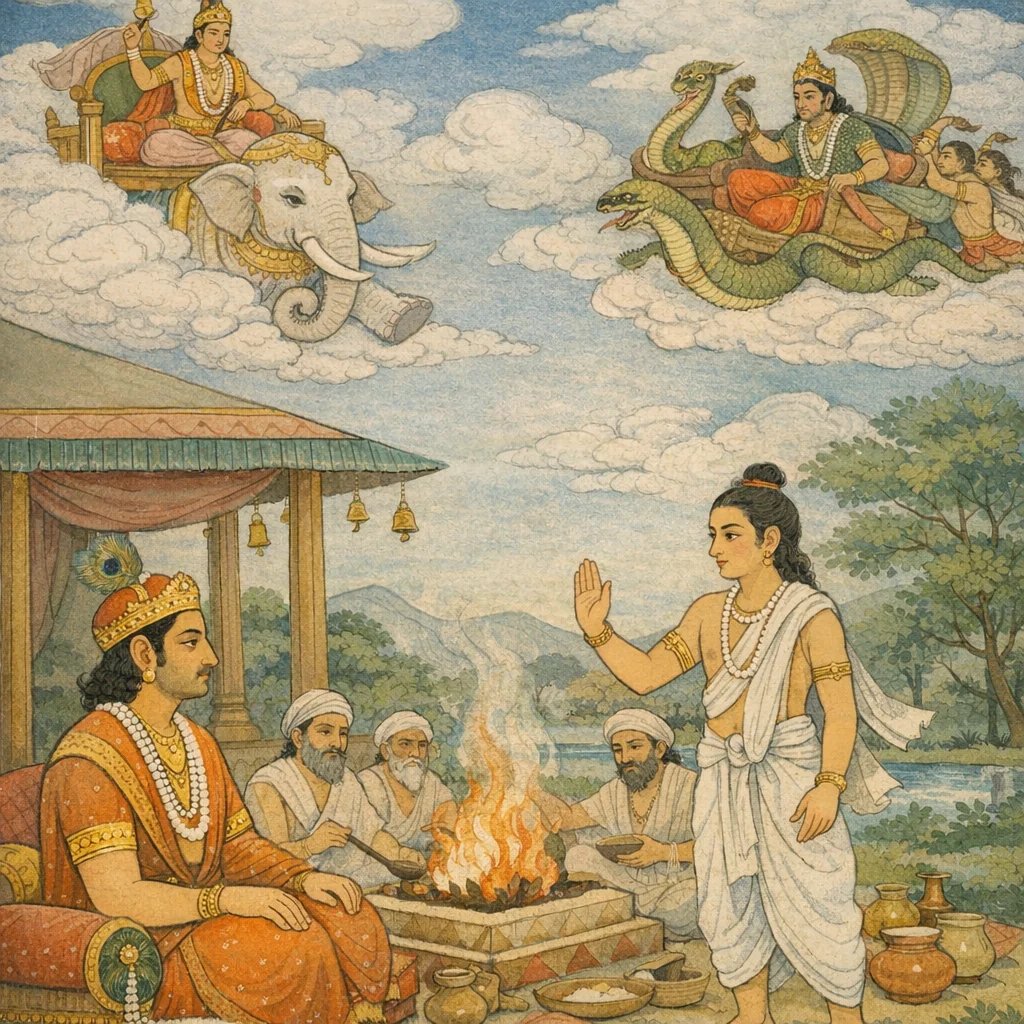
Janamejaya said: “Though he is a boy, he speaks like an elder; therefore, in my judgment he is not to be treated as a child but as one mature in understanding. I wish to grant him a boon. So, O Brahmins, deliberate properly and advise me in the right way.”
Verse 2
सदस्या ऊचु: बालो<पि विप्रो मान्य एवेह राज्ञां विद्वान् यो वै स पुनर्वे यथावत् । सर्वान् कामांस्त्वत्त एवार्हतेडद्य यथा च नस्तक्षक एति शीघ्रम्,सदस्योंने कहा--ब्राह्मण यदि बालक हो तो भी यहाँ राजाओंके लिये सम्माननीय ही है। यदि वह विद्वान हो तब तो कहना ही क्या है? अतः यह ब्राह्मण बालक आज आपसे यथोचित रीतिसे अपनी सम्पूर्ण कामनाओंको पानेके योग्य है, किंतु वर देनेसे पहले तक्षक नाग चाहे जैसे भी शीघ्रतापूर्वक हमारे पास आ पहुँचे, वैसा उपाय करना चाहिये
The assembled councillors said: “Even if a brahmin is but a child, he is worthy of honor here from kings; and if he is learned, what need is there to say more? Therefore this young brahmin deserves to obtain from you today all his wishes in the proper manner. Yet, before granting the boon, you should also take such measures that Takṣaka the serpent does not, by any means, swiftly reach us.”
Verse 3
सौतिरुवाच व्याहर्तुकामे वरदे नृपे द्विज॑ वरं वृणीष्वेति ततो5भ्युवाच । होता वाक््यं नातिदहृष्टान्तरात्मा कर्मण्यस्मिंस्तक्षको नैति तावत्,उग्रश्रवाजी कहते हैं-शौनक! तदनन्तर वर देनेके लिये उद्यत राजा जनमेजय विप्रवर आस्तीकसे यह कहना ही चाहते थे कि “तुम मुहमाँगा वर माँग लो।” इतनेमें ही होता, जिसका मन अधिक प्रसन्न नहीं था, बोल उठा--“हमारे इस यज्ञकर्ममें तक्षक नाग तो अभीतक आया ही नहीं"
Sauti said: When the boon-giving king (Janamejaya) was about to address the brahmin, intending to say, “Choose a boon,” the Hotṛ priest—whose heart was not greatly pleased—spoke up: “In this sacrificial rite, Takṣaka has not come here even now.”
Verse 4
जनमेजय उवाच यथा चेदं कर्म समाप्यते मे यथा च वै तक्षक एति शीघ्रम् । तथा भवन््त: प्रयतन्तु सर्वे परं शक््त्या स हि मे विद्विषाण:,जनमेजयने कहा--ब्राह्मणो! जैसे भी यह कर्म पूरा हो जाय और जिस प्रकार भी तक्षक नाग शीघ्र यहाँ आ जाय, आपलोग पूरी शक्ति लगाकर वैसा ही प्रयत्न कीजिये; क्योंकि मेरा असली शत्रु तो वही है
Janamejaya said: “So that this rite of mine may be brought to completion, and so that Takṣaka may quickly come here—let all of you strive accordingly with your utmost power; for he is truly my enemy.”
Verse 5
ऋत्विज ऊचु: यथा शास्त्राणि नः प्राहुर्यया शंसति पावक: । इन्द्रस्य भवने राजं॑स्तक्षको भयपीडित:,ऋत्विज बोले--राजन! हमारे शास्त्र जैसा कहते हैं तथा अग्निदेव जैसी बात बता रहे हैं, उसके अनुसार तो तक्षक नाग भयसे पीड़ित हो इन्द्रके भवनमें छिपा हुआ है
The officiating priests said: “O King, just as our sacred authorities declare, and just as Agni himself reports, Takṣaka—stricken with fear—has taken refuge, hiding in Indra’s celestial abode.”
Verse 6
यथा सूतो लोहिताक्षो महात्मा पौराणिको वेदितवान् पुरस्तात् | स राजान प्राह पृष्टस्तदानीं यथाहुर्विप्रास्तद्वदेतन्देव,लाल नेत्रोंवाले पुराणवेत्ता महात्मा सूतजीने पहले ही यह बात सूचित कर दी थी। तब राजाने सूतजीसे इसके विषयमें पूछा। पूछनेपर उन्होंने राजासे कहा--“नरदेव! ब्राह्मणलोग जैसी बात कह रहे हैं, वह ठीक वैसी ही है
Just as the great-souled Sūta Lohitākṣa, learned in the Purāṇas, had related earlier, so—when questioned then—he said to the king: “O lord among men, the matter is exactly as the Brahmins declare.”
Verse 7
पुराणमागम्य ततो ब्रवीम्यहं दत्तं तस्मै वरमिन्द्रेण राजन | वसेह त्वं मत्सकाशे सुगुप्तो न पावकर्त्वां प्रदहिष्पतीति,“राजन! पुराणको जानकर मैं यह कह रहा हूँ कि इन्द्रने तक्षकको वर दिया है --“नागराज! तुम यहाँ मेरे समीप सुरक्षित होकर रहो। सर्पसत्रकी आग तुम्हें नहीं जला सकेगी”
“O King, having learned the ancient account, I declare this: Indra granted Takṣaka a boon—‘O serpent-king, dwell here near me, well-protected; the fire of the serpent-sacrifice will not be able to burn you.’”
Verse 8
एतच्छुत्वा दीक्षितस्तप्यमान आस्ते होतारं चोदयन् कर्मकाले । होता च यत्तो5स्याजुहावा थ मन्त्रै- रथो महेन्द्र: स्वयमाजगाम,यह सुनकर यज्ञकी दीक्षा ग्रहण करनेवाले यजमान राजा जनमेजय संतप्त हो उठे और कर्मके समय होता-को इन्द्रसहित तक्षक नागका आकर्षण करनेके लिये प्रेरित करने लगे। तब होताने एकाग्रचित्त होकर मन्त्रोंद्वारा इन्द्रसाहित तक्षकका आवाहन किया। तब स्वयं देवराज इन्द्र विमानपर बैठकर आकाशमार्गसे चल पड़े। उस समय सम्पूर्ण देवता सब ओरसे घेरकर उन महानुभाव इन्द्रकी स्तुति कर रहे थे। अप्सराएँ, मेघ और विद्याधर भी उनके पीछे-पीछे आ रहे थे
Hearing this, King Janamejaya—already consecrated for the sacrifice—burned with agitation and, at the proper ritual moment, urged the Hotṛ-priest to proceed. The Hotṛ, fully intent, invoked with mantras; and then Mahendra (Indra) himself set out and arrived.
Verse 9
विमानमारुह् महानुभाव: सर्वर्देवै: परिसंस्तूयमान: । बलाहकैश्षाप्यनुगम्यमानो विद्याधरैरप्सरसां गणैशक्ष,यह सुनकर यज्ञकी दीक्षा ग्रहण करनेवाले यजमान राजा जनमेजय संतप्त हो उठे और कर्मके समय होता-को इन्द्रसहित तक्षक नागका आकर्षण करनेके लिये प्रेरित करने लगे। तब होताने एकाग्रचित्त होकर मन्त्रोंद्वारा इन्द्रसाहित तक्षकका आवाहन किया। तब स्वयं देवराज इन्द्र विमानपर बैठकर आकाशमार्गसे चल पड़े। उस समय सम्पूर्ण देवता सब ओरसे घेरकर उन महानुभाव इन्द्रकी स्तुति कर रहे थे। अप्सराएँ, मेघ और विद्याधर भी उनके पीछे-पीछे आ रहे थे
Ascending his celestial chariot, the illustrious Indra set forth through the sky. All the gods surrounded him on every side, praising him. Clouds followed in his wake, and so too did the Vidyādharas and the companies of Apsarases.
Verse 10
तस्योत्तरीये निहित: स नागो भयोद्विग्न: शर्म नैवाभ्यगच्छत् । ततो राजा मन्त्रविदो<ब्रवीत् पुनः क्रुद्धो वाक््यं तक्षकस्यान्तमिच्छन्,तक्षक नाग उन्हींके उत्तरीय वस्त्र (दुपट्टे)-में छिपा था। भयसे उद्विग्न होनेके कारण तक्षकको तनिक भी चैन नहीं आता था। इधर राजा जनमेजय तक्षकका नाश चाहते हुए कुपित होकर पुनः मन्त्रवेत्ता ब्राह्मणोंसे बोले
Hidden in Indra’s upper garment, the serpent Takṣaka lay concealed. Shaken by fear, he found no peace at all. Then King Janamejaya—angered and intent on bringing Takṣaka to destruction—again addressed the Brahmins skilled in mantras, urging them onward.
Verse 11
जनमेजय उवाच इन्द्रस्य भवने विप्रा यदि नाग: स तक्षक: । तमिन्द्रेणेव सहितं पातयध्वं विभावसौ,जनमेजयने कहा--विप्रगण! यदि तक्षक नाग इन्द्रके विमानमें छिपा हुआ है तो उसे इन्द्रके साथ ही अग्निमें गिरा दो
Janamejaya said: “O brahmins, if that serpent Takṣaka is hiding in Indra’s abode, then cast him into the fire—even together with Indra.”
Verse 12
सौतिरुवाच जनमेजयेन राज्ञा तु नोदितस्तक्षकं प्रति | होता जुहाव तत्रस्थं तक्षकं पन्नगं तथा,उग्रश्रवाजी कहते हैं--राजा जनमेजयके द्वारा इस प्रकार तक्षककी आहुतिके लिये प्रेरित हो होताने इन्द्रके समीपवर्ती तक्षक नागका अग्निमें आवाहन किया--उसके नामकी आहुति डाली
Sauti (Ugraśravas) said: Thus urged by King Janamejaya to make the oblation against Takṣaka, the hotṛ priest poured the offering and invoked the serpent Takṣaka who was there, calling him into the sacrificial fire.
Verse 13
हूयमाने तथा चैव तक्षक: सपुरन्दर: | आकाशे ददृशे चैव क्षणेन व्यथितस्तदा,इस प्रकार आहुति दी जानेपर क्षणभरमें इन्द्रसहित तक्षक नाग आकाशगमें दिखायी दिया। उस समय उसे बड़ी पीड़ा हो रही थी
As the oblations were being poured, Takṣaka—together with Purandara (Indra)—was suddenly seen in the sky; and in that very moment he was seized with intense distress.
Verse 14
पुरन्दरस्तु तं यज्ञं दृष्टयोरुभयमाविशत् । हित्वा तु तक्षकं त्रस्त: स्वमेव भवन ययौ,उस यज्ञको देखते ही इन्द्र अत्यन्त भयभीत हो उठे और तक्षक नागको वहीं छोड़कर बड़ी घबराहटके साथ अपने भवनको ही चलते बने
Seeing that sacrifice, Purandara (Indra) was seized by fear; in panic he abandoned Takṣaka there and hurried back to his own celestial abode.
Verse 15
इन्द्रे गते तु नागेन्द्रस्तक्षको भयमोहित: । मन्त्रशक्त्या पावकार्चि: समीपमवशो गत:,इन्द्रके चले जानेपर नागराज तक्षक भयसे मोहित हो मन्त्रशक्तिसे खिंचकर विवशतापूर्वक अग्निकी ज्वालाके समीप आने लगा
When Indra had departed, the serpent-king Takṣaka, overwhelmed by fear and delusion, was helplessly drawn by the power of the mantra toward the blazing flames of the sacrificial fire.
Verse 16
ऋत्विज ऊचु: वर्तते तव राजेन्द्र कर्मतद् विधिवत् प्रभो । अस्मै तु द्विजमुख्याय वरं त्वं दातुमहसि,ऋत्विजोंने कहा--राजेन्द्र! आपका यह यज्ञकर्म विधिपूर्वक सम्पन्न हो रहा है। अब आप इन विप्रवर आस्तीकको मनोवांछित वर दे सकते हैं
The officiating priests said: “O king, O lord, this sacrificial rite of yours is proceeding in full accordance with the prescribed rules. Therefore, you should now grant a boon to this foremost of Brahmins.”
Verse 17
जनमेजय उवाच बालाभिरूपस्य तवाप्रमेय वरं प्रयच्छामि यथानुरूपम् । वृणीष्व यत् तेडभिमतं हृदि स्थितं तत् ते प्रदास्याम्पपि चेददेयम्,जनमेजयने कहा--ब्राह्मणबालक! तुम अप्रमेय हो--तुम्हारी प्रतिभाकी कोई सीमा नहीं है। मैं तुम-जैसे विद्वान्के लिये वर देना चाहता हूँ। तुम्हारे मनमें जो अभीष्ट कामना हो, उसे बताओ। वह देनेयोग्य न होगी, तो भी तुम्हें अवश्य दे दूँगा
Janamejaya said: “O youthful Brahmin, you are beyond measure—your excellence admits no limit. I wish to grant you a boon befitting you. Choose whatever desire lies in your heart; I will give it to you, even if it is ordinarily considered not to be given.”
Verse 18
ऋत्विज ऊचु: अयमायाति तूर्ण स तक्षकस्ते वशं नृप । श्रूयते5स्य महान् नादो नदतो भैरवं रवम्,ऋत्विज बोले--राजन्! यह तक्षक नाग अब शीघ्र ही तुम्हारे वशमें आ रहा है। वह बड़ी भयानक आवाज में चीत्कार कर रहा है। उसकी भारी चिल््लाहट अब सुनायी देने लगी है
The officiating priests said: “O king, that Takṣaka is swiftly coming under your control. His great roar is now heard—he is crying out with a dreadful, terrifying sound.”
Verse 19
नूनं मुक्तो वज़भूता स नागो भ्रष्टो नाकान्मन्त्रविस्रस्तकाय: । घूर्णन्नाकाशे नष्टसंज्ञो 5 भ्युपैति तीव्रान् निःश्वासान् निः:श्वसन् पन्नगेन्द्र:,निश्चय ही इन्द्रने उस नागराज तक्षकको त्याग दिया है। उसका विशाल शरीर मन्त्रद्वारा आवदृष्ट होकर स्वर्गलोकसे नीचे गिर पड़ा है। वह आकाशमें चक्कर काटता अपनी सुध-बुध खो चुका है और बड़े वेगसे लम्बी साँसें छोड़ता हुआ अग्निकुण्डके समीप आ रहा है
Janamejaya said: “Surely that serpent-king—struck as if by Indra’s thunderbolt—has been cast off and has fallen from heaven, his huge body shaken loose by the force of the mantra. Spinning in the sky, senseless, he is now rushing toward the fire-pit, exhaling long, violent breaths.”
Verse 20
सौतिर्वाच पतिष्यमाणे नागेन्द्रे तक्षके जातवेदसि । इदमन्तरमित्येव तदा55स्तीको5 भ्यचोदयत्,उग्रश्रवाजी कहते हैं--शौनक! नागराज तक्षक अब कुछ ही क्षणोंमें आगकी ज्वालामें गिरनेवाला था। उस समय आस्तीकने यह सोचकर कि “यही वर माँगनेका अच्छा अवसर है' राजाको वर देनेके लिये प्रेरित किया
Sauti said: When Takṣaka, the lord of serpents, was about to fall into the sacrificial fire, Āstīka, thinking, “This is the very interval (the right moment),” then urged the king to grant a boon.
Verse 21
आस्तीक उवाच वरं ददासि चेन्महां वृूणोमि जनमेजय । सत्र ते विर्मत्वेतन्न पतेयुरिहोरगा:,आस्तीकने कहा--राजा जनमेजय! यदि तुम मुझे वर देना चाहते हो तो सुनो, मैं माँगता हूँ कि तुम्हारा यह यज्ञ बंद हो जाय और अब इसमें सर्प न गिरने पावें
Āstīka said: “O Janamejaya, if you truly mean to grant me a boon, then I choose this great one: let your sacrificial session cease; let this rite be brought to a stop, so that no serpents fall into the fire here.”
Verse 22
एवमुक्तस्तदा तेन ब्रह्मन् पारिक्षितस्तु सः । नातिदह्ृष्टमना श्षेदमास्तीकं वाक्यमब्रवीत्,ब्रह्म! आस्तीकके ऐसा कहनेपर वे परीक्षित्-कुमार जनमेजय खिन्नचित्त होकर बोले --
Thus addressed by him, O Brahmin, that descendant of Parīkṣit—King Janamejaya—his mind not greatly pleased and weighed down with dejection, spoke these words to Āstīka.
Verse 23
सुवर्ण रजतं गाश्न यच्चान्यन्मन्यसे विभो । तत् ते दद्यां वरं विप्र न निवर्तेत् क्रतुर्मम,“विप्रवर! आप सोना, चाँदी, गौ तथा अन्य अभीष्ट वस्तुओंको, जिन्हें आप ठीक समझते हों, माँग लें। प्रभो! वह मुँहमाँगा वर मैं आपको दे सकता हूँ, किंतु मेरा यह यज्ञ बंद नहीं होना चाहिये”
“O foremost of brahmins, ask for gold, silver, cows, and whatever else you deem fit. That boon I can grant you; but my sacrifice must not be turned back.”
Verse 24
आस्तीक उवाच सुवर्ण रजतं गाश्न न त्वां राजन् वृणोम्यहम् । सत्र॑ ते विर्मत्वेतत् स्वस्ति मातृकुलस्य न:,आस्तीकने कहा--राजन्! मैं तुमसे सोना, चाँदी और गौएँ नहीं माँगूगा, मेरी यही इच्छा है कि तुम्हारा यह यज्ञ बंद हो जाय, जिससे मेरी माताके कुलका कल्याण हो
Āstīka said: “O King, I do not choose gold, silver, or cows from you. This alone is my wish: let your sacrificial session be brought to a halt, so that well-being may come to our mother’s lineage.”
Verse 25
सौतिर्वाच आस्तीकेनैवमुक्तस्तु राजा पारिक्षितस्तदा । पुन: पुनरुवाचेदमास्तीकं वदतां वर:,उग्रश्रवाजी कहते हैं--भूगुनन्दन शौनक! आस्तीकके ऐसा कहनेपर उस समय वक्ताओंमें श्रेष्ठ राजा जनमेजयने उनसे बार-बार अनुरोध किया--'विप्रशिरोमणे! आपका कल्याण हो, कोई दूसरा वर माँगिये।' किंतु आस्तीकने दूसरा कोई वर नहीं माँगा
Sauti said: When Āstīka had spoken thus, King Janamejaya of Parīkṣit’s line—best among speakers at that time—repeatedly addressed Āstīka: “O foremost of brahmins, may you be well; ask for another boon.” Yet Āstīka asked for no second boon.
Verse 26
अन्यं वरय भद्रं ते वरं द्विजवरोत्तम । अयाचत न चाप्यन्यं वरं स भूगुनन्दन,उग्रश्रवाजी कहते हैं--भूगुनन्दन शौनक! आस्तीकके ऐसा कहनेपर उस समय वक्ताओंमें श्रेष्ठ राजा जनमेजयने उनसे बार-बार अनुरोध किया--'विप्रशिरोमणे! आपका कल्याण हो, कोई दूसरा वर माँगिये।' किंतु आस्तीकने दूसरा कोई वर नहीं माँगा
Āstīka said, “Choose another boon—may good befall you, O best among the twice-born.” Yet that descendant of Bhṛgu asked for no other boon. Even when King Janamejaya, foremost among speakers, urged him again and again—“O crest-jewel of brāhmaṇas, be well; ask for a different boon”—Āstīka sought nothing else, holding fast to his single purpose.
Verse 27
ततो वेदविदस्तात सदस्या: सर्व एव तम् | राजानमूचु: सहिता लभतां ब्राह्मणो वरम्,तब सम्पूर्ण वेदवेत्ता सभासदोंने एक साथ संगठित होकर राजासे कहा--'ब्राह्मणको (स्वीकार किया हुआ) वर मिलना ही चाहिये”
Then all the learned members of the assembly, versed in the Vedas, spoke together to the king: “Let the brāhmaṇa obtain the boon (that has been granted).” In the ethical frame of the episode, the elders uphold the sanctity of a promised gift and the duty of a ruler to honor his word—especially when a boon has been pledged to a brāhmaṇa.
Verse 55
इस प्रकार श्रीमहाभारत आदिपरववके अन्तर्गत आस्तीकपवर्में आस्तीकद्वारा सर्पसत्रमें राजा जनमेजयकी स्वुतिविषयक पचपनवाँ अध्याय पूरा हुआ
Thus ends the fifty-fifth chapter of the Āstīka section within the Ādi Parva of the Śrī Mahābhārata, describing the praise of King Janamejaya at the serpent-sacrifice, as spoken by Āstīka. The closing formula underscores the ethical frame of the episode: rightful speech and reverence are presented as forces capable of restraining destructive ritual violence and restoring dharmic balance.
Verse 56
इति श्रीमहाभारते आदिपर्वणि आस्तीकपर्वणि आस्तीकवरप्रदानं नाम षट्पञज्चाशत्तमो<ध्याय:
Thus, in the revered Mahābhārata, within the Ādi Parva and specifically the Āstīka section, concludes the fifty-sixth chapter entitled “The Granting of a Boon to Āstīka.” This closing colophon signals the completion of an episode in which righteous speech and timely intervention are honored, and a boon is conferred in recognition of dharmic conduct.
Frequently Asked Questions
The chapter foregrounds the dilemma of restraint under provocation: why ethically oriented agents (Pandavas and Draupadī) endure deception and humiliation without immediate retaliation, and how such restraint can be interpreted within dharma rather than weakness.
The text presents disciplined listening and reflective reception of itihāsa as a vehicle for comprehensive instruction in the four puruṣārthas, implying that ethical discernment is cultivated through narrative memory and interpretive attention.
Yes. The chapter contains explicit phalāśruti claims: reciting/hearing the Mahābhārata is described as purifying wrongdoing, producing merit, supporting ritual contexts (including parvan recitations and śrāddha), and granting elevated outcomes—framed as the epic’s self-authorization.