Adhyaya 55
आदि पर्व — अध्याय ५५: पाण्डव-कौरववैरस्य संक्षेपवृत्तान्तः (Synopsis of the Pāṇḍava–Kaurava Estrangement)
Upa-parva: Pāṇḍava–Kaurava Bheda-saṅgraha (Conflict Synopsis Unit)
Vaiśaṃpāyana begins with formal reverence—saluting the guru and honoring learned persons—signaling disciplined narration. He then provides Janamejaya a structured synopsis of the epic’s central political rupture: after the Pāṇḍavas return from the forest to their residence, their competence and public esteem provoke Kaurava intolerance. Duryodhana, with Karṇa and Śakuni, initiates a sequence of coercive measures: an attempted poisoning of Bhīma, binding and casting him into the Gaṅgā, and the failure of these attempts due to Bhīma’s recovery and immunity through serpent-venom exposure. Vidura is characterized as consistently attentive in countering such stratagems, functioning as a stabilizing counselor. When covert methods fail, the lac-house (jātu-gṛha) plan is authorized; the Pāṇḍavas escape through a tunnel prepared on Vidura’s instruction. Subsequent displacement episodes are summarized: the Hidimba encounter, residence in Ekacakrā, the slaying of Baka for a brāhmaṇa household’s safety, and the move to Pāñcāla culminating in Draupadī’s marriage. A negotiated return leads to settlement at Khāṇḍavaprastha, political consolidation, and directional campaigns by the brothers. Arjuna’s forest sojourn links to his alliance with Kṛṣṇa, marriage to Subhadrā, the Khāṇḍava episode, acquisition of Gāṇḍīva and other gifts, and the construction of the jeweled sabhā by Maya. Duryodhana’s envy culminates in the dice-based dispossession and the prescribed exile and concealment. After the term, property is denied; armed conflict follows, ending with Duryodhana’s death and the Pāṇḍavas’ restoration of rule—presented as a coherent causal chain from early rivalry to systemic breakdown.
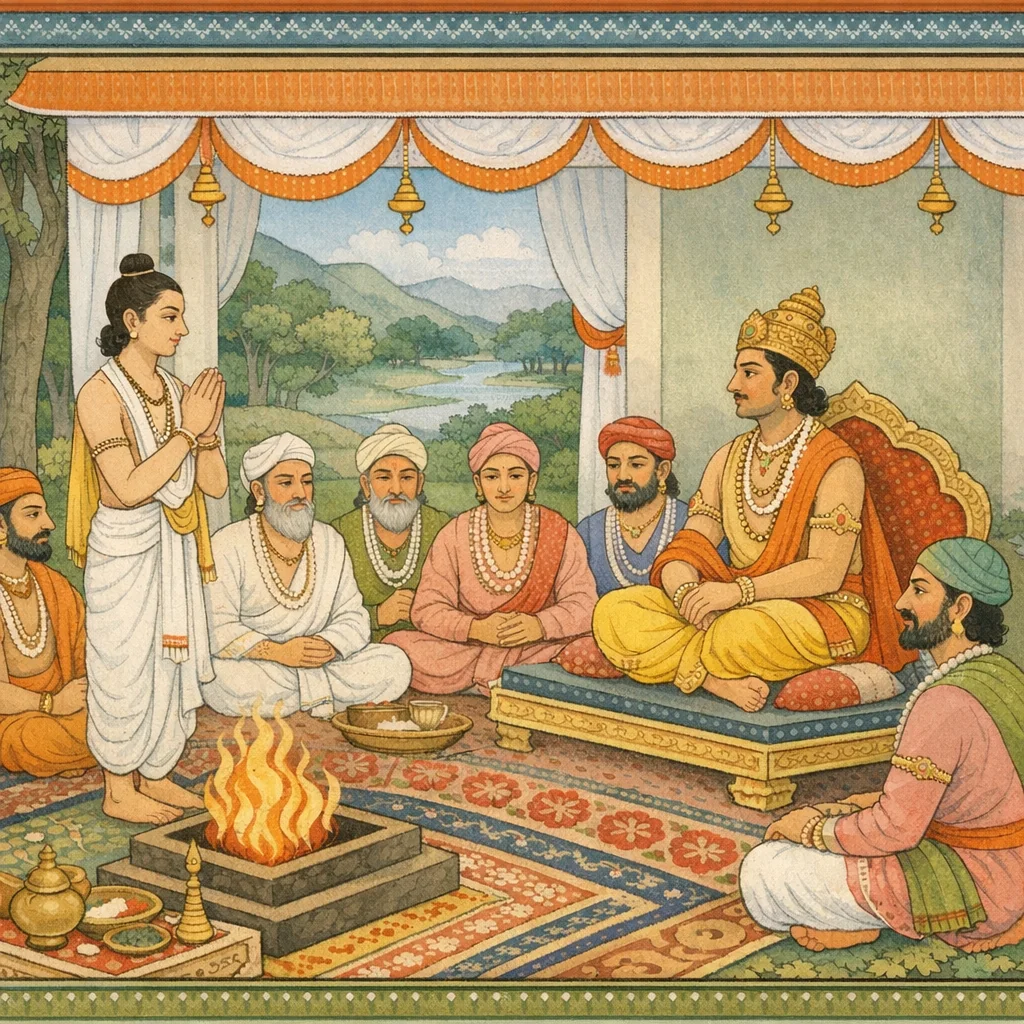
Chapter Arc: सर्पसत्र के भयावह वातावरण में आस्तीक वाणी का दीप जलाते हैं—यजमान जनमेजय, यज्ञ, ऋत्विजों, सदस्यों और अग्निदेव की स्तुति से वे सभा का मनोभाव बदलने लगते हैं। → आस्तीक अनेक आदर्श यज्ञों की परंपरा का स्मरण कराते हैं—सोम, वरुण, इन्द्र (शक्र), यम, रन्तिदेव, तथा सत्यवती-पुत्र कृष्ण (व्यास) से संबद्ध यज्ञों का उल्लेख कर जनमेजय के यज्ञ को उसी महिमा-श्रृंखला में प्रतिष्ठित करते हैं; साथ ही ‘स्वस्ति’ की बार-बार कामना से वे अनिष्ट-प्रवृत्ति (सर्प-विनाश) के बीच शुभ का आग्रह रचते हैं। → अग्निदेव का तेजस्वी, बहुनाम-समृद्ध रूप (विभावसु, चित्रभानु, हिरण्यरेता, हुतभुक्, कृष्णवर्त्मा) उभरता है—और आस्तीक की स्तुति-धारा सभा पर ऐसा प्रभाव डालती है कि यजमान, ऋत्विज, सदस्य और हव्यवाह सभी प्रसन्न हो उठते हैं। → स्तुति से संतुष्ट होकर सभा का भाव परिवर्तित होता है; उग्रश्रवा के अनुसार जनमेजय उन ‘भावित’ (अनुकूल) चित्तों को देखकर आगे बोलते हैं—यह संकेत कि अब आस्तीक की बात सुनी जाएगी और यज्ञ की दिशा पर प्रश्न उठेगा। → प्रसन्न हुई सभा के बीच जनमेजय का ‘अब क्या?’—राजा क्या वर माँगने को कहेंगे, और क्या आस्तीक सर्पसत्र को रोकने का अवसर पा सकेंगे?
Shlokas
Verse 1
भीकम (2 अमान पञ्चपञज्चाशत्तमो< ध्याय: आस्तीकके द्वारा यजमान, यज्ञ, ऋत्विज, सदस्यगण और अग्निदेवकी स्तुति-प्रशंसा आस्तीक उवाच सोमस्य यज्ञों वरुणस्य यज्ञ: प्रजापतेर्यज्ञ आसीतू _प्रयागे । तथा यज्ञोडयं तव भारताग्रय पारिक्षित स्वस्ति नोअस्तु प्रियेभ्य:,आस्तीकने कहा--भरतवंशियोंमें श्रेष्ठ जनमेजय! चन्द्रमाका जैसा यज्ञ हुआ था, वरुणने जैसा यज्ञ किया था और प्रयागमें प्रजापति ब्रह्माजीका यज्ञ जिस प्रकार समस्त सदगुणोंसे सम्पन्न हुआ था, उसी प्रकार तुम्हारा यह यज्ञ भी उत्तम गुणोंसे युक्त है। हमारे प्रियजनोंका कल्याण हो
Āstīka said: “O foremost of the Bhāratas, descendant of Parīkṣit! Just as there was the famed sacrifice of Soma, the sacrifice of Varuṇa, and the sacrifice of Prajāpati held at Prayāga—so too is this sacrifice of yours endowed with excellence. May well-being attend our dear ones.”
Verse 2
शक्रस्य यज्ञ: शतसंख्य उतक्त- स्तथा पूरोस्तुल्यसंख्यं शतं वै । तथा यज्ञोडयं तव भारताग्रय पारिक्षित स्वस्ति नोअस्तु प्रियेभ्य:,भरतकुलशिरोमणि परीक्षित््कुमार! इन्द्रके यज्ञोंकी संख्या सौ बतायी गयी है, राजा पूरुके यज्ञोंकी संख्या भी उनके समान ही सौ है। उन सबके यज्ञोंके तुल्य ही तुम्हारा यह यज्ञ शोभा पा रहा है। हमारे प्रियजनोंका कल्याण हो
Āstīka said: “Indra’s sacrifices are declared to be a hundred in number; and King Pūru’s sacrifices too are likewise a hundred. In the same measure, O foremost of the Bhāratas, descendant of Parīkṣit, this sacrifice of yours shines with equal splendor. May well-being attend our dear ones—O jewel of the Bharata lineage, Prince Parīkṣit.”
Verse 3
यमस्य यज्ञो हरिमेधसश्न यथा यज्ञो रन्तिदेवस्य राज्ञ: | तथा यज्ञोडयं तव भारताग्रय पारिक्षित स्वस्ति नोअस्तु प्रियेभ्य:,जनमेजय! यमराजका यज्ञ, हरिमेधाका यज्ञ तथा राजा रन्तिदेवका यज्ञ जिस प्रकार श्रेष्ठ गुणोंसे सम्पन्न था, वैसे ही तुम्हारा यह यज्ञ है। हमारे प्रियजनोंका कल्याण हो
Āstīka said: “Just as the sacrifice of Yama and the Harimedha sacrifice, and just as the sacrifice of King Rantideva were renowned for excellence, so too is this sacrifice of yours, O foremost of the Bhāratas, descendant of Parīkṣit. O Janamejaya, may well-being attend us and our loved ones.”
Verse 4
गयस्य यज्ञ: शशबिन्दोश्न राज्ञो यज्ञस्तथा वैश्रवणस्य राज्ञ: । तथा यज्ञोडयं तव भारताग्रय पारिक्षित स्वस्ति नोअस्तु प्रियेभ्य:,भरतवंशियोंमें अग्रगण्य जनमेजय! महाराज गयका यज्ञ, राजा शशबिन्दुका यज्ञ तथा राजाधिराज कुबेरका यज्ञ जिस प्रकार उत्तम विधि-विधानसे सम्पन्न हुआ था, वैसा ही तुम्हारा यह यज्ञ है। हमारे प्रियजनोंका कल्याण हो
Āstīka said: “Just as the sacrifices of King Gaya, of King Śaśabindu, and of the royal Vaiśravaṇa (Kubera) were accomplished in excellent and proper rite, so too is this sacrifice of yours, O foremost among the Bhāratas, descendant of Parikṣit. May well-being be upon our dear ones.”
Verse 5
नृगस्य यज्ञस्त्वजमीढस्य चासीदू यथा यज्ञो दाशरथेश्ष राज्ञ: | तथा यज्ञोड्यं तव भारताग्रय पारिक्षित स्वस्ति नोअस्तु प्रियेभ्य:,परीक्षितकुमार! राजा नृग, राजा अजमीढ़ और महाराज दशरथनन्दन श्रीरामचन्द्रजीने जिस प्रकार यज्ञ किया था, वैसा ही तुम्हारा यह यज्ञ भी है। हमारे प्रियजनोंका कल्याण हो
Āstīka said: “Just as King Nṛga and King Ajamīḍha once performed their renowned sacrifices, and as the sacrifice of the Daśaratha-born royal (Rāma) was celebrated, so too is this sacrifice of yours, foremost of the Bhāratas, O Pārīkṣita. May well-being attend our dear ones, O prince Pārīkṣita.”
Verse 6
यज्ञ: श्रुतों दिवि देवस्य सूनो- युधिष्ठिरस्पाजमीढस्य राज्ञ: । तथा यज्ञो5यं तव भारताग्रय पारिक्षित स्वस्ति नोअस्तु प्रियेभ्य:,भरतश्रेष्ठ जनमेजय! अजमीढ़वंशी धर्मपुत्र महाराज युधिष्छिरके यज्ञकी ख्याति स्वर्गके श्रेष्ठ देवताओंने भी सुन रखी थी, वैसा ही तुम्हारा भी यह यज्ञ है। हमारे प्रियजनोंका कल्याण हो
Āstīka said: “In heaven the fame of the sacrifice performed by King Yudhiṣṭhira—descendant of Ajamīḍha and son of the god (Dharma)—has been heard. In the same way, O foremost of the Bhāratas, descendant of Parīkṣit, this sacrifice of yours is renowned. O best of the Bharatas, Janamejaya, may well-being attend our dear ones.”
Verse 7
कृष्णस्य यज्ञ: सत्यवत्या: सुतस्य स्वयं च कर्म प्रचकार यत्र । तथा यज्ञो5यं तव भारताग्रय पारिक्षित स्वस्ति नोअस्तु प्रियेभ्य:,भरताग्रगण्य जनमेजय! सत्यवतीनन्दन व्यासजीका यज्ञ जिसमें उन्होंने स्वयं सब कार्य सम्पन्न किया था, जैसा हो पाया था, वैसा ही तुम्हारा यह यज्ञ भी है। हमारे प्रियजनोंका कल्याण हो
Āstīka said: “That sacrifice in which Kṛṣṇa—the son of Satyavatī—personally carried out the ritual duties: may your sacrifice, O foremost of the Bhāratas, descendant of Parīkṣit, be of the same auspicious character. O best of the Bhāratas, Janamejaya, may well-being attend our dear ones.”
Verse 8
इमे च ते सूर्यसमानवर्चस: समासते वृत्रहण: क्रतुं यथा । नैषां ज्ञातुं विद्यते ज्ञानमद्य दत्तं येभ्यो न प्रणश्येत् कदाचित्,तुम्हारे ये ऋत्विज सूर्यके समान तेजस्वी हैं और इन्द्रके यज्ञकी भाँति तुम्हारे इस यज्ञका भलीभाँति अनुष्ठान करते हैं। कोई भी ऐसी जानने योग्य वस्तु नहीं है, जिसका इन्हें ज्ञान न हो। इन्हें दिया हुआ दान कभी नष्ट नहीं हो सकता
Āstīka said: “These priests of yours, radiant like the sun, are seated here and are conducting your sacrifice with the same flawless order as Indra’s famed rite. There is nothing worth knowing that lies beyond their understanding. Whatever gift is given to such men does not perish; it becomes enduring merit.”
Verse 9
ऋषत्विक् समो नास्ति लोकेषु चैव दैपायनेनेति विनिकश्षितं मे । एतस्य शिष्या: क्षितिमाचरन्ति सर्वर्त्विज: कर्मसु स्वेषु दक्षा:,द्वैपायन व्यासजीके समान पारलौकिक साधनोंमें कुशल दूसरा कोई ऋत्विज नहीं है, यह मेरा निश्चित मत है। इनके शिष्य ही अपने-अपने कर्मोंमें निपुण होता, उदगाता आदि सभी प्रकारके ऋत्विज हैं, जो यज्ञ करानेके लिये सम्पूर्ण भूमण्डलमें विचरते रहते हैं
Āstīka said: “In all the worlds there is no officiating priest equal to Dvaipāyana—this is my settled conviction. His disciples, skilled in their own ritual duties as every kind of ṛtvij, roam across the whole earth to conduct sacrifices.”
Verse 10
विभावसश्षित्र भानुर्महात्मा हिरण्यरेता हुतभुक् कृष्णवर्त्मा । प्रदक्षिणावर्त शिख: प्रदीप्तो हव्यं तवेदं हुतभुग् वष्टि देव:,जो विभावसु, चित्रभानु, महात्मा, हिरण्यरेता, हविष्यभोजी तथा कृष्णवर्त्मा कहलाते हैं, वे अग्निदेव तुम्हारे इस यज्ञमें दक्षिणावर्त शिखाओंसे प्रज्वलित हो दी हुई आहुतिको भोग लगाते हुए तुम्हारे इस हविष्यकी सदा इच्छा रखते हैं
Āstīka said: “Agni—the divine Fire—known by names such as Vibhāvasu, Citrabhānu, Mahātmā, Hiraṇyaretas, Hutabhuk, and Kṛṣṇavartman, now blazes with right-curling flames as he makes an auspicious circumambulation. He accepts and consumes this oblation of yours, ever desiring the sacrificial offering rightly presented.”
Verse 11
नेह त्वदन्यो विद्यते जीवलोके समो नृपः पालयिता प्रजानाम् । धृत्या च ते प्रीतमना: सदाहं त्वं वा वरुणो धर्मराजो यमो वा,इस मृत्युलोकमें तुम्हारे सिवा दूसरा कोई ऐसा राजा नहीं है, जो तुम्हारी भाँति प्रजाका पालन कर सके। तुम्हारे धैर्यसे मेरा मन सदा प्रसन्न रहता है। तुम साक्षात् वरुण, धर्मराज एवं यमके समान प्रभावशाली हो
Āstīka praises the king, declaring that in this world of living beings there is no other ruler equal to him in protecting and sustaining the people. The king’s steadfast self-control and patience continually gladden Āstīka’s heart. He says the king bears an authority like that of Varuṇa, Dharma-rāja, or Yama—embodiments of cosmic order, justice, and restraint—thus portraying kingship as moral guardianship rather than mere power.
Verse 12
शक्र: साक्षाद् वज़पाणिरयथेह त्राता लोकेडस्मिंस्त्वं तथेह प्रजानाम् । मतत्त्व॑ नः पुरुषेन्द्रेह लोके न च त्वदन्यो भूपतिरस्ति जज्ञे,पुरुषोमें श्रेष्ठ जनमेजय! जैसे साक्षात् वज्रपाणि इन्द्र सम्पूर्ण प्रजाकी रक्षा करते हैं, उसी प्रकार तुम भी इस लोकमें हम प्रजावर्गके पालक माने गये हो। संसारमें तुम्हारे सिवा दूसरा कोई भूपाल तुम-जैसा प्रजापालक नहीं है
Āstīka said: “Just as Śakra—Indra himself, the wielder of the thunderbolt—stands in this world as a direct protector, so too are you regarded as the guardian of your subjects. O best of men, King Janamejaya, in this world no other ruler has been born who equals you in protecting the people.”
Verse 13
खट्वाड्ननाभागदिलीपकल्प ययातिमान्धातृसमप्रभाव । आदित्यतेज:प्रतिमानतेजा भीष्मो यथा राजसि सुत्रतस्त्वम्,राजन! तुम खट्वांग, नाभाग और दिलीपके समान प्रतापी हो। तुम्हारा प्रभाव राजा ययाति और मान्धाताके समान है। तुम अपने तेजसे भगवान् सूर्यके प्रचण्ड तेजकी समानता कर रहे हो। जैसे भीष्मपितामहने उत्तम ब्रह्मचर्यव्रतका पालन किया था, उसी प्रकार तुम भी इस यज्ञमें परम उत्तम व्रतका पालन करते हुए शोभा पा रहे हो
Āstīka said: “O king, you are like Khaṭvāṅga, Nābhāga, and Dilīpa in prowess. Your majesty equals that of Yayāti and Māndhātṛ. By your radiance you rival the fierce brilliance of the Sun. And just as Bhīṣma upheld an excellent vow of brahmacarya, so you too shine here in this sacrifice, observing a supremely noble vow.”
Verse 14
वाल्मीकिवत् ते निभृतं स्ववीर्य वसिष्ठवत् ते नियतश्न कोप: । प्रभुत्वमिन्द्रत्वसमं मतं मे द्युतिश्न नारायणवद् विभाति,महर्षि वाल्मीकिकी भाँति तुम्हारा अदभुत पराक्रम तुममें ही छिपा हुआ है। महर्षि वसिष्ठजीके समान तुमने अपने क्रोधको काबूमें कर रखा है। मेरी ऐसी मान्यता है कि तुम्हारा प्रभुत्व इन्द्रके ऐश्वर्यके तुल्य है और तुम्हारी अंगकान्ति भगवान् नारायणके समान सुशोभित होती है
Āstīka said: “Like the sage Vālmīki, your extraordinary prowess remains quietly contained within yourself; like Vasiṣṭha, you keep your anger under disciplined control. In my judgment, your lordly power equals Indra’s sovereignty, and your radiant splendor shines like that of Nārāyaṇa.”
Verse 15
यमो यथा धर्मविनिश्चयज्ञ: कृष्णो यथा सर्वगुणोपपन्न: । श्रियां निवासोडसि यथा वसूनां निधानभूतो5सि तथा क्रतूनाम्,तुम यमराजकी भाँति धर्मके निश्चित सिद्धान्तको जाननेवाले हो। भगवान् श्रीकृष्णकी भाँति सर्वगुणसम्पन्न हो। वसुगणोंके पास जो सम्पत्तियाँ हैं, वैसी ही सम्पदाओंके तुम निवासस्थान हो तथा यज्ञोंकी तो तुम साक्षात् निधि ही हो
Āstīka praises the one before him by likening him to the highest standards of righteousness and excellence: as Yama is the knower of dharma’s final determinations, so you discern dharma with certainty; as Kṛṣṇa is endowed with every virtue, so you are complete in qualities. As the Vasus are said to be the seat of prosperity, so you are a dwelling-place of fortune; and with respect to sacrificial rites, you are their very treasury—the storehouse and embodiment of their merit.
Verse 16
दम्भोद्धवेनासि समो बलेन रामो यथा शास्त्रविदस्त्रविच्च । औवर््रिताभ्यामसि तुल्यतेजा दुष्प्रेक्षणीयो5सि भगीरथेन,राजन! तुम बलमें दम्भोद्धवके समान और अस्त्र-शस्त्रोंके ज्ञानमें परशुरामके सदृश हो। तुम्हारा तेज और्व और त्रित नामक महर्षियोंके तुल्य है। राजा भगीरथकी भाँति तुम्हारी ओर देखना भी कठिन है
Āstīka said: “O King, in strength you are equal to Dambhodbhava; in mastery of sacred learning and in knowledge of weapons you are like Rāma (Paraśurāma). In radiance you match the sages Aurva and Tṛta. Like King Bhagīratha, you are so formidable in splendor that to look upon you is difficult.”
Verse 17
सौतिर्वाच एवं स्तुता: सर्व एव प्रसन्ना राजा सदस्या ऋत्विजो हव्यवाहः । तेषां दृष्टवा भावितानीकज्ञितानि प्रोवाच राजा जनमेजयो5थ,उग्रश्रवाजी कहते हैं--आस्तीकके इस प्रकार स्तुति करनेपर यजमान राजा जनमेजय, सदस्य, ऋत्विज् और अग्निदेव सभी बड़े प्रसन्न हुए। इन सबके मनोभावों तथा बाह्य चेष्टाओंको लक्ष्य करके राजा जनमेजय इस प्रकार बोले
Sauti said: Thus praised, all of them became pleased—the sacrificer King Janamejaya, the learned members of the assembly, the officiating priests, and the Fire-god who bears the oblations. Observing their inner dispositions and outward signs, King Janamejaya then spoke.
Verse 54
इस प्रकार श्रीमह्या भारत आदिपव॑के अन्तर्गत आस्तीकपदवर्में सर्पसत्रमें आस्तीकका आगमनविषयक चौवनवाँ अध्याय पूरा हुआ
Thus ends the fifty-fourth chapter of the Āstīka section within the Ādi Parva of the sacred Mahābhārata, describing Āstīka’s arrival at the serpent-sacrifice.
Verse 55
इति श्रीमहाभारते आदिपर्वणि आस्तीकपर्वणि सर्पसत्रे आस्तीककृतराजस्तवे पठ्चपज्चाशत्तमो5ध्याय
Thus, in the Śrī Mahābhārata, within the Ādi Parva—specifically the Āstīka Parva—at the Snake Sacrifice, ends the fifty-fifth chapter, concerning Āstīka’s praise of King Janamejaya.
Frequently Asked Questions
The chapter presents a governance dilemma: whether dynastic power should be preserved through legitimacy and counsel or through covert coercion; the Kauravas’ repeated resort to harmful stratagems highlights the ethical collapse that follows when fear of rivals overrides duty to kin and subjects.
Repeated small violations of duty—deception, partiality, and normalization of coercion—accumulate into systemic crisis; conversely, vigilant counsel and disciplined restraint can preserve life and political continuity even under sustained pressure.
No explicit phalaśruti is stated; the meta-commentary is structural: Vaiśaṃpāyana frames the narrative as an authoritative causal synopsis, implying that understanding the sequence of choices is essential for interpreting responsibility, dharma, and the epic’s broader moral economy.