Adhyaya 54
Vyāsa’s Arrival at Janamejaya’s Sarpasatra; Commissioning of Vaiśaṃpāyana’s Recital (व्यासागमनम्)
Upa-parva: Sarpasatra-Ākhyāna (Frame Narrative at Janamejaya’s Serpent Sacrifice)
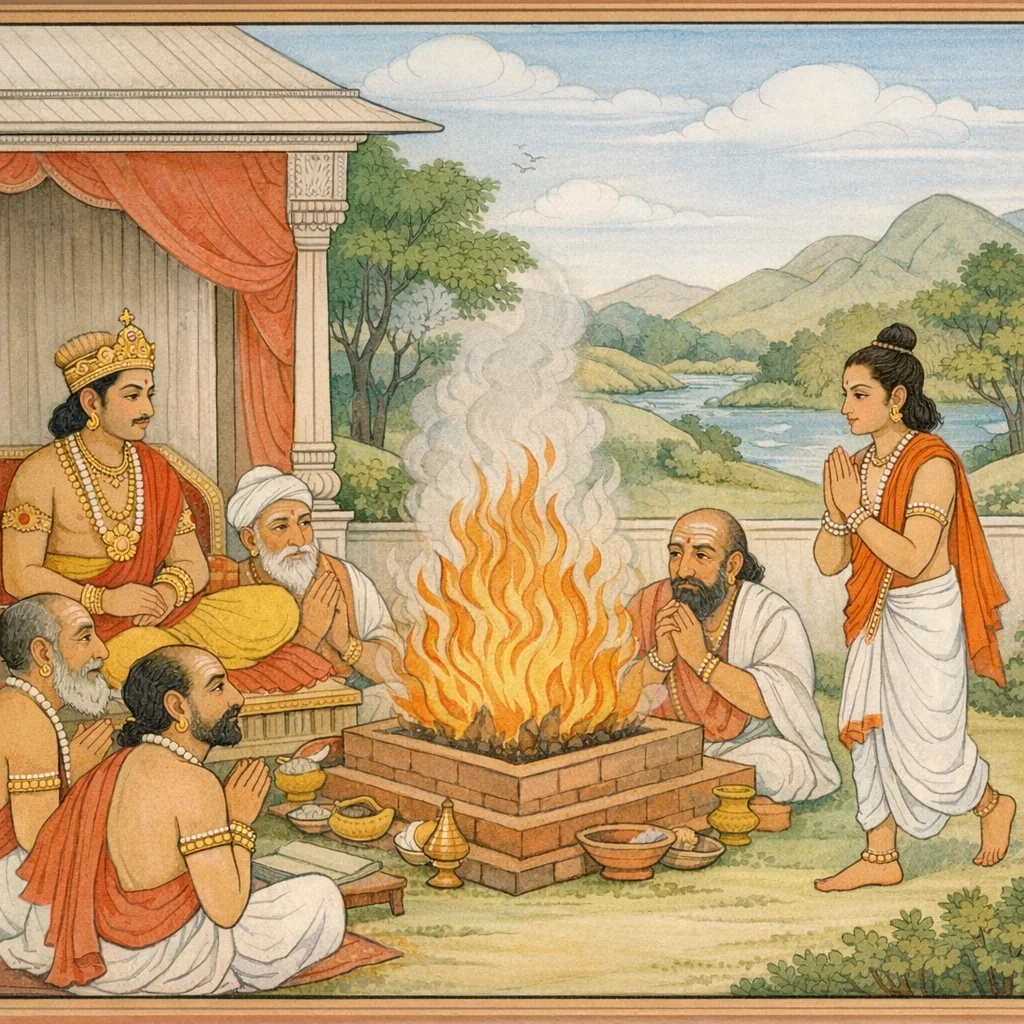
Sauti reports that, upon hearing of King Janamejaya’s consecration for the sarpasatra, the sage Kṛṣṇa Dvaipāyana Vyāsa arrives with disciples proficient in Veda and Vedāṅga. The chapter briefly profiles Vyāsa’s extraordinary birth and credentials—his rapid maturation, mastery of Vedic corpora with ancillary disciplines and itihāsa, and his role in extending Śaṃtanu’s line through the births of Dhṛtarāṣṭra, Pāṇḍu, and Vidura. Janamejaya, seated amid a large ritual assembly of officiants and regional rulers, rises to receive him, offers a golden seat, and performs formal hospitality (pādya, ācamanīya, arghya, and a cow) according to śāstric procedure. After mutual courtesies, Janamejaya petitions Vyāsa for a comprehensive explanation of how the division between Kurus and Pāṇḍavas arose and how the great, world-altering conflict unfolded. Vyāsa then instructs his seated disciple Vaiśaṃpāyana to narrate in full what he has learned, and Vaiśaṃpāyana begins the ancient itihāsa for the king, assembly, and kṣatriya audience, focusing on the rupture and the destruction of sovereignty that followed.
Chapter Arc: माता जरत्कारु आस्तीक को बुलाकर बताती हैं कि अब वही घड़ी आ पहुँची है जिसके लिए उसे जन्म दिया गया था—सर्पयज्ञ की ज्वाला में गिरते नागों को बचाने का समय। → आस्तीक कारण पूछता है; माता कद्रू के शाप, ब्रह्मा की ‘एवमस्तु’ स्वीकृति, और वासुकि-नागकुल पर मंडराते विनाश का वृत्तांत सुनाती है। आस्तीक पर पिता-वंश और मातृ-वंश—दोनों के ऋण का भार एक साथ उतर आता है। → आस्तीक वासुकि को आश्वासन देता है कि वह यज्ञाग्नि से उठे भय को नष्ट करेगा और शाप-बंधन से मुक्ति दिलाएगा; फिर वह यज्ञायतन में पहुँचकर जनमेजय, ऋत्विजों, सदस्यों और अग्नि की स्तुति करता हुआ निर्णायक हस्तक्षेप के लिए मंच तैयार करता है। → आस्तीक का आगमन और उसका विधिवत् प्रवेश-आचरण स्थापित हो जाता है—वह अब यज्ञ-सभा में मान्य अतिथि/ब्राह्मण के रूप में खड़ा है, जिससे उसकी वाणी को वरदान-रूप अधिकार मिल सके। → यज्ञ की धधकती प्रक्रिया के बीच आस्तीक कब और कैसे ‘वर’ माँगकर सर्पसत्र को रोकेगा—यही प्रश्न अगले प्रसंग पर छोड़ दिया जाता है।
Shlokas
Verse 1
अपन क्ात बछ। अर: 2 चतुष्पठ्चाशत्तमोड ध्याय: माताकी आज्ञासे मामाको सान्त्वना देकर आस्तीकका सर्पयज्ञमें जाना सौतिर्वाच तत आहूय पुत्र स्वं जरत्कारुर्भुजज्मा । वासुके्नागराजस्य वचनादिदमब्रवीत्,उग्रश्रवाजी कहते हैं--तब नागकन्या जरत्कारु नागराज वासुकिके कथनानुसार अपने पुत्रको बुलाकर इस प्रकार बोली--
Śaunaka asked. Sauti replied: Then the serpent-maiden Jaratkāru, acting on the instruction of Vāsuki, king of the Nāgas, summoned her own son and spoke these words.
Verse 2
अहं तव पितु: पुत्र भ्रात्रा दत्ता निमित्तत: । काल: स चायं सम्प्राप्तस्तत् कुरुष्व यथातथम्,“बेटा! मेरे भैयाने एक निमित्तको लेकर तुम्हारे पिताके साथ मेरा विवाह किया था। उसकी पूर्तिका यही उपयुक्त अवसर प्राप्त हुआ है। अतः तुम यथावत््रूपसे उस उद्देश्यकी पूर्ति करो!
She said: “My son, my brother gave me in marriage to your father for a certain purpose. Now the appointed time has come; therefore fulfill that aim, doing what is proper and as it ought to be.”
Verse 3
आस्तीक उवाच कि निमित्तं मम पितुर्दत्ता त्वं मातुलेन मे । तन्ममाचदक्ष्व तत्त्वेन श्रुत्वा कर्तास्मि तत् तथा,आस्तीकने पूछा--माँ! मामाजीने किस निमित्तको लेकर पिताजीके साथ तुम्हारा विवाह किया था? वह मुझे ठीक-ठीक बताओ। उसे सुनकर मैं उसकी सिद्धिके लिये प्रयत्न करूँगा
Āstīka said: “Mother, for what purpose did my maternal uncle give you in marriage to my father? Tell me the truth plainly. Once I have heard it, I will strive to bring that purpose to fulfillment.”
Verse 4
सौतिरुवाच तत आचरष्ट सा तस्मै बान्धवानां हितैषिणी । भगिनी नागराजस्य जरत्कारुरविक्लवा,उग्रश्रवाजी कहते हैं--तदनन्तर अपने भाई-बन्धुओंका हित चाहनेवाली नागराजकी बहिन जरत्कारु शान्तचित्त हो आस्तीकसे बोली
Sauti said: Thereupon she—Jaratkāru, the Nāga-king’s sister—steadfast and unshaken, intent on the welfare of her kinsmen, approached him and addressed Āstīka.
Verse 5
जरत्कारुर॒वाच पन्नगानामशेषाणां माता कद्रूरिति श्रुता । तया शप्ता रुषितया सुता यस्मान्निबोध तत्,जरत्कारुने कहा--वत्स! सम्पूर्ण नागोंकी माता कद्भू नामसे विख्यात हैं। उन्होंने किसी समय रुष्ट होकर अपने पुत्रोंको शाप दे दिया था। जिस कारणसे वह शाप दिया, वह बताती हूँ, सुनो
Jaratkāru said: “My child, the mother of all the Nāgas is known as Kadrū. Once, in anger, she laid a curse upon her sons. Now I shall tell you the cause of that curse—listen well.”
Verse 6
उच्चै:श्रवा: सो5श्वराजो यन्मिथ्या न कृतो मम । विनतार्थाय पणिते दासी भावाय पुत्रका:,(अश्वोंका राजा जो उच्चै:श्रवा है, उसके रंगको लेकर विनताके साथ कढद्रूने बाजी लगायी थी। उसमें यह शर्त थी--“जो हारे वह जीतनेवालीकी दासी बने।” कद्रू उच्चै:श्रवाकी पूँछ काली बता चुकी थी। अतः उसने अपने पुत्रोंसे कहा--“तुमलोग छलपूर्वक उस घोड़ेकी पूँछ काले रंगकी कर दो।' सर्प इससे सहमत न हुए। तब उन्होंने सर्पोको शाप देते हुए कहा --) पुत्रों! तुमलोगोंने मेरे कहनेसे अश्वराज उच्चै:श्रवाकी पूँछका रंग न बदलकर विनताके साथ जो मेरी दासी होनेकी शर्त थी, उसमें--उस घोड़ेके सम्बन्धमें विनताके कथनको मिथ्या नहीं कर दिखाया, इसलिये जनमेजयके यज्ञमें तुमलोगोंको आग जलाकर भस्म कर देगी और तुम सभी मरकर प्रेतलोकको चले जाओगे”
She said: “My sons, when Kadrū wagered with Vinatā over the color of the tail of Uccaiḥśravā, king of horses—on the condition that the loser would become the winner’s slave—you did not, at my command, make Vinatā’s claim false by darkening that horse’s tail. Therefore, in King Janamejaya’s sacrifice, the fire will burn you to ashes; you will all perish and go to the realm of the departed.”
Verse 7
जनमेजयस्य वो यज्ञे धक्ष्यत्यनिलसारथि: । तत्र पञठ्चत्वमापन्ना: प्रेतलोक॑ गमिष्यथ,(अश्वोंका राजा जो उच्चै:श्रवा है, उसके रंगको लेकर विनताके साथ कढद्रूने बाजी लगायी थी। उसमें यह शर्त थी--“जो हारे वह जीतनेवालीकी दासी बने।” कद्रू उच्चै:श्रवाकी पूँछ काली बता चुकी थी। अतः उसने अपने पुत्रोंसे कहा--“तुमलोग छलपूर्वक उस घोड़ेकी पूँछ काले रंगकी कर दो।' सर्प इससे सहमत न हुए। तब उन्होंने सर्पोको शाप देते हुए कहा --) पुत्रों! तुमलोगोंने मेरे कहनेसे अश्वराज उच्चै:श्रवाकी पूँछका रंग न बदलकर विनताके साथ जो मेरी दासी होनेकी शर्त थी, उसमें--उस घोड़ेके सम्बन्धमें विनताके कथनको मिथ्या नहीं कर दिखाया, इसलिये जनमेजयके यज्ञमें तुमलोगोंको आग जलाकर भस्म कर देगी और तुम सभी मरकर प्रेतलोकको चले जाओगे”
Āstīka said: “In King Janamejaya’s sacrifice, the Fire—driven by the wind as his charioteer—will burn you. There you will meet your end, and, having died, you will go to the realm of the departed.”
Verse 8
तां च शप्तवतीं देव: साक्षाल्लोकपितामह: । एवमस्त्विति तद्वाक्यं प्रोवाचानुमुमोद च,कद्रूने जब इस प्रकार शाप दे दिया, तब साक्षात् लोकपितामह भगवान् ब्रह्माने 'एवमस्तु' कहकर उनके वचनका अनुमोदन किया
And when she had thus pronounced the curse, the divine Lord—Brahmā himself, the grandsire of the worlds—declared, “So be it,” thereby affirming and approving her utterance.
Verse 9
वासुकिश्नापि तच्छुत्वा पितामहवचस्तदा । अमृते मथिते तात देवाञ्छरणमीयिवान्,तात! मेरे भाई वासुकिने भी उस समय पितामहकी बात सुनी थी। फिर अमृत- मन्थनका कार्य हो जानेपर वे देवताओंकी शरणमें गये
Āstīka said: “Vāsuki too, having heard the words of the Grandsire at that time, later—after the churning that produced the nectar was completed—sought refuge with the gods.”
Verse 10
सिद्धार्थाश्च सुरा: सर्वे प्राप्पामृतमनुत्तमम् । भ्रातरं मे पुरस्कृत्य पितामहमुपागमन्,देवतालोग मेरे भाईकी सहायतासे उत्तम अमृत पाकर अपना मनोरथ सिद्ध कर चुके थे। अतः वे मेरे भाईको आगे करके पितामह ब्रह्माजीके पास गये। वहाँ समस्त देवताओंने नागराज वासुकिके साथ रहकर पितामह ब्रह्माजीको प्रसन्न किया। उन्हें प्रसन्न करनेका उद्देश्य यह था कि माताका वह शाप लागू न हो
Āstīka said: All the gods, their purpose fulfilled, obtained the unsurpassed nectar of immortality. Then, placing my brother at their head, they approached the Pitāmaha (Brahmā). Their intent was to secure protection and avert the force of a mother’s curse.
Verse 11
ते त॑ प्रसादयामासु: सुरा: सर्वेडब्जसम्भवम् | राज्ञा वासुकिना सार्थ शापोड्सौ न भवेदिति,देवतालोग मेरे भाईकी सहायतासे उत्तम अमृत पाकर अपना मनोरथ सिद्ध कर चुके थे। अतः वे मेरे भाईको आगे करके पितामह ब्रह्माजीके पास गये। वहाँ समस्त देवताओंने नागराज वासुकिके साथ रहकर पितामह ब्रह्माजीको प्रसन्न किया। उन्हें प्रसन्न करनेका उद्देश्य यह था कि माताका वह शाप लागू न हो
Then all the gods sought to propitiate the Lotus-born Brahmā. Together with King Vāsuki, they approached him with a single aim: that the curse pronounced by the Mother should not take effect.
Verse 12
देवा ऊचु वासुकिर्नागराजो<यं दुःखितो ज्ञातिकारणात् । अभिशाप: स मातुस्तु भगवन् न भवेत् कथम्,देवता बोले--भगवन्! ये नागराज वासुकि अपने जाति-भाइयोंके लिये बहुत दुःखी हैं। कौन-सा ऐसा उपाय है, जिससे माताका शाप इन लोगोंपर लागू न हो
The gods said: “O Blessed One, this serpent-king Vāsuki is distressed on account of his kinsmen. By what means can it be that his mother’s curse does not take effect upon them?”
Verse 13
ब्रह्मोवाच जरत्कारुर्जरत्कारुं यां भार्या समवाप्स्यति । तत्र जातो द्विज:ः शापान्मोक्षयिष्यति पन्नगान्,ब्रह्माजीने कहा--जरत्कारु मुनि जरत्कारु नामवाली जिस पत्नीको ग्रहण करेंगे, उसके गर्भसे उत्पन्न ब्राह्मण सर्पोंको माताके शापसे मुक्त करेगा
Brahmā said: “The sage Jaratkāru will obtain a wife named Jaratkāru. From her will be born a twice-born son who will release the serpents from their mother’s curse.”
Verse 14
एतच्छुत्वा तु वचनं वासुकि: पन्नगोत्तम: । प्रादान्माममरप्रख्य तव पित्रे महात्मने,देवताके समान तेजस्वी पुत्र! ब्रह्माजीकी वह बात सुनकर नागश्रेष्ठ वासुकिने मुझे तुम्हारे महात्मा पिताकी सेवामें समर्पित कर दिया। यह अवसर आनेसे बहुत पहले इसी निमित्तसे मेरा विवाह किया गया। तदनन्तर उन महर्षिद्वारा मेरे गर्भसे तुम्हारा जन्म हुआ। जनमेजयके सर्पयज्ञका वह पूर्वनिर्दिष्ठ काल आज उपस्थित है (उस यज्ञमें निरन्तर सर्प जल रहे हैं)) अतः उस भयसे तुम उन सबका उद्धार करो। मेरे भाईको भी उस भयंकर अग्निसे बचा लो। जिस उद्देश्यको लेकर तुम्हारे बुद्धिमान् पिताकी सेवामें मैं दी गयी, वह व्यर्थ नहीं जाना चाहिये। अथवा बेटा! सर्पोको इस संकटसे बचानेके लिये तुम क्या उचित समझते हो?
Āstīka said: “Hearing these words, Vāsuki—the foremost of serpents—entrusted me to your noble father, O you who shine like the immortals. Long before this crisis, my marriage had been arranged for this very purpose; thereafter, through those great seers, you were born from my womb. The time earlier foretold for Janamejaya’s serpent-sacrifice has now arrived, and in that rite serpents are being consumed by fire without cease. Therefore, out of fear for them, you must bring about their deliverance. Save my brother too from that dreadful blaze. The purpose for which I was given into the service of your wise father should not be rendered futile. Tell me, my son—what do you judge to be the right course to rescue the serpents from this calamity?”
Verse 15
प्रागेवानागते काले तस्मात् त्वं मय्यजायथा: । अयं स काल: सम्प्राप्तो भयान्नस्त्रातुमहसि,देवताके समान तेजस्वी पुत्र! ब्रह्माजीकी वह बात सुनकर नागश्रेष्ठ वासुकिने मुझे तुम्हारे महात्मा पिताकी सेवामें समर्पित कर दिया। यह अवसर आनेसे बहुत पहले इसी निमित्तसे मेरा विवाह किया गया। तदनन्तर उन महर्षिद्वारा मेरे गर्भसे तुम्हारा जन्म हुआ। जनमेजयके सर्पयज्ञका वह पूर्वनिर्दिष्ठ काल आज उपस्थित है (उस यज्ञमें निरन्तर सर्प जल रहे हैं)) अतः उस भयसे तुम उन सबका उद्धार करो। मेरे भाईको भी उस भयंकर अग्निसे बचा लो। जिस उद्देश्यको लेकर तुम्हारे बुद्धिमान् पिताकी सेवामें मैं दी गयी, वह व्यर्थ नहीं जाना चाहिये। अथवा बेटा! सर्पोको इस संकटसे बचानेके लिये तुम क्या उचित समझते हो?
Āstīka said: “Long ago, before the appointed time arrived, you were born to me for this very purpose. Now that very moment has come. Therefore, O radiant son, equal in splendor to a god, you must save us from fear. The time foretold for Janamejaya’s serpent-sacrifice has arrived, and the serpents are being consumed in the fire without cease. Rescue them from this terror—save my brother as well from that dreadful blaze. The purpose for which I was given into the service of your wise and great-souled father must not be rendered futile. Tell me, my child: what do you judge to be the right course to save the serpents from this peril?”
Verse 16
भ्रातरं चापि मे तस्मात् त्रातुमहसि पावकात् । न मोघं तु कृतं तत् स्यथाद् यदहं तव धीमते । पित्रे दत्ता विमोक्षार्थ कथं वा पुत्र मन््यसे,देवताके समान तेजस्वी पुत्र! ब्रह्माजीकी वह बात सुनकर नागश्रेष्ठ वासुकिने मुझे तुम्हारे महात्मा पिताकी सेवामें समर्पित कर दिया। यह अवसर आनेसे बहुत पहले इसी निमित्तसे मेरा विवाह किया गया। तदनन्तर उन महर्षिद्वारा मेरे गर्भसे तुम्हारा जन्म हुआ। जनमेजयके सर्पयज्ञका वह पूर्वनिर्दिष्ठ काल आज उपस्थित है (उस यज्ञमें निरन्तर सर्प जल रहे हैं)) अतः उस भयसे तुम उन सबका उद्धार करो। मेरे भाईको भी उस भयंकर अग्निसे बचा लो। जिस उद्देश्यको लेकर तुम्हारे बुद्धिमान् पिताकी सेवामें मैं दी गयी, वह व्यर्थ नहीं जाना चाहिये। अथवा बेटा! सर्पोको इस संकटसे बचानेके लिये तुम क्या उचित समझते हो?
Āstīka said: “Therefore you must also rescue my brother from the fire. Let not the purpose for which I was given to serve your wise father—so that deliverance might be won—turn out to be fruitless. Tell me, my son: what do you judge to be the right course for saving the serpents from this peril?”
Verse 17
सौतिर्वाच एवमुक्तस्तथेत्युक्त्वा सास्तीको मातरं तदा | अब्रवीद् दुःखसंतप्तं वासुकिं जीवयन्निव,उग्रश्रवाजी कहते हैं--माताके ऐसा कहनेपर आस्तीकने उससे कहा--'माँ! तुम्हारी जैसी आज्ञा है वैसा ही करूँगा।' इसके बाद वे दुःखपीड़ित वासुकिको जीवनदान देते हुए- से बोले--
Ugraśrava (Sauti) said: When his mother had spoken thus, Āstīka replied, “Mother, as you command, so shall I do.” Then, as though restoring life to Vāsuki, tormented by sorrow, he spoke—
Verse 18
अहं त्वां मोक्षयिष्यामि वासुके पन्नगोत्तम । तस्माच्छापान्महास तत्त्व सत्यमेतद् ब्रवीमि ते,“महान् शक्तिशाली नागराज वासुके! मैं आपको माताके उस शापसे छुड़ा दूँगा। यह आपसे सत्य कहता हूँ
“Vāsuki, foremost of serpents, I shall free you from that curse—your mother’s curse. This I speak to you in truth.”
Verse 19
भव स्वस्थमना नाग न हि ते विद्यते भयम् । प्रयतिष्ये तथा राजन् यथा श्रेयो भविष्यति,“नागप्रवर! आप निश्चिन्त रहें। आपके लिये कोई भय नहीं है। राजन! जैसे भी आपका कल्याण होगा, मैं वैसा प्रयत्न करूँगा
“Be calm in mind, O noble serpent; truly there is no fear for you. O King, I shall strive so that what is for your welfare and highest good will come to pass.”
Verse 20
न मे वागनृतं प्राह स्वैरेष्वपि कुतोडन्यथा । त॑ वै नृपवरं गत्वा दीक्षितं जनमेजयम्,“मैंने कभी हँसी-मजाकमें भी झूठी बात नहीं कही है, फिर इस संकटके समय तो कह ही कैसे सकता हूँ। सत्पुरुषोंमें श्रेष्ठ मामाजी! सर्पयज्ञके लिये दीक्षित नृपश्रेष्ठ जनमेजयके पास जाकर अपनी मंगलमयी वाणीसे आज उन्हें ऐसा संतुष्ट करूँगा, जिससे राजाका वह यज्ञ बंद हो जायगा
“My speech has never uttered falsehood, not even in jest—how then could I speak otherwise in a time of peril? Therefore I shall go to Janamejaya, best of kings, consecrated for the serpent-sacrifice, and with auspicious words I will so satisfy him that the king’s rite will be brought to a halt.”
Verse 21
वाम्भि्मड्नलयुक्ताभिस्तोषयिष्येडद्य मातुल । यथा स यज्ञो नृपतेर्निवर्तिष्यति सत्तम,“मैंने कभी हँसी-मजाकमें भी झूठी बात नहीं कही है, फिर इस संकटके समय तो कह ही कैसे सकता हूँ। सत्पुरुषोंमें श्रेष्ठ मामाजी! सर्पयज्ञके लिये दीक्षित नृपश्रेष्ठ जनमेजयके पास जाकर अपनी मंगलमयी वाणीसे आज उन्हें ऐसा संतुष्ट करूँगा, जिससे राजाका वह यज्ञ बंद हो जायगा
“O uncle, best among the virtuous, today I shall please the king with auspicious, well-chosen words, so that that sacrifice of the ruler will be brought to a halt.”
Verse 22
स सम्भावय नागेन्द्र मयि सर्व महामते । न ते मयि मनो जातु मिथ्या भवितुमहति,“महाबुद्धिमान् नागराज! मुझमें यह सब कुछ करनेकी योग्यता है, आप इसपर विश्वास रखें। आपके मनमें मेरे प्रति जो आशा-भरोसा है, वह कभी मिथ्या नहीं हो सकता”
Āstīka said: “O lord of serpents, O great-minded one, place your full confidence in me. I am capable of accomplishing all that is needed. The hope and trust your heart has placed in me can never rightly turn out to be in vain.”
Verse 23
वायुकिरुवाच आस्तीक परिधघूर्णामि हृदयं मे विदीर्यते । दिशो न प्रतिजानामि ब्रह्म॒ृदण्डनिपीडित:,वासुकि बोले--आस्तीक! माताके शापरूप ब्रह्मदण्डसे पीड़ित होनेके कारण मुझे चक्कर आ रहा है, मेरा हृदय विदीर्ण होने लगा है और मुझे दिशाओंका ज्ञान नहीं हो रहा है
Vāsuki said: “Āstīka, I am reeling in circles; my heart feels as though it is being torn apart. Oppressed by the Brahmin’s rod—by the force of my mother’s curse—I can no longer even discern the directions.”
Verse 24
आस्तीक उवाच न संतापस्त्वया कार्य: कथंचित् पन्नगोत्तम | प्रदीप्ताग्ने: समुत्पन्नं नाशयिष्यामि ते भयम्,आस्तीकने कहा--नागप्रवर! आपको मनमें किसी प्रकार संताप नहीं करना चाहिये। सर्पयज्ञकी धधकती हुई आगसे जो भय आपको प्राप्त हुआ है, मैं उसका नाश कर दूँगा
Āstīka said: “O best of serpents, you should not give way to distress in any manner. The fear that has arisen for you from the blazing fire of this serpent-sacrifice—I will bring it to an end.”
Verse 25
ब्रह्मदण्डं महाघोरं कालाग्निसमतेजसम् । नाशयिष्यामि मात्र त्वं भयं कार्षी: कथंचन,कालाग्निके समान दाहक और अत्यन्त भयंकर शापका यहाँ मैं अवश्य नाश कर डालूँगा। अत: आप उससे किसी तरह भय न करें
Āstīka said: “That Brahmin’s punitive curse—most dreadful, blazing with the fire-like power of Time itself—I shall surely neutralize. Therefore, do not be afraid of it in any way.”
Verse 26
सौतिरुवाच ततः स वासुकेरघोरमपनीय मनोज्वरम् । आधाय चात्मनोड्रेषु जगाम त्वरितो भूशम्,उग्रश्रवाजी कहते हैं--तदनन्तर नागराज वासुकिके भयंकर चिन्ता-ज्वरको दूर कर और उसे अपने ऊपर लेकर द्विजश्रेष्ठ आस्तीक बड़ी उतावलीके साथ नागराज वासुकि आदिको प्राण-संकटसे छुड़ानेके लिये राजा जनमेजयके उस सर्पयज्ञमें गये, जो समस्त उत्तम गुणोंसे सम्पन्न था
Sauti said: Then he removed the dreadful fever of anxiety from Vāsuki, took that burden upon himself, and, hastening, went to the king—intent on rescuing Vāsuki and the serpents from the peril of life in Janamejaya’s serpent-sacrifice.
Verse 27
जनमेजयस्य त॑ यज्ञ सर्वे: समुदितं गुणै: । मोक्षाय भुजगेन्द्राणामास्तीको द्विजसत्तम:,उग्रश्रवाजी कहते हैं--तदनन्तर नागराज वासुकिके भयंकर चिन्ता-ज्वरको दूर कर और उसे अपने ऊपर लेकर द्विजश्रेष्ठ आस्तीक बड़ी उतावलीके साथ नागराज वासुकि आदिको प्राण-संकटसे छुड़ानेके लिये राजा जनमेजयके उस सर्पयज्ञमें गये, जो समस्त उत्तम गुणोंसे सम्पन्न था
For the liberation of the lordly serpents, Āstīka—the best of Brahmins—went to King Janamejaya’s sacrifice, an undertaking endowed with every excellent quality.
Verse 28
स गत्वापश्यदास्तीको यज्ञायतनमुत्तमम् | वृतं सदस्यैर्बहुभि: सूर्यवल्निसमप्रभै:,वहाँ पहुँचकर आस्तीकने परम उत्तम यज्ञमण्डप देखा, जो सूर्य और अग्निके समान तेजस्वी अनेक सदस्योंसे भरा हुआ था
Having gone there, Āstīka beheld the supremely excellent sacrificial enclosure. It was crowded with many assembled officiants and elders, radiant like the sun and fire.
Verse 29
स तत्र वारितो द्वा:स्थै: प्रविशन् द्विजसत्तम: । अभितुष्टाव त॑ यज्ञ प्रवेशार्थी परंतप:,द्विजश्रेष्ठ आस्तीक जब यज्ञमण्डपमें प्रवेश करने लगे, उस समय द्वारपालोंने उन्हें रोक दिया। तब काम-क्रोध आदि शत्रुओंको संतप्त करनेवाले आस्तीक उसमें प्रवेश करनेकी इच्छा रखकर उस यज्ञकी स्तुति करने लगे
There, as the foremost of Brahmins was about to enter, he was stopped by the gatekeepers. Seeking admission to the sacrifice, Āstīka—one who scorches inner foes such as desire and anger—began to praise that yajña with reverent speech, aiming for rightful entry rather than force.
Verse 30
स प्राप्य यज्ञायतनं वरिष्ठ द्विजोत्तम: पुण्यकृतां वरिष्ठ: । तुष्टाव राजानमनन्तकीर्ति- मृत्विक्सदस्यांश्व तथैव चाग्निम्,इस प्रकार उस परम उत्तम यज्ञमण्डपके निकट पहुँचकर पुण्यवानोंमें श्रेष्ठ विप्रवर आस्तीकने अक्षय कीर्तिसे सुशोभित यजमान राजा जनमेजय, ऋत्विजों, सदस्यों तथा अग्निदेवका स्तवन आरम्भ किया
Having reached the excellent sacrificial enclosure, Āstīka—the foremost among Brahmins and the best among the doers of merit—began to offer praises: to King Janamejaya, the sacrificer renowned for unending fame, and likewise to the officiating priests, the learned assembly, and the sacred fire, Agni.
Verse 53
इस प्रकार श्रीमह्या भारत आदिपर्वके अन्तर्गत आस्तीकपर्वमें सर्पसत्रके विषयमें वायुकिवचनसम्बन्धी तिरपनवाँ अध्याय पूरा हुआ
Thus ends the fifty-third chapter of the Āstīka section within the Ādi Parva of the sacred Mahābhārata, concerning the serpent-sacrifice and connected with the discourse attributed to Vāyuki.
Verse 54
इति श्रीमहा भारते आदिपर्वणि आस्तीकपर्वणि सर्पसत्रे आस्तीकागमने चतुष्पञ्चाशत्तमो<ध्याय:
Thus ends the fifty-fourth chapter of the Ādi Parva of the revered Mahābhārata, within the Āstīka section—describing the serpent-sacrifice and the arrival of Āstīka. This colophon marks the close of the chapter’s narration, setting it within the ethical frame of halting destructive ritual violence through righteous intervention.
Frequently Asked Questions
The chapter frames a governance dilemma of epistemic responsibility: the king seeks a complete, authoritative account of a catastrophic kin-conflict, requiring that knowledge be sourced through legitimate witnesses and transmitted without distortion.
Public understanding of complex ethical history depends on disciplined institutions—ritual propriety, respect for learning, and lineage-based instruction—so that collective memory can guide future conduct.
No explicit phalaśruti is stated here; the meta-commentary functions structurally by establishing narrative authority (Vyāsa → Vaiśaṃpāyana) and the ritual-court setting that legitimizes the ensuing account.