Adhyaya 43
Jaratkāru’s Marital Compact and Departure (जरत्कारु–जरत्कारुणी संवादः)
Upa-parva: Āstīka Upākhyāna (Serpent-cycle episode: Jaratkāru–Jaratkāruṇī marriage and progeny)
Sauti narrates how Vāsuki addresses the sage Jaratkāru, offering his sister—named Jaratkāruṇī—as a wife, promising her maintenance and protection. After this pledge, Jaratkāru proceeds to the Nāga residence and performs the marriage rite with mantras and proper procedure. The couple resides in a prepared chamber, and Jaratkāru establishes a strict mutual condition: she must never act or speak in a way he finds displeasing, or he will depart. Jaratkāruṇī, anxious yet compliant, serves him attentively and later approaches him during her fertile period; conception occurs, described as luminous and ascetically potent. On a later day, Jaratkāru sleeps with his head in her lap as sunset approaches. Jaratkāruṇī faces a dilemma: waking him risks anger, but letting him sleep risks a lapse in saṃdhyā observance. She wakes him gently, urging twilight worship and water-rituals. Jaratkāru interprets this as disrespect and announces his departure in accordance with the prior agreement. She pleads, emphasizing her innocence and the Nāgas’ need for offspring due to a maternal curse, but the sage confirms the pregnancy—foretelling a highly dharmic, learned son—and leaves to resume severe austerities.
Chapter Arc: तक्षक को ज्ञात होता है कि कश्यप—मंत्रबल से विषहरण करने वाले द्विजश्रेष्ठ—राजा परीक्षित को बचाने के लिए मार्ग में आ रहे हैं; मृत्यु का निश्चित दूत अपने लक्ष्य तक पहुँचने से पहले ही एक और शक्ति से टकराने वाला है। → तक्षक कश्यप की विद्या को चुनौती देता है—‘अपने मन्त्रबल का पराक्रम दिखाओ’; कश्यप प्रत्युत्तर में कहता है कि यदि तक्षक वृक्ष को भस्म कर सकता है तो वह उसी भस्मराशि से उसे पुनर्जीवित कर देगा। तक्षक वृक्ष को दग्ध करता है, और कश्यप उसे विद्या से जीवित कर देता है—इससे स्पष्ट हो जाता है कि यदि कश्यप राजा के पास पहुँच गया तो तक्षक का दंश निष्फल हो सकता है। तब तक्षक धन देकर कश्यप को लौटा देता है, और स्वयं नागलोक-सम्बद्ध नगर की ओर तीव्र गति से बढ़ता है; मार्ग में उसे राजा की स्थिति और समय-सीमा का समाचार मिलता रहता है। → तक्षक मायावी उपाय चुनता है: ‘फल-पुष्प-उदक’ आदि भेंट के बहाने अपने दूतों को निश्चिन्त भाव से राजा के पास भेजता है और स्वयं भी छल-रूप धारण कर निकट पहुँचता है; उधर राजा परीक्षित, काल-प्रेरित होकर, चेतना-शून्य-सा, उपहास करता हुआ भी अनजाने में मृत्यु के फन्दे की ओर बढ़ता है—और तक्षक भोगों से लिपटकर दंश के लिए तैयार होता है। → कश्यप, जो मन्त्र-विषहरण से रक्षा कर सकता था, धन-प्रलोभन से लौट चुका है; राजरक्षा का अन्तिम कवच हट जाता है। तक्षक की योजना सफल होने की दिशा में स्थिर हो जाती है—राजा के पास पहुँचने का मार्ग अब निर्विघ्न है। → तक्षक भेंट-छल के साथ राजा के समीप पहुँच चुका है—अब प्रश्न केवल यह है कि दंश किस क्षण होगा और राजवंश पर उसका क्या परिणाम पड़ेगा।
Shlokas
Verse 1
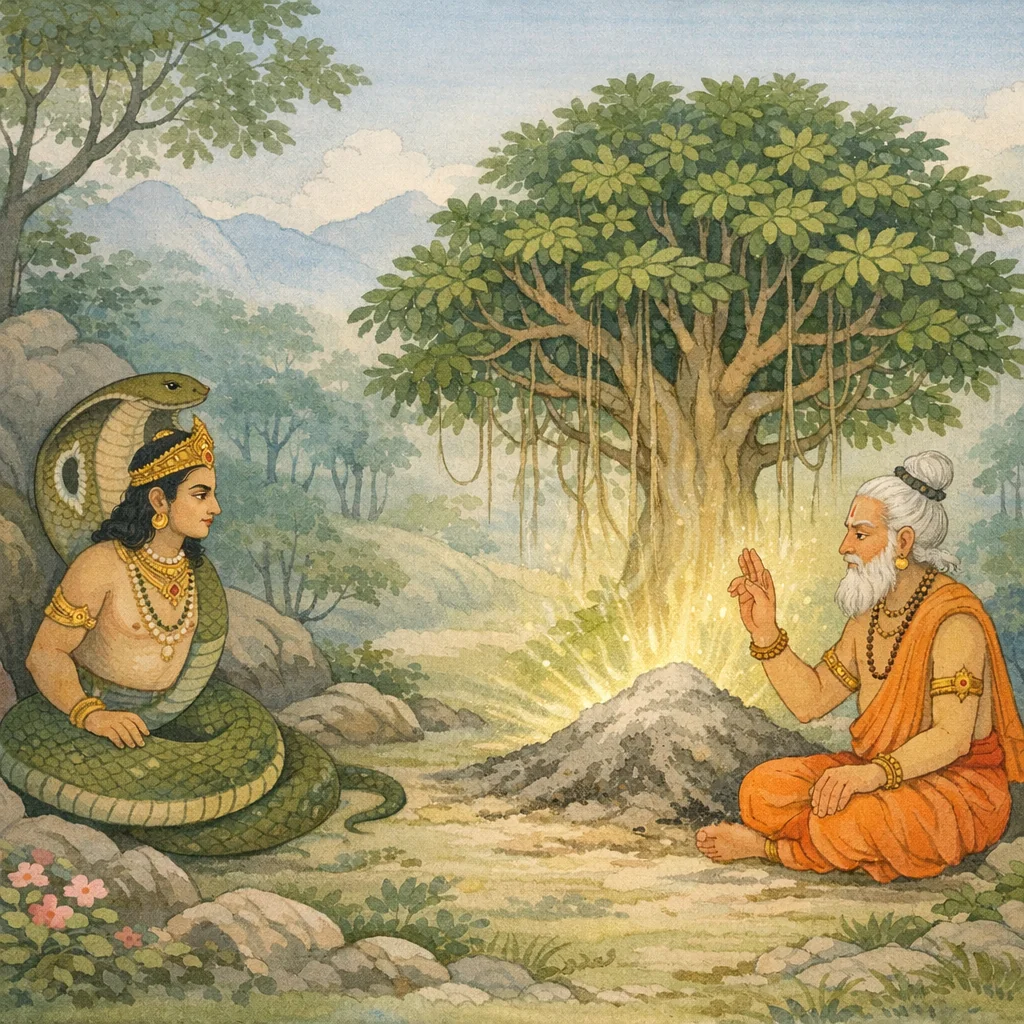
भीकम (2 अमान त्रिचत्वारिशो<् ध्याय: तक्षकका धन देकर काश्यपको लौटा देना और छलसे राजा परीक्षित्के समीप पहुँचकर उन्हें डँसना तक्षक उवाच यदि दष्टं मयेह त्वं शक्त: किंचिच्चिकित्सितुम् । ततो वृक्ष मया दष्टमिमं जीवय काश्यप,तक्षक बोला--काश्यप! यदि इस जगतमें मेरे डँसे हुए रोगीकी कुछ भी चिकित्सा करनेमें तुम समर्थ हो तो मेरे डँसे हुए इस वृक्षको जीवित कर दो
Takṣaka said: “If, here in this world, you are truly capable of applying any remedy to one whom I have bitten, then, O Kāśyapa, bring this tree back to life—this very one that I have bitten.”
Verse 2
परं मन्त्रबलं यत् ते तद् दर्शय यतस्व च । न्यग्रोधमेनं धक्ष्यामि पश्यतस्ते द्विजोत्तम,द्विजश्रेष्ठ! तुम्हारे पास जो उत्तम मन्त्रका बल है, उसे दिखाओ और यत्न करो। लो, तुम्हारे देखते-देखते इस वटवृक्षको मैं भस्म कर देता हूँ
Takṣaka said: “Show me the supreme power of the mantras you possess—exert yourself and display it. Even as you watch, O best of the twice-born, I shall burn this banyan tree to ashes.”
Verse 3
काश्यप उवाच दश नागेन्द्र वृक्ष॑ त्वं यद्येतदभिमन्यसे । अहमेनं त्वया दष्टं जीवयिष्ये भुजजड्रम,काश्यपने कहा--नागराज! यदि तुम्हें इतना अभिमान है तो इस वृक्षको डँसो। भुजंगम! तुम्हारे डँसे हुए इस वृक्षको मैं अभी जीवित कर दूँगा
Kāśyapa said: “O lord of serpents, if you are truly so proud of your power, then bite this tree. O serpent, I shall restore to life this tree that has been bitten by you.”
Verse 4
सौतिर्वाच एवमुक्त: स नागेन्द्र: काश्यपेन महात्मना । अदशद् वृक्षमभ्येत्य न्यग्रोध॑ं पन्नगोत्तम:,उग्रश्रवाजी कहते हैं--महात्मा काश्यपके ऐसा कहनेपर सर्पोमें श्रेष्ठ नागराज तक्षकने निकट जाकर बरगदके वृक्षको डँस लिया
Sauti said: When the great-souled Kāśyapa had spoken thus, Takṣaka—the lord of serpents, foremost among nāgas—went up to a banyan tree and bit it.
Verse 5
स वक्षस्तेन दष्टस्तु पन्नगेन महात्मना । आशीविषविषोपेत: प्रजज्वाल समन्तत:,उस महाकाय विषधर सर्पके डँसते ही उसके विषसे व्याप्त हो वह वृक्ष सब ओरसे जल उठा
When that great venomous serpent bit it, the deadly āśīviṣa poison spread through it, and the tree blazed up on every side.
Verse 6
त॑ दग्ध्वा स नगं॑ नाग: काश्यपं पुनरब्रवीत् । कुरु यत्नं द्विजश्रेष्ठ जीवयैनं वनस्पतिम्,इस प्रकार उस वृक्षको जलाकर नागराज पुन: काश्यपसे बोला--'द्विजश्रेष्ठ] अब तुम यत्न करो और इस वृक्षको जिला दो”
After burning that tree, the serpent again addressed Kāśyapa: “O best of the twice-born sages, now make the effort—restore this tree to life.”
Verse 7
सौतिरुवाच भस्मी भूत॑ं ततो वृक्ष पन्नगेन्द्रस्य तेजसा । भस्म सर्व समादह्ृत्य काश्यपो वाक्यमब्रवीत्,उग्रश्रवाजी कहते हैं--शौनकजी! नागराजके तेजसे भस्म हुए उस वृक्षकी सारी भस्मराशिको एकत्र करके काश्यपने कहा--
Sauti said: Then that tree was reduced to ashes by the blazing power of the lord of serpents. Gathering all the ashes together, Kāśyapa spoke—turning sheer destruction into a moment of reflection and purposeful action.
Verse 8
विद्याबलं पन्नगेन्द्र पश्य मेउद्य वनस्पतौ । अहं संजीवयाम्येनं पश्यतस्ते भुजड्रम,“नागराज! इस वनस्पतिपर आज मेरी विद्याका बल देखो। भुजंगम! मैं तुम्हारे देखते- देखते इस वृक्षको जीवित कर देता हूँ
Kāśyapa said: “O lord of serpents, behold today the power of my sacred knowledge upon this tree. O serpent, even as you watch, I shall restore this tree to life.”
Verse 9
ततः स भगवान् दिद्वान् काश्यपो द्विजसत्तम: । भस्मराशीकृतं वृक्ष विद्यया समजीवयत्,तदनन्तर सौभाग्यशाली दिद्वान् द्विजश्रेष्ठ काश्यपने भस्मराशिके रूपमें विद्यमान उस वृक्षको विद्याके बलसे जीवित कर दिया
Then the venerable sage Kāśyapa, foremost among the twice-born and a true knower, used his sacred knowledge to restore to life the tree that had been reduced to a heap of ashes.
Verse 10
अड्कुरं कृतवांस्तत्र ततः पर्णद्वयान्वितम् । पलाशिनं शाखिनं च तथा विटपिनं पुन:,पहले उन्होंने उसमेंसे अंकुर निकाला, फिर उसे दो पत्तेका कर दिया। इसी प्रकार क्रमश: पल्लव, शाखा और प्रशाखाओंसे युक्त उस महान् वृक्षको पुनः पूर्ववत् खड़ा कर दिया
Kāśyapa said: “There he caused a fresh sprout to appear; then he furnished it with a pair of leaves. In the same orderly progression, he restored it again—now bearing tender foliage, then branches, and then spreading offshoots—until the great tree stood as it had before.”
Verse 11
त॑ दृष्टवा जीवितं वृक्ष काश्यपेन महात्मना । उवाच तक्षको ब्रह्मन् नैतदत्यद्भुतं त्वयि,महात्मा काश्यपद्वारा जिलाये हुए उस वृक्षको देखकर तक्षकने कहा--'ब्रह्मन! तुम- जैसे मन्त्रवेत्तामें ऐसे चमत्कारका होना कोई अद्भुत बात नहीं है
Seeing that the tree had been restored to life by the great-souled Kāśyapa, Takṣaka said: “O Brahmin, this is not at all astonishing in you.”
Verse 12
द्विजेन्द्र यद् विषं हनया मम वा मद्विधस्य वा । कं त्वमर्थमभिप्रेप्सुर्यासि तत्र तपोधन,“तपस्याके धनी द्विजेन्द्र! जब तुम मेरे या मेरे-जैसे दूसरे सर्पके विषको अपनी विद्याके बलसे नष्ट कर सकते हो तो बताओ, तुम कौन-सा प्रयोजन सिद्ध करनेकी इच्छासे वहाँ जा रहे हो
“O best of the twice-born! If by the power of your sacred knowledge you can destroy the poison of me—or of serpents like me—tell me: for what purpose do you go there, O ascetic whose wealth is austerity?”
Verse 13
यत् तेडभिलपितं प्राप्तुं फलं तस्मान्नूपोत्तमात् । अहमेव प्रदास्यामि तत् ते यद्यपि दुर्लभम्,“उस श्रेष्ठ राजासे जो फल प्राप्त करना तुम्हें अभीष्ट है, वह अत्यन्त दुर्लभ हो तो भी मैं ही तुम्हें दे दूँगा
“Whatever fruit you wish to obtain from that excellent king—though it may be exceedingly hard to attain—I myself will grant it to you.”
Verse 14
विप्रशापाभिभूते च क्षीणायुषि नराधिपे । घटमानस्य ते विप्र सिद्धि: संशयिता भवेत्,“विप्रवर! महाराज परीक्षित् ब्राह्मणके शापसे तिरस्कृत हैं और उनकी आयु भी समाप्त हो चली है। ऐसी दशामें उन्हें जिलानेके लिये चेष्टा करनेपर तुम्हें सिद्धि प्राप्त होगी, इसमें संदेह है
“O foremost of brahmins! King Parīkṣit is overpowered by a brahmin’s curse, and his span of life is nearly spent. In such a state, even if you strive to restore him to life, your success is doubtful.”
Verse 15
ततो यशः प्रदीप्तं ते त्रिषु लोकेषु विश्रुतम् निरंशुरिव घर्माशुरन्तर्धानमितो व्रजेत्,“यदि तुम सफल न हुए तो तीनों लोकोंमें विख्यात एवं प्रकाशित तुम्हारा यश किरणरहित सूर्यके समान इस लोकसे अदृश्य हो जायगा”
“If you do not succeed, then your fame—now blazing and renowned across the three worlds—will vanish from this realm, like the sun’s heat when it is without rays.”
Verse 16
काश्यप उवाच धनार्थी याम्यहं तत्र तन्मे देहि भुजड़म । ततो<हं विनिवर्तिष्ये स्वापतेयं प्रगृह्य वै,काश्यपने कहा--नागराज तक्षक! मैं तो वहाँ धनके लिये ही जाता हूँ, वह तुम्हीं मुझे दे दो तो उस धनको लेकर मैं घर लौट जाऊँगा
Kāśyapa said: “O king of nāgas, Takṣaka! I am going there only for the sake of wealth; therefore, O serpent, give that to me. Then, taking my rightful share, I shall turn back and return.”
Verse 17
तक्षक उवाच यावद्धनं प्रार्थयसे तस्माद् राज्ञस्ततो5थधिकम् | अहमेव प्रदास्यामि निवर्तस्व द्विजोत्तम,तक्षक बोला--द्विजश्रेष्ठ! तुम राजा परीक्षितसे जितना धन पाना चाहते हो, उससे अधिक मैं ही दे दूँगा, अतः लौट जाओ
Takṣaka said: “Whatever wealth you seek—more than that, and even more than what the king could give—I myself will grant. Therefore, turn back, O best of Brahmins.”
Verse 18
सौतिर्वाच तक्षकस्य वच: श्रुत्वा काश्यपो द्विजसत्तम: । प्रदध्यौ सुमहातेजा राजानं प्रति बुद्धिमान्,उग्रश्रवाजी कहते हैं--तक्षककी बात सुनकर परम बुद्धिमान् महातेजस्वी विप्रवर काश्यपने राजा परीक्षितके विषयमें कुछ देर ध्यान लगाकर सोचा
Sauti said: Hearing Takṣaka’s words, Kāśyapa—the foremost among brahmins, exceedingly radiant and wise—paused to reflect, turning his mind toward the matter of King Parīkṣit.
Verse 19
दिव्यज्ञान: स तेजस्वी ज्ञात्वा तं नृपतिं तदा । क्षीणायुषं पाण्डवेयमपावर्तत काश्यप:,मन्त्रैंगदिर्विषहरै रक्ष्यमाणं प्रयत्नत: । तेजस्वी काश्यप दिव्य ज्ञानसे सम्पन्न थे। उस समय उन्होंने जान लिया कि पाण्डववंशी राजा परीक्षितकी आयु अब समाप्त हो गयी है, अतः वे मुनिश्रेष्ठ तक्षकसे अपनी रुचिके अनुसार धन लेकर वहाँसे लौट गये। महात्मा काश्यपके समय रहते लौट जानेपर तक्षक तुरंत हस्तिनापुर नगरमें जा पहुँचा। वहाँ जानेपर उसने सुना, राजा परीक्षित्की मन्त्रों तथा विष उतारनेवाली ओषधियोंद्वारा प्रयत्नपूर्वक रक्षा की जा रही है
That radiant Kāśyapa, endowed with divine knowledge, understood at that time that the Pāṇḍava-line king’s lifespan had run out. Therefore he turned back. And Takṣaka heard that King Parīkṣit was being carefully guarded with mantras and with antidotal medicines that remove poison.
Verse 20
लब्ध्वा वित्त मुनिवरस्तक्षकाद् यावदीप्सितम् । निवृत्ते काश्यपे तस्मिन् समयेन महात्मनि
Takṣaka said: “When the great sage Kāśyapa had obtained from Takṣaka as much wealth as he desired, that high-souled one—bound by the agreed time—turned back (from his intended act).”
Verse 21
जगाम तक्षकस्तूर्ण नगरं नागसाह्दयम् | अथ शुश्राव गच्छन् स तक्षको जगतीपतिम्
Takṣaka hurried to the city that was dear to the Nāgas. As he went, Takṣaka then heard about the lord of the earth (the king).
Verse 22
सौतिर्वाच स चिन्तयामास तदा मायायोगेन पार्थिव:,फलदर्भोदकं गृह राज्ञे नागोडथ तक्षक: । उग्रश्रवाजी कहते हैं--शौनकजी! तब तक्षकने विचार किया, मुझे मायाका आश्रय लेकर राजाको ठग लेना चाहिये; किंतु इसके लिये क्या उपाय हो? तदनन्तर तक्षक नागने फल, दर्भ (कुशा) और जल लेकर कुछ नागोंको तपस्वीरूपमें राजाके पास जानेकी आज्ञा दी
Sauti said: Then Takṣaka reflected, “By resorting to the power of māyā, I should deceive the king; but by what means?” Thereafter Takṣaka, the serpent, arranged offerings—fruit, kuśa-grass, and water—and directed certain serpents to approach the king in the guise of ascetics.
Verse 23
मया वज्चयितव्योडसौ क उपायो भवेदिति । ततस्तापसरूपेण प्राहिणोत् स भुजड़मान्
Takṣaka thought, “I must deceive him—what means could accomplish this?” Then, assuming the guise of an ascetic, he dispatched the serpent-creatures to carry out his design.
Verse 24
तक्षक उवाच गच्छथ्वं यूयमव्यग्रा राजानं कार्यवत्तया
Takṣaka said: “Go, all of you, without distraction. Approach the king as though you have urgent business to attend to.”
Verse 25
सौतिरु्वाच ते तक्षकसमादिष्टास्तथा चक्रुर्भुजज्रमा:,उग्रश्रवाजी कहते हैं--तक्षकके आदेश देनेपर उन नागोंने वैसा ही किया
Ugraśravas (Sauti) said: Those serpents, having been commanded by Takṣaka, acted exactly as he directed.
Verse 26
उपनिन्न्युस्तथा राज्ञे दर्भानाप: फलानि च | तच्च सर्व स राजेन्द्र: प्रतिजग्राह वीर्यवान्,वे राजाके पास कुश, जल और फल लेकर गये। परम पराक्रमी महाराज परीक्षित्ने उनकी दी हुई वे सब वस्तुएँ ग्रहण कर लीं
They then brought to the king kuśa-grass, water, and fruits. That mighty king—O best of kings—accepted all those offerings.
Verse 27
कृत्वा तेषां च कार्याणि गम्यतामित्युवाच तान् | गतेषु तेषु नागेषु तापसच्छझरूपिषु,तदनन्तर उन्हें पारितोषिक देने आदिका कार्य करके कहा--“'अब आपलोग जाय॑।' तपस्वियोंके वेषमें छिपे हुए उन नागोंके चले जानेपर राजाने अपने मन्त्रियों और सुहृदोंसे कहा--'ये सब तपस्वियोंद्वारा लाये हुए बड़े स्वादिष्ठ फल हैं। इन्हें मेरे साथ आपलोग भी खायेँ।” ऐसा कहकर मन्सत्रियोंसहित राजाने उन फलोंको लेनेकी इच्छा की
After completing the customary courtesies and services due to them, he said to those visitors, “Now you may depart.” When those Nāgas—disguised in the guise of ascetics—had gone, the king addressed his ministers and trusted friends: “These are exceedingly delicious fruits brought by the ascetics; you too should eat them with me.” Saying so, the king, together with his ministers, desired to take those fruits—unaware of the deception concealed beneath the appearance of holiness.
Verse 28
अमात्यान् सुहृदश्चैव प्रोवाच स नराधिप: । भक्षयन्तु भवन्तो वै स्वादूनीमानि सर्वश:,तदनन्तर उन्हें पारितोषिक देने आदिका कार्य करके कहा--“'अब आपलोग जाय॑।' तपस्वियोंके वेषमें छिपे हुए उन नागोंके चले जानेपर राजाने अपने मन्त्रियों और सुहृदोंसे कहा--'ये सब तपस्वियोंद्वारा लाये हुए बड़े स्वादिष्ठ फल हैं। इन्हें मेरे साथ आपलोग भी खायेँ।” ऐसा कहकर मन्सत्रियोंसहित राजाने उन फलोंको लेनेकी इच्छा की
The king then addressed his ministers and trusted friends: “Do eat these delicious fruits, all of you.” In the narrative context, the king—misled by appearances and hospitality—extends shared enjoyment to his inner circle, a choice that underscores the ethical risk of unexamined trust and the vulnerability of rulers when deception enters the court.
Verse 29
तापसैरुपनीतानि फलानि सहिता मया । ततो राजा ससचिव: फलान्यादातुमैच्छत,तदनन्तर उन्हें पारितोषिक देने आदिका कार्य करके कहा--“'अब आपलोग जाय॑।' तपस्वियोंके वेषमें छिपे हुए उन नागोंके चले जानेपर राजाने अपने मन्त्रियों और सुहृदोंसे कहा--'ये सब तपस्वियोंद्वारा लाये हुए बड़े स्वादिष्ठ फल हैं। इन्हें मेरे साथ आपलोग भी खायेँ।” ऐसा कहकर मन्सत्रियोंसहित राजाने उन फलोंको लेनेकी इच्छा की
Takṣaka said: “Accompanied by me, fruits were presented by those ascetics. Then the king, together with his ministers, wished to accept those fruits.” In the narrative context, the verse underscores how outward signs of holiness can be used to win trust, and how a ruler’s unguarded acceptance—especially when shared with close advisers—can turn a private lapse in discernment into a wider ethical and political harm.
Verse 30
विधिना सम्प्रयुक्तो वै ऋषिवाक्येन तेन तु । यस्मिन्नेव फले नागस्तमेवा भक्षयत् स्वयम्,विधाताके विधान एवं महर्षिके वचनसे प्रेरित होकर राजाने वही फल स्वयं खाया, जिसपर तक्षक नाग बैठा था
Compelled by destiny and impelled by that sage’s utterance, the king himself ate the very fruit upon which the serpent (Takṣaka) was seated—thus the ordained consequence, set in motion by a great seer’s words, came to pass.
Verse 31
ततो भक्षयतस्तस्य फलात् कृमिरभूदणु: । हस्वक: कृष्णनयनस्ताम्रवर्णोडथ शौनक,शौनकजी! खाते समय राजाके हाथमें जो फल था, उससे एक छोटा-सा कीट प्रकट हुआ। देखनेमें वह अत्यन्त लघु था, उसकी आँखें काली और शरीरका रंग ताँबेके समान था
Then, as he was eating, from the fruit in his hand there arose a minute worm. It was tiny in form, with black eyes and a copper-colored body—so it appeared, O Śaunaka. The episode underscores how hidden agents of fate can operate through seemingly ordinary objects, and how harm may arrive in subtle, concealed forms when a curse or hostile intent is at work.
Verse 32
स त॑ गृहा नृपश्रेष्ठ सचिवानिदमब्रवीत् । अस्तमभ्येति सविता विषादद्य न मे भयम्,नृपश्रेष्ठ परीक्षितने उस कीड़ेको हाथमें लेकर मन्त्रियोंसे इस प्रकार कहा--“अब सूर्यदेव अस्ताचलको जा रहे हैं; इसलिये इस समय मुझे सर्पके विषसे कोई भय नहीं है
Then, O best of kings, he took that worm in his hand and addressed his ministers: “The Sun is now setting; therefore, at this time I have no fear of poison—even from the serpent—since King Parīkṣit has been rendered vulnerable.”
Verse 33
सत्यवागस्तु स मुनि: कृमिर्मा दशतामयम् | तक्षको नाम भूत्वा वै तथा परिहृतं भवेत्,“वे मुनि सत्यवादी हों, इसके लिये यह कीट ही तक्षक नाम धारण करके मुझे डँस ले। ऐसा करनेसे मेरे दोषका परिहार हो जायगा
Takṣaka said: “May that sage indeed be a speaker of truth. Let this very worm bite me; becoming ‘Takṣaka’ in name, it will thus remove (or atone for) my fault.”
Verse 34
ते चैनमन्ववर्तन्त मन्त्रिण: कालचोदिता: । एवमुकक््त्वा स राजेन्द्रो ग्रीवायां संनिवेश्य ह,कालसे प्रेरित होकर मन्त्रियोंने भी उनकी हाँ-में-हाँ मिला दी। मन्त्रियोंसे पूर्वोक्त बात कहकर राजाधिराज परीक्षित् उस लघु कीटको कंधेपर रखकर जोर-जोरसे हँसने लगे। वे तत्काल ही मरनेवाले थे; अतः उनकी बुद्धि मारी गयी थी। राजा अभी हँस ही रहे थे कि उन्हें जो निवेदित किया गया था उस फलसे निकलकर तक्षक नागने अपने शरीरसे उनको जकड़ लिया। इस प्रकार वेगपूर्वक उनके शरीरमें लिपटकर नागराज तक्षकने बड़े जोरसे गर्जना की और भूपाल परीक्षित्को डँस लिया
And his ministers, driven on by the force of Time, echoed his course and went along with it. Having spoken thus, the king of kings placed it upon his neck.
Verse 35
कृमिकं प्राहसत् तूर्ण मुमूर्षुर्नष्टचेतन: । प्रहसन्नेव भोगेन तक्षकेण त्ववेष्ट्यत,कालसे प्रेरित होकर मन्त्रियोंने भी उनकी हाँ-में-हाँ मिला दी। मन्त्रियोंसे पूर्वोक्त बात कहकर राजाधिराज परीक्षित् उस लघु कीटको कंधेपर रखकर जोर-जोरसे हँसने लगे। वे तत्काल ही मरनेवाले थे; अतः उनकी बुद्धि मारी गयी थी। राजा अभी हँस ही रहे थे कि उन्हें जो निवेदित किया गया था उस फलसे निकलकर तक्षक नागने अपने शरीरसे उनको जकड़ लिया। इस प्रकार वेगपूर्वक उनके शरीरमें लिपटकर नागराज तक्षकने बड़े जोरसे गर्जना की और भूपाल परीक्षित्को डँस लिया
The king, his mind already clouded as death drew near, burst into loud laughter at the little worm. Even as he continued laughing, Takṣaka coiled his body around him like a tightening noose. Thus swiftly constricting the king, the serpent-king roared and then bit Parīkṣit.
Verse 36
तस्मात् फलादू विनिष्क्रम्य यत् तद् राज्ञे निवेदितम् । वेष्टयित्वा च वेगेन विनद्य च महास्वनम् | अदशत् पृथिवीपालं तक्षकः पन्नगेश्वर:,कालसे प्रेरित होकर मन्त्रियोंने भी उनकी हाँ-में-हाँ मिला दी। मन्त्रियोंसे पूर्वोक्त बात कहकर राजाधिराज परीक्षित् उस लघु कीटको कंधेपर रखकर जोर-जोरसे हँसने लगे। वे तत्काल ही मरनेवाले थे; अतः उनकी बुद्धि मारी गयी थी। राजा अभी हँस ही रहे थे कि उन्हें जो निवेदित किया गया था उस फलसे निकलकर तक्षक नागने अपने शरीरसे उनको जकड़ लिया। इस प्रकार वेगपूर्वक उनके शरीरमें लिपटकर नागराज तक्षकने बड़े जोरसे गर्जना की और भूपाल परीक्षित्को डँस लिया
Therefore, emerging from the fruit that had been presented to the king, Takṣaka—the lord of serpents—swiftly coiled around the protector of the earth. Raising a tremendous roar, he bit King Parīkṣit.
Verse 43
इति श्रीमहाभारते आदिपर्वणि आस्तीकपर्वणि तक्षकदंशे त्रिचत्वारिंशो5 ध्याय: ।। ४३ ।। इस प्रकार श्रीमह्ा भारत आदिपव॑के अन्तर्गत आस्तीकपर्वमें तक्षक-दंशनविषयक तैतालीसवाँ अध्याय पूरा हुआ
Thus ends the forty-third chapter of the Ādi Parva of the Śrī Mahābhārata, within the Āstīka section, concerning the biting of Takṣaka. This colophon marks the completion of this chapter’s narrative unit.
Verse 213
मन्त्रैंगदिर्विषहरै रक्ष्यमाणं प्रयत्नत: । तेजस्वी काश्यप दिव्य ज्ञानसे सम्पन्न थे। उस समय उन्होंने जान लिया कि पाण्डववंशी राजा परीक्षितकी आयु अब समाप्त हो गयी है, अतः वे मुनिश्रेष्ठ तक्षकसे अपनी रुचिके अनुसार धन लेकर वहाँसे लौट गये। महात्मा काश्यपके समय रहते लौट जानेपर तक्षक तुरंत हस्तिनापुर नगरमें जा पहुँचा। वहाँ जानेपर उसने सुना, राजा परीक्षित्की मन्त्रों तथा विष उतारनेवाली ओषधियोंद्वारा प्रयत्नपूर्वक रक्षा की जा रही है
Takṣaka said: “I have heard that King Parīkṣit is being guarded with great effort—by protective mantras and by remedies that neutralize poison.” In context, this underscores how human vigilance and medical-religious countermeasures are mobilized against impending danger, even as fate and prior actions continue to press toward their outcome.
Verse 233
फलदर्भोदकं गृह राज्ञे नागोडथ तक्षक: । उग्रश्रवाजी कहते हैं--शौनकजी! तब तक्षकने विचार किया, मुझे मायाका आश्रय लेकर राजाको ठग लेना चाहिये; किंतु इसके लिये क्या उपाय हो? तदनन्तर तक्षक नागने फल, दर्भ (कुशा) और जल लेकर कुछ नागोंको तपस्वीरूपमें राजाके पास जानेकी आज्ञा दी
Ugraśravā said: “O Śaunaka! Then Takṣaka reflected, ‘I should take refuge in māyā and deceive the king; but by what means?’ Thereupon the serpent Takṣaka took fruits, darbha (kuśa grass), and water, and commanded certain nāgas to go to the king in the guise of ascetics.”
Verse 246
फलपुष्पोदकं नाम प्रतिग्राहयितुं नृपम् तक्षकने कहा--तुमलोग कार्यकी सफलताके लिये राजाके पास जाओ, किंतु तनिक भी व्यग्र न होना। तुम्हारे जानेका उद्देश्य है--महाराजको फल, फूल और जल भेंट करना
Takṣaka said: “Go to the king for the success of your undertaking, and do not become even slightly agitated. Your purpose in going is to present the king with the customary offering—fruits, flowers, and water.”
Frequently Asked Questions
Jaratkāruṇī must choose between two risks: waking her husband may violate the marital samaya by displeasing him, while not waking him may allow a lapse in saṃdhyā observance—framed as a heavier dharmic fault due to time-bound ritual duty.
The chapter teaches that dharma often involves competing obligations; intention and context matter, but agreements and ritual disciplines carry real normative force. It also illustrates how private ethical choices can serve broader communal outcomes (lineage welfare and curse-resolution).
No explicit phalaśruti is stated here; the chapter’s meta-significance is narrative-causal: it authorizes the future importance of the unborn child by describing the pregnancy’s exceptional qualities and linking it to a larger lineage-and-curse framework.