Adhyaya 42
Jaratkāru’s Conditional Marriage Vow and Vāsuki’s Offer (जरत्कारु-विवाह-नियमः)
Upa-parva: Āstīka Upākhyāna (Jaratkāru–Nāga Episode)
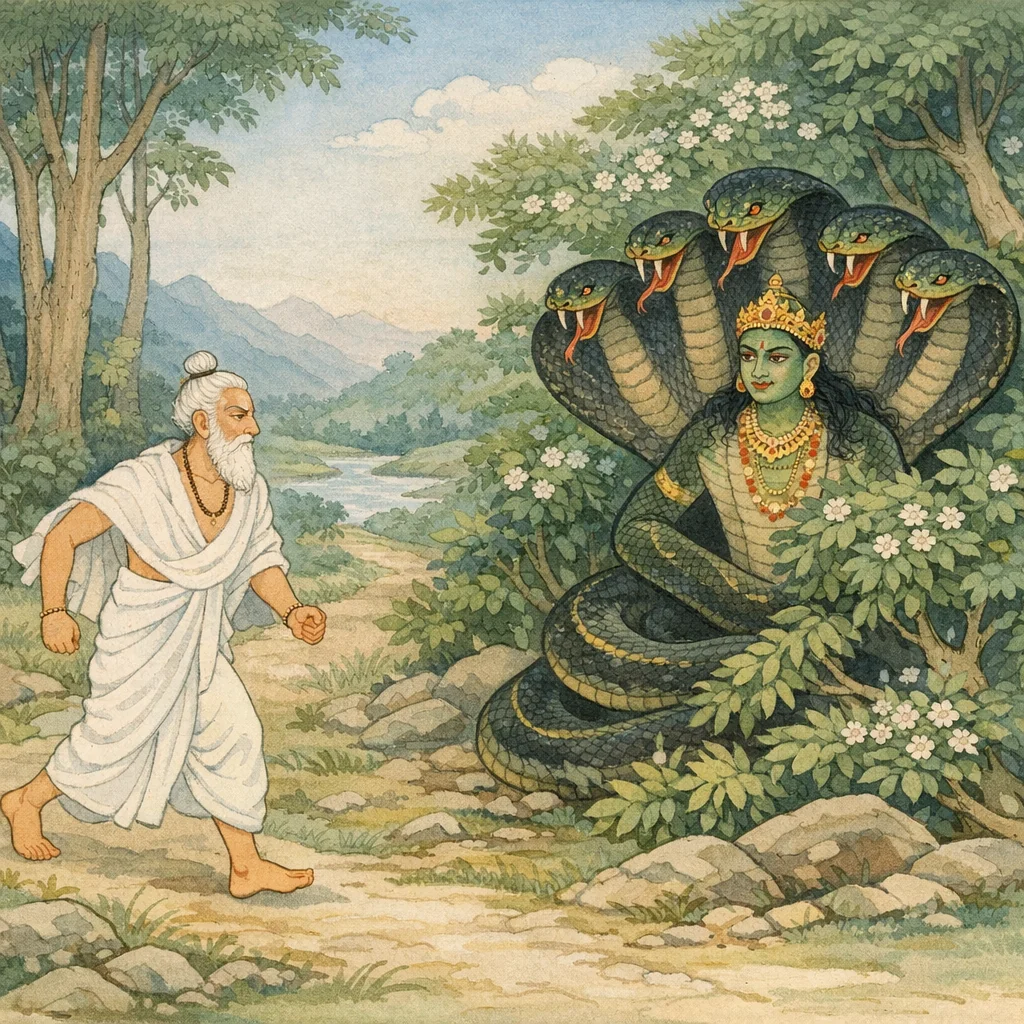
Sauti narrates that Jaratkāru, distressed after encountering the precarious state of his ancestors, addresses the pitṛs with grief and self-reproach, accepting moral accountability for their condition. The pitṛs question why he has not undertaken marriage, prompting Jaratkāru to articulate an ascetic rationale while acknowledging the ancestral claim upon him. He sets explicit conditions for marriage: he will accept only a maiden who bears the same name (sanāmnī), is offered like alms (bhaikṣavat) without coercion, and whom he will not be obligated to materially support—thereby preserving his renunciant orientation while minimally satisfying lineage duty. He then wanders seeking such a match, is repeatedly refused due to perceived age, and in despair calls upon all beings to hear his request. Nāgas devoted to Jaratkāru report this to Vāsuki, who brings an adorned maiden and offers her; Jaratkāru hesitates, suspecting she may not meet the naming condition and reiterating his refusal to assume maintenance, leading him to inquire her name and clarify terms with Vāsuki. The chapter’s thematic lesson is the negotiated interface between mokṣa-oriented discipline and the dharmic imperatives of ancestry and social reproduction.
Chapter Arc: शमीक ऋषि के आश्रम से निकला संदेश राजसभा की ओर बढ़ता है—पुत्र के शाप का अटल होना स्वीकार कर भी पिता शांति और यथाशक्ति प्रतिकार का उपाय खोजते हैं, और गौरमुख को परीक्षित् के पास भेजते हैं। → हस्तिनापुर में राजा परीक्षित् को शाप का समाचार मिलता है। वह आत्मरक्षा की व्यवस्था करता है—सावधानी, पहरा, और ब्राह्मणों/वैद्यों की सहायता—पर भीतर यह भय भी है कि ‘तक्षक’ जैसा नागराज साधारण उपायों से नहीं रुकता। इसी बीच एक और धारा चलती है: कश्यप मुनि (सर्प-विष-निवारक) राजा को बचाने के लिए शीघ्रगामी होते हैं। → मार्ग में तक्षक कश्यप को रोकता है और पूछता है कि वह इतनी शीघ्रता से कहाँ जा रहा है और क्या करने का संकल्प है। यह सामना अध्याय का शिखर है—एक ओर धर्मनिष्ठ वैद्य-ऋषि, दूसरी ओर नियति-रूप नागराज, और बीच में शाप की अपरिहार्यता का प्रश्न। → कश्यप अपने उद्देश्य का उद्घाटन करता है—वह राजा को तक्षक-दंश से बचाने की क्षमता रखता है और उसी हेतु जा रहा है। तक्षक उसकी राह में खड़ा होकर इस संभावना को चुनौती देता है, जिससे स्पष्ट होता है कि केवल राजकीय सुरक्षा नहीं, अलौकिक/दैवी संघर्ष भी सक्रिय है। → तक्षक और कश्यप के बीच आगे क्या होगा—क्या कश्यप राजा तक पहुँच पाएँगे, या तक्षक उन्हें रोककर शाप को सिद्ध करेगा—यह तनाव अगले अध्याय पर छोड़ दिया जाता है।
Shlokas
Verse 1
ऑपन-माज बछ। अकाल द्विचत्वारिशोड ध्याय: शमीकका अपने पुत्रको समझाना और गौरमुखको राजा परीक्षित्के पास भेजना, राजाद्वारा आत्मरक्षाकी व्यवस्था तथा तक्षक नाग और काश्यपकी बातचीत शड़युवाच यद्येतत् साहसं तात यदि वा दुष्कृतं कृतम् प्रियं वाप्यप्रियं वा ते वागुक्ता न मृषा भवेत्,शृंगी बोला--तात! यदि यह साहस है अथवा यदि मेरे द्वारा दुष्कर्म हो गया है तो हो जाय। आपको यह प्रिय लगे या अप्रिय, किंतु मैंने जो बात कह दी है, वह झूठी नहीं हो सकती
Śamīka said: “My son, even if this is rashness, even if a wrongdoing has been done, let it stand. Whether it pleases you or displeases you, the word that has been spoken cannot become false.”
Verse 2
नैवान्यथेदं भविता पितरेष ब्रवीमि ते । नाहं मृषा ब्रवीम्येवं स्वैरेष्वपि कुत: शपन्,पिताजी! मैं आपसे सच कहता हूँ, अब यह शाप टल नहीं सकता। मैं हँसी-मजाकमें भी झूठ नहीं बोलता, फिर शाप देते समय कैसे झूठी बात कह सकता हूँ
“This will not turn out otherwise; I tell you the truth, father. I do not speak falsely even in casual, playful talk—how then could I utter an untrue statement while pronouncing a curse?”
Verse 3
शमीक उवाच जानाम्युग्रप्रभाव॑ं त्वां तात सत्यगिरं तथा । नानृतं चोक्तपूर्व ते नैतन्मिथ्या भविष्यति,शमीकने कहा--बेटा! मैं जानता हूँ तुम्हारा प्रभाव उग्र है, तुम बड़े सत्यवादी हो, तुमने पहले भी कभी झूठी बात नहीं कही है; अतः यह शाप मिथ्या नहीं होगा
Śamīka said: “My son, I know your power is fierce, and that your speech is truthful. You have never spoken falsehood before; therefore this curse will not turn out to be in vain.”
Verse 4
पित्रा पुत्रो वयःस्थो5पि सततं वाच्य एव तु । यथा स्याद् गुणसंयुक्तः प्राप्तुयाच्च महद् यश:,तथापि पिताको उचित है कि वह अपने पुत्रको बड़ी अवस्थाका हो जानेपर भी सदा सत्कर्मोंका उपदेश देता रहे; जिससे वह गुणवान् हो और महान् यश प्राप्त करे
Śamīka said: Even when a son has grown old, a father should still continually counsel him, so that he may remain endowed with virtues and attain great renown.
Verse 5
कि पुनर्बाल एव त्वं तपसा भावित: सदा । वर्धते च प्रभवतां कोपो5तीव महात्मनाम्,फिर तुम्हें उपदेश देनेकी तो बात ही क्या है, तुम तो अभी बालक ही हो। तुमने सदा तपस्याके द्वारा अपनेको दिव्य शक्तिसे सम्पन्न किया है। जो योगजनित ऐश्वर्यसे सम्पन्न हैं, ऐसे प्रभावशाली तेजस्वी पुरुषोंका भी क्रोध अधिक बढ़ जाता है; फिर तुम-जैसे बालकको क्रोध हो, इसमें कहना ही क्या है
“How much more so in your case—you are still only a boy. Yet you have always been refined and empowered by austerity. Even in great-souled men of mighty influence, anger can flare up exceedingly; so what wonder is it if anger arises in a youth like you?”
Verse 6
सो<हं पश्यामि वक्तव्यं त्वयि धर्मभूतां वर । पुत्रत्वं बालतां चैव तवावेक्ष्य च साहसम्,(किंतु यह क्रोध धर्मका नाशक होता है) इसलिये धर्मात्माओंमें श्रेष्ठ पुत्र! तुम्हारे बचपन और दुःसाहसपूर्ण कार्यको देखकर मैं तुम्हें कुछ कालतक उपदेश देनेकी आवश्यकता समझता हूँ
“Therefore I see that I must speak to you, O best of the righteous. Considering your youth and your rash daring—(for anger is a destroyer of dharma)—I deem it necessary to instruct you for a time.”
Verse 7
स त्वं शमपरो भूत्वा वनन््यमाहारमाचरन् | चर क्रोधमिमं हत्वा नैवं धर्म प्रहास्यसि,तुम मन और इन्द्रियोंके निग्रहमें तत्यर होकर जंगली कन्द, मूल, फलका आहार करते हुए इस क्रोधको मिटाकर उत्तम आचरण करो; ऐसा करनेसे तुम्हारे धर्मकी हानि नहीं होगी
Śamīka said: “Become devoted to inner calm and self-restraint. Living on forest fare, practice a disciplined way of life; destroy this anger and conduct yourself nobly. By doing so, your dharma will not be diminished.”
Verse 8
क्रोधो हि धर्म हरति यतीनां दुःखसंचितम् । ततो धर्मविहीनानां गतिरिष्टा न विद्यते,क्रोध प्रयत्तशील साधकोंके अत्यन्त दुःखसे उपार्जित धर्मका नाश कर देता है। फिर धर्महीन मनुष्योंको अभीष्ट गति नहीं मिलती है
Śamīka said: “Anger indeed steals away the dharma that ascetics have amassed through long hardship. Therefore, for those bereft of dharma, the desired course and blessed destination are not attained.”
Verse 9
शम एव यतीनां हि क्षमिणां सिद्धिकारक: । क्षमावतामयं लोक: परश्रैव क्षमावताम्,शम (मनोनिग्रह) ही क्षमाशील साधकोंको सिद्धिकी प्राप्ति करानेवाला है। जिनमें क्षमा है, उन्हींके लिये यह लोक और परलोक दोनों कल्याणकारक हैं
Śamīka said: “Self-control (śama) alone is what brings spiritual accomplishment to ascetics who are endowed with forbearance. For those who possess forgiveness, this world is beneficial—and so too is the world beyond; forgiveness safeguards their welfare in both.”
Verse 10
तस्माच्चरेथा: सततं क्षमाशीलो जितेन्द्रिय: । क्षमया प्राप्स्यसे लोकान् ब्रह्मण: समनन्तरान्,इसलिये तुम सदा इन्द्रियोंको वशमें रखते हुए क्षमाशील बनो। क्षमासे ही ब्रह्माजीके निकटवर्ती लोकोंमें जा सकोगे
Therefore, conduct yourself at all times with forbearance, keeping your senses under control. Through forgiveness alone you will attain the worlds that lie close to Brahmā—exalted realms reached by those who master themselves and do not repay injury with injury.
Verse 11
मया तु शममास्थाय यच्छक्यं कर्तुमद्य वै । तत् करिष्याम्यहं तात प्रेषयिष्ये नृपाय वै,तात! मैं तो शान्ति धारण करके अब जो कुछ किया जा सकता है, वह करूँगा। राजाके पास यह संदेश भेज दूँगा कि “राजन! तुम्हारे द्वारा मुझे जो तिरस्कार प्राप्त हुआ है उसे देखकर अमर्षमें भरे हुए मेरे अल्पबुद्धि एवं मूढ़ पुत्रने तुम्हें शाप दे दिया है'
Śamīka said: “I will restrain myself and, adopting calm, do today whatever can still be done. Dear child, I shall act accordingly and send word to the king: ‘O King, seeing the insult you have shown me, my foolish and deluded son, overcome by anger, has pronounced a curse upon you.’”
Verse 12
मम पुत्रेण शप्तोडसि बालेन कृशबुद्धिना । ममेमां धर्षणां त्वत्त: प्रेक्ष्य राजन्नमर्षिणा,तात! मैं तो शान्ति धारण करके अब जो कुछ किया जा सकता है, वह करूँगा। राजाके पास यह संदेश भेज दूँगा कि “राजन! तुम्हारे द्वारा मुझे जो तिरस्कार प्राप्त हुआ है उसे देखकर अमर्षमें भरे हुए मेरे अल्पबुद्धि एवं मूढ़ पुत्रने तुम्हें शाप दे दिया है'
Śamīka said: “You have been cursed by my son—still a mere boy, of feeble understanding. Seeing the insult that has befallen me at your hands, O King, he was filled with indignation and, in anger, pronounced a curse upon you. For my part, I will steady myself in forbearance and do what can now be done—sending word to you of what has occurred.”
Verse 13
सौतिर्वाच एवमादिश्य शिष्यं स प्रेषयामास सुव्रत: । परिक्षिते नृपतये दयापन्नो महातपा:,उग्रश्रवाजी कहते हैं--उत्तम व्रतका पालन करनेवाले दयालु एवं महातपस्वी शमीक मुनिने अपने गौरमुख नामवाले एकाग्रचित्त एवं शीलवान् शिष्यको इस प्रकार आदेश दे कुशल-प्रश्न, कार्य एवं वृतान्तका संदेश देकर राजा परीक्षित्के पास भेजा
Sauti said: Having thus instructed his disciple, the great ascetic Śamīka—compassionate and steadfast in excellent vows—sent him to King Parīkṣit.
Verse 14
संदिश्य कुशलप्रश्न॑ कार्यवृत्तान्तमेव च । शिष्यं गौरमुखं नाम शीलवन्तं समाहितम्,उग्रश्रवाजी कहते हैं--उत्तम व्रतका पालन करनेवाले दयालु एवं महातपस्वी शमीक मुनिने अपने गौरमुख नामवाले एकाग्रचित्त एवं शीलवान् शिष्यको इस प्रकार आदेश दे कुशल-प्रश्न, कार्य एवं वृतान्तका संदेश देकर राजा परीक्षित्के पास भेजा
Having instructed him to convey courteous inquiries after well-being, along with the necessary message and the full account of events, Śamīka sent his disciple named Gauramukha—steadfast in conduct and composed in mind.
Verse 15
सो$5भिगम्य ततः शीघ्र नरेन्द्र कुरुवर्धनम् । विवेश भवन राज्ञ: पूर्व द्वा:स्थै्निवेदित:,गौरमुख वहाँसे शीघ्र कुरुकुलकी वृद्धि करनेवाले महाराज परीक्षित्के पास चला गया। राजधानीमें पहुँचनेपर द्वारपालने पहले महाराजको उसके आनेकी सूचना दी और उनकी आज्ञा मिलनेपर गौरमुखने राजभवनमें प्रवेश किया
Having approached, he then quickly went to the king—O enhancer of the Kuru line. After the doorkeepers had first announced his arrival, he entered the royal residence by the king’s permission.
Verse 16
पूजितस्तु नरेन्द्रेण द्विजो गौरमुखस्तदा । आचख्यौ च परिश्रान्तो राज्ञ: सर्वमशेषत:
Then the brahmin Gauramukha, having been duly honored by the king, and being weary from his exertions, reported to the king everything in full, without leaving anything out.
Verse 17
गौरयुख उवाच शमीको नाम राजेन्द्र वर्तते विषये तव,गौरमुख बोला--महाराज! आपके राज्यमें शमीक नामवाले एक परम धर्मात्मा महर्षि रहते हैं। वे जितेन्द्रिय, मनको वशमें रखनेवाले और महान् तपस्वी हैं। नरव्याप्र! आपने मौन व्रत धारण करनेवाले उन महात्माके कंधेपर धनुषकी नोकसे उठाकर एक मरा हुआ साँप रख दिया था। महर्षिने तो उसके लिये आपको क्षमा कर दिया था, किंतु उनके पुत्रको वह सहन नहीं हुआ
Gauramukha said: “O king, within your realm there lives a great sage named Śamīka—self-controlled, master of his mind, and a mighty ascetic. O tiger among men, you once lifted that holy man, who was observing a vow of silence, with the tip of your bow and placed a dead snake upon his shoulder. The sage himself forgave you for it; but his son could not endure the insult.”
Verse 18
ऋषि: परमधर्मात्मा दान्त: शान्तो महातपा: । तस्य त्वया नरव्याघ्र सर्प: प्राणैर्वियोजित:,गौरमुख बोला--महाराज! आपके राज्यमें शमीक नामवाले एक परम धर्मात्मा महर्षि रहते हैं। वे जितेन्द्रिय, मनको वशमें रखनेवाले और महान् तपस्वी हैं। नरव्याप्र! आपने मौन व्रत धारण करनेवाले उन महात्माके कंधेपर धनुषकी नोकसे उठाकर एक मरा हुआ साँप रख दिया था। महर्षिने तो उसके लिये आपको क्षमा कर दिया था, किंतु उनके पुत्रको वह सहन नहीं हुआ
Gauramukha said: “In your realm there lives the sage Śamīka—supremely righteous, self-restrained, tranquil, and of great austerity. Yet you, O tiger among men, placed upon that sage a dead snake, bereft of life.”
Verse 19
अवसक्तो धनुष्कोट्या स्कन्धे मौनान्वितस्य च । क्षान्तवांस्तव तत् कर्म पुत्रस्तस्य न चक्षमे,गौरमुख बोला--महाराज! आपके राज्यमें शमीक नामवाले एक परम धर्मात्मा महर्षि रहते हैं। वे जितेन्द्रिय, मनको वशमें रखनेवाले और महान् तपस्वी हैं। नरव्याप्र! आपने मौन व्रत धारण करनेवाले उन महात्माके कंधेपर धनुषकी नोकसे उठाकर एक मरा हुआ साँप रख दिया था। महर्षिने तो उसके लिये आपको क्षमा कर दिया था, किंतु उनके पुत्रको वह सहन नहीं हुआ
With the tip of your bow you placed a dead snake upon the shoulder of that sage who was observing a vow of silence. Though the sage forgave that act of yours, his son could not endure it.
Verse 20
तेन शप्तो<5सि राजेन्द्र पितुरज्ञातमद्य वै । तक्षक: सप्तरात्रेण मृत्युस्तव भविष्यति,राजेन्द्र! उस ऋषिकुमारने आज अपने पिताके अनजानमें ही आपके लिये यह शाप दिया है कि “आजसे सात रातके बाद ही तक्षक नाग आपकी मृत्युका कारण हो जायगा”
Gauramukha said: “O best of kings, today you have been cursed—though it was done without the father’s knowledge. Within seven nights Takṣaka will become the cause of your death, O king.”
Verse 21
तत्र रक्षां कुरुष्वेति पुन: पुनरथाब्रवीत् । तदन्यथा न शक््यं च कर्तु केनचिदप्युत,इस दशामें आप अपनी रक्षाकी व्यवस्था करें। यह मुनिने बार-बार कहा है। उस शापको कोई भी टाल नहीं सकता
Then he said again and again, “Make arrangements for your protection there.” For it is not possible for anyone at all to make it otherwise—this curse cannot be averted.
Verse 22
न हि शक्नोति त॑ यन्तुं पुत्र कोपसमन्वितम् । ततोऊहं प्रेषितस्तेन तव राजन् हितार्थिना,स्वयं महर्षि भी क्रोधमें भरे हुए अपने पुत्रको शान्त नहीं कर पा रहे हैं। अतः राजन! आपके हितकी इच्छासे उन्होंने मुझे यहाँ भेजा है
He is unable to restrain that son who is possessed by anger. Therefore, O King, desiring your welfare, he has sent me here (as his messenger).
Verse 23
सौतिर्वाच इति श्रुत्वा वचो घोरं स राजा कुरुनन्दन: । पर्यतप्यत तत् पापं कृत्वा राजा महातपा:,उग्रश्रवाजी कहते हैं-यह घोर वचन सुनकर कुरुनन्दन राजा परीक्षित् मुनिका अपराध करनेके कारण मन-ही-मन संतप्त हो उठे
Sauti said: Hearing those dreadful words, that king—descendant and delight of the Kurus—was inwardly tormented. Having committed that sinful act, the austere monarch burned with remorse within himself.
Verse 24
तं च मौनव्रतं श्रुत्वा वने मुनिवरं तदा । भूय एवाभवदू् राजा शोकसंतप्तमानस:,वे श्रेष्ठ महर्षि उस समय वनमें मौन-व्रतका पालन कर रहे थे, यह सुनकर राजा परीक्षित्का मन और भी शोक एवं संतापमें डूब गया
Hearing that the foremost sage in the forest was then observing a vow of silence, the king’s heart sank still further, scorched by grief and inner anguish.
Verse 25
अनुक्रोशात्मतां तस्य शमीकस्यावधार्य च । पर्यतप्यत भूयो5पि कृत्वा तत् किल्बिषं मुने:,शमीक मुनिकी दयालुता और अपने द्वारा उनके प्रति किये हुए उस अपराधका विचार करके वे अधिकाधिक संतप्त होने लगे
Reflecting on the compassionate nature of the sage Śamīka, and considering the wrongdoing he had committed against that ascetic, he became all the more tormented with remorse again and again.
Verse 26
न हि मृत्युं तथा राजा श्रुत्वा वै सोडन्वतप्यत । अशोचदमरप्रख्यो यथा कृत्वेह कर्म तत्,देवतुल्य राजा परीक्षित्को अपनी मृत्युका शाप सुनकर वैसा संताप नहीं हुआ जैसा कि मुनिके प्रति किये हुए अपने उस बर्तावको याद करके वे शोकमग्न हो रहे थे
For the king, on hearing of his impending death, did not grieve as much as he did—godlike though he was—when he recalled the deed he had committed here, namely his wrongful conduct toward the sage.
Verse 27
ततस्तं प्रेषयामास राजा गौरमुखं तदा । भूय: प्रसाद भगवान् करोत्विह ममेति वै,तदनन्तर राजाने यह संदेश देकर उस समय गौरमुखको विदा किया कि “भगवान् शमीक मुनि यहाँ पधारकर पुनः मुझपर कृपा करें”
Then the king dismissed Gauramukha as his envoy, saying, “May the venerable sage Śamīka come here and once again show me his favor.”
Verse 28
तस्मिंश्न गतमात्रे5थ राजा गौरमुखे तदा । मन्त्रिभिर्मन्त्रयामास सह संविग्नमानस:,गौरमुखके चले जानेपर राजाने उद्विग्नचित्त हो मन्त्रियोंके साथ गुप्त मन्त्रणा की
As soon as he had departed from there, the king—his mind troubled with anxiety—at that time held a confidential consultation with his ministers concerning Gauramukha.
Verse 29
सम्मन्त्रय मन्सत्रिभिश्वैव स तथा मन्त्रतत्त्ववित् प्रासादं कारयामास एकस्तम्भं सुरक्षितम्,मन्त्र-तत्त्वके ज्ञाता महाराजने मन्त्रियोंसे सलाह करके एक ऊँचा महल बनवाया; जिसमें एक ही खंभा लगा था। वह भवन सब ओरसे सुरक्षित था
Being a knower of statecraft and the inner principles of counsel, he first consulted with his ministers. Then he had a lofty palace constructed—secured on all sides—remarkable for having a single pillar.
Verse 30
रक्षां च विदधे तत्र भिषजश्नौषधानि च । ब्राह्मणान् मन्त्रसिद्धांश्व॒ सर्वतो वै न््ययोजयत्,राजाने वहाँ रक्षाके लिये आवश्यक प्रबन्ध किया, उन्होंने सब प्रकारकी ओषधियाँ जुटा लीं और वैद्यों तथा मन्त्रसिद्ध ब्राह्मणोंको सब ओर नियुक्त कर दिया
There he also arranged protective measures. He gathered medicines of every kind and stationed physicians and mantra-accomplished brāhmaṇas on all sides, ensuring that care and safeguarding were in place before danger could arise.
Verse 31
राजकार्याणि तत्रस्थ: सर्वाण्येवाकरोच्च स: । मन्सत्रिभि: सह धर्मज्ञ: समन्तात् परिरक्षित:,वहीं रहकर वे धर्मज्ञ नरेश सब ओरसे सुरक्षित हो मन्त्रियोंक साथ सम्पूर्ण राज- कार्यकी व्यवस्था करने लगे
Staying there, the dharma-knowing king proceeded to carry out and organize all the affairs of state. Surrounded by protection on every side and working together with his ministers, he set the administration in order.
Verse 32
न चैनं कश्चिदारूढं लभते राजसत्तमम् | वातो5पि निन्षरंस्तत्र प्रवेशे विनिवार्यते,उस समय महलनमें बैठे हुए महाराजसे कोई भी मिलने नहीं पाता था। वायुको भी वहाँसे निकल जानेपर पुनः प्रवेशके समय रोका जाता था
And no one could gain access to that foremost of kings once he had withdrawn into the inner chambers. Even the wind, having gone out from there, was barred from re-entering—such was the strictness of the seclusion and guarding of the royal residence.
Verse 33
प्राप्तेच दिवसे तस्मिन् सप्तमे द्विजसत्तम: | काश्यपो< भ्यागमद् विद्वांस्तं राजानं चिकित्सितुम्,सातवाँ दिन आनेपर मन्त्रशास्त्रके ज्ञाता द्विजश्रेष्ठ काश्यप राजाकी चिकित्सा करनेके लिये आ रहे थे
When that seventh day arrived, the foremost of Brahmins—Kāśyapa, a learned master of healing lore—came to attend to the king’s treatment.
Verse 34
श्रुतं हि तेन तदभूद् यथा तं राजसत्तमम् | तक्षकः पन्नगश्रेष्ठो नेष्पते यमसादनम्,उन्होंने सुन रखा था कि 'भूपशिरोमणि परीक्षित्को आज नागोंमें श्रेष्ठ तक्षक यमलोक पहुँचा देगा
For he had indeed heard that it would happen thus: the best of kings would be carried off to the abode of Yama by Takṣaka, the foremost among serpents.
Verse 35
त॑ दष्ट॑ पन्नगेन्द्रेण करिष्येडहमपज्वरम् । तत्र मे<र्थश्न धर्मश्न भवितेति विचिन्तयन्,अतः उन्होंने सोचा कि नागराजके डँसे हुए महाराजका विष उतारकर मैं उन्हें जीवित कर दूँगा। ऐसा करनेसे वहाँ मुझे धन तो मिलेगा ही, लोकोपकारी राजाको जिलानेसे धर्म भी होगा
He reflected: “The great king, bitten by the lord of serpents—I shall draw out the venom and restore him to life. By doing so I shall gain wealth there, and by reviving a king who benefits the world, I shall also gain the merit of dharma.”
Verse 36
त॑ ददर्श स नागेन्द्रस्तक्षक: काश्यपं पथि । गच्छन्तमेकमनसं द्विजो भूत्वा वयोडतिग:,मार्गमें नागराज तक्षकने काश्यपको देखा। वे एकचित्त होकर हस्तिनापुरकी ओर बढ़े जा रहे थे। तब नागराजने बूढ़े ब्राह्यणका वेश बनाकर मुनिवर काश्यपसे पूछा--“आप कहाँ बड़ी उतावलीके साथ जा रहे हैं और कौन-सा कार्य करना चाहते हैं?
On the road, the lord of serpents Takṣaka saw Kāśyapa. Kāśyapa was proceeding toward Hastināpura with single-minded resolve. Then Takṣaka, assuming the guise of an aged brāhmaṇa, approached the sage and asked: “Where are you hurrying, and what task do you intend to accomplish?”
Verse 37
तमब्रवीत् पन्नगेन्द्र: काश्यपं मुनिपुड्भवम् । क्व भवांस्त्वरितो याति कि च कार्य चिकीर्षति,मार्गमें नागराज तक्षकने काश्यपको देखा। वे एकचित्त होकर हस्तिनापुरकी ओर बढ़े जा रहे थे। तब नागराजने बूढ़े ब्राह्यणका वेश बनाकर मुनिवर काश्यपसे पूछा--“आप कहाँ बड़ी उतावलीके साथ जा रहे हैं और कौन-सा कार्य करना चाहते हैं?
Then the lord of serpents addressed Kāśyapa, foremost among sages: “Sir, where are you hurrying, and what task do you intend to accomplish?”
Verse 38
काश्यप उवाच नृपं कुरुकुलोत्पन्नं परिक्षितमरिन्दमम् | तक्षक: पन्नगश्रेष्ठस्तेजसाद्य प्रधक्ष्यति,काश्यपने कहा--कुरुकुलमें उत्पन्न शत्रुदमन महाराज परीक्षित्को आज नागराज तक्षक अपनी विषाग्निसे दग्ध कर देगा
Kāśyapa said: “Today Takṣaka, foremost of serpents, will burn King Parīkṣit—born in the Kuru line and a subduer of foes—by the force of his fiery venom.”
Verse 39
त॑ दष्ट॑ पन्नगेन्द्रेण तेनाग्निसमतेजसा । पाण्डवानां कुलकरं राजानममितौजसम् । गच्छामि त्वरितं सौम्य सद्य: कर्तुमपज्वरम्,वे राजा पाण्डवोंकी वंशपरम्पराको सुरक्षित रखने-वाले तथा अत्यन्त पराक्रमी हैं। अतः सौम्य! अग्निके समान तेजस्वी नागराजके डँस लेनेपर उन्हें तत्काल विषरहित करके जीवित कर देनेके लिये मैं जल्दी-जल्दी जा रहा हूँ
Kāśyapa said: “That king—mighty in valor and a preserver of the Pāṇḍavas’ lineage—has been bitten by the lord of serpents, whose brilliance is like fire. Therefore, dear one, I am going swiftly at once to remove the poison-fever and restore him to life.”
Verse 40
तक्षक उवाच अहं स तक्षको ब्रह्वांस्तं धक्ष्यामि महीपतिम् । निवर्तस्व न शक्तस्त्वं मया दष्टं चिकित्सितुम्,तक्षक बोला--ब्रह्मन्! मैं ही वह तक्षक हूँ। आज राजाको भस्म कर डालूँगा। आप लौट जाइये। मैं जिसे डँस लूँ, उसकी चिकित्सा आप नहीं कर सकते
Takṣaka said: “I am that Takṣaka. O venerable brāhmaṇa, today I shall burn that king to ashes. Turn back—one whom I have bitten, you are not able to cure.”
Verse 41
इस प्रकार श्रीमह्याभारत आदिपव॑के अन्तर्गत आस्तीकपर्वनें परीक्षितू-शापविषयक इकतालीसवाँ अध्याय पूरा हुआ,काश्यप उवाच अहं तं नृपतिं गत्वा त्वया दष्टमपज्वरम् | करिष्यामीति मे बुद्धिर्विद्यावलसमन्विता काश्यपने कहा--मैं तुम्हारे डँैँसे हुए राजाको वहाँ जाकर विषसे रहित कर दूँगा। यह विद्याबलसे सम्पन्न मेरी बुद्धिका निश्चय है
Kāśyapa said: “I will go to that king and, though he has been bitten by you, I will free him from the poison and its burning affliction. Such is my resolve—my understanding is fortified by the power of my knowledge.”
Verse 42
इति श्रीमहाभारते आदिपर्वणि आस्तीकपर्वणि काश्यपागमने द्विचत्वारिंशो5 ध्याय:,इस प्रकार श्रीमहाभारत आदिपवव॑के अन्तर्गत आस्तीकपवर्में काश्यपागमनविषयक बयालीसवाँ अध्याय पूरा हुआ
Thus, in the Śrī Mahābhārata, within the Ādi Parva, in the Āstīka section, the forty-second chapter—concerning the arrival of Kāśyapa—comes to an end.
Verse 163
शमीकवचरन घोरं यथोक्तं मन्सत्रिसन्निधौ | महाराज परीक्षितने उस समय गौरमुख ब्राह्मणका बड़ा सत्कार किया। जब उसने विश्राम कर लिया, तब शमीकके कहे हुए घोर वचनको मन्त्रियोंके समीप राजाके सामने पूर्णरूपसे कह सुनाया
Śamīka said: In the presence of the ministers, the king Parīkṣit, at that time, showed great honor to the fair-faced brāhmaṇa. After the brāhmaṇa had rested, he fully reported before the king—exactly as it had been spoken—the harsh and dreadful words uttered by Śamīka.
Frequently Asked Questions
Jaratkāru faces a dharma-saṅkaṭa between maintaining ascetic celibacy for liberation-oriented discipline and discharging pitṛ-ṛṇa by marrying to sustain lineage and ritual continuity for his ancestors.
Dharma may require calibrated compromise: one can preserve a primary life-orientation (ascetic restraint) while fulfilling unavoidable obligations through clearly stated, truthful conditions that minimize harm and maintain integrity.
No explicit phalaśruti is stated in these verses; the meta-function is structural—explaining how conditional householding becomes the causal bridge enabling later salvific outcomes within the Āstīka narrative arc.