Adhyaya 38
आदि पर्व, अध्याय ३८ — शमीक-उपदेशः, शाप-संदेशः, तक्षक-प्रसङ्गः (Śamīka’s counsel, the curse-message, and Takṣaka’s approach)
Upa-parva: Parīkṣit–Śamīka–Śṛṅgi Episode (Takṣaka-śāpa narrative unit)
The chapter opens with Śṛṅgi affirming the certainty of his utterance: whether his act is rash or wrongful, his speech will not prove false. Śamīka responds by acknowledging his son’s potency and truthfulness yet insists on paternal instruction even toward a spiritually empowered child, urging śama (calm) and kṣamā (forbearance). He warns that anger destroys dharma and that restraint yields success and higher worlds. Seeking to limit harm, Śamīka dispatches a disciplined disciple, Gauramukha, to King Parīkṣit with a welfare inquiry and a grave report: Parīkṣit’s prior offense (placing a dead serpent on the sage) has triggered Śṛṅgi’s curse that Takṣaka will cause the king’s death in seven nights, and protective measures are advised. Parīkṣit, distressed more by the moral fault against a silent ascetic than by death itself, sends Gauramukha back requesting renewed grace. He consults ministers, constructs a secure single-pillared residence, stations physicians, medicines, and mantra-adept brāhmaṇas, and continues royal duties under protection. On the seventh day, the physician-sage Kāśyapa approaches intending to neutralize Takṣaka’s poison, but Takṣaka intercepts him, declares himself the agent of the impending act, and challenges the possibility of cure; Kāśyapa asserts his confidence grounded in vidyā-bala (the power of knowledge).
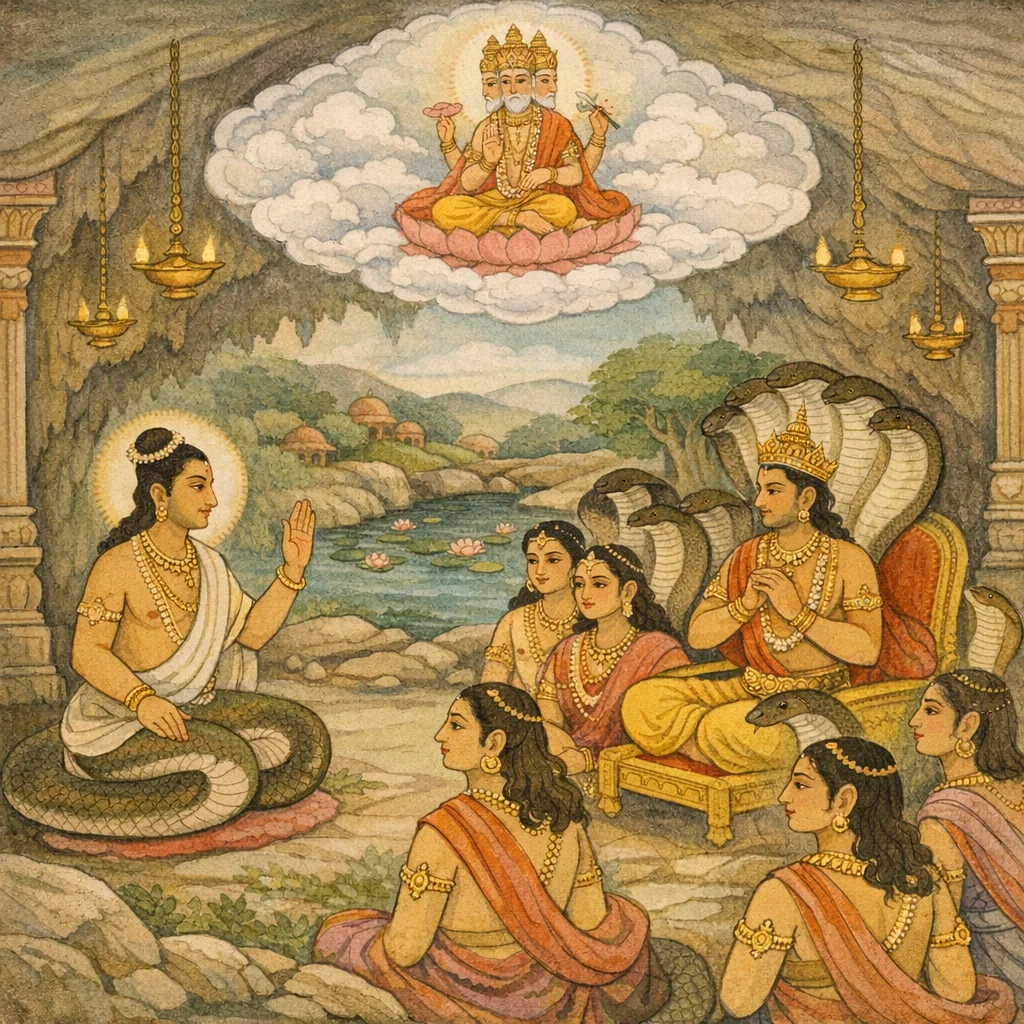
Chapter Arc: सौतिः शौनकादि ऋषियों को सुनाते हैं कि सर्पगण अपने विनाश-भय से काँपते हुए सभा में एकत्र हुए और जनमेजय के सर्पयज्ञ की अनिवार्यता पर चर्चा करने लगे—‘वह यज्ञ अवश्य होगा; वही हमारा महाभय है।’ → सर्पों में निराशा फैलती है: दैव-आघात से पीड़ित प्राणी के लिए मानो दैव ही एकमात्र शरण है। वे स्मरण करते हैं कि शाप की घोषणा के समय वे भय से माता की गोद में चढ़े हुए थे—यह भय भी दैवजनित प्रतीत होता है। तभी ब्रह्मा का वचन सुनाया जाता है: उन्होंने पहले ही अनेक घोर, विषधर नागों को देखा था और प्रजा-हित की दृष्टि से घटनाओं को होने दिया; पर साथ ही उन्होंने यह भी बताया कि उसी महाभय से मुक्ति का उपाय नियत है। → ब्रह्मा भविष्यवाणी करते हैं कि सर्पों की मुक्ति का निमित्त वासुकि की बहन ‘जरत्कारु’ के गर्भ से उत्पन्न पुत्र होगा, जो शाप से नागों को छुड़ाएगा। समाधान स्पष्ट होता है: वासुकि को अपनी बहन जरत्कारु का विवाह ऋषि जरत्कारु से कराना होगा—भिक्षावृत्ति से याचना करने वाले, सुव्रती ऋषि के साथ यह संयोग ही ‘मोक्ष’ का द्वार है। → एलापत्र (और सर्पसभा) निष्कर्ष पर पहुँचते हैं कि भय-शमन का उपाय दैव-निर्दिष्ट है: वासुकि को जरत्कारु-ऋषि के लिए अपनी बहन का दान/विवाह सुनिश्चित करना चाहिए, ताकि भविष्य का उद्धारक पुत्र जन्म ले सके। अध्याय का स्वर निर्णयात्मक है—अब कार्यवाही की दिशा तय हो गई। → वासुकि यह कठिन संकल्प कैसे सिद्ध करेगा—क्या ऋषि जरत्कारु विवाह स्वीकार करेंगे, और किन शर्तों पर?
Shlokas
Verse 1
ऑपन--माज बक। जि अष्टबत्रिशो& ध्याय: वासुकिकी बहिन जरत्कारुका जरत्कारु मुनिके साथ विवाह करनेका निश्चय सौतिरुवाच सर्पाणां तु वच:ः श्रुत्वा सर्वेषामिति चेति च । वासुकेश्न वच: श्रुत्वा एलापत्रो5ब्रवीदिदम्,उग्रश्रवाजी कहते हैं--शौनकजी! समस्त सर्पोकी भिन्न-भिन्न राय सुनकर और अन्तमें वासुकिके वचनोंका श्रवण कर एलापत्र नामक नागने इस प्रकार कहा--
Ugraśravas (Sauti) said: “O Śaunaka! Having heard the various opinions expressed by all the serpents, and then, in particular, having listened to Vāsuki’s words, the Nāga named Elāpatra spoke as follows.”
Verse 2
नस यज्ञो न भविता न स राजा तथाविध: । जनमेजय: पाण्डवेयो यतो5स्माकं महद् भयम्,'भाइयो! यह सम्भव नहीं कि वह यज्ञ न हो तथा पाण्डववंशी राजा जनमेजय भी, जिससे हमें महान् भय प्राप्त हुआ है, ऐसा नहीं है कि हम उसका कुछ बिगाड़ सकें
Śeṣa said: “That sacrifice will not fail to take place, nor will that king of such a kind fail to arise—Janamejaya, the Pāṇḍava-descended ruler—from whom a great terror has come upon us. We are not in a position to undo what is destined through him.”
Verse 3
दैवेनोपहतो राजन् यो भवेदिह पूरुष: । स दैवमेवाश्रयते नान्यत् तत्र परायणम्,“राजन! इस लोकमें जो पुरुष दैवका मारा हुआ है, उसे दैवकी ही शरण लेनी चाहिये। वहाँ दूसरा कोई आश्रय नहीं काम देता
O King, when a man in this world is struck down by fate, he must take refuge in fate alone; in such a condition there is no other dependable shelter.
Verse 4
तदिदं चैवमस्माकं भयं पन्नगसत्तमा: | दैवमेवाश्रयामो>त्र शृणुध्वं च वचो मम,'श्रेष्ठ नागगण! हमारे ऊपर आया हुआ यह भय भी दैवजनित ही है, अतः हमें दैवका ही आश्रय लेना चाहिये। उत्तम सर्पगण! इस विषयमें आपलोग मेरी बात सुनें। जब माताने सर्पोंको यह शाप दिया था, उस समय भयके मारे मैं माताकी गोदमें चढ़ गया था। पन्नगप्रवर महातेजस्वी नागराजगण! तभी दुःखसे आतुर होकर ब्रह्माजीके समीप आये हुए देवताओंकी यह वाणी मेरे कानोंमें पड़ी--'“अहो! स्त्रियाँ बड़ी कठोर होती हैं, बड़ी कठोर होती हैं!
“So this fear that has come upon us, O best of serpents, is indeed born of destiny. Therefore, in this matter we must take refuge in the divine. O excellent nāgas, listen to my words.”
Verse 5
अहं शापे समुत्सष्टे समश्रौषं वचस्तदा । मातुरुत्संगमारूढो भयात् पन्नगसत्तमा:,'श्रेष्ठ नागगण! हमारे ऊपर आया हुआ यह भय भी दैवजनित ही है, अतः हमें दैवका ही आश्रय लेना चाहिये। उत्तम सर्पगण! इस विषयमें आपलोग मेरी बात सुनें। जब माताने सर्पोंको यह शाप दिया था, उस समय भयके मारे मैं माताकी गोदमें चढ़ गया था। पन्नगप्रवर महातेजस्वी नागराजगण! तभी दुःखसे आतुर होकर ब्रह्माजीके समीप आये हुए देवताओंकी यह वाणी मेरे कानोंमें पड़ी--'“अहो! स्त्रियाँ बड़ी कठोर होती हैं, बड़ी कठोर होती हैं!
When that curse had been pronounced, I then heard those words. Out of fear, I climbed into my mother’s lap, O best of serpents.
Verse 6
देवानां पन्नगश्रेष्ठास्तीक्ष्णास्ती क्ष्णा इति प्रभो । पितामहमुपागम्य दु:खार्तानां महाद्युते,'श्रेष्ठ नागगण! हमारे ऊपर आया हुआ यह भय भी दैवजनित ही है, अतः हमें दैवका ही आश्रय लेना चाहिये। उत्तम सर्पगण! इस विषयमें आपलोग मेरी बात सुनें। जब माताने सर्पोंको यह शाप दिया था, उस समय भयके मारे मैं माताकी गोदमें चढ़ गया था। पन्नगप्रवर महातेजस्वी नागराजगण! तभी दुःखसे आतुर होकर ब्रह्माजीके समीप आये हुए देवताओंकी यह वाणी मेरे कानोंमें पड़ी--'“अहो! स्त्रियाँ बड़ी कठोर होती हैं, बड़ी कठोर होती हैं!
O lord, the foremost of serpents among the gods cried, “Cruel—cruel indeed!” and, distressed by suffering, approached the Grandfather (Brahmā), O greatly radiant one.
Verse 7
देवा ऊचु का हि लब्ध्वा प्रियान् पुत्रा्छपेदेव॑ पितामह । ऋते क्र तीक्षणरूपां देवदेव तवाग्रत:,देवता बोले--पितामह! देवदेव! तीखे स्वभाववाली इस क्रूर कद्रूको छोड़कर दूसरी कौन स्त्री होगी जो प्रिय पुत्रोंको पाकर उन्हें इस प्रकार शाप दे सके और वह भी आपके सामने
The gods said: “O Grandfather, what woman—other than the harsh-natured Kadru—could, after obtaining beloved sons, curse them in this way, and that too in your very presence, O God of gods?”
Verse 8
तथेति च वचस्तस्यास्त्वयाप्युक्त पितामह । एतदिच्छामि विज्ञातुं कारणं यन्न वारिता,पितामह! आपने भी “तथास्तु” कहकर कटद्रूकी बातका अनुमोदन ही किया है; उसे शाप देनेसे रोका नहीं है। इसका क्या कारण है, हम यह जानना चाहते हैं
O Grandfather, you too replied, “So be it,” thereby endorsing her words, and you did not restrain her from uttering the curse. I wish to understand the reason she was not prevented—what ethical or cosmic necessity required that it be allowed to proceed?
Verse 9
ब्रह्मोवाच बहव: पन्नगास्ती क्ष्णा घोररूपा विषोल्बणा: । प्रजानां हितकामो5हं न च वारितवांस्तदा,ब्रह्माजीने कहा--इन दिनों भयानक रूप और प्रचण्ड विषवाले क्रूर सर्प बहुत हो गये हैं (जो प्रजाको कष्ट दे रहे हैं)। मैंने प्रजाजनोंके हितकी इच्छासे ही उस समय कद्रूको मना नहीं किया
Brahmā said: “In these days many serpents have multiplied—fearsome in form, cruel, and laden with fierce venom—bringing distress upon living beings. Desiring the welfare of the creatures, I therefore did not restrain Kadrū at that time.”
Verse 10
ये दन्दशूका: क्षुद्राश्न पापाचारा विषोल्बणा: । तेषां विनाशो भविता न तु ये धर्मचारिण:,जनमेजयके सर्पयज्ञमें उन्हीं सर्पोंका विनाश होगा जो प्राय: लोगोंको डँसते रहते हैं, क्षुद्र स्वभावके हैं और पापाचारी तथा प्रचण्ड विषवाले हैं। किंतु जो धर्मात्मा हैं, उनका नाश नहीं होगा
“In Janamejaya’s serpent-sacrifice, destruction will befall only those serpents that habitually bite people—base in nature, sinful in conduct, and fierce in venom. But those who walk in dharma will not perish.”
Verse 11
यन्निमित्तं च भविता मोक्षस्तेषां महाभयात् । पन्नगानां निबोधध्वं तस्मिन् काले समागते,वह समय आनेपर सर्पोंका उस महान् भयसे जिस निमित्तसे छुटकारा होगा, उसे बतलाता हूँ, तुम सब लोग सुनो
“When the destined time arrives, I will tell you the cause by which the serpents will obtain release from that great terror. Listen, all of you.”
Verse 12
यायावरकुले धीमान् भविष्यति महानृषि: । जरत्कारुरिति ख्यातस्तपस्वी नियतेन्द्रिय:,यायावरकुलमें जरत्कारु नामसे विख्यात एक बुद्धिमान् महर्षि होंगे। वे तपस्यामें तत्पर रहकर अपने मन और इन्द्रियोंकोी संयममें रखेंगे
“In the lineage of the wandering ascetics there will arise a wise and great seer, famed by the name Jaratkāru. Devoted to austerity, he will live with mind and senses held in discipline.”
Verse 13
तस्य पुत्रो जरत्कारोर्भविष्यति तपोधन: । आस्तीको नाम यज्ञं स प्रतिषेत्स्यति तं तदा । तत्र मोक्ष्यन्ति भुजगा ये भविष्यन्ति धार्मिका:,उन्हींके आस्तीक नामका एक महातपस्वी पुत्र उत्पन्न होगा जो उस यज्ञको बंद करा देगा। अतः जो सर्प धार्मिक होंगे, वे उसमें जलनेसे बच जायँगे
His son will be born—a sage rich in austerity—named Āstīka; and at that time he will stop that sacrifice. Therefore the serpents who are righteous, abiding in dharma, will be spared from being burned in it.
Verse 14
देवा ऊचु: स मुनिप्रवरो ब्रह्मञ्जरत्कारुर्महातपा: । कस्यां पुत्र महात्मानं जनयिष्यति वीर्यवान्,देवताओंने पूछा--ब्रह्मन! वे मुनिशिरोमणि महातपस्वी शक्तिशाली जरत्कारु किसके गर्भसे अपने उस महात्मा पुत्रको उत्पन्न करेंगे?
The gods said: “O Brahman, that foremost of sages, Jaratkāru—of great austerity and mighty potency—through which woman will he beget a noble, great-souled son?”
Verse 15
ब्रह्मोवाच सनामायां सनामा स कन्यायां द्विजसत्तम: | अपत्यं वीर्यसम्पन्नं वीर्यवाउजनयिष्यति,ब्रद्माजीने कहा--वे शक्तिशाली द्विजश्रेष्ठ जिस “जरत्कारु” नामसे प्रसिद्ध होंगे, उसी नामवाली कन्याको पत्नीरूपमें प्राप्त करके उसके गर्भसे एक शक्तिसम्पन्न पुत्र उत्पन्न करेंगे
Brahmā said: “That foremost of twice-born men, renowned by the name ‘Jaratkāru’, will obtain as his wife a maiden bearing the very same name; and through her he will beget a son endowed with strength and heroic potency.”
Verse 16
वासुके: सर्पराजस्य जरत्कारु: स्वसा किल । स तस्यां भविता पुत्र: शापाज्नागांश्न मोक्ष्यति,सर्पराज वासुकिकी बहिनका नाम जरत्कारु है। उसीके गर्भसे वह पुत्र उत्पन्न होगा, जो नागोंको शापसे छुड़ायेगा
Śeṣa said: “Indeed, Jaratkāru is the sister of Vāsuki, the king of serpents. From her a son will be born, and he will deliver his kinsmen from the curse.”
Verse 17
एलापत्र उवाच एवमस्त्विति तं देवा: पितामहमथाब्रुवन् उक्त्वैवं वचन देवान् विरिज्चिस्त्रिदिवं ययौ,एलापत्र कहते हैं--यह सुनकर देवता ब्रह्माजीसे कहने लगे--'एवमस्तु” (ऐसा ही हो)। देवताओंसे ये सब बातें बताकर ब्रह्माजी ब्रह्मलोकमें चले गये
Elāpatra said: Hearing this, the gods replied to the Grandsire (Brahmā), “So be it.” Having thus conveyed these words to the gods, Viriñci (Brahmā) departed for the heavenly world.
Verse 18
सो5हमेवं प्रपश्यामि वासुके भगिनीं तव । जरत्कारुरिति ख्यातां तां तस्मै प्रतिपादय,अतः नागराज वासुके! मैं तो ऐसा समझता हूँ कि आप नागोंका भय दूर करनेके लिये कन्याकी भिक्षा माँगनेवाले, उत्तम व्रतका पालन करनेवाले महर्षि जरत्कारुको अपनी जरत्कारु नामवाली यह बहिन ही भिक्षारूपमें अर्पित कर दें। उस शापसे छूटनेका यही उपाय मैंने सुना है
Elāpatra said: “O Vāsuki, this is what I clearly foresee: offer your sister—she who is known by the name Jaratkāru—to that sage Jaratkāru. By giving her to him, you will secure the welfare of the Nāgas and avert the fear that hangs over them; this, I have heard, is the true remedy for release from that curse.”
Verse 19
भैक्षवद् भिक्षमाणाय नागानां भयशान्तये । ऋषये सुव्रतायैनामेष मोक्ष: श्रुतो मया,अतः नागराज वासुके! मैं तो ऐसा समझता हूँ कि आप नागोंका भय दूर करनेके लिये कन्याकी भिक्षा माँगनेवाले, उत्तम व्रतका पालन करनेवाले महर्षि जरत्कारुको अपनी जरत्कारु नामवाली यह बहिन ही भिक्षारूपमें अर्पित कर दें। उस शापसे छूटनेका यही उपाय मैंने सुना है
Elāpatra said: “For the pacification of the Nāgas’ fear, to that sage who begs as a mendicant and observes excellent vows, I have heard of this as the means of deliverance. Therefore, O Nāga-king Vāsuki, offer to him, as alms, this sister of ours named Jaratkāru. I have heard that this is the very remedy by which the Nāgas are freed from that curse.”
Verse 38
इति श्रीमहाभारते आदिपर्वणि आस्तीकपर्वणि एलापत्रवाक्ये अष्टत्रिंशो5ध्याय: ।। ३८ ।। इस प्रकार श्रीमहाभारत आदिपव॑के अन्तर्गत आस्तीकपर्वमें एलापत्र-वाक्यसम्बन्धी अड़तीसवाँ अध्याय पूरा हुआ
Thus, in the Śrī Mahābhārata, within the Ādi Parva and specifically the Āstīka Parva, the thirty-eighth chapter—containing the words of Elāpatra—comes to an end. (This is a colophon marking the completion of the chapter.)
Frequently Asked Questions
The dilemma centers on disproportionate response and moral authority: a king’s impropriety toward an ascetic triggers a youth’s irrevocable curse, raising questions about justice, restraint, and the ethical limits of punitive speech-acts.
Śamīka’s instruction treats anger as a corrosive force that strips dharma and accumulated merit, while restraint and forbearance are presented as disciplines that secure both social stability and higher spiritual outcomes.
No explicit phalaśruti is stated; the chapter’s meta-teaching is embedded in Śamīka’s didactic verses, positioning kṣamā and śama as the operative ‘fruit’—practical and transcendent—within the epic’s causal ethics.