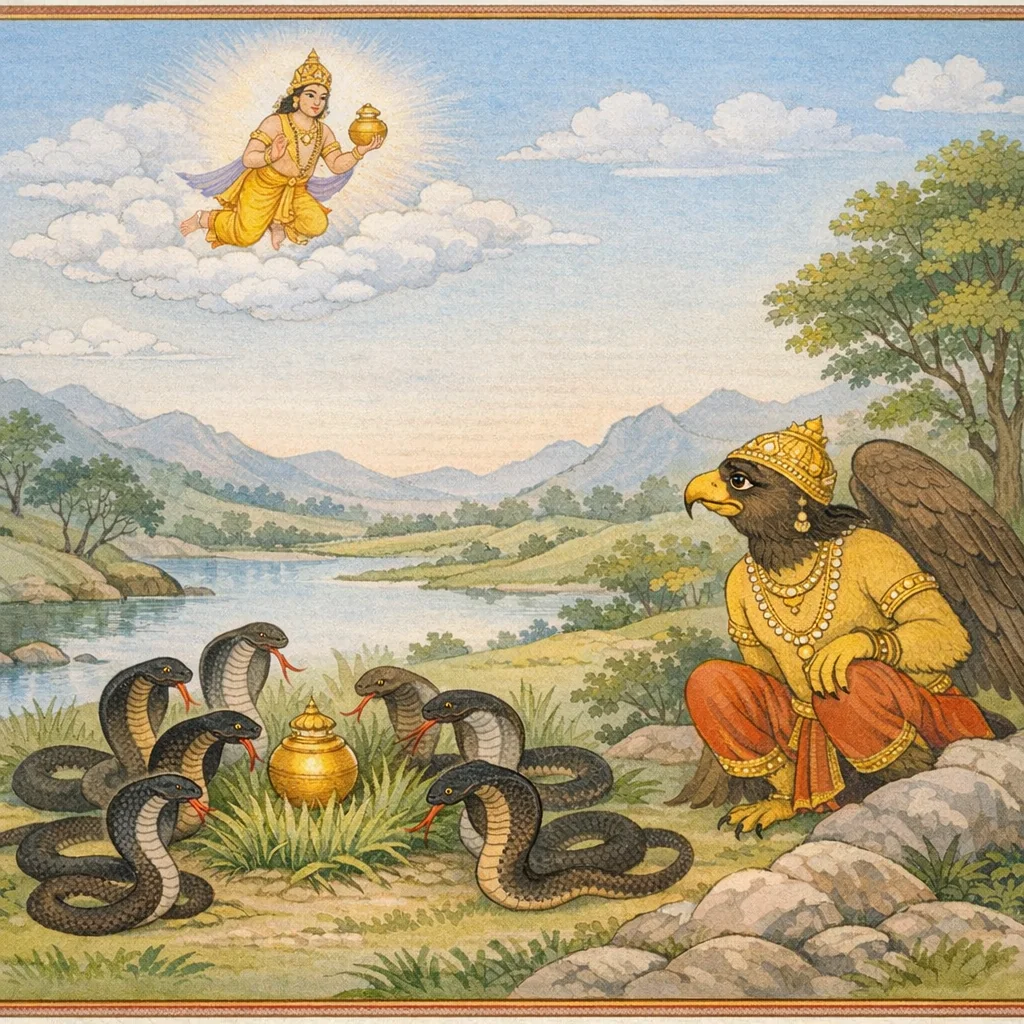
Adhyaya 34
अध्याय ३४ — एलापत्रस्योपदेशः (Elāpatra’s Counsel on the Nāgas’ Deliverance)
Upa-parva: Āstīka Upākhyāna (Serpent-sacrifice deliverance episode)
Sauti reports that, after hearing the assembly’s discussion and Vāsuki’s words, Elāpatra speaks. He denies the inevitability of Janamejaya’s serpent-sacrifice and frames the crisis as daiva-driven, urging reliance on destiny as the only refuge in the immediate predicament. Elāpatra then recounts an earlier scene: the gods approach Pitāmaha (Brahmā) concerning Kadrū’s curse that produced fierce, venomous serpents. Brahmā explains he did not restrain the curse because it will eliminate harmful, unrighteous serpents while sparing those who are dharmacārin; he further reveals the future means of liberation. A sage named Jaratkāru will arise, and through him a son, Āstīka, who will later stop the sacrifice, thereby releasing the righteous Nāgas. Returning to the present, Elāpatra advises Vāsuki to give his sister (also named Jaratkāru) to the sage Jaratkāru—portrayed as a mendicant—so that the foretold remedy may materialize and the Nāgas’ fear be pacified.
Chapter Arc: गरुड के अद्भुत पराक्रम की चर्चा के बीच इन्द्र का उससे संवाद—स्वबल-स्तुति के मर्यादित निषेध के साथ मित्रता का प्रस्ताव—कथा को देव-लोक की राजनीति और धर्म-नीति के मोड़ पर ले आता है। → इन्द्र गरुड से उसके सामर्थ्य का प्रमाण सुनता है; गरुड पृथ्वी-समेत उठाने जैसी अतिशयोक्तिपूर्ण शक्ति का संकेत देता है, पर ‘मित्र’ के आग्रह पर ही बोलने की मर्यादा रखता है। इसी बीच नागों के लिए अमृत-प्राप्ति की शर्त, विनता की दासता, और देवों के लिए अमृत-सुरक्षा—तीनों हित टकराते हैं। → इन्द्र और गरुड की मित्रता निर्णायक रूप लेती है: इन्द्र गरुड की याचना स्वीकार करता है कि कद्रु-पुत्र नाग गरुड के ‘भक्ष्य’ बनें; और गरुड अमृत लेकर नागों के पास आता है—विनता को दासी-बंधन से छुड़ाने की शर्त पूरी करने हेतु—पर अमृत देव-हित में अंततः इन्द्र के हाथ लौटता है। → गरुड नागों को अमृत रखने का स्थान बताकर उन्हें स्नान-शुद्धि के बहाने हटाता है; इन्द्र अवसर पाकर अमृत का अपहरण कर लेता है। नाग अमृत-स्थल की दर्भ-घास चाटते हैं; जीभ कटकर द्विधा हो जाती है—सर्प-लक्षण का कारण-आख्यान स्थापित होता है। विनता दासत्व से मुक्त होती है और गरुड का देव-लोक में मान बढ़ता है। → गरुड-इन्द्र मैत्री स्थापित हो चुकी है, पर नागों के साथ गरुड का वैर अब स्थायी दिशा लेता है—आगे यह शत्रुता और आस्तीक-प्रसंग की पृष्ठभूमि को और तीव्र करेगी।
Shlokas
Verse 1
ऑपन--+ह< बक। है २ >> चतुस्त्रिंशो 5 ध्याय: इन्द्र और गरुडकी मित्रता, कस पक लेकर नागोंके पास आना और विनताको दासी छुड़ाना तथा इन्द्रद्ारा अमृतका अपहरण गरुड उवाच सख्यं मे<स्तु त्वया देव यथेच्छसि पुरन्दर । बल॑ तु मम जानीहि महच्चासह[मेव च,गरुडने कहा--देव पुरन्दर! जैसी तुम्हारी इच्छा है, उसके अनुसार तुम्हारे साथ (मेरी) मित्रता स्थापित हो। मेरा बल भी जान लो, वह महान् और असहा है
Garuḍa said: “O god Purandara (Indra), let friendship be established between you and me, just as you desire. But know my strength as well—it is vast, and indeed irresistible.”
Verse 2
काम नैतत् प्रशंसन्ति सन्त: स्वबलसंस्तवम् । गुणसंकीर्तनं चापि स्वयमेव शतक्रतो,शतक्रतो! साधु पुरुष स्वेच्छासे अपने बलकी स्तुति और अपने ही मुखसे अपने गुणोंका बखान अच्छा नहीं मानते
Garuḍa said: “O Śatakratu (Indra), worthy men do not approve of this—of praising one’s own strength, nor of proclaiming one’s own virtues with one’s own mouth. Self-laudation is not considered noble conduct.”
Verse 3
सखेति कृत्वा तु सखे पृष्टो वक्ष्याम्यहं त्वया | न हाात्मस्तवसंयुक्तं वक्तव्यमनिमित्तत:,किंतु सखे! तुमने मित्र मानकर पूछा है, इसलिये मैं बता रहा हूँ; क्योंकि अकारण ही अपनी प्रशंसासे भरी हुई बात नहीं कहनी चाहिये (किंतु किसी मित्रके पूछनेपर सच्ची बात कहनेमें कोई हर्ज नहीं है।)
Because you have addressed me as a friend and questioned me in that spirit, I will answer you. For one should not, without proper cause, speak words that amount to self-praise; yet when a true friend asks, there is no fault in stating the truth.
Verse 4
सपर्वतवनामुर्वीं ससागरजलामिमाम् । वहे पक्षेण वै शक्र त्वामप्यत्रावलम्बिनम्,इन्द्र! पर्वत, वन और समुद्रके जलसहित सारी पृथ्वीको तथा इसके ऊपर रहनेवाले आपको भी अपने एक पंखपर उठाकर मैं बिना परिश्रमके उड़ सकता हूँ
Garuḍa declares to Indra that he can, without strain, fly while bearing on a single wing the entire earth—complete with its mountains, forests, and ocean-waters—and even Indra himself who abides upon it.
Verse 5
सर्वान् सम्पिण्डितान् वापि लोकान् सस्थाणुजड़मान् | वहेयमपरिश्रान्तो विद्धीदं मे महद् बलम्,अथवा सम्पूर्ण चराचर लोकोंको एकत्र करके यदि मेरे ऊपर रख दिया जाय तो मैं सबको बिना परिश्रमके ढो सकता हूँ। इससे तुम मेरे महान् बलको समझ लो
Garuḍa said: “Even if all the worlds—gathered together into a single mass, with their immovable and moving beings—were placed upon me, I could carry them without fatigue. Know from this the greatness of my strength.”
Verse 6
सौतिर्वाच इत्युक्तवचनं वीरं किरीटी श्रीमतां वर: । आह शौनक देवेन्द्र: सर्वलोकहित: प्रभु:,उग्रश्रवाजी कहते हैं--शौनक! वीरवर गरुडके इस प्रकार कहनेपर श्रीमानोंमें श्रेष्ठ किरीटधारी सर्वलोक-हितकारी भगवान् देवेन्द्रने कहा--“मित्र! तुम जैसा कहते हो, वैसी ही बात है। तुममें सब कुछ सम्भव है। इस समय मेरी अत्यन्त उत्तम मित्रता स्वीकार करो
Ugraśravas said: When the heroic Garuḍa had spoken thus, the crown-wearing Devendra—lordly, beneficent to all worlds, and foremost among the illustrious—addressed Śaunaka. The sense is that Indra acknowledges Garuḍa’s words as true and, recognizing his extraordinary capability, seeks to affirm a bond of friendship grounded in mutual respect and the welfare of beings.
Verse 7
एवमेव यथात्थ त्वं सर्व सम्भाव्यते त्वयि | संगृह्मतामिदानीं मे सख्यमत्यन्तमुत्तमम्,उग्रश्रवाजी कहते हैं--शौनक! वीरवर गरुडके इस प्रकार कहनेपर श्रीमानोंमें श्रेष्ठ किरीटधारी सर्वलोक-हितकारी भगवान् देवेन्द्रने कहा--“मित्र! तुम जैसा कहते हो, वैसी ही बात है। तुममें सब कुछ सम्भव है। इस समय मेरी अत्यन्त उत्तम मित्रता स्वीकार करो
Garuḍa said: “Just so—exactly as you have spoken. In you, everything is possible and can be brought to fulfillment. Therefore, accept now my friendship, the most excellent and unwavering.”
Verse 8
न कार्य यदि सोमेन मम सोम: प्रदीयताम् । अस्मांस्ते हि प्रबाधेयुरय्येभ्यो दद्याद् भवानिमम्,“यदि तुम्हें स्वयं अमृतकी आवश्यकता नहीं है तो वह मुझे वापस दे दो। तुम जिनको यह अमृत देना चाहते हो, वे इसे पीकर हमें कष्ट पहुँचावेंगे”
Garuḍa said: “If you have no need of Soma (the nectar) yourself, then give my Soma back to me. For those to whom you intend to give this will, after drinking it, surely harass and oppress us. Therefore, do not bestow this upon them.”
Verse 9
गरुड उवाच किंचित् कारणमुद्दिश्य सोमो5यं नीयते मया । न दास्यामि समादातुं सोमं कस्मैचिदप्यहम्,गरुडने कहा--स्वर्गके सम्राट् सहस्राक्ष! किसी कारणवश मैं यह अमृत ले जाता हूँ। इसे किसीको भी पीनेके लिये नहीं दूँगा। मैं स्वयं जहाँ इसे रख दूँ, वहाँसे तुरंत तुम उठा ले जा सकते हो
Garuḍa said: “For a certain purpose I am carrying away this Soma. I will not give this Soma to anyone to drink. Yet, wherever I myself place it down, from that very spot you may immediately take it away.”
Verse 10
यत्रेमं तु सहस्राक्ष निक्षिपेयमहं स्वयम् | त्वमादाय तततस्तूर्ण हरेथास्त्रिदिवेश्वर,गरुडने कहा--स्वर्गके सम्राट् सहस्राक्ष! किसी कारणवश मैं यह अमृत ले जाता हूँ। इसे किसीको भी पीनेके लिये नहीं दूँगा। मैं स्वयं जहाँ इसे रख दूँ, वहाँसे तुरंत तुम उठा ले जा सकते हो
Garuḍa said: “O Sahasrākṣa, lord of the three heavens! Wherever I myself set this Soma down, take it up from that very place and carry it away at once.”
Verse 11
शक्र उवाच वाक्येनानेन तुष्टो5हं यत् त्वयोक्तमिहाण्डज । यमिच्छसि वरं मत्तस्तं गृहाण खगोत्तम,इन्द्र बोले--पक्षिराज! तुमने यहाँ जो बात कही है, उससे मैं बहुत संतुष्ट हूँ। खगगश्रेष्ठ! तुम मुझसे जो चाहो, वर माँग लो
Śakra (Indra) said: “I am pleased by these words you have spoken here, O egg-born bird. Whatever boon you desire from me—take it, O best of birds.”
Verse 12
सौतिर्वाच इत्युक्त: प्रत्युवाचेदं कद्रपुत्राननुस्मरन् । स्मृत्वा चैवोपधिकृतं मातुर्दास्यनिमित्तत:,उग्रश्रवाजी कहते हैं--इन्द्रके ऐसा कहनेपर गरुडको कद्रुपुत्रोंकी दुष्टताका स्मरण हो आया। साथ ही उनके उस कपटपूर्ण बर्तावकी भी याद आ गयी, जो माताको दासी बनानेमें कारण था। अतः उन्होंने इन्द्रसे कहा--“इन्द्र! यद्यपि मैं सब कुछ करनेमें समर्थ हूँ, तो भी तुम्हारी इस याचनाको पूर्ण करूँगा कि अमृत दूसरोंको न दिया जाय। साथ ही तुम्हारे कथनानुसार यह वर भी माँगता हूँ कि महाबली सर्प मेरे भोजनकी सामग्री हो जाये!
Sauti said: Thus addressed, Garuḍa replied, recalling the sons of Kadrū. He also remembered their deceitful contrivance that had become the cause of his mother’s enslavement. With that grievance in mind, he answered Indra—though capable of accomplishing all things, he would comply with Indra’s request that the nectar not be given to others, and he further sought a boon that the mighty serpents should become his food.
Verse 13
ईशो5हमपि सर्वस्य करिष्यामि तु तेडर्थिताम् । भवेयुर्भुजगा: शक्र मम भक्ष्या महाबला:,उग्रश्रवाजी कहते हैं--इन्द्रके ऐसा कहनेपर गरुडको कद्रुपुत्रोंकी दुष्टताका स्मरण हो आया। साथ ही उनके उस कपटपूर्ण बर्तावकी भी याद आ गयी, जो माताको दासी बनानेमें कारण था। अतः उन्होंने इन्द्रसे कहा--“इन्द्र! यद्यपि मैं सब कुछ करनेमें समर्थ हूँ, तो भी तुम्हारी इस याचनाको पूर्ण करूँगा कि अमृत दूसरोंको न दिया जाय। साथ ही तुम्हारे कथनानुसार यह वर भी माँगता हूँ कि महाबली सर्प मेरे भोजनकी सामग्री हो जाये!
Śakra (Indra) said: “I too am sovereign over all; I shall grant what you have requested. Let the mighty serpents become your food.”
Verse 14
तथेत्युक्त्वान्वगच्छत् त॑ं ततो दानवसूदन: । देवदेवं महात्मानं योगिनामी श्वरं हरिम्,तब दानवशत्रु इन्द्र “तथास्तु” कहकर योगीश्वर देवाधिदेव परमात्मा श्रीहरिके पास गये
Having said, “So be it,” Indra—the slayer of the Dānavas—then went to that supreme Lord: Hari, the God of gods, the great-souled Master of yogins.
Verse 15
स चान्वमोदत्् त॑ चार्थ यथोक्तं गरुडेन वै | इदं भूयो वचः प्राह भगवांस्त्रिदशेश्वर:,श्रीहरिने भी गरुडकी कही हुई बातका अनुमोदन किया। तदनन्तर स्वर्गलोकके स्वामी भगवान् इन्द्र पुन गरुडको सम्बोधित करके इस प्रकार बोले--'तुम जिस समय इस अमृतको कहीं रख दोगे उसी समय मैं इसे हर ले आऊँगा' (ऐसा कहकर इन्द्र चले गये)। फिर सुन्दर पंखवाले गरुड तुरंत ही अपनी माताके समीप आ पहुँचे
Indra assented to Garuḍa’s statement exactly as it had been spoken. Then the blessed lord of the thirty gods addressed Garuḍa again: “At the very moment you set this nectar down anywhere, I will seize it and take it away.” Having said this, Indra departed. Thereafter, Garuḍa of splendid wings swiftly returned to his mother.
Verse 16
हरिष्यामि विनिक्षिप्तं सोममित्यनुभाष्य तम् । आजगाम ततत्तूर्ण सुपर्णो मातुरन्तिकम्,श्रीहरिने भी गरुडकी कही हुई बातका अनुमोदन किया। तदनन्तर स्वर्गलोकके स्वामी भगवान् इन्द्र पुन गरुडको सम्बोधित करके इस प्रकार बोले--'तुम जिस समय इस अमृतको कहीं रख दोगे उसी समय मैं इसे हर ले आऊँगा' (ऐसा कहकर इन्द्र चले गये)। फिर सुन्दर पंखवाले गरुड तुरंत ही अपनी माताके समीप आ पहुँचे
Śakra (Indra) said, “When you set the Soma down somewhere, I will seize it and take it away.” Having spoken thus, Indra, lord of heaven, departed. Then Suparṇa (Garuḍa), swift of wing, hurried at once to his mother’s side.
Verse 17
अथ सर्पनिवाचेदं सर्वान् परमहृष्टवत् इदमानीतममृतं निक्षेप्स्यामि कुशेषु व:,तदनन्तर अत्यन्त प्रसन्न-से होकर वे समस्त सर्पोंसे इस प्रकार बोले--'पन्नगो! मैंने तुम्हारे लिये यह अमृत ला दिया है। इसे कुशोंपर रख देता हूँ। तुम सब लोग स्नान और मंगल-कर्म (स्वस्ति-वाचन आदि) करके इस अमृतका पान करो। अमृतके लिये भेजते समय तुमने यहाँ बैठकर मुझसे जो बातें कही थीं, उनके अनुसार आजसे मेरी ये माता दासीपनसे मुक्त हो जाये; क्योंकि तुमने मेरे लिये जो काम बताया था, उसे मैंने पूर्ण कर दिया है”
Then Garuḍa, greatly rejoicing, addressed all the serpents: “O Nāgas, I have brought this amṛta for you. I shall place it upon the kuśa grass. Bathe and perform the auspicious rites—blessings and benedictions—and then drink this nectar. And according to what you, seated here, said to me when you sent me for it: from this day let my mother be freed from servitude, for I have completed the task you assigned.”
Verse 18
सस््नाता मंगलसंयुक्तास्ततः प्राश्नीत पन्नगा: । भवद्धिरिदमासीनैर्यदुक्त तद्बघचस्तदा,तदनन्तर अत्यन्त प्रसन्न-से होकर वे समस्त सर्पोंसे इस प्रकार बोले--'पन्नगो! मैंने तुम्हारे लिये यह अमृत ला दिया है। इसे कुशोंपर रख देता हूँ। तुम सब लोग स्नान और मंगल-कर्म (स्वस्ति-वाचन आदि) करके इस अमृतका पान करो। अमृतके लिये भेजते समय तुमने यहाँ बैठकर मुझसे जो बातें कही थीं, उनके अनुसार आजसे मेरी ये माता दासीपनसे मुक्त हो जाये; क्योंकि तुमने मेरे लिये जो काम बताया था, उसे मैंने पूर्ण कर दिया है”
“Having bathed and performed the auspicious rites, then drink, O serpents. I have brought this nectar for you and will place it upon the kuśa grass. After you have purified yourselves with bathing and blessings, partake of it. And according to what you, seated here, spoke to me when you sent me for the nectar—let my mother from this day be released from servitude, for I have completed the task you assigned to me.”
Verse 19
अदासी चैव मातेयमद्यप्रभृति चास्तु मे । यथोक्त भवतामेतद् वचो मे प्रतिपादितम्,तदनन्तर अत्यन्त प्रसन्न-से होकर वे समस्त सर्पोंसे इस प्रकार बोले--'पन्नगो! मैंने तुम्हारे लिये यह अमृत ला दिया है। इसे कुशोंपर रख देता हूँ। तुम सब लोग स्नान और मंगल-कर्म (स्वस्ति-वाचन आदि) करके इस अमृतका पान करो। अमृतके लिये भेजते समय तुमने यहाँ बैठकर मुझसे जो बातें कही थीं, उनके अनुसार आजसे मेरी ये माता दासीपनसे मुक्त हो जाये; क्योंकि तुमने मेरे लिये जो काम बताया था, उसे मैंने पूर्ण कर दिया है”
“From today onward, let this mother of mine no longer be a slave. In accordance with what you all had stated, I have fulfilled your instruction and carried out what was required of me.”
Verse 20
ततः स्नातुं गता: सर्पा: प्रत्युक्त्वा तं तथेत्युत । शक्रो5प्यमृतमाक्षिप्य जगाम त्रिदिवं पुन:,तब सर्पगण “तथास्तु' कहकर स्नानके लिये गये। इसी बीचमें इन्द्र वह अमृत लेकर पुनः स्वर्गलोकको चले गये
Then the serpents, replying, “So be it,” went to bathe. In that very interval, Śakra (Indra) seized the amṛta and returned again to the heavenly world.
Verse 21
अथागतास्तमुददेशं सर्पा: सोमार्थिनस्तदा । सस््नाताश्न कृतजप्याश्च प्रह्ष्ा: कृतमंगला:,इसके अनन्तर अमृत पीनेकी इच्छावाले सर्प स्नान, जप और मंगल-कार्य करके प्रसन्नतापूर्वक उस स्थानपर आये, जहाँ कुशके आसनपर अमृत रखा गया था। आनेपर उन्हें मालूम हुआ कि कोई उसे हर ले गया। तब सर्पोने यह सोचकर संतोष किया कि यह हमारे कपटपूर्ण बर्तावका बदला है
Then the serpents, longing for the Soma (nectar of immortality), came to that very spot. Having bathed, performed their recitations, and completed auspicious rites, they arrived in high spirits—only to find that the nectar placed upon the kuśa-seat had been carried off. Realizing this, they reconciled themselves to the loss, taking it as the fitting consequence of their own deceitful conduct.
Verse 22
यत्रैतदमृतं चापि स्थापितं कुशसंस्तरे । तद् विज्ञाय हृतं सर्पा: प्रतिमायाकृतं च तत्,इसके अनन्तर अमृत पीनेकी इच्छावाले सर्प स्नान, जप और मंगल-कार्य करके प्रसन्नतापूर्वक उस स्थानपर आये, जहाँ कुशके आसनपर अमृत रखा गया था। आनेपर उन्हें मालूम हुआ कि कोई उसे हर ले गया। तब सर्पोने यह सोचकर संतोष किया कि यह हमारे कपटपूर्ण बर्तावका बदला है
“At the place where that nectar had been set upon a bed of kuśa grass—when the serpents realized it had been carried off, they also found that what remained there was only a likeness (a decoy) made in its form.” The episode underscores an ethical reversal: through deceit and wrongdoing one invites a fitting counter-response, and the serpents recognize the loss as the consequence of their own crooked conduct.
Verse 23
सोमस्थानमिदं चेति दर्भास्ते लिलिहुस्तदा । ततो द्विधाकृता जिद्दा: सर्पाणां तेन कर्मणा,फिर यह समझकर कि यहाँ अमृत रखा गया था, इसलिये सम्भव है इसमें उसका कुछ अंश लगा हो, सर्पोने उस समय कुशोंको चाटना शुरू किया। ऐसा करनेसे सर्पोंकी जीभके दो भाग हो गये
Śakra said: “Thinking, ‘This must be the Soma-place,’ the serpents then began to lick those blades of kuśa grass, supposing that some trace of the nectar might have adhered there. By that very act, the tongues of the serpents became split into two.”
Verse 24
अभवंश्वामृतस्पर्शाद् दर्भास्ते5थ पवित्रिण: । एवं तदमृतं तेन हृतमाह्तमेव च । द्विजिद्वाश्व कृता: सर्पा गरुडेन महात्मना,तभीसे पवित्र अमृतका स्पर्श होनेके कारण कुशोंकी “पवित्री” संज्ञा हो गयी। इस प्रकार महात्मा गरुडने देवलोकसे अमृतका अपहरण किया और सर्पोंके समीपतक उसे पहुँचाया; साथ ही सपोंको द्विजिद्द (दो जिह्वाओंसे युक्त) बना दिया
Śakra said: “Because they came into contact with the nectar of immortality, those darbha-grasses became ‘pavitrī’—purifying in nature. Thus that amṛta was seized and carried off by the great-souled Garuḍa, and he brought it right up to the serpents. Moreover, Garuḍa made the snakes ‘two-tongued.’”
Verse 25
ततः सुपर्ण: परमप्रहर्षवान् विह्ृृत्य मात्रा सह तत्र कानने | भुजड़भक्ष: परमार्चित: खगै- रहीनकीर्तिविनितामनन्दयत्,उस दिनसे सुन्दर पंखवाले गरुड अत्यन्त प्रसन्न हो अपनी माताके साथ रहकर वहाँ वनमें इच्छानुसार घूमने-फिरने लगे। वे सर्पोंको खाते और पक्षियोंसे सादर सम्मानित होकर अपनी उज्ज्वल कीर्ति चारों ओर फैलाते हुए माता विनताको आनन्द देने लगे
Then Suparṇa (Garuḍa), filled with supreme joy, lived there in that forest together with his mother, roaming about as he pleased. Feeding on serpents and being highly honored by the birds, he spread his stainless fame in all directions and brought delight to Vinatā.
Verse 26
इमां कथां य: शृणुयान्नर: सदा पठेत वा द्विजगणमुख्यसंसदि । असंशयं त्रिदिवमियात् स पुण्यभाक् महात्मन: पतगपते: प्रकीर्तनात्,जो मनुष्य इस कथाको श्रेष्ठ द्विजोंकी उत्तम गोष्ठीमें सदा पढ़ता अथवा सुनता है, वह पक्षिराज महात्मा गरुडके गुणोंका गान करनेसे पुण्यका भागी होकर निश्चय ही स्वर्गलोकमें जाता है
Śakra said: “Whoever continually listens to this tale, or recites it in the foremost assembly of learned twice-born sages, shares in its merit; and by praising the virtues of the great-souled lord of birds, Garuḍa, he will without doubt attain the heavenly world.”
Verse 33
इस प्रकार श्रीमह्या भारत आदिपव॑के अन्तर्गत आस्तीकपवर्में गरुडचरित्रविषयक तैंतीसवाँ अध्याय पूरा हुआ
Thus, in the revered Mahābhārata, within the Ādi Parva—specifically in the Āstīka Parva—the thirty-third chapter concerning the account of Garuḍa is concluded.
Verse 34
इति श्रीमहा भारते आदिपर्वणि आस्तीकपर्वणि सौपर्णे चतुस्त्रिंशो 5ध्याय:
Thus ends the thirty-fourth chapter of the Sauparṇa section within the Āstīka sub-parvan of the Ādi Parvan of the sacred Mahābhārata.
Frequently Asked Questions
The community faces a dharma-sankat between accepting daiva as operative (resignation) and exercising responsible agency (planning a lawful remedy); the text resolves this by pairing reliance on destiny with concrete, ethical strategy.
Even when events appear fate-driven, outcomes are mediated by conduct: destructive forces are framed as self-limiting for pāpacārin, while dharmacārin are preserved through timely counsel, disciplined action, and adherence to legitimate social-religious means.
No explicit phalaśruti is stated; the meta-function is etiological—explaining the mechanism of “mokṣa” as release from collective fear through Āstīka’s future intervention, integrating this chapter into the broader sacrificial narrative arc.