Adhyaya 31
Nāga-prādhānya-nāma-kathana (Principal Nāga Names Enumerated)
Upa-parva: Astīka Upākhyāna (Serpent-Curse and Nāga Genealogies Context)
Śaunaka addresses Sauti, noting that the causes of the serpents’ curse and the Kadru–Vinatā account have been explained, along with the naming of Vainateya, but asks for the serpents’ names, at least in a principal selection (1.0–3.0). Sauti replies that the nāga names are too numerous to list exhaustively, and therefore he will recite the prominent ones (4.0). He then enumerates a prioritized catalog: Śeṣa, Vāsuki, Airāvata, Takṣaka, Karkoṭaka, Dhanaṃjaya, Kāliya, Maṇināga, and many others in successive groupings (5.0–15.0). After the list, Sauti states that these are the principal nāgas; the rest are omitted due to the multiplicity of names (16.0). He further adds that their progeny and the progeny’s continuations are regarded as innumerable; hence he does not detail them (17.0–18.0). The chapter functions as an indexical node: it anchors later references to nāgas by providing an authoritative, selective register while explicitly marking the limits of enumeration.
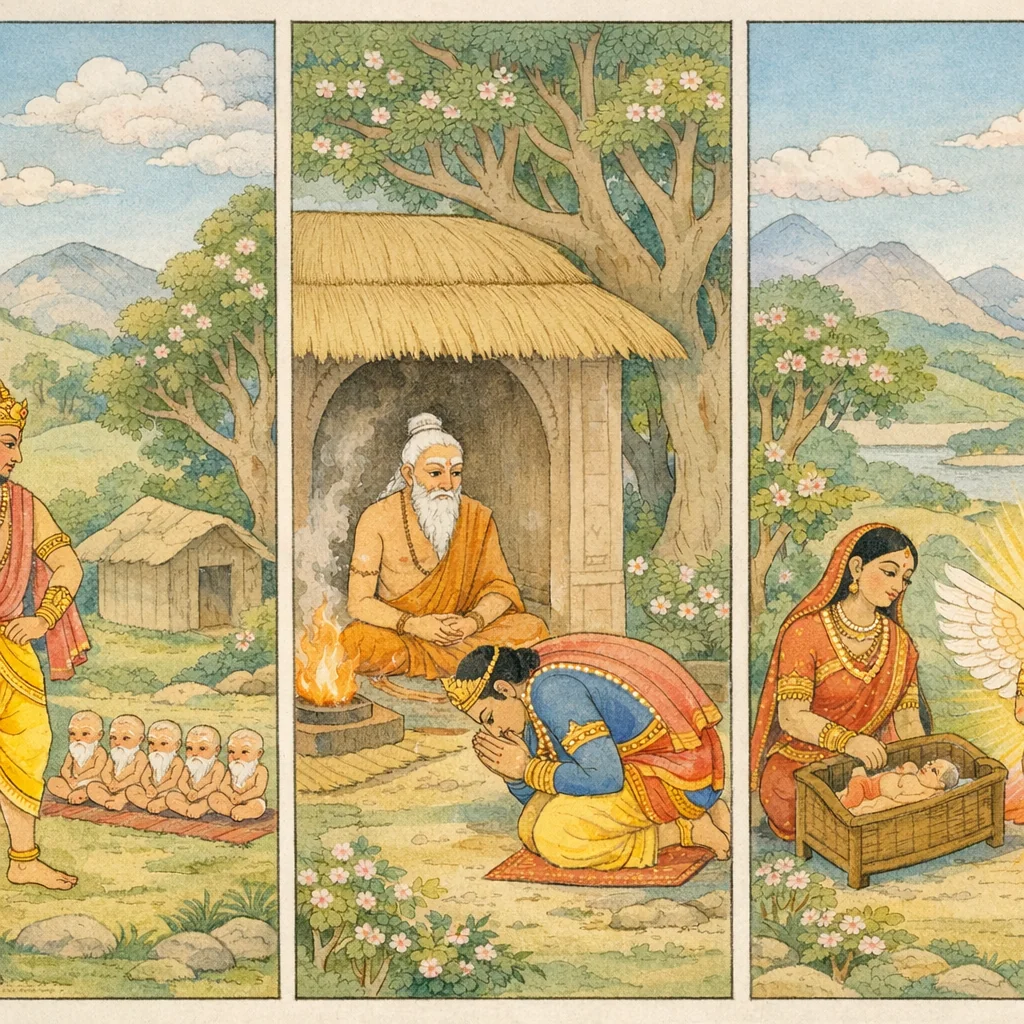
Chapter Arc: शौनक ऋषि जिज्ञासा करते हैं—ब्राह्मण कश्यप के यहाँ पक्षिराट् गरुड कैसे उत्पन्न हुए, वे सर्वभूत-अधृष्य और अवध्य कैसे बने, तथा उन्हें इच्छानुसार गमन और इच्छानुसार पराक्रम (कामचारी, कामवीर्य) कैसे प्राप्त हुआ। → सौति पुराण-प्रसंग खोलते हैं: वालखिल्य ऋषियों की कठोर तपस्या से देवलोक तक कम्पित होता है। इन्द्र अपने बल-गर्व में ‘गिरिप्रभ’ भार उठाकर आता है, तपस्वियों को तुच्छ समझकर उनका उपहास और अवमान करता है। अपमानित तपस्वी संकल्प लेते हैं कि वे ऐसा तेजस्वी उत्पन्न करेंगे जो देवराज को भय दे—मानो ‘दूसरा इन्द्र’ ही खड़ा हो जाए। → इन्द्र को अपने अपराध का बोध होता है और वह कश्यप के पास शरण/परामर्श हेतु पहुँचता है। कश्यप तपस्या-तेज की मर्यादा और इन्द्र के अहंकार की सीमा स्पष्ट करते हुए स्थिति को शांत करते हैं—ताकि ऋषियों का संकल्प भी व्यर्थ न हो और लोक-व्यवस्था भी न टूटे। → कश्यप के वचन से इन्द्र निःशंक त्रिविष्टप लौटता है। विनता सिद्धार्थ होकर प्रसन्न होती है और दो पुत्रों को जन्म देती है—अरुण (अंग-विकल, जो आगे भास्कर के अग्रसारथी बनते हैं) और गरुड, जिनका पक्षियों के ‘इन्द्र’ के रूप में अभिषेक होता है। → गरुड के अद्भुत सामर्थ्य और भविष्य-कार्य (देव-नाग-संघर्षों में उनकी भूमिका) की ओर कथा संकेत देकर आगे के प्रसंग के लिए उत्कंठा छोड़ती है।
Shlokas
Verse 1
अपन प्रात बछ। अंक एकत्रिशो<5 ध्याय: इन्द्रके द्वारा वालखिल्योंका अपमान और उनकी तपस्याके प्रभावसे अरुण एवं गरुडकी उत्पत्ति शौनक उवाच को<पराधो महेन्द्रस्य कः प्रमादश्च॒ सूतज । तपसा वालखिल्यानां सम्भूतो गरुड: कथम्,शौनकजीने पूछा--सूतनन्दन! इन्द्रका क्या अपराध और कौन-सा प्रमाद था? वालखिल्य मुनियोंकी तपस्याके प्रभावसे गरुडकी उत्पत्ति कैसे हुई थी?
Śaunaka said: “O son of the Sūta, what offense and what heedlessness did great Indra commit? And how did Garuḍa come into being through the power of the austerities of the Vālakhilya sages?”
Verse 2
कश्यपस्य द्विजातेश्व कथं वै पक्षिराट् सुतः । अधृष्य: सर्वभूतानामवध्यश्चाभवत् कथम्,कश्यपजी तो ब्राह्मण हैं, उनका पुत्र पक्षिराज कैसे हुआ? साथ ही वह समस्त प्राणियोंके लिये दुर्धर्ष एवं अवध्य कैसे हो गया?
Śaunaka said: “O foremost among the twice-born, how did Kaśyapa—though a brāhmaṇa—come to have a son who was the king of birds? And how did that son become unassailable to all beings and impossible to slay?”
Verse 3
कथं च कामचारी स कामवीर्यक्ष खेचर: । एतदिच्छाम्यहं श्रोतुं पुराणे यदि पठ्यते,उस पक्षीमें इच्छानुसार चलने तथा रुचिके अनुसार पराक्रम करनेकी शक्ति कैसे आ गयी? मैं यह सब सुनना चाहता हूँ। यदि पुराणमें कहीं इसका वर्णन हो तो सुनाइये
Śaunaka asked: “How did that sky-ranging being come to possess the power to move at will and to display prowess according to desire? I wish to hear this in full—if it is recorded anywhere in the Purāṇic tradition, please recount it.”
Verse 4
सौतिर्वाच विषयो<यं पुराणस्य यन्मां त्वं परिपृच्छसि । शृणु मे वदत: सर्वमेतत् संक्षेपतो द्विज,उग्रश्रवाजीने कहा--ब्रह्मन! आप मुझसे जो पूछ रहे हैं, वह पुराणका ही विषय है। मैं संक्षेपमें ये सब बातें बता रहा हूँ, सुनिये
Ugraśravas, the son of Sūta, said: “O Brahmin, what you ask me concerns the very subject-matter of the Purāṇic tradition. Listen as I speak; I shall relate all of it to you in brief.”
Verse 5
यजत: पुत्रकामस्य कश्यपस्य प्रजापते: । साहाय्यमृषयो देवा गन्धर्वाश्व ददु: किल,कहते हैं, प्रजापति कश्यपजी पुत्रकी कामनासे यज्ञ कर रहे थे, उसमें ऋषियों, देवताओं तथा गन्धर्वोने भी उन्हें बड़ी सहायता दी
It is said that when Prajāpati Kaśyapa, desiring offspring, was performing a sacrifice, the sages, the gods, and the Gandharvas also rendered him substantial assistance.
Verse 6
तत्रेध्मानयने शक्रो नियुक्त: कश्यपेन ह | मुनयो वालखिल्याश्न ये चान्ये देवतागणा:,उस यज्ञमें कश्यपजीने इन्द्रको समिधा लानेके कामपर नियुक्त किया था। वालखिल्य मुनियों तथा अन्य देवगणोंको भी यही कार्य सौंपा गया था
In that sacrifice, Kaśyapa appointed Śakra (Indra) to bring the sacrificial fuel-sticks. The Vālakhilya sages and other companies of deities, too, were assigned the very same service.
Verse 7
शक्रस्तु वीर्यसदृशमि ध्यभारं गिरिप्रभम् | समुद्यम्यानयामास नातिकृच्छादिव प्रभु:,इन्द्र शक्तिशाली थे। उन्होंने अपने बलके अनुसार लकड़ीका एक पहाड़-जैसा बोझ उठा लिया और उसे बिना कष्टके ही वे ले आये
Śaunaka said: Indra, the mighty lord, lifted a mountain-like load of fuel, proportionate to his strength, and brought it back with ease, as though it required no effort at all.
Verse 8
अथापश्यदृषीन् हस्वानडुष्ठोदरवर्ष्मण: । पलाशवर्तिकामेकां वहत: संहतान् पथि,उन्होंने मार्गमें बहुत-से ऐसे ऋषियोंको देखा जो कदमें बहुत ही छोटे थे। उनका सारा शरीर अँगूठेके मध्यभागके बराबर था। वे सब मिलकर पलाशकी एक बाती (छोटी-सी टहनी) लिये आ रहे थे
Then he saw, on the road, a group of sages of exceedingly small stature—each with a body no larger than the middle joint of a thumb—moving together and carrying a single wick-like twig of palāśa.
Verse 9
प्रलीनान् स्वेष्विवाड्रेषु निराहारांस्तपो धनान् । क्लिश्यमानान् मन्दबलान् गोष्पदे सम्प्लुतोदके,उन्होंने आहार छोड़ रखा था। तपस्या ही उनका धन था। वे अपने अंगोंमें ही समाये हुए-से जान पड़ते थे। पानीसे भरे हुए गोखुरके लाँघनेमें भी उन्हें बड़ा क्लेश होता था। उनमें शारीरिक बल बहुत कम था
Śaunaka said: “They seemed as though dissolved into their own bodies, like beings merged into their mountain-caves. Having renounced food, they possessed austerity alone as their wealth. Weak in physical strength and afflicted by hardship, even a mere cow’s-hoofprint filled with water was for them something to be crossed only with great strain.”
Verse 10
तान् सर्वान् विस्मयाविष्टो वीर्योन्मत्त: पुरन्दर: । अवहस्याभ्यगाच्छीघ्रं लड॒घयित्वावमन्य च,अपने बलके घमंडमें मतवाले इन्द्रने आश्वर्ययचकित होकर उन सबको देखा और उनकी हँसी उड़ाते हुए वे अपमानपूर्वक उन्हें लाँधघकर शीघ्रताके साथ आगे बढ़ गये
Śaunaka said: Indra, the slayer of cities (Purandara), intoxicated with his own prowess, looked upon them all in astonishment; then, mocking them and treating them with contempt, he quickly strode past, overstepping them as though they were of no account.
Verse 11
ते5थ रोषसमाविष्टा: सुभृश॑ जातमन्यव: । आरेभिरे महत् कर्म तदा शक्रभयंकरम्,इन्द्रके इस व्यवहारसे वालखिल्य मुनियोंकों बड़ा रोष हुआ। उनके हृदयमें भारी क्रोधका उदय हो गया। अतः उन्होंने उस समय एक ऐसे महान् कर्मका आरम्भ किया, जिसका परिणाम इन्द्रके लिये भयंकर था
Then, seized by indignation and with fierce anger newly arisen in their hearts, the Vālakhilya sages set in motion a great rite—an undertaking whose outcome was terrifying for Śakra (Indra).
Verse 12
जुह॒वुस्ते सुतपसो विधिवज्जातवेदसम् । मन्त्रैरुच्चावचैरविप्रा येन कामेन तच्छुणु,ब्राह्मणो! वे उत्तम तपस्वी वालखिल्य मनमें जो कामना रखकर छोटे-बड़े मन्त्रोंद्वारा विधिपूर्वक अग्निमें आहुति देते थे, वह बताता हूँ, सुनिये
Śaunaka said: “Those well-disciplined ascetics, of unimpaired Brahminical conduct, offered oblations into Jātavedas (Agni) according to proper rite, employing mantras of various kinds. O Brāhmaṇa, listen as I tell you the desire (purpose) for which they performed those offerings.”
Verse 13
कामवीर्य: कामगमो देवराजभयप्रद: । इन्द्रो5न्य: सर्वदेवानां भवेदिति यतव्रता:,संयमपूर्वक उत्तम व्रतका पालन करनेवाले वे महर्षि यह संकल्प करते थे कि --'सम्पूर्ण देवताओंके लिये कोई दूसरा ही इन्द्र उत्पन्न हो, जो वर्तमान देवराजके लिये भयदायक, इच्छानुसार पराक्रम करने-वाला और अपनी रुचिके अनुसार चलनेकी शक्ति रखनेवाला हो
Śaunaka said: “(The sages) who were steadfast in their vows resolved thus: ‘May there arise for all the gods another Indra—one who acts with power at will, moves as he pleases, and becomes a source of fear to the present king of the gods.’”
Verse 14
इन्द्राच्छतगुण: शौर्ये वीर्ये चैव मनोजव: । तपसो न: फलेनाद्य दारुण: सम्भवत्विति,'शौर्य और वीर्यमें इन्द्रसे वह सौगुना बढ़कर हो। उसका वेग मनके समान तीव्र हो। हमारी तपस्याके फलसे अब ऐसा ही वीर प्रकट हो जो इन्द्रके लिये भयंकर हो”
Śaunaka said: “May he be a hundredfold greater than Indra in valor and heroic power; may his speed be as swift as the mind. By the fruit of our austerities, let such a warrior be born today—one who will be a dreadful threat even to Indra.”
Verse 15
तद् बुद्ध्वा भृशसंतप्तो देवराज: शतक्रतुः । जगाम शरण तत्र कश्यपं संशितव्रतम्,उनका यह संकल्प सुनकर सौ यज्ञोंका अनुष्ठान पूर्ण करनेवाले देवराज इन्द्रको बड़ा संताप हुआ और वे कठोर व्रतका पालन करनेवाले कश्यपजीकी शरणमें गये
Hearing of that resolve, Indra—the king of the gods, famed as the performer of a hundred sacrifices—was deeply distressed. Seeking a remedy, he went there for refuge to the sage Kaśyapa, steadfast in his austere vows.
Verse 16
तच्छुत्वा देवराजस्य कश्यपो<5थ प्रजापति: । वालखिल्यानुपागम्य कर्मसिद्धिमपृच्छत,देवराज इन्द्रके मुखसे उनका संकल्प सुनकर प्रजापति कश्यप वालखिल्योंके पास गये और उनसे उस कर्मकी सिद्धिके सम्बन्धमें प्रश्न किया
Hearing the resolve of Indra, king of the gods, Prajāpati Kaśyapa approached the Vālakhilya sages and asked them how that rite might be brought to successful completion. The episode shows that even the mighty seek counsel from ascetic wisdom, and that the power of action rests on right method, rightful authority, and disciplined intent.
Verse 17
एवमस्त्विति त॑ चापि प्रत्यूचु: सत्यवादिन: । तान् कश्यप उवाचेदं सान्त्वपूर्व प्रजापति:,सत्यवादी महर्षि वालखिल्योंने “हाँ ऐसी ही बात है” कहकर अपने कर्मकी सिद्धिका प्रतिपादन किया। तब प्रजापति कश्यपने उन्हें सान्त्वनापूर्वक समझाते हुए कहा --
“So be it,” replied those truth-speaking sages in assent. Then Prajāpati Kaśyapa, seeking first to soothe and reconcile them, addressed them with gentle, calming words—setting their resolve within a larger moral order and urging steadiness in right conduct.
Verse 18
अयमिन्द्रस्त्रिभुवने नियोगाद् ब्रह्मण: कृत: । इन्द्रार्थे च भवन्तो5पि यत्नवन्तस्तपोधना:,“तपोधनो! ब्रह्माजीकी आज्ञासे ये पुरन्दर तीनों लोकोंके इन्द्र बनाये गये हैं और आपलोग भी दूसरे इन्द्रकी उत्पत्तिके लिये प्रयत्नशील हैं
Śaunaka said: “This Indra has been appointed as lord of the three worlds by the command of Brahmā. And you too, O rich in austerity, are striving with great effort for the sake of bringing forth another Indra.”
Verse 19
न भिथ्या ब्रह्मणो वाक्यं कर्तुमर्हथ सत्तमा: | भवतां हि न मिथ्यायं संकल्पो वै चिकीर्षित:,'संत-महात्माओ! आप ब्रह्माजीका वचन मिथ्या न करें। साथ ही मैं यह भी चाहता हूँ कि आपके द्वारा किया हुआ यह अभीष्ट संकल्प भी मिथ्या न हो
Śaunaka said: “O best of the virtuous, you should not allow Brahmā’s word to be made false. And I also wish that this intended resolve of yours—what you are determined to accomplish—may not turn out to be in vain or untrue.”
Verse 20
भवत्वेष पतत्त्रीणामिन्द्रोडतिबलसत्त्ववान् । प्रसाद: क्रियतामस्य देवराजस्य याचत:,“अतः अत्यन्त बल और सत्त्वगुणसे सम्पन्न जो यह भावी पुत्र है, यह पक्षियोंका इन्द्र हो। देवराज इन्द्र आपके पास याचक बनकर आये हैं, आप इनपर अनुग्रह करें"
Śaunaka said: “Therefore let this one—endowed with extraordinary strength and vital excellence—become the Indra among birds. Since Indra, king of the gods, has come to you as a supplicant, show him favor and grant his request.”
Verse 21
एवमुक्ता: कश्यपेन वालखिल्यास्तपोधना: । प्रत्यूचुरभिसम्पूज्य मुनिश्रेष्ठ प्रजापतिम्,महर्षि कश्यपके ऐसा कहनेपर तपस्याके धनी वालखिल्य मुनि उन मुनिश्रेष्ठ प्रजापतिका सत्कार करके बोले
When Kaśyapa had spoken thus, the Vālakhilya sages—rich in ascetic power—first honored that foremost of seers, the Prajāpati, the great Ṛṣi Kaśyapa, and then replied.
Verse 22
वालखिल्या ऊचु: इन्द्रार्थो&यं समारम्भ: सर्वेषां न: प्रजापते । अपत्यार्थ समारम्भो भवतश्चायमीप्सित:,वालखिल्योंने कहा--प्रजापते! हम सब लोगोंका यह अनुष्ठान इन्द्रके लिये हुआ था और आपका यह यज्ञसमारोह संतानके लिये अभीष्ट था। अत: इस फलसहित कर्मको आप ही स्वीकार करें और जिसमें सबकी भलाई दिखायी दे, वैसा ही करें
The Vālakhilya sages said: “O Prajāpati, this undertaking of ours was intended for Indra’s sake, whereas this sacrificial enterprise of yours is desired for the sake of offspring. Therefore, accept this rite together with its fruit, and act in the way that brings welfare to all.”
Verse 23
तदिदं सफल कर्म त्वयैव प्रतिगृह्ताम् । तथा चैवं विधत्स्वात्र यथा श्रेयोडनुपश्यसि,वालखिल्योंने कहा--प्रजापते! हम सब लोगोंका यह अनुष्ठान इन्द्रके लिये हुआ था और आपका यह यज्ञसमारोह संतानके लिये अभीष्ट था। अत: इस फलसहित कर्मको आप ही स्वीकार करें और जिसमें सबकी भलाई दिखायी दे, वैसा ही करें
Therefore, let this rite—now bearing its intended fruit—be accepted by you alone. And here, act in such a way that you clearly discern what leads to the highest good for all concerned.
Verse 24
सौतिरुवाच एतस्मिन्नेव काले तु देवी दाक्षायणी शुभा । विनता नाम कल्याणी पुत्रकामा यशस्विनी,उग्रश्रवाजी कहते हैं--इसी समय शुभलक्षणा दक्षकन्या कल्याणमयी विनता देवी, जो उत्तम यशसे सुशोभित थी, पुत्रकी कामनासे तपस्यापूर्वक ब्रह्मचर्य-व्रतका पालन करने लगी। ऋतुकाल आनेपर जब वह स्नान करके शुद्ध हुई, तब अपने स्वामीकी सेवामें गयी। उस समय कश्यपजीने उससे कहा--
Sauti said: At that very time, the auspicious goddess Dākṣāyaṇī—Vinatā by name—virtuous, blessed, and renowned, longing for a son, undertook disciplined austerity and observed the vow of celibacy. When her fertile season arrived and she had bathed and become ritually pure, she went to attend upon her husband. Then Kaśyapa spoke to her.
Verse 25
तपस्तप्त्वा व्रतपरा स्नाता पुंसवने शुचि: । उपचक्राम भर्तारें तामुवाचाथ कश्यप:,उग्रश्रवाजी कहते हैं--इसी समय शुभलक्षणा दक्षकन्या कल्याणमयी विनता देवी, जो उत्तम यशसे सुशोभित थी, पुत्रकी कामनासे तपस्यापूर्वक ब्रह्मचर्य-व्रतका पालन करने लगी। ऋतुकाल आनेपर जब वह स्नान करके शुद्ध हुई, तब अपने स्वामीकी सेवामें गयी। उस समय कश्यपजीने उससे कहा--
Having performed austerities and steadfastly observed her vow, Vinatā—purified after bathing at the time of the puṃsavana rite—approached her husband in service. Then Kaśyapa addressed her.
Verse 26
आरम्भ: सफलो देवि भविता यस्त्वयेप्सित: । जनयिष्यसि पुत्री द्वौ वीरौ त्रिभुवनेश्वरी,“देवि! तुम्हारा यह अभीष्ट समारम्भ अवश्य सफल होगा। तुम ऐसे दो पुत्रोंको जन्म दोगी, जो बड़े वीर और तीनों लोकोंपर शासन करनेकी शक्ति रखनेवाले होंगे
Śaunaka said: “O goddess, the undertaking you desire will surely succeed. You will give birth to two sons—mighty heroes—endowed with the power to rule over the three worlds.”
Verse 27
तपसा वालखिल्यानां मम संकल्पजौ तथा । भविष्यतो महाभागोौ पुत्रौ त्रैलोक्यपूजितौ,“वालखिल्योंकी तपस्या तथा मेरे संकल्पसे तुम्हें दो परम सौभाग्यशाली पुत्र प्राप्त होंगे, जिनकी तीनों लोकोंमें पूजा होगी”
Śaunaka said: “By the austerities of the Vālakhilya sages, and likewise through the power of my own resolve, there will be born to you two exceedingly fortunate sons, who in time will be revered throughout the three worlds.”
Verse 28
उवाच चैनां भगवान् कश्यप: पुनरेव ह । धार्यतामप्रमादेन गर्भोड्यं सुमहोदय:,इतना कहकर भगवान् कश्यपने पुनः विनतासे कहा--'देवि! यह गर्भ महान् अभ्युदयकारी होगा, अतः इसे सावधानीसे धारण करो
Then the venerable sage Kaśyapa spoke to her again: “O goddess, carry this pregnancy with vigilant care. This child in your womb will bring great prosperity and uplift.”
Verse 29
एतौ सर्वपतत्त्रीणामिन्द्रत्वं कारयिष्यत: । लोकसम्भावितौ वीरी कामरूपौ विहंगमौ,“तुम्हारे ये दोनों पुत्र सम्पूर्ण पक्षियोंके इन्द्रपदका उपभोग करेंगे। स्वरूपसे पक्षी होते हुए भी इच्छानुसार रूप धारण करनेमें समर्थ और लोक-सम्भावित वीर होंगे”
Śaunaka said: “These two sons of yours will be made to enjoy the sovereignty of Indra among all birds. Though avian in form, they will be heroic, honored by the world, and capable of assuming whatever form they desire.”
Verse 30
इस प्रकार श्रीमह़्ा भारत आदिपव॑के अन्तर्गत आस्तीकपर्वमें गरुडचरित्रविषयक तीसवाँ अध्याय पूरा हुआ,शतक्रतुमथोवाच प्रीयमाण: प्रजापति: । त्वत्सहायौ महावीर्यों भ्रातरौ ते भविष्यत: विनतासे ऐसा कहकर प्रसन्न हुए प्रजापतिने शतक्रतु इन्द्रसे कहा--'पुरन्दर! ये दोनों महापराक्रमी भ्राता तुम्हारे सहायक होंगे। तुम्हें इनसे कोई हानि नहीं होगी। इन्द्र! तुम्हारा संताप दूर हो जाना चाहिये। देवताओं के इन्द्र तुम्हीं बने रहोगे
Then Prajāpati, well pleased, said to Śatakratu (Indra): “O Purandara, these two brothers of great prowess will become your allies. You will suffer no harm from them. Let your distress be dispelled; you shall remain the Indra of the gods.”
Verse 31
नैताभ्यां भविता दोष: सकाशात् ते पुरन्दर | व्येतु ते शक्र संतापस्त्वमेवेन्द्री भविष्यसि,विनतासे ऐसा कहकर प्रसन्न हुए प्रजापतिने शतक्रतु इन्द्रसे कहा--'पुरन्दर! ये दोनों महापराक्रमी भ्राता तुम्हारे सहायक होंगे। तुम्हें इनसे कोई हानि नहीं होगी। इन्द्र! तुम्हारा संताप दूर हो जाना चाहिये। देवताओं के इन्द्र तुम्हीं बने रहोगे इति श्रीमहाभारते आदिपर्वणि आस्तीकपर्वणि सौपर्णे एकत्रिंशो5ध्याय:
“O Purandara, no harm will come to you from these two; on their account you will incur neither fault nor danger. O Śakra, let your distress pass away—indeed, you alone shall remain the Indra of the gods.”
Verse 32
न चाप्येवं त्वया भूय: क्षेप्तव्या ब्रह्म॒वादिन: । न चावमान्या दर्पात् ते वाग्वज़्ा भूशकोपना:,“एक बात ध्यान रखना--आजसे फिर कभी तुम घमंडमें आकर ब्रह्मवादी महात्माओंका उपहास और अपमान न करना; क्योंकि उनके पास वाणीरूप अमोघ वच् है तथा वे तीक्ष्ण कोपवाले होते हैं!
Śaunaka said: “Never again should you, in this manner, mock the brahma-vādins. Do not, out of pride, insult them; for their speech is like a thunderbolt, unfailing in effect, and they are capable of fierce wrath. Let this be a rule for you from today onward.”
Verse 33
एवमुक्तो जगामेन्द्रो निर्विशड्कस्त्रिविष्टपम् विनता चापि सिद्धार्था बभूव मुदिता तथा,कश्यपजीके ऐसा कहनेपर देवराज इन्द्र निःशंक होकर स्वर्गलोकमें चले गये। अपना मनोरथ सिद्ध होनेसे विनता भी बहुत प्रसन्न हुई
Thus addressed, Indra departed without anxiety to Triviṣṭapa (the heavenly world). And Vinatā too, her purpose fulfilled, became joyful.
Verse 34
जनयामास पुत्रौ द्वावरुणं गरुडं तथा । विकलाड्रो5रुणस्तत्र भास्करस्य पुर:सर:,उसने दो पुत्र उत्पन्न किये--अरुण और गरुड। जिनके अंग कुछ अधूरे रह गये थे, वे अरुण कहलाते हैं, वे ही सूर्यदेवके सारथि बनकर उनके आगे-आगे चलते हैं
Śaunaka said: She gave birth to two sons—first Aruṇa and then Garuḍa. In that birth Aruṇa was incomplete in his limbs; and he became the forerunner of Bhāskara (the Sun), serving as the Sun-god’s charioteer who goes before him.
Verse 35
पतत्त्रीणां च गरुडमिन्द्रत्वेनाभ्यषिज्चत । तस्यैतत् कर्म सुमहच्छूयतां भूगुनन्दन,भृगुनन्दन! दूसरे पुत्र गरुडका पक्षियोंके इन्द्र-यदपर अभिषेक किया गया। अब तुम गरुडका यह महान् पराक्रम सुनो
Śaunaka said: “And Garuḍa was consecrated as the Indra (sovereign) among birds. Now, O descendant of Bhṛgu, listen to this exceedingly great deed of his.”
Frequently Asked Questions
The chapter presents a knowledge-transmission dilemma: whether fidelity requires exhaustive completeness or whether a representative, prādhānya-based list better serves accurate preservation when the subject is explicitly described as too vast to count.
It teaches an epistemic discipline: tradition can be responsibly communicated through salient exemplars while acknowledging limits, and claims of innumerability (asaṃkhyeya) function as a formal boundary marker rather than a failure of narration.
No explicit phalaśruti is stated; the meta-commentary appears as Sauti’s methodological note that full progeny lists are omitted because the lineages are considered innumerable, positioning the chapter as an index rather than a merit-text.