Adhyaya 27
Vālakhilya-Tapas and the Birth of Garuḍa (वालखिल्यतपः-गरुडोत्पत्तिः)
Upa-parva: Garuḍotpatti (Origin of Garuḍa) — Vālakhilya-Tapas Episode
Śaunaka questions Sauti about (i) Indra’s offense, (ii) the Vālakhilyas’ tapas, and (iii) how Garuḍa becomes inviolable and exceptionally mobile. Sauti recounts Kaśyapa’s sacrifice undertaken for progeny, in which Indra is assigned to gather fuel. Indra, proud of strength, ridicules and bypasses the tiny, weakened Vālakhilya sages struggling in shallow water, provoking their anger. The sages perform a regulated fire-offering with mantras, intending a being whose power and freedom of movement would threaten Indra’s supremacy. Alarmed, Indra seeks Kaśyapa’s protection; Kaśyapa mediates by affirming Brahmā’s appointment of Indra while requesting the sages’ grace. The Vālakhilyas consent to redirect the fruit of tapas. Concurrently, Vinatā, seeking sons, performs observances; Kaśyapa and the sage Mārīca announce the conception and urge careful gestation. The outcome is the birth of Aruṇa and Garuḍa, with Garuḍa anointed as ‘Indra among birds’ (patatrīṇām indraḥ), while Indra’s position remains intact and he is cautioned not to disrespect brahma-vādins again.
Chapter Arc: उग्रश्रवा सूत उस अद्भुत द्वीप का वर्णन आरम्भ करते हैं—विश्वकर्मा-निर्मित, समुद्र से घिरा, पक्षियों के कलरव और पुष्प-वर्षा से भरा—जहाँ सर्प गरुड़ के साथ पहुँचे हैं। → वन की रमणीयता के बीच गरुड़ के भीतर दास्य-बंधन की पीड़ा उभरती है; वह अपनी माता के दुःख से दुःखी होकर सर्पों से पूछता है कि किस उपाय से वह दासत्व से मुक्त हो सकता है। → सर्प स्पष्ट शर्त रखते हैं—‘बलपूर्वक अमृत ले आओ; तभी तुम्हें दास्य से विमोचन मिलेगा।’ → गरुड़ को मुक्ति का मार्ग तो मिल जाता है, पर वह मार्ग असाध्य-सा है: देवों के अमृत तक पहुँचना। अध्याय वन-वर्णन से उठकर प्रतिज्ञा-जन्य कर्मपथ पर टिक जाता है। → गरुड़ अब अमृत-हरण के लिए उद्यत है—क्या वह देव-रक्षा, दिव्य बाधाओं और धर्म-संकटों को पार कर पाएगा?
Shlokas
Verse 1
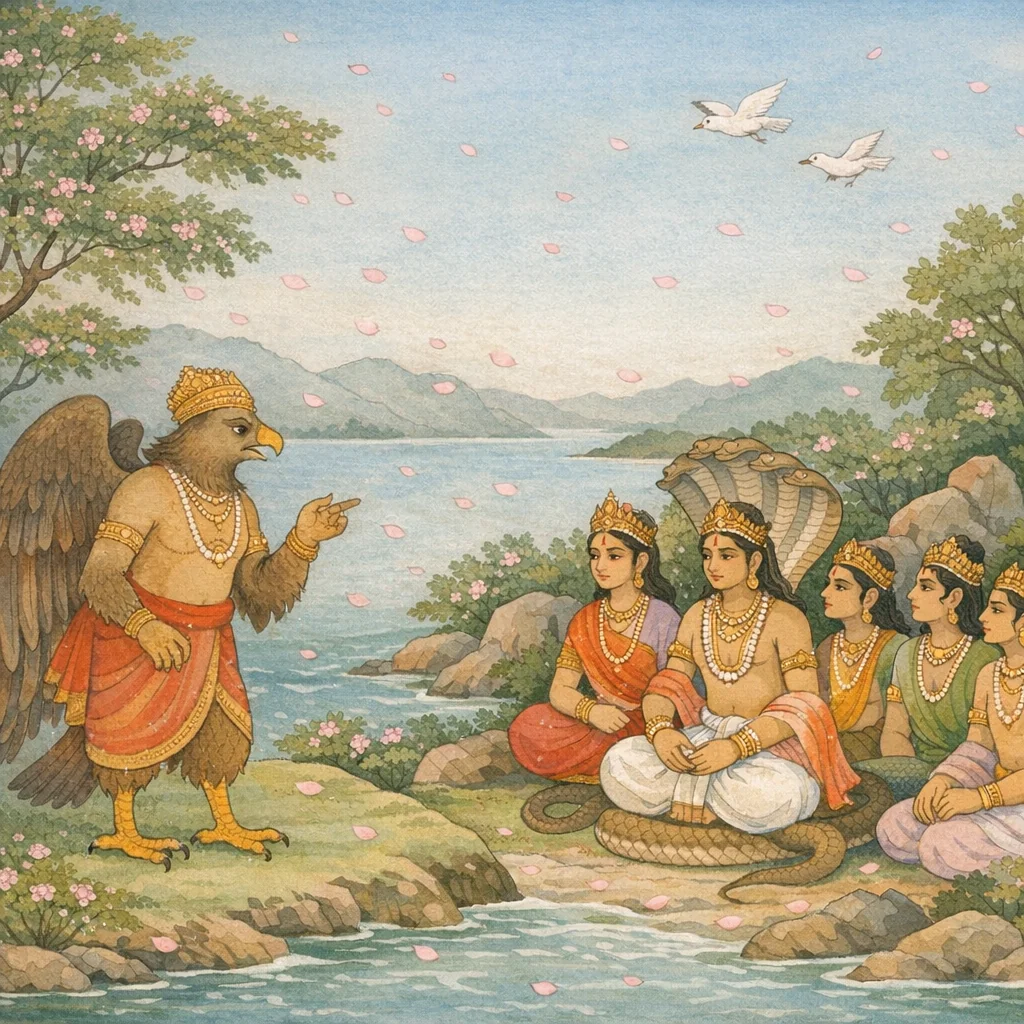
अपना बछ। ] अत्णऑशाय: सप्तविशो<्ध्याय: रामणीयक द्वीपके मनोरम वनका वर्णन तथा गरुडका दास्यभावसे छूटनेके लिये सर्पोंसे उपाय पूछना सौतिरुवाच सम्प्रहष्टास्ततो नागा जलधाराप्लुतास्तदा । सुपर्णेनोहमानास्ते जम्मुस्तं द्वीपमाशु वै,उग्रश्रवाजी कहते हैं--गरुडपर सवार होकर यात्रा करनेवाले वे नाग उस समय जलधारासे नहाकर अत्यन्त प्रसन्न हो शीघ्र ही रामणीयक द्वीपमें जा पहुँचे
Ugraśravas (Sauti) said: Then the Nāgas, delighted at heart and bathed by the flowing waters, were swiftly borne along by Suparṇa (Garuḍa) and quickly reached that island. The scene underscores how even those bound by fear and servitude seek relief through purification and purposeful action, moving toward a place of refuge while still under the power of another.
Verse 2
त॑ द्वीपं मकरावासं विहितं विश्वकर्मणा । तत्र ते लवणं घोरं ददृशु: पूर्वमागता:,विश्वकर्माजीके बनाये हुए उस द्वीपमें, जहाँ अब मगर निवास करते थे, जब पहली बार नाग आये थे तो उन्हें वहाँ भयंकर लवणासुरका दर्शन हुआ था
That island—fashioned by Viśvakarman and later known as a haunt of crocodiles—was the place where the Nāgas, on their first arrival, beheld the dreadful Lavaṇa (the salt-demon). The line underscores how a seemingly well-made domain can still conceal peril, calling for vigilance and prudent action rather than complacency.
Verse 3
सुपर्णसहिता: सर्पा: काननं च मनोरमम् | सागराम्बुपरिक्षिप्तं पक्षिसड्घनिनादितम्,सर्प गरुडके साथ उस द्वीपके मनोरम वनमें आये, जो चारों ओरसे समुद्रद्वारा घिरकर उसके जलसे अभिषिक्त हो रहा था। वहाँ झुंड-के-झुंड पक्षी कलरव कर रहे थे
Accompanied by Suparṇa (Garuḍa), the serpents came to a delightful forest. The place was encircled on all sides by the sea and bathed by its waters, and it resounded with the cries of flocks of birds—setting the scene for the serpents’ fateful movement under Garuḍa’s shadow and the moral tension between fear, survival, and the consequences of enmity.
Verse 4
विचित्रफलपुष्पाभिववनराजिभिरावृतम् । भवनैरावृतं रम्यैस्तथा पद्माकरैरपि,विचित्र फूलों और फलोंसे भरी हुई वनश्रेणियाँ उस दिव्य वनको घेरे हुए थीं। वह वन बहुत-से रमणीय भवनों और कमलयुक्त सरोवरोंसे आवृत था
Bhīṣma said: The divine woodland was encircled by stretches of forest thick with variegated fruits and blossoms. It was further adorned on all sides with many delightful mansions and with lotus-filled lakes—an image of ordered beauty and auspicious prosperity that frames the scene in a dharmic, heaven-like atmosphere.
Verse 5
प्रसन्नसलिलै श्वापि हदैर्दिव्यैर्वि भूषितम् । दिव्यगन्धवहै: पुण्यैमारुतैरुपवीजितम्,स्वच्छ जलवाले कितने ही दिव्य सरोवर उसकी शोभा बढ़ा रहे थे। दिव्य सुगन्धका भार वहन करनेवाली पावन वायु मानो वहाँ चँवर डुला रही थी
It was adorned with celestial lakes whose waters were clear and tranquil. Pure breezes, bearing divine fragrance, seemed to fan that place like a ceremonial whisk—evoking an atmosphere of sanctity, auspiciousness, and inner calm rather than worldly agitation.
Verse 6
उत्पतद्धिरिवाकाशं वृक्षर्मलयजैरपि । शोभितं पुष्पवर्षाणि मुज्चद्धिर्मारुतोद्धतैः,वहाँ ऊँचे-ऊँचे मलयज वृक्ष ऐसे प्रतीत होते थे, मानो आकाशमें उड़े जा रहे हों। वे वायुके वेगसे विकम्पित हो फूलोंकी वर्षा करते हुए उस प्रदेशकी शोभा बढ़ा रहे थे
Even the Malaya sandalwood trees seemed as though they were flying up into the sky. Shaken by the force of the wind, they showered blossoms, thereby enhancing the beauty of that region.
Verse 7
वायुविक्षिप्तकुसुमैस्तथान्यैरपि पादपै: । किरद्धिरिव तत्रस्थान् नागान् पुष्पाम्बुवृष्टिभि:,हवाके झोंकेसे दूसरे-दूसरे वृक्षोंके भी फ़ूल झड़ रहे थे, मानो वहाँके वृक्षसमूह वहाँ उपस्थित हुए नागोंपर फूलोंकी वर्षा करते हुए उनके लिये अर्घ्य दे रहे हों
As the wind scattered blossoms, flowers from other trees too kept falling there, as though the grove itself were showering the serpents present with a rain of flowers and water—offering them a reverential arghya in welcome.
Verse 8
मन:संहर्षजं दिव्यं गन्धर्वाप्ससां प्रियम् । मत्तभ्रमरसंघुष्टं मनोज्ञाकृतिदर्शनम्,वह दिव्य वन हृदयके हर्षको बढ़ानेवाला था। गन्धर्व और अप्सराएँ उसे अधिक पसंद करती थीं। मतवाले भ्रमर वहाँ सब ओर गूँज रहे थे। अपनी मनोहर छटाके द्वारा वह अत्यन्त दर्शनीय जान पड़ता था
That divine woodland heightened the heart’s delight. It was beloved of the Gandharvas and Apsarases. Intoxicated swarms of bees hummed all around, and by its pleasing form and radiance it appeared supremely worthy of beholding.
Verse 9
रमणीयं शिवं पुण्यं सर्वर्जनमनोहरैः । नानापक्षिरुतं रम्यं कद्रूपुत्रप्रहर्षणम्,वह वन रमणीय, मंगलकारी और पवित्र होनेके साथ ही लोगोंके मनको मोहनेवाले सभी उत्तम गुणोंसे युक्त था। भाँति भाँतिके पक्षियोंके कलरवोंसे व्याप्त एवं परम सुन्दर होनेके कारण वह कढद्रूके पुत्रोंका आनन्द बढ़ा रहा था
That forest was delightful, auspicious, and holy—endowed with excellent qualities that captivated the minds of all. Filled with the varied calls of many kinds of birds and exceedingly beautiful, it increased the joy of Kadru’s sons (the serpents).
Verse 10
तत् ते वनं समासाद्य विजहु: पन्नगास्तदा । अब्रुवंश्व महावीर्य सुपर्ण पतगेश्वरम्,उस वनमें पहुँचकर वे सर्प उस समय सब ओर विहार करने लगे और महापराक्रमी पक्षिराज गरुडसे इस प्रकार बोले--
Having reached that forest, the serpents then began to roam about freely on all sides. Thereupon they addressed Suparṇa—Garuḍa, the mighty lord of birds—speaking to him in this manner.
Verse 11
वहास्मानपरं द्वीपं सुरम्यं विमलोदकम् | त्वं हि देशान् बहून् रम्यान् व्रजन् पश्यसि खेचर,“खेचर! तुम आकाशमें उड़ते समय बहुत-से रमणीय प्रदेश देखा करते हो; अतः हमें निर्मल जलवाले किसी दूसरे रमणीय द्वीपमें ले चलो”
“Carry us to another island—exceedingly beautiful, with clear, pure waters. For you, O sky-roamer, as you travel through the air, behold many delightful regions; therefore take us to some other charming isle with spotless water.”
Verse 12
स विचिन्त्याब्रवीत् पक्षी मातरं विनतां तदा । कि कारणं मया मात: कर्तव्यं सर्पभाषितम्,गरुडने कुछ सोचकर अपनी माता विनतासे पूछा--“माँ! क्या कारण है कि मुझे सर्पोंकी आज्ञाका पालन करना पड़ता है?”
After reflecting, the bird (Garuḍa) spoke to his mother Vinatā: “Mother, for what reason must I obey the command imposed by the serpents?”
Verse 13
विनतोवाच दासी भूतास्मि दुर्योगात् सपत्न्या: पतगोत्तम | पणं वितथमास्थाय सर्पैरुपधिना कृतम्,विनता बोली--बेटा पक्षिराज! मैं दुर्भाग्यवश सौतकी दासी हूँ, इन सर्पोने छल करके मेरी जीती हुई बाजीको पलट दिया था
Vinata said: “O best of birds, through ill fortune I have become the slave of my co-wife. The wager was made false—those serpents, by deceitful contrivance, overturned what I had rightfully won.”
Verse 14
तस्मिंस्तु कथिते मात्रा कारणे गगनेचर: । उवाच वचन सर्पास्तेन दुःखेन दुःखित:,माताके यह कारण बतानेपर आकाशचारी गरुडने उस दुःखसे दुःखी होकर सर्पोसे कहा--
When his mother had thus explained the reason, the sky-ranging Garuḍa—himself pained by that sorrow—addressed the serpents with words.
Verse 15
किमाह्त्य विदित्वा वा कि वा कृत्वेह पौरुषम् दास्याद् वो विप्रमुच्येयं तथ्यं वदत लेलिहा:,“जीभ लपलपानेवाले सर्पो! तुमलोग सच-सच बताओ मैं तुम्हें क्या लाकर दे दूँ? किस विद्याका लाभ करा दूँ अथवा यहाँ कौन-सा पुरुषार्थ करके दिखा दूँ: जिससे मुझे तथा मेरी माताको तुम्हारी दासतासे छुटकारा मिल जाय”
“Tell me truthfully, O tongue-flickering serpents—what shall I bring you, what knowledge shall I acquire, or what act of valor shall I perform here, so that I and my mother may be released from servitude to you?”
Verse 16
सौतिरुवाच श्रुत्वा तमब्रुवन् सर्पा आहरामृतमोजसा । ततो दास्याद् विप्रमोक्षो भविता तव खेचर,उग्रश्रवाजी कहते हैं--गरुड़की बात सुनकर सर्पोने कहा--“गरुड! तुम पराक्रम करके हमारे लिये अमृत ला दो। इससे तुम्हें दास्यभावसे छुटकारा मिल जायगा”
Ugraśravas (Sauti) said: Hearing his words, the serpents replied, “O sky-ranging Garuḍa, bring us the nectar by your own might. Then you will be freed from the condition of servitude.”
Verse 26
इस प्रकार श्रीमह्या भारत आदिपव॑के अन्तर्गत आस्तीकपरवर्में गरुडचरित्रविषयक छब्बीसवाँ अध्याय पूरा हुआ
Thus ends the twenty-sixth chapter, concerning the story of Garuḍa, within the Āstīka section of the Ādi Parva of the sacred Mahābhārata.
Verse 27
इति श्रीमहा भारते आदिपर्वणि आस्तीकपर्वणि सौपर्णे सप्तविंशो5ध्याय:
Thus ends the twenty-seventh chapter of the Sauparṇa section within the Āstīka sub-parvan of the Ādi Parvan of the sacred Mahābhārata.
Frequently Asked Questions
The dilemma concerns how power should respond to ascetic authority: Indra’s pride leads to disrespect, triggering a legitimate ascetic counteraction; the ethical resolution requires acknowledging fault and adopting conciliation so that justice and stability are both preserved.
Tapas and speech-acts (mantra, vow) are portrayed as causally effective; therefore, humility and careful conduct toward disciplined sages is a practical requirement of governance, and mediation can ethically redirect conflict toward constructive outcomes.
Rather than a formal phalaśruti, the chapter provides meta-instruction through narrative closure: Indra’s anxiety is relieved after reconciliation, and an explicit caution is issued not to mock or insult brahma-vādins, implying that comprehension of the episode serves as guidance for maintaining order and avoiding avoidable harm.