Adhyaya 231
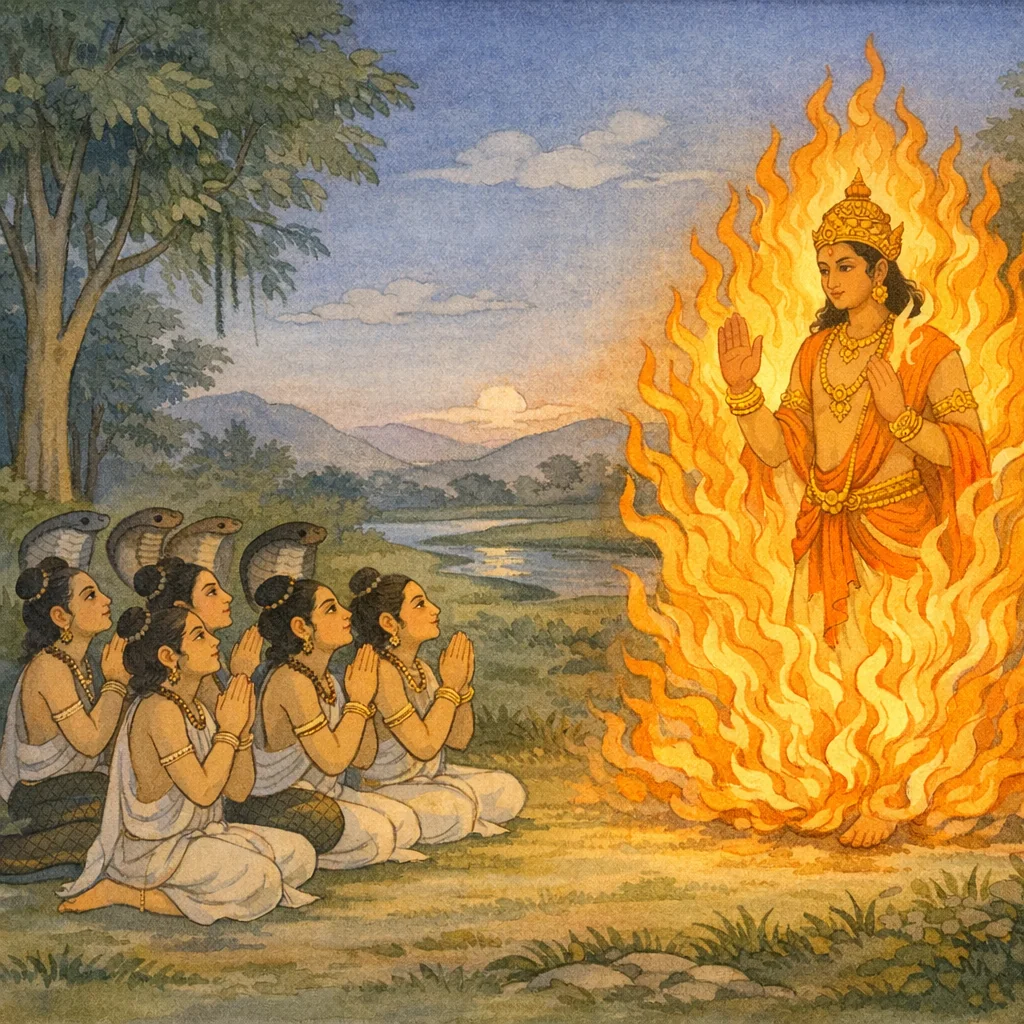
Chapter Arc: कृच्छ्रकाल (संकट-समय) की आहट के बीच शार्ङ्गक वंश के बालक-सर्प अग्नि के सम्मुख शरणागत होकर अपनी रक्षा की याचना करते हैं—और कथा एक नीति-वाक्य से चमक उठती है कि जो आने वाले संकट को नहीं पहचानता, वह संकट में कल्याण नहीं पाता। → भाइयों के बीच उत्तरदायित्व का प्रश्न उठता है—कौन संकट से निकालेगा? ‘ज्येष्ठ’ होने का भार, ‘कनीयान’ की असहायता, और परिवार-धर्म की कसौटी पर संवाद तीखा होता जाता है। शरणागत बालक अग्नि के ‘शिव रूप’ और ‘सप्त ज्वालाओं’ का स्मरण कर रक्षा-प्रतिज्ञा माँगते हैं। → अग्नि-स्तुति अपने चरम पर पहुँचती है—‘जातवेद’ को एकमात्र तपस्वी-व्यापक देव मानकर बालक ऋषि-संतति की रक्षा का आग्रह किया जाता है; अग्नि की सृजन-शक्ति (वनस्पति, पुष्करिणी, समुद्र आदि का उद्गम) का स्मरण कर उसे करुणा और सामर्थ्य—दोनों रूपों में बाँधा जाता है। → अग्निदेव शार्ङ्गकों से प्रसन्न होकर उन्हें ‘अभय’ देते हैं—शरणागत की रक्षा का वचन देकर संकट-छाया को हटाते हैं; उपाख्यान का उद्देश्य—संकट-पूर्वदृष्टि, ज्येष्ठ-धर्म और देव-शरणागति—स्थिर हो जाता है। → उपाख्यान की समाप्ति के साथ मुख्य प्रवाह में अग्नि के व्यापक कर्म (खाण्डव-दाह की ओर संकेत) की स्मृति बनी रहती है, मानो अग्नि का वही तेज आगे किसी बड़े प्रसंग में फिर प्रकट होगा।
Shlokas
Verse 1
अपन का बा | अत-#-#कत एकत्रिशर्दाधिकद्विशततमो< ध्याय: शार्जगकोंके सतवनसे प्रसन्न होकर अग्निदेवका उन्हें अभय देना जरितारिर्वाच पुरत: कृच्छूकालस्य धीमाज्जागर्ति पूरुष: । स कृच्छूकालं सम्प्राप्य व्यथां नैवैति कहिचित्,जरितारि बोला--बुद्धिमान् पुरुष संकटकाल आनेके पहले ही सजग हो जाता है, वह संकटका समय आ जानेपर कभी व्यथित नहीं होता
Jaritāri said: “A wise person stays alert in advance of a time of distress. When that difficult time actually arrives, he is never shaken by anxiety.”
Verse 2
यस्तु कृच्छुमनुप्राप्तं विचेता नावबुध्यते । स कृच्छुकाले व्यथितो न श्रेयो विन्दते महत्,जो मूढ़चित्त जीव आनेवाले संकटको नहीं जानता, वह संकटके समय व्यथित होनेके कारण महान् कल्याणसे वंचित रह जाता है
But the person who, though capable of reflection, fails to recognize an approaching crisis—when that hardship arrives, he becomes shaken and distressed, and thus forfeits the chance to attain great welfare and true good.
Verse 3
सारियुक्क उवाच धीरस्त्वमसि मेधावी प्राणकृच्छुमिदं च न: । प्राज्ञ: शूरो बहूनां हि भवत्येकी न संशय:,सारिसृक्कने कहा--भैया! तुम धीर और बुद्धिमानू हो और हमारे लिये यह प्राणसंकटका समय है (अत: इससे तुम्हीं हमारी रक्षा कर सकते हो); क्योंकि बहुतोंमें कोई एक ही बुद्धिमान् और शूरवीर होता है, इसमें संशय नहीं है
Sārisṛkka said: “You are steadfast and intelligent, and this is a life-threatening crisis for us. Therefore you are the one who can protect us; for among many, it is indeed a single person who proves both wise and heroic—of this there is no doubt.”
Verse 4
स्तम्बमित्र उवाच ज्येष्ठस्तातो भवति वै ज्येष्ठो मुजचति कृच्छृत: । ज्येष्ठश्नेन्न प्रजानाति कनीयान् कि करिष्यति,स्तम्बमित्र बोला--बड़ा भाई पिताके तुल्य है, बड़ा भाई ही संकटसे छुड़ाता है। यदि बड़ा भाई ही आनेवाले भय और उससे बचनेके उपायको न जाने तो छोटा भाई क्या करेगा?
Stambhamitra said: “The eldest brother is truly like a father; it is the eldest who rescues one from distress. But if the elder himself does not understand the fear that is coming and the means of protection from it, what can the younger brother possibly do?”
Verse 5
द्रोण उवाच हिरण्यरेतास्त्वरितो ज्वलन्नायाति न: क्षयम् । सप्तजिद्दानन: क्रूरो लेलिहानो विसर्पति,द्रोणने कहा--यह जाज्वल्यमान अग्नि हमारे घोंसलेकी ओर तीव्र वेगसे आ रहा है। इसके मुखमें सात जिह्वाएँ हैं और यह क्रूर अग्नि समस्त वृक्षोंको चाटता हुआ सब ओर फैल रहा है
Droṇa said: “Hiraṇyaretas, blazing and swift, is rushing toward our nest to bring us to ruin. Seven tongues are in his mouth, and this cruel fire, licking up all the trees, is spreading in every direction.”
Verse 6
वैशम्पायन उवाच एवं सम्भाष्य ते<न्योन्यं मन्दपालस्य पुत्रका: । तुष्टवुः प्रयता भूत्वा यथाग्निं शृणु पार्थिव,वैशम्पायनजी कहते हैं--राजन्! इस प्रकार आपसमें बातें करके मन्दपालके वे पुत्र एकाग्रचित्त हो अग्निदेवकी स्तुति करने लगे; वह स्तुति सुनो
Vaiśampāyana said: “O king, having thus spoken with one another, the sons of Maṇḍapāla—now composed and intent—began to hymn Agni in due form. Listen to that praise of the Fire-god.”
Verse 7
जरितारिरुवाच आत्मासि वायोज्वलन शरीरमसि वीरुधाम् | योनिरापश्न ते शुक्रे योनिस्त्वमसि चाम्भस:,जरितारिने कहा--अग्निदेव! आप वायुके आत्मस्वरूप और वनस्पतियोंके शरीर हैं। तृण-लता आदिकी योनि पृथ्वी और जल तुम्हारे वीर्य हैं, जलकी योनि भी तुम्हीं हो
Jaritāri said: “O Fire, you are the very self of the Wind, and you are the embodied form within plants. Earth and water are the womb from which grasses and creepers arise; and water is your seed. Indeed, you yourself are also the womb of the waters.”
Verse 8
ऊर्ध्व चाधश्न सर्पन्ति पृष्ठतः पारश्वतस्तथा । अर्चिषस्ते महावीर्य रश्मय: सवितुर्यथा,महावीर्य! आपकी ज्वालाएँ सूर्यकी किरणोंके समान ऊपर-नीचे, आगे-पीछे तथा अगल-बगल सब ओर फैल रही हैं
“O mighty hero, your blazing flames spread in every direction—upward and downward, behind and to the sides—like the rays of the Sun.”
Verse 9
सारियुक्क उवाच माता प्रणष्टा पितरं न विद्य: पक्षा जाता नैव नो धूमकेतो । न नस्त्राता विद्यते वै त्वदन्य- स्तस्मादस्मांस्त्राहि बालांस्त्वमग्ने,सारिसृकक बोला--धूममयी ध्वजासे सुशोभित अग्निदेव! हमारी माता चली गयी, पिताका भी हमें पता नहीं है और हमारे अभी पंखतक नहीं निकले हैं। हमारा आपके सिवा दूसरा कोई रक्षक नहीं है; अतः आप ही हम बालकोंकी रक्षा करें
Sāriyukka said: “Our mother is lost, and we do not know our father. Our wings have not yet grown, O Dhūmaketu (Smoke-bannered Fire). We have no protector other than you. Therefore, O Agni, protect us—mere children.”
Verse 10
यदग्ने ते शिवं रूप॑ ये च ते सप्त हेतय: । तेन नः परिपाहि त्वमार्त्तान् वै शरणैषिण:,अग्ने! आपका जो कल्याणमय स्वरूप है तथा आपकी जो सात ज्वालाएँ हैं, उन सबके द्वारा आप शरणमें आनेकी इच्छावाले हम आर्त प्राणियोंकी रक्षा कीजिये
O Agni, by your auspicious form and by your seven blazing powers, protect us—distressed beings who seek refuge, O Agni!
Verse 11
त्वमेवैकस्तपसे जातवेदो नान्यस्तप्ता विद्यते गोषु देव । ऋषीनस्मान् बालकान् पालयस्व परेणास्मान् प्रेहि वै हव्यवाह,जातवेदा! एकमात्र आप ही सर्वत्र तपते हैं। देव! सूर्यकी किरणोंमें तपनेवाला पुरुष भी आपसे भिन्न नहीं है। हव्यवाहन! हम बालक ऋषि हैं; हमारी रक्षा कीजिये। हमसे दूर चले जाइये
You alone, O Jātavedas, are the one who truly burns with ascetic heat; apart from you, O divine one, there is no other burner. Protect us—young ṛṣis still like children. O Havyavāha, withdraw far away from us, O Jātavedas.
Verse 12
स्तम्बमित्र उवाच सर्वमग्ने त्वमेवैकस्त्वयि सर्वमिदं जगत् । त्वं धारयसि भूतानि भुवनं त्वं बिभर्षि च,स्तम्बमित्रने कहा--अग्ने! एकमात्र आप ही सब कुछ हैं, यह सम्पूर्ण जगत् आपमें ही प्रतिष्ठित है। आप ही प्राणियोंका पालन और जगत्को धारण करते हैं
Stambhamitra said: “O Agni, you alone are everything. This entire world rests in you. You sustain all beings, and you uphold the whole cosmos as well.”
Verse 13
त्वमनिनिर्हव्यवाहस्त्वं त्वमेव परमं हवि: । मनीषिणस्त्वां जानन्ति बहुधा चैकधापि च,आप ही अग्नि, आप ही हव्यका वहन करनेवाले और आप ही उत्तम हविष्य हैं। मनीषी पुरुष आपको ही अनेक और एकरूपमें स्थित जानते हैं
Stambhamitra said: “You are the very fire, you are the bearer that conveys the oblation, and you yourself are the supreme offering. The wise recognize you as present in many forms, and also as the one reality.”
Verse 14
सृष्टवा लोकांस्त्रीनिमान् हव्यवाह काले प्राप्ते पचसि पुनः समिद्ध: । त्वं सर्वस्य भुवनस्य प्रसूति- स्त्वमेवाग्ने भवसि पुनः प्रतिष्ठा,हव्यवाह! आप इन तीनों लोकोंकी सृष्टि करके प्रलयकाल आनेपर पुन: प्रज्वलित हो इन सबका संहार कर देते हैं। अतः अग्ने! आप सम्पूर्ण जगतके उत्पत्तिस्थान हैं और आप ही इसके लयस्थान भी हैं
Stambhamitra said: “O Havyavāha, having created these three worlds, when the time of dissolution arrives you blaze up again and consume them. Therefore, O Agni, you are the source from which the whole universe is born, and you alone become again its final resting-place—its dissolution and end.”
Verse 15
द्रोण उदाच त्वमन्नं प्राणिभिर्भुक्तमन्तर्भूतो जगत्पते । नित्यप्रवृद्धः पचसि त्वयि सर्व प्रतिष्ठितम्,द्रोण बोला--जगत्पते! आप ही शरीरके भीतर रहकर प्राणियोंद्वारा खाये हुए अन्नको सदा उद्दीप्त होकर पचाते हैं। सम्पूर्ण विश्व आपमें ही प्रतिष्ठित है
Drona said: “O Lord of the world! Dwelling within the body, you ever, with fire that continually grows in strength, digest the food eaten by living beings. The whole universe is established in you.”
Verse 16
सूर्यो भूत्वा रश्मिभिर्जातवेदो भूमेरम्भो भूमिजातान् रसांश्व । विश्वानादाय पुनरुत्सृज्य काले दृष्टवा वृष्ट्या भावयसीह शुक्र,शुक्लवर्णवाले सर्वज्ञ अग्निदेव! आप ही सूर्य होकर अपनी किरणोंद्वारा पृथ्वीसे जलको और सम्पूर्ण पार्थिव रसोंको ग्रहण करते हैं तथा पुन: समय आनेपर आवश्यकता देखकर वर्षके द्वारा इस पृथ्वीपर जलरूपमें उन सब रसोंको प्रस्तुत कर देते हैं
Stambhamitra praised Agni as the regulator of the cosmos: “O all-knowing Agnideva, white-maned and radiant! Becoming the Sun, you draw up with your rays the earth’s waters and all terrestrial essences; then, when the proper time arrives, seeing what is needed, you release them again—nourishing this world through rainfall. Therefore you are called Śukra: your orderly cycles sustain life and uphold the moral harmony of the universe.”
Verse 17
त्वत्त एता: पुनः शुक्र वीरुधों हरितच्छदा: । जायन्ते पुष्करिण्यश्व सुभद्रश्न महोदधि:,उज्ज्वलवर्णवाले अग्ने! फिर आपसे ही हरे-हरे पत्तोंवाले वनस्पति उत्पन्न होते हैं और आपसे ही पोखरियाँ तथा कल्याणमय महासागर पूर्ण होते हैं
Stambhamitra said: “O radiant one, from you again arise these green-leaved plants and creepers; and from you are filled the lotus-ponds as well as the auspicious great ocean.”
Verse 18
इदं वै सझ तिग्मांशो वरुणस्य परायणम् | शिवस्त्राता भवास्माकं मास्मानद्य विनाशय,प्रचण्ड किरणोंवाले अग्निदेव! हमारा यह शरीररूप घर रसनेन्द्रियाधिपति वरुणदेवका आलम्बन है। आप आज शीतल एवं कल्याणमय बनकर हमारे रक्षक होइये; हमें नष्ट न कीजिये
Stambhamitra said: “O sharp-rayed one (Agni), this embodied dwelling of ours stands under the protection of Varuṇa, lord of the waters and the restraining power. Become cool and auspicious, be our saving guardian today; do not destroy us.”
Verse 19
पिड्ञाक्ष लोहितग्रीव कृष्णवर्त्मन् हुताशन । परेण प्रेहि मुड्चास्मान् सागरस्य गृहानिव,पिंगल नेत्र तथा लोहित ग्रीवावाले हुताशन! आप कृष्णवर्त्मा हैं। समुद्रतटवर्ती गृहोंकी भाँति हमें भी छोड़ दीजिये। दूरसे ही निकल जाइये
Stambhamitra addressed the blazing Fire: “O tawny-eyed one, red-necked, dark-tracked Hutāśana! Go away by another route; release us and leave us behind, just as the sea leaves the houses on its shore. Withdraw from afar.”
Verse 20
वैशम्पायन उवाच एवमुक्तो जातवेदा द्रोणेन ब्रह्म॒वादिना । द्रोणमाह प्रतीतात्मा मन्दपालप्रतिज्ञया,वैशम्पायनजी कहते हैं--जनमेजय! ब्रह्मवादी द्रोणके द्वारा इस प्रकार प्रार्थना की जानेपर प्रसन्नचित्त हुए अग्निने मन्दपालसे की हुई प्रतिज्ञाका स्मरण करके द्रोणसे कहा
Vaiśampāyana said: Thus addressed by Droṇa, a knower and expounder of sacred lore, Agni (Jātavedas) was inwardly pleased. Remembering the pledge he had once made to Mandapāla, he spoke to Droṇa—linking the present request to an earlier moral commitment and showing fidelity to one’s word.
Verse 21
अग्निर॒वाच ऋषिद्रोणस्त्वमसि वै ब्रह्म तद् व्याहृतं त्वया । ईप्सितं ते करिष्यामि न च ते विद्यते भयम्,अग्नि बोले--जान पड़ता है, तुम द्रोण ऋषि हो; क्योंकि तुमने उस ब्रह्मका ही प्रतिपादन किया है। मैं तुम्हारा अभीष्ट सिद्ध करूँगा, तुम्हें कोई भय नहीं है
Agni said: “You are indeed the sage Droṇa, for you have uttered and set forth that Brahman. I shall accomplish what you desire; for you there is no fear.”
Verse 22
मन्दपालेन वै यूयं मम पूर्व निवेदिता: । वर्जये: पुत्रकान् महां दहन् दावमिति सम ह,मन्दपाल मुनिने पहले ही मुझसे तुमलोगोंके विषयमें निवेदन किया था कि “आप खाण्डववनका दाह करते समय मेरे पुत्रोंको बचा दीजियेगा”
“Earlier, the sage Mandapāla had already informed me about you, saying, ‘When the great forest-fire is kindled, please spare my young sons.’”
Verse 23
तस्य तद् वचन द्रोण त्वया यच्चेह भाषितम् । उभयं मे गरीयस्तु ब्रूहि कि करवाणि ते । भृशं प्रीतो5स्मि भद्र ते ब्रह्मन् स्तोत्रेण सत्तम,द्रोण! तुम्हारे पिताका यह वचन और तुमने यहाँ जो कुछ कहा है, वह भी मेरे लिये गौरवकी वस्तु है। बोलो, तुम्हारी और कौन-सी इच्छा पूर्ण करूँ? ब्रह्म! साधुशिरोमणे! तुम्हारा कल्याण हो। तुम्हारे इस स्तोत्रसे मैं बहुत प्रसन्न हूँ
Vaiśaṃpāyana said: “Droṇa, both that statement of your father and what you have spoken here are, to me, matters of great weight and honor. Tell me—what shall I do for you? Blessings upon you, O Brahmin, best of the good. I am deeply pleased by your hymn of praise.”
Verse 24
द्रोण उवाच इमे मार्जारका: शुक्र नित्यमुद्रेजयन्ति न: । एतान् कुरुष्व दग्धांस्त्वं हुताशन सबान्धवान्,द्रोणने कहा--शुक्लस्वरूप अग्ने! ये बिलाव हमें प्रतिदिन उद्विग्न करते रहते हैं। हुताशन! आप इन्हें बन्धु-बान्धवोंसहित भस्म कर डालिये
Droṇa said: “O radiant, pure-hued Fire! These cats continually harass and disturb us. O Hutāśana, burn them to ashes—together with their kin.”
Verse 25
वैशम्पायन उवाच तथा तत् कृतवानग्निरभ्यनुज्ञाय शा्ड्गकान् | ददाह खाण्डवं दाव॑ समिद्धो जनमेजय,वैशम्पायनजी कहते हैं--जनमेजय! शार्कह्कोंकी अनुमतिसे अग्निदेवने वैसा ही किया और प्रज्वलित होकर वे सम्पूर्ण खाण्डववनको जलाने लगे
Vaiśampāyana said: “So it was done by Agni. Having obtained the consent of the Śārṅgakas, and blazing fiercely, he began to burn the Khāṇḍava forest like a raging wildfire, O Janamejaya.”
Verse 230
इस प्रकार श्रीमह्याभारत आदिपव॑के अन्तर्गत मयदर्शनपर्वमें शार्ड्यकोपाख्यानविषयक दो सौ तीसवाँ अध्याय पूरा हुआ
Thus ends the two-hundred-and-thirtieth chapter of the Śrī Mahābhārata within the Ādi Parva, in the Mayadarśana section, dealing with the Śārḍyaka episode. This closing formula marks the completion of that narrative unit as transmitted by Vaiśaṃpāyana.
Verse 231
इति श्रीमहाभारते आदिपर्वणि मयदर्शनपर्वणि शार्इ्कोपाख्याने एकत्रिंशदधिकद्विशततमो< ध्याय:,इस प्रकार श्रीमहाभारत आदिपव॑के अन्तर्गत मयदर्शनपर्वमें शा्ड्कोपाख्यानविषयक दो सौ इकतीसवाँ अध्याय पूरा हुआ
Vaiśampāyana said: Thus ends the two-hundred-and-thirty-first chapter of the Ādi Parva of the Śrī Mahābhārata, within the section called the Mayadarśana Parvan, in the sub-narrative known as the Śārṅka Upākhyāna. With this, that chapter is concluded. (This is a colophon marking the completion of the chapter rather than a narrative verse.)