Adhyaya 229
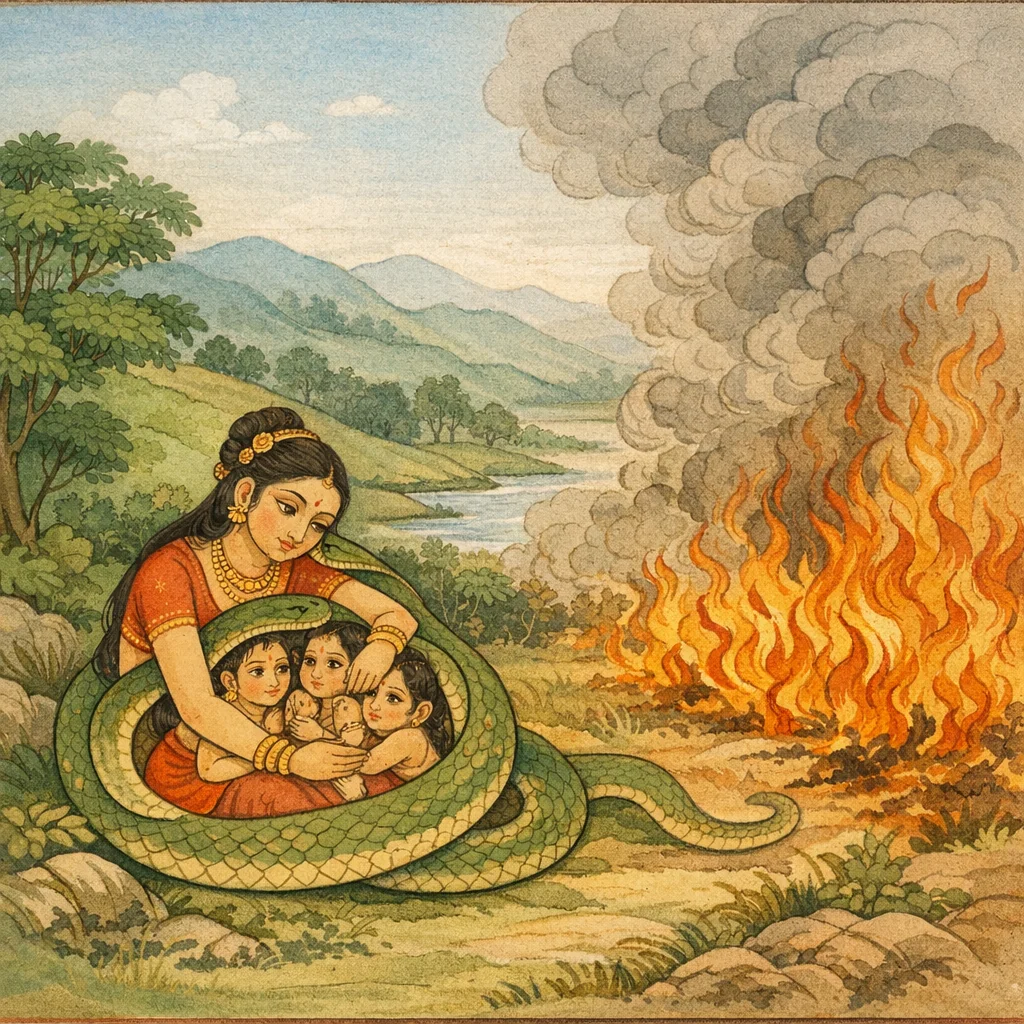
Chapter Arc: वन में दावाग्नि की ज्वाला उठती है; तपस्विनी सर्प-माता जरिता अपने बालकों को बालक जानकर घबराकर विलाप करती है। → अग्नि ‘जगत् संदीपयन्’ भयावह रूप से निकट आती जाती है। जरिता असहाय होकर सोचती है—किस पुत्र को छोड़ूँ, किसे लेकर जाऊँ; कोई उपाय नहीं सूझता। → जरिता निर्णय के अभाव में चरम त्याग का संकल्प करती है—‘छादयिष्यामि वो गात्रैः करिष्ये मरणं सह’—मैं अपने शरीर से तुम्हें ढँककर तुम्हारे साथ मर जाऊँगी। → बाल सर्प तर्कपूर्वक माता को रोकते हैं: बिल में चूहे से ‘गर्हित’ मृत्यु होगी, आकाश में उड़ने पर अग्नि से; दोनों का विचार कर वे कहते हैं कि अग्नि में देह-त्याग (हुताशन) चूहे द्वारा भक्षण से श्रेष्ठ है, और कुल-क्षेम हेतु माता को वही करना चाहिए जो समष्टि के लिए हितकर हो। → माता और पुत्रों के सामने अब तत्काल निर्णय का क्षण है—क्या वे बिल का जोखिम लें, उड़ान लें, या अग्नि में ही ‘शिष्ट’ त्याग को चुनें?
Shlokas
Verse 1
अ-क्राछ एकोनत्रिशर्दाधिकद्वधिशततमो< ध्याय: जरिताका अपने बच्चोंकी रक्षाके लिये चिन्तित होकर विलाप करना वैशमग्पायन उवाच ततः प्रज्वलिते वह्लौ शार्कषकास्ते सुदु:खिता: । व्यथिता: परमोद्विग्ना नाधिजग्मु: परायणम्,वैशम्पायनजी कहते हैं--जनमेजय! तदनन्तर जब आग प्रज्वलित हुई, तब वे शार्ड्गक शिशु बहुत दुःखी, व्यथित और अत्यन्त उद्विग्न हो गये। उस समय उन्हें अपना कोई रक्षक नहीं जान पड़ता था
Vaiśampāyana said: “O Janamejaya, when the fire blazed up, those Śārṅgaka young ones were plunged into intense sorrow. Shaken and exceedingly distressed, they could find no refuge or protector.”
Verse 2
निशम्य पुत्रकान् बालान् माता तेषां तपस्विनी । जरिता शोकदुः:खार्ता विललाप सुदु:ःखिता,उन बच्चोंको छोटे जानकर उनकी तपस्विनी माता शोक और दु:खसे आतुर हुई जरिता बहुत दुःखी होकर विलाप करने लगी
Hearing that her sons were still mere children, their ascetic mother Jaritā—overwhelmed by grief and sorrow—lamented bitterly, stricken with deep distress.
Verse 3
जरितोवाच अयमन्निर्दहन् कक्षमित आयाति भीषण: | जगत् संदीपयन् भीमो मम दुःखविवर्धन:,जरिता बोली--यह भयानक आग इस वनको जलाती हुई इधर ही बढ़ी आ रही है। जान पड़ता है, यह सम्पूर्ण जगत्को भस्म कर डालेगी। इसका स्वरूप भयंकर और मेरे दुःखको बढ़ानेवाला है
Jarita said: “This dreadful fire, burning the thicket, is advancing toward us. It seems ready to set the whole world ablaze. Terrible in form, it only increases my sorrow.”
Verse 4
इमे च मां कर्षयन्ति शिशवो मन्दचेतस: । अबह॒श्चविरणैहीना: पूर्वेषां न: परायणा:,ये सांसारिक ज्ञानसे शून्य चित्तवाले शिशु मुझे अपनी ओर आकर्षित करते हैं। इन्हें पाँखें नहीं निकलीं और अभीतक ये पैरोंसे भी हीन हैं, हमारे पितरोंके ये ही आधार हैं
Vaiśaṃpāyana said: “These little children, simple in understanding, tug at my heart and draw me toward them. They are still helpless—without strength and not yet steady on their feet—yet they are the refuge and continuation of our forefathers’ line.”
Verse 5
त्रासयंश्नायमायाति लेलिहानो महीरुहान् । अजातफ फक्षाश्न सुता न शक्ता: सरणे मम,सबको त्रास देती और वृक्षोंको चाटती हुई यह आगकी लपट इधर ही चली आ रही है। हाय! मेरे बच्चे बिना पंखके हैं, मेरे साथ उड़ नहीं सकते
Vaiśaṃpāyana said: “Spreading terror, the fire rushes toward us, licking at the trees. Alas—my little ones are still without wings; my chicks, my children, are not able to take refuge with me by flying away.”
Verse 6
आदाय च न शक्नोमि पुत्रांस्तरितुमात्मना । नच त्यक्तुमहं शक्ता हृदयं दूयतीव मे,मैं स्वयं भी इन्हें लेकर इस आगसे पार नहीं हो सकूँगी। इन्हें छोड़ भी नहीं सकती। मेरे हृदयमें इनके लिये बड़ी व्यथा हो रही है
“Even if I take my sons with me, I cannot cross through this fire by my own strength; yet I am also unable to abandon them. My heart is as though burning with anguish for them.”
Verse 7
क॑ तु जह्यामहं पुत्र कमादाय व्रजाम्पहम् । कि नु मे स्यात् कृतं कृत्वा मन्यध्वं पुत्रका: कथम्,मैं किस बच्चेको छोड़ दूँ और किसे साथ लेकर जाऊँ? क्या करनेसे कृतकृत्य हो सकती हूँ? मेरे बच्चो! तुमलोगोंकी क्या राय है?
‘My son, whom should I abandon, and whom should I take with me? By doing what deed could I truly feel my duty fulfilled? Tell me, my children—what do you think I ought to do?’
Verse 8
चिन्तयाना विमोक्षं वो नाधिगच्छामि किंचन । छादयिष्यामि वो गात्रै: करिष्ये मरणं सह,मैं तुमलोगोंके छुटकारेका उपाय सोचती हूँ; किंतु कुछ भी समझमें नहीं आता। अच्छा; अपने अंगोंसे तुमलोगोंको ढक लूँगी और तुम्हारे साथ ही मैं भी मर जाऊँगी
“I keep thinking of some way to free you, yet I can find nothing at all. Very well—then I shall cover you with my own limbs and meet death together with you.”
Verse 9
जरितारौ कुल॑ होतज्ज्येष्ठत्वेन प्रतिष्ठितम् सारिसृक््क: प्रजायेत पितृणां कुलवर्धन:,पुत्रो! तुम्हारे निर्दयी पिता पहले ही यह कहकर चल दिये कि “जरितारि ज्येष्ठ है, अतः इस कुलकी रक्षाका भार इसीपर होगा। दूसरा पुत्र सारिसृक्क अपने पितरोंके कुलकी वृद्धि करनेवाला होगा। स्तम्बमित्र तपस्या करेगा और द्रोण ब्रह्मवेत्ताओंमें श्रेष्ठ होगा"
Vaiśaṃpāyana said: “Your harsh father had already departed after declaring this: ‘Jaritarī is the eldest and therefore established as the one who will bear the responsibility of protecting the lineage. The second son, Sārisṛkka, will be born as an increaser of the forefathers’ family. Stambhamitra will undertake austerities, and Droṇa will become foremost among the knowers of Brahman.’”
Verse 10
स्तम्बमित्रस्तप: कुर्याद् द्रोणो ब्रह्म॒विदां वर: । इत्येवमुक्त्वा प्रययौ पिता वो निर्घण: पुरा,पुत्रो! तुम्हारे निर्दयी पिता पहले ही यह कहकर चल दिये कि “जरितारि ज्येष्ठ है, अतः इस कुलकी रक्षाका भार इसीपर होगा। दूसरा पुत्र सारिसृक्क अपने पितरोंके कुलकी वृद्धि करनेवाला होगा। स्तम्बमित्र तपस्या करेगा और द्रोण ब्रह्मवेत्ताओंमें श्रेष्ठ होगा"
Vaiśaṃpāyana said: “Having spoken thus, your pitiless father departed long ago, O son: ‘Stambhamitra shall undertake austerities, and Droṇa shall become the foremost among knowers of Brahman.’”
Verse 11
कमुपादाय शकक््येयं गन्तुं कष्टापदुत्तमा । कि नु कृत्वा कृतं कार्य भवेदिति च विह्नला । नापश्यत् स्वधिया मोक्ष स्वसुतानां तदानलातू,हाय! मुझपर बड़ी भारी कष्टदायिनी आपत्ति आ पड़ी। इन चारों बच्चोंमेंसे किसको लेकर मैं इस आगको पार कर सकूँगी। क्या करनेसे मेरा कार्य सिद्ध हो सकता है? इस प्रकार विचार करते-करते जरिता अत्यन्त विह्नल हो गयी; परंतु अपने पुत्रोंको उस आगसे बचानेका कोई उपाय उस समय उसके ध्यानमें नहीं आया
Vaiśaṃpāyana said: Overwhelmed by the gravest distress, Jaritā thought, “Taking whom can I possibly cross this terrible danger? What should I do so that my duty is truly accomplished?” Thus, wavering and confused, she could not, by her own understanding, see any means of rescuing her sons from the fire at that moment.
Verse 12
वैशम्पायन उवाच एवं ब्रुवाणां शार्स्तिे प्रत्यूचुरथ मातरम् | स्नेहमुत्सृज्य मातस्त्वं पत यत्र न हव्यवाट्,वैशम्पायनजी कहते हैं--जनमेजय! इस प्रकार बिलखती हुई अपनी मातासे वे शार्ड्गपक्षीके बच्चे बोले--'माँ! तुम स्नेह छोड़कर जहाँ आग न हो, उधर उड़ जाओ
Vaiśampāyana said: As their mother spoke thus in lamentation, the young śārṅga-birds replied to her: “Mother, set aside your attachment and fly away to a place where there is no fire.”
Verse 13
अस्मास्विह विनष्टेषु भवितार: सुतास्तव । त्वयि मातर्विनष्टायां न नः स्यात् कुलसंतति:,“माँ! यदि हम यहाँ नष्ट हो जायँ तो भी तुम्हारे दूसरे बच्चे हो सकते हैं; परंतु तुम्हारे नष्ट हो जानेपर तो हमारे इस कुलकी परम्परा ही लुप्त हो जायगी
Vaiśampāyana said: “Mother, even if we were to perish here, you could still have other sons. But if you, our mother, were to be lost, then our family’s line of continuity would not remain.”
Verse 14
अन्ववेक्ष्यैतदुभयं क्षेमं स्थाद् यत् कुलस्य न: । तद् वै कर्तु पर: कालो मातरेष भवेत् तव,“माँ! इन दोनों बातोंपर विचार करके जिस प्रकार हमारे कुलका कल्याण हो, वही करनेको तुम्हारे लिये यह उत्तम अवसर है
Vaiśampāyana said: “Having carefully weighed both these considerations, do that by which the welfare of our lineage will be secured. For you, O Mother, this is indeed the most fitting and decisive time to act.”
Verse 15
मा त्वं सर्वविनाशाय स्नेहं कार्षी: सुतेषु न: । न हीदं कर्म मोघं स्थाल्लोककामस्य नः पितु:,“तुम हम सब पुत्रोंपर ऐसा स्नेह न करो, जिससे सबका विनाश हो जाय। उत्तम लोककी इच्छा रखनेवाले मेरे पिताका यह कर्म व्यर्थ न हो जाय”
“Do not show such partial affection toward us, your sons, that it brings about the ruin of all. Let not this deed of our father—who seeks the higher worlds—turn out to be futile.”
Verse 16
जरितोवाच इदमाखोर्बिलं भूमौ वृक्षस्थास्य समीपत: । तदाविशध्वं त्वरिता वल्लेरत्र न वो भयम्,जरिता बोली--मेरे बच्चो! इस वृक्षके पास भूमिमें यह चूहेका बिल है। तुमलोग जल्दी-से-जल्दी इसके भीतर घुस जाओ। इसके भीतर तुम्हें आगसे भय नहीं है
Jarītā said: “My children, here on the ground near this tree is a mouse’s burrow. Enter it quickly. In this hollow, sheltered by the creeper, you will have no fear from the fire.”
Verse 17
ततोऊहं पांसुना छिद्रमपिधास्यामि पुत्रका: । एवं प्रतिकृतं मन््ये ज्वलत: कृष्णवर्त्मन:,तुमलोगोंके घुस जानेपर मैं इस बिलका छेद धूलसे बंद कर दूँगी। बच्चो! मेरा विश्वास है, ऐसा करनेसे इस जलती आगसे तुम्हारा बचाव हो सकेगा
Then she said, “My children, once you have entered, I shall seal the mouth of this burrow with dust. I believe that by doing so I will have repaid the danger in kind—protecting you from the blazing fire with its dark, smoke-filled path.”
Verse 18
तत एष्याम्यतीतेडग्नौ विहन्तुं पांसुसंचयम् । रोचतामेष वो वादो मीक्षार्थ च हुताशनात्,फिर आग बुझ जानेपर मैं धूल हटानेके लिये यहाँ आ जाऊँगी। आगसे बचनेके लिये मेरी यह बात तुमलोगोंको पसंद आनी चाहिये
Vaiśampāyana said: “Then, when the fire has died down, I shall come here to clear away the heap of dust. Let these words of mine be acceptable to you, for they are meant to safeguard you from the blazing fire.”
Verse 19
शाड्गका ऊचु. अबर्हन् मांसभूतान् न: क्रव्यादाखुर्विनाशयेत् । पश्यमाना भयमिदं प्रवेष्टं नात्र शकनुम:,शार्ड्गक बोले--अभी हम बिना पंखोंके बच्चे हैं, हमारा शरीर मांसका लोथड़ामात्र है। चूहा मांसभक्षी जीव है, वह हमें नष्ट कर देगा। इस भयको देखते हुए हम इस बिलमें प्रवेश नहीं कर सकते
The Śāḍgaka chicks said: “We are still without feathers; our bodies are nothing but soft flesh. A mouse is a flesh-eating creature—he would destroy us. Seeing this danger, we cannot enter this burrow.”
Verse 20
कथमन्निर्न नो धक्ष्येत् कथमाखुर्न नाशयेत् | कथं न स्यात् पिता मोघ: कथं माता प्रियेत न:,हम तो यह सोचते हैं कि क्या उपाय हो, जिससे अग्नि हमें न जलावे, चूहा हमें न मारे एवं हमारे पिताका संतानोत्पादनविषयक प्रयत्न निष्फल न हो और हमारी माता भी जीवित रहे?
Vaiśampāyana said: “How can it be that fire does not burn us? How can it be that the rat does not destroy us? How can it be that our father’s effort to beget offspring does not turn out futile? And how can it be that our mother remains alive and dear to us?”
Verse 21
बिल आखोर्विनाश: स्यादग्नेराकाशचारिणाम् । अन्ववेक्ष्यैतदुभयं श्रेयान् दाहो न भक्षणम्,बिलमें चूहेसे हमारा विनाश हो जायगा और आकाशमें उड़नेपर अग्निसे। इन दोनों परिणामोंपर विचार करनेसे हमें आगसे जल जाना ही श्रेष्ठ जान पड़ता है, चूहेका भोजन बनना नहीं
Vaiśampāyana said: “If we remain in the burrow, we will be destroyed by the mouse; if we take to the sky, we will be destroyed by fire. Considering both outcomes, it is better for us to be burned by fire than to become the mouse’s food.”
Verse 22
गर्हितं मरणं न: स्थादाखुना भक्षिते बिले । शिष्टादिष्ट: परित्याग: शरीरस्य हुताशनात्,यदि हमलोगोंको बिलमें चूहेने खा लिया तो वह हमारी निन्दित मृत्यु होगी। आगसे जलकर शरीरका परित्याग करनेके लिये शिष्ट पुरुषोंकी आज्ञा है
Vaiśampāyana said: “Let it not be that we meet a disgraceful death—being eaten by a rat in this burrow. For the cultured and righteous prescribe that one should relinquish the body by fire.”
Verse 229
इति श्रीमहाभारते आदिपर्वणि मयदर्शनपर्वणि जरिताविलापे एकोनत्रिंशदधिकद्विशततमो<ध्याय:
Thus ends the two-hundred-and-twenty-ninth chapter of the Ādi Parva of the Śrī Mahābhārata, within the section called the Mayadarśana Parvan, in the episode known as Jaritā’s Lament. This closing colophon marks the completion of the chapter and situates the narrative within its larger ethical frame—where grief, attachment, and duty are contemplated through the voices of those affected by peril and loss.