Adhyaya 218
Khāṇḍava-dāha: Indra’s Countermeasures and the Nāga Aśvasena’s Escape (आदि पर्व, अध्याय २१८)
Upa-parva: Khāṇḍava-dāha Parva (Episode of the Burning of Khāṇḍava Forest)
Vaiśaṃpāyana describes Arjuna’s defensive enclosure of the Khāṇḍava forest as Indra attempts to extinguish Agni with heavy rains. Arjuna counters the downpour by saturating the sky with arrows, preventing beings—especially birds and other forest life—from escaping the encirclement. The nāga-king Takṣaka is absent, but his son Aśvasena struggles to flee; his mother attempts to save him by swallowing and lifting him, yet Arjuna severs her head with a sharp bhalla. Indra (Vajrī) intervenes with wind and storm to free Aśvasena, but Arjuna cuts through the nāga’s illusion and continues the engagement, cursing the serpent’s future instability. Arjuna then directly contests Indra, who escalates from storm-clouds to a stone-rain and finally hurls a mountain peak; Arjuna shatters these assaults with precise arrows. The chapter culminates in a broad mustering of devas with diverse weapons, repeated repulses by Kṛṣṇa and Arjuna, and ominous portents likened to end-of-age conditions, while the forest’s inhabitants suffer escalating destruction.
Chapter Arc: रैवतक पर्वत के महोत्सव का वैभव—दान, गान, गन्धर्व-नृत्य, रत्नजटित प्रासाद और वृष्णि-भोज-अन्धक वीरों की चहल-पहल—उसी रंगभूमि में अर्जुन का मन सुभद्रा की ओर खिंचता है। → उत्सव के बीच कृष्ण और अर्जुन का एकान्त विचार: क्षत्रिय-विवाह के मार्ग (स्वयंवर आदि) अनिश्चित हैं; सुभद्रा के लिए कौन-सा उपाय धर्मसम्मत और सफल होगा—यह प्रश्न तीखा होता जाता है, और इन्द्रप्रस्थ में युधिष्ठिर की सहमति की आवश्यकता भी दबाव बनती है। → कृष्ण का निर्णायक परामर्श—परिणाम-संदिग्ध मार्ग छोड़कर ऐसा उपाय चुनना जो क्षत्रिय-रीति में स्वीकार्य हो और लक्ष्य सिद्ध करे; अर्जुन का निश्चय पक्का होता है और योजना को क्रियान्वित करने की दिशा तय हो जाती है। → अर्जुन-कृष्ण द्वारा युधिष्ठिर को सब समाचार पहुँचाना और धर्मराज का अनुमोदन; इस स्वीकृति से पाण्डव-पक्ष में उद्देश्य-सिद्धि का विश्वास जमता है। → भीम का समाचार सुनकर ‘कृतकृत्य’ अनुभव करना संकेत देता है कि अगला चरण—सुभद्रा-हरण/विवाह की प्रत्यक्ष घटना—अब अवश्य घटेगी।
Shlokas
Verse 1
अपर बक। ] अति्ऑशाड (सुभद्राहरणपर्व) अष्टादशाधिकद्धिशततमो< ध्याय: रैवतक पर्वतके उत्सवमें अर्जुनका सुभद्रापर आसक्त होना और श्रीकृष्ण तथा युधिष्ठिरकी अनुमतिसे उसे हर ले जानेका निश्चय करना वैशम्पायन उवाच ततः कतिपयाहस्य तस्मिन् रैवतके गिरौ | वृष्ण्यन्धकानाम भवदुत्सवो नृपसत्तम,वैशम्पायनजी कहते हैं--नृपश्रेष्ठ तदनन्तर कुछ दिन बीतनेके बाद रैवतक पर्वतपर वृष्णि और अन्धकवंशके लोगोंका एक बड़ा भारी उत्सव हुआ
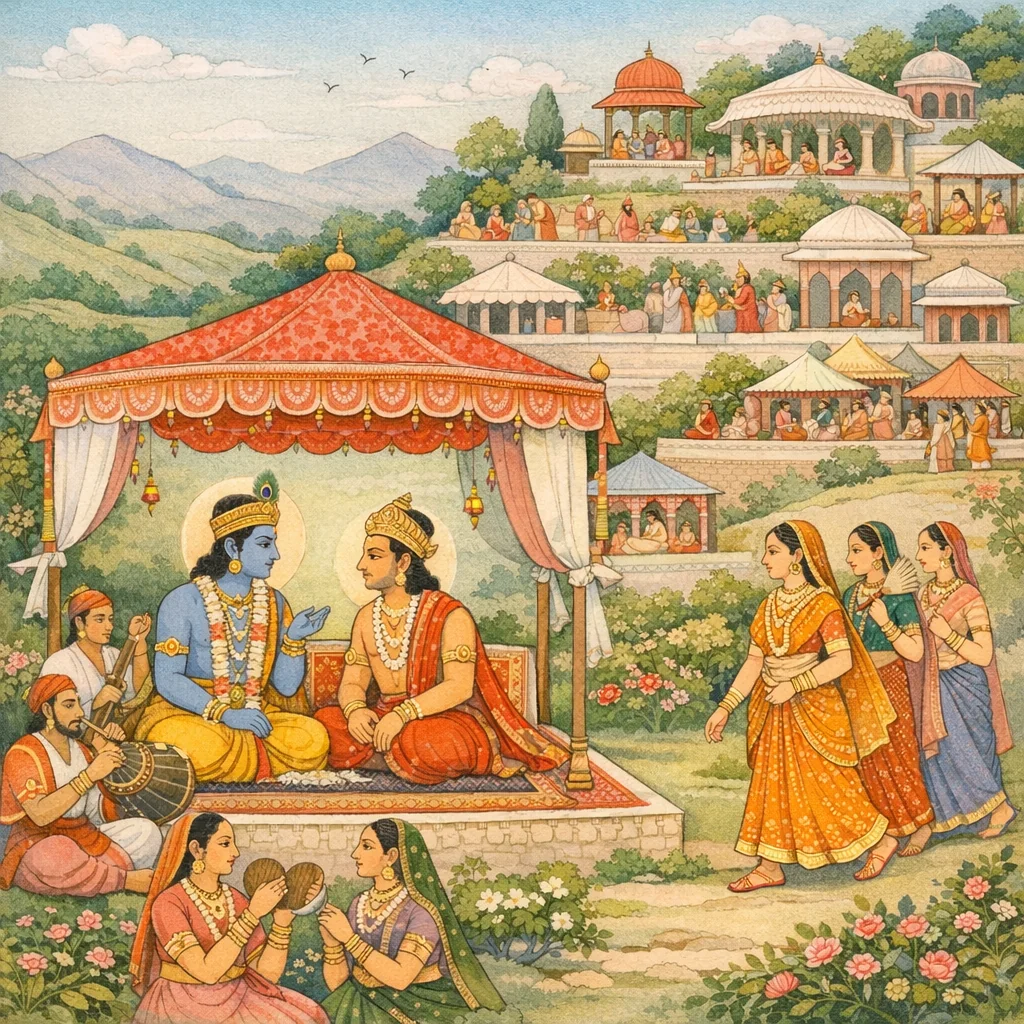
Vaiśampāyana said: O best of kings, after a few days had passed, on that Raivataka mountain there took place a grand festival of the Vṛṣṇis and the Andhakas. This festive gathering becomes the setting in which personal desire and social custom begin to press upon questions of rightful conduct and consent, soon shaping decisive action.
Verse 2
तत्र दान ददुर्वीरा ब्राह्मणेभ्य: सहस्रश: । भोजवृष्ण्यन्धकाश्नैव महे तस्य गिरेस्तदा,पर्वतपर होनेवाले उस उत्सवमें भोज, वृष्णि और अन्धकवंशके वीरोंने सहस्रों ब्राह्मणोंको दान दिया
Vaiśampāyana said: There, at that great festival held on the mountain, the valiant heroes of the Bhoja, Vṛṣṇi, and Andhaka lineages bestowed gifts in thousands upon the brāhmaṇas. The scene underscores the social ethic of honoring sacred learning and sustaining the religious order through generous giving during public rites.
Verse 3
प्रासादै रत्नचित्रैश्व॒ गिरेस्तस्य समन्ततः । स देश: शोभितो राजन् कल्पवृक्षैश्न सर्वश:,राजन! उस पर्वतके चारों ओर रत्नजटित विचित्र राजभवन और कल्पवृक्ष थे, जिनसे उस स्थानकी बड़ी शोभा हो रही थी
Vaiśampāyana said: O King, all around that mountain the land was adorned with palaces inlaid with variegated jewels, and everywhere with Kalpavṛkṣa trees that grant desires; thus the whole place shone with extraordinary splendor.
Verse 4
वादित्राणि च तत्रान्ये वादका: समवादयन् | ननृतुर्नर्तकाश्चैव जगुर्गेयानि गायना:,वहाँ बाजे बजानेमें कुशल मनुष्य अनेक प्रकारके बाजे बजाते, नाचनेवाले नाचते और गायकगण गीत गाते थे
Vaiśampāyana said: There, other musicians played various instruments; dancers performed their dances, and singers sang melodious songs.
Verse 5
अलंकृता: कुमाराश्न वृष्णीनां सुमहौजसाम् | यानैर्हाटकचित्रैश्व चज्चूर्यन्ते सम सर्वश:,महान् तेजस्वी वृष्णिवंशियोंके बालक वस्त्राभूषणोंसे विभूषित हो सुवर्णचित्रित सवारियोंपर बैठकर देदीप्यमान होते हुए चारों ओर घूम रहे थे
Vaiśampāyana said: The boys of the mighty Vṛṣṇi clan, adorned with garments and ornaments, sat upon conveyances decorated with gold and, shining with youthful splendor, moved about everywhere in all directions.
Verse 6
पौराक्ष पादचारेण यानैरुच्चावचैस्तथा । सदारा: सानुयात्राश्ष शतशो5थ सहस्रश:,द्वारकापुरीके निवासी सैकड़ों-हजारों मनुष्य अपनी स्त्रियों और सेवकोंके साथ पैदल चलकर अथवा छोटी-बड़ी सवारियोंके द्वारा आकर उस उत्सवमें सम्मिलित हुए थे। भारत! भगवान् बलराम हर्षोन्मत्त होकर वहाँ रेवतीके साथ विचर रहे थे। उनके पीछे-पीछे गन्धर्व (गायक) चल रहे थे
Vaiśampāyana said: O descendant of Puru, hundreds and even thousands of people—accompanied by their wives and attendants—arrived for that festival, some coming on foot and others by conveyances of various kinds, high and low.
Verse 7
ततो हलधर: क्षीबो रेवतीसहित: प्रभु: । अनुगम्यमानो गन्धर्वैरचरत् तत्र भारत,द्वारकापुरीके निवासी सैकड़ों-हजारों मनुष्य अपनी स्त्रियों और सेवकोंके साथ पैदल चलकर अथवा छोटी-बड़ी सवारियोंके द्वारा आकर उस उत्सवमें सम्मिलित हुए थे। भारत! भगवान् बलराम हर्षोन्मत्त होकर वहाँ रेवतीके साथ विचर रहे थे। उनके पीछे-पीछे गन्धर्व (गायक) चल रहे थे
Then the mighty Lord Haladhara (Balarāma), exhilarated with joy and accompanied by Revatī, wandered about there, O Bhārata, while Gandharvas followed behind him, providing musical accompaniment.
Verse 8
तथैव राजा वृष्णीनामुग्रसेन: प्रतापवान् । अनुगीयमानो गन्धर्व: स्त्रीसहस्रसहायवान्,वृष्णिवंशके प्रतापी राजा उमग्रसेन भी वहाँ आमोद-प्रमोद कर रहे थे। उनके पास बहुतसे गन्धर्व गा रहे थे और सहसों स्त्रियाँ उनकी सेवा कर रही थीं
Vaiśampāyana said: In the same manner, the mighty King Ugrasena of the Vṛṣṇis was enjoying himself in festive delight. Gandharvas were singing in his honor, and he was attended by thousands of women—an image of royal prosperity and worldly splendor that frames the courtly atmosphere of the narrative.
Verse 9
रौक्मिणेयश्न साम्बश्न क्षीबौ समरदुर्मदौ | दिव्यमाल्याम्बरधरौ विजद्वातेडमराविव,युद्धमें दुर्मद वीरवर प्रद्युम्म और साम्ब दिव्य मालाएँ तथा दिव्य वस्त्र धारण करके आनन्दसे उन्मत्त हो देवताओंकी भाँति विहार करते थे
Vaiśampāyana said: Pradyumna (son of Rukmiṇī) and Sāmba, intoxicated with exhilaration and made fiercely proud by battle, wore divine garlands and splendid garments, and moved about joyfully like the gods themselves. The verse highlights the heady, morally risky elation that can follow victory—where heroic prowess easily turns into overconfidence.
Verse 10
अक्रूरः सारणश्वैव गदो बश्रुविदूरथ: । निशठपश्चारुदेष्णश्व पृथुर्विपृथुरेव च,अक्रूर, सारण, गद, बश्रु, विदूरथ, निशठ, चारुदेष्ण, पृथु, विपृथु, सत्यक, सात्यकि, भंगकार, महारव, हृदिकपुत्र कृतवर्मा, उद्धव और जिनका नाम यहाँ नहीं लिया गया है, ऐसे अन्य यदुवंशी भी सब-के-सब अलग-अलग स्त्रियों और गन्धर्वोंसे घिरे हुए रैवतक पर्वतके उस उत्सवकी शोभा बढ़ा रहे थे
Vaiśampāyana said: Akrūra and Sāraṇa, and also Gada, Baśru and Vidūratha; Niśaṭha and Cārudeṣṇa, and Pṛthu and Vipṛthu as well—these prominent Yādavas (together with others not named) enhanced the splendor of the festivities on Mount Raivataka, each surrounded by women and by Gandharvas. The scene underscores worldly prosperity and social celebration, while also hinting at the vast network of alliances and attachments that accompany royal power.
Verse 11
सत्यक: सात्यकिश्वैव भड़कारमहारवौ । हार्दिक्य उद्धवश्वैव ये चान्ये नानुकीर्तिता:,अक्रूर, सारण, गद, बश्रु, विदूरथ, निशठ, चारुदेष्ण, पृथु, विपृथु, सत्यक, सात्यकि, भंगकार, महारव, हृदिकपुत्र कृतवर्मा, उद्धव और जिनका नाम यहाँ नहीं लिया गया है, ऐसे अन्य यदुवंशी भी सब-के-सब अलग-अलग स्त्रियों और गन्धर्वोंसे घिरे हुए रैवतक पर्वतके उस उत्सवकी शोभा बढ़ा रहे थे
Vaiśampāyana said: Satyaka, Sātyaki, and also Bhaṅkāra and Mahārava; Hārdikya (Kṛtavarmā) and Uddhava as well—together with other Yādavas whose names are not recited here—were all, each in his own way, enhancing the splendor of that festival on Mount Raivataka, surrounded by women and Gandharvas. The passage underscores the grandeur and allure of celebration, while hinting at the social power and prestige displayed through retinues, music, and companionship.
Verse 12
एते परिवृता: स्त्रीभिर्गन्धर्वैश्न पृथक् पृथक् तमुत्सवं रैवतके शोभयाज्चक्रिरे तदा,अक्रूर, सारण, गद, बश्रु, विदूरथ, निशठ, चारुदेष्ण, पृथु, विपृथु, सत्यक, सात्यकि, भंगकार, महारव, हृदिकपुत्र कृतवर्मा, उद्धव और जिनका नाम यहाँ नहीं लिया गया है, ऐसे अन्य यदुवंशी भी सब-के-सब अलग-अलग स्त्रियों और गन्धर्वोंसे घिरे हुए रैवतक पर्वतके उस उत्सवकी शोभा बढ़ा रहे थे
Vaiśampāyana said: Encircled by women and by Gandharvas, each in his own company, they then enhanced the splendor of that festival on Mount Raivataka. Akrūra, Sāraṇa, Gada, Babhru, Vidūratha, Niśaṭha, Cārudeṣṇa, Pṛthu, Vipṛthu, Satyaka, Sātyaki, Bhaṅgakāra, Mahārava, Hṛdika’s son Kṛtavarmā, Uddhava, and other Yādavas whose names are not listed here—all of them, surrounded by their respective women and Gandharvas, were adorning the celebration at Raivataka.
Verse 13
चित्रकौतूहले तस्मिन् वर्तमाने महाद्धुते । वासुदेवश्व पार्थश्ष सहितौ परिजग्मतु:,उस अत्यन्त अद्भुत विचित्र कौतूहलपूर्ण उत्सवमें भगवान् श्रीकृष्ण और अर्जुन एक साथ घूम रहे थे
Vaiśampāyana said: While that wondrous festival—full of striking marvels and curious spectacle—was in progress, Vāsudeva (Śrī Kṛṣṇa) and Pārtha (Arjuna) moved about together, observing it side by side.
Verse 14
तत्र चडुक्रममाणौ तौ वसुदेवसुतां शुभाम् | अलंकृतां सखीमध्ये भद्रां ददूशतुस्तदा,इसी समय वहाँ वसुदेवजीकी सुन्दरी पुत्री सुभद्रा शृंगारसे सुसज्जित हो सखियोंसे घिरी हुई उधर आ निकली। वहाँ टहलते हुए श्रीकृष्ण और अर्जुनने उसे देखा
Just then, as the two of them were walking about there, they saw the auspicious daughter of Vasudeva—Subhadrā—beautifully adorned and standing amid her companions. At that moment, Kṛṣṇa and Arjuna, strolling nearby, caught sight of her.
Verse 15
दृष्टवैव तामर्जुनस्य कन्दर्प: समजायत । त॑ तदैकाग्रमनसं कृष्ण: पार्थमलक्षयत्,उसे देखते ही अर्जुनके हृदयमें कामाग्नि प्रज्वलित हो उठी। उनका चित्त उसीके चिन्तनमें एकाग्र हो गया। भगवान् श्रीकृष्णने अर्जुकी इस मनोदशाको भाँप लिया
Vaiśampāyana said: The moment he saw her, desire arose in Arjuna. His mind became fixed single-pointedly upon her; and Kṛṣṇa perceived that change in Pārtha’s inner state.
Verse 16
अब्रवीत् पुरुषव्याप्र: प्रहसन्निव भारत । वनेचरस्य किमिदं कामेनालोड्यते मन:,फिर वे पुरुषोतम हँसते हुए-से बोले--“भारत! यह क्या, वनवासीका मन भी इस तरह कामसे उन्मथित हो रहा है?
Vaiśampāyana said: Then that tiger among men, as if smiling, spoke: “O Bhārata, what is this? Is even the mind of a forest-dweller being churned and agitated by desire?”
Verse 17
ममैषा भगिनी पार्थ सारणस्य सहोदरा । सुभद्रा नाम भद्रं ते पितुर्में दयिता सुता । यदि ते वर्तते बुद्धिर्वक्ष्यामि पितरं स्वयम्,“कुन्तीनन्दन! यह मेरी बहिन और सारणकी सगी बहिन है, तुम्हारा कल्याण हो, इसका नाम सुभद्रा है। यह मेरे पिताकी बड़ी लाड़िली कन्या है। यदि तुम्हारा विचार इससे ब्याह करनेका हो तो मैं पितासे स्वयं कहूँगा'
Vaiśampāyana said: “O Pārtha, this is my sister—also the full sister of Sāraṇa. Her name is Subhadrā; may good befall you. She is my father’s dearly beloved daughter. If it is your intention to marry her, I myself will speak to my father.”
Verse 18
अर्जुन उवाच दुहिता वसुदेवस्य वासुदेवस्य च स्वसा । रूपेण चैषा सम्पन्ना कमिवैषा न मोहयेत्,अर्जुनने कहा--यह वसुदेवजीकी पुत्री, साक्षात् आप वासुदेवकी बहिन और अनुपम रूपसे सम्पन्न है, फिर यह किसका मन न मोह लेगी
Arjuna said: “She is the daughter of Vasudeva and also the sister of Vāsudeva (Kṛṣṇa). Endowed with exquisite beauty, whose mind would she not enchant?”
Verse 19
कृतमेव तु कल्याणं सर्व मम भवेद् ध्रुवम् यदि स्यान्मम वार्ष्णेयी महिषीयं स्वसा तव,सखे! यदि यह वृष्णिकुलकी कुमारी और आपकी बहिन सुभद्रा मेरी रानी हो सके तो निश्चय ही मेरा समस्त कल्याणमय मनोरथ पूर्ण हो जाय
Arjuna said: “Indeed, all my welfare would be firmly accomplished, if your sister Subhadrā—born in the Vṛṣṇi line—could become my queen, my wedded consort, O friend. Such a union would fulfill my auspicious purpose.”
Verse 20
प्राप्तो तु क उपाय: स्यात् तं ब्रवीहि जनार्दन । आस्थास्यामि तदा सर्व यदि शक््यं नरेण तत्ू,जनार्दन! बताइये, इसे प्राप्त करनेका क्या उपाय हो सकता है? यदि मनुष्यके द्वारा कर सकने योग्य होगा तो वह सारा प्रयत्न मैं अवश्य करूँगा
Arjuna said: “O Janārdana, tell me—by what means may she be obtained? If it is something a man can accomplish, I will surely undertake every effort.”
Verse 21
भगवान् श्रीकृष्ण बोले--नरश्रेष्ठ पार्थ! क्षत्रियोंक विवाहका स्वयंवर एक प्रकार है, परंतु उसका परिणाम संदिग्ध होता है; क्योंकि स्त्रियोंका स्वभाव अनिश्चित हुआ करता है (पता नहीं, वे स्वयंवरमें किसका वरण करें)
Śrī Kṛṣṇa said: “O best of men, Pārtha! Among the modes of marriage for kṣatriyas, the svayaṃvara is one recognized form; yet its outcome remains uncertain, for a woman’s choice can be unpredictable—one cannot know whom she will select in the assembly.”
Verse 22
प्रसह हरणं चापि क्षत्रियाणां प्रशस्यते । विवाहहेतु: शूराणामिति धर्मविदो विदु:,बलपूर्वक कनन््याका हरण भी शूरवीर क्षत्रियोंके लिये विवाहका उत्तम हेतु कहा गया है; ऐसा धर्मज्ञ पुरुषोंका मत है
Vāyu said: “Even the forcible taking away (of a bride) is praised among kṣatriyas. The knowers of dharma hold that, for the valorous, such an act can serve as a legitimate ground for marriage.”
Verse 23
वायुदेव उवाच स्वयंवर: क्षत्रियाणां विवाह: पुरुषर्षभ । स च संशयित: पार्थ स्वभावस्यानिमित्तत:,स त्वमर्जुन कल्याणीं प्रसहा् भगिनीं मम । हर स्वयंवरे हाुस्या: को वै वेद चिकीर्षितम् अत: अर्जुन! मेरी राय तो यही है कि तुम मेरी कल्याणमयी बहिनको बलपूर्वक हर ले जाओ। कौन जानता है, स्वयंवरमें उसकी क्या चेष्टा होगी--वह किसे वरण करना चाहेगी?
Vāyudeva said: “O bull among men, for kṣatriyas the svayaṃvara is a recognized form of marriage. Yet, O Pārtha, it is uncertain—for a woman’s choice may arise from her own nature, without any clear outward cause. Therefore, Arjuna, seize and carry off my auspicious sister by force from the svayaṃvara. Who can truly know what she intends to do there—whom she may wish to choose?”
Verse 24
ततो४्र्जुनश्व कृष्णश्न विनिश्ित्येति कृत्यताम् शीघ्रगान् पुरुषानन्याम् प्रेषयामासतुस्तदा,तब अर्जुन और श्रीकृष्णने कर्तव्यका निश्चय करके कुछ दूसरे शीघ्रगामी पुरुषोंको इन्द्रप्रस्थमें धर्मराज युधिष्ठिरके पास भेजा और सब बातें उन्हें सूचित करके उनकी सम्मति जाननेकी इच्छा प्रकट की। महाबाहु युधिष्ठिरने यह सुनते ही अपनी ओरसे आज्ञा दे दी
Then Arjuna and Kṛṣṇa, having firmly decided what ought to be done, dispatched other swift-footed men. They sent them to Indraprastha to inform Dharmarāja Yudhiṣṭhira of all that had occurred and to learn his assent. On hearing this, the mighty-armed Yudhiṣṭhira at once issued his command from his side.
Verse 25
धर्मराजाय तत् सर्वमिन्द्रप्रस्थगताय वै । श्रुत्वैव च महाबाहुरनुजज्ञे स पाण्डव:,तब अर्जुन और श्रीकृष्णने कर्तव्यका निश्चय करके कुछ दूसरे शीघ्रगामी पुरुषोंको इन्द्रप्रस्थमें धर्मराज युधिष्ठिरके पास भेजा और सब बातें उन्हें सूचित करके उनकी सम्मति जाननेकी इच्छा प्रकट की। महाबाहु युधिष्ठिरने यह सुनते ही अपनी ओरसे आज्ञा दे दी
All of this was conveyed to King Dharmarāja Yudhiṣṭhira, who was then residing at Indraprastha. The mighty-armed Pāṇḍava, having heard it, immediately granted his consent—authorizing the proposed course of action in accordance with duty and proper procedure.
Verse 217
इस प्रकार श्रीमह्याभारत आदिपर्वके अन्तर्गत अर्जुनवनवासपर्वमें अर्जुनका द्वारकागमनविषयक दो सौ सत्रहवाँ अध्याय पूरा हुआ
Thus ends the two-hundred-and-seventeenth chapter of the Ādi Parva of the Śrī Mahābhārata, within the Arjuna’s Exile section, dealing with Arjuna’s journey to Dvārakā. This closing colophon marks the completion of that narrative unit as transmitted by Vaiśampāyana.
Verse 218
(भीमसेनस्तु तच्छुत्वा कृतकृत्यो5 भ्यमन्यत । इत्येवं मनुजै: सार्थमुक्त्वा प्रीतिमुपेयिवान् ।।) भीमसेन यह समाचार सुनकर अपनेको कृतकृत्य मानने लगे और दूसरे लोगोंके साथ ये बातें करके उनको बड़ी प्रसन्नता हुई। इति श्रीमहाभारते आदिपर्वणि सुभद्राहरणपर्वणि युधिष्टिरानुज्ञायामष्टादशाधिकद्विशततमो< ध्याय:,इस प्रकार श्रीमह्याभारत आदिपर्वके अन्तर्गत युभद्राहरणपर्वनें युधिष्ठिरकी आज्ञासम्बन्धी दो सौ अठारहवाँ अध्याय पूरा हुआ
Hearing this report, Bhīmasena considered his purpose fulfilled. Having spoken thus in the company of the others, he became greatly pleased—his satisfaction arising from the sense that the intended duty had been accomplished and affirmed before the community.
Frequently Asked Questions
The chapter stages a dharma-sankat between fulfilling a pledged protective duty (defending Agni’s act) and the evident harm to forest inhabitants, including beings attempting to flee; it records how martial success can coexist with ethically troubling outcomes.
The text underscores that agency operates within complex causal fields: disciplined skill and resolve can overcome even divine-scale obstacles, yet the moral weight of action persists, requiring later reflection on responsibility, intention, and consequence.
No explicit phalaśruti is stated here; the meta-function is narrative-architectural—demonstrating the limits of divine intervention against vowed human-divine alliance, and foreshadowing how unresolved enmities (e.g., nāga hostility) continue to shape later events.