Adhyaya 217
Khāṇḍava-dāha: Strategic containment and Indra’s rain (Ādi Parva, Adhyāya 217)
Upa-parva: Khāṇḍava-dāha (The Burning of the Khāṇḍava Forest) — Ādi Parva sub-episode
Vaiśaṃpāyana describes Arjuna and Kṛṣṇa stationed on opposite sides of the Khāṇḍava forest with their chariots, executing rapid, coordinated movement so that fleeing beings find no gap for escape. As the forest burns, large numbers of creatures exhibit distress and disorientation; some cling to family members and perish together, while others, injured and panicked, re-enter the fire. Aquatic refuges also fail as waters heat, and the scene is rendered as a comprehensive collapse of safe spaces. Arjuna targets those attempting to rise or flee, striking them with arrows so they fall back into the conflagration, and the collective soundscape is compared to the churning sea. The devas, alarmed, seek refuge with Indra, questioning whether a broader destruction of worlds is underway. Indra then covers the sky with dense clouds and releases torrents toward the fire, but the streams dry up before reaching the flames due to Agni’s intensity. Indra renews the rain with anger; the forest becomes a violent composite of fire, smoke, lightning, and thunder.
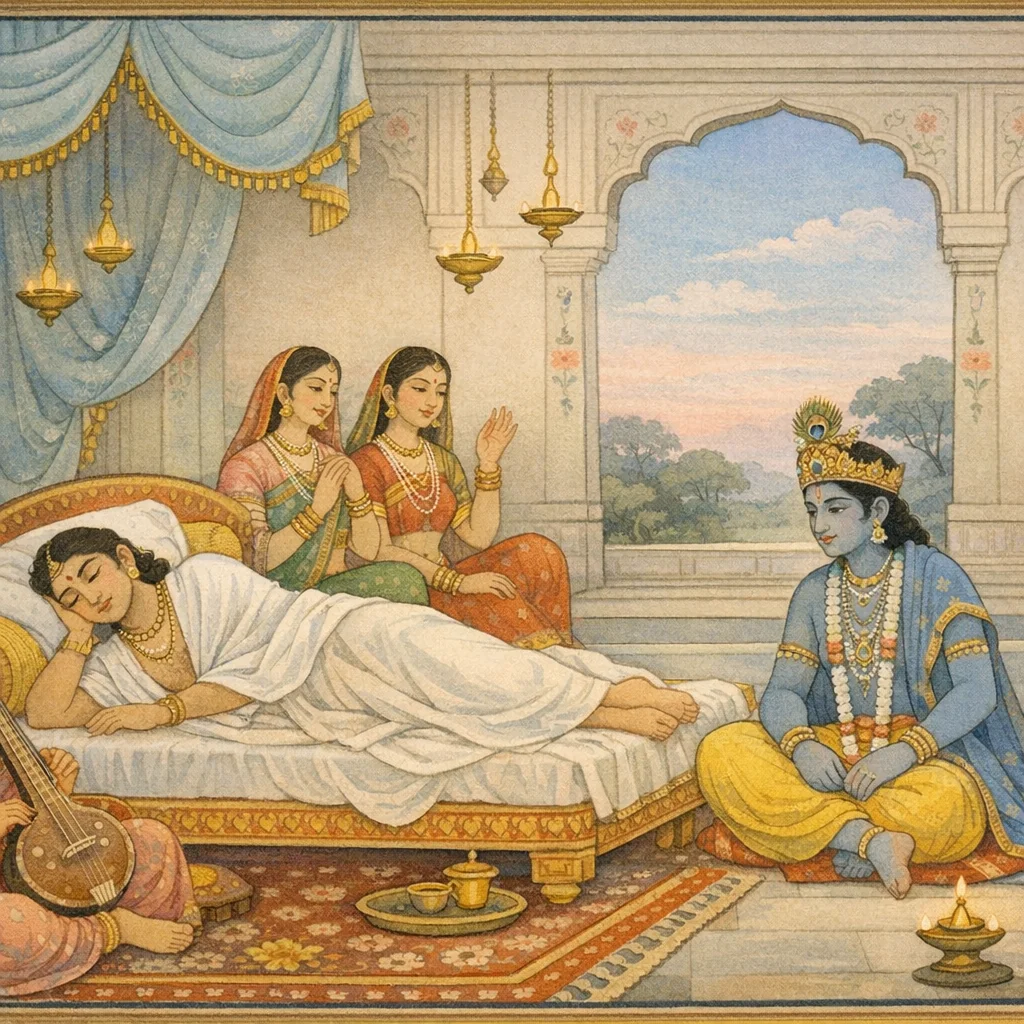
Chapter Arc: पश्चिम समुद्र-तट के तीर्थों का परिभ्रमण कर अजेय बीभत्सु अर्जुन प्रभास-देश में पहुँचता है—और उसी क्षण गुप्तचरों से यह समाचार मधुसूदन कृष्ण तक जा पहुँचता है कि पाण्डवों का तेजस्वी वनवासी यहाँ आया है। → अर्जुन और कृष्ण का मिलन होता है; अर्जुन अपने वनवास, तीर्थयात्रा और अब तक के समस्त वृत्तान्त को ‘ज्यों-का-त्यों’ कह सुनाता है। मित्रता के भीतर राजनीति की धड़कन है—पाण्डव-जीवन का यह एकाकी चरण अब वृष्णि-राज्य की देहरी पर आ खड़ा है। → कृष्ण के आतिथ्य में अर्जुन का द्वारका-प्रवेश और कृष्ण-भवन में उसका सम्मानित निवास—दिव्य शय्या, रात्रि-भर संवाद, और प्रातः मधुर गीत-वीणा व मंगल-स्तुतियों से उसका जागरण—यह संकेत देता है कि वनवासी धनुर्धर अब देव-नगर की शक्ति-परिधि में आ गया है। → अर्जुन कृष्ण के रम्य, रत्न-विभूषित भवन में अनेक रात्रियाँ कृष्ण के साथ निवास करता है; प्रभास से रैवतक पर्वत और द्वारका तक की यात्रा आतिथ्य, स्नेह और राजकीय संरक्षण में पूर्ण होती है। → द्वारका में यह निकटता आगे किस बन्धन में परिणत होगी—मित्रता मात्र, या ऐसा सम्बन्ध जो पाण्डवों के भाग्य को निर्णायक रूप से मोड़ दे?
Shlokas
Verse 1
भीकम (2 अमान सप्तदर्शाधिकद्विशततमो< ध्याय: अर्जुनका प्रभासतीर्थमें श्रीकृष्णसे मिलना और उन्हींके साथ उनका रैवतक पर्वत एवं द्वारकापुरीमें आना वैशम्पायन उवाच सो<परान्तेषु तीर्थानि पुण्यान्यायतनानि च । सर्वाण्येवानुपूर्व्येण जगामामितविक्रम:,वैशम्पायनजी कहते हैं--जनमेजय! तदनन्तर अमित-पराक्रमी अर्जुन क्रमशः अपरान्त (पश्चिम समुद्रतटवर्ती)-देशके समस्त पुण्य तीर्थों और मन्दिरोंमें गये
Vaiśampāyana said: Thereafter, the mighty Arjuna—of immeasurable prowess—went in due sequence through all the sacred fords and holy shrines in the Aparānta region (the western coastal lands).
Verse 2
समुद्रे पश्चिमे यानि तीर्थान्यायतनानि च । तानि सर्वाणि गत्वा स प्रभासमुपजग्मिवान्,पश्चिम समुद्रके तटपर जितने तीर्थ और देवालय थे, उन सबकी यात्रा करके वे प्रभासक्षेत्रमें जा पहुँचे
Vaiśampāyana said: Having visited all the sacred fords and holy shrines that lay along the western sea, he completed that pilgrimage and then proceeded onward to Prabhāsa—moving from one consecrated place to the next in a disciplined, dharma-oriented journey.
Verse 3
प्रभासदेशं सम्प्राप्तं बीभत्सुमपराजितम् । सुपुण्यं रमणीयं च शुआ्राव मधुसूदन:,भगवान् श्रीकृष्णने गुप्तचरोंद्वारा यह सुना कि किसीसे भी परास्त न होनेवाले अर्जुन परम पवित्र एवं रमणीय प्रभासक्षेत्रमें आ गये हैं, तब वे अपने सखा कुन्तीनन्दनसे मिलनेके लिये वहाँ गये। उस समय प्रभासमें श्रीकृष्ण और अर्जुनने एक-दूसरेको देखा
Vaiśampāyana said: Madhusūdana (Śrī Kṛṣṇa) heard that Bībhatsu (Arjuna)—unconquered by any—had arrived in the region of Prabhāsa, a place of great sanctity and beauty. On learning this, Kṛṣṇa went there to meet his friend, Kuntī’s son. There, at Prabhāsa, Kṛṣṇa and Arjuna came into one another’s sight, renewing their bond of friendship and shared duty.
Verse 4
ततो<भ्यगच्छत् कौन्तेयं सखायं तत्र माधव: । ददृशाते तदान्योन्यं प्रभासे कृष्णपाण्डवीौ,भगवान् श्रीकृष्णने गुप्तचरोंद्वारा यह सुना कि किसीसे भी परास्त न होनेवाले अर्जुन परम पवित्र एवं रमणीय प्रभासक्षेत्रमें आ गये हैं, तब वे अपने सखा कुन्तीनन्दनसे मिलनेके लिये वहाँ गये। उस समय प्रभासमें श्रीकृष्ण और अर्जुनने एक-दूसरेको देखा
Then Mādhava (Śrī Kṛṣṇa) went there to meet his friend, the son of Kuntī (Arjuna). At Prabhāsa, Kṛṣṇa and the Pāṇḍava beheld one another face to face.
Verse 5
तावन्योन्यं सम श्लिष्य पृष्टवा च कुशलं वने । आस्तां प्रियसखायौ तौ नरनारायणावृषी,दोनों ही दोनोंको हृदयसे लगाकर कुशल-प्रश्न पूछनेके पश्चात् वे परस्पर प्रिय मित्र साक्षात् नर-नारायण ऋषि वनमें एक स्थानपर बैठ गये
Vaiśaṃpāyana said: Embracing one another warmly and inquiring after each other’s well-being, those two dear friends—the sages Nara and Nārāyaṇa—sat together at a spot in the forest.
Verse 6
ततोडर्जुनं वासुदेवस्तां चर्या पर्यपृच्छत । किमर्थ पाण्डवैतानि तीर्थान्यनुचरस्युत,तब भगवान् वासुदेवने अर्जुनसे उनकी जीवनचर्याके सम्बन्धमें पूछा--“पाण्डव! तुम किसलिये तीर्थोंमें विचर रहे हो?”
Then Vāsudeva questioned Arjuna about his course of life and conduct: “O Pāṇḍava, for what reason are you wandering from one sacred ford to another?”
Verse 7
ततोअ्र्जुनो यथावृत्तं सर्वमाख्यातवांस्तदा । श्रुत्वोवाच च वार्ष्णेय एवमेतदिति प्रभु:,यह सुनकर अर्जुनने उन्हें सारा वृत्तान्त ज्यों-का-त्यों सुना दिया। सब कुछ सुनकर भगवान् श्रीकृष्ण बोले--“यह बात ऐसी ही है!
Then Arjuna related the entire account exactly as it had occurred. Having heard it all, the Lord—Kṛṣṇa of the Vṛṣṇis—said, “So it is; this matter is indeed just as you have stated.”
Verse 8
तौ विहृत्य यथाकामं प्रभासे कृष्णपाण्डवौ । महीधरं रैवतकं वासायैवाभिजग्मतु:,तदनन्तर श्रीकृष्ण और अर्जुन दोनों प्रभासक्षेत्रमें इच्छानुसार घूम-फिरकर रैवतक पर्वतपर चले गये। उन्हें रातको वहीं ठहरना था
Vaiśaṃpāyana said: After roaming in Prabhāsa as they pleased, Kṛṣṇa and the Pāṇḍava (Arjuna) went to the mountain Raivataka, intending to spend the night there.
Verse 9
पूर्वमेव तु कृष्णस्य वचनात् त॑ महीधरम् । पुरुषा मण्डयाज्चक्रुरुपजहुश्न भोजनम्,भगवान् श्रीकृष्णकी आज्ञासे उनके सेवकोंने पहलेसे ही आकर उस पर्वतको सजा रखा था और वहाँ भोजन भी तैयार करके रख लिया था
Vaiśampāyana said: Acting beforehand, in accordance with Kṛṣṇa’s instruction, the men decorated the mountain and also brought and arranged the meal there.
Verse 10
प्रतिगृह्मार्जुन: सर्वमुपभुज्य च पाण्डव: । सहैव वासुदेवेन दृष्टवान् नटनर्तकान्,पाण्डुकुमार अर्जुनने भगवान् वासुदेवके साथ प्रस्तुत किये हुए सम्पूर्ण भोज्य पदार्थोंको यथारुचि खाकर नटों और नर्तकोंके नृत्य देखे। तत्पश्चात् उन सबको उपहार आदिसे सम्मानित करके जानेकी आज्ञा दे महाबुद्धिमान् पाण्डुकुमार अर्जुन सत्कारपूर्वक बिछी हुई दिव्य शय्यापर सोनेके लिये गये
Vaiśampāyana said: Having accepted and enjoyed all the offerings, Arjuna—the son of Pāṇḍu—together with Vāsudeva watched the performances of actors and dancers. Thereafter, having honored them with gifts and other courtesies and granted them leave to depart, the wise Pāṇḍava retired to rest upon a splendidly prepared divine couch.
Verse 11
अभ्यनुज्ञाय तान् सर्वानर्चयित्वा च पाण्डव: । सत्कृतं शयनं दिव्यमभ्यगच्छन्महामति:,पाण्डुकुमार अर्जुनने भगवान् वासुदेवके साथ प्रस्तुत किये हुए सम्पूर्ण भोज्य पदार्थोंको यथारुचि खाकर नटों और नर्तकोंके नृत्य देखे। तत्पश्चात् उन सबको उपहार आदिसे सम्मानित करके जानेकी आज्ञा दे महाबुद्धिमान् पाण्डुकुमार अर्जुन सत्कारपूर्वक बिछी हुई दिव्य शय्यापर सोनेके लिये गये
Vaiśampāyana said: Having granted leave to them all and having honored them with gifts and courtesies, the wise Pāṇḍava approached the splendid, well-prepared bed.
Verse 12
ततस्तत्र महाबाहुः शयान: शयने शुभे । तीर्थानां पल्वलानां च पर्वतानां च दर्शनम् आपगानां वनानां च कथयामास सात्वते,वहाँ सुन्दर शय्यापर सोये हुए महाबाहु धनंजयने भगवान् श्रीकृष्णसे अनेक तीर्थों, कुण्डों, पर्वतों, नदियों तथा वनोंके दर्शनसम्बन्धी अनुभवकी विचित्र बातें कहीं
Then there, the mighty-armed Dhanañjaya, reclining upon an auspicious couch, recounted to Sātvata (Śrī Kṛṣṇa) his varied experiences of visiting sacred fords, pools, mountains, rivers, and forests.
Verse 13
एवं स कथयज्नेव निद्रया जनमेजय । कौन्तेयो5पि हृतस्तस्मिन् शयने स्वर्गसंनिभे,जनमेजय! इस प्रकार बात करते-करते अर्जुन उस स्वर्गसदृश सुखदायिनी शय्यापर सो गये
Vaiśampāyana said: “Thus, as he continued speaking, O Janamejaya, sleep overcame him. Even the son of Kuntī, drawn into repose, fell asleep upon that couch, delightful and resembling heaven.”
Verse 14
मधुरेणैव गीतेन वीणाशब्देन चैव ह । प्रबोध्यमानो बुबुधे स्तुतिभिर्मज्जलैस्तथा,तदनन्तर प्रातःकाल मधुर गीत, वीणाकी मीठी ध्वनि, स्तुति और मंगलपाठके शब्दोंद्वारा जगाये जानेपर उनकी नींद खुली
Vaiśampāyana said: Then, at dawn, he awoke as he was gently roused by sweet singing, the pleasing sound of the vīṇā, and by words of praise and auspicious recitations.
Verse 15
स कृत्वावश्यकार्याणि वार्ष्णेयेनाभिनन्दित: । रथेन काज्चनाड्रेन द्वारकामभिजग्मिवान्,तत्पश्चात् आवश्यक कार्य करके श्रीकृष्णके द्वारा अभिनन्दित हो उनके साथ सुवर्णमय रथपर बैठकर वे द्वारकापुरीको गये
Vaiśampāyana said: Having completed the necessary duties, and being warmly commended by Vārṣṇeya (Śrī Kṛṣṇa), he then set out for the city of Dvārakā, riding in a splendid golden chariot.
Verse 16
अलंकृता द्वारका तु बभूव जनमेजय । कुन्तीपुत्रस्य पूजार्थमपि निष्कुटकेष्वपि,जनमेजय! उस समय कुन्तीकुमारके स्वागतके लिये समूची द्वारकापुरी सजायी गयी थी तथा वहाँके घरोंके बगीचेतक सजाये गये थे
Vaiśampāyana said: O Janamejaya, the city of Dvārakā was beautifully adorned—indeed, even the private garden-enclosures were decorated—in order to honor and welcome the son of Kuntī.
Verse 17
दिदृक्षन्तश्न कौन्तेयं द्वारकावासिनो जना: । नरेन्द्रमार्गमाजग्मुस्तूर्ण शतसहस्रश:,कुन्तीनन्दन अर्जुनको देखनेके लिये द्वारका-वासी मनुष्य लाखोंकी संख्यामें मुख्य सड़कपर चले आये थे
Vaiśampāyana said: Eager to behold Arjuna, Kuntī’s son, the people of Dvārakā hurried in hundreds of thousands to the king’s main road. The scene underscores the public reverence accorded to a righteous hero and the collective impulse to witness virtue and fame made manifest.
Verse 18
अवलोकेषु नारीणां सहस्राणि शतानि च । भोजवृष्ण्यन्धकानां च समवायो महानभूत्,जहाँसे अर्जुनका दर्शन हो सके, ऐसे स्थानोंपर सैकड़ों-हजारों स्त्रियाँ आँख लगाये खड़ी थीं तथा भोज, वृष्णि और अन्धकवंशके पुरुषोंकी बहुत बड़ी भीड़ एकत्र हो गयी थी
Vaiśampāyana said: In vantage places from which Arjuna could be seen, hundreds and thousands of women stood with their eyes fixed in eager watch; and a great gathering of men from the Bhoja, Vṛṣṇi, and Andhaka clans assembled there. The scene conveys the public gravity of Arjuna’s presence and the collective attention of the Yādava communities, where admiration and curiosity draw the populace into a single, orderly convergence.
Verse 19
स तथा सत्कृतः सर्वैर्भोजवृष्ण्यन्धकात्मजै: । अभिवाद्यभिवाद्यांश्न सर्वेश्ष प्रतिनन्दित:,भोज, वृष्णि और अन्धकवंशके सब लोगोंद्वारा इस प्रकार आदर-सत्कार पाकर अर्जुनने वन्दनीय पुरुषोंको प्रणाम किया और उन सबने उनका स्वागत किया
Thus honored by all the sons of the Bhojas, Vṛṣṇis, and Andhakas, Arjuna repeatedly offered respectful salutations to those worthy of reverence; and by them all he was warmly welcomed in return. The passage highlights the ethic of mutual honor: the guest receives due hospitality, and the guest, in turn, upholds dharma through humility and proper greeting of elders and respected persons.
Verse 20
कुमारै: सर्वशो वीर: सत्कारेणाभिचोदित: । समानवयस: सर्वानिश्लिष्य स पुन: पुन:,यदुकुलके समस्त कुमारोंने भी वीरवर अर्जुनका बड़ा सत्कार किया। अर्जुन अपने समान अवस्थावाले सब लोगोंसे उन्हें बारंबार हृदयसे लगाकर मिले
Vaiśampāyana said: Urged on all sides by the respectful attentions of the young princes, the heroic Arjuna repeatedly embraced all those of his own age. The scene highlights a code of noble conduct: honor is met with humility, and kinship is affirmed through affectionate, equal regard rather than pride.
Verse 21
इसके बाद नाना प्रकारके रत्न तथा भाँति-भाँतिके भोज्यपदार्थोंसे भरपूर श्रीकृष्णके रमणीय भवनमें उन्होंने श्रीकृष्णके साथ ही अनेक रात्रियोंतक निवास किया
Vaiśampāyana said: Thereafter, in Śrī Kṛṣṇa’s delightful residence—abounding in many kinds of jewels and richly supplied with varied foods—they stayed there together with Śrī Kṛṣṇa for many nights. The scene underscores the duties of hospitality and the sustaining power of friendship and alliance, where material abundance is framed as a means to honor guests and strengthen righteous bonds.
Verse 23
कृष्णस्य भवने रम्ये रत्नभोज्यसमावृते । उवास सह कृष्णेन बहुलास्तत्र शर्वरी:
Vaiśampāyana said: In Kṛṣṇa’s delightful residence, well furnished with precious treasures and rich provisions, he stayed together with Kṛṣṇa; and many nights were spent there. The verse underscores the ethic of hospitality and companionship—how righteous friendship is sustained through respectful dwelling, shared time, and generous care.
Verse 216
इस प्रकार श्रीमह्याभारत आदिपववके अन्तर्गत अर्जुनवनवासपर्वमें अर्जुनकी तीर्थयात्रासे सम्बन्ध रखनेवाला दो सौ सोलहवाँ अध्याय पूरा हुआ
Thus, in the revered Mahābhārata, within the Ādi Parva, in the section known as the Arjuna’s Exile episode, the two-hundred-and-sixteenth chapter—dealing with Arjuna’s pilgrimage to sacred fords—comes to its conclusion.
Verse 217
इति श्रीमहाभारते आदिपर्वणि अर्जुनवनवासपर्वणि अर्जुनद्वारकागमने सप्तदशाधिकद्विशततमो<ध्याय:
Thus ends the two-hundred-and-seventeenth chapter in the Ādi Parva of the Śrī Mahābhārata, within the section on Arjuna’s exile to the forest, specifically the episode describing Arjuna’s arrival at Dvārakā. The colophon marks the close of a narrative unit, situating the events within the larger moral arc of vows kept, duties accepted, and the consequences of chosen conduct.
Frequently Asked Questions
The chapter foregrounds an ethical tension between strategic objectives and collateral vulnerability: containment tactics are depicted as effective, while the narrative simultaneously emphasizes the suffering of non-combatant beings and the breakdown of refuge.
It illustrates that power operates through coordination and speed, yet outcomes remain conditioned by larger forces; the episode stages the interplay of human agency and cosmic constraints, inviting reflection on responsibility amid complex causality.
No explicit phalaśruti appears in this chapter; its interpretive function is contextual, intensifying the epic’s themes of agency, consequence, and the limits of intervention within the broader Ādi Parva framework.