Adhyaya 210
प्रभासे कृष्णार्जुनसमागमः तथा द्वारकाप्रवेशः | Kṛṣṇa–Arjuna Meeting at Prabhāsa and Entry into Dvārakā
Upa-parva: Tīrtha-yātrā (Arjuna–Kṛṣṇa Meeting at Prabhāsa and Journey to Dvārakā)
Vaiśaṃpāyana narrates that Arjuna, of great prowess, proceeds sequentially through sacred fords and sanctuaries in the western coastal region and arrives at Prabhāsa. Kṛṣṇa (Mādhava), initially unidentified, comes to meet Kaunteya; the two recognize one another and exchange an embrace, asking after each other’s welfare in the forest. Vāsudeva questions Arjuna’s purpose in undertaking the pilgrimage circuit; Arjuna reports the prior events in full, and Kṛṣṇa affirms the account. After recreating at Prabhāsa, they go to Mount Raivataka for residence; attendants, acting on Kṛṣṇa’s earlier instructions, prepare the place and provide food. Arjuna accepts hospitality, partakes, and observes performers (actors and dancers). He dismisses and honors them, then retires to a well-appointed bed, recounting to Kṛṣṇa observations about tīrthas, mountains, rivers, and forests, and falls asleep. He awakens to music and auspicious praises, completes necessary duties, and—commended by Kṛṣṇa—travels by a golden-equipped chariot to Dvārakā. The city is decorated to honor Kuntī’s son; residents gather in large numbers, including women in viewing galleries and the assembled Bhoja-Vṛṣṇi-Andhaka groups. Arjuna is repeatedly greeted and honored, embraces peers, and then resides many nights in Kṛṣṇa’s splendid residence amid abundant provisions.
Chapter Arc: नारद सुन्द-उपसुन्द के उग्र तप और उनके बढ़ते आतंक की पृष्ठभूमि में देव-ऋषियों की चिंता उठाते हैं—ऐसे असुरों को बल से नहीं, उपाय से ही रोका जा सकता है। → देवगण और महर्षि पितामह ब्रह्मा के भवन में एकत्र होते हैं; ब्रह्मा करुणा से उपाय सोचते हैं और विश्वकर्मा को दिव्य स्त्री-रूप रचने की आज्ञा देते हैं—ऐसा रूप जो दोनों भाइयों के अहंकार और काम को ही उनका शत्रु बना दे। → विश्वकर्मा की बार-बार की चिन्तना से तिलोत्तमा प्रकट होती है—मूर्तिमती श्री की भाँति, कामरूपिणी, जिसके सौन्दर्य से समस्त प्राणियों के नेत्र और मन हर लिए जाते हैं; उसके चलने मात्र से देवताओं तक का चित्त डोल उठता है और इन्द्र के शरीर पर सर्वत्र नेत्र प्रकट हो जाते हैं। → ब्रह्मा तिलोत्तमा को आदेश देते हैं कि वह अपने प्रार्थनीय रूप से सुन्द-उपसुन्द को मोहित कर उनके बीच कलह उत्पन्न करे; तिलोत्तमा प्रस्थान करती है और देव-ऋषि उसके रूप-सम्पदा को देखकर कार्य-सिद्धि का संकेत मान लेते हैं। → तिलोत्तमा के प्रस्थान के साथ ही कथा अगले चरण पर टिकती है—अब सुन्द-उपसुन्द के सम्मुख उसका प्रवेश और उससे जन्म लेने वाला विनाशकारी संघर्ष निकट है।
Shlokas
Verse 1
ऑपनआक्रात छा अर: 2 दशाधिकद्विशततमो< ध्याय: तिलोत्तमाकी उत्पत्ति, उसके रूपका आकर्षण तथा सुन्दोप-सुन्दको मोहित करनेके लिये उसका प्रस्थान नारद उवाच ततो देवर्षय: सर्वे सिद्धाश्ष परमर्षय: । जग्मुस्तदा परामार्ति दृष्टवा तत् कदनं महत्,नारदजी कहते हैं--युधिष्ठिर! तदनन्तर सम्पूर्ण देवर्षि और सिद्ध-महर्षि वह महान् हत्याकाण्ड देखकर बहुत दुःखी हुए
Narada said: Then all the divine seers, the Siddhas, and the great sages, seeing that vast slaughter, were overcome with profound grief and distress.
Verse 2
तेडभिजम्मुर्जितक्रोधा जितात्मानो जितेन्द्रिया: । पितामहस्य भवनं जगत: कृपया तदा,उन्होंने अपने मन, इन्द्रियसमुदाय तथा क्रोधको जीत लिया था। फिर भी सम्पूर्ण जगतपर दया करके वे ब्रह्माजीके धाममें गये
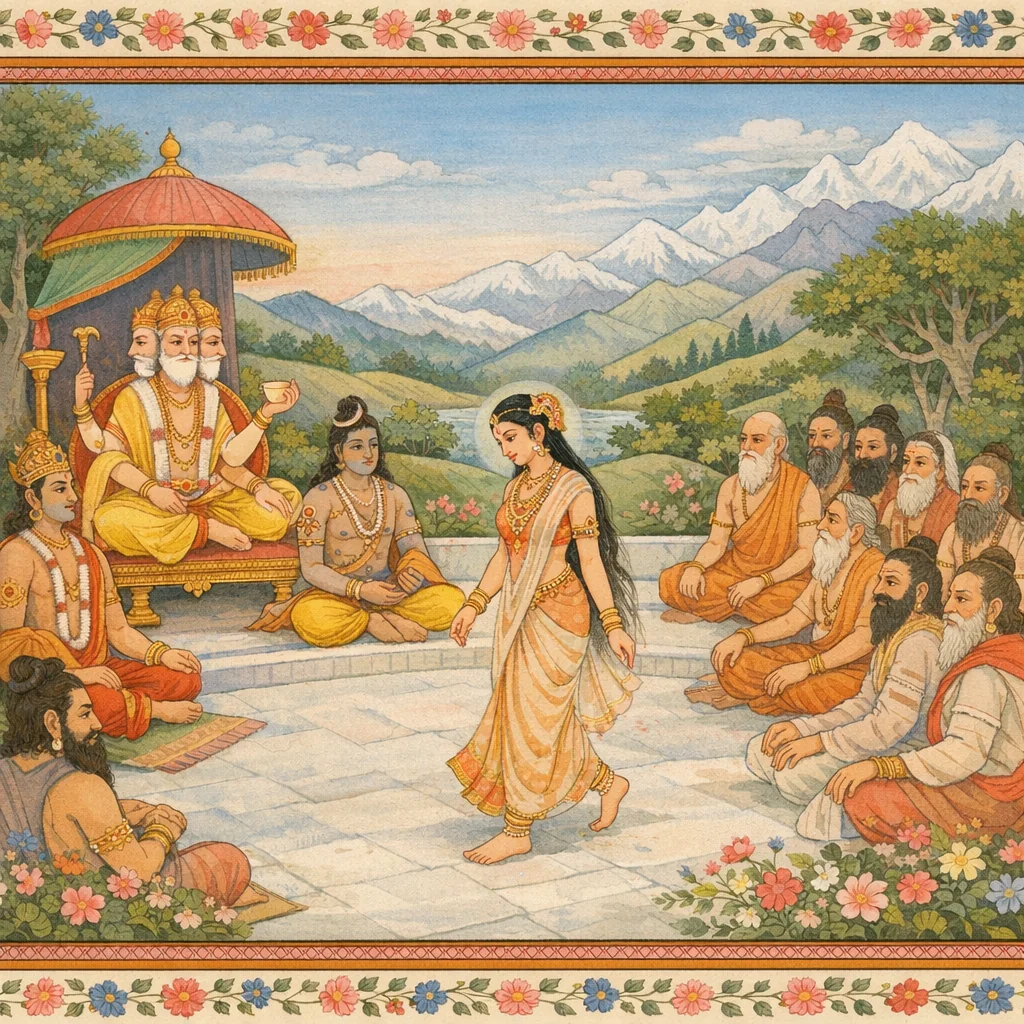
Having conquered anger, mastering their own minds, and restraining their senses, they nevertheless—moved by compassion for the whole world—went at that time to the abode of the Grandfather (Brahmā).
Verse 3
ततो ददृशुरासीनं सह देवैः: पितामहम् | सिद्ध॑र्ब्रद्र्षिभिश्वैव समन््तात् परिवारितम्,वहाँ पहुँचकर उन्होंने ब्रह्माजीको देवताओं, सिद्धों और महर्षियोंसे सब ओर घिरे हुए बैठे देखा
Then, on arriving there, they saw the Grandsire Brahmā seated, surrounded on every side by the gods, the Siddhas, and the great sages.
Verse 4
तत्र देवो महादेवस्तत्राग्निर्वायुना सह । चन्द्रादित्यौ च शक्रश्न पारमेष्ठयास्तथर्षय:,वहाँ भगवान् महादेव, वायुसहित अग्निदेव, चन्द्रमा, सूर्य, इन्द्र, ब्रह्मपुत्र महर्षि, वैखानस (वनवासी), बालखिल्य, वानप्रस्थ, मरीचिप, अजन्मा, अविमूढ़ तथा तेजोगर्भ आदि नाना प्रकारके तपस्वी मुनि ब्रह्माजीके पास आये थे। उन सभी महर्षियोंने निकट जाकर दीनभावसे ब्रह्माजीसे सुन्द-उपसुन्दके सारे क्रूर कर्मोंका वृत्तान्त कह सुनाया। दैत्योंने जिस प्रकार लूट-पाट की, जैसे-जैसे और जिस क्रमसे लोगोंकी हत्याएँ कीं, वह सब समाचार पूर्णरूपसे ब्रह्माजीको बताया। तब सम्पूर्ण देवताओं और महर्षियोंने भी इस बातको लेकर ब्रह्माजीको प्रेरणा की। ब्रह्माजीने उन सबकी बातें सुनकर दो घड़ीतक कुछ विचार किया। फिर उन दोनोंके वधके लिये कर्तव्यका निश्चय करके विश्वकर्माको बुलाया
Nārada said: “There, Lord Mahādeva was present; there too were Agni together with Vāyu, and also the Moon and the Sun, Indra, and the sages born of the Supreme Creator (Brahmā).” In context, this gathering of gods and ascetics underscores a moral crisis: when violent wrongdoing threatens the world’s order, the highest divine and ṛṣi authorities assemble to report the facts and urge a righteous remedy, so that dharma may be restored through deliberate, lawful action rather than impulsive vengeance.
Verse 5
वैखानसा बालखिल्या वानप्रस्था मरीचिपा: । अजाश्रवैवाविमूढाश्व॒ तेजोगर्भास्तपस्विन:,वहाँ भगवान् महादेव, वायुसहित अग्निदेव, चन्द्रमा, सूर्य, इन्द्र, ब्रह्मपुत्र महर्षि, वैखानस (वनवासी), बालखिल्य, वानप्रस्थ, मरीचिप, अजन्मा, अविमूढ़ तथा तेजोगर्भ आदि नाना प्रकारके तपस्वी मुनि ब्रह्माजीके पास आये थे। उन सभी महर्षियोंने निकट जाकर दीनभावसे ब्रह्माजीसे सुन्द-उपसुन्दके सारे क्रूर कर्मोंका वृत्तान्त कह सुनाया। दैत्योंने जिस प्रकार लूट-पाट की, जैसे-जैसे और जिस क्रमसे लोगोंकी हत्याएँ कीं, वह सब समाचार पूर्णरूपसे ब्रह्माजीको बताया। तब सम्पूर्ण देवताओं और महर्षियोंने भी इस बातको लेकर ब्रह्माजीको प्रेरणा की। ब्रह्माजीने उन सबकी बातें सुनकर दो घड़ीतक कुछ विचार किया। फिर उन दोनोंके वधके लिये कर्तव्यका निश्चय करके विश्वकर्माको बुलाया
Nārada said: “There came to Brahmā many kinds of ascetic sages—Vaikhānasas, Bālakhilyas, forest-dwelling Vānaprasthas, followers of Marīci, and others such as Ajāśrava, the unbewildered ones, and the Tejogarbhāḥ—men of austerity. Approaching him with humility, they reported in full the cruel deeds of Sunda and Upasunda: the plundering, the killings, and the order in which the atrocities were carried out. Hearing their appeal, Brahmā reflected, resolved upon the proper course for the slaying of the two, and summoned Viśvakarman to bring about the means.”
Verse 6
ऋषय: सर्व एवैते पितामहमुपागमन् | ततो5भिगम्य ते दीना: सर्व एव महर्षय:,वहाँ भगवान् महादेव, वायुसहित अग्निदेव, चन्द्रमा, सूर्य, इन्द्र, ब्रह्मपुत्र महर्षि, वैखानस (वनवासी), बालखिल्य, वानप्रस्थ, मरीचिप, अजन्मा, अविमूढ़ तथा तेजोगर्भ आदि नाना प्रकारके तपस्वी मुनि ब्रह्माजीके पास आये थे। उन सभी महर्षियोंने निकट जाकर दीनभावसे ब्रह्माजीसे सुन्द-उपसुन्दके सारे क्रूर कर्मोंका वृत्तान्त कह सुनाया। दैत्योंने जिस प्रकार लूट-पाट की, जैसे-जैसे और जिस क्रमसे लोगोंकी हत्याएँ कीं, वह सब समाचार पूर्णरूपसे ब्रह्माजीको बताया। तब सम्पूर्ण देवताओं और महर्षियोंने भी इस बातको लेकर ब्रह्माजीको प्रेरणा की। ब्रह्माजीने उन सबकी बातें सुनकर दो घड़ीतक कुछ विचार किया। फिर उन दोनोंके वधके लिये कर्तव्यका निश्चय करके विश्वकर्माको बुलाया
Nārada said: All those sages approached the Grandsire (Brahmā). Drawing near, every one of those great seers, humbled and distressed, reported to Brahmā the full account of the cruel deeds of Sunda and Upasunda—how they plundered, and in what manner and sequence they slew people. Hearing the gods and sages urge him to act, Brahmā reflected for a time and then resolved upon the proper course for bringing about the brothers’ destruction, summoning Viśvakarman to implement that decision.
Verse 7
सुन्दोपसुन्दयो कर्म सर्वमेव शशंसिरे । यथा हृतं यथा चैव कृतं येन क्रमेण च,वहाँ भगवान् महादेव, वायुसहित अग्निदेव, चन्द्रमा, सूर्य, इन्द्र, ब्रह्मपुत्र महर्षि, वैखानस (वनवासी), बालखिल्य, वानप्रस्थ, मरीचिप, अजन्मा, अविमूढ़ तथा तेजोगर्भ आदि नाना प्रकारके तपस्वी मुनि ब्रह्माजीके पास आये थे। उन सभी महर्षियोंने निकट जाकर दीनभावसे ब्रह्माजीसे सुन्द-उपसुन्दके सारे क्रूर कर्मोंका वृत्तान्त कह सुनाया। दैत्योंने जिस प्रकार लूट-पाट की, जैसे-जैसे और जिस क्रमसे लोगोंकी हत्याएँ कीं, वह सब समाचार पूर्णरूपसे ब्रह्माजीको बताया। तब सम्पूर्ण देवताओं और महर्षियोंने भी इस बातको लेकर ब्रह्माजीको प्रेरणा की। ब्रह्माजीने उन सबकी बातें सुनकर दो घड़ीतक कुछ विचार किया। फिर उन दोनोंके वधके लिये कर्तव्यका निश्चय करके विश्वकर्माको बुलाया
Narada said: They reported in full the deeds of Sunda and Upasunda—how they plundered, how they acted, and in what manner and sequence their violent acts were carried out. The sages thus laid before Brahmā a complete account of the demons’ cruelty, urging him to take decisive action to protect the world and restore moral order.
Verse 8
न्यवेदयंस्तत: सर्वमखिलेन पितामहे । ततो देवगणा: सर्वे ते चैव परमर्षय:,वहाँ भगवान् महादेव, वायुसहित अग्निदेव, चन्द्रमा, सूर्य, इन्द्र, ब्रह्मपुत्र महर्षि, वैखानस (वनवासी), बालखिल्य, वानप्रस्थ, मरीचिप, अजन्मा, अविमूढ़ तथा तेजोगर्भ आदि नाना प्रकारके तपस्वी मुनि ब्रह्माजीके पास आये थे। उन सभी महर्षियोंने निकट जाकर दीनभावसे ब्रह्माजीसे सुन्द-उपसुन्दके सारे क्रूर कर्मोंका वृत्तान्त कह सुनाया। दैत्योंने जिस प्रकार लूट-पाट की, जैसे-जैसे और जिस क्रमसे लोगोंकी हत्याएँ कीं, वह सब समाचार पूर्णरूपसे ब्रह्माजीको बताया। तब सम्पूर्ण देवताओं और महर्षियोंने भी इस बातको लेकर ब्रह्माजीको प्रेरणा की। ब्रह्माजीने उन सबकी बातें सुनकर दो घड़ीतक कुछ विचार किया। फिर उन दोनोंके वधके लिये कर्तव्यका निश्चय करके विश्वकर्माको बुलाया
Nārada said: “Then they reported everything in full detail to Pitāmaha (Brahmā). Thereupon all the hosts of gods, together with the supreme seers, approached him as well.” In ethical terms, the verse frames a collective appeal to the cosmic lawgiver: when cruelty and social disorder spread, the righteous do not retaliate blindly but place the facts before the highest authority so that a just, proportionate remedy may be determined.
Verse 9
तमेवार्थ पुरस्कृत्य पितामहमचोदयन् । ततः पितामह: श्रुत्वा सर्वेषां तद् वचस्तदा,वहाँ भगवान् महादेव, वायुसहित अग्निदेव, चन्द्रमा, सूर्य, इन्द्र, ब्रह्मपुत्र महर्षि, वैखानस (वनवासी), बालखिल्य, वानप्रस्थ, मरीचिप, अजन्मा, अविमूढ़ तथा तेजोगर्भ आदि नाना प्रकारके तपस्वी मुनि ब्रह्माजीके पास आये थे। उन सभी महर्षियोंने निकट जाकर दीनभावसे ब्रह्माजीसे सुन्द-उपसुन्दके सारे क्रूर कर्मोंका वृत्तान्त कह सुनाया। दैत्योंने जिस प्रकार लूट-पाट की, जैसे-जैसे और जिस क्रमसे लोगोंकी हत्याएँ कीं, वह सब समाचार पूर्णरूपसे ब्रह्माजीको बताया। तब सम्पूर्ण देवताओं और महर्षियोंने भी इस बातको लेकर ब्रह्माजीको प्रेरणा की। ब्रह्माजीने उन सबकी बातें सुनकर दो घड़ीतक कुछ विचार किया। फिर उन दोनोंके वधके लिये कर्तव्यका निश्चय करके विश्वकर्माको बुलाया
Keeping that urgent purpose foremost, they urged the Grandfather, Brahmā, to act. Then the Grandfather, having heard their collective appeal, reflected upon it. In the wider course of the tale, gods and ascetics approach Brahmā in humility to report the brutal crimes of the demons Sunda and Upasunda—plunder and killings in their very sequence—and press for a remedy in accord with dharma. After deliberation, Brahmā resolves the proper course for their destruction and summons Viśvakarman to carry it out, showing that cosmic rule must answer unchecked violence with measured, duty-bound action, not impulsive wrath.
Verse 10
मुहूर्तमिव संचिन्त्य कर्तव्यस्य च निश्चयम् । तयोरवधं समुद्दिश्य विश्वकर्माणमाह्दयत्,वहाँ भगवान् महादेव, वायुसहित अग्निदेव, चन्द्रमा, सूर्य, इन्द्र, ब्रह्मपुत्र महर्षि, वैखानस (वनवासी), बालखिल्य, वानप्रस्थ, मरीचिप, अजन्मा, अविमूढ़ तथा तेजोगर्भ आदि नाना प्रकारके तपस्वी मुनि ब्रह्माजीके पास आये थे। उन सभी महर्षियोंने निकट जाकर दीनभावसे ब्रह्माजीसे सुन्द-उपसुन्दके सारे क्रूर कर्मोंका वृत्तान्त कह सुनाया। दैत्योंने जिस प्रकार लूट-पाट की, जैसे-जैसे और जिस क्रमसे लोगोंकी हत्याएँ कीं, वह सब समाचार पूर्णरूपसे ब्रह्माजीको बताया। तब सम्पूर्ण देवताओं और महर्षियोंने भी इस बातको लेकर ब्रह्माजीको प्रेरणा की। ब्रह्माजीने उन सबकी बातें सुनकर दो घड़ीतक कुछ विचार किया। फिर उन दोनोंके वधके लिये कर्तव्यका निश्चय करके विश्वकर्माको बुलाया
After reflecting for a brief while and arriving at a firm decision about what duty required, Brahmā—keeping in view the slaying of those two, Sunda and Upasunda—summoned Viśvakarman. The ethical thrust is that when cruelty and lawlessness become intolerable, the ruler of the cosmos must act with deliberation, not impulse, and employ fitting means to restore order.
Verse 11
दृष्टवा च विश्वकर्माणं व्यादिदेश पितामह: । सज्यतां प्रार्थनीयैका प्रमदेति महातपा:,उनको आया देखकर महातपस्वी ब्रह्माजीने यह आज्ञा दी कि तुम एक तरुणी स्त्रीके शरीरकी रचना करो, जो सबका मन लुभा लेनेवाली हो
Seeing Viśvakarman arrive, the grandsire Brahmā—great in austerity—issued his command: “Let there be fashioned a single maiden, worthy of being sought and desired, one who captivates all hearts.”
Verse 12
पितामहं नमस्कृत्य तद्वाक्यमभिनन्द्य च । निर्ममे योषितं दिव्यां चिन्तयित्वा पुनः पुन:,ब्रह्माजीकी आज्ञाको शिरोधार्य करके विश्वकर्माने उन्हें प्रणाम किया और खूब सोच- विचारकर एक दिव्य युवतीका निर्माण किया
Nārada said: Having bowed to the Grandfather, Brahmā, and approving his command, Viśvakarmā—after reflecting again and again—fashioned a celestial maiden. The verse highlights reverent obedience to rightful authority and careful deliberation before undertaking a consequential act of creation.
Verse 13
त्रिषु लोकेषु यत् किंचिद् भूतं स्थावरजड्भमम् । समानयद् दर्शनीयं तत् तदत्र स विश्ववित्,तीनों लोकोंमें जो कुछ भी चर और अचर दर्शनीय पदार्थ था, सर्वज्ञ विश्वकर्माने उन सबके सारांशका उस सुन्दरीके शरीरमें संग्रह किया
Nārada said: “Whatever beautiful and noteworthy beings existed in the three worlds—whether moving or unmoving—he, the all-knowing craftsman, gathered their finest essence and concentrated it here into her very form.”
Verse 14
कोटिशश्लैव रत्नानि तस्या गात्रे न्यवेशयत् । तां रत्नसंघातमयीमसृजद् देवरूपिणीम्,उन्होंने उस युवतीके अंगोंमें करोड़ों रत्नोंका समावेश किया और इस प्रकार रत्नराशिमयी उस देवरूपिणी रमणीका निर्माण किया
Nārada said: He set into her limbs countless jewels, in their millions; and thus he fashioned that maiden into a radiant woman of divine appearance, as though her very body were a clustered constellation of gems.
Verse 15
सा प्रयत्नेन महता निर्मिता विश्वकर्मणा । त्रिषु लोकेषु नारीणां रूपेणाप्रतिमाभवत्,विश्वकर्माद्वारा बड़े प्रयत्नसे बनायी हुई वह दिव्य युवती अपने रूप-सौन्दर्यके कारण तीनों लोकोंकी स्त्रियोंमें अनुपम थी
Fashioned with great effort by Viśvakarman, that radiant young woman became, by the excellence of her beauty, without equal among women in all the three worlds.
Verse 16
न तस्या: सूक्ष्ममप्यस्ति यद् गात्रे रूपसम्पदा । नियुक्ता यत्र वा दृष्टिन सज्जति निरीक्षताम्,उसके शरीरमें कहीं तिलभर भी ऐसी जगह नहीं थी, जहाँकी रूपसम्पत्तिको देखनेके लिये लगी हुई दर्शकोंकी दृष्टि जम न जाती हो
Nārada said: “There was not even the smallest spot on her body where the splendour of her beauty was absent—wherever the onlookers’ gaze was directed, it would inevitably fasten there.”
Verse 17
सा विग्रहवतीव श्री: कामरूपा वपुष्मती । जहार सर्वभूतानां चक्षूंषि च मनांसि च,वह मूर्तिमती कामरूपिणी लक्ष्मीकी भाँति समस्त प्राणियोंके नेत्रों और मनको हर लेती थी
Nārada said: She appeared like embodied Fortune herself—Śrī, Lakṣmī—radiant, graceful, and able to assume any form at will. By her very presence she captivated all beings, stealing away both their eyes and their minds.
Verse 18
तिल॑ तिल समानीय रत्नानां यद् विनिर्मिता । तिलोत्तमेति तत् तस्या नाम चक्रे पितामह:,उत्तम रत्नोंका तिल-तिलभर अंश लेकर उसके अंगोंका निर्माण हुआ था, इसलिये ब्रह्माजीने उसका नाम “तिलोत्तमा" रख दिया
Having gathered, grain by grain, the finest portions of precious jewels and fashioned her limbs from them, the Grandsire Brahmā bestowed upon her the name “Tilottamā,” for she was made from ‘tila-tila’—tiny portions—of the best gems.
Verse 19
ब्रहद्माणं सा नमस्कृत्य प्राञ्जलिवॉक्यमब्रवीत् । कि कार्य मयि भूतेश येनास्म्यद्येह निर्मिता,तदनन्तर तिलोत्तमा ब्रह्माजीको नमस्कार करके हाथ जोड़कर बोली--'प्रजापते! मुझपर किस कार्यका भार रखा गया है? जिसके लिये आज मेरे शरीरका निर्माण किया गया है'
Having bowed to Brahmā with folded hands, she spoke: “O Lord of beings, what task has been laid upon me, for the sake of which I have been fashioned here today?”
Verse 20
पितामह उवाच गच्छ सुन्दोपसुन्दा भ्यामसुरा भ्यां तिलोत्तमे । प्रार्थनीयेन रूपेण कुरु भद्रे प्रलोभनम्,ब्रह्माजीने कहा--भद्रे तिलोत्तमे! तू सुन्दर और उपसुन्द नामक असुरोंके पास जा और अपने अत्यन्त कमनीय रूपके द्वारा उनको लुभा
Pitāmaha said: “O Tilottamā, go to those two asuras, Sunda and Upasunda. O auspicious one, by means of your most desirable beauty, entice them.”
Verse 21
त्वत्कृते दर्शनादेव रूपसम्पतत्कृतेन वै । विरोध: स्यथाद् यथा ताभ्यामन्योन्येन तथा कुरु,तुझे देखते ही तेरे लिये--तेरी रूपसम्पत्तिके लिये उन दोनों दैत्योंमें परस्पर विरोध हो जाय, ऐसा प्रयत्न कर
Pitāmaha said: “Let it be so arranged that, merely upon seeing you—because of your beauty and splendid form—those two Daityas fall into mutual hostility. Make such an effort that they turn against one another.”
Verse 22
नारद उवाच सा तथेति प्रतिज्ञाय नमस्कृत्य पितामहम् । चकार मण्डल तत्र विबुधानां प्रदक्षिणम्,नारदजी कहते हैं--युधिष्ठि!! तब तिलोत्तमाने वैसा ही करनेकी प्रतिज्ञा करके ब्रह्माजीके चरणोंमें प्रणाम किया। फिर वह देवमण्डलीकी परिक्रमा करने लगी
Narada said: “She assented—‘So be it’—and, having pledged accordingly, bowed in reverence to Pitāmaha (Brahmā). Then, in that very assembly, she began to circumambulate the circle of the gods, honoring them in due order.”
Verse 23
प्राडमुखो भगवानास्ते दक्षिणेन महेश्वर: । देवाश्वैवोत्तरेणासन् सर्वतस्त्वृषयो5भवन्,ब्रह्माजीके दक्षिणभागमें भगवान् महेश्वर पूर्वांभिमुख होकर बैठे थे, उत्तरभागमें देवतालोग थे तथा ऋषि-मुनि ब्रह्माजीके चारों ओर बैठे थे
Narada said: On Brahmā’s southern side sat the Blessed Lord Maheśvara, facing east. To the north were seated the gods, and all around Brahmā sat the sages.
Verse 24
कुर्वत्या तु तदा तत्र मण्डलं तत् प्रदक्षिणम् । इन्द्र: स्थाणुश्व भगवान् धैर्येण प्रत्यवस्थितौ,वहाँ तिलोत्तमाने जब देवमण्डलीकी प्रदक्षिणा आरम्भ की, तब इन्द्र और भगवान् शंकर दोनों धैर्यपूर्वक अपने स्थानपर ही बैठे रहे
Then and there, as Tilottamā began to circumambulate (pradakṣiṇa) the circle of the assembled gods, Indra and the Blessed Lord Sthāṇu (Śiva) alone remained steady in their own places, preserving composure through firm self-control.
Verse 25
द्रष्टकामस्य चात्यर्थ गतया पार्श्चतस्तया । अन्यदज्चितप्झाक्षं दक्षिणं नि:सृतं मुखम्,जब वह दक्षिण पार्श्ववी ओर गयी, तब उसे देखनेकी इच्छासे भगवान् शंकरके दक्षिणभागमें एक और मुख प्रकट हो गया, जो कमलसदृश नेत्रोंसे सुशोभित था
Nārada said: When she moved very close along his side, eager to behold him, another face emerged on Lord Śaṅkara’s right side—radiant, with eyes like lotuses—so that her wish to see him might be fulfilled.
Verse 26
पृष्ठत: परिवर्तन्त्या पश्चिमं नि:सृतं मुखम् । गतया चोत्तरं पार्श्वमुत्तरं नि:सृतं मुखम्,जब वह पीछेकी ओर गयी, तब उनका पश्चिम मुख प्रकट हुआ और उत्तर पार््वकी ओर उसके जानेपर भगवान् शिवके उत्तरवर्ती मुखका प्राकट्य हुआ
Nārada said: “As she turned toward the rear, the western face manifested. And when she moved toward the northern side, the northern face likewise emerged.”
Verse 27
महेन्द्रस्यापि नेत्राणां पृष्ठत: पार्श्वतो5ग्रत: । रक्तान्तानां विशालानां सहस्न॑ सर्वतो5भवत्,इसी प्रकार इन्द्रके भी आगे, पीछे और पार्श्च-भागमें सब ओर लाल कोनेवाले सहस्रों विशाल नेत्र प्रकट हो गये
Nārada said: Even upon Mahendra (Indra), from behind, from the sides, and from the front, there appeared everywhere a thousand large eyes with reddish corners.
Verse 28
एवं चतुर्मुख: स्थाणुर्महादेवो5भवत् पुरा । तथा सहसनेत्रश्न बभूव बलसूदन:,इस प्रकार पूर्वकालमें अविनाशी भगवान् महादेवजीके चार मुख प्रकट हुए और बलहन्ता इन्द्रके हजार नेत्र हुए
Nārada said: “Thus, in ancient times, the steadfast and imperishable Mahādeva, Sthāṇu, manifested with four faces; and likewise Indra, the slayer of Bala, came to possess a thousand eyes.”
Verse 29
तथा देवनिकायानां महर्षीणां च सर्वश: । मुखानि चाभ्यवर्तन्त येन याति तिलोत्तमा,दूसरे-दूसरे देवताओं और महर्षियोंके मुख भी जिस ओर तिलोत्तमा जाती थी, उसी ओर घूम जाते थे
Nārada said: In the same way, the faces of the hosts of gods and of the great seers, without exception, would turn toward whichever direction Tilottamā moved—so overpowering was her beauty that even the self-controlled found their attention drawn after her.
Verse 30
तस्या गात्रे निपतिता दृष्टिस्तेषां महात्मनाम् । सर्वेषामेव भूयिष्ठमृते देवं पितामहम्,उस समय देवाधिदेव ब्रह्माजीको छोड़कर शेष सभी महानुभावोंकी दृष्टि तिलोत्तमाके शरीरपर बार-बार पड़ने लगी
Nārada said: Their gaze—those great-souled ones—fell upon her body; indeed, again and again the eyes of all of them turned most strongly toward her, except for the divine Grandfather, Brahmā.
Verse 31
गच्छन्त्या तु तया सर्वे देवाश्व॒ परमर्षय: । कृतमित्येव तत् कार्य मेनिरे रूपसम्पदा,जब वह जाने लगी, तब सभी देवताओं और महर्षियोंको उसकी रूपसम्पत्ति देखकर यह विश्वास हो गया कि अब वह सारा कार्य सिद्ध ही है
As she set forth, all the gods and the highest sages, beholding the splendor of her beauty, became convinced that the intended task was already accomplished.
Verse 32
सुन्द और उपसुन्दका अत्याचार तिलोत्तमाके लिये सुन्द और उपसुन्दका युद्ध तिलोत्तमायां तस्यां तु गतायां लोकभावन: । सर्वान् विसर्जयामास देवानृषिगणांश्व॒ तान्,तिलोत्तमाके चले जानेपर लोकस्रष्टा ब्रह्माजीने उन सम्पूर्ण देवताओं और महर्षियोंको विदा किया
When Tilottamā had departed, Brahmā—the Creator and Sustainer of the worlds—dismissed all those gods and the assembled hosts of seers.
Verse 210
इति श्रीमहाभारते आदिपर्वणि विदुरागमनराज्यलम्भपर्वणि सुन्दोपसुन्दोपाख्याने तिलोत्तमाप्रस्थापने दशाधिकद्धिशततमो<ध्याय:
Thus, in the Śrī Mahābhārata, within the Ādi Parva—under the section concerning Vidura’s arrival and the gaining of the kingdom—ends the episode of Sunda and Upasunda, specifically the dispatching of Tilottamā. Here the chapter is concluded.
Frequently Asked Questions
The chapter centers on managing public duty and private circumstance: Arjuna must explain a sensitive travel-and-exile context while preserving dignity and maintaining alliance trust through transparent, measured disclosure.
Righteous conduct is shown through orderly pilgrimage, truthful communication between allies, and reciprocal honor; social harmony is maintained by disciplined speech, hospitality, and respectful recognition of merit.
No explicit phalaśruti is stated here; the chapter functions as narrative linkage and cultural documentation, implying merit through tīrtha-darśana and ethical hospitality rather than promising a formalized spiritual reward.