Adhyaya 21
कद्रू-इन्द्र-स्तुतिः तथा नागानां तापनिवृत्तिः (Kadrū’s Hymn to Indra and the Nāgas’ Distress)
Upa-parva: Garuda-Vinata-Kadru Episode (Suparṇa-ākhyāna)
Sauti narrates that the powerful bird Kāmagama/Vainateya (Garuḍa), following maternal prompting, approaches Vinatā at the far shore of the great ocean where she remains defeated by a wager and reduced to servitude. At a later time, Kadrū summons the compliant Vinatā and instructs her to carry her to the nāga dwelling—described as beautiful and secluded in the ocean’s recess. Vinatā bears Kadrū, and Garuḍa likewise transports the serpents at his mother’s word. During the flight Garuḍa circles near the sun; the nāgas, overwhelmed by solar rays, faint. Observing her sons’ condition, Kadrū offers an extended stuti to Indra (Śakra/Puraṃdara/Sahasrākṣa), portraying him as the cosmic regulator of rain, wind, fire, lightning, time-units, seasons, and the sustaining earth and ocean. Her petition requests that Indra become a ‘plava’ (means of crossing/salvation) through water—i.e., send rain or cooling relief—framing divine sovereignty as the remedy for embodied suffering produced by the episode’s coercive movement.
Chapter Arc: रात्रि के बीतते ही प्रभात में कद्रू और विनता—दोनों बहनें—अपने विवाद के निर्णायक प्रमाण को देखने के लिए निकल पड़ती हैं; कथा का द्वार समुद्र-मार्ग पर खुलता है। → ज्यों-ज्यों वे आगे बढ़ती हैं, मार्ग में जलनिधि समुद्र का विराट, अगाध और महाशब्दमय रूप प्रकट होता है—आवर्तों की गहराई, गर्जना, और जलचरों की भीषण उपस्थिति यात्रा को भय-आकर्षण के द्वंद्व में बाँध देती है। → समुद्र का सर्वभूतभयंकर, रौद्र-नाद से भरापूरा दृश्य चरम पर पहुँचता है—तिमि-मकर, कूर्म-ग्राह, घोर जलचर, और वेलाओं पर झूलती वायु के बीच अनन्त जलराशि का ‘अम्बरप्रकाश’ विस्तार मानो स्वयं एक जीवित महाशक्ति बनकर सामने खड़ा हो जाता है। → अध्याय समुद्र के विस्तार और स्वभाव का सघन वर्णन देकर स्थिर होता है—यह वही सीमा-रेखा है जहाँ से आगे कथा नाग-गरुड़-सम्बन्धी महावृत्तान्त की ओर निर्णायक ढंग से मुड़ने वाली है। → समुद्र-दर्शन के बाद कद्रू-विनता का उद्देश्य (उच्चैःश्रवा को देखना और दास्य-शर्त का परिणाम) अगले प्रसंग में निर्णायक रूप से सामने आने को टल जाता है।
Shlokas
Verse 1
अ-क्राछ एकविशो< ध्याय: समुद्रका विस्तारसे वर्णन सौतिरुवाच ततो रजन्यां व्युष्टायां प्रभाते5 भ्युदिते रवौ । कद्रश्न विनता चैव भगिन्यौ ते तपोधन,उग्रश्रवाजी कहते हैं--तपोधन! तदनन्तर जब रात बीती, प्रात:काल हुआ और भगवान् सूर्यका उदय हो गया, उस समय कद्रू और विनता दोनों बहनें बड़े जोश और रोषके साथ दासी होनेकी बाजी लगाकर उच्चै:श्रवा नामक अश्वको निकटसे देखनेके लिये गयीं
Śaunaka said: Then, when the night had passed and morning had come, with the sun risen, those two sisters—Kadrū and Vinatā—O ascetic rich in austerity, set out in the heat of rivalry, having staked the condition of servitude, to look closely at the horse Uccaiḥśravas.
Verse 2
अमर्षिते सुसंरब्धे दास्ये कृतपणे तदा । जम्मतुस्तुरगं द्रष्टमुच्चै:अ्रवसमन्तिकात्,उग्रश्रवाजी कहते हैं--तपोधन! तदनन्तर जब रात बीती, प्रात:काल हुआ और भगवान् सूर्यका उदय हो गया, उस समय कद्रू और विनता दोनों बहनें बड़े जोश और रोषके साथ दासी होनेकी बाजी लगाकर उच्चै:श्रवा नामक अश्वको निकटसे देखनेके लिये गयीं
Śaunaka said: “Then, when both were resentful and fiercely agitated, having staked a wager that involved becoming a slave, the two sisters went to see the horse Uccaiḥśravas up close.”
Verse 3
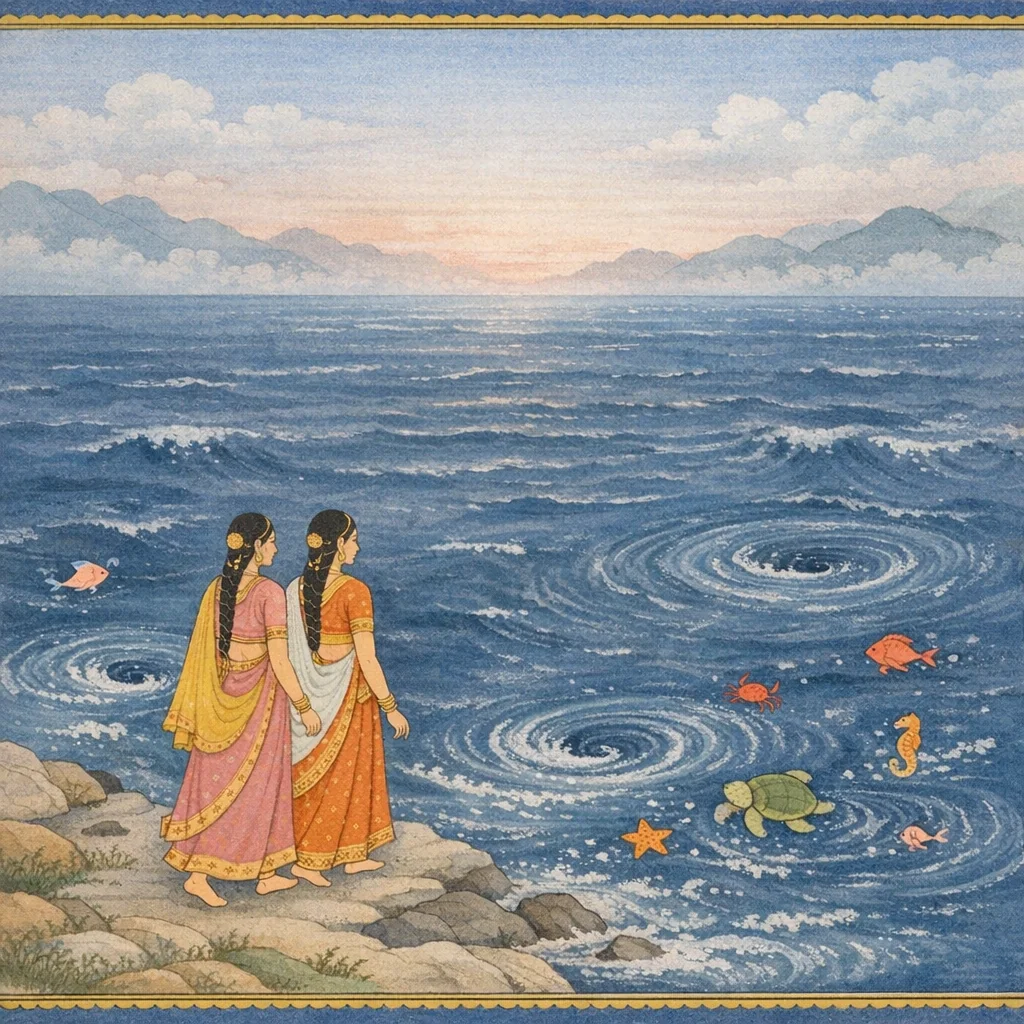
ददृशाते<थ ते तत्र समुद्र निधिमम्भसाम् । महान्तमुदकागाध॑ क्षो भ्यमाणं महास्वनम्,कुछ दूर जानेपर उन्होंने मार्गमें जलनिधि समुद्रको देखा, जो महान् होनेके साथ ही अगाध जलसे भरा था। मगर आदि जल-जन्तु उसे विक्षुब्ध कर रहे थे और उससे बड़े जोरकी गर्जना हो रही थी
After they had gone some distance, they beheld on the way the ocean, the treasure-house of waters—vast, unfathomably deep, and filled with water. Primeval creatures of the deep churned it, and from it arose a mighty roar.
Verse 4
तिमिड्िलझषाकीर्ण मकरैरावृतं तथा । सत्त्वैश्व बहुसाहस्रनैनानारूपै: समावृतम्,वह तिमि नामक बड़े-बड़े मत्स्योंको भी निगल जानेवाले तिमिंगिलों, मत्स्यों तथा मगर आदिसे व्याप्त था। नाना प्रकारकी आकृतिवाले सहस्रों जल-जन्तु उसमें भरे हुए थे
Śaunaka said: “That expanse of water was crowded with timiṅgila sea-monsters and great fish, and likewise covered with makaras (crocodile-like aquatic beasts). It was filled on all sides with many thousands of water-creatures of diverse forms.”
Verse 5
भीषणैरविंकृतैरन्यैघोरैर्जलचरैस्तथा । उग्रैर्नित्यमनाधुष्यं कूर्मग्राहसमाकुलम्,विकट आकायवाले दूसरे-दूसरे घोर डरावने जलचरों तथा उग्र जल-जन्तुओंके कारण वह महासागर सदा सबके लिये दुर्धर्ष बना हुआ था। उसके भीतर बहुत-से कछुए और ग्राह निवास करते थे
Śaunaka said: “Because it was filled with other fearsome and monstrous creatures, and with dreadful aquatic beings—ever fierce—the great ocean remained perpetually unassailable to all. Within it dwelt multitudes of turtles and crocodiles (grāhas), making it a turbulent, perilous expanse.”
Verse 6
आकर सर्वरत्नानामालयं वरुणस्य च । नागानामालयं रम्यमुत्तमं सरितां पतिम्,सरिताओंका स्वामी वह महासागर सम्पूर्ण रत्नोंकी खान, वरुणदेवका निवासस्थान और नागोंका रमणीय उत्तम गृह है
Śaunaka said: “The great ocean—lord of rivers—is the mine of all precious gems, the dwelling of Varuṇa, and the delightful, supreme abode of the Nāgas.”
Verse 7
पातालज्वलनावासमसुराणां च बान्धवम् | भयंकरं च सत्त्वानां पयसां निधिमर्णवम्,पातालकी अग्नि--बड़वानलका निवास भी उसीमें है। असुरोंको तो वह जलनिधि समुद्र भाई-बन्धुकी भाँति शरण देनेवाला है तथा दूसरे थलचर जीवोंके लिये अत्यन्त भयदायक है
Śaunaka said: “That ocean is the repository of waters, the abode of the submarine fire in the netherworld; to the Asuras it is like a kinsman and protector, yet to other creatures it is terrifying.”
Verse 8
शुभं दिव्यममर्त्यानाममृतस्याकरं परम् । अप्रमेयमचिन्त्यं च सुपुण्यजलमद्भुतम्,अमरोंके अमृतकी खान होनेसे वह अत्यन्त शुभ एवं दिव्य माना जाता है। उसका कोई माप नहीं है। वह अचिन्त्य, पवित्र जलसे परिपूर्ण तथा अद्भुत है
Śaunaka said: “That supreme source-mine of nectar, belonging to the deathless ones, is held to be exceedingly auspicious and divine. It is beyond measure and beyond the reach of thought—marvellous, and filled with most holy, merit-bearing waters.”
Verse 9
घोरं जलचरारावरौद्रै भैरवनि:स्वनम् । गम्भीरावर्तकलिलं सर्वभूतभयंकरम्,वह घोर समुद्र जल-जन्तुओंके शब्दोंसे और भी भयंकर प्रतीत होता था, उससे भयंकर गर्जना हो रही थी, उसमें गहरी भँवरें उठ रही थीं तथा वह समस्त प्राणियोंके लिये भय-सा उत्पन्न करता था
Śaunaka said: “That ocean appeared dreadful—made even more terrifying by the fierce cries of aquatic creatures. It roared with a fearsome sound, was churned into confusion by deep, swirling whirlpools, and seemed to arouse fear in all living beings.”
Verse 10
वेलादोलानिलचलं क्षोभोद्वेगसमुच्छितम् । वीचीहस्तै: प्रचलितैर्न॑त्यन्तमिव सर्वतः,तटपर तीव्रवेगसे बहनेवाली वायु मानो झूला बनकर उस महासागरको चंचल किये देती थी। वह क्षोभ और उद्वेगसे बहुत ऊँचेतक लहरें उठाता था और सब ओर चंचल तरंगरूपी हाथोंको हिला-हिलाकर नृत्य-सा कर रहा था
Śaunaka describes the ocean as if set into restless motion by a wind that, like a swinging cradle at the shore, makes it unsteady. Swollen with agitation and surging excitement, it heaves up lofty waves; and on every side, with its moving ‘hands’ of rippling billows, it seems to dance in tumult.
Verse 11
चन्द्रवृद्धिक्षयवशादुद्वृत्तोर्मिसमाकुलम् । पाञ्चजन्यस्य जननं रत्नाकरमनुत्तमम्,चन्द्रमाकी वृद्धि और क्षयके कारण उसकी लहरें बहुत ऊँचे उठतीं और उतरती थीं (उसमें ज्वार-भाटे आया करते थे), अतः वह उत्ताल-तरंगोंसे व्याप्त जान पड़ता था। उसीने पांचजन्य शंखको जन्म दिया था। वह रत्नोंका आकर और परम उत्तम था
Śaunaka said: Driven by the moon’s waxing and waning, the ocean became turbulent, crowded with surging waves. That supreme mine of jewels gave birth to the conch Pāñcajanya.
Verse 12
गां विन्द्ता भगवता गोविन्देनामितौजसा । वराहरूपिणा चान्तर्विक्षेभितजलाविलम्,अमिततेजस्वी भगवान् गोविन्दने वराहरूपसे पृथ्वीको उपलब्ध करते समय उस समुद्रको भीतरसे मथ डाला था और उस मथित जलसे वह समस्त महासागर मलिन-सा जान पड़ता था
Śaunaka said: When the Blessed Lord Govinda—of immeasurable might—assumed the form of the Boar and recovered the Earth, he churned and stirred the ocean from within; and by that agitated, churned-up water the whole great sea appeared as though turbid and sullied.
Verse 13
ब्रह्मर्षिणा ब्रतवता वर्षाणां शतमत्रिणा । अनासादितगाध॑ं च पातालतलमव्ययम्,व्रतधारी ब्रह्मर्षि अत्रिने समुद्रके भीतरी तलका अन्वेषण करते हुए सौ वर्षोतक चेष्टा करके भी उसका पता नहीं पाया। वह पातालके नीचेतक व्याप्त है और पातालके नष्ट होनेपर भी बना रहता है, इसलिये अविनाशी है
Śaunaka said: The Brahmarṣi Atri, steadfast in his vow, strove for a hundred years, yet could not reach the unfathomable depths. That nether region extends down to the very floor of Pātāla and is imperishable—remaining even when Pātāla itself is destroyed.
Verse 14
अध्यात्मयोगनिद्रां च पद्मनाभस्य सेवत: । युगादिकालशयनं विष्णोरमिततेजस:,आध्यात्मिक योगनिद्राका सेवन करनेवाले अमित-तेजस्वी कमलनाभ भगवान् विष्णुके लिये वह (युगान्तकालसे लेकर) युगादिकालतक शयनागार बना रहता है
Śaunaka said: For the lotus-naveled Viṣṇu of immeasurable splendor—who abides in the inward, contemplative “yoga-sleep”—that state itself becomes his couch: a cosmic resting-place spanning from the end of an age to the beginning of the next.
Verse 15
वज्पातनसंत्रस्तमैनाकस्या भयप्रदम् । डिम्बाहवार्दितानां च असुराणां परायणम्,उसीने वज्रपातसे डरे हुए मैनाक पर्वतको अभयदान दिया है तथा जहाँ भयके मारे हाहाकार करना पड़ता है, ऐसे युद्धसे पीड़ित हुए असुरोंका वह सबसे बड़ा आश्रय है
Śaunaka said: He granted fearlessness to Mount Maināka, who had been terrified by the falling of Indra’s thunderbolt; and for the Asuras, distressed by battle and driven to cries of alarm, he became the supreme refuge.
Verse 16
वडवामुखदीप्ताग्नेस्तोयहव्यप्रदं शिवम् । अगाधपारं विस्तीर्णमप्रमेयं सरित्पतिम्,बड़वानलके प्रज्वलित मुखमें वह सदा अपने जलरूपी हविष्यकी आहुति देता रहता है और जगत्के लिये कल्याणकारी है। इस प्रकार वह सरिताओंका स्वामी समुद्र अगाध, अपार, विस्तृत और अप्रमेय है
Śaunaka said: Into the blazing fire of Vaḍavāmukha (the submarine mare’s-mouth), the ocean ever pours its own waters as an offering, bringing welfare to the world. Thus the sea—the lord of rivers—is unfathomable, shoreless, vast, and beyond measure.
Verse 17
महानदीभिर्बद्वीभि: स्पर्धयेव सहसत्रश: । अभिसार्यमाणमनिशं ददृशाते महार्णवम् । आपूर्यमाणमत्यर्थ नृत्यमानमिवोर्मिभि:,सहस्रों बड़ी-बड़ी नदियाँ आपसमें होड़-सी लगाकर उस विस्तृत महासागरमें निरन्तर मिलती रहती हैं और अपने जलसे उसे सदा परिपूर्ण किया करती हैं। वह ऊँची-ऊँची लहरोंकी भुजाएँ ऊपर उठाये निरन्तर नृत्य करता-सा जान पड़ता है
Śaunaka said: “They beheld the great ocean as countless mighty rivers—like rivals in a race—unceasingly hastened into it. Though it was being filled to overflowing, it seemed ever in motion, as if dancing with its waves.”
Verse 18
गम्भीरं तिमिमकरोग्रसंकुलं त॑ गर्जन्तं जलचररावरीौद्रनादै: । विस्तीर्ण ददृशतुरम्बरप्रकाशं तेडगाधं निधिमुरुमम्भसामनन्तम्,इस प्रकार गम्भीर, तिमि और मकर आदि भयंकर जल-जन्तुओंसे व्याप्त, जलचर जीवोंके शब्दरूप भयंकर नादसे निरन्तर गर्जना करनेवाले, अत्यन्त विस्तृत, आकाशके समान स्वच्छ, अगाध, अनन्त एवं महान् जलनिधि समुद्रको कद्भू और विनताने देखा
Śaunaka describes how Kadru and Vinatā beheld the ocean: deep and unfathomable, crowded with fearsome creatures such as timi and makara, continually roaring with the dreadful cries of aquatic beings, vast in expanse, clear and sky-like in appearance—an endless, mighty reservoir of waters.
Verse 20
इस प्रकार श्रीमहाभारत आदिपववके अन्तर्गत आस्तीकपरववमें गरुडचरितविषयक बीसवाँ अध्याय पूरा हुआ
Thus ends the twentieth chapter, dealing with the account of Garuḍa, within the Āstīka section of the Ādi Parva of the sacred Mahābhārata.
Verse 21
इति श्रीमहाभारते आदिपर्वणि आस्तीकपर्वणि सौपर्णे एकविंशो5ध्याय:
Thus ends the twenty-first chapter of the Sauparṇa section within the Āstīka sub-parva of the Ādi Parva of the sacred Mahābhārata. This closing colophon signals the completion of a narrative unit and preserves the traditional structure of transmission, emphasizing orderly recitation and faithful preservation of the text.
Frequently Asked Questions
Vinatā’s predicament presents coerced duty: after losing a wager she must serve Kadrū, raising the ethical tension between personal autonomy and obligations produced by prior commitments and social enforcement.
The chapter emphasizes causal continuity—small acts like wagers and commands can crystallize into durable constraints—while also showing stuti as a structured mode of seeking relief within a world governed by cosmic and political powers.
No explicit phalaśruti is stated in the provided verses; the passage functions primarily as narrative progression and theological characterization (Indra’s cosmic scope) rather than as a self-contained merit statement.