Adhyaya 209
Ādi-parva Adhyāya 209: Śaraṇāgati of the Cursed Apsarases; Nārītīrtha-prasiddhi; Arjuna’s Vimocana
Upa-parva: Tīrtha–Śāpa–Mokṣa Episode (Nārītīrtha-prasiddhi and Apsaras-śāpa-vimocana)
The chapter opens with a collective speaker (Varga) describing the group’s distress and their approach to a brāhmaṇa ascetic as a refuge. They confess moral error—pride in beauty and youth leading to improper conduct—and argue from dharma that women are not to be harmed, while also invoking the brāhmaṇa’s expected friendliness toward all beings and the obligation to protect those who surrender. Vaiśaṃpāyana then reports the brāhmaṇa’s gracious response. The brāhmaṇa articulates a conditional timeline and a concrete mechanism for their restoration: when someone lifts them from the water to land while they are seizing men like crocodiles, they will regain their original forms; he also asserts his commitment to truthfulness. He further declares that the associated sacred places will become renowned as “Nārītīrthas,” gaining purificatory status. The group departs, seeking rapid relief, and soon encounters Devarṣi Nārada, who, after hearing their account, directs them to five southern coastal tīrthas and prophesies that Arjuna (Dhanaṃjaya) will liberate them. The narrative confirms the prophecy: Arjuna releases them from the curse, they regain their bodies and disappear as before. After cleansing the tīrthas and taking leave, Arjuna proceeds to Maṇalūra to see Citrāṅgadā; the chapter closes by noting their son Babhruvāhana and Arjuna’s subsequent movement toward Gokarṇa.
Chapter Arc: नारद ऋषि उत्सव के शांत होते ही सुन्द और उपसुन्द के प्रस्थान का वृत्तांत उठाते हैं—दो दैत्य-भ्राता, वर-बल से उन्मत्त, त्रिलोकी को रौंदने निकल पड़ते हैं। → दैत्य-वृद्ध मंत्रियों और सुहृदों की अनुमति लेकर वे रात्रि में मघा नक्षत्र के योग में प्रस्थान करते हैं; गदा, पट्टिश, शूल, मुद्गर और कवचधारी विशाल दैत्यसेना उनके साथ चलती है। उनके आगमन और ब्रह्मा-वरदान का स्मरण कर देवगण त्रिविष्टप छोड़ ब्रह्मलोक की ओर पलायन करते हैं। सुन्द-उपसुन्द रूप बदल-बदल कर (हाथी, सिंह, व्याघ्र, अदृश्य) दुर्गम आश्रमों तक में छिपे मुनियों को खींचकर यमसदन भेजते हैं। → पृथ्वी का धर्म-तंत्र टूटता दिखता है—यज्ञ-स्वाध्याय रुक जाते हैं, द्विज और नृपति लुप्त-से हो जाते हैं, उत्सव-यज्ञ उजड़ जाते हैं; श्राद्ध, वषट्कार और मंगल का नाम मिटता है। उनके क्रूर कर्म को देखकर चन्द्र, सूर्य, ग्रह-तारा तक विषाद में डूबे प्रतीत होते हैं—मानो सृष्टि का प्रकाश भी भय से सिकुड़ गया हो। → समस्त दिशाओं को जीतकर वे निःसपत्न हो जाते हैं और कुरुक्षेत्र में अपना निवास जमाते हैं—विजय का शिखर, पर उसी में विनाश का बीज छिपा। → कुरुक्षेत्र में उनका अडिग पड़ाव संकेत देता है कि अब उनके अहंकार और वरदान की परीक्षा निकट है—कौन-सा कारण उन्हें स्वयं अपने ही हाथों टूटने को बाध्य करेगा?
Shlokas
Verse 1
अपन क्राता बछ। 5 नवाधिकद्विशततमो< ध्याय: सुन्द और उपसुन्दद्वारा क्रूरतापूर्ण कर्मोंसे त्रिलोकीपर विजय प्राप्त करना नारद उवाच उत्सवे वृत्तमात्रे तु त्रैलोक्याकाड्क्षिणावु भौ । मन्त्रयित्वा ततः सेनां तावाज्ञापयतां तदा,नारदजी कहते हैं--युधिष्ठिर! उत्सव समाप्त हो जानेपर तीनों लोकोंको अपने अधिकारमें करनेकी इच्छासे आपसमें सलाह करके उन दोनों दैत्योंने सेनाको कूच करनेकी आज्ञा दी
Narada said: “O Yudhiṣṭhira, when the festival had only just concluded, those two, longing to bring the three worlds under their control, consulted together and then ordered their army to march.”
Verse 2
सुहृद्धिरप्यनुज्ञाती दैत्यर्वृद्धैश्व मन्त्रिभि: । कृत्वा प्रास्थानिकं रात्रौ मघासु ययतुस्तदा,सुहृदों तथा दैत्यजातीय बूढ़े मन्त्रियोंकी अनुमति लेकर उन्होंने रातके समय मघा नक्षत्रमें प्रस्थान करके यात्रा प्रारम्भ की
Even Suhṛddhi, having obtained the consent of the elder Daityas and their ministers, performed the customary rites for departure; then, setting out by night under the Maghā constellation, they began their journey.
Verse 3
गदापट्टिशधारिण्या शूलमुद्गरहस्तया । प्रस्थितौ सह वर्मिण्या महत्या दैत्यसेनया,उनके साथ गदा, पट्टिश, शूल, मुदुगर और कवचसे सुसज्जित दैत्योंकी विशाल सेना जा रही थी। वे दोनों सेनाके साथ प्रस्थान कर रहे थे। चारणलोग विजयसूचक मंगल और स्तुतिपाठ करते हुए उन दोनोंके गुण गाते जाते थे। इस प्रकार उन दोनों दैत्योंने बड़े आनन्दसे यात्रा की
Nārada said: “Accompanied by a vast army of Daityas—armoured and equipped with maces, battle-axes (paṭṭiśa), tridents, and heavy clubs—the two set out on their march. As they advanced with the host, bards (cāraṇas) went along singing auspicious victory-hymns and praises, proclaiming their qualities. Thus those two Daityas travelled onward in great exhilaration.”
Verse 4
मड़लै: स्तुतिभिश्चापि विजयप्रतिसंहितै: । चारणै: स्तूयमानौ तौ जग्मतु: परया मुदा,उनके साथ गदा, पट्टिश, शूल, मुदुगर और कवचसे सुसज्जित दैत्योंकी विशाल सेना जा रही थी। वे दोनों सेनाके साथ प्रस्थान कर रहे थे। चारणलोग विजयसूचक मंगल और स्तुतिपाठ करते हुए उन दोनोंके गुण गाते जाते थे। इस प्रकार उन दोनों दैत्योंने बड़े आनन्दसे यात्रा की
Nārada said: Accompanied by maṅgala-utterances and hymns charged with the assurance of victory, the two set out in great delight, while the Cāraṇas praised them aloud.
Verse 5
तावन्तरिक्षमुत्प्लुत्य दैत्यौ कामगमावुभौ । देवानामेव भवनं जम्मतुर्युद्धदुर्मदौ,युद्धके लिये उन्मत्त रहनेवाले वे दोनों दैत्य इच्छानुसार सर्वत्र जानेकी शक्ति रखते थे; अत: आकाशमें उछलकर पहले देवताओंके ही घरोंपर जा चढ़े
Nārada said: Leaping up into the open sky, the two Dānavas—able to go wherever they wished—driven mad with the lust for battle, went first of all to the very abode of the gods.
Verse 6
तयोरागमन ज्ञात्वा वरदानं च तत् प्रभो: । हित्वा त्रिविष्टपं जम्मुर्ब्रह्मलोक॑ तत: सुरा:,उनका आगमन सुनकर और ब्रह्माजीसे मिले हुए उनके वरदानका विचार करके देवतालोग स्वर्ग छोड़कर ब्रह्मलोकमें चले गये
Nārada said: Learning of the two persons’ arrival, and reflecting on the boon that had been granted by the Lord, the gods abandoned Triviṣṭapa (heaven) and then went to Brahmaloka.
Verse 7
ताविन्द्रलोक॑ निर्जित्य यक्षरक्षोगणांस्तदा | खेचराण्यपि भूतानि जष्नतुस्तीतव्रविक्रमौ,इस प्रकार इन्द्रलोकपर विजय पाकर वे तीव्रपराक्रमी दैत्य यक्षों, राक्षसों तथा अन्यान्य आकाशचारी भूतोंको मारने और पीड़ा देने लगे
Having then conquered Indra’s world, those two, fierce in prowess, began to strike down and torment the hosts of Yakṣas and Rākṣasas, and even other airborne beings. The narrative underscores how victory, when driven by unchecked aggression, turns into oppression and becomes ethically blameworthy despite martial success.
Verse 8
अन्तर्भूमिगतान् नागाज्जित्वा तौ च महारथौ | समुद्रवासिनी: सर्वा म्लेच्छजातीर्विजिग्यतु:,उन दोनों महारथियोंने भूमिके अंदर पातालमें रहनेवाले नागोंको जीतकर समुद्रके तटपर निवास करनेवाली सम्पूर्ण म्लेच्छ जातियोंको परास्त किया
Nārada said: Those two great chariot-warriors first subdued the Nāgas dwelling in the subterranean regions beneath the earth; then they went on to conquer all the Mleccha tribes living along the seacoast—portraying their far-ranging campaign and the ideal of royal prowess expressed as the bringing of hostile or unruly peoples under control.
Verse 9
ततः सर्वा महीं जेतुमारब्धावुग्रशासनौ । सैनिकांश्व समाहूय सुतीक्ष्णं वाक्यमूचतु:,तदनन्तर भयंकर शासन करनेवाले वे दोनों दैत्य सारी पृथ्वीको जीतनेके लिये उद्यत हो गये और अपने सैनिकोंको बुलाकर अत्यन्त तीखे वचन बोले--
Then those two, fierce in their rule, set about conquering the whole earth. Summoning their soldiers, they spoke words of extreme harshness—signaling the onset of a campaign driven by intimidation rather than restraint.
Verse 10
राजर्षयो महायज्ञै्हव्यकव्यैद्धिजातय: । तेजो बलं च देवानां वर्धयन्ति श्रियं तथा,“इस पृथ्वीपर बहुतसे राजर्षि और ब्राह्मण रहते हैं, जो बड़े-बड़े यज्ञ करके हव्य- कव्योंद्वारा देवताओंके तेज, बल और लक्ष्मीकी वृद्धि किया करते हैं!
Nārada said: “On this earth dwell many royal sages and twice-born Brahmins who, by performing great sacrifices and by offering the oblations meant for the gods and the ancestral rites, continually increase the gods’ splendor and strength, and likewise augment their prosperity. Thus, disciplined ritual action is shown as a means by which human duty sustains the cosmic order and the well-being of the divine realm.”
Verse 11
तेषामेवंप्रवृत्तानां सर्वेषामसुरद्धिषाम् । सम्भूय सर्वैरस्माभि: कार्य: सर्वात्मना वध:,“इस प्रकार यज्ञादि कर्मोंमें लगे हुए वे सभी लोग असुरोंके द्रोही हैं। इसलिये हम सबको संगठित होकर उन सबका सब प्रकारसे वध कर डालना चाहिये'
Narada said: “Since all those people, engaged in such acts (like sacrifices and allied rites), have become hostile to the Asuras, we must all unite and, with total resolve, carry out their destruction.”
Verse 12
एवं सर्वान् समादिश्य पूर्वतीरे महोदथे: । क्रूरां मतिं समास्थाय जग्मतु: सर्वतोमुखौ,समुद्रके पूर्वतटपर अपने समस्त सैनिकोंको ऐसा आदेश देकर मनमें क्रूर संकल्प लिये वे दोनों भाई सब ओर आक्रमण करने लगे
Thus, after issuing commands to all their forces on the eastern shore of the great ocean, the two brothers—having embraced a ruthless resolve—set out to drive their assault in every direction.
Verse 13
यज्जैर्यजन्ति ये केचिद् याजयन्ति च ये द्विजा: । तान् सर्वान् प्रसभं हत्वा बलिनौ जग्मतुस्तत:,जो लोग यज्ञ करते तथा जो ब्राह्मण आचार्य बनकर यज्ञ कराते थे, उन सबका बलपूर्वक वध करके वे महाबली दैत्य आगे बढ़ जाते थे
Nārada said: “Those who performed sacrifices, and those twice-born Brahmins who served as officiating priests and caused sacrifices to be performed—having violently slain them all, the two mighty Daityas then advanced onward.”
Verse 14
आश्रमेष्वग्निहोत्राणि मुनीनां भावितात्मनाम् | गृहीत्वा प्रक्षिपन्त्यप्सु विश्रब्धं सैनिकास्तयो:,उनके सैनिक शुद्धात्मा मुनियोंके आश्रमोंपर जाकर उनके अन्निहोत्रकी सामग्री उठाकर बिना किसी डर-भयके पानीमें फेंक देते थे
Nārada said: In the hermitages of sages whose selves were disciplined and purified, the soldiers of those two would seize the materials meant for the agnihotra rites and, without fear or restraint, fling them into the water.
Verse 15
तपोधनैश्व ये क्रुद्धद: शापा उक्ता महात्मभि: । नाक्रामन्त तयोस्तेडपि वरदाननिराकृता:,कुछ तपस्याके धनी महात्माओंने क्रोधमें भरकर उन्हें जो शाप दिये, उनके शाप भी उन दैत्योंके मिले हुए वरदानसे प्रतिहत होकर उनका कुछ बिगाड़ नहीं सके
Nārada said: Even the curses pronounced in anger by great sages rich in austerity could not take effect against those two; for those curses, too, were nullified by the boons the Daityas had obtained.
Verse 16
नाक्रामन्त यदा शापा बाणा मुक्ता: शिलास्विव । नियमान् सम्परित्यज्य व्यद्रवन्त द्विजातय:,पत्थरपर चलाये हुए बाणोंकी भाँति जब शाप उन्हें पीड़ित न कर सके, तब ब्राह्मगलोग अपने सारे नियम छोड़कर वहाँसे भाग चले
Nārada said: When the curses could not check them—like arrows shot at rocks—then the twice-born, abandoning their prescribed restraints, fled away from that place.
Verse 17
पृथिव्यां ये तप:सिद्धा दान्ता: शमपरायणा: । तयोर्भयाद् दुद्गर॒ुवुस्ते वैनतेयादिवोरगा:,जैसे साँप गरुड़के डरसे भाग जाते हैं, उसी प्रकार भूमण्डलके जितेन्द्रिय, शान्तिपरायण एवं तपः:सिद्ध महात्मा भी उन दोनों दैत्योंके भयसे भाग जाते थे
Even those on earth perfected through austerity—self-restrained and devoted to inner calm—would flee in fear of those two daityas, just as serpents scatter at the approach of Vainateya (Garuḍa).
Verse 18
मथितैराश्रमैर्भग्नैर्विकीर्णकलशखुवै: । शून्यमासीज्जगत् सर्व कालेनेव हतं तदा,सारे आश्रम मथकर उजाड़ डाले गये। कलश और खुवब तोड़-फोड़कर फेंक दिये गये। उस समय सारा जगत् कालके द्वारा विनष्ट हुएकी भाँति सूना हो गया
With hermitages churned up and ruined, and with their pots and water-vessels smashed and scattered, the whole world then seemed deserted—like a realm struck down by Time itself.
Verse 19
ततो राजन्नदृश्यद्धिऋ्षिभिश्व महासुरौ । उभौ विनिश्चयं कृत्वा विकुर्वाते वधैषिणां,राजन! तदनन्तर जब गुफाओंमें छिपे हुए ऋषि दिखायी न दिये, तब उन दोनोंने एक राय करके उनके वधकी इच्छासे अपने स्वरूपको अनेक जीव-जन्तुओंके रूपमें बदल लिया
Then, O King, when the great asuras were no longer seen by the sages—having hidden themselves away—those two, intent on killing them, came to a joint decision and began to alter their forms, assuming the shapes of many kinds of living creatures.
Verse 20
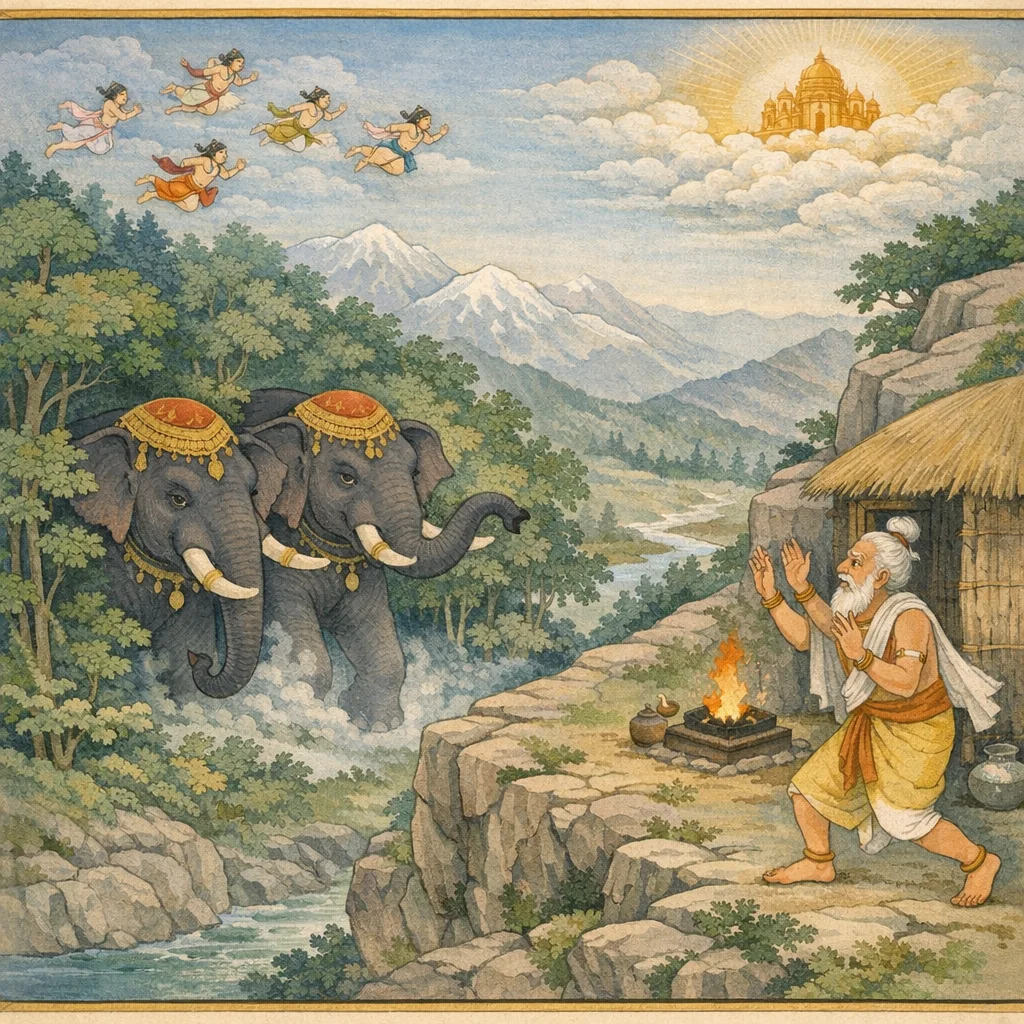
प्रभिन्नकरटौ मत्तौ भूत्वा कुड्जरखूपिणौ । संलीनमपि दुर्गेषु निन्यतुर्यमसादनम्,कठिन-से-कठिन स्थानमें छिपे हुए मुनिको भी वे मद बहानेवाले मतवाले हाथीका रूप धारण करके यमलोक पहुँचा देते थे
They assumed the form of furious elephants, their temples streaming in rut and their minds intoxicated; even a sage hidden away in the most inaccessible fastnesses they would drag off to the abode of Yama (death).
Verse 21
सिंहौ भूत्वा पुनर्व्याप्रौ पुनश्चान्तर्हितावुभौ । तैस्तैरुपायैस्तौ क्रूरावृषीन् दृष्टवा निजघ्नतु:,वे कभी सिंह होते, कभी बाघ बन जाते और कभी अदृश्य हो जाते थे। इस प्रकार वे क्रूर दैत्य विभिन्न उपायोंद्वारा ऋषियोंको दढूँढ़-दूँढ़कर मारने लगे। उस समय पृथ्वीपर यज्ञ और स्वाध्याय बंद हो गये। राजर्षि और ब्राह्मण नष्ट हो गये और यात्रा, विवाह आदि उत्सवों तथा यज्ञोंकी सर्वथा समाप्ति हो गयी
They would become lions, then again tigers, and again both would vanish from sight. By such varied stratagems those cruel daityas, whenever they found the seers, struck them down. As a result, sacrificial rites (yajña) and Vedic study (svādhyāya) ceased upon the earth; royal sages and brāhmaṇas were destroyed, and journeys, marriages, and other auspicious observances—together with sacrifices—came to a complete halt.
Verse 22
निवृत्तयज्ञस्वाध्याया प्रणष्टनूपतिद्विजा । उत्सन्नोत्सवयज्ञा च बभूव वसुधा तदा,वे कभी सिंह होते, कभी बाघ बन जाते और कभी अदृश्य हो जाते थे। इस प्रकार वे क्रूर दैत्य विभिन्न उपायोंद्वारा ऋषियोंको दढूँढ़-दूँढ़कर मारने लगे। उस समय पृथ्वीपर यज्ञ और स्वाध्याय बंद हो गये। राजर्षि और ब्राह्मण नष्ट हो गये और यात्रा, विवाह आदि उत्सवों तथा यज्ञोंकी सर्वथा समाप्ति हो गयी
Nārada said: “Then the earth fell into ruin: sacrificial rites and Vedic study came to a halt; kings and Brahmins were destroyed; and festivals—along with the sacrifices that sustain them—were completely extinguished.”
Verse 23
हाहाभूता भयार्ता च निवृत्तविपणापणा । निवृत्तदेवकार्या च पुण्योद्वाहविवर्जिता,सर्वत्र हाहाकार छा रहा था, भयका आर्तनाद सुनायी पड़ता था। बाजारोंमें खरीद- बिक्रीका नाम नहीं था। देवकार्य बंद हो गये। पुण्य और विवाहादि कर्म छूट गये थे
Narada said: “Everywhere there was only wailing and panic-stricken cries. Trade and commerce had come to a halt; the markets were silent. Sacred rites for the gods were discontinued, and the customary meritorious observances—such as weddings and other auspicious ceremonies—were abandoned.”
Verse 24
निवृत्तकृषिगोरक्षा विध्वस्तनगराश्रमा | अस्थिकड्कालसंकीर्णा भूर्बभूवोग्रदर्शना,कृषि और गोरक्षाका नाम नहीं था, नगर और आश्रम उजड़कर खण्डहर हो गये थे। चारों ओर हड्डियाँ और कंकाल भरे पड़े थे। इस प्रकार पृथ्वीकी ओर देखना भी भयानक प्रतीत होता था
Nārada said: Agriculture and the protection of cattle had ceased; towns and hermitages lay ruined. The earth was strewn everywhere with bones and skeletons, so that even to look upon the land had become a dreadful sight—an image of social collapse when dharma is abandoned and violence prevails.
Verse 25
निवृत्तपितृकार्य च निर्वषट््कारमज्लम् । जगत् प्रतिभयाकारं दुष्प्रेक्षष्म भवत् तदा,श्राद्धकर्म लुप्त हो गया। वषट्कार और मंगलका कहीं नाम नहीं रह गया। सारा जगत् भयानक प्रतीत होता था। इसकी ओर देखनातक कठिन हो गया था
Narada said: “Then the rites owed to the ancestors came to a halt; the sacred ‘vaṣaṭ’ exclamation and all auspicious observances disappeared. The whole world took on a terrifying aspect, and it became hard even to look upon it.”
Verse 26
चन्द्रादित्यौ ग्रहास्तारा नक्षत्राणि दिवौकस: । जम्मुर्विषादं तत् कर्म दृष्टवा सुन्दोपसुन्दयो:,सुन्द और उपसुन्दका वह भयानक कर्म देखकर चन्द्रमा, सूर्य, ग्रह, तारे, नक्षत्र और देवता सभी अत्यन्त खिन्न हो उठे
Nārada said: Seeing that dreadful deed of Sunda and Upasunda, the moon and the sun, the planets, the stars, the constellations, and even the gods of heaven were overcome with deep sorrow—an image of how adharma disturbs not only human society but the very moral order of the cosmos.
Verse 27
एवं सर्वा दिशो दैत्यौ जित्वा क्रूरेण कर्मणा । निःसपत्नौ कुरुक्षेत्रे निविशमभिचक्रतु:,इस प्रकार वे दोनों दैत्य अपने क्रूर कर्मद्वारा सम्पूर्ण दिशाओंको जीतकर शत्रुओंसे रहित हो कुरुक्षेत्रमें निवास करने लगे
Nārada said: Thus those two Dānavas, having conquered all the directions through ruthless deeds, became free of rivals and established their dwelling in Kurukṣetra—an occupation gained not by dharma but by violent domination.
Verse 209
इति श्रीमहाभारते आदिपर्वणि विदुरागमनराज्यलम्भपर्वणि सुन्दोपसुन्दोपाख्याने नवाधिकद्धिशततमो< ध्याय:,इस प्रकार श्रीमह्या भारत आदिपर्वके अन्तर्गत विदुरागमनराज्यलम्भपर्वमें युन्दोपयुन्दोपाख्यानविषयक दो सौ नौवाँ अध्याय पूरा हुआ
Thus, in the Śrī Mahābhārata, within the Ādi Parva—under the section concerning Vidura’s arrival and the gaining of the kingdom—ends the two-hundred-and-ninth chapter, which contains the episode (upākhyāna) of Sunda and Upasunda. The colophon marks the close of this unit, signaling that the moral illustration of fraternal rivalry and self-destruction has been concluded and the narrative is ready to move forward.
Frequently Asked Questions
The dilemma centers on how a dharma-minded authority should respond to wrongdoing by vulnerable petitioners: the women admit misconduct yet claim protection through śaraṇāgati and the norm of restraint, requiring a response that balances accountability with non-harm and refuge-duty.
The chapter foregrounds that ethical speech and action—truthfulness, protection of those who surrender, and restraint—can transform punitive trajectories into conditional rehabilitation, while sacred geography preserves moral memory through named tīrthas.
Rather than a formal phalaśruti, the text offers an etiological meta-layer: the declaration that these sites will be famed as Nārītīrthas and become purifying, implying enduring religious significance attached to understanding and remembering the episode.