Adhyaya 207
अर्जुनस्य तीर्थयात्रा तथा मणलूर-सम्बन्धः (Arjuna’s Pilgrimage and the Maṇalūra Alliance)
Upa-parva: Tīrtha-yātrā and Maṇalūra Episode (Arjuna’s Eastern Pilgrimage and Marriage Alliance)
Vaiśaṃpāyana reports that after narrating prior matters to brāhmaṇas, Arjuna proceeds along Himavat’s vicinity, visits notable ascetic landmarks (Agastya’s banyan, Vasiṣṭha’s mountain, Bhṛgu’s peak), and undertakes ritual purification. He distributes extensive gifts—cows and provisions—at tīrthas and sanctuaries, and provides dwellings/support to dvijas, framing the journey as both self-purification and social-ritual patronage. He bathes at Hiraṇyabindu-tīrtha, surveys revered sites, and travels eastward, sequentially viewing rivers and regions (including Nandā, Aparanandā, Kauśikī, Gaṅgā, and locales associated with Aṅga, Vaṅga, and Kaliṅga), continuing regulated giving. At the borders of Kaliṅga, accompanying brāhmaṇas take leave; Arjuna proceeds with few aides toward the ocean, observing dhārmic and scenic settlements. Reaching Mahendra Mountain and the coastal route, he arrives at Maṇalūra, visits local sacred places, and meets the ruler Citravāhana. He sees the king’s daughter Citrāṅgadā, forms an intent to marry, and communicates his purpose. The king explains a dynastic constraint grounded in a prior boon: each generation yields a single issue, and his daughter is designated a putrikā so her child will continue his lineage. Arjuna agrees to the condition, accepts Citrāṅgadā, and resides there for three years.
Chapter Arc: इन्द्रप्रस्थ-वैभव के बीच देवर्षि नारद का पाण्डवों के यहाँ आगमन होता है; उनके तेजस्वी आगमन से सभा में एक साथ श्रद्धा और जिज्ञासा जाग उठती है। → नारद पाण्डवों की पूर्व-कीर्ति का स्मरण कराते हैं—कैसे वे एक ही द्रौपदी के पति होकर भी परस्पर ईर्ष्या से रहित रहे और युधिष्ठिर ने धर्मपूर्वक राज्य-पालन किया। इसी प्रशंसा के भीतर एक सूक्ष्म चेतावनी छिपी है: महान् पुरुषों में भी फूट का बीज कैसे पड़ता है। युधिष्ठिर की जिज्ञासा तीव्र होती है और वे सुन्द-उपसुन्द की कथा पूछते हैं—फूट का कारण, तिलोत्तमा का स्वरूप, और परस्पर-वध का वृत्तान्त। → युधिष्ठिर का प्रश्न-प्रहार—‘सुन्दोपसुन्द कौन थे, किसके पुत्र थे, भेद कैसे उत्पन्न हुआ, और तिलोत्तमा किसकी थी कि उसके कारण वे उन्मत्त होकर एक-दूसरे को मार बैठे?’—अध्याय का शिखर बनता है; यह प्रश्न पाण्डव-एकता के भविष्य पर भी परोक्ष प्रकाश डालता है। → नारद का विधिवत् सत्कार होता है; संवाद की भूमि तैयार हो जाती है और कथा-प्रवेश के लिए युधिष्ठिर की उत्कंठा स्पष्ट रूप से स्थापित हो जाती है। → नारद से ‘यथावृत्तं विस्तरेण’ सुन्द-उपसुन्द तथा तिलोत्तमा का सम्पूर्ण वृत्तान्त सुनाए जाने का संकेत—कथा अगले अध्याय में खुलने को ठहर जाती है।
Shlokas
Verse 1
(दाक्षिणात्य अधिक पाठके ९९ श्लोक मिलाकर कुल १५१ श्लोक हैं) अपन क्ाा बछ। अकाल सप्ताधिकदद्विशततमो< ध्याय: पाण्डवोंके यहाँ नारदजीका आगमन और उनमें फूट न हो, इसके लिये कुछ नियम बनानेके लिये प्रेरणा करके सुन्द और उपसुन्दकी कथाको प्रस्तावित करना जनमेजय उवाच एवं सम्प्राप्य राज्यं तदिन्द्रप्रस्थं तपोधन । अत ऊर्ध्व॑ महात्मान: किमकुर्वत पाण्डवा:,जनमेजयने पूछा--तपोधन! इस प्रकार इन्द्रप्रस्थका राज्य प्राप्त कर लेनेके पश्चात् महात्मा पाण्डवोंने कौन-सा कार्य किया?
Janamejaya said: “O ascetic rich in austerity, after the Pāṇḍavas had thus obtained that kingdom—Indraprastha—what did those great-souled men do thereafter?”
Verse 2
सर्व एव महासत्त्वा मम पूर्वपितामहा: । द्रौपदी धर्मपत्नी च कथं तानन्ववर्तत,मेरे पूर्वपितामह सभी पाण्डव महान् सत्त्व (मनोबल) से सम्पन्न थे। उनकी धर्मपत्नी द्रौपदीने किस प्रकार उन सबका अनुसरण किया?
Janamejaya said: “All my forefathers—the Pāṇḍavas—were men of great inner strength and nobility. And Draupadī, their lawful wife, how did she follow and accompany them all?”
Verse 3
कथं च पञ्च कृष्णायामेकस्यां ते नराधिपा: । वर्तमाना महाभागा नाभिद्यन्त परस्परम्,वे महान् सौभाग्यशाली नरेश जब एक ही कृष्णाके प्रति अनुरक्त थे, तब उनमें आपसमें फूट कैसे नहीं हुई?
Janamejaya asked: “How was it that those five fortunate kings, all devoted to a single Kṛṣṇā (Draupadī), did not fall into mutual discord? When such great rulers were attached to one woman, how did no division arise among them?”
Verse 4
श्रोतुमिच्छाम्यहं सर्व विस्तरेण तपोधन । तेषां चेष्टितमन्योन्यं युक्तानां कृष्णया सह,तपोधन! द्रौपदीसे सम्बन्ध रखनेवाले उन पाण्डवोंका आपसमें कैसा बर्ताव था, यह सब मैं विस्तारके साथ सुनना चाहता हूँ
Janamejaya said: O ascetic rich in austerity, I wish to hear everything in detail—how those brothers, united with Kṛṣṇā (Draupadī), conducted themselves toward one another, and what their mutual dealings and behavior were.
Verse 5
वैशम्पायन उवाच धृतराष्ट्रा भ्यनुज्ञाता: कृष्णया सह पाण्डवा: । रेमिरे खाण्डवप्रस्थे प्राप्तराज्या: परंतपा:,वैशम्पायनजीने कहा--राजन! धुृतराष्ट्रकी आज्ञासे राज्य पाकर परंतप पाण्डव द्रौपदीके साथ खाण्डव-प्रस्थमें विहार करने लगे
Vaiśampāyana said: With Dhṛtarāṣṭra’s consent, the Pāṇḍavas—together with Kṛṣṇā (Draupadī)—having obtained their allotted kingship, took their ease and enjoyed life at Khāṇḍavaprastha, those scorcher of foes.
Verse 6
प्राप्प राज्यं महातेजा: सत्यसंधो युधिष्ठिर: । पालयामास धर्मेण पृथिवीं भ्रातृभि: सह,सत्यप्रतिज्ञ महातेजस्वी राजा युधिष्ठिर उस राज्यको पाकर अपने भाइयोंके साथ धर्मपूर्वक पृथ्वीका पालन करने लगे
Having obtained the kingdom, the radiant Yudhiṣṭhira—steadfast in truth—began to govern the earth in accordance with dharma, together with his brothers.
Verse 7
जितारयो महाप्रज्ञा: सत्यधर्मपरायणा: । मुर्दे परमिकां प्राप्तास्तत्रोषु: पाण्डुनन्दना:,वे सभी शत्रुओंपर विजय पा चुके थे, सभी महाबुद्धिमान् थे। सबने सत्यधर्मका आश्रय ले रखा था। इस प्रकार वे पाण्डव वहाँ बड़े आनन्दके साथ रहते थे
Having conquered their foes, the Pāṇḍu princes—men of great intelligence and steadfast commitment to truth and dharma—had attained the highest eminence; and there they dwelt in contentment, established in righteous conduct after their victories.
Verse 8
कुर्वाणा: पौरकार्याणि सर्वाणि पुरुषर्षभा: । आसांचक्रुर्महा्हेंषु पार्थिवेष्वासनेषु च,नरश्रेष्ठ पाण्डव नगरवासियोंके सम्पूर्ण कार्य करते हुए बहुमूल्य तथा राजोचित सिंहासनोंपर बैठा करते थे
Vaiśampāyana said: Those bull-like men among men, while carrying out all the civic duties of the townspeople, would take their seats upon costly, kingly thrones and royal seats—thus combining public service with the dignity and responsibility of rulership.
Verse 9
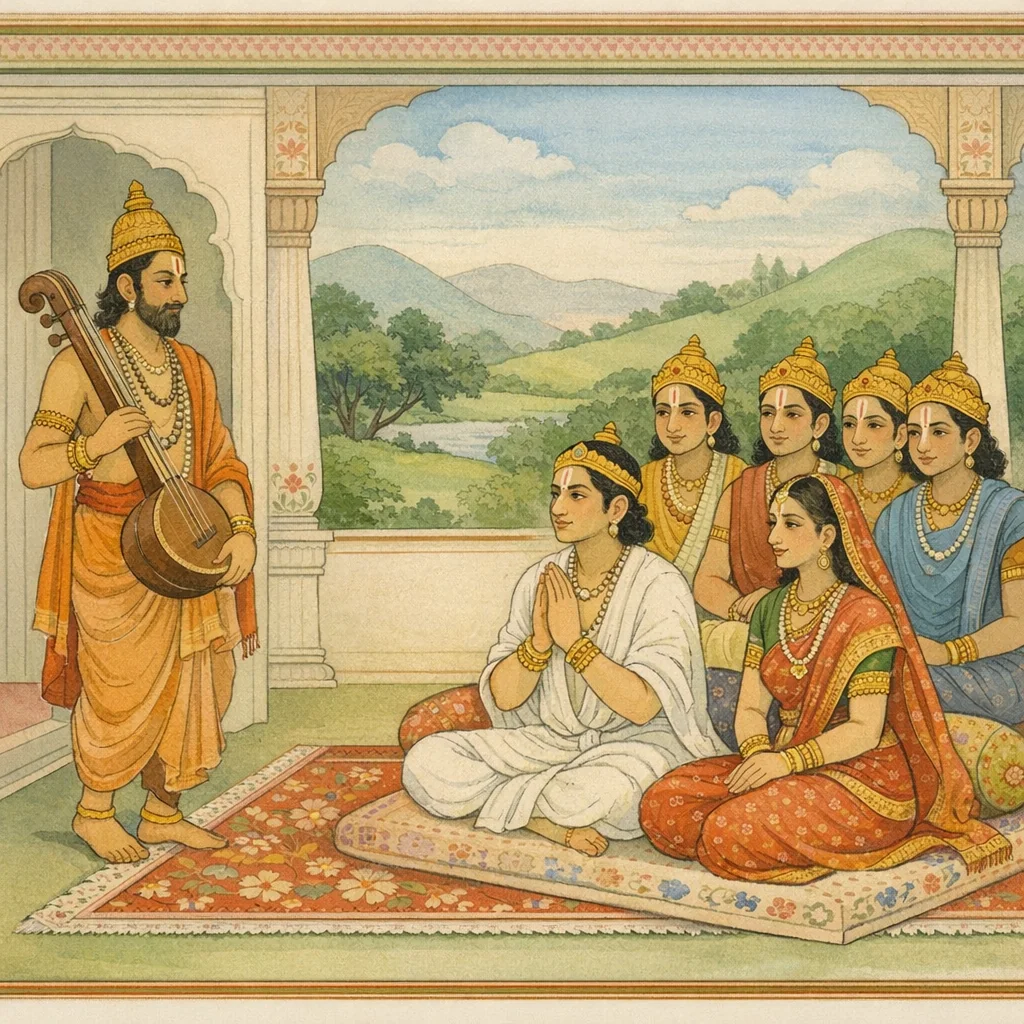
अथ तेषूपविष्टेषु सर्वेष्वेव महात्मसु । नारदस्त्वथ देवर्षिराजगाम यदृच्छया,एक दिन जब वे सभी महामना पाण्डव अपने सिंहासनोंपर विराजमान थे, उसी समय देवर्षि नारद अकस्मात् वहाँ आ पहुँचे
When all those high-souled ones were seated, the divine seer Nārada arrived there unexpectedly, as if by chance. The scene underscores the reverence due to realized sages and the sudden, providential arrival of spiritual counsel at pivotal moments in the lives of the righteous.
Verse 10
(पथा नक्षत्रजुष्टेन सुपर्णचरितेन च ।। चन्द्रसूर्यपप्रकाशेन सेवितेन महर्षिभि: । नभःस्थलेन दिव्येन दुर्लभेनातपस्विनाम् ।। उनका आगमन आकाशभमार्गसे हुआ, जिसका नक्षत्र सेवन करते हैं, जिसपर गरुड़ चलते हैं, जहाँ चन्द्रमा और सूर्यका प्रकाश फैलता है और जो महर्षियोंसे सेवित है। जो लोग तपस्वी नहीं हैं, उनके लिये व्योममण्डलका वह दिव्य मार्ग दुर्लभ है। भूतार्चितो भूतधरं राष्ट्र नगरभूषितम् । अवेक्षमाणो द्युतिमानाजगाम महातपा: ।। सर्ववेदान्तगो विप्र: सर्वविद्यासु पारग: । परेण तपसा युक्तो ब्राह्ेण तपसा वृत: ।। नये नीतौ च निरतो विश्रुतश्न महामुनि: । सम्पूर्ण प्राणियोंद्वारा पूजित महान् तपस्वी एवं तेजस्वी देवर्षि नारद बड़े-बड़े नगरोंसे विभूषित और सम्पूर्ण प्राणियोंके आश्रयभूत राष्ट्रोंका अवलोकन करते हुए वहाँ आये। विप्रवर नारद सम्पूर्ण वेदान्तशास्त्रके ज्ञाता तथा समस्त विद्याओंके पारंगत पण्डित हैं। वे परमतपस्वी तथा ब्राह्मतेजसे सम्पन्न हैं; न््यायोचित बर्ताव तथा नीतिमें निरन्तर निरत रहनेवाले सुविख्यात महामृुनि हैं। परात् परतरं प्राप्तो धर्मात्ू समभिजग्मिवान् ।। भावितात्मा गतरजा: शान्तो मुदुर्ऋजुर्द्धिज: । धर्मेणाधिगत: सर्वैर्देवदानवमानुषै: ।। अक्षीणवृत्तधर्म श्व संसारभयवर्जित: । सर्वथा कृतमर्यादो वेदेषु विविधेषु च ।। ऋषकसामयजुषां वेत्ता न््यायवृत्तान्तकोविद: ।। ऋजुरारोहवाउछुक्लो भूयिष्ठपथिको5डनघ: । श्लक्षणया शिखयोपेत: सम्पन्न: परमत्विषा ।। अवदाते च सूक्ष्मे च दिव्ये च रुचिरे शुभे । महेन्द्रदत्ते महती बिभ्रत् परमवाससी ।। प्राप्य दुष्प्रापमन्येन ब्रह्म॒वर्चसमुत्तमम् । भवने भूमिपालस्य बृहस्पतिरिवाप्लुत: ।। उन्होंने धर्म-बलसे परात्पर परमात्माका ज्ञान प्राप्त कर लिया है। वे शुद्धात्मा, रजोगुणरहित, शान्त, मृदु तथा सरल स्वभावके ब्राह्मण हैं। वे देवता, दानव और मनुष्य सबको धर्मतः प्राप्त होते हैं। उनका धर्म और सदाचार कभी खण्डित नहीं हुआ है। वे संसारभयसे सर्वथा रहित हैं। उन्होंने सब प्रकारसे विविध वैदिक धर्मोंकी मर्यादा स्थापित की है। वे ऋग्वेद, सामवेद और यजुर्वेदके विद्वान् हैं। न्न्यायशास्त्रके पारंगत पण्डित हैं। वे सीधे और ऊँचे कदके तथा शुक्ल वर्णके हैं। वे निष्पाप नारद अधिकांश समय यात्रामें व्यतीत करते हैं। उनके मस्तकपर सुन्दर शिखा शोभित है। वे उत्तम कान्तिसे प्रकाशित होते हैं। वे देवराज इन्द्रके दिये हुए दो बहुमूल्य वस्त्र धारण करते हैं। उनके वे दोनों वस्त्र उज्ज्वल, महीन, दिव्य, सुन्दर और शुभ हैं। दूसरोंके लिये दुर्लभ एवं उत्तम ब्रह्मतेजसे युक्त वे बृहस्पतिके समान बुद्धिमान् नारदजी राजा युधिष्ठिरके महलमें उतरे। संहितायां च सर्वेषां स्थितस्यपोपस्थितस्य च । द्विपदस्य च धर्मस्य क्रमधर्मस्य पारग: ।। गाथासामानुधर्मज्ञ: साम्नां परमवल्गुनाम् । आत्मना सर्वमोक्षि भ्य: कृतिमान् कृत्यवित् तथा ।। योक्ता धर्मे बहुविधे मनो मतिमतां वर: । विदितार्थ: समश्नैव छेत्ता निगमसंशयान् ।। अर्थनिर्वचने नित्यं संशयच्छिद्संशय: । प्रकृत्या धर्मकृशलो नानाधर्मविशारद: ।। लोपेनागमधर्मेण संक्रमेण च वृत्तिषु । एकशब्दांश्व नानार्थनिकार्थाश्व पृथक्छूमतीन् ।। पृथगर्थाभिधानांश्व॒ प्रयोगाणामवेक्षिता ।। संहिताशास्त्रमें सबके लिये स्थित और उपस्थित मानवधर्म तथा क्रमप्राप्त धर्मके वे पारगामी दिद्वान् हैं। वे गाथा और साममन्त्रोंमें कहे हुए आनुषंगिक धर्मोंके भी ज्ञाता हैं तथा अत्यन्त मधुर सामगानके पण्डित हैं। मुक्तिकी इच्छा रखनेवाले सब लोगोंके हितके लिये नारदजी स्वयं ही प्रयत्नशील रहते हैं। कब किसका क्या कर्तव्य है, इसका उन्हें पूर्ण ज्ञान है। वे बुद्धिमानोंमें श्रेष्ठ हैं और मनको नाना प्रकारके धर्ममें लगाये रखते हैं। उन्हें जानने योग्य सभी अर्थोका ज्ञान है। वे सबमें समभाव रखनेवाले हैं और वेदविषयक सम्पूर्ण संदेहोंका निवारण करनेवाले हैं। अर्थकी व्याख्याके समय सदा संशयोंका उच्छेद करते हैं। उनके हृदयमें संशयका लेश भी नहीं है। वे स्वभावत: धर्मनिपुण तथा नाना धर्मोंके विशेषज्ञ हैं। लोप, आगमधर्म तथा वृतिसंक्रमणके द्वारा प्रयोगमें आये हुए एक शब्दके अनेक अर्थोंको, पृथक्-पृथक् श्रवणगोचर होनेवाले अनेक शब्दोंके एक अर्थको तथा विभिन्न शब्दोंके भिन्न-भिन्न अर्थोंको वे पूर्णरूपसे देखते और समझते हैं। प्रमाणभूतो लोकस्य सर्वाधिकरणेषु च । सर्ववर्णविकारेषु नित्यं सकलपूजित: ।। स्वरे5स्वरे च विविधे वृत्तेषु विविधेषु च । समस्थानेषु सर्वेषु समाम्नायेषु धातुषु ।। उद्देश्यानां समाख्याता सर्वमाख्यातमुद्दिशन् । अभिसंधिषु तत्त्वज्ञ: पदान्यजड्भान्यनुस्मरन् ।। कालधर्मेण निर्दिष्ट यथार्थ च विचारयन् | चिकीर्षितं च यो वेत्ता यथा लोकेन संवृतम् ।। विभाषितं च समयं भाषितं हृदयड्रमम् । आत्मने च परस्मै च स्वरसंस्कारयोगवान् ।। एषां स्वराणां वेत्ता च बोद्धा च वचनस्वरान् | विज्ञाता चोक्तवाक्यानामेकतां बहुतां तथा ।। बोद्धा हि परमार्थाश्च विविधांश्व व्यतिक्रमान् । अभेदतश्च बहुशो बहुशश्नापि भेदत: ।। वचनानां च विविधानादेशांश्व॒ समीक्षिता । नानार्थकुशलस्तत्र तद्धितेषु च सर्वश: ।। परिभूषयिता वाचां वर्णतः स्वरतो<र्थत: । प्रत्ययांश्ष समाख्याता नियतं प्रतिधातुकम् ।। पजञ्च चाक्षरजातानि स्वरसंज्ञानि यानि च ।) सभी अधिकरणों और समस्त वर्णोके विकारोंमें निर्णय देनेके निमित्त वे सब लोगोंके लिये प्रमाणभूत हैं। सदा सब लोग उनकी पूजा करते हैं। नाना प्रकारके स्वर, व्यंजन, भाँति-भाँतिके छन््द, समान स्थानवाले सभी वर्ण, समाम्नाय तथा धातु--इन सबके उद्देश्योंकी नारदजी बहुत अच्छी व्याख्या करते हैं। सम्पूर्ण आख्यात प्रकरण (धातुरूप तिडनन्त आदि)-का प्रतिपादन कर सकते हैं। सब प्रकारकी संधियोंके सम्पूर्ण रहस्योंको जानते हैं। पदों और अंगोंका निरन्तर स्मरण रखते हैं, काल-घधर्मसे निर्दिष्ट यथार्थ तत्त्वका विचार करनेवाले हैं तथा वे लोगोंके छिपे हुए मनोभावको--वे क्या करना चाहते हैं, इस बातको भी अच्छी तरह जानते हैं। विभाषित (वैकल्पिक), भाषित (निश्चयपूर्वक कथित) और हृदयंगम किये हुए समयका उन्हें यथार्थ ज्ञान है। वे अपने तथा दूसरेके लिये स्वरसंस्कार तथा योगसाधनमें तत्पर रहते हैं। वे इन प्रत्यक्ष चलनेवाले स्वरोंको भी जानते हैं, वचन-स्वरोंका भी ज्ञान रखते हैं, कही हुई बातोंके मर्मको जानते और उनकी एकता तथा अनेकताको समझते हैं। उन्हें परमार्थका यथार्थ ज्ञान है। वे नाना प्रकारके व्यतिक्रमों (अपराधों)-को भी जानते हैं। अभेद और भेददृष्टिसे भी बारंबार तत्त्वविचार करते रहते हैं। वे शास्त्रीय वाक्योंके विविध आदेशोंकी भी समीक्षा करनेवाले तथा नाना प्रकारके अर्थज्ञानमें कुशल हैं, तद्धित प्रत्ययोंका उन्हें पूरा ज्ञान है। वे स्वर, वर्ण और अर्थ तीनोंसे ही वाणीको विभूषित करते हैं। प्रत्येक धातुके प्रत्ययोंका नियमपूर्वक प्रतिपादन करनेवाले हैं। पाँच प्रकारके जो अक्षरसमूह तथा स्वर हैं-, उनको भी वे यथार्थरूपसे जानते हैं। तमागतमृषिं दृष्ट्वा प्रत्युदूगम्याभिवाद्य च । आसन रुचिरं तस्मै प्रददौ स्वं युधिष्ठिर: । देवर्षेरुपविष्टस्य स्वयमर्घ्य यथाविधि,उन्हें आया देख राजा युधिष्ठिरने आगे बढ़कर उन्हें प्रणाम किया और अपना परम सुन्दर आसन उन्हें बैठनेके लिये दिया। जब देवर्षि उसपर बैठ गये, तब परम बुद्धिमान् युधिष्ठिरने स्वयं ही विधिपूर्वक उन्हें अर्घ्य निवेदन किया और उसीके साथ-साथ उन्हें अपना राज्य समर्पित कर दिया। उनकी यह पूजा ग्रहण करके देवर्षि उस समय मन-ही-मन बड़े प्रसन्न हुए
Vaiśampāyana said: Nārada arrived by a celestial sky-path—one frequented by the stars, traversed by Garuḍa, lit by the radiance of sun and moon, and used by great seers—an exalted route inaccessible to those without ascetic discipline. That mighty ascetic, honored by all beings, came while surveying the earth that bears all creatures—its kingdoms and cities adorned and thriving. Nārada, foremost among brahmins, was a master of Vedānta and had crossed to the far shore of every branch of learning. Endowed with supreme austerity and clothed in brahmanical splendor, he was renowned as a great sage devoted to justice and right policy. Through the power of dharma he had attained the highest knowledge; purified in self, free of passion, calm, gentle, and straightforward, he was accessible to gods, demons, and humans through righteousness. His conduct never decayed; he was without fear of worldly existence, and he upheld the boundaries of the many Vedic disciplines. Skilled in Ṛg, Sāma, and Yajus, and expert in reasoning and jurisprudence, he was tall, fair, and tireless in travel, wearing a fine topknot and shining with supreme brilliance. He bore two splendid garments given by Indra—bright, delicate, divine, beautiful, and auspicious. Possessing a brahmanical radiance hard for others to attain, he entered the royal residence like Bṛhaspati himself. He was also a consummate authority on the sciences of recitation and grammar: the joined and separated forms of speech, the twofold and sequential duties, ancillary dharmas taught in gāthās and Sāman chants, and the sweetest modes of Sāma singing. For the welfare of those seeking liberation he exerted himself, knowing precisely what should be done and when. Best among the wise, he could engage the mind in many forms of dharma, understood all knowable meanings, remained even-minded, and cut through doubts about the Veda. In explaining meanings he constantly removed uncertainty; by nature he was skilled in dharma and versed in diverse codes of conduct. He discerned how usage shifts by elision, authorized tradition, and semantic transfer—how one word can bear many meanings, how different words can converge on one meaning, and how distinct expressions yield distinct senses. A standard of authority for the world in all matters of adjudication and in all phonetic transformations, he was ever revered. He could expound vowels and consonants, meters, points of articulation, the traditional phonetic lists, and verbal roots; he could set forth the entire system of verbal forms, knew the secrets of sandhi, and kept words and stems in constant memory. He judged what is truly intended according to time and circumstance, and understood even what people conceal in their hearts. He knew optional and fixed usages, and was skilled in refining speech for self and others through correct accent and discipline. He understood the accents of utterance, the unity and multiplicity of statements, the highest meaning, and the many ways of transgression—considering truth both from the standpoint of non-difference and difference. He examined the various injunctions of scriptural sentences, was adept at polysemy and derivative formations, and adorned speech by sound, accent, and meaning, explaining affixes in relation to each root and the classes of phonemes and vowels. Seeing the seer arrive, King Yudhiṣṭhira went forward to greet him, bowed in reverence, and offered him a splendid seat. When the divine seer had sat, Yudhiṣṭhira himself presented the arghya according to rule.
Verse 11
प्रादाद् युधिष्ठिरो धीमान् राज्यं तस्मै न््यवेदयत् । प्रतिगृहा तु तां पूजामृषि: प्रीतमनास्तदा,उन्हें आया देख राजा युधिष्ठिरने आगे बढ़कर उन्हें प्रणाम किया और अपना परम सुन्दर आसन उन्हें बैठनेके लिये दिया। जब देवर्षि उसपर बैठ गये, तब परम बुद्धिमान् युधिष्ठिरने स्वयं ही विधिपूर्वक उन्हें अर्घ्य निवेदन किया और उसीके साथ-साथ उन्हें अपना राज्य समर्पित कर दिया। उनकी यह पूजा ग्रहण करके देवर्षि उस समय मन-ही-मन बड़े प्रसन्न हुए
Vaiśampāyana said: The wise Yudhiṣṭhira offered him due honor and formally presented his kingdom to him. Having accepted that reverential worship, the sage was then inwardly pleased. The scene underscores Yudhiṣṭhira’s ethic of humility and dharma: true sovereignty is shown not by clinging to power, but by honoring spiritual authority and offering oneself and one’s possessions in service and reverence.
Verse 12
आशीर्भिविर्धयित्वा च तमुवाचास्यतामिति । निषसादाभ्यनुज्ञातस्ततो राजा युधिष्ठिर:,फिर आशीर्वादसूचक वचनोंद्वारा उनके अभ्युदयकी कामना करके बोले--“तुम भी बैठो।” नारदकी आज्ञा पाकर राजा युधिष्छिर बैठे और कृष्णाको कहला दिया कि स्वयं भगवान् नारदजी पधारे हैं। यह सुनकर द्रौपदी भी पवित्र एवं एकाग्रचित हो उसी स्थानपर गयी, जहाँ पाण्डवोंके साथ नारदजी विराजमान थे। धर्मका आचरण करनेवाली कृष्णा देवर्षिके चरणोंमें प्रणाम करके अपने अंगोंको ढके हुए हाथ जोड़कर खड़ी हो गयी। धर्मात्मा एवं सत्यवादी मुनिश्रेष्ठ भगवान् नारदने राजकुमारी द्रौपदीको नाना प्रकारके आशीर्वाद देकर उस सती-साध्वी देवीसे कहा, “अब तुम भीतर जाओ।' कृष्णाके चले जानेपर भगवान् देवर्षिने एकान्तमें युधिष्ठिर आदि समस्त पाण्डवोंसे कहा
Vaiśaṃpāyana said: Having blessed him with auspicious benedictions, he then said to him, “Be seated.” Granted permission, King Yudhiṣṭhira sat down. The scene underscores the ethic of reverence toward a sage: hospitality, humility, and orderly conduct precede any private counsel or instruction.
Verse 13
कथयामास कृष्णायै भगवन्तमुपस्थितम् | श्रुत्वैतद् द्रौपदी चापि शुचिर्भूत्वा समाहिता,फिर आशीर्वादसूचक वचनोंद्वारा उनके अभ्युदयकी कामना करके बोले--“तुम भी बैठो।” नारदकी आज्ञा पाकर राजा युधिष्छिर बैठे और कृष्णाको कहला दिया कि स्वयं भगवान् नारदजी पधारे हैं। यह सुनकर द्रौपदी भी पवित्र एवं एकाग्रचित हो उसी स्थानपर गयी, जहाँ पाण्डवोंके साथ नारदजी विराजमान थे। धर्मका आचरण करनेवाली कृष्णा देवर्षिके चरणोंमें प्रणाम करके अपने अंगोंको ढके हुए हाथ जोड़कर खड़ी हो गयी। धर्मात्मा एवं सत्यवादी मुनिश्रेष्ठ भगवान् नारदने राजकुमारी द्रौपदीको नाना प्रकारके आशीर्वाद देकर उस सती-साध्वी देवीसे कहा, “अब तुम भीतर जाओ।' कृष्णाके चले जानेपर भगवान् देवर्षिने एकान्तमें युधिष्ठिर आदि समस्त पाण्डवोंसे कहा
Vaiśampāyana said: He informed Kṛṣṇā (Draupadī) that the venerable sage had arrived and was present. Hearing this, Draupadī purified her mind and, composed and attentive, prepared to approach—showing the dharmic response of reverence and self-restraint at the coming of a great seer.
Verse 14
जगाम तत्र यत्रास्ते नारद: पाण्डवै: सह | तस्याभिवाद्य चरणौ देवर्षेर्धर्मचारिणी,फिर आशीर्वादसूचक वचनोंद्वारा उनके अभ्युदयकी कामना करके बोले--“तुम भी बैठो।” नारदकी आज्ञा पाकर राजा युधिष्छिर बैठे और कृष्णाको कहला दिया कि स्वयं भगवान् नारदजी पधारे हैं। यह सुनकर द्रौपदी भी पवित्र एवं एकाग्रचित हो उसी स्थानपर गयी, जहाँ पाण्डवोंके साथ नारदजी विराजमान थे। धर्मका आचरण करनेवाली कृष्णा देवर्षिके चरणोंमें प्रणाम करके अपने अंगोंको ढके हुए हाथ जोड़कर खड़ी हो गयी। धर्मात्मा एवं सत्यवादी मुनिश्रेष्ठ भगवान् नारदने राजकुमारी द्रौपदीको नाना प्रकारके आशीर्वाद देकर उस सती-साध्वी देवीसे कहा, “अब तुम भीतर जाओ।' कृष्णाके चले जानेपर भगवान् देवर्षिने एकान्तमें युधिष्ठिर आदि समस्त पाण्डवोंसे कहा
Vaiśaṃpāyana said: She went to the place where the divine seer Nārada was seated with the Pāṇḍavas. Observing dharma, she bowed at the devarṣi’s feet and paid her reverence—framing the scene in humility, propriety, and righteous conduct before spiritual authority.
Verse 15
कृताञ्जलि: सुसंवीता स्थिताथ द्रुपदात्मजा | तस्याश्लापि स धर्मात्मा सत्यवागृषिसत्तम:,फिर आशीर्वादसूचक वचनोंद्वारा उनके अभ्युदयकी कामना करके बोले--“तुम भी बैठो।” नारदकी आज्ञा पाकर राजा युधिष्छिर बैठे और कृष्णाको कहला दिया कि स्वयं भगवान् नारदजी पधारे हैं। यह सुनकर द्रौपदी भी पवित्र एवं एकाग्रचित हो उसी स्थानपर गयी, जहाँ पाण्डवोंके साथ नारदजी विराजमान थे। धर्मका आचरण करनेवाली कृष्णा देवर्षिके चरणोंमें प्रणाम करके अपने अंगोंको ढके हुए हाथ जोड़कर खड़ी हो गयी। धर्मात्मा एवं सत्यवादी मुनिश्रेष्ठ भगवान् नारदने राजकुमारी द्रौपदीको नाना प्रकारके आशीर्वाद देकर उस सती-साध्वी देवीसे कहा, “अब तुम भीतर जाओ।' कृष्णाके चले जानेपर भगवान् देवर्षिने एकान्तमें युधिष्ठिर आदि समस्त पाण्डवोंसे कहा
Vaiśaṃpāyana said: Draupadī, the daughter of Drupada, stood there with hands joined in reverence, her body modestly covered. Then that foremost of sages—righteous in conduct and truthful in speech—addressed her with words of blessing, wishing her welfare and prosperity.
Verse 16
आशिषो विविधाः: प्रोच्य राजपुत्र्यास्तु नारद: । गम्यतामिति होवाच भगवांस्तामनिन्दिताम्,फिर आशीर्वादसूचक वचनोंद्वारा उनके अभ्युदयकी कामना करके बोले--“तुम भी बैठो।” नारदकी आज्ञा पाकर राजा युधिष्छिर बैठे और कृष्णाको कहला दिया कि स्वयं भगवान् नारदजी पधारे हैं। यह सुनकर द्रौपदी भी पवित्र एवं एकाग्रचित हो उसी स्थानपर गयी, जहाँ पाण्डवोंके साथ नारदजी विराजमान थे। धर्मका आचरण करनेवाली कृष्णा देवर्षिके चरणोंमें प्रणाम करके अपने अंगोंको ढके हुए हाथ जोड़कर खड़ी हो गयी। धर्मात्मा एवं सत्यवादी मुनिश्रेष्ठ भगवान् नारदने राजकुमारी द्रौपदीको नाना प्रकारके आशीर्वाद देकर उस सती-साध्वी देवीसे कहा, “अब तुम भीतर जाओ।' कृष्णाके चले जानेपर भगवान् देवर्षिने एकान्तमें युधिष्ठिर आदि समस्त पाण्डवोंसे कहा
Vaiśaṃpāyana said: Having pronounced various blessings upon the princess, Nārada then addressed that blameless lady, saying, “You may go now.” Thus the decorum of dharma is upheld: the revered sage bestows auspicious benedictions, and the virtuous woman receives them with modest respect before withdrawing, so that he may speak privately with the Pāṇḍavas.
Verse 17
गतायामथ कृष्णायां युधिष्ठिरपुरोगमान् । विविक्ते पाण्डवान् सर्वानुवाच भगवानृषि:,फिर आशीर्वादसूचक वचनोंद्वारा उनके अभ्युदयकी कामना करके बोले--“तुम भी बैठो।” नारदकी आज्ञा पाकर राजा युधिष्छिर बैठे और कृष्णाको कहला दिया कि स्वयं भगवान् नारदजी पधारे हैं। यह सुनकर द्रौपदी भी पवित्र एवं एकाग्रचित हो उसी स्थानपर गयी, जहाँ पाण्डवोंके साथ नारदजी विराजमान थे। धर्मका आचरण करनेवाली कृष्णा देवर्षिके चरणोंमें प्रणाम करके अपने अंगोंको ढके हुए हाथ जोड़कर खड़ी हो गयी। धर्मात्मा एवं सत्यवादी मुनिश्रेष्ठ भगवान् नारदने राजकुमारी द्रौपदीको नाना प्रकारके आशीर्वाद देकर उस सती-साध्वी देवीसे कहा, “अब तुम भीतर जाओ।' कृष्णाके चले जानेपर भगवान् देवर्षिने एकान्तमें युधिष्ठिर आदि समस्त पाण्डवोंसे कहा
When Kṛṣṇā (Draupadī) had departed, the blessed sage addressed all the Pāṇḍavas—led by Yudhiṣṭhira—in private. Thus the propriety of counsel is upheld: after bestowing blessings and sending Draupadī within, the seer turned to confidential instruction for the brothers’ welfare and righteous conduct.
Verse 18
नारद उवाच पाञ्चाली भवतामेका धर्मपत्नी यशस्विनी । यथा वो नात्र भेद: स्यात् तथा नीतिर्विधीयताम्,नारदजी बोले--पाण्डवो! यशस्विनी पांचाली तुम सब लोगोंकी एक ही धर्मपत्नी है; अतः तुमलोग ऐसी नीति बना लो, जिससे तुमलोगोंमें कभी परस्पर फूट न हो
Nārada said: “Pāñcālī, the illustrious one, is the single lawful wife of you all. Therefore, establish such a rule of conduct that no division or discord may ever arise among you in this matter.”
Verse 19
सुन्दोपसुन्दौ हि पुरा भ्रातरौ सहितावुभौ । आस्तामवध्यावन्येषां त्रिषु लोकेषु विश्रुती,पहलेकी बात है, सुन्दर और उपसुन्द नामक दो असुर भाई-भाई थे। वे सदा साथ रहते थे एवं दूसरेके लिये अवध्य थे (केवल आपसमें ही लड़कर वे मर सकते थे)। उनकी तीनों लोकोंमें बड़ी ख्याति थी
Nārada said: “Long ago there were two Asura brothers, Sunda and Upasunda. They were ever together and could not be slain by others—only by fighting each other could they die. Their fame was renowned throughout the three worlds.”
Verse 20
एकराज्यावेकगृहावेकशय्यासनाशनौ । तिलोत्तमायास्तौ हेतोरन्योन्यमभिजषध्नतु:,उनका एक ही राज्य था और एक ही घर। वे एक ही शय्यापर सोते, एक ही आसनपर बैठते और एक साथ ही भोजन करते थे। इस प्रकार आपसमें अटूट प्रेम होनेपर भी तिलोत्तमा अप्सराके लिये लड़कर उन्होंने एक-दूसरेको मार डाला
Nārada said: “They shared one kingdom and one household. They slept on the same bed, sat on the same seat, and ate together. Yet, despite such inseparable affection, for the sake of the apsaras Tilottamā they fell into mutual rivalry and killed one another.”
Verse 21
रक्ष्यतां सौहृदं तस्मादन्योन्यप्रीतिभावकम् | यथा वो नात्र भेद: स्यात् तत् कुरुष्व युधिछ्िर,युधिष्ठिर! इसलिये आपसकी प्रीतिको बढ़ानेवाले सौहार्दकी रक्षा करो और ऐसा कोई नियम बनाओ, जिससे यहाँ तुमलोगोंमें वैर-विरोध न हो
Therefore, safeguard the bond of friendship that nourishes mutual affection. Establish such a rule, O Yudhiṣṭhira, that no division or hostility may arise among you here.
Verse 22
युधिष्ठिर उदाच सुन्दोपसुन्दावसुरौ कस्य पुत्रौ महामुने । उत्पन्नश्न॒ कथं भेद: कथं चान्योन्यमघ्नताम्,युधिष्ठिरने पूछा--महामुने! सुन्दर और उपसुन्द नामक असुर किसके पुत्र थे? उनमें कैसे विरोध उत्पन्न हुआ और किस प्रकार उन्होंने एक-दूसरेको मार डाला?
Yudhiṣṭhira said: “O great sage, whose sons were the two Asuras Sunda and Upasunda? How did discord arise between them, and how did they come to slay one another?”
Verse 23
अप्सरा देवकन्या वा कस्य चैषा तिलोत्तमा | यस्या: कामेन सम्मत्तौ जघ्नतुस्तौ परस्परम्,यह तिलोत्तमा अप्सरा थी? किसी देवताकी कन्या थी? तथा वह किसके अधिकारमें थी, जिसकी कामनासे उन्मत्त होकर उन्होंने एक-दूसरेको मार डाला
Nārada said: “Was this Tilottamā an apsaras, or a daughter of the gods? And to whom did she belong, or to whom was she assigned—she for whose sake, maddened by desire, those two slew one another?”
Verse 24
एतत् सर्व यथावृत्तं विस्तरेण तपोधन । श्रोतुमिच्छामहे ब्रह्मन् परं कौतूहलं हि न:,तपोधन! यह सब वृत्तान्त जिस प्रकार घटित हुआ था, वह सब हम विस्तारपूर्वक सुनना चाहते हैं। ब्रह्म! उसे सुननेके लिये हमारे मनमें बड़ी उत्कण्ठा है
Nārada said: “O treasure of austerity, we wish to hear in full detail how all this truly happened, exactly as it occurred. O Brahman, our curiosity is profound, and we are eager to listen.”
Verse 206
इस प्रकार श्रीमह्या भारत आदिपर्वके अन्तर्गत विदुरागमनराज्यलम्भपर्वमें नगरनिर्माणविषयक दो सौ छठा अध्याय पूरा हुआ
Thus ends the two-hundred-and-sixth chapter of the Ādi Parva of the sacred Mahābhārata, within the sub-section concerning Vidura’s arrival and the gaining of the kingdom, dealing with the theme of city-construction. This is a closing colophon marking the completion of the chapter rather than advancing the story itself.
Verse 207
इति श्रीमहाभारते आदिपर्वणि विदुरागमनराज्यलम्भपर्वणि युधिष्ठिरनारदसंवादे सप्ताधिकद्धिशततमो<ध्याय:
Thus ends the two-hundred-and-seventh chapter in the Ādi Parva of the Śrī Mahābhārata, within the section concerning Vidura’s arrival and the attainment of the kingdom, in the dialogue between Yudhiṣṭhira and Nārada.
Frequently Asked Questions
The chapter centers on balancing personal marital intent with institutional duty: Arjuna’s desire to marry is conditioned by Citravāhana’s requirement that the offspring serve the maternal grandfather’s lineage continuity (putrikā), requiring consent to a binding ethical-legal constraint.
Dharma is enacted through disciplined movement (pilgrimage), public benefaction (dāna), and transparent agreements; legitimate relationships—ritual or political—depend on honoring local norms and clearly articulated obligations.
No explicit phalaśruti is stated here; the chapter functions as narrative-legal documentation illustrating the merit logic of tīrtha-yātrā and the normative validity of putrikā arrangements within the epic’s dharma framework.