Adhyaya 205
Arjuna Restores a Brāhmaṇa’s Cattle and Accepts Forest Exile (Satya-vrata at Khaṇḍavaprastha)
Upa-parva: Khaṇḍavaprastha-vṛttānta (Arjuna’s Satya-vrata and Forest Exile Episode)
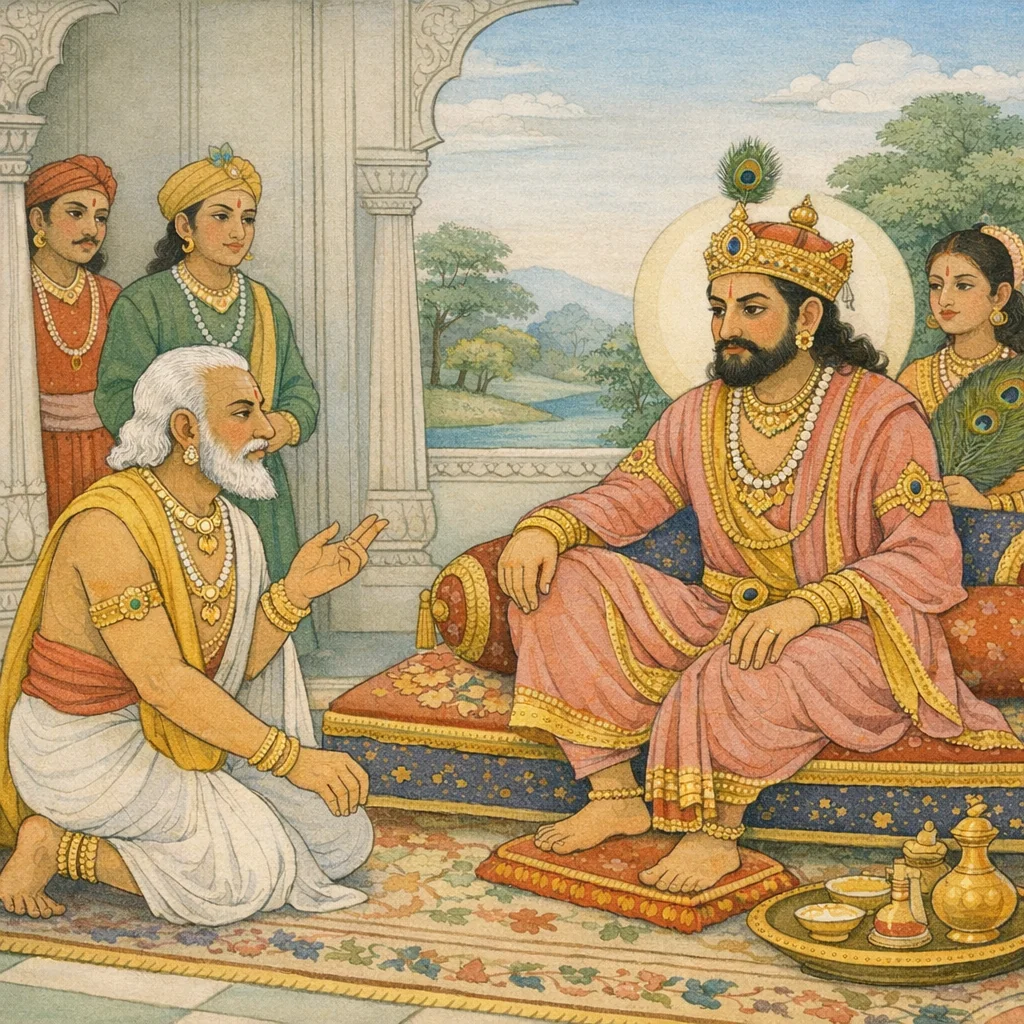
Vaiśaṃpāyana reports that the Pāṇḍavas, ruling by martial capability and lawful conduct, prosper with Kṛṣṇā (Draupadī) harmoniously situated among the five. After time passes, thieves seize a brāhmaṇa’s cattle; the brāhmaṇa arrives at Khaṇḍavaprastha and publicly censures the failure of protection, framing non-intervention as adharma and reputational decay for rulers. Arjuna (Dhanaṃjaya) hears the lament, reassures the brāhmaṇa, arms himself, and pursues the thieves; he defeats them with arrows and returns the cattle, gaining renown. Returning to the city, Arjuna requests that Yudhiṣṭhira prescribe his expiation: by entering the royal space where Yudhiṣṭhira and Kṛṣṇā were present, he has technically violated a previously agreed rule. Yudhiṣṭhira attempts to absolve him, arguing no hostile intent and no true injury, but Arjuna refuses to dilute dharma through pretext, insisting on satya and the binding nature of the pact. With the king’s consent, he undertakes a brahmacarya vow and departs for twelve years of forest dwelling, emphasizing the chapter’s theme that ethical credibility is sustained through costly consistency.
Chapter Arc: धृतराष्ट्र की आज्ञा लेकर विदुर द्रुपद के पास पहुँचते हैं—उद्देश्य स्पष्ट है: पाण्डवों का कुशल जानना और उन्हें ससम्मान हस्तिनापुर बुलाने का मार्ग बनाना। → विदुर द्रुपद को धृतराष्ट्र का संदेश सुनाते हैं: पाण्डु-पुत्र और धृतराष्ट्र-पुत्र—दोनों का राज्य पर ‘धर्मतः’ समान अधिकार है; अतः पाण्डवों को लौटना चाहिए और कुरुजन उन्हें देखने को आतुर हैं, विशेषतः पाञ्चाली को। → विदुर का निर्णायक आग्रह: ‘यह जानकर आप पाण्डवों को प्रस्थापित करें’—और साथ ही यह घोषणा कि द्रुपद के अनुमति देते ही वे धृतराष्ट्र को शीघ्र दूत भेजकर पाण्डवों, कुन्ती और कृष्णा के आगमन की व्यवस्था कराएँगे। → द्रुपद धर्मानुसार विदुर का सत्कार करते हैं, कुशल-प्रश्न करते हैं, और संवाद का निष्कर्ष पाण्डवों के हस्तिनापुर-प्रस्थान की दिशा में ठहरता है—कुरु-नगर और कुल-वधुएँ प्रतीक्षा में हैं। → पाण्डवों का लौटना तय-सा दिखता है, पर हस्तिनापुर में यह ‘धर्म’ का निमंत्रण आगे चलकर किस छल/नीति का द्वार बनेगा—यह अनकहा तनाव अध्याय के अंत में टिका रहता है।
Shlokas
Verse 1
अपर बक। ] अति्ऑशाड पज्चाधिकद्विशततमो< ध्याय: धृतराष्ट्रकी आज्ञासे विदुरका द्रुपदके यहाँ जाना और पाण्डवोंको हस्तिनापुर भेजनेका प्रस्ताव करना धृतराष्ट्र रवाच भीष्म: शांतनवो विद्वान द्रोणश्व भगवानृषि: । हितं च परम वाकक््यं त्वं च सत्यं ब्रवीषि माम्,धृतराष्ट्र बोले--विदुर! शंतनुनन्दन भीष्म ज्ञानी हैं और भगवान् द्रोणाचार्य तो ऋषि ही ठहरे। अत: इनका वचन परम हितकारक है। तुम भी मुझसे जो कुछ कहते हो, वह सत्य ही है
Dhṛtarāṣṭra said: “Vidura! Bhīṣma, the wise son of Śantanu, and Droṇa, revered as a ṛṣi, speak words of the highest good. And you too, Vidura—whatever you say to me is truth.”
Verse 2
यथैव पाण्डोस्ते वीरा: कुन्तीपुत्रा महारथा: । तथैव धर्मत: सर्वे मम पुत्रा न संशय:,कुन्तीके वीर महारथी पुत्र जैसे पाण्डुके लड़के हैं, उसी प्रकार धर्मकी दृष्टिसे वे सब मेरे भी पुत्र हैं-“-इसमें संशय नहीं है
Vidura said: “Just as those heroes—Kuntī’s sons—are Pāṇḍu’s mighty chariot-warriors, so too, by dharma’s measure, all of them are my sons as well—of this there is no doubt.”
Verse 3
यथैव मम पुत्राणामिदं राज्यं विधीयते । तथैव पाण्डुपुत्राणामिदं राज्यं न संशय:,जैसे मेरे पुत्रोंका यह राज्य कहा जाता है, उसी प्रकार पाण्डुपुत्रोंका भी यह राज्य है-- इसमें भी संशय नहीं है
Vidura declared: “Just as this kingdom is spoken of and allotted as belonging to ‘my sons,’ so too it belongs to the sons of Pāṇḍu—there is no doubt of it.”
Verse 4
क्षत्तरानय गच्छैतान् सह मात्रा सुसत्कृतान् | तया च देवरूपिण्या कृष्णया सह भारत,भरतवंशी विदुर! अब तुम्हीं जाओ और उनकी माता कुन्ती तथा उस देवरूपिणी वधू कृष्णाके साथ इन पाण्डवोंको सत्कारपूर्वक ले आओ
Vidura said: “O Kṣattṛ (charioteer), go and bring these Pāṇḍavas here, receiving them with due honor, together with their mother; and bring also Kṛṣṇā, the bride radiant like a goddess, O Bhārata.”
Verse 5
दिष्टया जीवन्ति ते पार्था दिष्टया जीवति सा पृथा । दिष्टया द्रुपदकन्यां च लब्धवन्तो महारथा:,सौभाग्यकी बात है कि वे कुन्तीपुत्र जीवित हैं। सौभाग्यसे ही कुन्ती भी जीवित है और यह भी बड़े सौभाग्यकी बात है कि उन महारथियोंने ट्रुपदकन्याको प्राप्त कर लिया
Vidura said: “By good fortune those sons of Pṛthā (the Pāṇḍavas) are alive; by good fortune Pṛthā (Kuntī) herself lives. And it is also by great good fortune that those mighty warriors have obtained the daughter of Drupada as their bride.”
Verse 6
दिष्टया वर्धामहे सर्वे दिष्टया शान्त: पुरोचन: । दिष्टया मम परं दुःखमपनीतं महाद्युते,महाद्युते! सौभाग्यसे हम सबकी वृद्धि हो रही है। भाग्यकी बात है कि पापी पुरोचन शान्त हो गया और सौभाग्यसे ही मेरा महान् दुःख मिट गया
Vidura said: “By good fortune we are all prospering. By good fortune the wicked Purocana has been silenced (brought to rest). And by that same good fortune, O radiant one, my greatest sorrow has been removed.”
Verse 7
वैशम्पायन उवाच ततो जगाम विदुरो धृतराष्ट्रस्य शासनात् | सकाशं यज्ञसेनस्य पाण्डवानां च भारत,वैशम्पायनजी कहते हैं--जनमेजय! तदनन्तर धृतराष्ट्रकी आज्ञासे विदुरजी द्रौपदी, पाण्डव तथा महाराज यज्ञसेनके लिये नाना प्रकारके धन-रत्नोंकी भेंट लेकर राजा ट्रुपद और पाण्डवोंके समीप गये
Vaiśampāyana said: Then Vidura, acting under Dhṛtarāṣṭra’s command, went to the presence of King Yajñasena (Drupada) and also to the Pāṇḍavas, O Bhārata.
Verse 8
समुपादाय रत्नानि वसूनि विविधानि च । द्रौपद्या: पाण्डवानां च यज्ञसेनस्य चैव ह,वैशम्पायनजी कहते हैं--जनमेजय! तदनन्तर धृतराष्ट्रकी आज्ञासे विदुरजी द्रौपदी, पाण्डव तथा महाराज यज्ञसेनके लिये नाना प्रकारके धन-रत्नोंकी भेंट लेकर राजा ट्रुपद और पाण्डवोंके समीप गये
Vaiśampāyana said: Having gathered various kinds of jewels and wealth, Vidura—acting on Dhṛtarāṣṭra’s command—went bearing gifts intended for Draupadī, the Pāṇḍavas, and King Yajñasena (Drupada).
Verse 9
तत्र गत्वा स धर्मज्ञ: सर्वशास्त्रविशारद: | द्रुपदं न््यायतो राजन् संयुक्तमुपतस्थिवान्,राजन! वहाँ पहुँचकर सम्पूर्ण शास्त्रोंके विद्वान् एवं धर्मज्ञ विदुर न्यायके अनुसार बड़े- छोटेके क्रमसे ट्रपद और अन्य लोगोंके साथ हृदयसे लगकर नमस्कार आदिदपूर्वक मिले
Having arrived there, Vidura—knower of dharma and learned in all the śāstras—approached King Drupada in accordance with propriety, O king, and greeted the others as well in due order of senior and junior, with respectful salutations and fitting words.
Verse 10
स चापि प्रतिजग्राह धर्मेण विदुरं तत: । चक्रतुश्व यथान्यायं कुशलप्रश्नसंविदम्,राजा ट्रुपदने भी धर्मके अनुसार विदुरजीका आदर-सत्कार किया। फिर वे दोनों यथोचित रीतिसे एक-दूसरेके कुशल-समाचार पूछने और कहने लगे
And he too then received Vidura in accordance with dharma, honoring him as was proper. Thereafter, the two of them, as was fitting, exchanged courteous inquiries about one another’s welfare, speaking in the manner prescribed by good conduct.
Verse 11
ददर्श पाण्डवांस्तत्र वासुदेव॑ च भारत । स्नेहात् परिष्वज्य स तान् पप्रच्छानामयं तत:,भारत! विदुरजीने वहाँ पाण्डवों तथा वसुदेवनन्दन भगवान् श्रीकृष्णको भी देखा और स्नेहपूर्वक उन्हें हृदयसे लगाकर उन सबकी कुशल पूछी
Vaiśampāyana said: There Vidura saw the Pāṇḍavas and also Vāsudeva (Śrī Kṛṣṇa), O Bhārata. Moved by affection, he embraced them and then inquired about their well-being.
Verse 12
तैश्नाप्पमितबुद्धि: स पूजितो हि यथाक्रमम् | वचनाद् धृतराष्ट्रस्य स्नेहयुक्तं पुन: पुन:,उन्होंने भी अमित-बुद्धिमान् विदुरजीका क्रमशः: आदर-सत्कार किया। तदनन्तर विदुरजीने राजा धृतराष्ट्रकी आज्ञाके अनुसार बारंबार स्नेहपूर्वक युधिष्ठिर आदि पाण्डुपुत्रोंसे कुशल-मंगल एवं स्वास्थ्यविषयक प्रश्न किया। जनमेजय! फिर विदुरजीने कौरवोंकी ओरसे जैसे दिये गये थे, उसीके अनुसार पाण्डवों, कुन्ती, द्रौपदी तथा ट्रुपदके पुत्रोंक लिये नाना प्रकारके रत्न और धन भेंट किये
Vaiśampāyana said: In due order they duly honored that man of immeasurable intellect (Vidura). Then, at Dhṛtarāṣṭra’s command, Vidura again and again, with affectionate concern, inquired about the welfare, prosperity, and health of Yudhiṣṭhira and the other sons of Pāṇḍu.
Verse 13
पप्रच्छानामयं राजंस्ततस्तान् पाण्डुनन्दनान् । प्रददौ चापि रत्नानि विविधानि वसूनि च,उन्होंने भी अमित-बुद्धिमान् विदुरजीका क्रमशः: आदर-सत्कार किया। तदनन्तर विदुरजीने राजा धृतराष्ट्रकी आज्ञाके अनुसार बारंबार स्नेहपूर्वक युधिष्ठिर आदि पाण्डुपुत्रोंसे कुशल-मंगल एवं स्वास्थ्यविषयक प्रश्न किया। जनमेजय! फिर विदुरजीने कौरवोंकी ओरसे जैसे दिये गये थे, उसीके अनुसार पाण्डवों, कुन्ती, द्रौपदी तथा ट्रुपदके पुत्रोंक लिये नाना प्रकारके रत्न और धन भेंट किये
Vaiśampāyana said: Then, O King, he repeatedly inquired after the welfare and health of those sons of Pāṇḍu, and he also presented them with various jewels and other valuables.
Verse 14
पाण्डवानां च कुन्त्याश्ष द्रौपद्याश्व विशाम्पते | द्रुपदस्य च पुत्राणां यथा दत्तानि कौरवै:,उन्होंने भी अमित-बुद्धिमान् विदुरजीका क्रमशः: आदर-सत्कार किया। तदनन्तर विदुरजीने राजा धृतराष्ट्रकी आज्ञाके अनुसार बारंबार स्नेहपूर्वक युधिष्ठिर आदि पाण्डुपुत्रोंसे कुशल-मंगल एवं स्वास्थ्यविषयक प्रश्न किया। जनमेजय! फिर विदुरजीने कौरवोंकी ओरसे जैसे दिये गये थे, उसीके अनुसार पाण्डवों, कुन्ती, द्रौपदी तथा ट्रुपदके पुत्रोंक लिये नाना प्रकारके रत्न और धन भेंट किये
Vaiśampāyana said: “O lord of the people, to the Pāṇḍavas, to Kuntī, to Draupadī, and to the sons of Drupada, gifts of jewels and wealth were presented—exactly in the manner and measure that had been given on behalf of the Kauravas.”
Verse 15
प्रोवाच चामितमतिः: प्रश्नितं विनयान्वितः । द्रुपदं पाण्डुपुत्राणां संनिधी केशवस्य च,अगाध बुद्धिवाले विदुरजी पाण्डवों तथा भगवान् श्रीकृष्णके समीप विनीतभावसे नम्रतापूर्वक बोले--
Vaiśampāyana said: Then Vidura, whose intellect was immeasurable, addressed Drupada with humility and courtesy, speaking in the presence of the sons of Pāṇḍu and of Keśava (Śrī Kṛṣṇa).
Verse 16
विदुर उवाच राजजउ्छूणु सहामात्य: सपुत्रश्न वचो मम | धृतराष्ट्र: सपुत्रस्त्वां सहामात्य: सबान्धव:,विदुरने कहा--राजन्! आप अपने मन्त्रियों और पुत्रोंके साथ मेरी बात सुनें। महाराज धृतराष्ट्रने अपने पुत्र, मन््त्री और बन्धुओंके साथ अत्यन्त प्रसन्न होकर बारंबार आपकी कुशल पूछी है। महाराज! आपके साथ यह जो सम्बन्ध हुआ है, इससे उनको बड़ी प्रसन्नता हुई है
Vidura said: “O King, listen to my words, together with your ministers and your sons. King Dhṛtarāṣṭra—along with his sons, ministers, and kinsmen—has repeatedly and with great satisfaction inquired after your welfare. O King, he has been greatly pleased by the relationship that has arisen between you and him.”
Verse 17
अब्रवीत् कुशलं राजन् प्रीयमाण: पुन: पुन: । प्रीतिमांस्ते दृढे चापि सम्बन्धेन नराधिप,विदुरने कहा--राजन्! आप अपने मन्त्रियों और पुत्रोंके साथ मेरी बात सुनें। महाराज धृतराष्ट्रने अपने पुत्र, मन््त्री और बन्धुओंके साथ अत्यन्त प्रसन्न होकर बारंबार आपकी कुशल पूछी है। महाराज! आपके साथ यह जो सम्बन्ध हुआ है, इससे उनको बड़ी प्रसन्नता हुई है
Vidura said: “O King, he repeatedly asked after your welfare with evident delight. O lord of men, he is firmly pleased with you as well, and this bond of relationship has brought him great satisfaction.”
Verse 18
ः्ड़ .. >मणणमममन्>-स+-त >>6र्थी नि 5. | कमी 8 ऋाध्णिर पक उडी "हा छा 7 कम क- आाए>> तथा भीष्म: शांतनव: कौरवै: सह सर्वश:ः । कुशल त्वां महाप्राज्ञ: सर्वतः परिपृच्छति,इसी प्रकार शंतनुनन्दन महाप्राज्ञ भीष्मजी भी समस्त कौरवोंके साथ सब तरहसे आपकी कुशल पूछते हैं
Likewise Bhīṣma, the son of Śāntanu, together with all the Kauravas in every way, inquires on all sides after your well-being, O greatly wise one.
Verse 19
भारद्वाजो महाप्राज्ञो द्रोण: प्रियसखस्तव । समाश्लेषमुपेत्य त्वां कुशलं परिपृच्छति,आपके प्रिय मित्र महाबुद्धिमान् भरद्वाजनन्दन द्रोणाचार्य भी (मन-ही-मन) आपको हृदयसे लगाकर कुशल पूछ रहे हैं
Vidura said: “Bhāradvāja’s son Droṇa—highly discerning and your dear friend—approaches you as if to embrace you, and asks after your welfare.”
Verse 20
धृतराष्ट्रश्न पाउ्चाल्य त्वया सम्बन्धमीयिवान् । कृतार्थ मन्यते55त्मानं तथा सर्वेडपि कौरवा:,पांचालनरेश! राजा धृतराष्ट्र आपके सम्बन्धी होकर अपने-आपको कृतार्थ मानते हैं। यही दशा समस्त कौरवोंकी है
Vidura said: “O king of the Pāñcālas, Dhṛtarāṣṭra, having entered into kinship with you, considers himself fulfilled. In the same way, all the Kauravas too regard themselves as having achieved their purpose through this alliance.”
Verse 21
न तथा राज्यसम्प्राप्तिस्तेषां प्रीतिकरी मता । यथा सम्बन्धकं प्राप्य यज्ञसेन त्ववा सह,यज्ञसेन! उन्हें राज्यकी प्राप्ति भी उतनी प्रसन्नता देनेवाली नहीं जान पड़ी, जितनी प्रसन्नता आपके साथ सम्बन्धका सौभाग्य पाकर हुई है
Vidura said: “They did not regard the attainment of a kingdom as bringing them as much joy as the good fortune of gaining a bond of relationship with you, O Yajñasena. In matters of dharma and polity, true satisfaction often lies not in power itself, but in righteous alliances and kinship that strengthen concord.”
Verse 22
एतद् विदित्वा तु भवान् प्रस्थापयतु पाण्डवान् । द्रष्ट हि पाण्डुपुत्रांश्व त्वरन्ति कुरवो भूशम्,यह जानकर आप पाण्डवोंको हस्तिनापुर भेज दें। समस्त कुरुवंशी पाण्डवोंको देखने और मिलनेके लिये अत्यन्त उतावले हो रहे हैं
Knowing this, you should send the Pāṇḍavas on their way (to Hastināpura). For the Kurus are greatly eager to see and meet the sons of Pāṇḍu.
Verse 23
विप्रोषिता दीर्घकालमेते चापि नरर्षभा: | उत्सुका नगर द्रष्टे भविष्यन्ति तथा पृथा,दीर्घकालसे ये परदेशमें रह रहे हैं, अतः नरश्रेष्ठ पाण्डव तथा कुन्ती--सभी लोग अपना नगर देखनेके लिये उत्सुक हो रहे होंगे
Vidura said: “These bull-like men have lived away from home for a long time. Therefore the foremost among men—the Pāṇḍavas—and Pṛthā (Kuntī) too will surely be eager to see their own city again.”
Verse 24
कृष्णामपि च पाज्चालीं सर्वा: कुरुवरस्त्रिय: । द्रष्टकामा: प्रतीक्षन्ते पुरं च विषयाश्व॒ न:,कौरवकुलकी सभी श्रेष्ठ स्त्रियाँ, हमारे हस्तिनापुर नगर तथा राष्ट्रके सभी लोग पांचालराजकुमारी कृष्णाको देखनेकी इच्छा रखकर उसके शुभागमनकी प्रतीक्षा कर रहे हैं
Vidura said: “All the noble women of the Kuru house, and indeed our city and the people of the realm as well, are waiting in eager anticipation—desiring to behold Kṛṣṇā, the Pāñcāla princess—awaiting her auspicious arrival.”
Verse 25
स भवान् पाणए्जुपुत्राणामाज्ञापयतु मा चिरम् | गमन॑ सहदाराणामेतदत्र मतं मम,अतः आप पत्नीसहित पाण्डवोंको हस्तिनापुर चलनेके लिये शीघ्र आज्ञा दीजिये। इस विषयमें मेरी सम्मति यही है
Vidura said: “Let Your Majesty, without delay, issue the order to the sons of Pāṇḍu to set out—together with their wives—for Hastināpura. This, in this matter, is my considered counsel.”
Verse 26
निसृष्टेषु त्वया राजन् पाण्डवेषु महात्मसु । ततोऊ हं प्रेषयिष्यामि धृतराष्ट्रस्य शीघ्रगान् । आगमिष्यन्ति कौन्तेया: कुन्ती च सह कृष्णया,राजन! जब आप महामना पाण्डवोंको जानेकी आज्ञा दे देंगे, तब मैं यहाँसे राजा धृतराष्ट्रके पास शीघ्रगामी दूत भेजूगा और यह संदेश कहला दूँगा कि कुन्ती तथा कृष्णाके साथ समस्त पाण्डव हस्तिनापुरमें आयेंगे
Vidura said: “O King, once you have granted leave to the high-souled Pāṇḍavas, I shall at once dispatch swift messengers to Dhṛtarāṣṭra. Let him be informed that the sons of Kuntī, together with Kuntī herself and Kṛṣṇā (Draupadī), will be coming to Hastināpura.”
Verse 204
इस प्रकार श्रीमहाभारत आदिपर्वके अन्तर्गत विदुरागमन-राज्यलम्भपर्वमें विदुरवाक्यविषयक दो सौ चौथा अध्याय पूरा हुआ
Thus concludes the two-hundred-and-fourth chapter of the Ādi Parva of the Śrī Mahābhārata, within the section concerning Vidura’s arrival and the attainment of the kingdom, dealing with Vidura’s discourse.
Verse 205
इति श्रीमहा भारते आदिपर्वणि विदुरागमनराज्यलम्भपर्वणि विदुरद्रुपदसंवादे पज्चाधिकद्विशततमो 5 ध्याय:,इस प्रकार श्रीमह्याभारत आदिपरववके अन्तर्गत विदुरागमनराज्यलम्भपर्वमें विदुर- ट्ुपदरसंवादविषयक दो सौ पॉचवाँ अध्याय पूरा हुआ
Thus, in the Śrī Mahābhārata, within the Ādi Parva—specifically in the section concerning Vidura’s arrival and the attainment of kingship—ends the dialogue between Vidura and Drupada, completing the 205th chapter.
Frequently Asked Questions
Arjuna must reconcile two obligations: immediate rājadharma (protecting a brāhmaṇa and restoring stolen property) and strict compliance with a private procedural pact after he enters a restricted royal space, creating a conflict between situational necessity and rule fidelity.
The chapter teaches that dharma is sustained by credibility: protection of the distressed must be prompt, and commitments must not be eroded by convenient reinterpretation; ethical authority is shown through willingness to bear the cost of one’s own rules.
No explicit phalaśruti is stated; the chapter functions as implicit meta-commentary by dramatizing how adherence to satya and prāyaścitta preserves social trust and the moral standing of rulers within the epic’s broader framework of dharma.