Adhyaya 20
गरुडजन्म तथा विनतादास्यवृत्तान्तः (Garuḍa’s Birth and Vinatā’s Enslavement)
Upa-parva: Āstīka Upākhyāna (Garuḍa–Vinātā Episode)
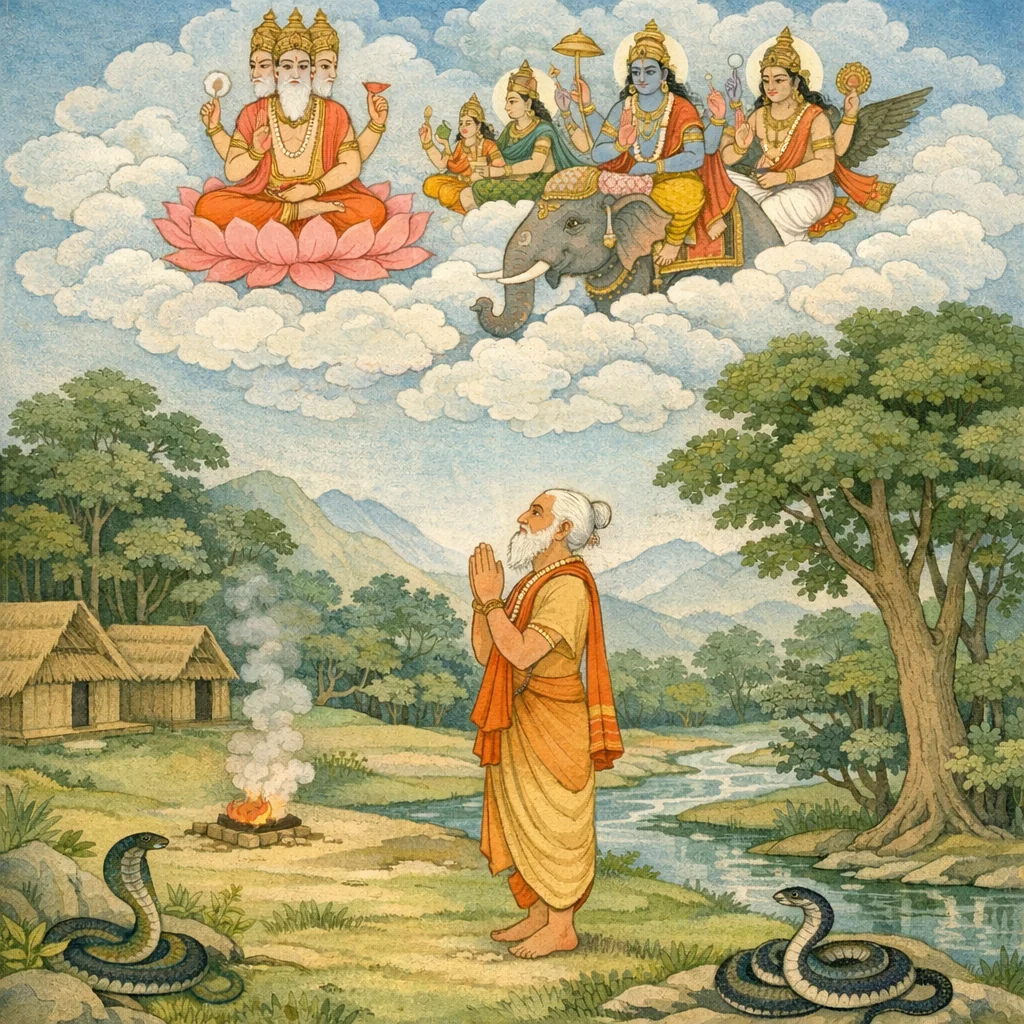
This chapter reports (via Sauti) the immediate consequence of the Kadru–Vinatā wager: after crossing the ocean, Kadru observes numerous black hairs attached to the serpent’s tail, interprets this as proof in her favor, and assigns the despondent Vinatā to servitude. In parallel, the narrative shifts to a cosmological register: at the destined time Garuḍa is born, bursting the egg without maternal assistance, rapidly expanding and taking to the sky. His blazing appearance resembles an immense conflagration; beings, fearing a world-consuming fire, seek refuge with Agni. Agni clarifies that the radiance is Garuḍa’s, comparable to his own tejas. Devas and ṛṣis then approach Garuḍa and praise him with elevated epithets—seer, lord of birds, protector, and cosmic illuminator—framing him as both beneficent and potentially catastrophic. The chapter closes with a key ethical-cosmological act: Garuḍa, thus addressed, performs tejas-pratisaṃhāra, withdrawing and regulating his radiance, signaling controlled power rather than indiscriminate destruction.
Chapter Arc: उग्रश्रवा (सौति) शौनकादि ऋषियों को उस निर्णायक प्रसंग में ले जाते हैं जहाँ कद्रू विनता से पूछती है—उच्चैःश्रवा घोड़े का वर्ण क्या है? एक छोटे-से उत्तर पर दास्य और वंश-भाग्य टिके हैं। → विनता निश्चयपूर्वक कहती है कि अश्वराज श्वेत है और कद्रू से भी वर्ण बताने को कहती है; दोनों बहनों में शर्त बँधती है कि जो गलत होगी वह दूसरी की दासी बनेगी। इसी बीच कद्रू का कठोर शाप नागों पर उतरता है, और उसका प्रतिध्वनि ब्रह्मा तक पहुँचती है—देवगणों सहित सृष्टिकर्ता उस शाप को लोक-हित की दृष्टि से स्वीकारते हैं, क्योंकि नागों की संख्या और उग्रता बढ़ रही है। → ब्रह्मा कश्यप को बुलाकर कहते हैं कि ये दन्दशूक (सर्प) अत्यन्त विषोल्बण, महाभोग और परंतप हैं; कद्रू के शाप पर क्रोध न किया जाए—यह पुरातन विधान है कि यज्ञ में सर्प-विनाश होगा। फिर वे कश्यप को विषहर विद्या प्रदान करते हैं, ताकि विनाश-नियति के बीच भी उपचार और संतुलन बना रहे। → सृष्टि-व्यवस्था का संतुलन स्पष्ट होता है—नागों का संहार नियत है, पर साथ ही विषहर विद्या का दान करुणा और संरक्षण का मार्ग खोलता है। कद्रू-विनता की शर्त निजी कलह से उठकर विश्व-व्यवस्था (यज्ञ, शाप, नियति) के ताने-बाने में जुड़ जाती है। → शप्त नागों के बीच कर्कोटक जैसे प्रमुख भुजग कद्रू से आगे की योजना/उपाय की बात करते हैं—और कथा उस बिंदु पर ठहरती है जहाँ नाग-समुदाय शाप से बचने या उसे मोड़ने की युक्ति खोजने को उद्यत है।
Shlokas
Verse 1
इस प्रकार श्रीमह्ाभारत आदिपरव्वके अन्तर्गत आस्तीकपर्वमें अमृतमन्थन-समाप्ति नामक उन्नीसवाँ अध्याय पूरा हुआ ॥/ १९ ॥ अपर बक। ] अि्शशाएड< विशो<् ध्याय: कद्रू और विनताकी होड़, कद्रुद्वारा अपने पुत्रोंको शाप एवं ब्रह्माजीद्वारा उसका अनुमोदन सौतिर्वाच एतत् ते कथितं सर्वममृतं मथितं यथा । यत्र सो5श्वः समुत्पन्न: श्रीमानतुलविक्रम:,उग्रश्रवाजी कहते हैं--शौनकादि महर्षियो! जिस प्रकार अमृत मथकर निकाला गया, वह सब प्रसंग मैंने आपलोगोंसे कह सुनाया। उस अमृत-मन्थनके समय ही वह अनुपम वेगशाली सुन्दर अश्व उत्पन्न हुआ था, जिसे देखकर कद्रूने विनतासे कहा--“भद्रे! शीघ्र बताओ तो यह उच्चै:श्रवा घोड़ा किस रंगका है?”
Sauti said: “I have now told you in full how the nectar was churned forth. At that very churning there arose the splendid horse, of incomparable might.”
Verse 2
यं निशम्य तदा कद्रूविनतामिदमब्रवीत् । उच्चै:श्रवा हि किं वर्णो भद्रे प्रत्रूहि माचिरम्,उग्रश्रवाजी कहते हैं--शौनकादि महर्षियो! जिस प्रकार अमृत मथकर निकाला गया, वह सब प्रसंग मैंने आपलोगोंसे कह सुनाया। उस अमृत-मन्थनके समय ही वह अनुपम वेगशाली सुन्दर अश्व उत्पन्न हुआ था, जिसे देखकर कद्रूने विनतासे कहा--“भद्रे! शीघ्र बताओ तो यह उच्चै:श्रवा घोड़ा किस रंगका है?”
Hearing of it then, Kadrū said to Vinatā: “O gentle lady, what color indeed is Uccaiḥśravā? Tell me quickly—do not delay.”
Verse 3
विनतोवाच श्वेत एवाश्वराजो<यं किं वा त्वं मनन््यसे शुभे । ब्रृहि वर्ण त्वमप्यस्य ततो5त्र विपणावहे,विनता बोली--शुभे! यह अश्वराज श्वेत वर्णका ही है। तुम इसे कैसा समझती हो? तुम भी इसका रंग बताओ, तब हम दोनों इसके लिये बाजी लगायेंगी
Vinata said: “O auspicious one, this king of horses is indeed white. What do you think? You too declare its color; then let us make a wager here.”
Verse 4
कटूरुवाच कृष्णवालमहं मन्ये हयमेनं शुचिस्मिते । एहि सार्ध मया दीव्य दासीभावाय भामिनि,कद्रूने कहा--पवित्र मुसकानवाली बहन! इस घोड़े (का रंग तो अवश्य सफेद है, किंतु इस)-की पूँछको मैं काले रंगकी ही मानती हूँ। भामिनि! आओ, दासी होनेकी शर्त रखकर मेरे साथ बाजी लगाओ (यदि तुम्हारी बात ठीक हुई तो मैं दासी बनकर रहूँगी; अन्यथा तुम्हें मेरी दासी बनना होगा)
Kadrū said: “O you of pure, gentle smile, I hold that this horse has a black tail. Come—wager with me on this point, with slavery as the stake, O proud lady. If your claim proves true, I shall live as your servant; otherwise, you must become mine.”
Verse 5
सौतिर्वाच एवं ते समयं कृत्वा दासीभावाय वै मिथ: । जम्मतुः स्वगृहानेव श्रो द्रक्ष्याव इति सम ह,उग्रश्रवाजी कहते हैं--इस प्रकार वे दोनों बहनें आपसमें एक-दूसरेकी दासी होनेकी शर्त रखकर अपने-अपने घर चली गयीं और उन्होंने यह निश्चय किया कि कल आकर घोड़ेको देखेंगी
Sauti said: Having thus made an agreement between themselves—stipulating that one would become the other’s maidservant—they both returned to their respective homes. They resolved, “Tomorrow we shall come and see the horse.”
Verse 6
ततः पुत्रसहसत्रं तु कद्रूर्जिह्यां चिकीर्षती । आज्ञापयामास तदा वाला भूत्वाञ्जनप्रभा:,कद्रू कुटिलता एवं छलसे काम लेना चाहती थी। उसने अपने सहस्र पुत्रोंकी इस समय आज्ञा दी कि तुम काले रंगके बाल बनकर शीघ्र उस घोड़ेकी पूँछमें लग जाओ, जिससे मुझे दासी न होना पड़े। उस समय जिन सर्पोने उसकी आज्ञा न मानी उन्हें उसने शाप दिया कि, “जाओ, पाण्डववंशी बुद्धिमान् राजर्षि जनमेजयके सर्पयज्ञका आरम्भ होनेपर उसमें प्रज्वलित अग्नि तुम्हें जलाकर भस्म कर देगी”
Then Kadrū, bent on crooked deceit, commanded her thousand sons: “Become black hairs at once and cling swiftly to the horse’s tail, so that I may not become a slave.” Those serpents who did not obey her order she cursed: “When the wise royal sage Janamejaya of the Pāṇḍava line begins the serpent-sacrifice, the blazing fire of that rite will burn you to ashes.”
Verse 7
आविशध्वं हयं क्षिप्रं दासी न स्थामहं यथा । नावपद्यन्त ये वाक्यं ताञ्छशाप भुजड्मान्,कद्रू कुटिलता एवं छलसे काम लेना चाहती थी। उसने अपने सहस्र पुत्रोंकी इस समय आज्ञा दी कि तुम काले रंगके बाल बनकर शीघ्र उस घोड़ेकी पूँछमें लग जाओ, जिससे मुझे दासी न होना पड़े। उस समय जिन सर्पोने उसकी आज्ञा न मानी उन्हें उसने शाप दिया कि, “जाओ, पाण्डववंशी बुद्धिमान् राजर्षि जनमेजयके सर्पयज्ञका आरम्भ होनेपर उसमें प्रज्वलित अग्नि तुम्हें जलाकर भस्म कर देगी”
Śaunaka said: “Enter the horse at once, so that I may not become a slave.” Those serpents who did not comply with her command, Kadrū—acting with crooked intent—cursed: “When the wise royal sage Janamejaya of the Pāṇḍava line begins the serpent-sacrifice, the blazing fire of that rite will burn you to ashes.”
Verse 8
सर्पसत्रे वर्तमाने पावको व: प्रधक्ष्यति । जनमेजयस्य राजर्षे: पाण्डवेयस्प धीमत:,कद्रू कुटिलता एवं छलसे काम लेना चाहती थी। उसने अपने सहस्र पुत्रोंकी इस समय आज्ञा दी कि तुम काले रंगके बाल बनकर शीघ्र उस घोड़ेकी पूँछमें लग जाओ, जिससे मुझे दासी न होना पड़े। उस समय जिन सर्पोने उसकी आज्ञा न मानी उन्हें उसने शाप दिया कि, “जाओ, पाण्डववंशी बुद्धिमान् राजर्षि जनमेजयके सर्पयज्ञका आरम्भ होनेपर उसमें प्रज्वलित अग्नि तुम्हें जलाकर भस्म कर देगी”
Śaunaka said: “When the serpent-sacrifice is underway, the blazing fire will burn you. In the sacrifice of the wise royal sage Janamejaya, descendant of the Pāṇḍavas, you will be consumed.”
Verse 9
शापमेनं तु शुश्राव स्वयमेव पितामह: । अतिक्रूरं समुत्सृष्टं कद्रवा दैवादतीव हि,इस शापको स्वयं ब्रह्माजीने सुना। यह दैवसंयोगकी बात है कि सर्पोंको उनकी माता कद्गरूकी ओरसे ही अत्यन्त कठोर शाप प्राप्त हो गया
Śaunaka said: The Grandsire (Brahmā) himself heard of this curse. By a striking turn of fate, the serpents received an exceedingly harsh curse—issued by their own mother, Kadrū.
Verse 10
सार्ध देवगणै: सर्वैर्वाच॑ं तामन्वमोदत । बहुवं प्रेक्ष्य सर्पाणां प्रजानां हितकाम्यया,सम्पूर्ण देवताओंसहित ब्रह्माजीने सर्पोंकी संख्या बढ़ती देख प्रजाके हितकी इच्छासे कद्रूकी उस बातका अनुमोदन ही किया
Śaunaka said: Together with all the hosts of gods, Brahmā approved that proposal. Seeing the serpents multiplying in great numbers, and wishing the welfare of living beings, he consented—motivated by concern for the common good.
Verse 11
तिग्मवीर्यविषा होते दन््दशूका महाबला: । तेषां तीक्षणविषत्वाद्धि प्रजानां च हिताय च,“ये महाबली दुःसह पराक्रम तथा प्रचण्ड विषसे युक्त हैं। अपने तीखे विषके कारण ये सदा दूसरोंको पीड़ा देनेके लिये दौड़ते-फिरते हैं। अतः समस्त प्राणियोंके हितकी दृष्टिसे इन्हें शाप देकर माता कद्भूने उचित ही किया है। जो सदा दूसरे प्राणियोंको हानि पहुँचाते रहते हैं, उनके ऊपर दैवके द्वारा ही प्राणनाशक दण्ड आ पड़ता है।” ऐसी बात कहकर ब्रह्माजीने कट्रूकी प्रशंसा की और कश्यपजीको बुलाकर यह बात कही--“अनघ! तुम्हारे द्वारा जो ये लोगोंको डँसनेवाले सर्प उत्पन्न हो गये हैं, इनके शरीर बहुत विशाल और विष बड़े भयंकर हैं। परंतप! इन्हें इनकी माताने शाप दे दिया है, इसके कारण तुम किसी तरह भी उसपर क्रोध न करना। तात! यज्ञमें सर्पोंका नाश होनेवाला है, यह पुराणवृत्तान्त तुम्हारी दृष्टिमें भी है ही!” ऐसा कहकर सृष्टिकर्ता ब्रह्माजीने प्रजापति कश्यपको प्रसन्न करके उन महात्माको सर्पोका विष उतारनेवाली विद्या प्रदान की
Śaunaka said: “These serpents are of fierce potency and venom, mighty in strength and deadly in their bite. Because their poison is so sharp—and for the welfare of living beings—it was right for their mother Kadrū to restrain them by a curse. Those who continually injure other creatures inevitably meet a life-destroying punishment ordained by fate.” Saying this, Brahmā praised Kadrū and summoned Kaśyapa, advising him: “Blameless one, the biting serpents born of you have huge bodies and dreadful venom; yet since their mother has cursed them, you must not be angered by it. Their destruction in a sacrifice is an ancient destined event known to you as well.” Having thus consoled Prajāpati Kaśyapa, the Creator granted him the knowledge that neutralizes serpent-venom.
Verse 12
युक्त मात्रा कृतं तेषां परपीडोपसर्पिणाम् । अन्येषामपि सत्त्वानां नित्यं दोषपरास्तु ये,“ये महाबली दुःसह पराक्रम तथा प्रचण्ड विषसे युक्त हैं। अपने तीखे विषके कारण ये सदा दूसरोंको पीड़ा देनेके लिये दौड़ते-फिरते हैं। अतः समस्त प्राणियोंके हितकी दृष्टिसे इन्हें शाप देकर माता कद्भूने उचित ही किया है। जो सदा दूसरे प्राणियोंको हानि पहुँचाते रहते हैं, उनके ऊपर दैवके द्वारा ही प्राणनाशक दण्ड आ पड़ता है।” ऐसी बात कहकर ब्रह्माजीने कट्रूकी प्रशंसा की और कश्यपजीको बुलाकर यह बात कही--“अनघ! तुम्हारे द्वारा जो ये लोगोंको डँसनेवाले सर्प उत्पन्न हो गये हैं, इनके शरीर बहुत विशाल और विष बड़े भयंकर हैं। परंतप! इन्हें इनकी माताने शाप दे दिया है, इसके कारण तुम किसी तरह भी उसपर क्रोध न करना। तात! यज्ञमें सर्पोंका नाश होनेवाला है, यह पुराणवृत्तान्त तुम्हारी दृष्टिमें भी है ही!” ऐसा कहकर सृष्टिकर्ता ब्रह्माजीने प्रजापति कश्यपको प्रसन्न करके उन महात्माको सर्पोका विष उतारनेवाली विद्या प्रदान की
Śaunaka said: “The mother acted with due measure in cursing those creatures who creep about to torment others. For those beings who are ever intent on wrongdoing and who constantly injure other living creatures, a life-destroying punishment inevitably falls upon them by divine ordinance.” Thus speaking, Brahmā praised Kadrū and, summoning Kaśyapa, told him not to be angered by the curse laid upon the mighty, venomous serpents he had begotten, for their destruction in a sacrifice was already foreseen; and Brahmā then consoled Kaśyapa and granted him the knowledge for neutralizing serpent-venom.
Verse 13
तेषां प्राणान््तको दण्डो देवेन विनिपात्यते । एवं सम्भाष्य देवस्तु पूज्य कद्रें च तां तदा,“ये महाबली दुःसह पराक्रम तथा प्रचण्ड विषसे युक्त हैं। अपने तीखे विषके कारण ये सदा दूसरोंको पीड़ा देनेके लिये दौड़ते-फिरते हैं। अतः समस्त प्राणियोंके हितकी दृष्टिसे इन्हें शाप देकर माता कद्भूने उचित ही किया है। जो सदा दूसरे प्राणियोंको हानि पहुँचाते रहते हैं, उनके ऊपर दैवके द्वारा ही प्राणनाशक दण्ड आ पड़ता है।” ऐसी बात कहकर ब्रह्माजीने कट्रूकी प्रशंसा की और कश्यपजीको बुलाकर यह बात कही--“अनघ! तुम्हारे द्वारा जो ये लोगोंको डँसनेवाले सर्प उत्पन्न हो गये हैं, इनके शरीर बहुत विशाल और विष बड़े भयंकर हैं। परंतप! इन्हें इनकी माताने शाप दे दिया है, इसके कारण तुम किसी तरह भी उसपर क्रोध न करना। तात! यज्ञमें सर्पोंका नाश होनेवाला है, यह पुराणवृत्तान्त तुम्हारी दृष्टिमें भी है ही!” ऐसा कहकर सृष्टिकर्ता ब्रह्माजीने प्रजापति कश्यपको प्रसन्न करके उन महात्माको सर्पोका विष उतारनेवाली विद्या प्रदान की
Śaunaka said: “For such beings, a life-ending punishment is cast down by the divine. Having spoken thus, the god (Brahmā) then honored Kadrū and praised her decision: those mighty serpents, unbearable in prowess and fierce with venom, roam about ever eager to harm others; therefore, for the welfare of all creatures, it was right that their mother cursed them. Upon those who continually injure living beings, a deadly chastisement inevitably descends by the ordinance of fate.”
Verse 14
आहूय कश्यपं देव इदं वचनमत्रवीत् । यदेते दन्दशूकाश्न सर्पा जातास्त्वयानघ,“ये महाबली दुःसह पराक्रम तथा प्रचण्ड विषसे युक्त हैं। अपने तीखे विषके कारण ये सदा दूसरोंको पीड़ा देनेके लिये दौड़ते-फिरते हैं। अतः समस्त प्राणियोंके हितकी दृष्टिसे इन्हें शाप देकर माता कद्भूने उचित ही किया है। जो सदा दूसरे प्राणियोंको हानि पहुँचाते रहते हैं, उनके ऊपर दैवके द्वारा ही प्राणनाशक दण्ड आ पड़ता है।” ऐसी बात कहकर ब्रह्माजीने कट्रूकी प्रशंसा की और कश्यपजीको बुलाकर यह बात कही--“अनघ! तुम्हारे द्वारा जो ये लोगोंको डँसनेवाले सर्प उत्पन्न हो गये हैं, इनके शरीर बहुत विशाल और विष बड़े भयंकर हैं। परंतप! इन्हें इनकी माताने शाप दे दिया है, इसके कारण तुम किसी तरह भी उसपर क्रोध न करना। तात! यज्ञमें सर्पोंका नाश होनेवाला है, यह पुराणवृत्तान्त तुम्हारी दृष्टिमें भी है ही!” ऐसा कहकर सृष्टिकर्ता ब्रह्माजीने प्रजापति कश्यपको प्रसन्न करके उन महात्माको सर्पोका विष उतारनेवाली विद्या प्रदान की
Śaunaka said: “Summoning Kaśyapa, the Lord spoke these words: ‘O blameless one, these biting serpents that have been born through you…’” The passage frames the serpents’ dangerous nature within a moral order: beings that habitually harm others become subject to a divinely sanctioned punishment, and Kaśyapa is urged not to be angered at their mother’s curse, since a destined event (their destruction in a sacrifice) lies ahead.
Verse 15
विषोल्बणा महाभोगा मात्रा शप्ता: परंतप । तत्र मन्युस्त्वया तात न कर्तव्य: कथंचन,“ये महाबली दुःसह पराक्रम तथा प्रचण्ड विषसे युक्त हैं। अपने तीखे विषके कारण ये सदा दूसरोंको पीड़ा देनेके लिये दौड़ते-फिरते हैं। अतः समस्त प्राणियोंके हितकी दृष्टिसे इन्हें शाप देकर माता कद्भूने उचित ही किया है। जो सदा दूसरे प्राणियोंको हानि पहुँचाते रहते हैं, उनके ऊपर दैवके द्वारा ही प्राणनाशक दण्ड आ पड़ता है।” ऐसी बात कहकर ब्रह्माजीने कट्रूकी प्रशंसा की और कश्यपजीको बुलाकर यह बात कही--“अनघ! तुम्हारे द्वारा जो ये लोगोंको डँसनेवाले सर्प उत्पन्न हो गये हैं, इनके शरीर बहुत विशाल और विष बड़े भयंकर हैं। परंतप! इन्हें इनकी माताने शाप दे दिया है, इसके कारण तुम किसी तरह भी उसपर क्रोध न करना। तात! यज्ञमें सर्पोंका नाश होनेवाला है, यह पुराणवृत्तान्त तुम्हारी दृष्टिमें भी है ही!” ऐसा कहकर सृष्टिकर्ता ब्रह्माजीने प्रजापति कश्यपको प्रसन्न करके उन महात्माको सर्पोका विष उतारनेवाली विद्या प्रदान की
Śaunaka said: “These serpents are swollen with venom and formidable in their power; they have been cursed by their mother. Therefore, O subduer of foes, you must not give way to anger on that account in any manner, dear one.” The ethical point is that when beings habitually harm others, a restraining punishment may arise through destiny; one should not respond with personal wrath but accept the corrective order that protects the welfare of creatures.
Verse 16
दृष्ट पुरातनं होतद् यज्ञे सर्पविनाशनम् । इत्युक्त्वा सृष्टिकृद् देवस्तं प्रसाद्य प्रजापतिम् । प्रादाद् विषहरीं विद्यां कश्यपाय महात्मने,“ये महाबली दुःसह पराक्रम तथा प्रचण्ड विषसे युक्त हैं। अपने तीखे विषके कारण ये सदा दूसरोंको पीड़ा देनेके लिये दौड़ते-फिरते हैं। अतः समस्त प्राणियोंके हितकी दृष्टिसे इन्हें शाप देकर माता कद्भूने उचित ही किया है। जो सदा दूसरे प्राणियोंको हानि पहुँचाते रहते हैं, उनके ऊपर दैवके द्वारा ही प्राणनाशक दण्ड आ पड़ता है।” ऐसी बात कहकर ब्रह्माजीने कट्रूकी प्रशंसा की और कश्यपजीको बुलाकर यह बात कही--“अनघ! तुम्हारे द्वारा जो ये लोगोंको डँसनेवाले सर्प उत्पन्न हो गये हैं, इनके शरीर बहुत विशाल और विष बड़े भयंकर हैं। परंतप! इन्हें इनकी माताने शाप दे दिया है, इसके कारण तुम किसी तरह भी उसपर क्रोध न करना। तात! यज्ञमें सर्पोंका नाश होनेवाला है, यह पुराणवृत्तान्त तुम्हारी दृष्टिमें भी है ही!” ऐसा कहकर सृष्टिकर्ता ब्रह्माजीने प्रजापति कश्यपको प्रसन्न करके उन महात्माको सर्पोका विष उतारनेवाली विद्या प्रदान की
Śaunaka said: “This ancient account is well known—that in a sacrifice there will be the destruction of the serpents.” Having spoken thus, the Creator-god (Brahmā), after gratifying the Prajāpati Kaśyapa, bestowed upon that great-souled sage the serpent-poison-removing lore. The passage frames the serpents’ impending doom as a divinely ordered consequence for beings who harm others, while also providing a remedial knowledge meant for the welfare of living creatures.
Verse 20
(एवं शप्तेषु नागेषु कद्गवा च द्विजसत्तम । उद्विग्न: शापतस्तस्या: कद्/ूं कर्कोटको<ब्रवीत् ।। मातरं परमप्रीतस्तदा भुजगसत्तम: । आविश्य वाजिन मुख्यं वालो भूत्वाउ्जनप्रभ: ।। दर्शयिष्यामि तत्राहमात्मानं काममाश्वस । एवमस्त्विति त॑ पुत्र प्रत्युवाच यशस्विनी ।।) द्विजश्रेष्ठ! इस प्रकार माता कद्भूने जब नागोंको शाप दे दिया, तब उस शापसे उद्विग्न हो भुजंगप्रवर कर्कोटकने परम प्रसन्नता व्यक्त करते हुए अपनी मातासे कहा--“मा! तुम धैर्य रखो, मैं काले रंगका बाल बनकर उस श्रेष्ठ अश्वके शरीरमें प्रविष्ट हो अपने-आपको ही इसकी काली पूँछके रूपमें दिखाऊँगा।' यह सुनकर यशस्विनी कढद्रूने पुत्रको उत्तर दिया --“बेटा! ऐसा ही होना चाहिये'। इति श्रीमहाभारते आदिपर्वणि आस्तीकपर्वणि सौपर्णे विंशो&ध्याय:
Śaunaka said: “O best of twice-born sages, when Kadru had thus cursed the serpents, Karkoṭaka—the foremost among nāgas—distressed by the force of that curse yet speaking with great delight, addressed his mother: ‘Mother, be at ease. Becoming a black hair, I shall enter the body of that excellent horse and there reveal myself as its dark tail.’ Hearing this, the illustrious Kadru replied to her son, ‘So be it, my child.’”
Frequently Asked Questions
The chapter foregrounds the ethical tension between procedural justice and substantive fairness: Vinatā becomes a servant due to the wager’s adjudicated outcome, illustrating how binding agreements can impose severe consequences even when the result appears socially destabilizing.
Power and brilliance (tejas) require self-regulation and social calibration; the narrative models how recognition and wise counsel can convert fear of destruction into ordered coexistence through restraint rather than escalation.
No explicit phalaśruti appears here; the meta-function is structural—linking Vinatā’s bondage to the necessity of Garuḍa’s later actions, and presenting tejas-pratisaṃhāra as an interpretive key for reading power ethically within the epic’s cosmology.