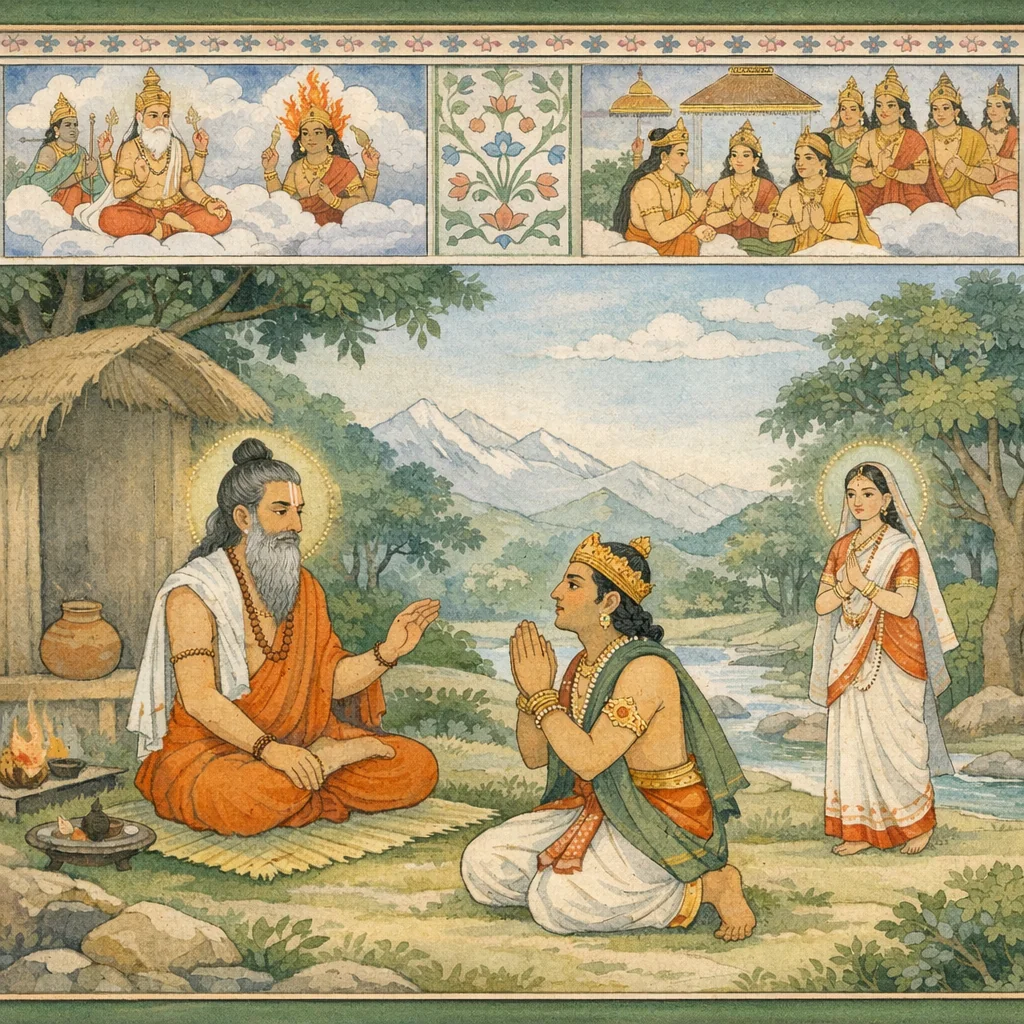
Adhyaya 196
Adhyāya 196: Droṇa’s Conciliatory Counsel and Karṇa’s Suspicion of Counsel (मन्त्र-नय-विवादः)
Upa-parva: Mantra-Nīti in the Kuru Court (Drona–Karna Counsel Episode)
The chapter is structured as a court debate on policy. Droṇa opens by affirming that counsel for Dhṛtarāṣṭra’s benefit should be dharmya (ethically sound), pathya (wholesome/prudent), and yaśasya (reputation-preserving). He aligns his view with Bhīṣma’s and proposes a concrete diplomatic program: send a courteous envoy promptly to Drupada bearing abundant jewels; communicate mutual obligations and the prosperity that would arise from renewed association; convey goodwill toward Duryodhana; repeatedly reassure Drupada and his son Dhṛṣṭadyumna; and deliver bright golden ornaments to Draupadī and suitable gifts to Drupada’s sons and the Pāṇḍavas (including items appropriate for Kuntī). After this conciliatory address, the envoy should discuss the Pāṇḍavas’ coming, and upon permission, a suitable force should proceed, with Duḥśāsana and Vikarṇa tasked to bring the Pāṇḍavas back. Droṇa further argues that honored by the king and accepted by the subjects, they will stand in their ancestral station. Karṇa then challenges the counsel’s credibility: he asserts that those aligned by interest may not advise what truly benefits the king, and that a person with concealed, malicious intent cannot credibly speak of welfare. He introduces an exemplum about a debilitated Magadhan king named Ambuvīca and a powerful minister Mahākarṇi who, emboldened, appropriates royal enjoyments and wealth, his greed escalating toward seizing the kingdom—yet the king cannot prevent it. Karṇa concludes with a deterministic note: if sovereignty is ordained (vihita) it will remain; if otherwise, effort will not secure it; therefore the king must discriminate between good and bad ministers and interpret both the speech of the corrupt and the non-corrupt. Droṇa replies by diagnosing Karṇa’s motive as hostility toward the Pāṇḍavas, insisting his own advice is paramount welfare for the Kurus. He challenges Karṇa to propose a superior policy if he deems Droṇa’s counsel flawed, and warns that if the king acts contrary to this prudent course, the Kurus will perish soon—closing the chapter on a stark policy-and-consequence admonition.
Chapter Arc: व्यासजी द्रुपद को एक प्राचीन, विस्मयकारी आख्यान में ले जाते हैं—नैमिषारण्य में देवताओं का यज्ञ, जहाँ यम (वैवस्वत) यज्ञ-दीक्षा में प्रवृत्त हैं। → यम के यज्ञ-कार्य में व्यस्त होने से मृत्यु-व्यवस्था शिथिल पड़ जाती है; प्रजाएँ ‘कालातिपात’ से मरना छोड़ देती हैं और लोक-व्यवस्था असंतुलित होने लगती है। देवगण—सोम, इन्द्र, वरुण, कुबेर, साध्य, रुद्र, वसु, अश्विन, प्रजापति आदि—इस विचित्र स्थिति पर एकत्र होकर कारण खोजते हैं। → ब्रह्मा/भगवान् का निर्णायक वचन आता है—यम सत्र-हेतु व्यस्त है, इसलिए मनुष्य नहीं मर रहे; पर जब वह एकाग्र होकर अपना कार्य पूर्ण करेगा, तब सबका ‘अन्तकाल’ अवश्य आएगा। इसी धुरी पर कथा आगे ‘पञ्चेन्द्र’ रहस्य की ओर मुड़ती है—देव-तत्त्व और मानव-जीवन के विधान का उद्घाटन। → व्यास तपस्या-बल से द्रुपद को दिव्य-चक्षु प्रदान करते हैं, जिससे वह पूर्वदेहों/पूर्व-स्वरूपों का यथावत् दर्शन कर सके। फिर संकेत स्पष्ट होता है—यह देवी (द्रौपदी) देवजुष्टा है, पाँचों के लिए एक है; द्रुपद को उसी के अनुरूप निर्णय करना चाहिए। → गिरिश (शिव) क्रुद्ध होकर इन्द्र (शतक्रतु) को पुरानी अवमानना का स्मरण कराते हुए आदेश देते हैं—‘इस दरी/गुफा में प्रवेश कर’; देव-प्रतिस्पर्धा और दैवी दण्ड का भय कथा को अगले प्रसंग की ओर धकेल देता है।
Shlokas
Verse 1
व्यासजीने कहा--पांचालनरेश! पूर्व कालकी बात है, नैमिषारण्य क्षेत्रमें देवता लोग एक यज्ञ कर रहे थे। उस समय वहाँ सूर्यपुत्र यम शामित्र (यज्ञ)-कार्य करते थे
Vyāsa said: “O king of Pañcāla, this is an account from ancient times. In the sacred region of Naimiṣāraṇya, the gods were performing a sacrifice. At that time, Yama—the Sun’s son—was present there, officiating and carrying out the sacrificial duties.”
Verse 2
ततो यमो दीक्षितस्तत्र राजन् नामारयत् कंचिदपि प्रजानाम् | ततः प्रजास्ता बहुला बभूवु: कालातिपातान्मरणप्रहीणा:,राजन! उस यज्ञकी दीक्षा लेनेके कारण यमराजने मानवप्रजाकी मृत्युका काम बंद कर रखा था। इस प्रकार मृत्युका नियत समय बीत जानेसे सारी प्रजा अमर होकर दिनों-दिन बढ़ने लगी। धीरे-धीरे उसकी संख्या बहुत बढ़ गयी
Then, O King, Yama—having undertaken the consecration for that rite—did not cause the death of any among the people. As the appointed time of death passed without taking effect, the populace became free from mortality and, day by day, multiplied greatly.
Verse 3
सोमश्च शक्रो वरुण: कुबेर: साध्या रुद्रा वसवो<5थाश्विनौ च । प्रजापतिर्भुवनस्य प्रणेता समाजम्मुस्तत्र देवास्तथान्ये,चन्द्रमा, इन्द्र, वरुण, कुबेर, साध्यगण, रुद्रगण, वसुगण, दोनों अश्विनीकुमार तथा अन्य सब देवता मिलकर जहाँ सृष्टिकर्ता प्रजापति ब्रह्माजी रहते थे, वहाँ गये। वहाँ जाकर वे सब देवता लोकगुरु ब्रह्माजीसे बोले--'भगवन्! मनुष्योंकी संख्या बहुत बढ़ रही है। इससे हमें बड़ा भय लगता है। उस भयसे हम सबलोग व्याकुल हो उठे हैं और सुख पानेकी इच्छासे आपकी शरणमें आये हैं!
Vyāsa said: Soma (the Moon), Śakra (Indra), Varuṇa, Kubera, the Sādhyas, the Rudras, the Vasus, and the two Aśvins—along with other gods—assembled and went to the Creator Prajāpati, the ordainer of the worlds. Approaching the Lord of beings, they expressed their anxiety: the human population was increasing greatly; this growth filled them with fear and unrest, and seeking security and well-being they took refuge in him and appealed for guidance.
Verse 4
ततो<ब्रुवन् लोकगुरुं समेता भयात् तीव्रान्मानुषाणां च वृद्धया । तस्माद् भयादुद्धिजन्त: सुखेप्सव: प्रयाम सर्वे शरणं भवन्तम्,चन्द्रमा, इन्द्र, वरुण, कुबेर, साध्यगण, रुद्रगण, वसुगण, दोनों अश्विनीकुमार तथा अन्य सब देवता मिलकर जहाँ सृष्टिकर्ता प्रजापति ब्रह्माजी रहते थे, वहाँ गये। वहाँ जाकर वे सब देवता लोकगुरु ब्रह्माजीसे बोले--'भगवन्! मनुष्योंकी संख्या बहुत बढ़ रही है। इससे हमें बड़ा भय लगता है। उस भयसे हम सबलोग व्याकुल हो उठे हैं और सुख पानेकी इच्छासे आपकी शरणमें आये हैं!
Then the gods assembled and, seized by intense fear because the human population had greatly increased, went for refuge to the Teacher of the worlds—Pitāmaha, Prajāpati Brahmā, the Creator. Chandra, Indra, Varuṇa, Kubera, the hosts of the Sādhyas, the Rudras, the Vasus, the two Aśvinī-kumāras, and all the other deities came to where the Creator dwelt and said to Brahmā, the world’s guru: “O Blessed Lord! The number of human beings has grown exceedingly, and this fills us with great fear. Disturbed by that fear and desiring well-being, we have all come to seek shelter in you.”
Verse 5
पितामह उवाच कि वो भयं मानुषेभ्यो यूयं सर्वे यदामरा: । मा वो मर्त्यसकाशाद् वै भयं भवितुमर्हति,ब्रहद्माजीने कहा--तुम्हें मनुष्योंसे क्यों भय लगता है? जबकि तुम सभी लोग अमर हो, तब तुम्हें मरणधर्मा मनुष्योंसे कभी भयभीत नहीं होना चाहिये
Pitāmaha said: “Why do you fear human beings, when all of you are immortal? It is not fitting that you should ever be afraid of mortals.”
Verse 6
देवा ऊचु मर्त्या अमर्त्या: संवृत्ता न विशेषो$स्ति कश्नन । अविशेषादुद्धिजन्तो विशेषार्थमिहागता:,देवता बोले--जो मरणशील थे, वे अमर हो गये। अब हममें और उनमें कोई अन्तर नहीं रह गया। यह अन्तर मिट जानेसे ही हमें अधिक घबराहट हो रही है। हमारी विशेषता बनी रहे, इसीलिये हम यहाँ आये हैं
The gods said: “Those who were mortal have become immortal; now there is no distinction at all between us and them. Disturbed by this loss of distinction, we have come here seeking to restore our special status.”
Verse 7
श्रीभगवानुवाच वैवस्वतो व्यापृतः सत्रहेतो- स्तेन त्विमे न ग्रियन्ते मनुष्या: । तस्मिन्नेकाग्रे कृतसर्वकार्ये तत एपषां भवितैवान्तकाल:,भगवान् ब्रह्माजीने कहा--सूर्यपुत्र यमराज यज्ञके कार्यमें लगे हैं, इसीलिये ये मनुष्य मर नहीं रहे हैं। जब वे यज्ञका सारा काम पूरा करके इधर ध्यान देंगे, तब इन मनुष्योंका अन्तकाल उपस्थित होगा। तुमलोगोंके बलके प्रभावसे जब सूर्यनन्दन यमराजका शरीर यज्ञकार्यसे अलग होकर अपने कार्यमें प्रयुक्त होगा, तब वही अन्तकाल आनेपर मनुष्योंकी मृत्युका कारण बनेगा। उस समय मनुष्योंमें इतनी शक्ति नहीं होगी कि वे मृत्युसे अपनेको बचा सकें
The Blessed Lord said: “Vaivasvata (Yama), engaged on account of a sacrificial session, is occupied elsewhere; therefore these human beings are not dying. But when he becomes single-minded again—having completed all the work of that rite—then indeed their appointed end-time will arrive.”
Verse 8
वैवस्वतस्यैव तनुर्विभक्ता वीर्येण युष्माकमुत प्रयुक्ता । सैषामन्तो भविता हाुन्तकाले न तत्र वीर्य भविता नरेषु,भगवान् ब्रह्माजीने कहा--सूर्यपुत्र यमराज यज्ञके कार्यमें लगे हैं, इसीलिये ये मनुष्य मर नहीं रहे हैं। जब वे यज्ञका सारा काम पूरा करके इधर ध्यान देंगे, तब इन मनुष्योंका अन्तकाल उपस्थित होगा। तुमलोगोंके बलके प्रभावसे जब सूर्यनन्दन यमराजका शरीर यज्ञकार्यसे अलग होकर अपने कार्यमें प्रयुक्त होगा, तब वही अन्तकाल आनेपर मनुष्योंकी मृत्युका कारण बनेगा। उस समय मनुष्योंमें इतनी शक्ति नहीं होगी कि वे मृत्युसे अपनेको बचा सकें
Pitāmaha said: “It is indeed a portion of Vaivasvata (Yama) himself—separated off and set to work, impelled by your might. When the destined end-time arrives, that very agency will become the cause of these men’s death; and at that time there will be no strength left in human beings to ward off death.”
Verse 9
व्यास उवाच ततस्तु ते पूर्वजदेववाक्यं श्रुत्वा जम्मुर्यत्र देवा यजन्ते । समासीनास्ते समेता महाबला भागीर थ्यां ददृशु: पुण्डरीकम्,व्यासजी कहते हैं--राजन्! तब वे अपने पूर्वज देवता ब्रह्माजीका वचन सुनकर फिर वहीं चले गये, जहाँ सब देवता यज्ञ कर रहे थे। एक दिन वे सभी महाबली देवगण गंगाजीमें स्नान करनेके लिये गये और वहाँ तटपर बैठे। उसी समय उन्हें भागीरथीके जलमें बहता हुआ एक कमल दिखायी दिया
Vyāsa said: “O King, having heard the command of their ancestral deity, Brahmā, they returned to the very place where the gods were performing sacrifice. One day, all those mighty gods went to bathe in the Bhāgīrathī (Gaṅgā). Sitting together on the riverbank, they then saw a lotus drifting along in the waters of the Bhāgīrathī.”
Verse 10
दृष्टवा च तद् विस्मितास्ते बभूवु- स्तेषामिन्द्रस्तत्र शूरो जगाम । सो<पश्यद् योषामथ पावकप्रभां यत्र देवी गड़ा सततं प्रसूता,उसे देखकर वे सब देवता चकित हो गये। उनमें सबसे प्रधान और शूरवीर इन्द्र उस कमलका पता लगानेके लिये गंगाजीके मूल-स्थानकी ओर गये। गंगोत्तरीके पास, जहाँ गंगादेवीका जल सदा अविच्छिन्नरूपसे झरता रहता है, पहुँचकर इन्द्रने एक अग्निके समान तेजस्विनी युवती देखी
Seeing that marvel, all the gods were struck with astonishment. Then Indra—the foremost among them and a hero—went there to trace its source. Reaching the region near Gaṅgā’s origin, where the goddess Gaṅgā’s waters flow forth unceasingly, Indra beheld a young woman radiant like fire.
Verse 11
सा तत्र योषा रुदती जलार्थिनी गड्जां देवीं व्यवगाहा व्यतिष्ठत् । तस्याश्रुबिन्दु: पतितो जले य- स्तत् पद्ममासीदथ तत्र काउ्चनम्,वह युवती वहाँ जलके लिये आयी थी और भगवती गंगाकी धारामें प्रवेश करके रोती हुई खड़ी थी। उसके आँसुओंका एक-एक बिन्दु, जो जलमें गिरता था, वहाँ सुवर्णमय कमल बन जाता था
There, a young woman, weeping and seeking water, entered the sacred river Gaṅgā and stood within her current. Each tear-drop of hers that fell into the water at once became a lotus of gold.
Verse 12
तदद्धुत॑ प्रेक्ष्य वज्जी तदानी- मपृच्छत् तां योषितमन्तिकाद् वै | का त्वं भद्रे रोदिषि कस्य हेतो- वॉक्यं तथ्यं कामये<हं ब्रवीहि,यह अद्भुत दृश्य देखकर वज्रधारी इन्द्रने उस समय उस युवतीके निकट जाकर पूछा --'भद्रे! तुम कौन हो और किसलिये रोती हो? बताओ, मैं तुमसे सच्ची बात जानना चाहता हूँ!
Seeing that wondrous sight, Indra, the wielder of the thunderbolt, at once approached the young woman and questioned her from nearby: “O gentle lady, who are you, and for what reason do you weep? Tell me— I desire to hear the truth from you.”
Verse 13
रूयुवाच त्वं वेत्स्यसे मामिह यास्मि शक्र यदर्थ चाहं रोदिमि मन्दभाग्या । आगच्छ राजन् पुरतो गमिष्ये द्रष्टासि तद् रोदिमि यत्कृतेडहम्,युवती बोली--देवराज इन्द्र! मैं एक भाग्यहीन अबला हूँ; कौन हूँ और किसलिये रो रही हूँ, यह सब तुम्हें ज्ञात हो जायगा। तुम मेरे पीछे-पीछे आओ, मैं आगे-आगे चल रही हूँ। वहाँ चलकर स्वयं ही देख लोगे कि मैं किसलिये रोती हूँ
Rū said: “O Śakra (Indra), you will soon know who I am and for what reason I, a luckless woman, am weeping here. Come, O king of the gods—follow behind me; I shall go ahead. When we reach there, you will see for yourself the very cause for which I weep.”
Verse 14
व्यास उवाच तां गच्छन्तीमन्वगच्छत् तदानीं सो<पश्यदारात् तरुणं दर्शनीयम् । सिद्धासनस्थं युवतीसहायं क्रीडन्तमैक्षद् गिरिराजमूर्थ्नि,व्यासजी कहते हैं--राजन्! यों कहकर आगे-आगे जाती हुई उस स्त्रीके पीछे-पीछे उस समय इन्द्र भी गये। गिरिराज हिमालयके शिखरपर पहुँचकर उन्होंने देखा--पास ही एक परम सुन्दर तरुण पुरुष सिद्धासनसे बैठे हैं, उनके साथ एक युवती भी है। इन्द्रने उस युवतीके साथ उन्हें क्रीड़ा-विनोद करते देखा
Vyāsa said: O King, when that woman had spoken thus and went on ahead, Indra followed close behind her. Reaching the summit of the king of mountains, the Himālaya, he saw nearby a handsome young man seated in the siddhāsana posture, with a young woman as his companion. Indra observed the two engaged in playful sport.
Verse 15
तमब्रवीद् देवराजो ममेदं त्वं विद्धि विद्वन् भुवनं वशे स्थितम् । ईशो5हमस्मीति समन्युरब्रवीद् दृष्टवा तमक्षै: सुभुशं प्रमत्तम्,वे अपनी सम्पूर्ण इन्द्रियोंसे क्रीड़ामें अत्यन्त तन््मय हो रहे थे, अत: इधर-उधर उनका ध्यान नहीं जाता था। उन्हें इस प्रकार असावधान देख देवराज इन्द्रने कुपित होकर कहा --“महानुभाव! यह सारा जगत् मेरे अधिकारमें है, मेरी आज्ञाके अधीन है; मैं इस जगत्का ईश्वर हूँ"
Seeing him utterly heedless—his senses absorbed in play and his gaze unaware of all around—the king of the gods, Indra, spoke in anger: “Know this, O learned one: this whole world stands under my control, subject to my command. I am its lord.”
Verse 16
क्रुद्धं च शक्रं प्रसमीक्ष्य देवो जहास शक्रं च शनैरुदैक्षत । संस्तम्भितो5भूदथ देवराज- स्तेनेक्षित: स्थाणुरिवावतस्थे,इन्द्रको क्रोधमें भरा देख वे देवपुरुष हँस पड़े। उन्होंने धीरेसे आँख उठाकर उनकी ओर देखा। उनकी दृष्टि पड़ते ही देवराज इन्द्रका शरीर स्तम्भित हो गया (अकड़ गया)। वे ढूँठे काठकी भाँति निश्चेष्ट हो गये
Seeing Śakra (Indra) inflamed with anger, the divine being laughed. Then, slowly raising his gaze toward Śakra, he looked at him. Struck by that look, the king of the gods became rigid and immobilized, standing motionless like a stump.
Verse 17
यदा तु पर्याप्तमिहास्य क्रीडया तदा देवीं रुदतीं तामुवाच । आनीयतामेष यतो5हमारा- न्ैनं दर्प: पुनरप्याविशेत,जब उनकी वह क्रीड़ा समाप्त हुई, तब वे उस रोती हुई देवीसे बोले--“इस इन्द्रको जहाँ मैं हूँ, यहीं--मेरे समीप ले आओ, जिससे फिर इसके भीतर अभिमानका प्रवेश न हो”
When his sport here had gone on long enough, he addressed that goddess who was weeping: “Bring this Indra to where I am, close at hand, so that arrogance may not enter him again.”
Verse 18
ततः शक्र: स्पृष्टमात्रस्तया तु स्रस्तैरड्रे: पतितो5भूद् धरण्याम् । तमब्रवीद् भगवानुग्रतेजा मैवं पुन: शक्र कृथा: कथंचित्,तदनन्तर उस स्त्रीने ज्यों ही इन्द्रका स्पर्श किया, उनके सारे अंग शिथिल हो गये और वे धरतीपर गिर पड़े। तब उग्र तेजस्वी भगवान् रुद्रने उनसे कहा--'इन्द्र! फिर किसी प्रकार भी ऐसा घमंड न करना
Then Śakra (Indra), the moment he was touched by that woman, had all his limbs go slack and fell down upon the earth. The blessed Lord, of fierce splendor (Rudra), addressed him: “Indra—do not ever again, in any way, act with such arrogance.”
Verse 19
निवर्तयैनं च महाद्रिराजं बलं॑ च वीर्य च तवाप्रमेयम् । छिद्रस्य चैवाविश मध्यमस्य यत्रासते त्वद्विधा: सूर्यभास:,“तुममें अनन्त बल और पराक्रम है, अत: इस गुफाके दरवाजेपर लगे हुए इस महान् पर्ववराजको हटा दो और इसी गुफाके भीतर घुस जाओ, जहाँ सूर्यके समान तेजस्वी तुम्हारे-जैसे और भी इन्द्र रहते हैं!
Vyāsa said: “Your strength and heroic power are immeasurable. Therefore, remove this great king of mountains that blocks the mouth of the cave, and enter through the opening within. There dwell others like you—radiant as the sun.”
Verse 20
स तदू विवृत्य विवरं महागिरे- स्तुल्यब्ुतींश्ष॒तुरो5न्यान् ददर्श । स तानभिप्रेक्ष्य बभूव दु:ःखित: कच्चिन्नाहं भविता वै यथेमे,उन्होंने उस महान् पर्वतकी कन्दराका द्वार खोलकर उसमें अपने ही समान तेजस्वी अन्य चार इन्द्रोंको भी देखा। उन्हें देखकर वे बहुत दुखी हुए और सोचने लगे--“कहीं ऐसा तो नहीं होगा कि मैं भी इन्हींके समान दुर्दशामें पड़ जाऊँ”
Vyāsa said: Having opened the mouth of that cavern in the great mountain, he saw four other Indras, radiant like himself. Seeing them, he became distressed and thought, “Could it be that I too will end up in the same fallen condition as they?”
Verse 21
तब पर्वतपर शयन करनेवाले महादेवजीने आँखें तरेरकर कुपित हो वज्रधारी इन्द्रसे कहा--“शतक्रतो! तुमने मूर्खतावश पहले मेरा अपमान किया है, इसलिये अब इस कन्दरामें प्रवेश करो”
Then Mahādeva, lying upon the mountain, rolled his eyes in anger and addressed Indra, the wielder of the thunderbolt: “Śatakratu! Through foolishness you once insulted me; therefore now enter this cave.”
Verse 22
उक्तस्त्वेवं विभुना देवराज: प्रावेपतातों भूशमेवाभिषज्भात् स्रस्तैरड्रैरनिलेनेव नुन्न- मश्व॒त्थपत्र॑ गिरिराजमूर्थ्नि,उस पर्वत-शिखरपर भगवान् रुद्रके यों कहनेपर देवराज इन्द्र पराभवकी आशंकासे अत्यन्त दुःखी हो गये, उनके सारे अंग शिथिल पड़ गये और हवासे हिलनेवाले पीपलके पत्तेकी तरह वे थर-थर काँपने लगे
Vyāsa said: Thus addressed by the mighty Lord, the king of the gods, Indra, was seized by intense trembling and sank into deep distress. His limbs grew slack, and he quivered like a peepal leaf shaken by the wind upon the summit of the king of mountains—overwhelmed by the fear of defeat and the moral weight of what he had heard.
Verse 23
स प्राञ्जलिवैं वृषवाहनेन प्रवेपमान: सहसैवमुक्तः । उवाच देवं बहुरूपमुग्र- स्रष्टाशेषस्य भुवनस्य त्वं भवाद्य:,वृषभवाहन भगवान् शंकरके द्वारा इस प्रकार सहसा गुहाप्रवेशकी आज्ञा मिलनेपर काँपते हुए इन्द्रने हाथ जोड़कर उन अनेक रूपधारी उमग्रस्वरूप रुद्रदेवले कहा--“जगद्योने! आप ही समस्त जगतकी उत्पत्ति करनेवाले आदिपुरुष हैं"
With palms joined in reverence, trembling, and suddenly commanded by the bull-bannered Lord, Indra spoke to that fierce, many-formed deity: “O Lord Śaṅkara, rider of the bull! You are the primordial source—the first cause—who brings forth the entire universe.”
Verse 24
तमब्रवीदुग्रवर्चा: प्रहस्य नैवंशीला: शेषमिहाप्नुवन्ति । एते<प्येवं भवितार: पुरस्तात् तस्मादेतां दरीमाविश्य शेष्व,तब भयंकर तेजवाले रुद्रने हँसकर कहा--*तुम्हारे-जैसे शील-स्वभाववाले लोगोंको यहाँ प्रसादकी प्राप्ति नहीं होती। ये लोग भी पहले तुम्हारेही-जैसे थे, अतः तुम भी इस कन्दरामें घुसकर शयन करो
Then the radiant, formidable one laughed and said to him: “People of such gentle disposition do not obtain the remaining grace here. These too were once like you in former times; therefore enter this cave and lie down to sleep.”
Verse 25
तत्र होवं भवितारो न संशयो योनिं सर्वे मानुषीमाविशध्वम् । तत्र यूयं कर्म कृत्वाविषहां बहूनन्यान् निधन प्रापयित्वा,“वहाँ भविष्यमें निश्चय ही तुमलोग ऐसे ही होनेवाले हो--तुम सबको मनुष्ययोनिमें प्रवेश करना पड़ेगा। उस जन्ममें तुम अनेक दुःसह कर्म करके बहुतोंको मौतके घाट उतारकर पुनः अपने शुभ कर्मोद्वारा पहलेसे ही उपार्जित पुण्यात्माओंके निवासयोग्य इन्द्रलोकमें आ जाओगे। मैंने जो कुछ कहा है, वह सब कुछ तुम्हें करना होगा। इसके सिवा और भी नाना प्रकारके प्रयोजनोंसे युक्त कार्य तुम्हारे द्वारा सम्पन्न होंगे!
Vyāsa said: “There is no doubt about it: in the time to come you will indeed become such as this. All of you must enter a human womb. In that birth, performing deeds that are hard to endure, you will bring many others to death; and then, by your auspicious actions, you will return to Indra’s world—the abode of those who have earned merit. Whatever I have declared, you must carry out; and besides this, many other tasks, each serving its own purpose, will also be accomplished through you.”
Verse 26
आगन्तार: पुनरेवेन्द्रलोक॑ स्वकर्मणा पूर्वजितं महाम् । सर्व मया भाषितमेतदेवं कर्तव्यमन्यद् विविधार्थयुक्तम्,“वहाँ भविष्यमें निश्चय ही तुमलोग ऐसे ही होनेवाले हो--तुम सबको मनुष्ययोनिमें प्रवेश करना पड़ेगा। उस जन्ममें तुम अनेक दुःसह कर्म करके बहुतोंको मौतके घाट उतारकर पुनः अपने शुभ कर्मोद्वारा पहलेसे ही उपार्जित पुण्यात्माओंके निवासयोग्य इन्द्रलोकमें आ जाओगे। मैंने जो कुछ कहा है, वह सब कुछ तुम्हें करना होगा। इसके सिवा और भी नाना प्रकारके प्रयोजनोंसे युक्त कार्य तुम्हारे द्वारा सम्पन्न होंगे!
Vyāsa said: “Thereafter you will surely return again to Indra’s world—vast and already won by your own past deeds. Everything I have declared will indeed come to pass and must be carried out by you. And besides this, you will also accomplish other actions, connected with many different purposes.”
Verse 27
पूर्वन्द्रा ऊचु: गमिष्यामो मानुषं देवलोकाद् दुराधरो विहितो यत्र मोक्ष: । पाण्डव, टद्रुपद और व्यासजीमें बातचीत व्यासजीद्धारा पाण्डवोंके पूर्वजन्मके वृत्तान्तका वर्णन देवास्त्वस्मानादधीरञ्जनन्यां धर्मो वायुर्मघवानश्विनौ च । अस्त्रैदिव्यैर्मानुषान् योधयित्वा आगमन्तार: पुनरेवेन्द्रलोकम्,पहलेके चारों इन्द्र बोले--भगवन! हम आपकी आज्ञाके अनुसार देवलोकसे मनुष्यलोकमें जायँगे, जहाँ दुर्लभ मोक्षका साधन भी सुलभ होता है। परंतु वहाँ हमें धर्म, वायु, इन्द्र और दोनों अश्विनीकुमार--ये ही देवता माताके गर्भमें स्थापित करें। तदनन्तर हम दिव्यास्त्रोंद्वारा मानव-वीरोंसे युद्ध करके पुनः इन्द्रलोकमें चले आयेंगे
The former Indras said: “We shall depart from the world of the gods to the human realm, where the means to liberation—though difficult to attain—has been ordained. But there, let Dharma, Vāyu, Maghavān (Indra), and the two Aśvins place us in a mother’s womb. Thereafter, having fought with human heroes by means of divine weapons, we shall return again to Indra’s heaven.”
Verse 28
व्यास उवाच एतच्छुत्वा वज्ञपाणियवरचस्तु देवश्रेष्ठ पुनरेवेदमाह । वीर्येणाहं पुरुष कार्यहेतो- ्दद्यामेषां पठचमं मत्प्रसूतम्,व्यासजी कहते हैं--राजन्! पूर्ववर्ती इन्द्रोंका यह वचन सुनकर वज्रधारी इन्द्रने पुनः देवश्रेष्ठ महादेवजीसे इस प्रकार कहा--“भगवन्! मैं अपने वीर्यसे अपने ही अंशभूत पुरुषको देवताओंके कार्यके लिये समर्पित करूँगा, जो इन चारोंके साथ पाँचवाँ होगा। उसे मैं स्वयं ही उत्पन्न करूँगा। विश्वभुक, भूतधामा, प्रतापी इन्द्र शिबि, चौथे शान्ति और पाँचवें तेजस्वी--ये ही उन पाँचोंके नाम हैं
Vyāsa said: Hearing these words of the earlier Indras, the thunderbolt-bearing Indra again addressed the foremost of the gods, Mahādeva: “Blessed Lord, for the sake of the gods’ purpose I shall offer a man—born from my own potency, a portion of myself—as the fifth among these four. I myself will bring him forth.”
Verse 29
विश्वभुग भूतथामा च शिबिरिन्द्र: प्रतापवान् । शन्तिश्नतुर्थस्तेषां वै तेजस्वी पठचम: स्मृत:,व्यासजी कहते हैं--राजन्! पूर्ववर्ती इन्द्रोंका यह वचन सुनकर वज्रधारी इन्द्रने पुनः देवश्रेष्ठ महादेवजीसे इस प्रकार कहा--“भगवन्! मैं अपने वीर्यसे अपने ही अंशभूत पुरुषको देवताओंके कार्यके लिये समर्पित करूँगा, जो इन चारोंके साथ पाँचवाँ होगा। उसे मैं स्वयं ही उत्पन्न करूँगा। विश्वभुक, भूतधामा, प्रतापी इन्द्र शिबि, चौथे शान्ति और पाँचवें तेजस्वी--ये ही उन पाँचोंके नाम हैं
Vyāsa said: “O King, after hearing the words of the earlier Indras, Indra, wielder of the thunderbolt, again addressed Mahādeva, foremost of the gods, saying: ‘Blessed Lord, by my own potency I shall dedicate a man—truly a portion of myself—for the work of the gods. He will be the fifth alongside those four. I myself shall bring him forth.’ The names of those five are remembered as: Viśvabhuk, Bhūtathāmā, the mighty Śibi-Indra, fourth Śānti, and fifth the radiant Tejasvin.”
Verse 30
तेषां काम भगवानुग्रधन्वा प्रादादिष्टं संनिसर्गाद् यथोक्तम् | तां चाप्येषां योषितं लोककान्तां श्रियं भार्या व्यदधान्मानुषेषु,उग्र धनुष धारण करनेवाले भगवान् रुद्रने उन सबको उनकी अभीष्ट कामना पूर्ण होनेका वरदान दिया, जिसे वे अपने साधुस्वभावके कारण भगवानके सामने प्रकट कर चुके थे। साथ ही उस लोककमनीया युवती स्त्रीको, जो स्वर्गलोककी लक्ष्मी थी, मनुष्यलोकमें उनकी पत्नी निश्चित की
Vyāsa said: The Lord, the fierce bow-bearer Rudra, granted them the fulfillment of their desired wishes, exactly as they had expressed them in their sincere and guileless petition. And he also ordained that the world-enchanting maiden—Śrī herself, the splendor of heaven—would become their wife among human beings, thus linking divine grace with a destined human household order.
Verse 31
तैरेव सार्ध तु ततः स देवो जगाम नारायणमप्रमेयम् । अनन्तमव्यक्तमजं पुराणं सनातन विश्वमनन्तरूपम्,तदनन्तर उन्हींके साथ महादेवजी अनन्त, अप्रमेय, अव्यक्त, अजन्मा, पुराणपुरुष, सनातन, विश्वरूप एवं अनन्तमूर्ति भगवान् नारायणके पास गये
Vyāsa said: Then that divine Lord, Mahādeva, accompanied by those very beings, went to Nārāyaṇa—immeasurable and beyond all limits—who is endless, unmanifest, unborn, the primeval Person, eternal, the universe itself, and of infinite forms.
Verse 32
स चापि तद्ू व्यदधात् सर्वमेव ततः सर्वे सम्बभूवुर्धरण्याम् । स चापि केशौ हरिरुद्धबर्ह शुक्लमेकमपरं चापि कृष्णम्,उन्होंने भी उन्हीं सब बातोंके लिये आज्ञा दी। तत्पश्चात् वे सब लोग पृथ्वीपर प्रकट हुए। उस समय भगवान् नारायणने अपने मस्तकसे दो केश निकाले, जिनमें एक श्वेत था और दूसरा श्याम
Vyāsa said: He too set in motion all those arrangements; thereafter all of them were born upon the earth. At that time Lord Nārāyaṇa (Hari) drew forth two hairs from his head—one white and the other dark—signaling the divine resolve that would take embodied form for the restoration of order.
Verse 33
तौ चापि केशौ निविशेतां यदूनां कुले स्त्रियां देवकीं रोहिणी च । तयोरेको बलदेवो बभूव योञ्सौ श्वेतस्तस्य देवस्य केश: । कृष्णो द्वितीय: केशव: सम्बभूव केशो यो5सौ वर्णत: कृष्ण उक्त:,वे दोनों केश यदुवंशकी दो स्त्रियों--देवकी तथा रोहिणीके भीतर प्रविष्ट हुए। उनमेंसे रोहिणीके बलदेव प्रकट हुए, जो भगवान् नारायणका श्वेत केश थे; दूसरा केश, जिसे श्यामवर्णका बताया गया है, वही देवकीके गर्भसे भगवान् श्रीकृष्णके रूपमें प्रकट हुआ-
Vyāsa said: Those two divine locks of hair also entered the lineage of the Yadus, into two women—Devakī and Rohiṇī. Of them, one became Baladeva, the white lock belonging to that Lord (Nārāyaṇa), born from Rohiṇī. The second, described as dark in hue, was born from Devakī’s womb as Kṛṣṇa; hence he is called Keśava.
Verse 34
ये ते पूर्व शक्ररूपा निबद्धा- स्तस्यां दर्या पर्वतस्योत्तरस्यथ । इहैव ते पाण्डवा वीर्यवन्त: शक्रस्यथांश: पाण्डव: सव्यसाची,उत्तरवर्ती हिमालयकी कन्दरामें पहले जो इन्द्रस्वरूप पुरुष बंदी बनाकर रखे गये थे, वे ही चारों पराक्रमी पाण्डव यहाँ विद्यमान हैं और साक्षात् इन्द्रका अंशभूत जो पाँचवाँ पुरुष प्रकट होनेवाला था, वही पाण्डुकुमार सव्यसाची अर्जुन है
Vyāsa said: “Those men who formerly, bearing the likeness of Indra, were held bound in that northern mountain-cavern—those very same mighty Pāṇḍavas are present here. And the fifth, who was to manifest as an actual portion of Indra, is the Pāṇḍu prince Savyasācī, Arjuna.”
Verse 35
एवमेते पाण्डवा: सम्ब भूवु- यें ते राजन् पूर्वमिन्द्रा बभूवु: । लक्ष्मीश्वैषां पूर्वमेवोपदिष्टा भार्या यैषा द्रौपदी दिव्यरूपा,राजन! इस प्रकार ये पाण्डव प्रकट हुए हैं, जो पहले इन्द्र रह चुके हैं। यह दिव्यरूपा द्रौपदी वही स्वर्गलोककी लक्ष्मी है, जो पहलेसे ही इनकी पत्नी नियत हो चुकी है। महाराज! यदि इस कार्यमें देवताओंका सहयोग न होता तो तुम्हारे इस यज्ञकर्मद्वारा यज्ञवेदीकी भूमिसे ऐसी दिव्य नारी कैसे प्रकट हो सकती थी, जिसका रूप सूर्य और चन्द्रमाके समान प्रकाश बिखेर रहा है और जिसकी सुगन्ध एक कोसतक फैलती रहती है
Vyāsa said: “Thus have these Pāṇḍavas come into manifestation—those very ones who, O King, were formerly Indras. And this radiant Draupadī is that same Lakṣmī of the heavenly world, long ago appointed as their wife. Therefore, understand that such an extraordinary birth is not the product of ritual effort alone: without the cooperation of the gods, how could a woman of such divine splendor arise from the sacrificial altar—shining like sun and moon and spreading fragrance far and wide?”
Verse 36
कथं हि स्त्री कर्मणा ते महीतलात् समुत्तिछेदन्यतो दैवयोगात् । यस्या रूप॑ सोमसूर्यप्रकाशं गन्धश्चास्या: क्रोशमात्रात् प्रवाति,राजन! इस प्रकार ये पाण्डव प्रकट हुए हैं, जो पहले इन्द्र रह चुके हैं। यह दिव्यरूपा द्रौपदी वही स्वर्गलोककी लक्ष्मी है, जो पहलेसे ही इनकी पत्नी नियत हो चुकी है। महाराज! यदि इस कार्यमें देवताओंका सहयोग न होता तो तुम्हारे इस यज्ञकर्मद्वारा यज्ञवेदीकी भूमिसे ऐसी दिव्य नारी कैसे प्रकट हो सकती थी, जिसका रूप सूर्य और चन्द्रमाके समान प्रकाश बिखेर रहा है और जिसकी सुगन्ध एक कोसतक फैलती रहती है
Vyāsa said: “O king, how could a woman like this arise from the earth through your ritual action, unless it were by some other cause—through the conjunction of divine destiny? Her beauty shines with the radiance of the moon and the sun, and her fragrance wafts for a full krośa. Therefore, know that this manifestation is not merely the fruit of human effort, but the working of the gods and fate behind the rite.”
Verse 37
इदं चान्यत् प्रीतिपूर्व नरेन्द्र ददानि ते वरमत्यद्धभुतं च । दिव्यं चक्षु: पश्य कुन्तीसुतांस्त्वं पुण्यर्दिव्यै: पूर्वदेहिरुपेतान्,नरेन्द्र! मैं तुम्हें प्रसन्नतापूर्वक एक और अद्भुत वरके रूपमें यह दिव्य दृष्टि देता हूँ; इससे सम्पन्न होकर तुम कुन्तीके पुत्रोंको उनके पूर्वकालिक पुण्यमय दिव्य शरीरोंसे सम्पन्न देखो
Vyāsa said: “And now, O king, I grant you—gladly—another boon, most wondrous: a divine sight. With this vision, behold the sons of Kuntī, endowed with their former, merit-born celestial forms.”
Verse 38
वैशम्पायन उवाच ततो व्यास: परमोदारकर्मा शुचिर्विप्रस्तपसा तस्य राज्ञ: | चक्षुदिव्यं प्रददौ तांश्व॒ सर्वान् राजापश्यत् पूर्वदेहैर्यथावत्,वैशम्पायनजी कहते हैं--जनमेजय! तदनन्तर परम उदारकर्मवाले पवित्र ब्रह्मर्षि व्यासजीने अपनी तपस्याके प्रभावसे राजा द्रुपदको दिव्य दृष्टि प्रदान की, जिससे उन्होंने समस्त पाण्डवोंको पूर्वशरीरोंसे सम्पन्न वास्तविक रूपमें देखा
Vaiśampāyana said: Then the sage Vyāsa—pure, a brahmarṣi of supremely generous deeds—by the power of his austerities bestowed divine sight upon that king. With that vision the king beheld them all exactly as they truly were, endowed with their former bodies.
Verse 39
ततो दिव्यान् हेमकिरीटमालिन: शक्रप्रख्यान् पावकादित्यवर्णान् । बद्धापीडांश्वारुरूपां श्व॒ यूनो व्यूढोरस्कांस्तालमात्रान् ददर्श,वे दिव्य शरीरसे सुशोभित थे। उनके मस्तकपर सुवर्णमय किरीट और गलेमें सुन्दर सोनेकी माला शोभा पा रही थी। उनकी छबि इन्द्रके ही समान थी। वे अग्नि और सूर्यके समान कान्तिमान् थे। उन्होंने अपने अंगोंमें सब तरहके दिव्य अलंकार धारण कर रखे थे। उनकी युवावस्था थी तथा रूप अत्यन्त मनोहर था। उन सबकी छाती चौड़ी थी और वे तालवृक्षके समान लंबे थे। इस रूपमें राजा ट्रपदने उनका दर्शन किया
Then he beheld celestial youths, adorned with golden crowns and garlands, renowned like Indra, radiant as fire and the sun. With bound diadems and divine ornaments upon their limbs, they stood in the bloom of youth—exceedingly handsome, broad-chested, and as tall as palmyra trees. In this splendid form King Drupada saw them.
Verse 40
दिव्यैर्वस्त्रैररजोभि: सुगन्धै- मल्यैश्षाग्रयै: शोभमानानतीव । साक्षात् त्र्यक्षान् वा वसूंश्षापि रुद्रा- नादित्यान् वा सर्वगुणोपपन्नान्,वे दिव्य निर्मल वस्त्रों, उत्तम गन्धों और सुन्दर मालाओंसे अत्यन्त सुशोभित हो रहे थे तथा साक्षात् त्रिनेत्र महादेव, वसुगण, रुद्रणगण अथवा आदित्यगणोंके समान तेजस्वी एवं सर्वगुणसम्पन्न दिखायी देते थे
Vaiśampāyana said: They were exceedingly resplendent—adorned with divine, spotless garments, fine fragrances, and excellent garlands—and appeared radiant and complete in every virtue, like the very Three-eyed Lord (Śiva) himself, or like the Vasus, the Rudras, or the Ādityas.
Verse 41
तान् पूर्वेन्द्रानभिवीक्ष्याभिरूपान् शक्रात्मजं चेन्द्ररूपं निशम्य । प्रीतो राजा द्रुपदो विस्मितश्न दिव्यां मायां तामवेक्ष्याप्रमेयाम्ू,चारों पाण्डवोंको परम सुन्दर पूर्वकालिक इन्द्रोंके रूपमें तथा इन्द्रपुत्र अर्जुनको भी इन्द्रके ही स्वरूपमें देखकर उस अप्रमेय दिव्य मायापर दृष्टिपात करके राजा ट्रुपद अत्यन्त प्रसन्न एवं आश्चर्यचकित हो उठे
Vaiśampāyana said: Seeing those four handsome heroes as if they were Indras of former ages, and recognizing Arjuna, the son of Śakra, in the very form of Indra himself, King Drupada became delighted and astonished. Gazing upon that immeasurable, divine power of illusion, he was filled with wonder.
Verse 42
तां चैवाग्रयां स्त्रियमतिरूपयुक्तां दिव्यां साक्षात् सोमवल्निप्रकाशाम् योग्यां तेषां रूपतेजोयशोभि: पत्नीं मत्वा हृष्टवान् पार्थिवेन्द्र:,उन राजराजेश्वरने अपनी पुत्रीको भी सर्वश्रेष्ठ सुन्दरी, अत्यन्त रूपवती और साक्षात् चन्द्रमा तथा अग्निके समान प्रकाशित होनेवाली दिव्य नारीके रूपमें देखा। साथ ही यह मान लिया कि द्रौपदी रूप, तेज और यशकी दृष्टिसे अवश्य उन पाण्डवोंकी पत्नी होनेयोग्य है। इससे उन्हें महान् हर्ष हुआ
Vaiśaṃpāyana said: The king, beholding her as the foremost among women—exceedingly beautiful, divine, and shining as if with the very radiance of the moon and fire—concluded that, by her beauty, splendor, and fame, she was truly fit to be the wife of those Pāṇḍavas. With that conviction, the lord of the earth was filled with great joy.
Verse 43
स तद् दृष्ट्वा महदाश्चर्यरूप॑ जग्राह पादौ सत्यवत्या: सुतस्य । नैतच्चित्रं परमर्षे त्वयीति प्रसन्नचेता: स उवाच चैनम्,यह महान् आश्चर्य देखकर द्रुपदने सत्यवतीनन्दन व्यासजीके चरण पकड़ लिये और प्रसन्नचित्त होकर उनसे कहा--“महर्षे! आपमें ऐसी अद्भुत शक्तिका होना आश्चवर्यकी बात नहीं है।” तब व्यासजी प्रसन्नचित्त हो ट्रुपदसे बोले
Seeing that great and wondrous manifestation, he clasped the feet of Vyāsa, the son of Satyavatī. With a mind made serene, he said to him, “O supreme seer, it is no marvel that such extraordinary power should be found in you.” Thus addressed with reverence, Vyāsa—pleased at heart—spoke to him in return.
Verse 44
व्यास उवाच आसीत् तपोवने काचिदृषे: कन्या महात्मन: । नाध्यगच्छत् पतिं सा तु कन्या रूपवती सती,व्यासजीने कहा--राजन्! (अपनी पुत्रीके एक और जन्मका वृत्तान्त भी सुनो--) एक तपोवनमें किसी महात्मा मुनिकी कोई कन्या रहती थी। सती-साध्वी एवं रूपवती होनेपर भी उसे योग्य पतिकी प्राप्ति नहीं हुई
Vyāsa said: In a forest hermitage of austerity lived the daughter of a great-souled sage. Yet that maiden—though virtuous and beautiful—did not obtain a suitable husband.
Verse 45
तोषयामास तपसा सा किलोग्रेण शंकरम् । तामुवाचेश्वर: प्रीतो वृणु काममिति स्वयम्,उसने कठोर तपस्याद्वारा भगवान् शंकरको संतुष्ट किया; महादेवजी प्रसन्न हो साक्षात् प्रकट होकर उस मुनि-कन्यासे बोले--'तुम मनोवांछित वर माँगो”
By her severe austerities, she indeed pleased Śaṅkara. The Lord, delighted, spoke to her in person: “Choose a boon—whatever you desire.”
Verse 46
सैवमुक्ताब्रवीत् कन्या देवं वरदमी श्वरम् | पतिं सर्वगुणोपेतमिच्छामीति पुनः पुन:,उनके यों कहनेपर उस मुनि-कन्याने वरदायक महेश्वरसे बार-बार कहा--मैं सर्वगुणसम्पन्न पति चाहती हूँ”
Thus addressed, the maiden replied again and again to the boon-giving Lord (Maheśvara): “I desire a husband endowed with every virtue.”
Verse 47
ददौ तस्यै स देवेशस्तं वरं प्रीतमानस: । पज्च ते पतयो भद्रे भविष्यन्तीति शंकर:,देवेश्वर भगवान् शंकर प्रसन्नचित्त होकर उसे वर देते हुए बोले--'भद्रे! तुम्हारे पाँच पति होंगे”
Then Śaṅkara, the Lord of the gods, pleased at heart, granted her that boon, saying: “O auspicious lady, you shall have five husbands.”
Verse 48
सा प्रसादयती देवमिदं भूयो5भ्यभाषत । एकं पति गुणोपेतं त्वत्तोडहामीति शंकर,यह सुनकर उसने महादेवजीको प्रसन्न करते हुए पुनः यह बात कही--“शंकरजी! मैं तो आपसे एक ही गुणवान् पति प्राप्त करना चाहती हूँ”
Still seeking the Lord’s favor, she again addressed the god: “O Śaṅkara, from you I desire to obtain one husband—endowed with virtues.”
Verse 49
तां देवदेव: प्रीतात्मा पुनः प्राह शुभं वचः । पञ्चकृत्वस्त्वयोक्तो5हं पतिं देहीति वै पुनः:,तब देवाधिदेव महादेवजीने मन-ही-मन अत्यन्त संतुष्ट होकर उससे यह शुभ वचन कहा--'भद्रे! तुमने 'पति दीजिये” इस वाक्यको पाँच बार दुहराया है; इसलिये मैंने जो पहले कहा है, वैसा ही होगा, तुम्हारा कल्याण हो। किंतु तुम्हें दूसरे शरीरमें प्रवेश करनेपर यह सब होगा”
The God of gods, his heart well pleased, spoke to her again with auspicious words: “O gentle lady, you have repeated the plea ‘Grant me a husband’ five times. Therefore what I declared earlier shall surely come to pass for you—may it be for your welfare. Yet it will be fulfilled only when you enter another body.”
Verse 50
तत् तथा भविता भद्रे वचस्तदू भद्रमस्तु ते । देहमन्यं गतायास्ते सर्वमेतद् भविष्यति,तब देवाधिदेव महादेवजीने मन-ही-मन अत्यन्त संतुष्ट होकर उससे यह शुभ वचन कहा--'भद्रे! तुमने 'पति दीजिये” इस वाक्यको पाँच बार दुहराया है; इसलिये मैंने जो पहले कहा है, वैसा ही होगा, तुम्हारा कल्याण हो। किंतु तुम्हें दूसरे शरीरमें प्रवेश करनेपर यह सब होगा”
Vyāsa said: “So it shall be, noble lady—may good befall you. Since you have repeated the request ‘Grant me a husband’ five times, what I stated earlier will indeed come to pass. Yet all of this will be fulfilled for you only after you pass into another body.”
Verse 51
द्रुपदैषा हि सा जज्ञे सुता वै देवरूपिणी । पज्चानां विहिता पत्नी कृष्णा पार्षत्यनिन्दिता,द्रपद! वही मुनिकन्या तुम्हारी इस दिव्यरूपिणी पुत्रीके रूपमें फिर उत्पन्न हुई है। अतः यह पृषत-वंशकी सती कन्या कृष्णा पहलेसे ही पाँच पतियोंकी पत्नी नियत की गयी है
Vyāsa said: “Indeed, she has been born again as your daughter, O Drupada—radiant with a divine form. Therefore Kṛṣṇā, the blameless princess of the Pārṣata (Prishata) line, has already been ordained as the wife of five husbands.”
Verse 52
स्वर्गश्री: पाण्डवार्थ तु समुत्पन्ना महामखे । सेह तप्त्वा तपो घोर दुहितृत्वं तवागता,यह स्वर्गलोककी लक्ष्मी है, जो पाण्डवोंके लिये तुम्हारे महायज्ञमें प्रकट हुई है। इसने अत्यन्त घोर तपस्या करके इस जन्ममें तुम्हारी पुत्री होनेका सौभाग्य प्राप्त किया है
Vyāsa said: “This is Svargaśrī—the very splendor and fortune of heaven—who has manifested in your great sacrifice for the sake of the Pāṇḍavas. Having performed exceedingly severe austerities, she has attained in this birth the blessed destiny of becoming your daughter.”
Verse 53
सैषा देवी रुचिरा देवजुष्टा पज्चानामेका स्वकृतेनेह कर्मणा । सृष्टा स्वयं देवपत्नी स्वयम्भुवा श्र॒त्वा राजन द्रुपदेष्टं कुरुष्व,महाराज द्रुपद! वही यह देवसेवित सुन्दरी देवी अपने ही कर्मसे पाँच पुरुषोंकी एक ही पत्नी नियत की गयी है। स्वयं ब्रह्माजीने इसे देवस्वरूप पाण्डवोंकी पत्नी होनेके लिये रचा है। यह सब सुनकर तुम्हें जो अच्छा लगे, वह करो
Vyāsa said: “This radiant goddess, cherished by the gods, has—by the force of her own past deeds—been ordained here to be the single wife of the five. The Self-born Creator himself has fashioned her as the divinely appointed consort of those godlike men. Having heard this, O king Drupada, do what you judge best.”
Verse 196
इति श्रीमहाभारते आदिपर्वणि वैवाहिकपर्वणि पज्चेन्द्रोपाख्याने षण्णवत्यधिकशततमो< ध्याय:,इस प्रकार श्रीमहाभारत आदिपरव्वके अन्तर्गत वैवाहिकपर्वमें पाँच इन्द्रोंके उपाख्यानका वर्णन करनेवाला एक सौ छानबेवाँ अध्याय पूरा हुआ
Thus, in the Śrī Mahābhārata, within the Ādi Parva, in the section concerning marriage (Vaivāhika Parva), the one-hundred-and-ninety-sixth chapter—containing the episode known as the “Tale of the Five Indras”—comes to an end. This colophon marks the completion of the narrative unit, setting the foregoing account within the ethical frame of marriage, duty, and the ordering of social life through sanctioned rites and exemplary tales.
Verse 231
ततो देवो गिरिशो वज्रपारणिं विवृत्य नेत्रे कुपितो5भ्युवाच । दरीमेतां प्रविश त्वं शतक्रतो यन्मां बाल्यादवमंस्था: पुरस्तात्
Then the god Girīśa (Śiva), opening his eyes, angrily addressed Vajrapāṇi (Indra): “O Śatakratu, enter this cavern, since from your very boyhood you have slighted and insulted me to my face.”
Frequently Asked Questions
The dilemma is whether the king should adopt reconciliation-oriented policy grounded in dharma and public legitimacy, or treat such counsel as potentially biased and strategically dangerous due to hidden motives within the advisory circle.
The chapter teaches that governance requires both constructive diplomacy (sāntva/dāna) and rigorous evaluation of counsel (mantri-parīkṣā): ethical policy must be paired with scrutiny of intention, because outcomes depend on both norms and the integrity of advisors.
No formal phalaśruti is stated; the meta-commentary is pragmatic and political: Droṇa frames acceptance of prudent counsel as survival-oriented, warning that rejecting it accelerates collective ruin, thereby positioning the chapter as a cautionary governance unit within Ādi-parva.