Adhyaya 19
समुद्रवर्णनम् (Description of the Ocean) — Kadrū and Vinatā approach the sea
Upa-parva: Astīka Upākhyāna (Nāga–Vinata–Kadrū Episode)
Sauti narrates that, at dawn, the sisters Kadrū and Vinatā—agitated by their wager-bound circumstances—set out to see the horse Uccaiḥśravas. They reach the ocean and the chapter unfolds as an extended cosmographic description: the sea is portrayed as the treasury of waters, filled with timiṅgila and other great fish, makaras, turtles and crocodiles, vast whirlpools and terrifying sounds, and incessant wave-motion likened to dancing. It is named the mine of jewels (ratnākara), the abode of Varuṇa, and a pleasing dwelling of nāgas, while also being linked to netherworld fire imagery (pātāla-jvalana) and danger to living beings. The text further overlays theological memory: references evoke amṛta as a supreme source, the boar-form associated with lifting the earth, and Viṣṇu’s yoganidrā, thereby integrating natural description with mythic-theological indexing. The chapter ends with the sisters swiftly proceeding onward after beholding the deep, immeasurable, roaring ocean illuminated like the sky.
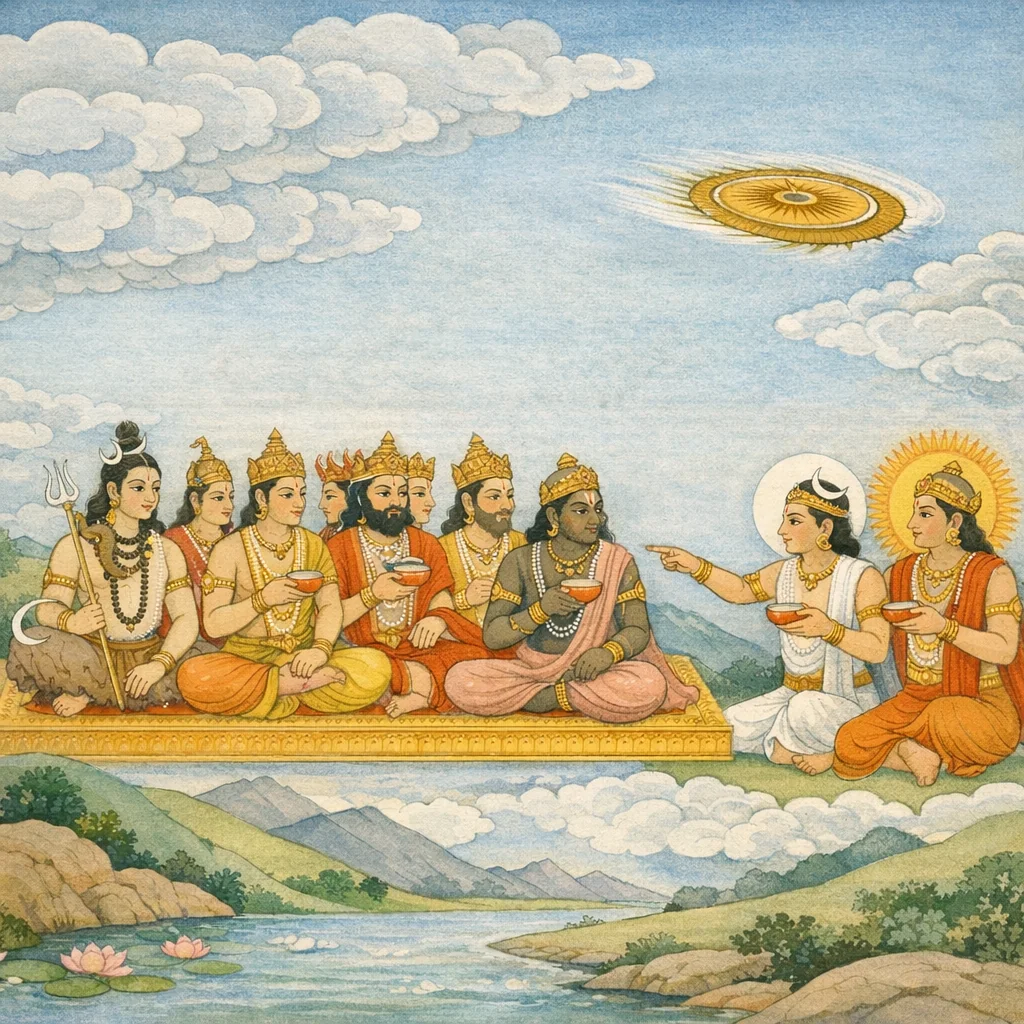
Chapter Arc: समुद्रमन्थन के फल—अमृत—पर देव और दानव दोनों की दृष्टि टिकती है; उसी क्षण यह स्पष्ट हो जाता है कि अमृत का पात्र केवल पेय नहीं, प्रभुत्व का निर्णय है। → विष्णु नर के सहित मोहिनी-रूप धारण कर दानवों को मोहित करते हैं और अमृत को उनके हाथों से छीनकर देवगणों तक पहुँचा देते हैं। दानवों को छल का बोध होते ही रणभूमि में परिघ, मुष्टि और पर्वतों तक से प्रहार होने लगता है; आकाश तक शब्द गूँजता है और युद्ध उग्र होता जाता है। → राहु (दानव) देववेष में अमृत पीने बैठता है, पर अमृत कण्ठ तक ही पहुँचा होता है कि चन्द्र और सूर्य उसे पहचानकर देवहित में उद्घाटित कर देते हैं; विष्णु का सुदर्शन चक्र क्रुद्ध होकर उसे काट देता है—अमृत-युद्ध का निर्णायक क्षण। → देवगण विष्णु से प्राप्त अमृत पीकर अजेय-से हो उठते हैं; दानव पराजित होकर समुद्र और भूमिगत आश्रयों की ओर भागते हैं। मन्दराचल को देवता सम्मानपूर्वक उसके स्थान पर लौटा देते हैं; मेघ जैसे अपने मार्ग पर लौटते हैं और देवों में महान् हर्ष छा जाता है। → अमृत-निधि की रक्षा का दायित्व इन्द्र (किरीटी) को सौंपा जाता है—पर अमृत के कारण उत्पन्न वैर की आग भविष्य में किस रूप में लौटेगी, यह संकेत बनकर रह जाता है।
Shlokas
Verse 1
(दाक्षिणात्य अधिक पाठके २६ शलोक मिलाकर कुल ४८३ “लोक हैं) नशा (0) आज अत +- एकोनविशो< ध्याय: देवताओंका अमृतपान, देवासुरसंग्राम तथा देवताओंकी विजय सौतिरुवाच अथावरणमुख्यानि नानाप्रहरणानि च । प्रगृह्मा भ्यद्रवन् देवान् सहिता दैत्यदानवा:,उग्रश्रवाजी कहते हैं--अमृत हाथसे निकल जानेपर दैत्य और दानव संगठित हो गये और उत्तम-उत्तम कवच तथा नाना प्रकारके अस्त्र-शस्त्र लेकर देवताओंपर टूट पड़े
Sauti said: When the nectar slipped from their grasp, the Daityas and Dānavas rallied together. Taking up their finest armor and a variety of weapons, they charged in a united assault against the gods.
Verse 2
ततस्तदमृतं देवो विष्णुरादाय वीर्यवान् जहार दानवेन्द्रेभ्यो नरेण सहित: प्रभु:,उधर अनन्त शक्तिशाली नरसहित भगवान् नारायणने जब मोहिनीरूप धारण करके दानवेन्द्रोंक हाथसे अमृत लेकर हड़प लिया, तब सब देवता भगवान् विष्णुसे अमृत ले- लेकर पीने लगे; क्योंकि उस समय घमासान युद्धकी सम्भावना हो गयी थी
Then the mighty Lord Viṣṇu, taking that nectar, carried it away from the chiefs of the Dānavas, accompanied by Nara. In the wake of this seizure—when the prospect of a fierce, all-consuming battle had arisen—the gods began to drink the nectar received from Viṣṇu, securing their strength and rightful advantage against the forces that sought to claim it through rivalry and deception.
Verse 3
ततो देवगणा: सर्वे पपुस्तदमृतं तदा । विष्णो: सकाशात् सम्प्राप्य सम्भ्रमे तुमुले सति,उधर अनन्त शक्तिशाली नरसहित भगवान् नारायणने जब मोहिनीरूप धारण करके दानवेन्द्रोंक हाथसे अमृत लेकर हड़प लिया, तब सब देवता भगवान् विष्णुसे अमृत ले- लेकर पीने लगे; क्योंकि उस समय घमासान युद्धकी सम्भावना हो गयी थी
Then all the hosts of gods drank that nectar, having obtained it from Viṣṇu, at a time when tumult and alarm had arisen—when the prospect of a fierce clash with the Daityas had become imminent. The passage underscores that divine protection and rightful guardianship of the amṛta are invoked to prevent its misuse and to preserve cosmic order.
Verse 4
ततः पिबत्सु तत्काल देवेष्वमृतमीप्सितम् । राहुविबुधरूपेण दानव: प्रापिबत् तदा,जिस समय देवता उस अभीष्ट अमृतका पान कर रहे थे, ठीक उसी समय राहु नामक दानवने देवतारूपसे आकर अमृत पीना आरम्भ किया
Then, at that very moment when the gods were drinking the long-desired nectar of immortality, the Dānava named Rāhu, assuming the form of a god, began to drink it as well—an act of deceit driven by craving for what was not rightfully his.
Verse 5
तस्य कण्ठमनुप्राप्ते दानवस्यामृते तदा । आखापयातं चन्द्रसूर्या भ्यां सुराणां हितकाम्यया,वह अमृत अभी उस दानवके कण्ठतक ही पहुँचा था कि चन्द्रमा और सूर्यने देवताओंके हितकी इच्छासे उसका भेद बतला दिया
Just as the nectar had reached the demon’s throat, the Moon and the Sun—wishing the welfare of the gods—revealed his identity. The episode underscores a moral tension: divine loyalty and the protection of cosmic order are upheld even through disclosure, preventing an unworthy claimant from securing immortality by deceit.
Verse 6
ततो भगवता तस्य शिरश्छिन्नमलंकृतम् | चक्रायुधेन चक्रेण पिबतो5मृतमोजसा,तब चक्रधारी भगवान् श्रीहरिने अमृत पीनेवाले उस दानवका मुकुटमण्डित मस्तक चक्रद्वारा बलपूर्वक काट दिया
Then the Blessed Lord, wielder of the discus, with His discus-weapon forcefully severed the demon’s crown-adorned head as he was drinking the nectar with great might. The episode underscores that even when one grasps at immortality through deceit or unrighteous means, divine justice intervenes to uphold cosmic order.
Verse 7
भगवान् विष्णुने चक्रसे राहुका सिर काट दिया तच्छैलशुज्गप्रतिमं दानवस्य शिरो महत् | चक्रच्छिन्न॑ं खमुत्पत्य ननादातिभयंकरम्,चक्रसे कटा हुआ दानवका महान् मस्तक पर्वतके शिखर-सा जान पड़ता था। वह आकाशगमें उछल-उछलकर अत्यन्त भयंकर गर्जना करने लगा
Śaunaka said: “With his discus, the Blessed Lord Viṣṇu cut off Rāhu’s head. That great head of the Dānava looked like a mountain peak. Severed by the discus, it sprang up into the sky and roared with a terrifying sound.”
Verse 8
तत् कबन्धं पपातास्य विस्फुरदू धरणीतले । सपर्वतवनद्दीपां दैत्यस्याकम्पयन् महीम्,किंतु उस दैत्यका वह धड़ धरतीपर गिर पड़ा और पर्वत, वन तथा द्वीपोंसहित समूची पृथ्वीको कैँपाता हुआ तड़फड़ाने लगा
Śaunaka said: The headless trunk of that demon fell upon the surface of the earth. Still twitching and convulsing, it shook the whole world—together with its mountains, forests, and islands.
Verse 9
ततो वैरविनिर्बन्ध: कृतो राहुमुखेन वै । शाश्वतश्रन्द्रसूर्या भ्यां ग्रसत्यद्यापि चैव तौ,तभीसे राहुके मुखने चन्द्रमा और सूर्यके साथ भारी एवं स्थायी वैर बाँध लिया; इसीलिये वह आज भी दोनोंपर ग्रहण लगाता है
Then Rāhu, by his own mouth, forged a fierce and enduring enmity with the Moon and the Sun; and for that reason he even now seizes them both—thus causing eclipses.
Verse 10
विहाय भगवांश्षापि स्त्रीरूपमतुलं हरि: । नानाप्रहरणैर्भीमैर्दानवान् समकम्पयत्,(देवताओंको अमृत पिलानेके बाद) भगवान् श्रीहरिने भी अपना अनुपम मोहिनीरूप त्यागकर नाना प्रकारके भयंकर अस्त्र-शस्त्रोंद्वारा दानवोंको अत्यन्त कम्पित कर दिया
Śaunaka said: After setting aside His incomparable female form, the Blessed Lord Hari struck terror into the Dānavas, shaking them thoroughly with many kinds of dreadful weapons.
Verse 11
ततः प्रवृत्त: संग्राम: समीपे लवणाम्भस: । सुराणामसुराणां च सर्वघोरतरो महान्,फिर तो क्षारसागरके समीप देवताओं और असुरोंका सबसे भयंकर महासंग्राम छिड़ गया
Then, near the salt ocean, a great battle broke out—most dreadful of all—between the gods and the asuras.
Verse 12
प्रासाश्न विपुलास्तीक्ष्णा न्यपतन्त सहस्रश: । तोमराश्च सुतीक्ष्णाग्रा: शस्त्राणि विविधानि च,दोनों दलोंपर सहस्रों तीखी धारवाले बड़े-बड़े भालोंकी मार पड़ने लगी। तेज नोकवाले तोमर तथा भाँति-भाँतिके शस्त्र बरसने लगे
Śaunaka said: Thousands of great, razor-sharp spears rained down, and keen-pointed javelins as well—along with weapons of many kinds.
Verse 13
ततोअसुराश्चक्रभिन्ना वमन्तो रुधिरं बहु । असिशक्तिगदारुग्णा निपेतुर्धरणीतले,भगवानके चक्रसे छिन्न-भिन्न तथा देवताओंके खड़्ग, शक्ति और गदासे घायल हुए असुर मुखसे अधिकाधिक रक्त वमन करते हुए पृथ्वीपर लोटने लगे। उस समय तपाये हुए सुवर्णकी मालाओंसे विभूषित दानवोंके सिर भयंकर पट्टिशोंसे कटकर निरन्तर युद्धभूमिमें गिर रहे थे
Then the asuras, shattered by the discus, began to vomit copious blood. Wounded by swords, spears, and maces, they fell upon the ground.
Verse 14
छिन्नानि पट्टिशैश्वैव शिरांसि युधि दारुणै: | तप्तकाञ्चनमालीनि निपेतुरनिशं तदा,भगवानके चक्रसे छिन्न-भिन्न तथा देवताओंके खड़्ग, शक्ति और गदासे घायल हुए असुर मुखसे अधिकाधिक रक्त वमन करते हुए पृथ्वीपर लोटने लगे। उस समय तपाये हुए सुवर्णकी मालाओंसे विभूषित दानवोंके सिर भयंकर पट्टिशोंसे कटकर निरन्तर युद्धभूमिमें गिर रहे थे
Śaunaka said: In that dreadful battle, heads adorned with garlands of heated gold were relentlessly severed by terrible battle-axes and kept falling again and again upon the field.
Verse 15
रुधिरेणानुलिप्ताजड़ा निहताश्न महासुरा: । अद्रीणामिव कूटानि धातुरक्तानि शेरते,वहाँ खूनसे लथपथ अंगवाले मरे हुए महान् असुर, जो समरभूमिमें सो रहे थे, गेरू आदि धातुओंसे रँँगे हुए पर्वत-शिखरोंके समान जान पड़ते थे
Śaunaka describes the aftermath: the mighty Asuras, slain and lying inert, their bodies smeared with blood, appear like mountain-peaks stained red with mineral ores such as red ochre.
Verse 16
हाहाकार: समभवत् तत्र तत्र सहस्रशः । अन्योन्यं छिन्दतां शस्त्रैरादित्ये लोहितायति,संध्याके समय जब सूर्यमण्डल लाल हो रहा था, एक-दूसरेके शस्त्रोंसे कटनेवाले सहस्रों योद्धाओंका हाहाकार इधर-उधर सब ओर गूँज उठा
As twilight approached and the sun’s disc reddened, a tumultuous cry of anguish rose everywhere—again and again in countless places—while warriors, locked in mutual fury, cut one another down with their weapons.
Verse 17
परिघैरायसैस्तीकणै: संनिकर्षे च मुष्टिभि: । निध्नतां समरे<न्योन्यं शब्दो दिवमिवास्पृशत्,उस समरांगणमें दूरवर्ती देवता और दानव लोहेके तीखे परिघोंसे एक-दूसरेपर चोट करते थे और निकट आ जानेपर आपसमें मुक्का-मुक्की करने लगते थे। इस प्रकार उनके पारस्परिक आघात-प्रत्याघातका शब्द मानो सारे आकाशमें गूँज उठा
Śaunaka said: In the battle, they struck one another with sharp iron clubs; and when they closed in at close quarters, they fought with their fists. The din of their mutual blows and counterblows seemed to rise and touch the very heavens—an image of war’s consuming fury, where strength overwhelms restraint and the world is filled with the consequences of unchecked hostility.
Verse 18
छिन्धि भिन्धि प्रधाव त्वं पातयाभिसरेति च । व्यश्रूयन्त महाघोरा: शब्दास्तत्र समन्तत:,उस रणभूमिमें चारों ओर ये ही अत्यन्त भयंकर शब्द सुनायी पड़ते थे कि “टुकड़े- टुकड़े कर दो, चीर डालो, दौड़ो, गिरा दो और पीछा करो”
Śaunaka said: On that battlefield, from every side, there rang out terrifying cries—“Cut him down! Split him apart! Charge forward! Strike him to the ground! Pursue!” The scene conveys the frenzy of combat, where ethical restraint is eclipsed by the raw momentum of violence.
Verse 19
एवं सुतुमुले युद्धे वर्तमाने महाभये । नरनारायणौ देवी समाजग्मतुराहवम्,इस प्रकार अत्यन्त भयंकर तुमुल युद्ध हो ही रहा था कि भगवान् विष्णुके दो रूप नर और नारायणदेव भी युद्धभूमिमें आ गये इति श्रीमहाभारते आदिपर्वणि आस्तीकपर्वणि अमृतमन्थनसमाप्तिनमिकोनविंशो5ध्याय:
Thus, even as that exceedingly dreadful and tumultuous war raged on in great terror, Nara and Nārāyaṇa—two forms of Lord Viṣṇu—came to the battlefield.
Verse 20
तत्र दिव्यं धनुर्दष्टवा नरस्य भगवानपि । चिन्तयामास तच्चक्रं विष्णुर्दानवसूदनम्,भगवान् नारायणने वहाँ नरके हाथमें दिव्य धनुष देखकर स्वयं भी दानवसंहारक दिव्य चक्रका चिन्तन किया
There, seeing the celestial bow in Nara’s hand, the Lord Himself—Viṣṇu, the slayer of the Dānavas—also turned His mind to His divine discus (cakra).
Verse 21
ततोअम्बराच्चिन्तितमात्रमागतं महाप्रभं चक्रममित्रतापनम् । विभावसोस्तुल्यमकुण्ठमण्डलं सुदर्शन॑ संयति भीमदर्शनम्,चिन्तन करते ही शत्रुओंको संताप देनेवाला अत्यन्त तेजस्वी चक्र आकाशमार्गसे उनके हाथमें आ गया। वह सूर्य एवं अग्निके समान जाज्वल्यमान हो रहा था। उस मण्डलाकार चक्रकी गति कहीं भी कुण्ठित नहीं होती थी। उसका नाम तो सुदर्शन था, किंतु वह युद्धमें शत्रुओंके लिये अत्यन्त भयंकर दिखायी देता था
Then, the moment it was merely thought of, a supremely radiant discus—one that scorches foes—came to his hand through the path of the sky. Blazing like the Sun and Fire, its circular rim was never blunted or impeded in its course. Though named Sudarśana (“fair to behold”), in battle it appeared terrifying to enemies.
Verse 22
तदागतं ज्वलितहुताशनप्रभं भयंकर करिकरबाहुरच्युत: । मुमोच वै प्रबलवदुग्रवेगवान् महाप्रभं परनगरावदारणम्,वहाँ आया हुआ वह भयंकर चक्र प्रज्वलित अग्निके समान प्रकाशित हो रहा था। उसमें शत्रुओंके बड़े-बड़े नगरोंको विध्वेंस कर डालनेकी शक्ति थी। हाथीकी सूँड़के समान विशाल भुजदण्डवाले उमग्रवेगशाली भगवान् नारायणने उस महातेजस्वी एवं महाबलशाली चक्रको दानवोंके दलपर चलाया
That fearful discus arrived, blazing with the radiance of a kindled fire. It possessed the power to shatter the great cities of enemies. Then the Unfailing Lord—Nārāyaṇa, whose mighty arms were like an elephant’s trunk and whose force was swift and irresistible—released that supremely radiant, immensely powerful weapon upon the host of the demons, bringing decisive destruction to those who stood against dharma.
Verse 23
तदन्तकज्वलनसमानवर्चसं पुन: पुनर्न्यपतत वेगवत्तदा । विदारयद् दितिदनुजान् सहस्रशः करेरितं पुरुषवरेण संयुगे,उस महासमरमें पुरुषोत्तम श्रीहरिके हाथोंसे संचालित हो वह चक्र प्रलयकालीन अग्निके समान जाज्वल्यमान हो उठा और सहसोौरं दैत्यों तथा दानवोंको विदीर्ण करता हुआ बड़े वेगसे बारम्बार उनकी सेनापर पड़ने लगा
Śaunaka said: Then, in that great battle, the discus—its radiance like the fire of the world’s end—was hurled again and again with tremendous speed. Driven by the hand of the supreme hero, it repeatedly fell upon their host, tearing apart the Daityas and Dānavas by the thousand. The passage underscores the moral order of the epic: when destructive forces rise in arrogance and violence, divine power acts decisively to restore balance, and the might displayed is not mere cruelty but the enforcement of cosmic justice.
Verse 24
दहत् क्वचिज्ज्वलन इवावलेलिहत् प्रसह तानसुरगणान् न््यकृन्तत । प्रवेरितं वियति मुहुः क्षितौ तथा पपौ रणे रुधिरमथो पिशाचवत्,श्रीहरिके हाथोंसे चलाया हुआ सुदर्शन चक्र कभी प्रज्वलित अग्निकी भाँति अपनी लपलपाती लपटोंसे असुरोंको चाटता हुआ भस्म कर देता और कभी हठपूर्वक उनके टुकड़े-टुकड़े कर डालता था। इस प्रकार रणभूमिके भीतर पृथ्वी और आकाशकमें घूम- घूमकर वह पिशाचकी भाँति बार-बार रक्त पीने लगा
Śaunaka said: Driven onward, the Sudarśana discus blazed like fire—at times licking up the hosts of asuras as though with flaming tongues and reducing them to ash, and at times, with relentless force, cutting them into pieces. Wheeling again and again through sky and earth within the battlefield, it seemed, like a piśāca, to drink the blood repeatedly—an image that underscores the terrifying momentum of divine retribution when adharma takes the field.
Verse 25
तथासुरा गिरिभिरदीनचेतसो मुहुर्मुहु: सुरगणमार्दयंस्तदा । महाबला विगलितमेघवर्चस: सहस्रशों गगनमभिप्रपद्य ह,इसी प्रकार उदार एवं उत्साहभरे हृदयवाले महाबली असुर भी, जो जलरहित बादलोंके समान श्वेत रंगके दिखायी देते थे, उस समय सहस्रोंकी संख्यामें आकाशमें उड़-उड़कर शिलाखण्डोंकी वर्षासे बार-बार देवताओंको पीड़ित करने लगे
Śaunaka said: “In the same way, the asuras—undaunted in spirit—again and again assailed the hosts of gods with mountains. Mighty in strength and pale like rainless, dispersed clouds, they rose into the sky in their thousands and, by showering down rocky masses, repeatedly tormented the devas.”
Verse 26
अथाम्बराद् भयजननाः: प्रपेदिरे सपादपा बहुविधमेघरूपिण: । महाद्रय: परिगलिताग्रसानव: परस्परं द्रुतमभिहत्य सस्वना:,तत्पश्चात् आकाशसे नाना प्रकारके लाल, पीले, नीले आदि रंगवाले बादलों-जैसे बड़े- बड़े पर्वत भय उत्पन्न करते हुए वृक्षोंसहित पृथ्वीपर गिरने लगे। उनके ऊँचे-ऊँचे शिखर गलते जा रहे थे और वे एक-दूसरेसे टकराकर बड़े जोरका शब्द करते थे
Śaunaka said: Then, from the sky, terrifying masses—like clouds of many shapes—fell down upon the earth together with trees. Great mountains, their lofty peaks crumbling and melting away, struck one another in swift succession, producing a thunderous roar. The scene conveys a world-order shaken, where even the stable supports of the earth seem to collapse, foreshadowing grave disorder and fear.
Verse 27
ततो मही प्रविचलिता सकानना महाद्रिपाताभिहता समनन््ततः । परस्परं भृशमभिगर्जतां मुहू रणाजिरे भूशमभिसम्प्रवर्तिते,उस समय एक-दूसरेको लक्ष्य करके बार-बार जोर-जोरसे गरजनेवाले देवताओं और असुरोंके उस समरांगणमें सब ओर भयंकर मार-काट मच रही थी; बड़े-बड़े पर्वतोंके गिरनेसे आहत हुई वनसहित सारी भूमि काँपने लगी
Then the earth, with its forests, began to tremble, struck on every side by the crashing fall of great mountains. In that battlefield, as gods and asuras repeatedly roared at one another in fierce challenge, a dreadful slaughter surged everywhere—an image of war’s unchecked violence overwhelming the very stability of the world.
Verse 28
नरस्ततो वरकनकाग्रभूषणै- महेषुभिर्गगननपथं समावृणोत् । विदारयन् गिरिशिखराणि पत्रिभि: महाभयेडसुरगणविग्रहे तदा,तब उस महाभयंकर देवासुर-संग्राममें भगवान् नरने उत्तम सुवर्ण-भूषित अग्रभागवाले पंखयुक्त बड़े-बड़े बाणोंद्वारा पर्वत-शिखरोंको विदीर्ण करते हुए समस्त आकाशमार्गको आच्छादित कर दिया
Śaunaka said: Then Nara, in that dread conflict between the hosts of gods and asuras, covered the whole track of the sky with mighty arrows whose foreparts were adorned with excellent gold. With winged shafts he split mountain-peaks as he shot, displaying overwhelming martial power in the service of the divine cause.
Verse 29
ततो महीं लवणजलं च सागरं महासुरा: प्रविविशुरद्दिता: सुरै: । वियद्गतं ज्वलितहुताशनप्रभं सुदर्शनं परिकुपितं निशम्य ते,इस प्रकार देवताओंके द्वारा पीड़ित हुए महादैत्य आकाशमें जलती हुई आगके समान उद्धासित होनेवाले सुदर्शन चक्रको अपने ऊपर कुपित देख पृथ्वीके भीतर और खारे पानीके समुद्रमें घुस गये
Then the mighty Asuras, tormented by the Devas, plunged into the earth and into the ocean of salty waters. Hearing that the Sudarśana discus—moving through the sky and blazing like a sacrificial fire—was fiercely enraged against them, they sought refuge by hiding in those depths.
Verse 30
ततः सुरैर्विजयमवाप्य मन्दर: स्वमेव देशं गमित: सुपूजित: । विनाद्य खं दिवमपि चैव सर्वशः ततो गता: सलिलधरा यथागतम्,तदनन्तर देवताओंने विजय पाकर मन्दराचलको सम्मानपूर्वक उसके पूर्वस्थानपर ही पहुँचा दिया। इसके बाद वे अमृत धारण करनेवाले देवता अपने सिंहनादसे अन्तरिक्ष और स्वर्गलोकको भी सब ओरसे गुँजाते हुए अपने-अपने स्थानको चले गये
Then, after the gods had secured victory, the Mandara mountain—honoured with due reverence—was returned to its own proper place. Thereafter those bearers of the nectar, roaring aloud so that the sky and even heaven resounded on all sides, departed each to their respective abodes, returning as they had come.
Verse 31
ततो<मृतं सुनिहितमेव चक्रिरे सुरा: परां मुदमभिगम्य पुष्कलाम् | ददौ च तं निधिममृतस्य रक्षितुं किरीटिने बलभिदथामरै: सह,देवताओंको इस विजयसे बड़ी भारी प्रसन्नता प्राप्त हुई। उन्होंने उस अमृतको बड़ी सुव्यवस्थासे रखा। अमरोंसहित इन्द्रने अमृतकी वह निधि किरीटधारी भगवान् नरको रक्षाके लिये सौंप दी
Thereupon the gods, having attained abundant and supreme joy from that success, carefully secured the nectar of immortality. Then Indra, the slayer of Bala, together with the immortals, entrusted that treasure of amṛta for safekeeping to the diadem-wearing divine Nara.
Frequently Asked Questions
The opening frames a vow-and-wager constraint: the sisters’ agitation indicates an ethical pressure where rivalry and claimed outcomes generate coercive obligations, setting up later questions about truth, manipulation, and responsibility.
The ocean is presented as morally neutral yet causally overwhelming—immeasurable, resource-bearing, and dangerous—suggesting that human agency operates within larger forces (nature, fate-like consequence, and divine memory) that demand prudence and restraint.
No explicit phalaśruti is stated in this adhyāya; its function is primarily descriptive and contextual, serving as a narrative and cosmographic bridge that amplifies the gravity of subsequent actions in the nāga-related storyline.