Adhyaya 183
गूढपाण्डवदर्शनम् — The Hidden Pāṇḍavas and Kṛṣṇa’s Visit
Upa-parva: Jatugṛha-dāha Parva (The Lac House Episode)
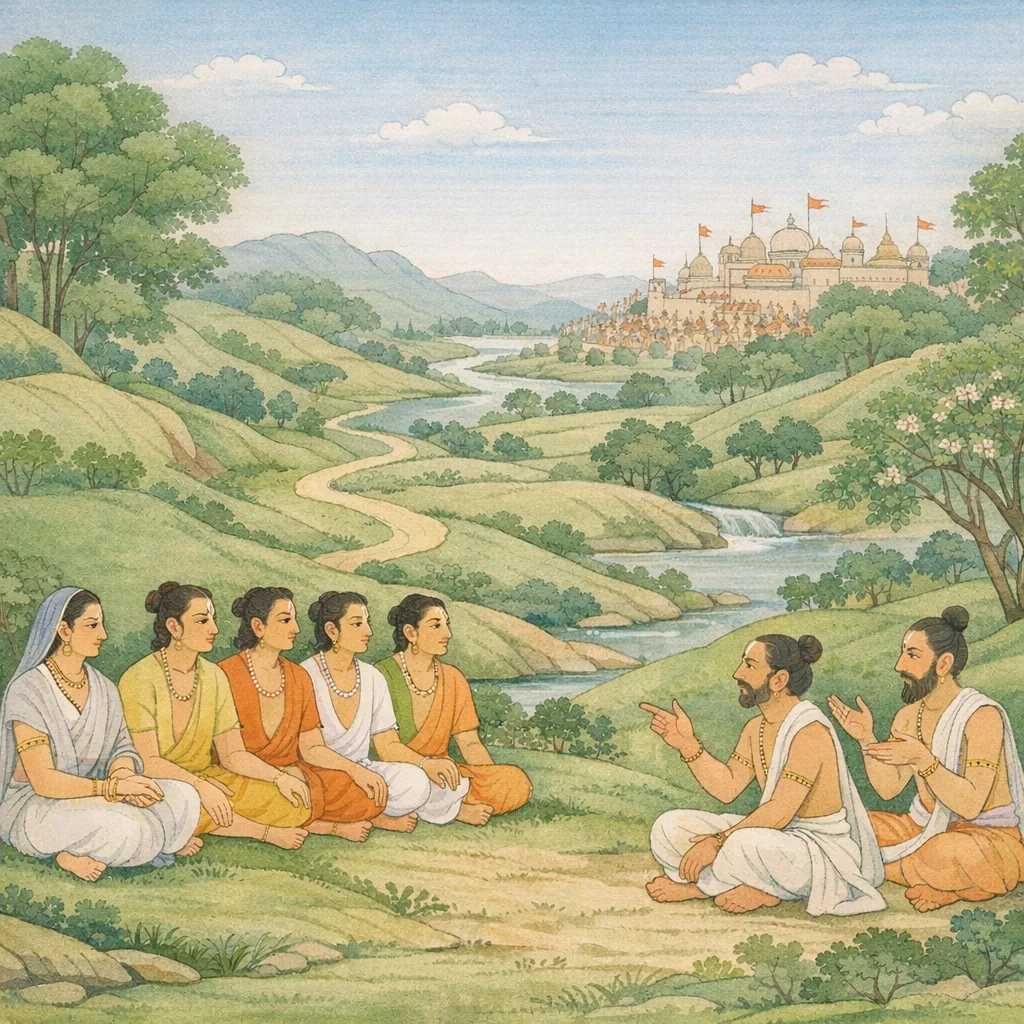
Vaiśaṃpāyana narrates that the Pāṇḍavas, having evaluated their brother’s counsel, remain mentally fixed on a single objective: survival through concealment and strategic patience. Vāsudeva Kṛṣṇa, accompanied by Rauhiṇeya (Balarāma), proceeds without apprehension to the Bhārgava workshop where leading men are assembled. There he sees Yudhiṣṭhira (Ajātaśatru), surrounded by radiant companions, and identifies himself, formally greeting by taking the king’s feet; Balarāma follows, and the Kurus express approval. Yudhiṣṭhira inquires how their hidden residence became known. Kṛṣṇa replies with a measured analogy: even concealed fire becomes recognizable, and among humans none could match the Pāṇḍavas’ prowess. He offers auspicious wishes, notes their fortunate escape from the conflagration, and remarks that Dhṛtarāṣṭra’s son with his advisors did not achieve his intended outcome. He advises continued concealment and growth—like fire fed by fuel—until the time is ripe; with permission, Kṛṣṇa departs swiftly with Balarāma toward camp.
Chapter Arc: लाक्षागृह की राख से बच निकले पाण्डव, ब्राह्मण-वेष में, माता कुन्ती के साथ पञ्चाल-मार्ग पर बढ़ते हैं—और मार्ग में ब्राह्मणों की भीड़ से टकराते हैं जो किसी महान उत्सव की ओर जा रही है। → मार्गस्थ ब्राह्मण पाण्डवों से पूछते हैं—‘कहाँ से आए हो, कहाँ जाओगे?’—और फिर द्रुपद-नगरी में होने वाले द्रौपदी-स्वयंवर का वर्णन करते हैं: धृष्टद्युम्न की बहन, निर्दोष अंगों वाली, मनस्विनी, सुकुमारी; तथा उत्सव में जुटते नट, वैतालिक, सूत, मागध, मल्ल—एक ऐसा जनसमुद्र जो किसी असाधारण घटना का संकेत देता है। → ब्राह्मणों के वचनों में स्वयंवर की शर्तों और वर-चयन की संभावना चमक उठती है—‘तुम सब देव-रूप हो; कृष्णा तुममें से किसी एक को चुन सकती है’—और विशेषतः अर्जुन की प्रशंसा होती है कि वह विजय-प्रयत्न में धन और यश लाकर सबकी प्रीति बढ़ाएगा। → युधिष्ठिर निर्णय करते हैं: ‘हम भी उस महोत्सव को देखने—और कन्या के स्वयंवर में सम्मिलित होने—भवद्भिः सहिता:’ चलेंगे; इस प्रकार पाण्डवों की पञ्चाल-यात्रा का उद्देश्य स्पष्ट हो जाता है। → पाण्डव ब्राह्मणों के साथ द्रुपद-नगरी की ओर बढ़ते हैं—पर स्वयंवर में कौन-सा अद्भुत विधान होगा, और उस विधान के सामने ब्राह्मण-वेषधारी अर्जुन का भाग्य क्या मोड़ लेगा—यह अभी गर्भित है।
Shlokas
Verse 1
ऑपनआक्राा बा अ-काज जा (स्वयंवरपर्व) त्रपशीत्यधिकशततमो< ध्याय: पाण्डवोंकी पंचालयात्रा और मार्ममें ब्राह्म॒णोंसे बातचीत वैशम्पायन उवाच ततस्ते नरशार्दूला भ्रातर: पठच पाण्डवा: | प्रययुद्रौपदीं द्रष्टर तं च देशं महोत्सवम्,वैशम्पायनजी कहते हैं--जनमेजय! तब वे नरश्रेष्ठ पाँचों भाई पाण्डव राजकुमारी द्रौपदी, उसके पंचालदेश और वहाँके महान् उत्सवको देखनेके लिये वहाँसे चल दिये
Vaiśampāyana said: Then those tiger-like men—the five Pāṇḍava brothers—set out to see Draupadī, and also to behold that land and its great festival.
Verse 2
ते प्रयाता नरव्याप्रा: सह मात्रा परंतपा: । ब्राह्मणान् ददृशुर्मार्गें गच्छत: संगतान् बहून्,मनुष्योंमें सिंहके समान वीर परंतप पाण्डव अपनी माताके साथ यात्रा कर रहे थे। उन्होंने मार्गमें देखा, बहुत-से ब्राह्मण एक साथ जा रहे हैं
Vaiśampāyana said: The Pāṇḍavas—valiant men, unscorched by any foe—journeyed on with their mother. On the road they saw many Brahmins traveling together in a gathered company.
Verse 3
त ऊचुर्ब्राह्मणा राजन् पाण्डवान् ब्रह्मचारिण: । क्व भवन्तो गमिष्यन्ति कुतो वाभ्यागता इह,राजन! उन ब्रह्मचारी ब्राह्मणोंने पाण्डवोंसे पूछा--/आपलोग कहाँ जायँगे और कहाँसे आ रहे हैं?”
Vaiśampāyana said: The brahmin students, observing the Pāṇḍavas, addressed the king and asked: “Where are you going, and from where have you come here?”
Verse 4
युधिछिर उवाच आगतानेकचक्राया: सोदर्यानेकचारिण: । भवन्तो वै विजानन्तु सह मात्रा द्विजर्षभा:,युधिष्ठटिर बोले--विप्रवरो! आपलोगोंको मालूम हो कि हमलोग एक साथ विचरनेवाले सहोदर भाई हैं और अपनी माताके साथ एकचक्रा नगरीसे आ रहे हैं
Yudhiṣṭhira said: “O best of Brahmins, know this: we are full brothers who travel together, and we have come here from the city of Ekacakrā along with our mother.”
Verse 5
ब्राह्मणा ऊचु गच्छताद्यैव पञ्चालान द्रुपदस्य निवेशने । स्वयंवरो महांस्तत्र भविता सुमहाधन:,ब्राह्मणोंने कहा--आज ही पंचालदेशको चलिये। वहाँ राजा द्रुपदके दरबारमें महान् धन-धान्यसे सम्पन्न स्वयंवरका बहुत बड़ा उत्सव होनेवाला है
The Brahmins said, “Go today itself to the land of the Pañcālas, to the residence (court) of King Drupada. There, a grand svayaṃvara is about to take place—an immense festival endowed with great wealth and resources.”
Verse 6
एकसार्थ प्रयाता: सम वयं तत्रैव गामिन: । तत्र हाद्भुतसंकाशो भविता सुमहोत्सव:,हम सबलोग एक साथ चले हैं और वहीं जा रहे हैं। वहाँ अत्यन्त अद्भुत और बहुत बड़ा उत्सव होनेवाला है
Yudhiṣṭhira said: “We have all set out together as one party, and we are bound for that very place. There, an exceedingly wondrous and truly grand festival is going to take place.”
Verse 7
यज्ञसेनस्य दुहिता द्रुपदस्य महात्मन: । वेदीमध्यात् समुत्पन्ना पद्मपत्रनिभेक्षणा,यज्ञसेन नामवाले महाराज ट्रुपदके एक पुत्री है, जो यज्ञकी वेदीसे प्रकट हुई है। उसके नेत्र विकसित कमलदलके समान सुन्दर हैं
Yudhiṣṭhira said: “King Drupada, the great-souled, has a daughter named (Draupadī), born from the midst of the sacrificial altar. Her eyes are beautiful like fully opened lotus petals.”
Verse 8
दर्शनीयानवद्याड्री सुकुमारी मनस्विनी । धृष्टद्युम्नस्य भगिनी द्रोणशत्रो: प्रतापिन:,उसका एक-एक अंग निर्दोष है। वह मनस्विनी सुकुमारी द्रुपदकन्या देखने ही योग्य है। द्रोणाचार्यके शत्रु प्रतापी धृष्टद्युम्मनकी वह बहिन है
Yudhiṣṭhira said: “She is truly worth seeing—her limbs are flawless. Gentle and delicate, yet strong-minded, she is the sister of the valiant Dhṛṣṭadyumna, the enemy of Droṇa.”
Verse 9
यो जात: कवची खड्गी सशर: सशरासन: । सुसमिद्धे महाबाहु: पावके पावकोपम:,धृष्टद्युम्न वे ही हैं, जो कवच, खड्ग, धनुष और बाणके साथ उत्पन्न हुए हैं। महाबाहु धष्टद्युम्न प्रजजलित अग्निसे प्रकट होनेके कारण अग्निके समान ही तेजस्वी हैं
Yudhiṣṭhira said: “He was born already armed—wearing armor, bearing a sword, furnished with arrows and a bow. Mighty-armed, he emerged from the blazing sacrificial fire; therefore Dhṛṣṭadyumna shines with a brilliance like fire itself.”
Verse 10
स्वसा तस्यानवचद्याज्ञी द्रौपदी तनुमध्यमा | नीलोत्पलसमो गन्धो यस्या: क्रोशात् प्रवाति वै,द्रौपदी निर्दोष अंगों तथा पतली कमरवाली है और उसके शरीरसे नीलकमलके समान सुगन्ध निकलकर एक कोसतक फैलती रहती है। वह उन्हीं धृष्टद्युम्मनकी बहिन है
Yudhiṣṭhira said: “Draupadī—his blameless, noble-minded sister—slender-waisted and faultless in every limb, bears a fragrance like the blue lotus, wafting on the wind for a full krośa. She is indeed the sister of that very Dhṛṣṭadyumna.”
Verse 11
यज्ञसेनस्थ च सुतां स्वयंवरकृतक्षणाम् । गच्छामो वै वयं द्र॒ष्टू त॑ं च दिव्यं महोत्सवम्,यज्ञसेनकी पुत्री ट्रौयदीका स्वयंवर नियत हुआ है। अतः हमलोग उस राजकुमारीको तथा उस स्वयंवरके दिव्य महोत्सवको देखनेके लिये वहाँ जा रहे हैं
Yudhiṣṭhira said: “The daughter of King Yajñasena has set the moment of her svayaṃvara. We are going there to see that princess and to witness that splendid, divine grand festival.”
Verse 12
राजानो राजपुत्राश्न॒ यज्वानो भूरिदक्षिणा: | स्वाध्यायवन्त: शुचयो महात्मानो यतव्रता:,(वहाँ) कितने ही प्रचुर दक्षिणा देनेवाले, यज्ञ करनेवाले, स्वाध्यायशील, पवित्र, नियमपूर्वक व्रतका पालन करनेवाले, महात्मा एवं तरुण अवस्थावाले दर्शनीय राजा और राजकुमार अनेक देशोंसे पधारेंगे। अस्त्रविद्यामें निपुण महारथी भूमिपाल भी वहाँ आयेंगे
Yudhiṣṭhira said: “Kings and princes will come there—men who perform sacrifices and bestow abundant gifts, devoted to svādhyāya, pure in conduct, great-souled, and steadfast in disciplined vows.”
Verse 13
तरुणा दर्शनीयाश्व॒ नानादेशसमागता: । महारथा: कृतास्त्राश्न समुपैष्यन्ति भूमिपा:,(वहाँ) कितने ही प्रचुर दक्षिणा देनेवाले, यज्ञ करनेवाले, स्वाध्यायशील, पवित्र, नियमपूर्वक व्रतका पालन करनेवाले, महात्मा एवं तरुण अवस्थावाले दर्शनीय राजा और राजकुमार अनेक देशोंसे पधारेंगे। अस्त्रविद्यामें निपुण महारथी भूमिपाल भी वहाँ आयेंगे
Yudhiṣṭhira said: “Many youthful and handsome kings and princes, arriving from various lands, will come there—great-souled men who perform sacrifices, devote themselves to svādhyāya, maintain purity, and observe vows with disciplined regularity, giving abundant gifts. Mighty rulers too—great chariot-warriors trained in the science of weapons—will also assemble there.”
Verse 14
ते तत्र विविधान् दायान् विजयार्थ नरेश्वरा: । प्रदास्यन्ति धन गाश्न भक्ष्यं भोज्यं च सर्वश:,वे नरपतिगण अपनी-अपनी विजयके उद्देश्यसे वहाँ नाना प्रकारके उपहार, धन, गौएँ, भक्ष्य और भोज्य आदि सब प्रकारकी वस्तुएँ दान करेंगे
“There, those kings—each intent on securing victory—will bestow gifts of many kinds: wealth, cows, and every sort of food and delicacy to be eaten and enjoyed.”
Verse 15
प्रतिगृह्य च तत् सर्व दृष्टवा चैव स्वयंवरम् । अनुभूयोत्सवं चैव गमिष्यामो यथेप्सितम्,उनका वह सब दान ग्रहण कर, स्वयंवरको देखकर और उत्सवका आनन्द लेकर फिर हमलोग अपने-अपने अभीष्ट स्थानको चले जायाँगे
Yudhiṣṭhira said: “Having accepted all those gifts, and having witnessed the svayaṃvara, and having also enjoyed the festivities, we shall then depart—each of us—to the place we desire.”
Verse 16
नटा वैतालिकास्तत्र नर्तका: सूतमागधा: । नियोधकाश्च देशेभ्य: समेष्यन्ति महाबला:,वहाँ अनेक देशोंके नट, वैतालिक, नर्तक, सूत, मागध तथा अत्यन्त बलवान् मल्ल आयेंगे
Yudhiṣṭhira said: “There, actors and bards, dancers, charioteer-singers and panegyrists will be present; and from many regions powerful wrestlers and combatants will also assemble.”
Verse 17
एवं कौतूहल कृत्वा दृष्टवा च प्रतिगृह्म॒ च । सहास्माभिमर्महात्मान: पुनः प्रतिनिवर्त्स्यथ,महात्माओ! इस प्रकार हमारे साथ खेल करके, तमाशा देखकर और नाना प्रकारके दान ग्रहण करके फिर आपलोग भी लौट आइयेगा
Yudhiṣṭhira said: “Having thus indulged our curiosity—joining in our play, witnessing the spectacle, and accepting the gifts we offer—may you noble souls return again to us.”
Verse 18
दर्शनीयांश्व॒ व: सर्वान् देवरूपानवस्थितान् | समीक्ष्य कृष्णा वरयेत् संगत्यैकतमं वरम्,आप सब लोगोंका रूप तो देवताओंके समान है, आप सभी दर्शनीय हैं, आपलोगोंको (वहाँ उपस्थित) देखकर द्रौपदी दैवयोगसे आपमेंसे ही किसी एकको अपना वर चुन सकती है
Yudhiṣṭhira said: “All of you are worthy to be seen—standing here with forms like those of the gods. Seeing you assembled, Kṛṣṇā (Draupadī), by the force of destiny, may choose from among you one as her husband.”
Verse 19
अयं भ्राता तव श्रीमान् दर्शनीयो महाभुज: । नियुज्यमानो विजये संगत्या द्रविणं बहु । आहरिष्यन्नयं नूनं॑ प्रीतिं वो वर्धयिष्यति,आपलोगोंके ये भाई अर्जुन तो बड़े सुन्दर और दर्शनीय हैं। इनकी भुजाएँ बहुत बड़ी हैं। इन्हें यदि विजयके कार्यमें नियुक्त कर दिया जाय, तो ये दैवात् बहुत बड़ी धनराशि जीत लाकर निश्चय ही आपलोगोंकी प्रसन्नता बढ़ायेंगे
Yudhiṣṭhira said: “This brother of yours is illustrious—handsome to behold and mighty-armed. If he is appointed to the work of winning victory, then, by good fortune and through alliance, he will surely bring back abundant wealth and thereby increase your satisfaction.”
Verse 20
युधिछिर उवाच परम॑ भो गमिष्यामो द्रष्ठं चैव महोत्सवम् । भवद्धि: सहिता: सर्वे कन्यायास्तं स्वयंवरम्,युधिष्ठिर बोले--ब्राह्मणो! हम भी द्रुपदकन्याके उस श्रेष्ठ स्वयंवर-महोत्सवको देखनेके लिये आपलोगोंके साथ चलेंगे
Yudhiṣṭhira said, “Indeed, O revered one, we too shall go to witness that great festival—the princess’s svayaṃvara. All of us will accompany you.” In this, Yudhiṣṭhira’s words reflect courteous restraint and dharmic propriety: he seeks to join the event not as an aggressor, but as a respectful participant, aligning action with social and ethical decorum.
Verse 182
इस प्रकार श्रीमह्ाभारत आदिपर्वके अन्तर्गत चैत्ररथपर्वमें धौम्यको पुरोहित बनानेसे सम्बन्ध रखनेवाला एक सौ बयासीवाँ अध्याय पूरा हुआ
Thus ends the one hundred and eighty-second chapter of the Ādi Parva of the Śrī Mahābhārata, within the Caitraratha section, concerning the matter of appointing Dhaumya as the family priest. The closing note marks the completion of this unit of narration, emphasizing the establishment of proper ritual and counsel through a qualified purohita as a foundation for righteous conduct.
Verse 183
इति श्रीमहाभारते आदिपर्वणि स्वयंवरपर्वणि पाण्डवागमने त्रयशीत्यधिकशततमो<5 ध्याय:,इस प्रकार श्रीमहाभारत आदिपरव्वके अन्तर्गत स्वयंवरपर्वमें पाण्डवागमनविषयक एक सौ तिरासीवाँ अध्याय पूरा हुआ
Thus ends the one hundred and eighty-third chapter of the Ādi Parva of the Śrī Mahābhārata, within the section on the svayaṃvara, describing the arrival of the Pāṇḍavas. This is a colophon marking the completion of the chapter and its narrative unit.
Frequently Asked Questions
The dilemma concerns whether concealment and delayed disclosure are ethically permissible for kṣatriyas; the chapter frames secrecy as protective prudence when open action would expose dependents and allies to preventable risk.
Tejas (effective presence) is difficult to hide: capability and integrity generate recognizable signals; therefore, one should pair inner strength with disciplined timing and measured communication.
No explicit phalaśruti is stated; the meta-function is narrative instruction—positioning prudential counsel (gūḍha-nīti) as a legitimate dharmic tool within the epic’s broader governance discourse.