Adhyaya 182
द्रौपदी-प्राप्तिः, कुन्त्याः वाक्यप्रमादः, भ्रातृ-एक्यनिर्णयः (Draupadī’s Arrival, Kuntī’s Unintended Utterance, and the Decision for Fraternal Unity)
Upa-parva: Svayaṃvara (Draupadī-vivāha) Upa-Parva
Vaiśaṃpāyana narrates the Pāṇḍavas’ return to Kuntī after the svayaṃvara. Without looking, Kuntī instructs them to ‘share the alms’ (bhikṣā) together; only afterward does she perceive that what has been brought is Draupadī. Kuntī experiences immediate ethical anxiety: she seeks to avoid untruth and to prevent an unprecedented breach of dharma regarding Drupada’s daughter. Yudhiṣṭhira, after reflection, reassures Kuntī and addresses Arjuna, initially directing him toward formal marriage rites since he won Draupadī. Arjuna refuses exclusive entitlement and proposes an order of precedence that includes the brothers, requesting a course that is both dharmic and politically acceptable to Drupada. The brothers, seeing Draupadī, experience attraction; Yudhiṣṭhira recalls Dvaipāyana’s prior words and, to avert division among them, articulates the resolution that Draupadī will become the wife of all five, framing the decision as protective of unity and stability.
Chapter Arc: चैत्ररथ वन की रहस्यमयी छाया में गन्धर्व का संकेत मिलता है—देवल का कनिष्ठ भ्राता धौम्य उत्कोचक तीर्थ में तप कर रहा है; पाण्डवों के लिए यह मार्गदर्शन भी है और आश्रय का वचन भी। → अर्जुन गन्धर्व से प्राप्त अश्वों को तत्काल अपने अधिकार में न रखकर, समय आने तक उसी के पास सुरक्षित रखने का निर्णय करता है—यह संयम और नीति का क्षण है। फिर पाण्डव उत्कोचक तीर्थ की ओर बढ़ते हैं, जहाँ उन्हें अपने नव-प्राप्त राज्य-लक्ष्मी को धर्मसम्मत आधार देने हेतु योग्य पुरोहित की आवश्यकता अनुभव होती है। → उत्कोचक तीर्थ में धौम्याश्रम पहुँचकर पाण्डव धौम्य को पुरोहित-रूप में वरण करते हैं; धौम्य वेदार्थ-तत्त्वज्ञ और धर्मविद् गुरु के रूप में उन्हें स्वीकार कर ‘स्वस्तिवाचन’ करता है—राज्य-प्राप्ति का धार्मिक अभिषेक-सा संस्कार। → धौम्य के आशीर्वाद और स्वस्त्ययन के बाद पाण्डव एकत्र होकर पाञ्चाल के स्वयंवर (द्रौपदी-स्वयंवर) की यात्रा का निश्चय करते हैं; उनकी शक्ति अब केवल बाहुबल नहीं, वैदिक-धर्माधारित मर्यादा भी बन जाती है। → पाण्डवों का पाञ्चाल-स्वयंवर की ओर प्रस्थान—आगामी निर्णायक मोड़ (द्रौपदी-प्राप्ति और उससे उपजने वाले व्यापक परिणाम) का संकेत।
Shlokas
Verse 1
इस प्रकार श्रीमहाभारत आदिपव॑ेके अन्तर्गत चैत्ररथपर्वमें वसिष्ठोपाख्यानविषयक एक सौ इक्यासीवाँ अध्याय पूरा हुआ ॥/ १८१ ॥। द्वयशीर्त्याधेकशततमो< ध्याय: पाण्डवोंका धौम्यको अपना पुरोहित बनाना अर्जुन उवाच अस्माकमनुरूपो वै यः स्याद् गन्धर्व वेदवित् । पुरोहितस्तमाचक्ष्व सर्व हि विदितं तव,अर्जुनने कहा--गन्धर्वराज! हमारे अनुरूप जो कोई वेदवेत्ता पुरोहित हों, उनका नाम बताओ; क्योंकि तुम्हें सब कुछ ज्ञात है
Arjuna said: “O king of the Gandharvas, tell us who would be a suitable priest for us—one who is learned in the Vedas and fitting to our station. Reveal his name, for everything is known to you.”
Verse 2
गन्धर्व उवाच यवीयान् देवलस्यैष वने भ्राता तपस्यति । धौम्य उत्कोचके तीर्थे तं॑ वृणुध्वं यदीच्छथ,गन्धर्व बोला--कुन्तीनन्दन! इसी वनके उत्कोचक तीर्थमें महर्षि देवलके छोटे भाई धौम्य मुनि तपस्या करते हैं। यदि आपलोग चाहें तो उन्हींका पुरोहितके पदपर वरण करें
The Gandharva said: “Here in this forest, the younger brother of the sage Devala is practicing austerities—Dhaumya—at the sacred ford called Utkochaka. If you wish, choose him as your priest.”
Verse 3
वैशम्पायन उवाच ततोडर्जुनो<स्त्रमाग्नेयं प्रददौ तद् यथाविधि । गन्धर्वाय तदा प्रीतो वचन॑ चेदमब्रवीत्,वैशम्पायनजी कहते हैं--तब अर्जुनने (बहुत) प्रसन्न होकर गन्धर्वको विधिपूर्वक आगेनेयास्त्र प्रदान किया और यह बात कही--
Vaiśampāyana said: Then Arjuna, glad at heart, duly bestowed the Agneya weapon upon the Gandharva according to rite, and spoke these words to him.
Verse 4
त्वय्येव तावत् तिष्ठन्तु हया गन्धर्वसत्तम । कार्यकाले ग्रहीष्याम: स्वस्ति ते5स्त्विति चाब्रवीत्,“गन्धर्वप्रवर! तुमने जो घोड़े दिये हैं, वे अभी तुम्हारे ही पास रहें। आवश्यकताके समय हम तुमसे ले लेंगे, तुम्हारा कल्याण हो।” अर्जुनकी यह बात पूरी होनेपर गन्धर्वराज और पाण्डवोंने एक-दूसरेका बड़ा सत्कार किया। फिर पाण्डवगण गंगाके रमणीय तटसे अपनी इच्छाके अनुसार चल दिये
Vaiśampāyana said: “O best of Gandharvas, let the horses remain with you for now. When the need arises, we shall take them from you. May welfare be yours,” he said. When these words were finished, the Gandharva king and the Pāṇḍavas honored one another greatly; then the Pāṇḍavas departed from the lovely bank of the Gaṅgā, going as they wished.
Verse 5
तेडन्योन्यमभिसम्पूज्य गन्धर्व: पाण्डवाश्व ह । रम्याद् भागीरथीतीराद् यथाकामं प्रतस्थिरे,“गन्धर्वप्रवर! तुमने जो घोड़े दिये हैं, वे अभी तुम्हारे ही पास रहें। आवश्यकताके समय हम तुमसे ले लेंगे, तुम्हारा कल्याण हो।” अर्जुनकी यह बात पूरी होनेपर गन्धर्वराज और पाण्डवोंने एक-दूसरेका बड़ा सत्कार किया। फिर पाण्डवगण गंगाके रमणीय तटसे अपनी इच्छाके अनुसार चल दिये
Vaiśampāyana said: Having honored one another with due courtesy, the foremost of the Gandharvas and the Pāṇḍavas set out as they wished from the lovely bank of the Bhāgīrathī (the Gaṅgā).
Verse 6
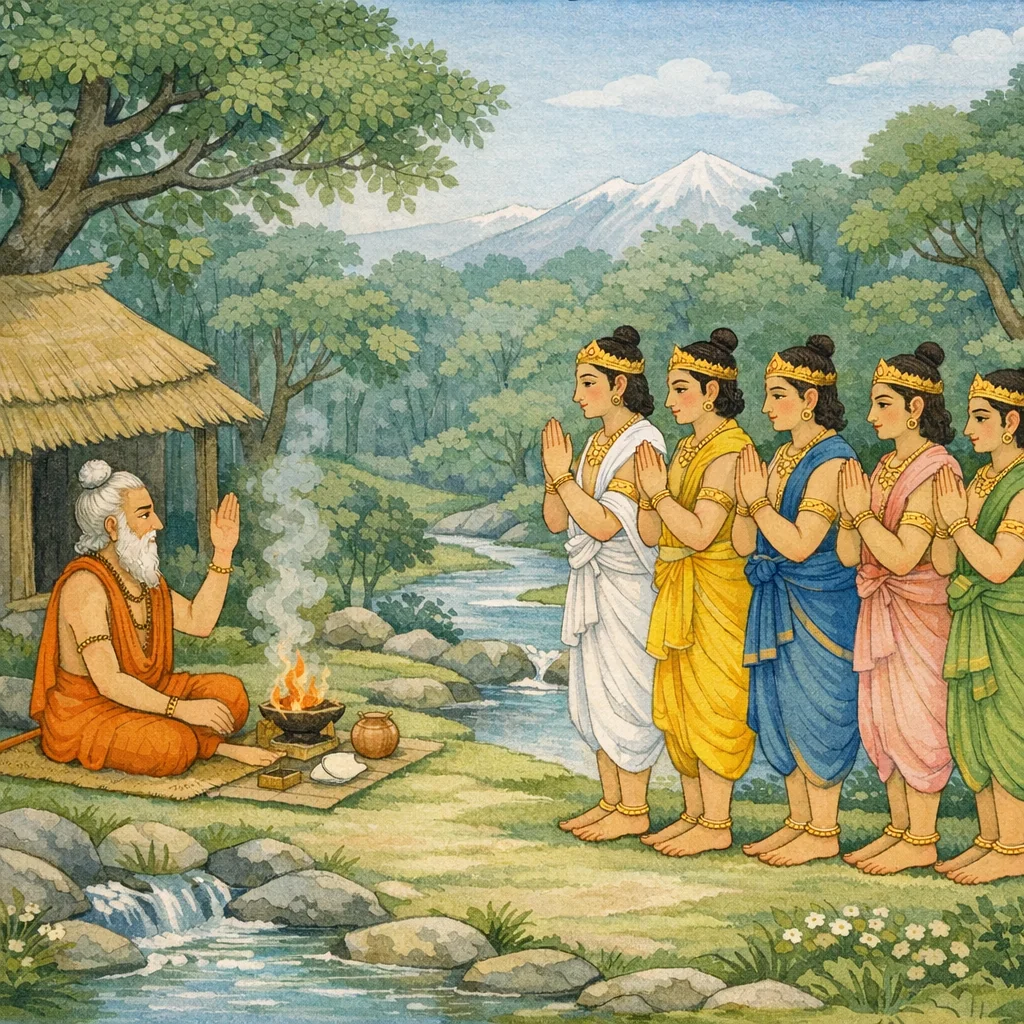
तत उत्कोचकं तीर्थ गत्वा धौम्याश्रमं तु ते । त॑ वच्रु: पाण्डवा धौम्यं पौरोहित्याय भारत,जनमेजय! तदनन्तर उत्कोचक तीर्थमें धौम्यके आश्रमपर जाकर पाण्डवोंने धौम्यका पौरोहित्य-कर्मके लिये वरण किया
Then they went to the sacred ford called Utkośaka and thereafter to the hermitage of Dhaumya. There the Pāṇḍavas, O Janamejaya of Bhārata’s line, approached Dhaumya and chose him to serve as their family priest (purohita).
Verse 7
तान् धौम्य: प्रतिजग्राह सर्ववेदविदां वर: । वन्येन फलमूलेन पौरोहित्येन चैव ह,सम्पूर्ण वेदोंके विद्वानोंमें श्रेष्ठ धौम्यने जंगली फल-मूल अर्पण करके तथा पुरोहितीके लिये स्वीकृति देकर उन सबका सत्कार किया
Vaiśampāyana said: Dhaumya—foremost among those who know the entire Veda—received them with due honor, offering wild fruits and roots, and accepting the role of their family priest (purohita).
Verse 8
ते समाशंसिरे लब्धां श्रियं राज्यं च पाण्डवा: । ब्राह्मणं तै पुरस्कृत्य पाज्चालीं च स्वयंवरे,पाण्डवोंने उन ब्राह्मणदेवताको पुरोहित बनाकर यह भलीभाँति विश्वास कर लिया कि “हमें अपना राज्य और धन अब मिले हुएके ही समान है।” साथ ही उन्हें यह भी भरोसा हो गया कि 'स्वयंवरमें द्रौपदी हमें मिल जायगी”
Vaiśaṃpāyana said: The Pāṇḍavas took heart, convinced that prosperity and their rightful kingdom were as good as already won. Placing a brāhmaṇa at their head as a respected guide, they also felt assured that in the svayaṃvara they would obtain Pāñcālī (Draupadī).
Verse 9
पुरोहितेन तेनाथ गुरुणा संगतास्तदा । नाथवन्तमिवात्मानं मेनिरे भरतर्षभा:,उन गुरु एवं पुरोहितके साथ हो जानेसे उस समय भरतवंशियोंमें श्रेष्ठ पाण्डवोंने अपने- आपको सनाथ-सा समझा
Then, having come into close association with that priestly preceptor, the Pāṇḍavas—foremost among the Bharatas—felt as though they had gained a true protector; they regarded themselves as no longer bereft of guidance, but supported and safeguarded by rightful counsel.
Verse 10
स हि वेदार्थतत्त्वज्ञस्तेषां गुरुकुदारधी: । तेन धर्मविदा पार्था याज्या धर्मविद: कृता:,उदारबुद्धि धौम्य वेदार्थके तत्त्वज्ञ थे, वे पाण्डवोंके गुरु हुए। उन धर्मज्ञ मुनिने धर्मज्ञ कुन्तीकुमारोंकोी अपना यजमान बना लिया
Vaiśampāyana said: For he was a knower of the true purport and principles of the Vedas, and of noble understanding; thus that sage, learned in dharma, became their teacher. And those sons of Kuntī (the Pārthas), themselves versed in dharma, were accepted by him as his yajamānas (patrons for sacrificial rites).
Verse 11
वीरांस्तु सहितान् मेने प्राप्तराज्यान् स्वधर्मत: । बुद्धिवीर्यबलोत्साहैर्युक्तान् देवानिव द्विज:,धौम्यको भी यह विश्वास हो गया कि ये बुद्धि, वीर्य, बल और उत्साहसे युक्त देवोपम वीर संगठित होकर स्वधर्मके अनुसार अपना राज्य अवश्य प्राप्त कर लेंगे
Vaiśampāyana said: The Brahmin (Dhūmya) became convinced that those heroes, united together, would surely regain their kingdom in accordance with their own dharma—endowed as they were with intelligence, valor, strength, and steadfast zeal, like the gods themselves.
Verse 12
कृतस्वस्त्ययनास्तेन ततस्ते मनुजाधिपा: । मेनिरे सहिता गन्तुं पाञ्चाल्यास्तं स्वयंवरम्,धौम्यने पाण्डवोंके लिये स्वस्तिवाचन किया। तदनन्तर उन नरश्रेष्ठ पाण्डवोंने एक साथ द्रौपदीके स्वयंवरमें जानेका निश्चय किया
Vaiśaṃpāyana said: After Dhaumya had performed the auspicious benedictions for them, those royal sons resolved to go together to the svayaṃvara of the Pāñcāla princess.
Verse 182
इति श्रीमहाभारते आदिपर्वणि चैत्ररथपर्वणि धौम्यपुरोहितकरणे द्यशीत्यधिकशततमो<ध्याय:
Thus ends the one-hundred-and-eighty-second chapter (182nd) of the Ādi Parva of the Śrī Mahābhārata, in the Caitraratha section, concerning the installation of Dhaumya as the family priest (purohita).
Frequently Asked Questions
The chapter presents a dharma-sankat: Kuntī’s authoritative instruction is spoken without knowledge of its object, yet it carries normative force; the family must reconcile truthfulness and obedience with prevailing marital norms and the dignity of Drupada’s daughter.
Ethical action is shown as contextual adjudication: when norms collide, leaders prioritize outcomes that prevent destructive conflict, preserve integrity of speech as far as possible, and sustain social order through reasoned, collective decision-making.
No explicit phalaśruti appears in this chapter’s verses; its meta-significance lies in illustrating how narrative authority (recalling Dvaipāyana’s words) legitimizes an exceptional arrangement within the epic’s larger framework of dharma under constraint.