Adhyaya 176
द्रौपदी-स्वयंवर-प्रारम्भः (Commencement of Draupadī’s Svayaṃvara)
Upa-parva: Svayaṃvara-parva (Draupadī Svayaṃvara Episode)
Vaiśaṃpāyana reports that the Pāṇḍavas proceed toward Drupada’s protected southern Pañcāla territory. En route they encounter Kṛṣṇa Dvaipāyana (Vyāsa), offer due hospitality, receive reassurance, and depart with his permission. Traveling gradually through pleasing forests and lakes, they arrive in Pañcāla, take lodging in a potter’s hall, and maintain themselves by brāhmaṇa-style alms without being recognized. Drupada privately desires to give Kṛṣṇā (Draupadī) to Arjuna and therefore commissions an exceptionally rigid bow and a mechanical apparatus with a golden target. He publicly proclaims the condition: whoever strings the bow and, using arrows, hits the target by passing through the device’s aperture will obtain his daughter. Hearing this, rulers, sages, and brāhmaṇas assemble; the text provides a detailed description of the arena’s fortifications, gateways, canopies, perfumes, ornamentation, and seating arrangements. Over many days the gathering grows in scale and gift-giving. On the sixteenth day Draupadī enters the arena carrying a golden, ornamented vessel; the Somaka priest performs fire offerings and enforces silence. Dhṛṣṭadyumna announces the rules of the feat and states that the successful performer will receive Kṛṣṇā, then begins to identify assembled kings by name, lineage, and deeds—setting the stage for the contest proper.
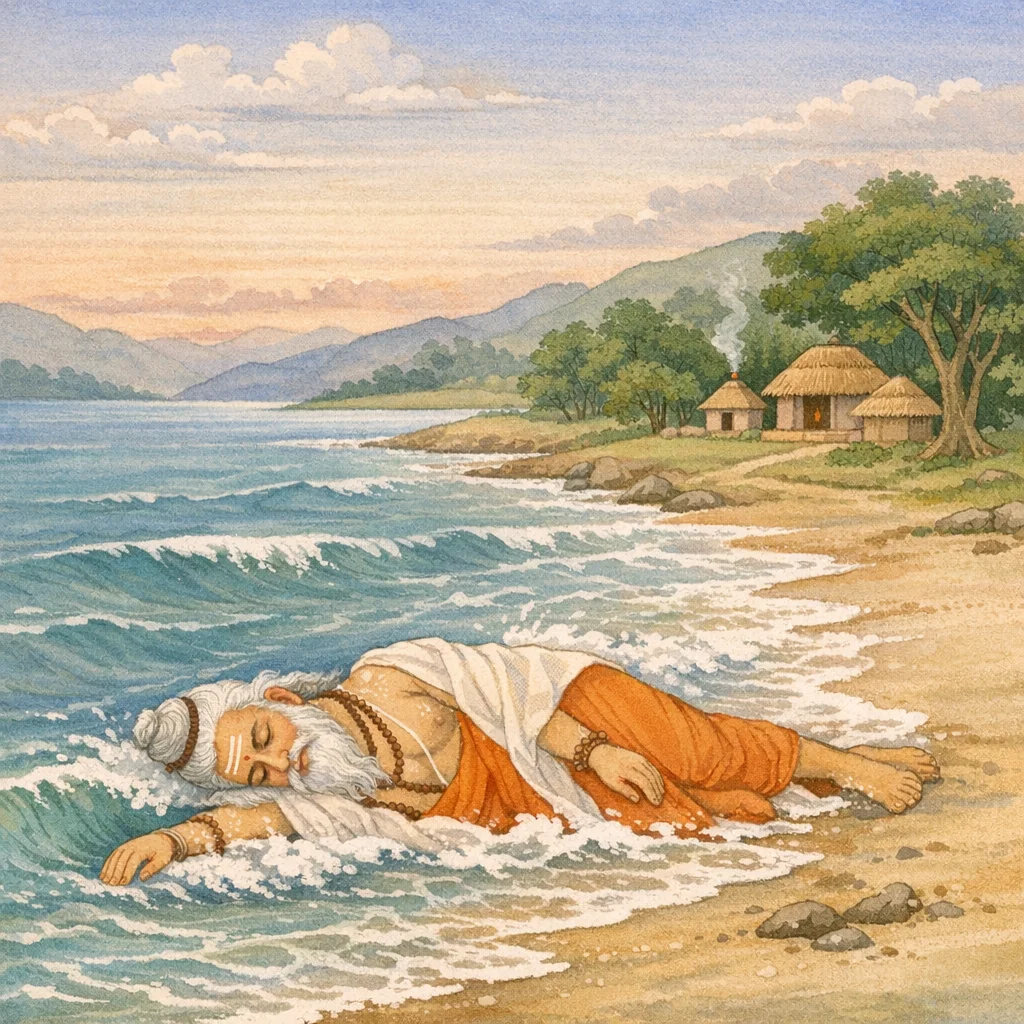
Chapter Arc: वन-राजा (नृपश्रेष्ठ) मृगया के लिए नगर से निकलता है और घोर वन में हिंसक पशुओं का संहार करता हुआ आगे बढ़ता है—पर यह शिकार-यात्रा शीघ्र ही धर्म-संघर्ष में बदलने वाली है। → वन-पथ पर राजा और मुनि (वसिष्ठ/शक्ति-प्रसंग) का आमना-सामना होता है; मार्ग को लेकर दोनों में वाक्य-युद्ध छिड़ता है—“अपसर्प, अपसर्प” की तकरार अहंकार को भड़काती है। राजा का दण्ड (कोड़े का प्रहार) तपस्वी-तेज को चोट पहुँचाता है और क्रोधाग्नि प्रज्वलित होती है। → कोड़े की चोट से आहत मुनिसत्तम क्रोधमूर्च्छित होकर राजा को शाप देता है; शाप की पुनरुक्ति से वह और बलवान हो उठता है और राजा राक्षसी-बल से आविष्ट होकर विवश/विसंज्ञ-सा हो जाता है। → राक्षस-आवेश का सत्य जानकर विश्वामित्र भी उस देश से हट जाता है; उधर वसिष्ठ शोक से व्याकुल होकर समुद्र के सामने गले में भारी शिला बाँधकर जल में कूद पड़ता है, पर समुद्र-तरंगें उसे तट पर पटक देती हैं—वह मर नहीं पाता और खिन्न होकर पुनः आश्रम की ओर लौटता है। → वसिष्ठ का शोक शांत नहीं होता—असफल आत्मविनाश के बाद वह किस प्रकार अपने दुःख का रूपांतरण करेगा और यह प्रसंग विश्वामित्र-वसिष्ठ वैर की धारा को आगे कैसे मोड़ेगा?
Shlokas
Verse 1
इस प्रकार श्रीमहाभारत आदिपर्वके अन्तर्गत चैत्ररथपर्वमें वसिष्ठजीके चरित्रके प्रसंगमें विश्वामित्र-पराभवविषयक एक सौ चौद्वत्तरवाँ अध्याय पूरा हुआ ॥/ १७४ ॥। (दाक्षिणात्य अधिक पाठके १०६३ श्लोक मिलाकर कुल ५८३ श्लोक हैं) नस्म्म (2 अमन +ा ३. गौओंके मस्तक आदि छ: अंगोंका बड़ा एवं विस्तृत होना शुभ माना गया है। जैसा कि शास्त्रका वचन है-- शिरो ग्रीवा सक्थिनी च सास्ना पुच्छमथ सतना: । शुभान्येतानि धेनूनामायतानि प्रचक्षते ।। २. गौओंका ललाट, दोनों नेत्र और दोनों कान--ये पाँचों अंग पृथु (पुष्ट एवं विस्तृत) हों तो विद्दानोंद्वारा अच्छे माने जाते हैं। जैसा कि शास्त्रका वचन है-- ललाटं श्रवणौ चैव नयनद्वितयं तथा । पृथून्येतानि शस्यन्ते धेनूनां पडच सूरिभि: ।। [नीलकण्ठी टीकासे] पजञज्चसप्तत्याधेकशततमो< ध्याय: शक्तिके शापसे कल्माषपादका राक्षस होना, विश्वामित्रकी प्रेरणासे राक्षसद्वारा वसिष्ठके पुत्रोंका भक्षण और वसिष्ठका शोक गन्धर्व उवाच कल्माषपाद इत्येवं लोके राजा बभूव ह । इक्ष्वाकुवंशज: पार्थ तेजसासदृशो भुवि,गन्धर्व कहता है--अर्जुन! इक्ष्वाकुवंशमें एक राजा हुए, जो लोकमें कल्माषपादके नामसे प्रसिद्ध थे। इस पृथ्वीपर वे एक असाधारण तेजस्वी राजा थे
The Gandharva said: “O Arjuna, in the Ikṣvāku lineage there once arose a king who became known in the world by the name Kalmāṣapāda. On earth he was a ruler of uncommon splendor, a man whose radiance and prowess made him stand out among kings.”
Verse 2
स कदाचिद् वन राजा मृगयां निर्ययौ पुरात् मृगान् विध्यन् वराहांश्व चचार रिपुमर्दन:,एक दिन वे नगरसे निकलकर वनमें हिंसक पशुओंको मारनेके लिये गये। वहाँ वे रिपुमर्दन नरेश वराहों और अन्य हिंसक पशुओंको मारते हुए इधर-उधर विचरने लगे
Once, the king of the realm that lay by the forests set out from his city on a hunt. Striking down wild beasts—boars and other game—this “crusher of foes” ranged through the woods, absorbed in the pursuit and violence of the chase.
Verse 3
तस्मिन् वने महाघोरे खड्गांश्न बहुशो5हनत् । हत्वा च सुचिरं श्रान्तो राजा निववृते ततः,उस महाभयानक वनमें उन्होंने बहुत-से गैंडे भी मारे। बहुत देरतक हिंस़न पशुओंको मारकर जब राजा थक गये, तब वहाँसे नगरकी ओर लौटे
In that exceedingly dreadful forest, the king struck down many rhinoceroses again and again. After killing wild beasts for a long time, he grew weary; then he turned back from there toward the city—an episode that shows how hunting and violence, when left unchecked though framed as royal sport, end in exhaustion and invite reflection on restraint (saṃyama) and dharma.
Verse 4
अकामयतृ त॑ याज्यार्थे विश्वामित्र: प्रतापवान् । स तु राजा महात्मानं॑ वासिष्ठमृषिसत्तमम्,प्रतापी विश्वामित्र उन्हें अपना यजमान बनाना चाहते थे। राजा कल्माषपाद युद्धमें कभी पराजित नहीं होते थे। उस दिन वे भूख-प्याससे पीड़ित थे और ऐसे तंग रास्तेपर आ पहुँचे थे, जहाँ एक ही आदमी आ-जा सकता था। वहाँ आनेपर उन्होंने देखा, सामनेकी ओससे मुनिश्रेष्ठ महामना वसिष्ठकुमार आ रहे हैं
The mighty Viśvāmitra wished to take him as the yajamāna for a sacrifice. Yet the king—great-souled—approached the noble Vasiṣṭha, best among sages. The episode sets royal power against ascetic authority: the hunger for ritual legitimacy becomes the seed of rivalry, raising questions of rightful patronage, restraint, and reverence for spiritual precedence.
Verse 5
तृषार्तश्न क्षुधार्तक्ष एकायनगत: पथि । अपश्यदजित: संख्ये मुनि प्रतिमुखागतम्,प्रतापी विश्वामित्र उन्हें अपना यजमान बनाना चाहते थे। राजा कल्माषपाद युद्धमें कभी पराजित नहीं होते थे। उस दिन वे भूख-प्याससे पीड़ित थे और ऐसे तंग रास्तेपर आ पहुँचे थे, जहाँ एक ही आदमी आ-जा सकता था। वहाँ आनेपर उन्होंने देखा, सामनेकी ओससे मुनिश्रेष्ठ महामना वसिष्ठकुमार आ रहे हैं
Tormented by thirst and hunger, and having come upon a narrow path fit for only a single passage, the king—unconquered in battle—saw a sage approaching him face to face. In the narrative, this meeting on a constricted way foreshadows a clash of priorities: royal force and urgency on one side, and the inviolable dignity of a brahmin-sage on the other, raising the ethical question of who must yield and how dharma is to be upheld under pressure.
Verse 6
शक्ति नाम महाभागं वसिष्ठकुलवर्धनम् । ज्येष्ं पुत्र पुत्रशताद् वसिष्ठस्थ महात्मन:,वे वसिष्ठजीके वंशकी वृद्धि करनेवाले महाभाग शक्ति थे। महात्मा वसिष्ठजीके सौ पुत्रोंमें सबसे बड़े वे ही थे
The Gandharva said: “There was a most illustrious one named Śakti, an enhancer of the lineage of Vasiṣṭha. Among the hundred sons of the great-souled sage Vasiṣṭha, he was the eldest.”
Verse 7
अपगच्छ पथोड<स्माकमित्येवं पार्थिवो<ब्रवीत् । तथा ऋषिरुवाचैनं सान्त्वयउश्लक्षणया गिरा,उन्हें देखकर राजाने कहा--/हमारे रास्तेसे हट जाओ।” तब शक्ति मुनिने मधुर वाणीमें उन्हें समझाते हुए कहा--
Seeing them, the king said, “Move away from our path.” Then the sage, seeking to pacify him, addressed the king in gentle and conciliatory words—attempting to restrain the rising conflict through courteous speech and self-control.
Verse 8
मम पन्था महाराज धर्म एष सनातन: । रज्ञा सर्वेषु धर्मेषु देय: पनथा द्विजातये,“महाराज! मार्ग तो मुझे ही मिलना चाहिये। यही सनातन धर्म है। सभी धर्मोमें राजाके लिये यही उचित है कि ब्राह्मणको मार्ग दे”
The Gandharva said: “O great king, the right of way should be granted to me. This is the eternal rule of dharma: among all duties of a ruler, it is proper that the king yield the path to a twice-born (a Brahmin).”
Verse 9
एवं परस्परं तौ तु पथो<र्थ वाक्यमूचतु: । अपसर्पापसर्पेति वागुत्तरमकुर्वताम्,इस प्रकार वे दोनों आपसमें रास्तेके लिये वाग्युद्ध करने लगे। एक कहता, “तुम हटो' तो दूसरा कहता, “नहीं, तुम हटो।' इस प्रकार वे उत्तर-प्रत्युत्तर करने लगे
Thus the two of them began a verbal quarrel with each other over the right of way on the road. One kept saying, “Move aside, move aside,” and the other replied in kind, each returning word for word—an exchange that shows how pride and insistence can turn a trivial matter into conflict.
Verse 10
ऋषिस्तु नापचक्राम तस्मिन् धर्मपथे स्थित: । नापि राजा मुनेर्मानात् क्रोधाच्चाथ जगाम ह,ऋषि तो धर्मके मार्गमें स्थित थे, अतः वे रास्ता छोड़कर नहीं हटे। उधर राजा भी मान और क्रोधके वशीभूत हो मुनिके मार्गसे इधर-उधर नहीं हट सके। राजाओंमें श्रेष्ठ कल्माषपादने मार्ग न छोड़नेवाले शक्ति मुनिके ऊपर मोह-वश राक्षसकी भाँति कोड़ेसे आघात किया
The sage did not step aside, for he stood firm upon the path of dharma. Nor did the king move away from the sage’s way, held fast by pride and anger. Thus, when neither yielded, the confrontation on the road became a test of restraint and righteousness rather than mere right of passage.
Verse 11
अमुज्चन्तं तु पन्थानं तमृषिं नृपसत्तम: । जघान कशया मोहात् तदा राक्षसवन्मुनिम्,ऋषि तो धर्मके मार्गमें स्थित थे, अतः वे रास्ता छोड़कर नहीं हटे। उधर राजा भी मान और क्रोधके वशीभूत हो मुनिके मार्गसे इधर-उधर नहीं हट सके। राजाओंमें श्रेष्ठ कल्माषपादने मार्ग न छोड़नेवाले शक्ति मुनिके ऊपर मोह-वश राक्षसकी भाँति कोड़ेसे आघात किया
When the sage would not abandon the path, the best of kings—deluded at that moment—struck the rishi with a whip, behaving like a rākṣasa. The episode highlights how pride and anger can eclipse royal restraint and lead to an assault on a dharma-abiding ascetic.
Verse 12
कशाप्रहाराभिहतस्तत: स मुनिसत्तम: | त॑ शशाप नृपश्रेष्ठ॑ वासिष्ठ: क्रोधमूर्च्छित:,कोड़ेकी चोट खाकर मुनिश्रष्ठ शक्तिने क्रोधसे मूर्च्छिंत हो उन उत्तम नरेशको शाप दे दिया
Struck by the lash, that foremost of sages—Vasiṣṭha—overcome by a surge of anger, pronounced a curse upon the excellent king.
Verse 13
हंसि राक्षसवद् यस्माद् राजापसद तापसम् | तस्मात् त्वमद्यप्रभृति पुरुषादो भविष्यसि,तपस्याकी प्रबल शक्तिसे सम्पन्न शक्तिमुनिने कहा--“राजाओंमें नीच कल्माषपाद! तू एक तपस्वी ब्राह्मणको राक्षसकी भाँति मार रहा है, इसलिये आजसे नरभक्षी राक्षस हो जायगा तथा अबसे तू मनुष्योंके मांसमें आसक्त होकर इस पृथ्वीपर विचरता रहेगा। नृूपाधम! जा यहाँसे”
“Since you, O outcast among kings, slay an ascetic like a rākṣasa, therefore from this day onward you shall become a man-eater. Henceforth, driven by craving for human flesh, you will roam upon this earth. O basest of rulers—go from here!”
Verse 14
मनुष्यपिशिते सक्तश्नरिष्यसि महीमिमाम् | गच्छ राजाभमेत्युक्त: शक्तिना वीर्यशक्तिना,तपस्याकी प्रबल शक्तिसे सम्पन्न शक्तिमुनिने कहा--“राजाओंमें नीच कल्माषपाद! तू एक तपस्वी ब्राह्मणको राक्षसकी भाँति मार रहा है, इसलिये आजसे नरभक्षी राक्षस हो जायगा तथा अबसे तू मनुष्योंके मांसमें आसक्त होकर इस पृथ्वीपर विचरता रहेगा। नृूपाधम! जा यहाँसे”
“Because you are intent on human flesh, you shall roam upon this earth, bound to that craving. O basest of kings, depart from here!”
Verse 15
! ५ ॥५ गाए, भी - ॥* /#॥॥ ५११ ॥/55 ० ततो याज्यनिमित्ते तु विश्वामित्रवसिष्ठयो: । वैरमासीत् तदा त॑ तु विश्वामित्रो5न्वपद्यत,उन्हीं दिनों यजमानके लिये विश्वामित्र और वसिष्ठमें वैर चल रहा था। उस समय विश्वामित्र राजा कल्माषपादके पास आये
Then, on account of a dispute concerning the patron of a sacrifice, enmity arose between Viśvāmitra and Vasiṣṭha. At that time Viśvāmitra approached the king.
Verse 16
तयोरविवदतोरेवं समीपमुपचक्रमे । ऋषिरुग्रतपा: पार्थ विश्वामित्र: प्रतापवान्,अर्जुन! जब राजा तथा ऋषिषपुत्र दोनों इस प्रकार विवाद कर रहे थे, उग्रतपस्वी प्रतापी विश्वामित्र मुनि उनके निकट चले गये
As the two continued their dispute, the mighty sage Viśvāmitra—renowned for fierce austerities—approached them.
Verse 17
ततः स बुबुधे पश्चात् तमृषिं नृपसत्तम: । ऋषे: पुत्र वसिष्ठस्य वसिष्ठमिव तेजसा,तदनन्तर नृपश्रेष्ठ कल्माषपादने वसिष्ठके समान तेजस्वी वसिष्ठ मुनिके पुत्र उन महर्षि शक्तिको पहचाना
Then, after a while, the best of kings recognized that sage—Vasiṣṭha’s son—who shone with a splendor like Vasiṣṭha himself.
Verse 18
अन्तर्धाय तदा5>त्मानं विश्वामित्रोडपि भारत । तावुभावतिचक्राम चिकीर्षन्नात्मन: प्रियम्,भारत! तब विश्वामित्रजीने भी अपनेको अदृश्य करके अपना प्रिय करनेकी इच्छासे राजा और शक्ति दोनोंको चकमा दिया
Then Viśvāmitra, O Bhārata, made himself invisible. Intending to accomplish what was dear to him, he outwitted them both and slipped past.
Verse 19
स तु शप्तस्तदा तेन शक्तिना वै नृपोत्तम: । जगाम शरणं शक्ति प्रसादयितुमरहयन्,जब शक्तिने शाप दे दिया, तब नृपतिशिरोमणि कल्माषपाद उनकी स्तुति करते हुए उन्हें प्रसन्न करनेके लिये उनके शरण होने चले
But when that best of kings had then been cursed by Śakti, he sought refuge with Śakti, deeming it right to appease him—approaching with reverence in order to regain the sage’s favor.
Verse 20
तस्य भावं विदित्वा स नृपते: कुरुसत्तम । विश्वामित्रस्ततो रक्ष आदिदेश नृपं प्रति,कुरुश्रेष्ठ॒ राजाके मनोभावको समझकर उक्त विश्वामित्रजीने एक राक्षसको राजाके भीतर प्रवेश करनेके लिये आज्ञा दी
Understanding the king’s inner intention, O best of the Kurus, Viśvāmitra then commanded a rākṣasa to approach and enter the king’s presence.
Verse 21
शापात् तस्य तु विप्रर्षेविश्वामित्रस्य चाज्ञया । राक्षस: किंकरो नाम विवेश नृपतिं तदा,ब्रह्मर्षि शक्तिके शाप तथा विश्वामित्रजीकी आज्ञासे किंकर नामक राक्षसने तब राजाके भीतर प्रवेश किया
Because of that curse, and by the command of the sage Viśvāmitra, a rākṣasa named Kiṅkara then entered the king.
Verse 22
रक्षसा तं गृहीतं तु विदित्वा मुनिसत्तम: । विश्वामित्रो5प्यपाक्रामत् तस्माद् देशादरिंदम,शत्रुसूदन! राक्षसने राजाको आविष्ट कर लिया है, यह जानकर मुनिवर विश्वामित्रजी भी उस स्थानसे चले गये
Knowing that he had been seized by a rākṣasa, the foremost of sages, Viśvāmitra too withdrew from that region—O subduer of foes, O slayer of enemies.
Verse 23
ततः स नृपतिस्तेन रक्षसान्तर्गतेन वै । बलवत् पीडित: पार्थ नान्यबुध्यत किंचन,कुन्तीनन्दन! भीतर घुसे हुए राक्षससे अत्यन्त पीड़ित हो उन नरेशको किसी भी बातकी सुध-बुध न रही
Then that king, with the rākṣasa having entered within him, was grievously tormented. O Pārtha, overwhelmed by that fierce affliction, he could discern nothing at all.
Verse 24
ददर्शाथ द्विज: वच्िद् राजानं प्रस्थितं वनम् । अयाचत क्षुधापन्न: समांसं भोजनं तदा,एक दिन किसी ब्राह्मणने (राक्षससे आविष्ट) राजाको वनकी ओर जाते देखा और भूखसे अत्यन्त पीड़ित होनेके कारण उनसे मांससहित भोजन माँगा
Then a certain brahmin saw the king setting out toward the forest. Tormented by hunger, he begged the king at that time for food—specifically a meal that included meat.
Verse 25
तमुवाचाथ राजर्षिद्धिजं मित्रसहस्तदा । आस्स्व ब्रह्म॒ंस्त्वमत्रैव मुहूर्त प्रतिपालयन्,तब राजर्षि मित्रसह (कल्माषपाद)-ने उस द्विजसे कहा--'ब्रह्मन! आप यहीं बैठिये और दो घड़ीतक प्रतीक्षा कीजिये
Then the royal sage Mitrasaha addressed the twice-born man: “O Brahmin, sit here just for a short while and wait.”
Verse 26
निवृत्त: प्रतिदास्यामि भोजन ते यथेप्सितम् । इत्युक्त्वा प्रययौ राजा तस्थौ च द्विजसत्तम:,“मैं वनसे लौटनेपर आपको यशथेष्ट भोजन दूँगा।। यह कहकर राजा चले गये और वह ब्राह्मण (वहाँ) ठहर गया
“When I return, I shall provide you with the meal you desire.” Having said this, the king departed, and the foremost of Brahmins remained there.
Verse 27
ततो राजा परिक्रम्य यथाकामं यथासुखम् । निवृत्तो5न्तःपुरं पार्थ प्रविवेश महामना:,पार्थ! तत्पश्चात् महामना राजा मित्रसह इच्छानुसार मौजसे घूम-फिरकर जब लौटे, तब अन्तःपुरमें चले गये
Then the king, having wandered as he wished and at his ease, turned back and—O Pārtha—entered the inner apartments, noble-minded.
Verse 28
ततोडर्धरात्र उत्थाय सूदमानाय्य सत्वरम् । उवाच राजा संस्मृत्य ब्राह्मणस्य प्रतिश्रुतम्,वहाँ आधी रातके समय उन्हें ब्राह्मणको भोजन देनेकी प्रतिज्ञाका स्मरण हुआ। फिर तो वे उठ बैठे और तुरंत रसोइयेको बुलाकर बोले--“जाओ, वनके अमुक प्रदेशमें एक ब्राह्मण भोजनके लिये मेरी प्रतीक्षा करता है। उसे तुम मांसयुक्त भोजनसे तृप्त करो”
Then, in the middle of the night, the king rose and quickly summoned the cook. Remembering the promise he had given to a Brahmin, the king said: “Go—there is a Brahmin waiting for me for his meal in a certain part of the forest. Satisfy him with a meal that includes meat.”
Verse 29
गच्छामुष्मिन् वनोद्देशे ब्राह्मणो मां प्रतीक्षते । अन्नार्थी तं त्वमन्नेन समांसेनोपपादय,वहाँ आधी रातके समय उन्हें ब्राह्मणको भोजन देनेकी प्रतिज्ञाका स्मरण हुआ। फिर तो वे उठ बैठे और तुरंत रसोइयेको बुलाकर बोले--“जाओ, वनके अमुक प्रदेशमें एक ब्राह्मण भोजनके लिये मेरी प्रतीक्षा करता है। उसे तुम मांसयुक्त भोजनसे तृप्त करो”
The Gandharva said: “Go to that part of the forest; a Brahmin is waiting there for me. He has come seeking food—so you should satisfy him with a meal, including meat.”
Verse 30
गन्धर्व उवाच एवमुक्तस्तत: सूद: सो5नासाद्यामिषं क्वचित् | निवेदयामास तदा तस्मै राज्ञे व्यथान्वित:,गन्धर्व कहता है--उनके यों कहनेपर रसोइयेने मांसके लिये खोज की; परंतु जब कहीं भी मांस नहीं मिला, तब उसने दु:ःखी होकर राजाको इस बातकी सूचना दी
The Gandharva said: Thus addressed, the cook searched for meat; but finding none anywhere, he then, distressed, reported the matter to the king.
Verse 31
राजा तु रक्षसा5<विष्ट: सूदमाह गतव्यथ: । अप्येनं नरमांसेन भोजयेति पुन: पुन:,राजापर राक्षसका आवेश था, अतः उन्होंने रसोइयेसे निश्चिन्त होकर कहा--“उस ब्राह्मणको मनुष्यका मांस ही खिला दो' यह बात उन्होंने बार-बार दुहरायी
The king, possessed by a rākṣasa, spoke to the cook without any sense of distress: “Feed this man with human flesh.” He repeated this command again and again.
Verse 32
तथेत्युक्त्वा तत: सूद: संस्थानं वध्यघातिनाम् । गत्वा55जहार त्वरितो नरमांसमपेतभी:,तब रसोइया “तथास्तु' कहकर वध्यभूमिमें जल्लादोंके घर गया और (उनसे) निर्भय होकर तुरंत ही मनुष्यका मांस ले आया
Saying, “So be it,” the cook went to the place where the executioners dwell—the haunt of those who slay the condemned—and, without fear, quickly brought back human flesh.
Verse 33
एतत् संस्कृत्य विधिवदन्नोपहितमाशु वै । तस्मै प्रादाद् ब्राह्मणाय क्षुधिताय तपस्विने,फिर उसीको तुरंत विधिपूर्वक राँधकर अन्नके साथ उसे उस तपस्वी एवं भूखे ब्राह्मणको दे दिया
He promptly prepared it in proper fashion according to due procedure, served it together with food, and gave it to that hungry, ascetic brāhmaṇa.
Verse 34
स सिद्धचक्षुषा दृष्टवा तदन्नं द्विजसत्तम: । अभोज्यमिदमित्याह क्रोधपर्याकुलेक्षण:,तब उस श्रेष्ठ ब्राह्मणने तपःसिद्ध दृष्टिसे उस अन्नको देखा और “यह खानेयोग्य नहीं है' यों समझकर क्रोधपूर्ण नेत्रोंसे देखते हुए कहा
The foremost of Brahmins, having beheld that food with his vision perfected by austerity, declared, “This is not fit to be eaten,” his eyes agitated with anger.
Verse 35
ब्राह्मण उवाच यस्मादभोज्यमन्नं मे ददाति स नृपाधम: । तस्मात् तस्यैव मूढस्य भविष्यत्यत्र लोलुपा,ब्राह्मणने कहा--वह नीच राजा मुझे न खाने-योग्य अन्न दे रहा है, अतः उसी मूर्खकी जिह्ठा ऐसे अन्नके लिये लालायित रहेगी
The Brahmin said: “Since that vile king gives me food that is unfit to be eaten, therefore that very fool’s tongue will, in this very matter, become greedily craving for such food.”
Verse 36
सक्तो मानुषमांसेषु यथोक्तः शक्तिना तथा । उद्वेजनीयो भूतानां चरिष्यति महीमिमाम्,जैसा कि शक्ति मुनिने कहा है, वह मनुष्योंके मांसमें आसक्त हो समस्त प्राणियोंका उद्वेगपात्र बनकर इस पृथ्वीपर विचरेगा
Addicted to human flesh, exactly as the sage Śakti has foretold, he will roam this earth as a source of terror and distress to all living beings—becoming an object of dread for creatures everywhere.
Verse 37
द्विरनुव्याह्वते राज्ञ: स शापो बलवानभूत् । रक्षोबलसमाविष्टो विसंज्ञश्नाभवन्नूप:,दो बार इस तरहकी बात कही जानेके कारण राजाका शाप प्रबल हो गया। उसके साथ उनमें राक्षसके बलका समावेश हो जानेके कारण राजाकी विवेकशक्ति सर्वथा लुप्त हो गयी
Because the king repeated the same utterance twice, the curse grew in strength. And as the power of a rākṣasa pervaded him, the king lost consciousness and discernment altogether.
Verse 38
ततः स नृपतिश्रेष्ठो रक्षसापद्वतेन्द्रिय: । उवाच शर्ति तं दृष्टवा न चिरादिव भारत,भारत! राक्षसने राजाके मन और इन्द्रियोंको काबूमें कर लिया था, अतः उन नृपश्रष्ठने कुछ ही दिनों बाद उक्त शक्ति मुनिको अपने सामने देखकर कहा--
Then that foremost of kings—O Bhārata—his mind and senses held under the rākṣasa’s peril, spoke when he saw Śarti before him again after only a short time.
Verse 39
यस्मादसदृश: शाप: प्रयुक्तोडयं मयि त्वया । तस्मात् त्वत्त: प्रवर्तिष्ये खादितुं पुरुषानहम्,“चूँकि तुमने मुझे यह सर्वथा अयोग्य शाप दिया है, अतः अब मैं तुम्हींसे मनुष्योंका भक्षण आरम्भ करूँगा”
“Since you have hurled at me a curse wholly unfitting and unjust, therefore I shall begin—starting with you—to devour human beings.”
Verse 40
एवमुक््त्वा तत: सद्यस्तं प्राणैविप्रयुज्य च । शक्तिनं भक्षयामास व्यात्र: पशुमिवेप्सितम्,यों कहकर राजाने तत्काल ही शक्तिके प्राण ले लिये और जैसे बाघ अपनी रुचिके अनुकूल पशुको चबा जाता है, उसी प्रकार वे भी शक्तिको खा गये
Having spoken thus, he immediately deprived Śakti of his life. Then, like a tiger devouring a desired prey-animal, he consumed Śakti.
Verse 41
शक्तिनं तु मृतं दृष्टवा विश्वामित्र: पुन: पुनः । वसिष्ठस्यैव पुत्रेषु तद् रक्ष: संदिदेश ह,शक्तिको मारा गया देख विश्वामित्र बार-बार वसिष्ठके पुत्रोंपर ही आक्रमण करनेके लिये उस राक्षसको प्रेरित करते थे
Seeing Śakti slain, Viśvāmitra again and again urged that rākṣasa to attack the sons of Vasiṣṭha.
Verse 42
स ताउछत्त्यवरान् पुत्रान् वसिष्ठस्थ महात्मन: । भक्षयामास संक्रुद्धः सिंह: क्षुद्रमूगानिव,जैसे क्रोधमें भरा हुआ सिंह छोटे मृगोंको खा जाता है, उसी प्रकार उन (राक्षसभावापन्न) नरेशने महात्मा वसिष्ठके उन सब पुत्रोंको भी, जो शक्तिसे छोटे थे, (मारकर) खा लिया
Inflamed with wrath and taking on a rākṣasa-like nature, he cut down the sons of the great-souled Vasiṣṭha—sons inferior in power—and devoured them, as a lion devours small deer.
Verse 43
वसिष्ठो घातिताउच्ूुत्वा विश्वामित्रेण तान् सुतान् | धारयामास तं॑ शोक महाद्रिरिव मेदिनीम्,वसिष्ठने यह सुनकर भी कि विश्वामित्रने मेरे पुत्रोंकी मरवा डाला है, अपने शोकके वेगको उसी प्रकार धारण कर लिया, जैसे महान् पर्वत सुमेरु इस पृथ्वीको
Hearing that Viśvāmitra had caused those sons to be slain, Vasiṣṭha nonetheless bore the surge of his grief, steadfast as a mighty mountain that supports the earth.
Verse 44
चक्रे चात्मविनाशाय बुद्धिं स मुनिसत्तम: । न त्वेव कौशिकोच्छेदं मेने मतिमतां वर:,उस समय (अपनी पुत्रवधुओंके दुःखसे दुःखित हो) वसिष्ठने अपने शरीरको त्याग देनेका विचार कर लिया; परंतु विश्वामित्रका मूलोच्छेद करनेकी बात बुद्धि-मानोंमें श्रेष्ठ मुनिवर वसिष्ठके मनमें ही नहीं आयी
The foremost of sages, Vasiṣṭha, overwhelmed by grief, resolved upon self-destruction; yet that best of the wise never even entertained the thought of uprooting Kauśika (Viśvāmitra).
Verse 45
स मेरुकूटादात्मानं मुमोच भगवानृषि: । गिरेस्तस्य शिलायां तु तूलराशाविवापतत्,महर्षि भगवान् वसिष्ठने मेरुपर्वतके शिखरसे अपने-आपको उसी पर्वतकी शिलापर गिराया; परंतु उन्हें ऐसा जान पड़ा मानो वे रूईके ढेरपर गिरे हों
The blessed sage released himself from the peak of Meru and fell upon the rock of that mountain; yet it felt to him as though he had landed on a heap of cotton.
Verse 46
न ममार च पातेन स यदा तेन पाण्डव | तदाग्निमिद्धं भगवान् संविवेश महावने,पाण्डुनन्दन! जब (इस प्रकार) गिरनेसे भी वे नहीं मरे, तब वे भगवान् वसिष्ठ महान् वनके भीतर धधकते हुए दावानलमें घुस गये
O Pāṇḍava, when he did not die even from that fall, the venerable Vasiṣṭha entered the blazing forest-conflagration in the great wilderness.
Verse 47
त॑ तदा सुसमिद्धो5पि न ददाह हुताशन: । दीप्यमानो<प्यमित्रघ्न शीतोडग्निरभवत् ततः,यद्यपि उस समय अग्नि प्रचण्ड वेगसे प्रज्वलित हो रही थी, तो भी उन्हें जला न सकी। शत्रुसूदन अर्जुन! उनके प्रभावसे वह दहकती हुई आग भी उनके लिये शीतल हो गयी
Then, though the fire blazed at the height of its power, it could not burn him. O Arjuna, slayer of foes, by the force of that person’s tapas and spiritual potency, even the fiercely flaming fire became cool and harmless to him.
Verse 48
स समुद्रमभिप्रेक्ष्य शोकाविष्टो महामुनि: । बद्ध्वा कण्ठे शिलां गुर्वी निपषात तदाम्भसि,तब शोकके आवेशसे युक्त महामुनि वसिष्ठने सामने समुद्र देखकर अपने कण्ठमें बड़ी भारी शिला बाँध ली और तत्काल जलमें कूद पड़े
Overwhelmed by grief, the great sage looked out upon the ocean. Binding a very heavy stone to his neck, he at once plunged into those waters.
Verse 49
स समुद्रोर्मिवेगेन स्थले न्यस्तो महामुनि: । न ममार यदा विप्र: कथंचित् संशितव्रत: । जगाम स ततः खिन्नः पुनरेवाश्रमं प्रति,परंतु समुद्रकी लहरोंके वेगने उन महामुनिको किनारे लाकर डाल दिया। कठोर व्रतका पालन करनेवाले ब्रह्मर्षि वसिष्ठ जब किसी प्रकार न मर सके, तब खिन्न होकर अपने आश्रमपर ही लौट पड़े
But driven by the force of the ocean’s waves, the great sage was cast up onto dry land. When that austere, vow-bound brahmin—Vasiṣṭha—could not die by any means, he grew weary and disheartened, and then returned once again to his hermitage.
Verse 175
इति श्रीमहाभारते आदिपर्वणि चैत्ररथपर्वणि वासिष्ठे वसिष्ठ शोके पञ्चसप्तत्यधिकशततमो<ध्याय:
Thus, in the Śrī Mahābhārata, within the Ādi Parva, in the Caitraratha section, in the episode concerning Vasiṣṭha—known as “Vasiṣṭha’s grief”—the one hundred and seventy-sixth chapter concludes.
Frequently Asked Questions
The chapter foregrounds the tension between identity and safety: the Pāṇḍavas must act within public dharmic norms (hospitality, ritual decorum) while concealing identity to manage risk in a politically crowded arena.
Legitimacy is constructed through disciplined procedure: hospitality to sages, ritual sequencing, and rule-defined contests function as social technologies for converting power and preference into publicly acceptable outcomes.
No explicit phalaśruti is stated here; the meta-function is structural—this adhyāya provides the formal conditions and ceremonial frame that make the ensuing selection intelligible within the epic’s dharma-centered narrative logic.