Adhyaya 172
पराशरस्य राक्षससत्रनिवृत्तिः | Paraśara’s Rakṣasa-Satra and Its Cessation
Upa-parva: Āstīka Parva (Sarpa-satra frame and ancillary lineages)
A Gandharva narrator reports that, after being addressed by the great Vasiṣṭha, the brahmarṣi restrains personal anger arising from public humiliation and proceeds to conduct a formidable ritual. Paraśara (Śākteya), described as eminent among Veda-knowers, performs a rakṣasa-satra, expanding it into a destructive rite in which he burns rākṣasas indiscriminately—old and young—while recalling the killing of Śakti. Vasiṣṭha does not initially prevent the slaughter, motivated by a resolve not to invalidate a prior pledge/commitment. The sacrifice is depicted with heightened imagery: Paraśara appears like a fourth fire among three blazing fires; the sky is illuminated like sunlight after clouds disperse; sages perceive him as a second sun. As the rite becomes difficult to stop, elder ṛṣis—Atri, Pulastya, Pulaha, and Kratu—arrive seeking the preservation of rākṣasa life. Pulastya addresses Paraśara, questioning his satisfaction in killing the blameless and warning of prajoccheda (population-erasure) and adharma, while noting that Kalmāṣapāda’s trajectory and Śakti’s other sons’ heavenly joy are already known to Vasiṣṭha. The elders frame Paraśara as an instrument (nimitta) in a larger ascetic causality and instruct him to release/terminate the rite. Persuaded by Pulastya and Vasiṣṭha, Paraśara concludes the satra and discharges the accumulated ritual fire north of the Himālaya into a great forest. The text closes with an etiological note: that fire is said to be seen even now, periodically, consuming rākṣasas as well as trees and stones—an enduring trace of ritual power and the necessity of its regulation.
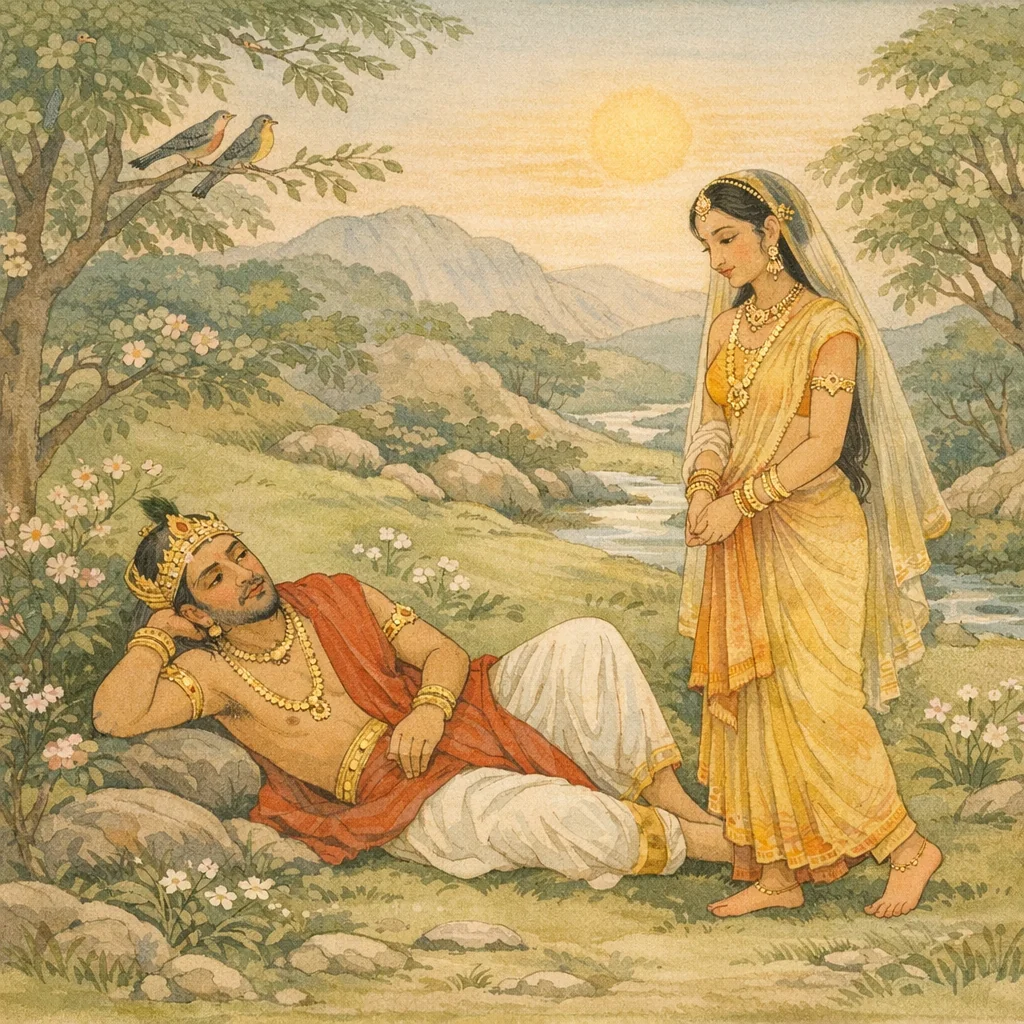
Chapter Arc: A Gandharva narrates how King Saṁvaraṇa, struck by sudden desire when Tapati vanishes from sight, collapses to the earth—conqueror of foes now conquered by love. → Tapati reappears, smiling, and addresses the Kuru progenitor with honeyed words; yet she checks his passion by reminding him she is not independent—her father still lives and must be approached. → Tapati declares the boundary of dharma: she cannot come near him of her own will, for a woman is not self-willed; if his love is true, he must formally seek her from her father, Savitṛ. → She reveals her identity—Tapati, daughter of Savitṛ and younger sister of Sāvitrī—and promises that if her father consents, she will become Saṁvaraṇa’s devoted wife from that very day. → Whether Savitṛ will grant his radiant daughter to the mortal king is left hanging, urging the suitor toward the next step of petition and proof.
Shlokas
Verse 1
ऑपन---का< छा | अ-क्राछ एकसप्तत्याधिकशततमो< ध्याय: तपती और संवरणकी बातचीत गन्धर्व उवाच अथ तस्यामदृश्यायां नृपति: काममोहितः । पातन: शत्रुसड्घानां पपात धरणीतले,गन्धर्व कहता है--अर्जुन! जब तपती अदृश्य हो गयी, तब काममोहित राजा संवरण, जो शत्रुसमुदायको मार गिरानेवाले थे, स्वयं ही बेहोश होकर धरतीपर गिर पड़े
The Gandharva said: When Tapati vanished from sight, King Saṃvaraṇa—overpowered by desire and delusion—collapsed senseless to the ground, though he was famed as one who could bring down hosts of enemies.
Verse 2
तस्मिन् निपतिते भूमावथ सा चारुहासिनी । पुन: पीनायतश्रोणी दर्शयामास तं नूपम्,जब वे इस प्रकार मूर्च्छित होकर पृथ्वीपर गिर पड़े, तब स्थूल एवं विशाल श्रोणीप्रदेशवाली तपतीने मन्द-मन्द मुसकराते हुए अपनेको राजा संवरणके सामने प्रकट कर दिया
When he had fallen senseless upon the earth, she—smiling sweetly—again revealed herself before that king, her hips full and broad.
Verse 3
अथाबभाषे कल्याणी वाचा मधुरया नृपम् । त॑ कुरूणां कुलकरं कामाभिहतचेतसम्,कुरुवंशका विस्तार करनेवाले राजा संवरण कामाग्निसे पीड़ित हो अचेत हो गये थे। उस समय जैसे कोई हँसकर मधुर वचन बोलता हो, उसी प्रकार कल्याणी तपती मीठी वाणीमें उन नरेशसे बोली--“शत्रुदमन! उठिये, उठिये; आपका कल्याण हो। राजसिंह! आप इस भूतलके विख्यात सम्राट् हैं। आपको इस प्रकार मोहके वशीभूत नहीं होना चाहिये।' तपतीने जब मधुर वाणीमें इस प्रकार कहा, तब राजा संवरणने आँखें खोलकर देखा। वही विशाल नितम्बोंवाली सुन्दरी सामने खड़ी थी। राजाके अन्तःकरणमें कामजनित आग जल रही थी। वे उस कजरारे नेत्रोंवाली सुन्दरीसे लड़खड़ाती वाणीमें बोले -- श्यामलोचने! तुम आ गयीं, अच्छा हुआ। यौवनके मदसे सुशोभित होनेवाली सुन्दरी! मैं कामसे पीड़ित तुम्हारा सेवक हूँ। तुम मुझे स्वीकार करो, अन्यथा मेरे प्राण मुझे छोड़कर चले जायँगे। विशालाक्षि! कमलके भीतरी भागकी-सी कान्तिवाली सुन्दरि! तुम्हारे लिये कामदेव मुझे अपने तीखे बाणोंद्वारा बार-बार घायल कर रहा है। यह (एक क्षणके लिये भी) शान्त नहीं होता। भद्रे! ऐसे समयमें जब मेरा कोई भी रक्षक नहीं है, मुझे कामरूपी महासर्पने डस लिया है
Then the auspicious lady addressed the king in a sweet voice—him, the founder of the Kuru line, whose mind had been struck and overwhelmed by desire. Her gentle speech serves as a wake‑up call: a ruler famed on earth should not lie helpless under delusion, but regain self-command and act with dignity.
Verse 4
उवाच मधुरं वाक्यं तपती प्रहसन्निव । उत्तिष्ोत्तिष्ठ भद्रं ते न त्वमर्हस्यरिंदम,कुरुवंशका विस्तार करनेवाले राजा संवरण कामाग्निसे पीड़ित हो अचेत हो गये थे। उस समय जैसे कोई हँसकर मधुर वचन बोलता हो, उसी प्रकार कल्याणी तपती मीठी वाणीमें उन नरेशसे बोली--“शत्रुदमन! उठिये, उठिये; आपका कल्याण हो। राजसिंह! आप इस भूतलके विख्यात सम्राट् हैं। आपको इस प्रकार मोहके वशीभूत नहीं होना चाहिये।' तपतीने जब मधुर वाणीमें इस प्रकार कहा, तब राजा संवरणने आँखें खोलकर देखा। वही विशाल नितम्बोंवाली सुन्दरी सामने खड़ी थी। राजाके अन्तःकरणमें कामजनित आग जल रही थी। वे उस कजरारे नेत्रोंवाली सुन्दरीसे लड़खड़ाती वाणीमें बोले -- श्यामलोचने! तुम आ गयीं, अच्छा हुआ। यौवनके मदसे सुशोभित होनेवाली सुन्दरी! मैं कामसे पीड़ित तुम्हारा सेवक हूँ। तुम मुझे स्वीकार करो, अन्यथा मेरे प्राण मुझे छोड़कर चले जायँगे। विशालाक्षि! कमलके भीतरी भागकी-सी कान्तिवाली सुन्दरि! तुम्हारे लिये कामदेव मुझे अपने तीखे बाणोंद्वारा बार-बार घायल कर रहा है। यह (एक क्षणके लिये भी) शान्त नहीं होता। भद्रे! ऐसे समयमें जब मेरा कोई भी रक्षक नहीं है, मुझे कामरूपी महासर्पने डस लिया है
Smiling as though in gentle amusement, Tapatī spoke sweetly: “Rise, rise—may good befall you. O subduer of foes, you are not fit to lie thus overcome.”
Verse 5
मोहं नृपतिशार्दूल गन्तुमाविष्कृत: क्षितौ । एवमुक्तो5थ नृपतिर्वाचा मधुरया तदा,कुरुवंशका विस्तार करनेवाले राजा संवरण कामाग्निसे पीड़ित हो अचेत हो गये थे। उस समय जैसे कोई हँसकर मधुर वचन बोलता हो, उसी प्रकार कल्याणी तपती मीठी वाणीमें उन नरेशसे बोली--“शत्रुदमन! उठिये, उठिये; आपका कल्याण हो। राजसिंह! आप इस भूतलके विख्यात सम्राट् हैं। आपको इस प्रकार मोहके वशीभूत नहीं होना चाहिये।' तपतीने जब मधुर वाणीमें इस प्रकार कहा, तब राजा संवरणने आँखें खोलकर देखा। वही विशाल नितम्बोंवाली सुन्दरी सामने खड़ी थी। राजाके अन्तःकरणमें कामजनित आग जल रही थी। वे उस कजरारे नेत्रोंवाली सुन्दरीसे लड़खड़ाती वाणीमें बोले -- श्यामलोचने! तुम आ गयीं, अच्छा हुआ। यौवनके मदसे सुशोभित होनेवाली सुन्दरी! मैं कामसे पीड़ित तुम्हारा सेवक हूँ। तुम मुझे स्वीकार करो, अन्यथा मेरे प्राण मुझे छोड़कर चले जायँगे। विशालाक्षि! कमलके भीतरी भागकी-सी कान्तिवाली सुन्दरि! तुम्हारे लिये कामदेव मुझे अपने तीखे बाणोंद्वारा बार-बार घायल कर रहा है। यह (एक क्षणके लिये भी) शान्त नहीं होता। भद्रे! ऐसे समयमें जब मेरा कोई भी रक्षक नहीं है, मुझे कामरूपी महासर्पने डस लिया है
The Gandharva said: “O tiger among kings, the delusion that had manifested upon the earth is to depart.” Thus addressed at that time in a sweet voice, the king was roused.
Verse 6
ददर्श विपुलश्रोणीं तामेवाभिमुखे स्थिताम् | अथ तामसितापाद्जीमाबभाषे स पार्थिव:,कुरुवंशका विस्तार करनेवाले राजा संवरण कामाग्निसे पीड़ित हो अचेत हो गये थे। उस समय जैसे कोई हँसकर मधुर वचन बोलता हो, उसी प्रकार कल्याणी तपती मीठी वाणीमें उन नरेशसे बोली--“शत्रुदमन! उठिये, उठिये; आपका कल्याण हो। राजसिंह! आप इस भूतलके विख्यात सम्राट् हैं। आपको इस प्रकार मोहके वशीभूत नहीं होना चाहिये।' तपतीने जब मधुर वाणीमें इस प्रकार कहा, तब राजा संवरणने आँखें खोलकर देखा। वही विशाल नितम्बोंवाली सुन्दरी सामने खड़ी थी। राजाके अन्तःकरणमें कामजनित आग जल रही थी। वे उस कजरारे नेत्रोंवाली सुन्दरीसे लड़खड़ाती वाणीमें बोले -- श्यामलोचने! तुम आ गयीं, अच्छा हुआ। यौवनके मदसे सुशोभित होनेवाली सुन्दरी! मैं कामसे पीड़ित तुम्हारा सेवक हूँ। तुम मुझे स्वीकार करो, अन्यथा मेरे प्राण मुझे छोड़कर चले जायँगे। विशालाक्षि! कमलके भीतरी भागकी-सी कान्तिवाली सुन्दरि! तुम्हारे लिये कामदेव मुझे अपने तीखे बाणोंद्वारा बार-बार घायल कर रहा है। यह (एक क्षणके लिये भी) शान्त नहीं होता। भद्रे! ऐसे समयमें जब मेरा कोई भी रक्षक नहीं है, मुझे कामरूपी महासर्पने डस लिया है
He saw that very woman of broad hips standing before him, facing him. Then the king addressed her—she whose eyes were dark at the corners—his words unsteady under the pressure of desire. (In context, this is King Saṃvaraṇa, inflamed by love, pleading with Tapatī for acceptance, revealing the overpowering force of kāma and a ruler’s vulnerability when self-mastery falters.)
Verse 7
मन्मथाग्निपरीतात्मा संदिग्धाक्षरया गिरा । साधु त्वमसितापाज्ञि कामार्त मत्तकाशिनि,कुरुवंशका विस्तार करनेवाले राजा संवरण कामाग्निसे पीड़ित हो अचेत हो गये थे। उस समय जैसे कोई हँसकर मधुर वचन बोलता हो, उसी प्रकार कल्याणी तपती मीठी वाणीमें उन नरेशसे बोली--“शत्रुदमन! उठिये, उठिये; आपका कल्याण हो। राजसिंह! आप इस भूतलके विख्यात सम्राट् हैं। आपको इस प्रकार मोहके वशीभूत नहीं होना चाहिये।' तपतीने जब मधुर वाणीमें इस प्रकार कहा, तब राजा संवरणने आँखें खोलकर देखा। वही विशाल नितम्बोंवाली सुन्दरी सामने खड़ी थी। राजाके अन्तःकरणमें कामजनित आग जल रही थी। वे उस कजरारे नेत्रोंवाली सुन्दरीसे लड़खड़ाती वाणीमें बोले -- श्यामलोचने! तुम आ गयीं, अच्छा हुआ। यौवनके मदसे सुशोभित होनेवाली सुन्दरी! मैं कामसे पीड़ित तुम्हारा सेवक हूँ। तुम मुझे स्वीकार करो, अन्यथा मेरे प्राण मुझे छोड़कर चले जायँगे। विशालाक्षि! कमलके भीतरी भागकी-सी कान्तिवाली सुन्दरि! तुम्हारे लिये कामदेव मुझे अपने तीखे बाणोंद्वारा बार-बार घायल कर रहा है। यह (एक क्षणके लिये भी) शान्त नहीं होता। भद्रे! ऐसे समयमें जब मेरा कोई भी रक्षक नहीं है, मुझे कामरूपी महासर्पने डस लिया है
The Gandharva said: “With his very self engulfed by the fire of Manmatha, he spoke in a voice whose syllables were uncertain and faltering: ‘Well done, O dark-eyed one—O radiant beauty, intoxicated with youth—I am tormented by desire.’”
Verse 8
भजस्व भजमान मां प्राणा हि प्रजहन्ति माम् । त्वदर्थ हि विशालाक्षि मामयं निशितै: शरै:,कुरुवंशका विस्तार करनेवाले राजा संवरण कामाग्निसे पीड़ित हो अचेत हो गये थे। उस समय जैसे कोई हँसकर मधुर वचन बोलता हो, उसी प्रकार कल्याणी तपती मीठी वाणीमें उन नरेशसे बोली--“शत्रुदमन! उठिये, उठिये; आपका कल्याण हो। राजसिंह! आप इस भूतलके विख्यात सम्राट् हैं। आपको इस प्रकार मोहके वशीभूत नहीं होना चाहिये।' तपतीने जब मधुर वाणीमें इस प्रकार कहा, तब राजा संवरणने आँखें खोलकर देखा। वही विशाल नितम्बोंवाली सुन्दरी सामने खड़ी थी। राजाके अन्तःकरणमें कामजनित आग जल रही थी। वे उस कजरारे नेत्रोंवाली सुन्दरीसे लड़खड़ाती वाणीमें बोले -- श्यामलोचने! तुम आ गयीं, अच्छा हुआ। यौवनके मदसे सुशोभित होनेवाली सुन्दरी! मैं कामसे पीड़ित तुम्हारा सेवक हूँ। तुम मुझे स्वीकार करो, अन्यथा मेरे प्राण मुझे छोड़कर चले जायँगे। विशालाक्षि! कमलके भीतरी भागकी-सी कान्तिवाली सुन्दरि! तुम्हारे लिये कामदेव मुझे अपने तीखे बाणोंद्वारा बार-बार घायल कर रहा है। यह (एक क्षणके लिये भी) शान्त नहीं होता। भद्रे! ऐसे समयमें जब मेरा कोई भी रक्षक नहीं है, मुझे कामरूपी महासर्पने डस लिया है
The Gandharva said: “Accept me, who am devoted to you; for my very life-breaths are leaving me. O large-eyed one, for your sake this god of Love is striking me again and again with his sharp arrows.”
Verse 9
काम: कमलगर्भाभे प्रतिविध्यन् न शाम्यति । दष्टमेवमनाक्रन्दे भद्रे काममहाहिना,कुरुवंशका विस्तार करनेवाले राजा संवरण कामाग्निसे पीड़ित हो अचेत हो गये थे। उस समय जैसे कोई हँसकर मधुर वचन बोलता हो, उसी प्रकार कल्याणी तपती मीठी वाणीमें उन नरेशसे बोली--“शत्रुदमन! उठिये, उठिये; आपका कल्याण हो। राजसिंह! आप इस भूतलके विख्यात सम्राट् हैं। आपको इस प्रकार मोहके वशीभूत नहीं होना चाहिये।' तपतीने जब मधुर वाणीमें इस प्रकार कहा, तब राजा संवरणने आँखें खोलकर देखा। वही विशाल नितम्बोंवाली सुन्दरी सामने खड़ी थी। राजाके अन्तःकरणमें कामजनित आग जल रही थी। वे उस कजरारे नेत्रोंवाली सुन्दरीसे लड़खड़ाती वाणीमें बोले -- श्यामलोचने! तुम आ गयीं, अच्छा हुआ। यौवनके मदसे सुशोभित होनेवाली सुन्दरी! मैं कामसे पीड़ित तुम्हारा सेवक हूँ। तुम मुझे स्वीकार करो, अन्यथा मेरे प्राण मुझे छोड़कर चले जायँगे। विशालाक्षि! कमलके भीतरी भागकी-सी कान्तिवाली सुन्दरि! तुम्हारे लिये कामदेव मुझे अपने तीखे बाणोंद्वारा बार-बार घायल कर रहा है। यह (एक क्षणके लिये भी) शान्त नहीं होता। भद्रे! ऐसे समयमें जब मेरा कोई भी रक्षक नहीं है, मुझे कामरूपी महासर्पने डस लिया है
The Gandharva said: “O fair one, this desire—though repeatedly striking me, as if with arrows—does not subside. In this helpless state, without any outcry or protection, I have been bitten by the great serpent of passion.”
Verse 10
सा त्वं पीनायतश्रोणि मामाप्लुहि वरानने | त्वदधीना हि मे प्राणा: किन्नरोद्गीतभाषिणि,'स्थूल एवं विशाल नितम्बोंवाली वरानने! मेरे समीप आओ। किन्नरोंकी-सी मीठी बोली बोलनेवाली! मेरे प्राण तुम्हारे ही अधीन हैं
The Gandharva said: “O fair-faced one with full, broad hips, come close to me. O you whose speech is like the sweet song of the Kinnaras—my very life-breath depends upon you.”
Verse 11
चारुसर्वनवद्याड़ि पद्मेन्दुप्रतिमानने । न हाहं त्वदृते भीरु शक्ष्यामि खलु जीवितुम्,'भीरु! तुम्हारे सभी अंग मनोहर तथा अनिन््द्य सौन्दर्यसे सुशोभित हैं। तुम्हारा मुख कमल और चन्द्रमाके समान सुशोभित होता है। मैं तुम्हारे बिना जीवित नहीं रह सकूँगा
The Gandharva said: “O timid one, every limb of yours is lovely, adorned with flawless beauty; your face shines like a lotus and the moon. Truly, without you I shall not be able to go on living.”
Verse 12
काम: कमलपत्राक्षि प्रतिविध्यति मामयम् । तस्मात् कुरु विशालाक्षि मय्यनुक्रोशमड़ने,“कमलदलके समान सुन्दर नेत्रोंवाली सुन्दरि! यह कामदेव मुझे (अपने बाणोंसे) घायल कर रहा है; विशाललोचने! इसलिये तुम मुझपर दया करो
The Gandharva said: “O woman with lotus-petal eyes, this god of desire is piercing me as if with arrows. Therefore, O wide-eyed lady, show compassion toward me.”
Verse 13
भक्त मामसितापाज्ि न परित्यक्तुमहसि । त्वं हि मां प्रीतियोगेन त्रातुमहसि भाविनि,“कजरारे नेत्रोंवाली भामिनि! मैं तुम्हारा भक्त हूँ। तुम मेरा परित्याग न करो। तुम्हें तो प्रेमपूर्वक मेरी रक्षा करनी चाहिये
The Gandharva said: “O dark-eyed lady, do not abandon me. I am devoted to you; and you, O passionate one, ought to protect me through the bond of love.”
Verse 14
त्वद्दर्शनकृतस्नेहं मनश्वलति मे भृशम् । नत्वां दृष्टवा पुनश्चान्यां द्रष्टूं कल्याणि रोचते,“मेरा मन तुम्हारे दर्शनके साथ ही तुमसे अनुरक्त हो गया है। इसलिये वह अत्यन्त चंचल हो उठा है। कल्याणि! तुम्हें देख लेनेके बाद फिर दूसरी स्त्रीकी ओर देखनेकी रुचि मुझे नहीं रह गयी है
The Gandharva says: “From the moment I beheld you, my mind has been bound to you by affection and has become intensely restless. O auspicious lady, having seen you, I no longer feel any desire to look upon another woman.”
Verse 15
प्रसीद वशगो<हं ते भक्त मां भज भाविनि | दृष्टवैव त्वां वरारोहे मन्मथो भृशमड़ने,“मैं सर्वथा तुम्हारे अधीन हूँ, मुझपर प्रसन्न हो जाओ। महानुभावे! मुझ भक्तको अंगीकार करो। वरारोहे! विशाल नेत्रोंवाली अंगने! जबसे मैंने तुम्हें देखा है, तभीसे कामदेव मेरे अन्तः:करणको अपने बाणोंद्वारा घायल कर रहा है। कमललोचने! तुम प्रेमपूर्वक समागमके जलसे मेरे कामाग्निजनित दाहको बुझाकर मुझे आह्वाद प्रदान करो। कल्याणि! तुम्हारे दर्शनसे उत्पन्न हुआ कामदेव फूलोंके आयुध लेकर भी अत्यन्त दुर्धर्ष हो रहा है। उसके धनुष और बाण दोनों ही बड़े प्रचण्ड हैं। वह अपने दुस्सह बाणोंसे मुझे बींध रहा है। महानुभावे! तुम आत्मदान देकर मेरे उस कामको शान्त करो
The Gandharva pleads: “Be gracious. I am wholly under your power—accept me, for I am devoted to you, O noble lady. O fair-hipped one, the moment I beheld you, Kāma (the god of desire) has been tormenting me intensely.”
Verse 16
अन्तर्गतं विशालाक्षि विध्यति सम पतत्त्रिभि: । मन्मथाग्निसमुद्धूतं दाहं कमललोचने,“मैं सर्वथा तुम्हारे अधीन हूँ, मुझपर प्रसन्न हो जाओ। महानुभावे! मुझ भक्तको अंगीकार करो। वरारोहे! विशाल नेत्रोंवाली अंगने! जबसे मैंने तुम्हें देखा है, तभीसे कामदेव मेरे अन्तः:करणको अपने बाणोंद्वारा घायल कर रहा है। कमललोचने! तुम प्रेमपूर्वक समागमके जलसे मेरे कामाग्निजनित दाहको बुझाकर मुझे आह्वाद प्रदान करो। कल्याणि! तुम्हारे दर्शनसे उत्पन्न हुआ कामदेव फूलोंके आयुध लेकर भी अत्यन्त दुर्धर्ष हो रहा है। उसके धनुष और बाण दोनों ही बड़े प्रचण्ड हैं। वह अपने दुस्सह बाणोंसे मुझे बींध रहा है। महानुभावे! तुम आत्मदान देकर मेरे उस कामको शान्त करो
The Gandharva said: “O wide-eyed lady, Kāma pierces my very inner being with his arrows. O lotus-eyed one, the burning heat stirred up by the fire of desire consumes me.”
Verse 17
प्रीतिसंयोगयुक्ताभिरद्धि: प्रह्लादयस्व मे । पुष्पायुध॑ दुराधर्ष प्रचण्डशरकार्मुकम्,“मैं सर्वथा तुम्हारे अधीन हूँ, मुझपर प्रसन्न हो जाओ। महानुभावे! मुझ भक्तको अंगीकार करो। वरारोहे! विशाल नेत्रोंवाली अंगने! जबसे मैंने तुम्हें देखा है, तभीसे कामदेव मेरे अन्तः:करणको अपने बाणोंद्वारा घायल कर रहा है। कमललोचने! तुम प्रेमपूर्वक समागमके जलसे मेरे कामाग्निजनित दाहको बुझाकर मुझे आह्वाद प्रदान करो। कल्याणि! तुम्हारे दर्शनसे उत्पन्न हुआ कामदेव फूलोंके आयुध लेकर भी अत्यन्त दुर्धर्ष हो रहा है। उसके धनुष और बाण दोनों ही बड़े प्रचण्ड हैं। वह अपने दुस्सह बाणोंसे मुझे बींध रहा है। महानुभावे! तुम आत्मदान देकर मेरे उस कामको शान्त करो
The Gandharva said: “With the delight of loving union, please gladden me. O Flower-weaponed Love, hard to resist, has become fierce—his bow and arrows are terrible.”
Verse 18
त्वद्दर्शनसमुद्धूतं विध्यन्तं दुस्सहैः शरै: । उपशामय कल्याणि आत्मदानेन भाविनि,“मैं सर्वथा तुम्हारे अधीन हूँ, मुझपर प्रसन्न हो जाओ। महानुभावे! मुझ भक्तको अंगीकार करो। वरारोहे! विशाल नेत्रोंवाली अंगने! जबसे मैंने तुम्हें देखा है, तभीसे कामदेव मेरे अन्तः:करणको अपने बाणोंद्वारा घायल कर रहा है। कमललोचने! तुम प्रेमपूर्वक समागमके जलसे मेरे कामाग्निजनित दाहको बुझाकर मुझे आह्वाद प्रदान करो। कल्याणि! तुम्हारे दर्शनसे उत्पन्न हुआ कामदेव फूलोंके आयुध लेकर भी अत्यन्त दुर्धर्ष हो रहा है। उसके धनुष और बाण दोनों ही बड़े प्रचण्ड हैं। वह अपने दुस्सह बाणोंसे मुझे बींध रहा है। महानुभावे! तुम आत्मदान देकर मेरे उस कामको शान्त करो
The Gandharva said: “O auspicious lady, since the moment I beheld you, desire—aroused by your very sight—has been piercing me with unbearable arrows. Compassionate one, calm this torment by granting yourself in love.”
Verse 19
गान्धर्वेण विवाहेन मामुपेहि वराड़ने । विवाहानां हि रम्भोरु गान्धर्व: श्रेष्ठ उच्यते,“वरांगने! गान्धर्व विवाहद्वारा तुम मुझे प्राप्त होओ। सब विवाहोंमें गान्धर्व विवाह ही श्रेष्ठ बतलाया जाता है”
The Gandharva said: “O fair-limbed lady, come to me by the Gandharva form of marriage. For, O woman of beautiful thighs, among the various kinds of marriage, the Gandharva marriage is declared the foremost.”
Verse 20
तपत्युवाच नाहमीशा55त्मनो राजन् कन्या पितृमती हाहम् | मयि चेदस्ति ते प्रीतिर्याचस्व पितरं मम,तपतीने कहा--राजन! मैं ऐसी कन्या हूँ, जिसके पिता विद्यमान हैं; अत: अपने इस शरीरपर मेरा कोई अधिकार नहीं है। यदि आपका मुझपर प्रेम है तो मेरे पिताजीसे मुझे माँग लीजिये
Tapatī said: “O King, I am not the mistress of my own person; I am a maiden whose father is living. Therefore I have no independent authority over myself. If you truly bear affection for me, then formally request me from my father.”
Verse 21
यथा हि ते मया प्राणा: संगृहीता नरेश्वर । दर्शनादेव भूयस्त्वं तथा प्राणान् ममाहर:,नरेश्वर! जैसे आपके प्राण मेरे अधीन हैं, उसी प्रकार आपने भी दर्शनमात्रसे ही मेरे प्राणोंको हर लिया है
The Gandharva said: “O king, just as your life-breath was held within my power, so too—by the mere sight of you—you have again taken away my very life-breath.”
Verse 22
न चाहमीशा देहस्य तस्मान्नपतिसत्तम । समीप॑ नोपगच्छामि न स्वतन्त्रा हि योषित:,नृपश्रेष्ठ! मैं अपने शरीरकी स्वामिनी नहीं हूँ, इसलिये आपके समीप नहीं आ सकती; कारण कि स्त्रियाँ कभी स्वतन्त्र नहीं होती। आपका कुल सम्पूर्ण लोकोंमें विख्यात है। आप-जैसे भक्तवत्सल नरेशको कौन कन्या अपना पति बनानेकी इच्छा नहीं करेगी?
The Gandharva said: “I am not the mistress of my own body; therefore, O best of kings, I cannot come near you. For women are not independent. Your lineage is renowned throughout the worlds; and what maiden would not wish to choose as her husband a king like you, so devoted to those who seek refuge?”
Verse 23
का हि सर्वेषु लोकेषु विश्रुताभिजनं नृपम् | कन्या नाभिलकषेन्नाथं भर्तारें भक्तवत्सलम्,नृपश्रेष्ठ! मैं अपने शरीरकी स्वामिनी नहीं हूँ, इसलिये आपके समीप नहीं आ सकती; कारण कि स्त्रियाँ कभी स्वतन्त्र नहीं होती। आपका कुल सम्पूर्ण लोकोंमें विख्यात है। आप-जैसे भक्तवत्सल नरेशको कौन कन्या अपना पति बनानेकी इच्छा नहीं करेगी?
For what maiden would not wish to choose as her lord a king of renowned lineage, famed throughout all the worlds—one who is affectionate to the devoted? Such a ruler, O best of kings, is desired as a husband by all.
Verse 24
तस्मादेवं गते काले याचस्व पितरं मम । आदित्यं प्रणिपातेन तपसा नियमेन च,ऐसी दशामें आप यथासमय नमस्कार, तपस्या और नियमके द्वारा मेरे पिता भगवान् सूर्यको प्रसन्न करके उनसे मुझे माँग लीजिये
“Since matters have come to this pass, at the proper time approach my father, Āditya (the Sun). With reverent prostration, austerity, and disciplined observances, win his favor and then ask him to grant me to you.”
Verse 25
स चेत् कामयते दातुं तव मामरिसूदन । भविष्याम्यद्य ते राजन् सततं वशवर्तिनी,शत्रुसूदन नरेश! यदि वे मुझे आपकी सेवामें देना चाहेंगे तो मैं आजसे सदा आपकी आज्ञाके अधीन रहूँगी
“O slayer of foes, if he wishes to give me to you, then from this very day, O king, I shall ever remain obedient to your command.”
Verse 26
अहं हि तपती नाम साविनत्र्यवरजा सुता । अस्य लोकप्रदीपस्य सवितु: क्षत्रियर्षभ,क्षत्रियशिरोमणे! मैं इन्हीं अखिलभुवनभास्कर भगवान् सविताकी पुत्री और सावित्रीकी छोटी बहिन हूँ। मेरा नाम तपती है
The Gandharva said: “I am indeed Tapati by name, the younger daughter of Sāvinatrī. O bull among kṣatriyas, crest-jewel of warriors, I am the daughter of Savitṛ, the Sun—the lamp of this world.”
Verse 170
इस प्रकार श्रीमहाभारत आदिपव॑के अन्तर्गत चैत्ररथपर्वमें तपती-उपाख्यानविषयक एक सौ सत्तरवाँ अध्याय पूरा हुआ
Thus ends the one hundred and seventieth chapter of the Śrī Mahābhārata’s Ādi Parva, within the Caitraratha section, dealing with the episode of Tapatī.
Verse 171
इति श्रीमहाभारते आदिपर्वणि चैत्ररथपर्वणि तपत्युपाख्याने एकसप्तत्यधिकशततमो<ध्याय:
Thus, in the Śrī Mahābhārata, within the Ādi Parva—specifically the Caitraratha section—this concludes the episode concerning Tapatī, marking the one-hundred-and-seventy-second chapter.
Frequently Asked Questions
The dilemma is whether grief-justified retaliation can extend to indiscriminate destruction: Paraśara’s desire to punish for Śakti’s death conflicts with dharma when it becomes prajoccheda—harm to the blameless and erosion of cosmic-social balance.
Power—especially ritual or ascetic power—requires external and internal checks; anger must be subordinated to proportionate justice, and elder-mediated counsel functions as a dharmic mechanism to prevent moral overreach.
No explicit phalaśruti is stated; instead, the chapter offers an etiological meta-note (the continuing periodic fire near the northern Himālaya) that memorializes consequences, reinforcing that actions leave durable traces within the epic’s moral ecology.