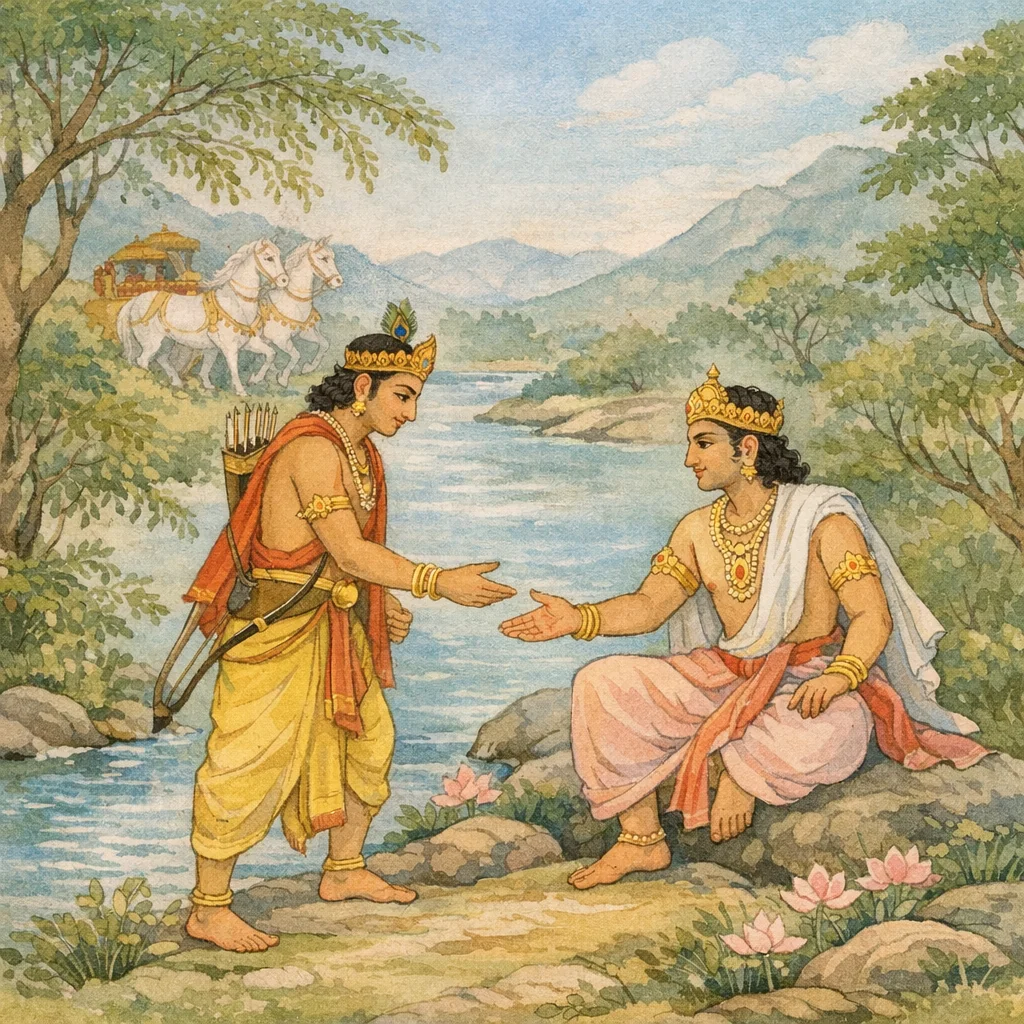
Adhyaya 170
और्वोपाख्यानम् (Aurva Episode: Restoration of Sight and Restraint of World-Destructive Anger)
Upa-parva: Āurva-Upākhyāna (Episode of Sage Aurva)
The chapter reports a sequence of explanations and interventions surrounding Āurva, a Bhārgava born by splitting a thigh (ūru), who embodies accumulated wrath from prior killings of Bhṛgus. A female speaker clarifies to afflicted kings that their loss of sight is not her act but arises from Āurva’s anger and divine potency, triggered by remembrance of slain kin. She advises the kings to supplicate Āurva; upon their prostration he relents and restores their sight, becoming famed as “Aurva.” The narrative then pivots: Āurva interprets the episode as a humiliation of the world and resolves, through intensified tapas, toward a comprehensive destruction of beings as a form of reparation for the Bhṛgus. The Pitṛs (ancestors), arriving from the ancestral realm, counsel him to restrain this impulse. They argue that earlier events were not unilaterally controlled by the Bhṛgus, that retaliatory schemes (including provocation via hidden wealth) were adopted under existential pressure, and that self-destruction is not an acceptable solution. They instruct Āurva to check sinful intention, abandon world-harming anger, and preserve the integrity of tapas by aligning it with restraint rather than collective ruin.
Chapter Arc: आश्रयदाता ब्राह्मण से अनुमति लेकर कुन्तीपुत्र पाण्डव पंचाल-यात्रा के लिए प्रस्थान करते हैं—वन-मार्ग, तीर्थ और गङ्गा-तट की ओर बढ़ते हुए। → दिन-रात की कठिन यात्रा के बाद वे गङ्गा-तट के सोमाश्रय तीर्थ पर पहुँचते हैं, जहाँ वन का रहस्य और गन्धर्व-लोक की छाया उनके मार्ग को असाधारण बना देती है। अर्जुन का सामना चित्ररथ गन्धर्व से होता है; पराक्रम की परीक्षा के साथ-साथ यह भी स्पष्ट होता है कि केवल बाहुबल नहीं, नीति और ब्राह्मण-आधारित राजधर्म भी निर्णायक है। → अर्जुन अपने वेग से शत्रु की शक्ति को स्तम्भित कर उसे पराजित करता है—पराजित चित्ररथ शरणागत-भाव से आता है; विजय के क्षण में अर्जुन का संयम और क्षत्रधर्म (शरणागत पर अनावश्यक प्रहार न करना) निर्णायक बनता है। → पराजय के बाद शत्रुता मित्रता में बदलती है। चित्ररथ ‘अङ्गारपर्ण’ के रूप में वन-परिचय देता है और गन्धर्व-देश के अद्भुत अश्वों का वर्णन/प्रदान करता है—जो इच्छानुसार रंग-वेग बदलने वाले, रथ-युद्ध के ‘वज्र’ के अंग समान माने गए हैं। साथ ही राजधर्म का उपदेश उभरता है: पुरोहित/ब्राह्मण-प्रधान व्यवस्था के बिना राज्य दीर्घकाल तक नहीं टिकता। → पाण्डवों की पंचाल-यात्रा आगे बढ़ती है—गन्धर्व-मित्रता से प्राप्त साधनों और उपदेशों के साथ अगला चरण किस परीक्षा की ओर ले जाएगा, यह संकेत मात्र रह जाता है।
Shlokas
Verse 1
ऑपनआक्रात बछ। अर: अ2 एकोनसप्तत्याधिकशततमो< ध्याय: पाण्डवोंकी पंचाल-यात्रा और अर्जुनके द्वारा चित्ररथ गन्धर्वकी पराजय एवं उन दोनोंकी मित्रता वैशम्पायन उवाच गते भगवति व्यासे पाण्डवा हृष्टमानसा: । ते प्रतस्थु: पुरस्कृत्य मातरं पुरुषर्षभा:,वैशम्पायनजी कहते हैं--जनमेजय! भगवान् व्यासके चले जानेपर पुरुषश्रेष्ठ पाण्डव प्रसन्नचित्त हो अपनी माताको आगे करके वहाँसे पंचालदेशकी ओर चल दिये इस प्रकार श्रीमहाभारत आदिपववके अन्तर्गत चैत्ररथपर्वमें गन्धर्वपराभवाविषयक एक सौ उनहत्तरवाँ अध्याय पूरा हुआ ॥/ १६९ ॥। (दाक्षिणात्य अधिक पाठके २ श्लोक मिलाकर कुल ८२ श्लोक हैं) ऑपन- मा बछ। अकाल सप्तत्याधेकशततमो< ध्याय: सूर्यकन्या तपतीको देखकर राजा संवरणका मोहित होना अजुन उवाच तापत्य इति यद् वाक्यमुक्तवानसि मामिह । तदहं ज्ञातुमिच्छामि तापत्यार्थ विनिश्चितम्
Vaiśampāyana said: When the revered sage Vyāsa had departed, the Pāṇḍavas—bulls among men—became joyful at heart. Placing their mother in front as the one to be honored and protected, they set out from there toward the land of Pañcāla.
Verse 2
आमन्त्य ब्राह्मा्ं पूर्वमभिवाद्यानुमान्य च । समैरुदड्मुखैर्मार्गर्यथोद्दिष्टं परंतपा:,परंतप! कुन्तीकुमारोंने पहले ही अपने आश्रयदाता ब्राह्मणसे पूछकर जानेकी आज्ञा ले ली थी और चलते समय बड़े आदरके साथ उन्हें प्रणाम किया। वे सब लोग उत्तर दिशाकी ओर जानेवाले सीधे मार्गोॉद्वारा उत्तराभिमुख हो अपने अभीष्ट स्थान पंचालदेशकी ओर बढ़ने लगे
Vaiśampāyana said: Having first taken leave of the brāhmaṇas—saluting them and receiving their approval—the sons of Kuntī set out. Keeping to the straight roads that faced north, as had been indicated to them, those scorcher of foes proceeded toward their desired destination, the land of Pañcāla.
Verse 3
ते त्वगच्छन्नहोरात्रात् तीर्थ सोमाश्रयायणम् | आसेदु: पुरुषव्यात्रा गज्ञायां पाण्डुनन्दना:,एक दिन और एक रात चलकर वे नरश्रेष्ठ पाण्डव गंगाजीके तटपर सोमाश्रयायण नामक तीर्थमें जा पहुँचे
After travelling for a full day and night, the Pāṇḍava brothers—lion-like among men—reached the sacred ford called Somāśrayāyaṇa on the bank of the river Gaṅgā.
Verse 4
उल्मुकं तु समुद्यम्य तेषामग्रे धनंजय: । प्रकाशार्थ ययौ तत्र रक्षार्थ च महारथ:,उस समय उनके आगे-आगे महारथी अर्जुन उजाला तथा रक्षा करनेके लिये जलती हुई मशाल उठाये चल रहे थे
Vaiśampāyana said: Then Dhanaṃjaya (Arjuna), the great chariot-warrior, lifted a blazing torch and went ahead of them—both to provide light on the way and to protect them.
Verse 5
तत्र गज्भाजले रम्ये विविक्ते क्रीडयन् स्त्रिय: । ईर्ष्युर्गन्धर्वराजो वै जलक्रीडामुपागत:,उस तीर्थकी गंगाके रमणीय तथा एकान्त जलमें गन्धर्वराज अंगारपर्ण (चित्ररथ) अपनी स्त्रियोंके साथ क्रीड़ा कर रहा था। वह बड़ा ही ईर्ष्यालु था और जलक्रीड़ा करनेके लिये ही वहाँ आया था
Vaiśampāyana said: There, in the lovely waters of the Gaṅgā, in a secluded spot, the king of the Gandharvas—jealous by nature—was sporting with his womenfolk, having come to that place for water-play.
Verse 6
शब्दं तेषां स शुश्राव नदीं समुपसर्पताम् । तेन शब्देन चाविष्ट श्रुक्रोध बलवद् बली,उसने गंगाजीकी ओर बढ़ते हुए पाण्डवोंके पैरोंकी धमक सुनी। उस शब्दको सुनते ही वह बलवान गन्धर्व क्रोधके आवेशमें आकर बड़े जोरसे कुपित हो उठा
He heard the sound of them as they approached the river. Struck by that sound, the powerful Gandharva—overcome by blazing anger—rose up in fierce wrath.
Verse 7
स दृष्टवा पाण्डवांस्तत्र सह मात्रा परंतपान् | विस्फारयन् धनुर्घोरमिदं वचनमब्रवीत्,परंतप पाण्डवोंको अपनी माताके साथ वहाँ देख वह अपने भयानक धनुषको टंकारता हुआ इस प्रकार बोला--
Seeing the Pāṇḍavas there together with their mother—those scorcher of foes—he twanged his dreadful bow and spoke these words. The bow’s thunder was both challenge and warning, marking the turn from recognition to threatened violence against a vulnerable family.
Verse 8
संध्या संरज्यते घोरा पूर्वरात्रागमेषु या । अशीतिभिललवैहींन तन्मुहुर्त प्रचक्षते,“रात्रि प्रारम्भ होनेके पहले जो पश्चिम दिशामें भयंकर संध्याकी लाली छा जाती है, उस समय अस्सी लवको छोड़कर सारा मुहूर्त इच्छानुसार विचरनेवाले यक्षों, गन्धर्वों तथा राक्षसोंके लिये निश्चित बताया जाता है। शेष दिनका सब समय मनुष्योंके कार्यवश विचरनेके लिये माना गया है
Vaiśampāyana said: “That dreadful twilight—when, just before the onset of night, a fearful redness spreads—marks a particular interval of time. That muhūrta is said to be a full muhūrta minus eighty lavas.”
Verse 9
विहितं कामचाराणां यक्षगन्धर्वरक्षसाम् । शेषमन्यन्मनुष्याणां कर्मचारेषु वै स्मृतम्,“रात्रि प्रारम्भ होनेके पहले जो पश्चिम दिशामें भयंकर संध्याकी लाली छा जाती है, उस समय अस्सी लवको छोड़कर सारा मुहूर्त इच्छानुसार विचरनेवाले यक्षों, गन्धर्वों तथा राक्षसोंके लिये निश्चित बताया जाता है। शेष दिनका सब समय मनुष्योंके कार्यवश विचरनेके लिये माना गया है
Vaiśampāyana said: “A particular time has been ordained for those beings who roam at will—Yakṣas, Gandharvas, and Rākṣasas. The remaining time, however, is remembered as the proper period for human beings to move about in accordance with their duties and occupations.”
Verse 10
लोभात् प्रचारं चरतस्तासु वेलासु वै नरान् । उपक्रान्तानि गृह्नीमो राक्षसैः सह बालिशान्,“जो मनुष्य लोभवश हमलोगोंकी वेलामें इधर घूमते हुए आ जाते हैं, उन मूर्खोंकी हम गन्धर्व और राक्षस कैद कर लेते हैं
Vaiśampāyana said: “Out of greed, when men wander about in those forbidden precincts, we—together with the Rākṣasas—seize and detain those foolish intruders who have ventured there.”
Verse 11
अतो रात्रौ प्राप्तुवन्तो जल॑ ब्रह्मविदो जना: । गर्हयन्ति नरान् सर्वान् बलस्थान् नृपतीनपि,“इसीलिये वेदवेत्ता पुरुष रातके समय जलनमें प्रवेश करनेवाले सम्पूर्ण मनुष्यों और बलवान् राजाओंकी भी निन्दा करते हैं
Therefore, those who are knowers of the Veda censure all people who enter water at night—even powerful kings—treating such conduct as blameworthy in the light of dharma and proper discipline.
Verse 12
आरात् तिष्ठत मा महां समीपमुपसर्पत । कस्मान्मां नाभिजानीत प्राप्त भागीरथीजलम्,“अरे, ओ मनुष्यो! दूर ही खड़े रहो। मेरे समीप न आना। तुम्हें ज्ञात कैसे नहीं हुआ कि मैं गन्धर्वराज अंगारपर्ण गंगाजीके जलमें उतरा हुआ हूँ। तुमलोग मुझे (अच्छी तरह) जान लो, मैं अपने ही बलका भरोसा करनेवाला स्वाभिमानी, ईर्ष्यालु तथा कुबेरका प्रिय मित्र हूँ
Vaiśampāyana said: “Stand back at a distance; do not come near me. Why do you not recognize me, now that I have entered the waters of the Bhāgīrathī (Gaṅgā)?”
Verse 13
अज्जरपर्ण गन्धर्व वित्त मां स्वबलाश्रयम् । अहं हि मानी चेष्युश्व॒ कुबेरस्य प्रियः सखा,“अरे, ओ मनुष्यो! दूर ही खड़े रहो। मेरे समीप न आना। तुम्हें ज्ञात कैसे नहीं हुआ कि मैं गन्धर्वराज अंगारपर्ण गंगाजीके जलमें उतरा हुआ हूँ। तुमलोग मुझे (अच्छी तरह) जान लो, मैं अपने ही बलका भरोसा करनेवाला स्वाभिमानी, ईर्ष्यालु तथा कुबेरका प्रिय मित्र हूँ
Vaiśampāyana said: “Know me as Aṅgāraparṇa, the Gandharva. I rely on my own strength alone. I am proud and jealous by nature, and I am a dear friend of Kubera. Stand far away, O men—do not come near me.”
Verse 14
अड्जरपर्णमित्येवं ख्यातं चेदं वन॑ मम । अनुगड़ं चरन् कामांश्रित्रं यत्र रमाम्पयहम्,“मेरा यह वन भी अंगारपर्ण नामसे विख्यात है। मैं गंगाजीके तटपर विचरता हुआ इस वनमें इच्छानुसार विचित्र क्रीड़ाएँ करता रहता हूँ
Vaiśampāyana said: “This forest of mine is indeed renowned by the name Aṅgāraparṇa. Roaming along the bank of the Gaṅgā, I take my pleasure here as I wish, engaging in various delightful pastimes.”
Verse 15
न कौणपा: शुज्िणो वा न देवा न च मानुषा: । इदं समुपसर्पन्ति तत् कि समनुसर्पथ,“मेरी उपस्थितिमें यहाँ राक्षस, यक्ष, देवता अथवा मनुष्य--कोई भी नहीं आने पाते; फिर तुमलोग कैसे आ रहे हो?”
Vaiśampāyana said: “Neither impure flesh-eaters nor even the pure—neither gods nor humans—are able to approach this place in my presence. How, then, are you able to come here and follow after?”
Verse 16
अजुन उवाच समुद्रे हिमवत्पाश्वे नद्यामस्यां च दुर्मते । रात्रावहनि संध्यायां कस्य गुप्त: परिग्रह:,अर्जुन बोले-<दुर्मते! समुद्र, हिमालयकी तराई और गंगानदीके तटपर रात, दिन अथवा संध्याके समय किसका अधिकार सुरक्षित है?
Arjuna said: “O wicked-minded one! On the seashore, on the slopes of the Himālaya, and on the bank of this river—by night, by day, or at twilight—whose claim can truly be kept secure? Who can hold such a possession as though it were protected and exclusively his?”
Verse 17
भुक्तो वाप्यथवाभुक्तो रात्रावहनि खेचर । न कालनियमो हास्ति गड्ढां प्राप्प सरिद्वराम्,आकाशचारी गन्धर्व! सरिताओंमें श्रेष्ठ गंगाजीके तटपर आनेके लिये यह नियम नहीं है कि यहाँ कोई खाकर आये या बिना खाये, रातमें आये या दिनमें। इसी प्रकार काल आदिका भी कोई नियम नहीं है
O Gandharva who moves through the sky! To come to the bank of the Gaṅgā, best of rivers, there is no rule that one must come having eaten or fasting, by night or by day. Likewise, there is no restriction here as to time or occasion.
Verse 18
वयं च शक्तिसम्पन्ना अकाले त्वामधृष्णुम । अशक्ता हि रणे क्रूर युष्मानर्चन्ति मानवा:,अरे, ओ क्रूर! हमलोग तो शक्तिसम्पन्न हैं। असमयमें भी आकर तुम्हें कुचल सकते हैं। जो युद्ध करनेमें असमर्थ हैं, वे दुर्बल मनुष्य ही तुमलोगोंकी पूजा करते हैं
Arjuna said: “We too are endowed with strength. Even at an untimely moment we could come and crush you, O fierce one. It is only those people who are powerless in battle—weak men—who offer you worship.”
Verse 19
पुरा हिमवतश्नैषा हेमशूज्राद् विनिस्सृता | गड्ढा गत्वा समुद्राम्भ: सप्तथा समपद्यत,प्राचीन कालमें हिमालयके स्वर्णशिखरसे निकली हुई गंगा सात धाराओंमें विभक्त हो समुद्रमें जाकर मिल गयी हैं। जो पुरुष गंगा, यमुना, प्लक्षकी जड़से प्रकट हुई सरस्वती, रथस्था, सरयू, गोमती और गण्डकी--इन सात नदियोंका जल पीते हैं, उनके पाप तत्काल नष्ट हो जाते हैं। ये गंगा बड़ी पवित्र नदी हैं। एकमात्र आकाश ही इनका तट है। गन्धर्व! ये आकाशकभमार्गसे विचरती हुई गंगा देवलोकमें अलकनन्दा नाम धारण करती हैं। ये ही वैतरणी होकर पितृलोकमें बहती हैं। वहाँ पापियोंके लिये इनके पार जाना अत्यन्त कठिन होता है। इस लोकमें आकर इनका नाम गंगा होता है। यह श्रीकृष्णद्वैपायन व्यासजीका कथन है
Arjuna said: “In ancient times, the Gaṅgā, issuing forth from the golden peak of the Himālaya, flowed onward and, entering the ocean, became divided into seven streams.”
Verse 20
गड्जां च यमुनां चैव प्लक्षजातां सरस्वतीम् । रथस्थां सरयूं चैव गोमतीं गण्डकीं तथा,प्राचीन कालमें हिमालयके स्वर्णशिखरसे निकली हुई गंगा सात धाराओंमें विभक्त हो समुद्रमें जाकर मिल गयी हैं। जो पुरुष गंगा, यमुना, प्लक्षकी जड़से प्रकट हुई सरस्वती, रथस्था, सरयू, गोमती और गण्डकी--इन सात नदियोंका जल पीते हैं, उनके पाप तत्काल नष्ट हो जाते हैं। ये गंगा बड़ी पवित्र नदी हैं। एकमात्र आकाश ही इनका तट है। गन्धर्व! ये आकाशकभमार्गसे विचरती हुई गंगा देवलोकमें अलकनन्दा नाम धारण करती हैं। ये ही वैतरणी होकर पितृलोकमें बहती हैं। वहाँ पापियोंके लिये इनके पार जाना अत्यन्त कठिन होता है। इस लोकमें आकर इनका नाम गंगा होता है। यह श्रीकृष्णद्वैपायन व्यासजीका कथन है
Arjuna said: “(I speak of) the Gaṅgā and the Yamunā, and the Sarasvatī that arises from the root of the Plakṣa tree; likewise the Rathasthā, the Sarayū, the Gomatī, and the Gaṇḍakī. The tradition declares that one who partakes of the waters of these seven sacred rivers has sins swiftly washed away. The Gaṅgā is praised as supremely purifying—her very ‘bank’ is said to be the sky, for she is envisioned as moving along a celestial path: in the world of the gods she is called Alakanandā; in the realm of the ancestors she becomes Vaitaraṇī, difficult for the sinful to cross; and in this human world she is known as Gaṅgā—so states Vyāsa.”
Verse 21
अपर्युषितपापास्ते नदी: सप्त पिबन्ति ये । इयं भूत्वा चैकवप्रा शुचिराकाशगा पुन:,प्राचीन कालमें हिमालयके स्वर्णशिखरसे निकली हुई गंगा सात धाराओंमें विभक्त हो समुद्रमें जाकर मिल गयी हैं। जो पुरुष गंगा, यमुना, प्लक्षकी जड़से प्रकट हुई सरस्वती, रथस्था, सरयू, गोमती और गण्डकी--इन सात नदियोंका जल पीते हैं, उनके पाप तत्काल नष्ट हो जाते हैं। ये गंगा बड़ी पवित्र नदी हैं। एकमात्र आकाश ही इनका तट है। गन्धर्व! ये आकाशकभमार्गसे विचरती हुई गंगा देवलोकमें अलकनन्दा नाम धारण करती हैं। ये ही वैतरणी होकर पितृलोकमें बहती हैं। वहाँ पापियोंके लिये इनके पार जाना अत्यन्त कठिन होता है। इस लोकमें आकर इनका नाम गंगा होता है। यह श्रीकृष्णद्वैपायन व्यासजीका कथन है
Arjuna said: “Those who drink the waters of these seven rivers have their sins washed away without delay. This river—pure and again moving through the sky—becomes, as it were, a single stream whose only bank is the open firmament.”
Verse 22
देवेषु गड्जा गन्धर्व प्राप्रोत्यलकनन्दताम् | तथा पितृन् वैतरणी दुस्तरा पापकर्मभि: । गड्जा भवति वै प्राप्य कृष्णद्वैपायनोडब्रवीत्,प्राचीन कालमें हिमालयके स्वर्णशिखरसे निकली हुई गंगा सात धाराओंमें विभक्त हो समुद्रमें जाकर मिल गयी हैं। जो पुरुष गंगा, यमुना, प्लक्षकी जड़से प्रकट हुई सरस्वती, रथस्था, सरयू, गोमती और गण्डकी--इन सात नदियोंका जल पीते हैं, उनके पाप तत्काल नष्ट हो जाते हैं। ये गंगा बड़ी पवित्र नदी हैं। एकमात्र आकाश ही इनका तट है। गन्धर्व! ये आकाशकभमार्गसे विचरती हुई गंगा देवलोकमें अलकनन्दा नाम धारण करती हैं। ये ही वैतरणी होकर पितृलोकमें बहती हैं। वहाँ पापियोंके लिये इनके पार जाना अत्यन्त कठिन होता है। इस लोकमें आकर इनका नाम गंगा होता है। यह श्रीकृष्णद्वैपायन व्यासजीका कथन है
Arjuna said: “O Gandharva, the Gaṅgā, moving among the gods, is known there as Alakanandā. In the realm of the ancestors she becomes the Vaitaraṇī—hard to cross for those burdened with sinful deeds. Having come to this world, she is called Gaṅgā. Thus spoke Kṛṣṇa Dvaipāyana (Vyāsa).”
Verse 23
असम्बाधा देवनदी स्वर्गसम्पादनी शुभा | कथमिच्छसि तां रोद्धुं नैष धर्म: सनातनः,ये कल्याणमयी देवनदी सब प्रकारकी विघ्न-बाधाओंसे रहित एवं स्वर्गलोककी प्राप्ति करानेवाली हैं। तुम उन्हीं गंगाजीपर किसलिये रोक लगाना चाहते हो? यह सनातन धर्म नहीं है
Arjuna said: “This divine river is unobstructed, auspicious, and a bestower of attainment of heaven. Why do you wish to restrain her? Such an act is not in keeping with the eternal law of dharma.”
Verse 24
अनिवार्यमसम्बाधं तव वाचा कथं वयम् | न स्पृशेम यथाकामं पुण्यं भागीरथीजलम्,जिसे कोई रोक नहीं सकता, जहाँ पहुँचनेमें कोई बाधा नहीं है, भागीरथीके उस पावन जलका तुम्हारे कहनेसे हम अपने इच्छानुसार स्पर्श क्यों न करें?
“Since none can restrain it and no barrier blocks access, why, at your bidding, should we not touch as we please the sacred waters of Bhāgīrathī?”
Verse 25
वैशम्पायन उवाच मम बा गन गला आग कार्मुकम् । मुमोच बाणान् निशि शीविषानिव,वैशम्पायनजी कहते हैं--जनमेजय! अर्जुनकी वह बात सुनकर अंगारपर्ण क्रोधित हो गया और धनुष नवाकर विषैले साँपोंकी भाँति तीखे बाण छोड़ने लगा
Vaiśampāyana said: “O Janamejaya, hearing Arjuna’s words, Aṅgāraparṇa became enraged. Bending his bow, he released volleys of arrows in the night, swift and deadly like venomous serpents.”
Verse 26
उल्मुकं भ्रामयंस्तूर्ण पाण्डवश्नर्म चोत्तरम् । व्यपोहत शरांस्तस्य स्वानिव धनंजय:,यह देख पाण्डुनन्दन धनंजयने तुरंत ही मशाल घुमाकर और उत्तम ढालसे रोककर उसके सभी बाण व्यर्थ कर दिये
Vaiśampāyana said: “Seeing this, Dhanaṃjaya (Arjuna), the noble son of Pāṇḍu, swiftly whirled a blazing firebrand and, with an excellent shield, beat aside all of his opponent’s arrows—rendering them futile.”
Verse 27
अर्जुन उवाच बिभीषिका वै गन्धर्व नास्त्रज्ेषु प्रयुज्यते । अस्त्रज्ेषु प्रयुक्तेयं फेनवत् प्रविलीयते,अर्जुनने कहा--गन्धर्व! जो अस्त्र-विद्याके विद्वान् हैं, उनपर तुम्हारी यह घुड़की नहीं चल सकती। अस्त्र-विद्याके मर्मज्ञोंपर फैलायी हुई तुम्हारी यह माया फेनकी तरह विलीन हो जायगी
Arjuna said: “O Gandharva, intimidation has no power over those who truly know the science of weapons. When such a threat or illusion is aimed at masters of arms, it dissolves like foam.”
Verse 28
मानुषानतिगन्धर्वान् सर्वान् गन्धर्व लक्षये | तस्मादस्त्रेण दिव्येन योत्स्येडहं न तु मायया,गन्धर्व! मैं जानता हूँ कि सम्पूर्ण गन्धर्व मनुष्योंसे अधिक शक्तिशाली होते हैं, इसलिये मैं तुम्हारे साथ मायासे नहीं, दिव्यास्त्रसे युद्ध करूँगा
Arjuna said: “O Gandharva, I know that all Gandharvas surpass human beings in power. Therefore I will fight you not by deception or illusion, but with a divine weapon.”
Verse 29
पुरास्त्रमिदमाग्नेयं प्रादात् किल बृहस्पति: । भरद्वाजाय गन्धर्व गुरुर्मान्य: शतक्रतो:,गन्धर्व! यह आग्नेय अस्त्र पूर्वकालमें इन्द्रके माननीय गुरु बृहस्पतिजीने भरद्वाज मुनिको दिया था
Arjuna said: “O Gandharva, this ancient Agneya weapon was once bestowed by Bṛhaspati—Indra’s revered preceptor—upon the sage Bharadvāja.”
Verse 30
भरद्वाजादग्निवेश्य अग्निवेश्याद् गुरुर्मम । साथ्विदं महमददद् द्रोणो ब्राह्मणसत्तम:,भरद्वाजसे इसे अग्निवेश्यने और अग्निवेश्यसे मेरे गुरु द्रोणाचार्यने प्राप्त किया है। फिर विप्रवर द्रोणाचार्यने यह उत्तम अस्त्र मुझे प्रदान किया
Arjuna said: “From Bharadvāja it came to Agniveśya; from Agniveśya it reached my own teacher. That supreme Brahmin, Droṇa, then bestowed this great (weapon/knowledge) upon me.”
Verse 31
वैशम्पायन उवाच इत्युक्त्वा पाण्डव: क्रुद्धों गन्धर्वाय मुमोच ह । प्रदीप्तमस्त्रमाग्नेयं ददाहास्य रथं तु तत्,वैशम्पायनजी कहते हैं--जनमेजय! ऐसा कहकर पाण्डुनन्दन अर्जुनने कुपित हो गन्धर्वपर वह प्रज्वलित आग्नेय अस्त्र चला दिया। उस अस्त्रने गन्धर्वके रथको जलाकर भस्म कर दिया। वह रथहीन गन्धर्व व्याकुल हो गया और अस्त्रके तेजसे मूढ होकर नीचे मुँह किये गिरने लगा। महाबली अर्जुनने उसके फ़ूलकी मालाओंसे सुशोभित केश पकड़ लिये और घसीटकर अपने भाइयोंके पास ले आये। अस्त्रके आघातसे वह गन्धर्व अचेत हो गया था
Vaiśampāyana said: Having spoken thus, the Pāṇḍava (Arjuna), angered, released against the Gandharva a blazing Agneya weapon. That fiery missile burned the Gandharva’s chariot to ashes.
Verse 32
विरथं विप्लुतं तं तु स गन्धर्व महाबल: । अस्त्रतेज:प्रमूढं च प्रपतन््तमवाड्मुखम्,वैशम्पायनजी कहते हैं--जनमेजय! ऐसा कहकर पाण्डुनन्दन अर्जुनने कुपित हो गन्धर्वपर वह प्रज्वलित आग्नेय अस्त्र चला दिया। उस अस्त्रने गन्धर्वके रथको जलाकर भस्म कर दिया। वह रथहीन गन्धर्व व्याकुल हो गया और अस्त्रके तेजसे मूढ होकर नीचे मुँह किये गिरने लगा। महाबली अर्जुनने उसके फ़ूलकी मालाओंसे सुशोभित केश पकड़ लिये और घसीटकर अपने भाइयोंके पास ले आये। अस्त्रके आघातसे वह गन्धर्व अचेत हो गया था
Vaiśampāyana said: That mighty Gandharva, his chariot destroyed and his mind thrown into turmoil, was stupefied by the blazing force of the weapon and began to fall headlong, his face turned downward. The scene shows how martial power, once unleashed, can swiftly strip even a formidable being of composure and dignity, reminding the listener that force carries consequences beyond mere victory.
Verse 33
शिरोरुहेषु जग्राह माल्यवत्सु धनंजय: । भ्रातृन् प्रति चकर्षाथ सो<स्त्रपातादचेतसम्,वैशम्पायनजी कहते हैं--जनमेजय! ऐसा कहकर पाण्डुनन्दन अर्जुनने कुपित हो गन्धर्वपर वह प्रज्वलित आग्नेय अस्त्र चला दिया। उस अस्त्रने गन्धर्वके रथको जलाकर भस्म कर दिया। वह रथहीन गन्धर्व व्याकुल हो गया और अस्त्रके तेजसे मूढ होकर नीचे मुँह किये गिरने लगा। महाबली अर्जुनने उसके फ़ूलकी मालाओंसे सुशोभित केश पकड़ लिये और घसीटकर अपने भाइयोंके पास ले आये। अस्त्रके आघातसे वह गन्धर्व अचेत हो गया था
Vaiśampāyana said: Dhanañjaya (Arjuna) seized him by the hair adorned with garlands and dragged him toward his brothers. Struck by the weapon’s force, that Gandharva had become unconscious. The episode highlights Arjuna’s resolve to protect his brothers, while also showing how overpowering force can reduce even a celestial opponent to helplessness—raising an ethical tension between necessary restraint and the humiliation of dragging a fallen foe.
Verse 34
युधिष्ठिरं तस्य भार्या प्रपेदे शरणार्थिनी । नाम्ना कुम्भीनसी नाम पतित्राणमभीप्सती,उस गन्धर्वकी पत्नीका नाम कुम्भीनसी था। उसने अपने पतिके जीवनकी रक्षाके लिये महाराज युधिष्ठिरकी शरण ली
Vaiśampāyana said: Seeking refuge, the wife of that Gandharva approached Yudhiṣṭhira. Her name was Kumbhīnasī, and she came desiring the protection and saving of her husband’s life—an appeal that places the duty of sheltering the distressed and safeguarding life at the center of righteous kingship.
Verse 35
गन्धर्व्युवाच त्रायस्व मां महाभाग पति चेम॑ विमुज्च मे । गन्धर्वी शरण प्राप्ता नाम्ना कुम्भीनसी प्रभो,गन्धर्वी बोली--महाभाग! मेरी रक्षा कीजिये और मेरे इन पतिदेवको आप छोड़ दीजिये। प्रभो! मैं गन्धर्वपत्नी कुम्भीनसी आपकी शरणमें आयी हूँ
The Gandharvī said: “O noble one, protect me, and release this husband of mine. O lord, I am a Gandharvī who has come seeking refuge; my name is Kumbhīnasī.” The verse foregrounds the ethic of śaraṇāgati (seeking protection): a vulnerable petitioner appeals to the duty of the powerful to grant safety and to refrain from unjust restraint.
Verse 36
युधिछिर उवाच युद्धे जितं यशोहीन स्त्रीनाथमपराक्रमम् । को निहन्यादू रिपुं तात मुड्चेमं रिपुसूदन,युधिष्ठिरने कहा--तात! शत्रुसूदन अर्जुन! यह गन्धर्व युद्धमें हार गया और अपना यश खो चुका। अब स्त्री इसकी रक्षिका बनकर आयी है। यह स्वयं कोई पराक्रम नहीं कर सकता। ऐसे दीन-हीन शत्रुको कौन मारता है? इसे जीवित छोड़ दो
Yudhiṣṭhira said: “Dear brother, O slayer of foes! This enemy has been defeated in battle and has lost his honor. Now a woman has come as his protector, and he himself shows no valor. Who would strike down such a wretched, helpless foe? Release him alive.”
Verse 37
अजुन उवाच जीवितं प्रतिपद्यस्व गच्छ गन्धर्व मा शुच: । प्रदिशत्यभयं ते5द्य कुरुराजो युधिछिर:,अर्जुन बोले--गन्धर्व! जीवन धारण करो। जाओ, अब शोक न करो। इस समय कुरुराज युधिष्ठिर तुम्हें अभयदान दे रहे हैं
Arjuna said: “Gandharva, keep your life—go forth and do not grieve. Today King Yudhiṣṭhira of the Kurus grants you fearlessness, safe-conduct.”
Verse 38
गन्धर्व उवाच जितोऊहं पूर्वक॑ नाम मुज्चाम्यड्रारपर्णताम् । न च श्लाघे बलेनाड़ न नाम्ना जनसंसदि,गन्धर्वने कहा--अर्जुन! मैं परास्त हो गया, अत: अपने पहले नाम अंगारपर्णको छोड़ देता हूँ। अब मैं जनसमुदायमें अपने बलकी श्लाघा नहीं करूँगा और न इस नामसे अपना परिचय ही दूँगा
The Gandharva said: “Arjuna, I have been defeated; therefore I cast aside my former name, Aṅgāraparṇa. Henceforth, in the assembly of men, I shall not boast of my strength, nor shall I introduce myself by that name.”
Verse 39
साध्विमं लब्धवॉल्लाभं योऊहं दिव्यास्त्रधारिणम् | गान्धर्व्या माययेच्छामि संयोजयितुमर्जुनम्,(आजकी पराजयसे) मुझे सबसे बड़ा लाभ यह हुआ है कि मैंने दिव्यास्त्रधारी अर्जुनको (मित्ररूपमें) प्राप्त किया है और अब मैं इन्हें गन्धर्वोकी मायासे संयुक्त करना चाहता हूँ
“From today’s defeat I have gained the greatest profit: I have won Arjuna, bearer of divine weapons, as a friend. Now I wish to join him with the Gandharvas’ māyā (mystic art).”
Verse 40
अस्त्राग्निना विचित्रो<यं दग्धो मे रथ उत्तम: । सो हं चित्ररथो भूत्वा नाम्ना दग्धरथो5भवम्,इनके दिव्यास्त्रकी अग्निसे मेरा यह विचित्र एवं उत्तम रथ दग्ध हो गया है। पहले मैं विचित्र रथके कारण “चित्ररथ” कहलाता था; परंतु अब मेरा नाम “दग्धरथ' हो गया
“The fire of a divine weapon has burned my splendid, wondrous chariot. I, who was known as Citraratha because of that remarkable chariot, have now come to be called Dagdharatha—‘the one whose chariot is burnt.’”
Verse 41
सम्भृता चैव विद्येयं तपसेह मया पुरा । निवेदयिष्ये तामद्य प्राणदाय महात्मने,मैंने पूर्वकालमें यहाँ तपस्याद्वारा जो यह विद्या प्राप्त की है, उसे आज अपने प्राणदाता महात्मा मित्रको अर्पित करूँगा
The Gandharva said: “Long ago, here, by austerity I acquired this sacred knowledge. Today I shall present it to that great-souled one—my life-saver—as an offering of gratitude and dharma.”
Verse 42
संस्तम्भयित्वा तरसा जितं शरणमागतम् । यो रिपुं योजयेत् प्राण: कल्याणं कि न सो5हति,जिन्होंने अपने वेगसे शत्रुकी शक्तिको कुण्ठित करके उसपर विजय पायी और फिर जब वह शत्रु शरणमें आ गया, तब जो उसे प्राणदान दे रहे हैं, वे किस कल्याणकी प्राप्तिके अधिकारी नहीं है?
Having checked the enemy’s power with sheer force and won, when that very foe then comes seeking refuge—whoever grants him his life, what good fortune or merit would such a person not deserve?
Verse 43
चाक्षुषी नाम विद्येयं यां सोमाय ददौ मनु: । ददौ स विश्वावसवे मम विश्वावसुर्ददी,यह चाक्षुषी नामक विद्या है, जिसे मनुने सोमको दिया। सोमने विश्वावसुको दिया और विश्वावसुने मुझे प्रदान किया है
“There is a science called Cākṣuṣī. Manu bestowed it upon Soma; Soma in turn gave it to Viśvāvasu; and Viśvāvasu has given it to me.”
Verse 44
सेयं कापुरुषं प्राप्ता गुरुदत्ता प्रणश्यति । आगमोडस्या मया प्रोक्तो वीर्य प्रतिनिबोध मे,यह गुरुकी दी हुई विद्या यदि किसी कायरको मिल गयी तो नष्ट हो जाती है। (इस प्रकार) मैंने इसके उपदेशकी परम्पराका वर्णन किया है। अब इसका बल भी मुझसे सुन लीजिये
The Gandharva said: “This sacred knowledge, when it falls into the hands of a cowardly person, perishes—being a gift entrusted by the teacher. I have already explained to you the lineage and transmission of its instruction; now, listen from me and understand its true power as well.”
Verse 45
यच्चक्षुषा द्रष्टमिच्छेत् त्रिषु लोकेषु किंचन । तत् पश्येद् यादृशं चेच्छेत् तादृशं द्रष्टमर्हति,तीनों लोकोंमें जो कोई भी वस्तु है, उसमेंसे जिस वस्तुको आँखसे देखनेकी इच्छा हो, उसे इस विद्याके प्रभावसे कोई भी देख सकता है और जिस रूपमें देखना चाहे, उसी रूपमें देख सकता है
The Gandharva said: “Whatever thing in the three worlds a person may wish to behold with the eyes—by the power of this knowledge he can indeed see it; and in whatever form he desires to see it, in that very form he is fit to behold it.”
Verse 46
एकपादेन षण्मासान् स्थितो विद्यां लभेदिमाम् । अनुनेष्याम्यहं विद्यां स्वयं तुभ्यं ब्रतेडकृते,जो एक पैरसे छ: महीनेतक खड़ा रहकर तपस्या करे, वही इस विद्याको पा सकता है। परंतु आपको इस व्रतका पालन या तपस्या किये बिना ही मैं स्वयं उक्त विद्याकी प्राप्ति कराऊँगा
Only one who stands on a single foot for six months can obtain this knowledge. Yet for you, I myself will cause you to attain it—without your observing that vow or performing austerities.
Verse 47
विद्यया हानया राजन् वयं नृभ्यो विशेषिता: । अविशिष्टाश्न देवानामनुभावप्रदर्शिन:,राजन! इस विद्याके बलसे ही हमलोग मनुष्योंसे श्रेष्ठ माने जाते हैं और देवताओंके तुल्य प्रभाव दिखा सकते हैं
The Gandharva said: “O King, it is by the power of our knowledge—our special lore—that we are regarded as superior to human beings. Indeed, we are not inferior to the gods, for we can display divine-like might.”
Verse 48
गन्धर्वजानामश्चानामहं पुरुषसत्तम | भ्रातृभ्यस्तव तुभ्यं च पृथग्दाता शतं शतम्,पुरुषशिरोमणे! मैं आपको और आपके भाइयोंको अलग-अलग गन्धर्वलोकके सौ-सौ घोड़े भेंट करता हूँ
The Gandharva said: “O best of men, I shall give you—along with your brothers—horses of Gandharva breed: a hundred each, separately to you and to every one of your brothers, O crest-jewel among men.”
Verse 49
देवगन्धर्ववाहास्ते दिव्यवर्णा मनोजवा: । क्षीणाक्षीणा भवन्त्येते न हीयन्ते च रंहस:,वे घोड़े देवताओं और गन्धर्वोंके वाहन हैं। उनके शरीरकी कान्ति दिव्य है। वे मनके समान वेगशाली और आवश्यकताके अनुसार दुबले-मोटे होते हैं; किंतु उनका वेग कभी कम नहीं होता
The Gandharva said: “These horses are the mounts of the gods and the Gandharvas. Their radiance is unearthly, and their speed matches the mind itself. They can become lean or full as need requires, yet their swiftness never diminishes.”
Verse 50
पुरा कृतं महेन्द्रस्य वज् वृत्रनिबर्हणम् । दशधा शतधा चैव तच्छीर्ण वृत्रमूर्धनि,पूर्वकालमें वृत्रासुरका संहार करनेके निमित्त इन्द्रके लिये जिस वज्रका निर्माण किया गया था, वृत्रासुरके मस्तकपर पड़ते ही उसके दस बड़े और सौ छोटे टुकड़े हो गये
The Gandharva said: “Long ago, for Mahendra (Indra), the thunderbolt was fashioned for the slaying of Vṛtra. When it struck Vṛtra’s head, it shattered—into ten large pieces and a hundred smaller fragments.”
Verse 51
ततो भागीकृतो देवैर्वज्ञभाग उपास्यते । लोके यशो धनं किंचित् सैव वज्जतनु: स्मृता,तबसे अनेक भागोंमें बँटे हुए उस वज्रके प्रत्येक भागकी देवतालोग उपासना करते हैं। लोकमें उत्कृष्ट धन और यश आदि जो कुछ भी वस्तु है, उसे वज्जका स्वरूप माना गया है
Then, when the thunderbolt was divided into portions, the gods began to venerate each portion of that thunderbolt. Whatever there is in the world that is regarded as excellent—such as fame and wealth—is remembered as being of the very nature of the Vajra.
Verse 52
वज्पाणित्रह्यिण: स्यात् क्षत्रं वज़रथं स्मृतम् । वैश्या वै दानवज्ाक्ष कर्मवज़ा यवीयस:,(अग्निमें आहुति देनेके कारण) ब्राह्मणका दाहिना हाथ वच्ञ है। क्षत्रियका रथ वज् है। वैश्यलोग जो दान करते हैं, वह भी वज्र है और शूद्रलोग जो सेवाकार्य करते हैं, उसे भी वज्र ही समझना चाहिये
The Gandharva declared that each social order bears its own “thunderbolt”—its distinctive strength and appointed duty. The Brahmin’s thunderbolt is his consecrated right hand, made potent by sacrificial offering; the Kshatriya’s thunderbolt is his war-chariot; the Vaishyas’ thunderbolt is their gift-giving and generosity; and the Shudras’ thunderbolt is their labor of service. The moral is that true power is not only martial force, but the disciplined fulfillment of one’s rightful function—without arrogance and with responsibility—by which the world is upheld.
Verse 53
क्षत्रवज़्स्य भागेन अवध्या वाजिन: स्मृता: । रथाजूं वडवा सूते शूराश्नाश्वेषु ये मता:,क्षत्रियके रथरूपी वज्रका एक विशिष्ट अंग होनेसे घोड़ोंको अवध्य बताया गया है। गन्धर्वदेशकी घोड़ी रथको वहन करनेवाले रथांगस्वरूप (वज्रस्वरूप) घोड़ेको जन्म देती है। वे घोड़े सब अश्वोंमें शूरवीर माने जाते हैं
The Gandharva said: “Because they partake of the ‘kṣatra-vajra’—the thunderbolt-like power of the warrior estate—these steeds are remembered as not to be slain. A mare of Gandharva-land gives birth to a horse that is, as it were, a limb of the chariot, fit to bear its burden; and such horses are regarded as the bravest among all steeds.”
Verse 54
कामवर्णा: कामजवा: कामत: समुपस्थिता: । इति गन्धर्वजा: काम॑ पूरयिष्यन्ति मे हया:,गन्धर्व-देशके घोड़ोंकी यह विशेषता है कि वे इच्छानुसार अपना रंग बदल लेते हैं। सवारकी इच्छाके अनुसार अपने वेगको घटा-बढ़ा सकते हैं। जब आवश्यकता या इच्छा हो, तभी वे उपस्थित हो जाते हैं। इस प्रकार मेरे गन्धर्वदेशीय घोड़े आपकी इच्छापूर्ण करते रहेंगे
The Gandharva said: “My horses assume whatever color is desired, move with whatever speed is desired, and appear precisely when one wishes. Thus these Gandharva-bred steeds of mine will continue to fulfill your wishes.”
Verse 55
अजुन उवाच यदि प्रीतेन मे दत्तं संशये जीवितस्य वा । विद्याधनं श्रुतं वापि न तद् गन्धर्व रोचये,अर्जुनने कहा--गन्धर्व! यदि तुमने प्रसन्न होकर अथवा प्राणसंकटसे बचानेके कारण मुझे विद्या, धन अथवा शास्त्र प्रदान किया है तो मैं इस तरहका दान लेना पसंद नहीं करता
Arjuna said: “O Gandharva, if you have offered me learning, wealth, or even sacred knowledge out of goodwill—or as repayment for saving your life in a moment of peril—I do not approve of accepting such a gift. I do not wish to take a reward of this kind.”
Verse 56
गन्धर्व उवाच संयोगो वै प्रीतिकरो महत्सु प्रतिदृश्यते । जीवितस्य प्रदानेन प्रीतो विद्यां ददामि ते,गन्धर्व बोला--महापुरुषोंके साथ जो समागम होता है, वह प्रीतिको बढ़ानेवाला होता है--ऐसा देखनेमें आता है। आपने मुझे जीवनदान दिया है, इससे प्रसन्न होकर मैं आपको चाक्षुषी विद्या भेंट करता हूँ
The Gandharva said: “Association with great persons is indeed seen to increase mutual affection. Since you have granted me my life, I am pleased; therefore I bestow upon you a sacred knowledge—Cākṣuṣī Vidyā.”
Verse 57
त्वत्तो5प्यहं ग्रहीष्यामि अस्त्रमाग्नेयमुत्तमम् । तथैव योग्यं बीभत्सो चिराय भरतर्षभ,साथ ही आपसे भी मैं उत्तम आग्नेयास्त्र ग्रहण करूँगा। भरतकुलभूषण अर्जुन! ऐसा करनेसे ही हम दोनोंमें दीर्घधकालतक समुचित सौहार्द बना रहेगा
The Gandharva said: “From you as well I shall receive the supreme Fire-weapon. Only by such a fitting exchange, O Bībhatsa, bull among the Bharatas, will proper goodwill and lasting friendship be maintained between us for a long time.”
Verse 58
अर्जुन उवाच त्वत्तोडस्त्रेण वृणोम्यश्वान् संयोग: शाश्व॒तो<स्तु नौ । सखे तद् ब्रूहि गन्धर्व युष्मभ्यो यद् भयं भवेत्,अर्जुनने कहा--ठीक है, मैं यह अस्त्र-विद्या देकर तुमसे घोड़े ले लूँगा। हम दोनोंकी मैत्री सदा बनी रहे। सखे गन्धर्वराज! बताओ तो सही, तुमलोगोंसे हम मनुष्योंको क्यों भय प्राप्त होता है?
Arjuna said: “Very well. In exchange for the weapon-knowledge (or this missile) I will take the horses. Let our alliance and friendship be everlasting. Friend, O Gandharva, tell me truly—what is it that causes fear to arise for you from us human beings?”
Verse 59
कारण ब्रूहि गन्धर्व कि तद् येन सम धर्षिता: । यान्तो वेदविद: सर्वे सन्तो रात्रावरिंदमा:,गन्धर्व! हम सब लोग वेदवेत्ता हैं और शत्रुओंका दमन करनेकी शक्ति रखते हैं; फिर भी रातमें यात्रा करते समय जो तुमने हमलोगोंपर आक्रमण किया है, इसका क्या कारण है? इसपर भी प्रकाश डालो
“Tell me the reason, O Gandharva—what was it by which you dared to assail us so? We are all knowers of the Vedas and possess the power to crush our foes; yet while traveling at night you attacked us. Shed light on that as well.”
Verse 60
गन्धर्व उवाच अनग्नयो<नाहुतयो न च विप्रपुरस्कृता: । यूयं ततो धर्षिता: स्थ मया वै पाण्डुनन्दना:,गन्धर्व बोला--पाण्डुकुमारो! आपलोग (विवाहित न होनेके कारण) त्रिविध अग्नियोंकी सेवा नहीं करते। (अध्ययन पूरा करके समावर्तन संस्कारसे सम्पन्न हो गये हैं, अतः) प्रतिदिन अग्निको आहुति भी नहीं देते। आपके आगे कोई ब्राह्मण पुरोहित भी नहीं है। इन्हीं कारणोंसे मैंने आपपर आक्रमण किया है
The Gandharva said: “O sons of Pāṇḍu, you are without the sacred fires; you do not offer the daily oblations, and no Brahmin priest stands before you as your officiant. For these reasons, you have been treated with contempt and assailed by me.”
Verse 61
(जानता च मया तस्मात् तेजश्चलाभिजनं च व: । इयं मतिमतां श्रेष्ठ धर्षितुं वै कृता मति: ।। को हि वस्त्रिषु लोकेषु न वेद भरतर्षभ | स्वैर्गुणैविस्तृतं श्रीमद् यशो5ग्र्यं भूरिवर्चसाम् ।।) यक्षराक्षसगन्धर्वा: पिशाचोरगदानवा: । विस्तरं कुरुवंशस्य धीमन्त: कथयन्ति ते,बुद्धिमानोंमें श्रेष्ठ अर्जुन! इसीलिये मैंने आपलोगोंके तेज और कुलोचित प्रभावको जानते हुए भी आपपर आक्रमण करनेका विचार किया। भरतश्रेष्ठी] आपलोग महान् तेजस्वी हैं। आपने अपने गुणोंसे जिस शोभाशाली श्रेष्ठ यशका विस्तार किया है, उसे तीनों लोकोंमें कौन नहीं जानता। बुद्धिमान् यक्ष, राक्षस, गन्धर्व, पिशाच, नाग और दानव कुरुकुलकी यशोगाथाका विस्तारपूर्वक वर्णन करते हैं
The Gandharva said: “Even though I knew your splendor and the nobility of your lineage, O Arjuna, best of the wise, I still formed the resolve to assail you. For who in the three worlds, O bull among the Bharatas, does not know the radiant, foremost fame of you mighty ones—fame spread far and wide by your own virtues? The wise among Yakṣas, Rākṣasas, Gandharvas, Piśācas, serpents (Nāgas), and Dānavas recount in detail the glory of the Kuru dynasty.”
Verse 62
नारदप्रभृतीनां तु देवर्षीणां मया श्रुतम् । गुणान् कथयतां वीर पूर्वेषां तव धीमताम्,वीर! नारद आदि देवर्षियोंके मुखसे भी मैंने आपके बुद्धिमान् पूर्वजोंका गुणगान सुना है
O hero, I have also heard—spoken by divine seers such as Nārada—the virtues and noble qualities of your wise ancestors. Their praise has been preserved in the words of the rishis, and it testifies to the excellence of your lineage.
Verse 63
स्वयं चापि मया दृष्टक्षरता सागराम्बराम् । इमां वसुमतीं कृत्स्नां प्रभाव: सुकुलस्य ते,तथा समुद्रसे घिरी हुई इस सम्पूर्ण पृथ्वीपर विचरते हुए मैंने स्वयं भी आपके उत्तम कुलका प्रभाव प्रत्यक्ष देखा है
The Gandharva said: “I myself have directly witnessed the splendour of your noble lineage while moving over this entire earth, girdled by the ocean as its garment. Across the whole world, your family’s influence is evident.”
Verse 64
वेदे धनुषि चाचार्यमभिजानामि तेडर्जुन । विश्रुतं त्रिषु लोकेषु भारद्वाजं यशस्विनम्,अर्जुन! तीनों लोकोंमें विख्यात यशस्वी भरद्वाजनन्दन द्रोणको भी, जो आपके वेद और थधरनुर्वेदके आचार्य रहे हैं, मैं अच्छी तरह जानता हूँ
The Gandharva said: “O Arjuna, I know well the teacher who instructed you in the Vedas and in archery—the illustrious son of Bharadvāja, Droṇa—whose fame is renowned throughout the three worlds.”
Verse 65
धर्म वायुं च शक्रं च विजानाम्यश्विनौ तथा । पाण्डुं च कुरुशार्टूल षडेतान् कुरुवर्धनान् । पितृनेतानहं पार्थ देवमानुषसत्तमान्,कुरुश्रेष्ठ! धर्म, वायु, इन्द्र, दोनों अश्विनीकुमार तथा महाराज पाण्डु--ये छः महापुरुष कुरुवंशकी वृद्धि करनेवाले हैं। पार्थ! ये देवताओं तथा मनुष्योंके सिर्मौर छहों व्यक्ति आपलोगोंके पिता हैं। मैं इन सबको जानता हूँ
The Gandharva said: “I recognize Dharma, Vāyu, and Śakra (Indra), and likewise the two Aśvins; and I also recognize King Pāṇḍu. O tiger among the Kurus, these six are the increasers of the Kuru line. O Pārtha, O best of the Kurus—these very six, the foremost among gods and men, are your fathers; I know them all.”
Verse 66
दिव्यात्मानो महात्मान: सर्वशस्त्रभृतां वरा: । भवन्तो भ्रातर: शूरा: सर्वे सुचरितव्रता:,आप सब भाई देवस्वरूप, महात्मा, समस्त श्त्रधारियोंमें श्रेष्ठ शूरवीर हैं तथा आपलोगोंने ब्रह्मचर्यव्रतका भलीभाँति पालन किया है
The Gandharva said: “You brothers are of divine nature, great-souled, and the foremost among all who bear weapons. You are all heroic, and you have faithfully observed your vows of good conduct—especially the discipline of brahmacarya.”
Verse 67
उत्तमां च मनोबुद्धिं भवतां भावितात्मनाम् | जानन्नपि च व: पार्थ कृतवानिह धर्षणाम्,आपलोगोंका अन्त:करण शुद्ध है, मन और बुद्धि भी उत्तम है। पार्थ! आपके विषयमें यह सब कुछ जानते हुए भी मैंने यहाँ आक्रमण किया था
The Gandharva said: “Your inner being is purified; your mind and intellect are of the highest order, for you are disciplined in spirit. Yet, O Pārtha, even while knowing this about you, I have committed this act of aggression here.”
Verse 68
स्त्रीसकाशे च कौरव्य न पुमान् क्षन्तुमरहति | धर्षणामात्मन: पश्यन् बाहुद्रविणमाश्रित:,कुरुनन्दन! इसका कारण यह है कि अपने बाहुबलका भरोसा रखनेवाला कोई भी पुरुष जब स्त्रीके समीप अपना तिरस्कार होता देखता है, तब उसे सहन नहीं कर पाता
The Gandharva said: “O Kauravya, a man cannot be expected to endure humiliation in the presence of a woman. When one who relies on the wealth of his own arms—his strength and prowess—sees himself being insulted, he cannot bear it.”
Verse 69
नक्तं च बलमस्माकं भूय एवाभिवर्धते | यतस्ततो मां कौन्तेय सदारं मन्युराविशत्,कुन्तीनन्दन! इसके सिवा एक बात यह भी है कि रातके समय हमलोगोंका बल बहुत बढ़ जाता है। इसीसे स्त्रीके साथ रहनेके कारण मुझमें क्रोधका आवेश हो गया था
“And at night our strength increases all the more. Therefore, O son of Kuntī, when I saw you together with your wife, anger surged into me.”
Verse 70
सो हं त्वयेह विजित: संख्ये तापत्यवर्धन । येन तेनेह विधिना कीर्त्यमानं निबोध मे,तपतीके कुलकी वृद्धि करनेवाले अर्जुन] आपने जिस कारण युद्धमें मुझे पराजित किया है, उसे (भी) बतलाता हूँ; सुनिये
The Gandharva said: “Here in battle I have been defeated by you, O Arjuna, increaser of the glory of the Tāpati lineage. I shall now tell you the very reason by which you overcame me in this encounter. Listen attentively as I explain it in due order.”
Verse 71
ब्रह्मचर्य परो धर्म: स चापि नियतस्त्वयि । यस्मात् तस्मादहं पार्थ रणेडस्मि विजितस्त्वया,ब्रह्मचर्य! सबसे बड़ा धर्म है और वह तुममें निश्चितरूपसे विद्यमान है। कुन्तीनन्दन! इसीलिये युद्धमें मैं तुमसे हार गया हूँ
The Gandharva said: “Brahmacarya is the highest form of dharma, and it is firmly established in you. Therefore, O Pārtha (son of Kuntī), it is for this reason that I have been defeated by you in battle.”
Verse 72
यस्तु स्यात् क्षत्रिय: कश्चित् कामवृत्त: परंतप । नक्तं च युधि युध्येत न स जीवेत् कथंचन,शत्रुओंको संताप देनेवाले वीर! यदि दूसरा कोई कामासक्त क्षत्रिय रातमें मुझसे युद्ध करने आता तो किसी प्रकार जीवित नहीं बच सकता था
O scorcher of foes, if any other kṣatriya—ruled by desire and acting from passion—were to come to fight me at night on the battlefield, he would not survive in any way.
Verse 73
यस्तु स्यात् कामवृत्तो5पि पार्थ ब्रह्मपुरस्कृत: । जयेन्नक्तंचरान् सर्वान् स पुरोहितधूर्गत:,किंतु कुन्तीकुमार! कामासक्त होनेपर भी यदि कोई पुरुष किसी ब्राह्मणको आगे करके चले तो वह समस्त निशाचरोंपर विजय पा सकता है; क्योंकि उस दशामें उसका सारा भार पुरोहितपर होता है
The Gandharva said: “O Pārtha, even if a man is driven by desire, if he proceeds with a Brāhmaṇa placed in front as his guide and protector, he can overcome all night-roaming foes; for in such a condition the whole burden of the undertaking is borne by the priest.”
Verse 74
तस्मात् तापत्य यक्किंचिन्नृणां श्रेय इहेप्सितम् | तस्मिन् कर्मणि योक्तव्या दान्तात्मान: पुरोहिता:,अतः तपतीनन्दन! मनुष्योंको इस लोकमें जो भी कल्याणकारी कार्य करना अभीष्ट हो, उसमें वह मन और इन्द्रियोंको वशमें रखनेवाले पुरोहितोंको नियुक्त करे
Therefore, O descendant of Tapati, whatever beneficial aim people desire to accomplish in this world—toward that very undertaking they should appoint priests who are self-controlled, with mind and senses restrained.
Verse 75
वेदे षडड़े निरता: शुचय: सत्यवादिन: । धर्मात्मान: कृतात्मान: स्युर्न॒पाणां पुरोहिता:,जो छहों अंगोंसहित वेदके स्वाध्यायमें तत्पर, ईमानदार, सत्यवादी, धर्मात्मा और मनको वशमें रखनेवाले हों, ऐसे ही ब्राह्मण राजाओंके पुरोहित होने चाहिये
The Gandharva said: “Only those Brahmins should serve as royal chaplains—men devoted to Vedic study together with its six auxiliaries, pure in conduct, truthful in speech, righteous in spirit, and self-disciplined.”
Verse 76
जयश्न नियतो राज्ञ: स्वर्गशक्ष तदनन्तरम् । यस्य स्याद् धर्मविद् वाग्मी पुरोधा: शीलवान् शुचि:,जिसके यहाँ धर्मज्ञ, वक्ता, शीलवान् और ईमानदार ब्राह्मण पुरोहित हो, उस राजाको इस लोकमें निश्चय ही विजय प्राप्त होती है और मरनेके बाद उसे स्वर्गलोक मिलता है
The Gandharva said: “For that king, victory is assured in this world, and thereafter heaven is attained—when he has as his household priest a Brahmin who knows dharma, is eloquent in counsel, disciplined in conduct, and pure in character.”
Verse 77
लाभ॑ लब्धुमलब्धं वा लब्धं वा परिरक्षितुम् । पुरोहितं प्रकुर्वीत राजा गुणसमन्वितम्,राजाको किसी अप्राप्त वस्तु या धनको प्राप्त करने अथवा उपलब्ध धन आदिकी रक्षा करनेके लिये गुणवान् ब्राह्मणको पुरोहित बनाना चाहिये
The Gandharva declared: a king, whether he seeks to gain what he has not yet gained or to safeguard what he has already obtained, should appoint as his royal priest a Brahmin endowed with virtues.
Verse 78
पुरोहितमते तिष्ठेद् य इच्छेद् भूतिमात्मन: । प्राप्तुं वसुमतीं सर्वा सर्वश: सागराम्बराम्,जो समुद्रसे घिरी हुई सम्पूर्ण पृथ्वीपर अपना अधिकार चाहे या अपने लिये ऐश्वर्य पाना चाहे, उसे पुरोहितकी आज्ञाके अधीन रहना चाहिये
The Gandharva said: “Whoever desires prosperity for himself, or seeks dominion over the whole earth—girt by the ocean on every side—should remain under the guidance and command of his priest.”
Verse 79
न हि केवलशौर्येण तापत्याभिजनेन च । जयेदब्राह्मण: कश्चिद् भूमिं भूमिपति: क्वचित्,तपतीनन्दन! कोई भी राजा कहीं भी पुरोहितकी सहायताके बिना केवल अपने बल अथवा कुलीनताके भरोसे भूमिपर विजय नहीं पाता
The Gandharva said: “Not by mere valor, nor by descent from the line of Tapati, does any king truly conquer and hold the earth. O son of Tapati, without the support of a Brahmin—bearer of sacred knowledge and priestly counsel—no ruler secures sovereignty.”
Verse 80
तस्मादेवं विजानीहि कुरूणां वंशवर्धन । ब्राह्मणप्रमुखं राज्यं शक््यं पालयितुं चिरम्,अतः कौरवोंके कुलकी वृद्धि करनेवाले अर्जुन] आप यह जान लें कि जहाँ विद्वान् ब्राह्मणोंकी प्रधानता हो, उसी राज्यकी दीर्घकालतक रक्षा की जा सकती है
Therefore understand this, O increaser of the Kuru line: only that kingdom in which learned Brahmins hold primacy can be protected and sustained for a long time.
Verse 169
इति श्रीमहाभारते आदिपर्वणि चैत्ररथपर्वणि गन्धर्वपराभवे एकोनसप्तत्यधिकशततमो< ध्याय:
Thus, in the Śrī Mahābhārata, within the Ādi Parva, in the Caitraratha section, in the episode concerning the defeat of the Gandharvas, ends the one-hundred-and-sixty-ninth chapter.
Frequently Asked Questions
The dilemma is whether justified grief and anger (rooted in lineage violence) can authorize indiscriminate retaliation against the wider world, or whether dharma requires restraint and non-universalization of punishment.
Tapas and power are ethically meaningful only when governed by self-restraint; remembrance of injury must be processed through dharmic limits to prevent escalation from personal grievance into collective catastrophe.
No explicit phalaśruti is stated here; the meta-function is structural—this episode models how ancestral/ethical counsel contains destructive agency, reinforcing the epic’s broader thesis that unchecked anger destabilizes worlds.