Adhyaya 17
Amṛta-Pāna, Rāhu’s Detection, and the Sudarśana Intervention (अमृतपान-राहुप्रकाशन-सुदर्शनप्रयोगः)
Upa-parva: Astika Parva (Cosmic Prelude: Amṛta and the Deva–Asura Contest)
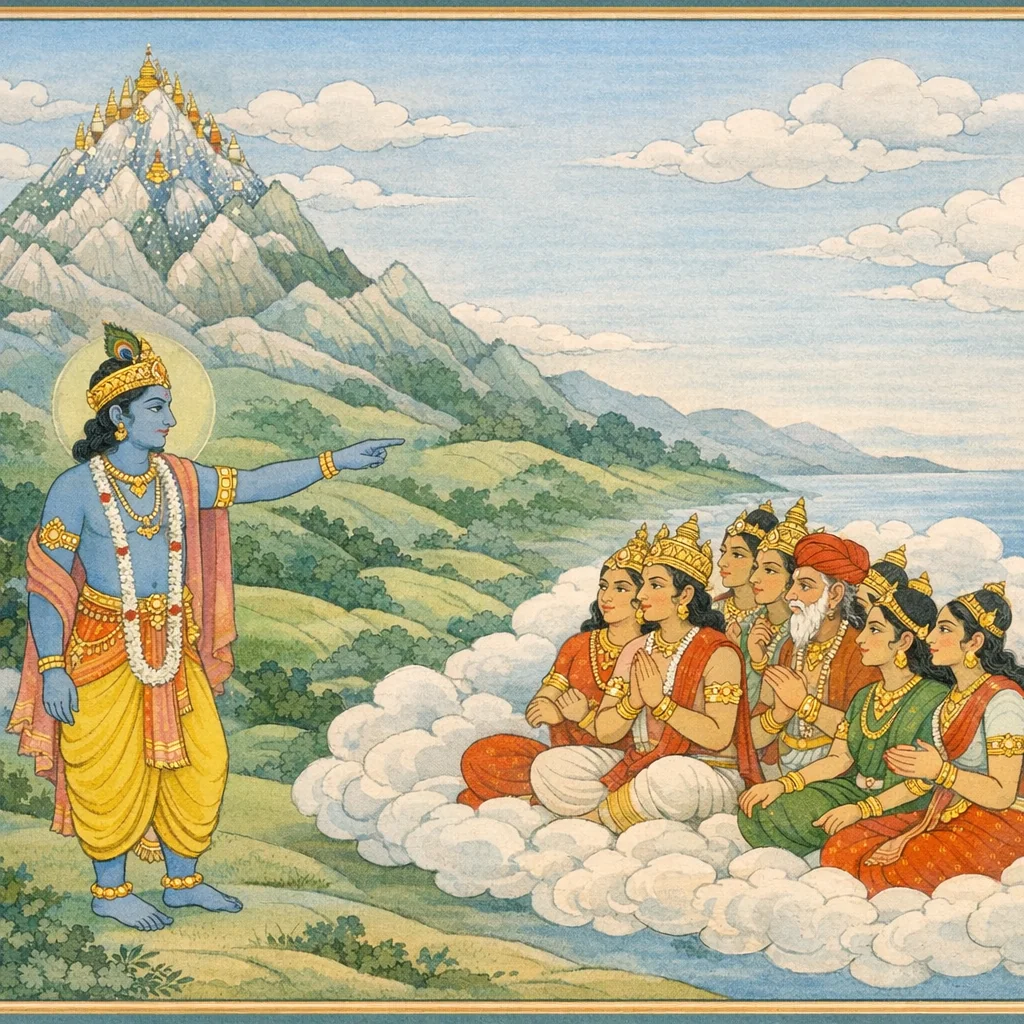
Sauti narrates the escalation following the emergence and handling of amṛta. Daityas and Dānavas, armed with varied weapons, rush the devas. Viṣṇu, acting with Nara, secures the amṛta so that the devas can drink amid tumult. Rāhu, a dānava, infiltrates the assembly in deva-like form and begins to drink; as the nectar reaches his throat, Candra and Sūrya identify him for the devas’ benefit. Viṣṇu responds with the cakra, severing Rāhu’s head; the fallen head becomes the enduring source of enmity toward the Sun and Moon, explaining their periodic “grasping.” Hari then abandons the female form (implied earlier in the wider episode) and destabilizes the dānavas with formidable weaponry. A large-scale, highly chaotic engagement unfolds near the salt waters: missiles and blades fall in multitudes; combatants are cut down; battle-cries and impacts fill the space. Nara-Nārāyaṇa arrive; Viṣṇu contemplates and summons the radiant Sudarśana, which repeatedly strikes, disperses, and routs asuric forces. Asuras attempt countermeasures using mountains and cloud-like formations; the earth shakes under impacts. Nara covers the sky-path with golden-adorned arrows, shattering peaks. The asuras retreat into the ocean; the devas secure victory, return Mandara to its place, conceal the amṛta, and entrust its protection to Indra (Kirīṭin) with the immortals.
Chapter Arc: उग्रश्रवा शौनक को उस क्षण की ओर ले जाते हैं जब कद्रू और विनता विहार को निकलती हैं और अमृत-मन्थन से उत्पन्न दिव्य अश्व ‘उच्चैःश्रवा’ को निकट से देखती हैं—यही दृश्य आगे के वैर का बीज बनता है। → शौनक जिज्ञासा करते हैं कि अमृत कहाँ और कैसे मथा गया, और वह महातेजस्वी अश्वराज कैसे उत्पन्न हुआ। उत्तर में कथा मेरु-पर्वत, देव-सभा और समुद्र-मन्थन की योजना तक फैलती है—देव और असुरों के संयुक्त परंतु अंतर्निहित प्रतिस्पर्धी प्रयत्न का संकेत उभरता है। → नारायण का ब्रह्मा से संवाद और निर्णायक आदेश: देव-गण (और असुर-संघ सहित) क्षीरसागर का मन्थन करें; समस्त औषधियाँ और रत्न समुद्र में समाविष्ट कर मन्थन से अमृत प्रकट होगा—यहीं ‘अमृत’ और ‘उच्चैःश्रवा’ के उद्भव का कारण-बीज स्थापित होता है। → देवताओं के परामर्श को दिशा मिलती है: मन्थन की विधि, उद्देश्य और अपेक्षित फल (अमृत) स्पष्ट हो जाते हैं; मेरु की दिव्यता और देव-योजना की भव्यता कथा को स्थिर आधार देती है। → मन्थन का संकल्प तो हो गया—अब प्रश्न शेष है कि यह महासंकट-साध्य कर्म कैसे सम्पन्न होगा, और उससे निकले रत्नों/अमृत पर अधिकार के लिए देव-असुर संघर्ष किस रूप में फूटेगा।
Shlokas
Verse 1
उग्रश्रवाजी कहते हैं--तपोधन! इसी समय कद्रू और विनता दोनों बहनें एक साथ ही घूमनेके लिये निकलीं। उस समय उन्होंने उच्चै:श्रवा नामक घोड़ेको निकटसे जाते देखा। वह परम उत्तम अश्वरत्न अमृतके लिये समुद्रका मन्थन करते समय प्रकट हुआ था। उसमें अमोघ बल था। वह संसारके समस्त अअभ्रोंमें श्रेष्ठ, उत्तम गुणोंसे युक्त, सुन्दर, अजर, दिव्य एवं सम्पूर्ण शुभ लक्षणोंसे संयुक्त था। उसके अंग बड़े हृष्ट-पुष्ट थे। सम्पूर्ण देवताओंने उसकी भूरि-भूरि प्रशंसा की थी
Śaunaka said: “O ascetic rich in austerity! Just then, the two sisters Kadrū and Vinatā set out together for a stroll. At that time they saw, passing close by, the horse named Uccaiḥśravas—the supreme jewel among horses, which had arisen during the churning of the ocean for nectar. His strength was unfailing. He was the finest of all horses in the world: endowed with excellent qualities, beautiful, ageless, divine, and marked with every auspicious sign. His limbs were firm and well-built, and all the gods had praised him again and again.”
Verse 2
यं तं देवगणा: सर्वे हृष्टरूपमपूजयन् | मध्यमानेअमृते जातमश्चवरत्नमनुत्तमम्,उग्रश्रवाजी कहते हैं--तपोधन! इसी समय कद्रू और विनता दोनों बहनें एक साथ ही घूमनेके लिये निकलीं। उस समय उन्होंने उच्चै:श्रवा नामक घोड़ेको निकटसे जाते देखा। वह परम उत्तम अश्वरत्न अमृतके लिये समुद्रका मन्थन करते समय प्रकट हुआ था। उसमें अमोघ बल था। वह संसारके समस्त अअभ्रोंमें श्रेष्ठ, उत्तम गुणोंसे युक्त, सुन्दर, अजर, दिव्य एवं सम्पूर्ण शुभ लक्षणोंसे संयुक्त था। उसके अंग बड़े हृष्ट-पुष्ट थे। सम्पूर्ण देवताओंने उसकी भूरि-भूरि प्रशंसा की थी
Śaunaka said: “That horse—whom all the hosts of gods honored, radiant and splendid in form—was the unsurpassed jewel among horses, born when the Ocean was churned for nectar. Its emergence is recalled here to mark it as a divinely sanctioned marvel, worthy of reverence and destined to become the occasion for a moral contest of truthfulness and restraint.”
Verse 3
अमोघबलमश्रानामुत्तमं जगतां वरम् | श्रीमन्तमजरं दिव्यं सर्वलक्षणपूजितम्,उग्रश्रवाजी कहते हैं--तपोधन! इसी समय कद्रू और विनता दोनों बहनें एक साथ ही घूमनेके लिये निकलीं। उस समय उन्होंने उच्चै:श्रवा नामक घोड़ेको निकटसे जाते देखा। वह परम उत्तम अश्वरत्न अमृतके लिये समुद्रका मन्थन करते समय प्रकट हुआ था। उसमें अमोघ बल था। वह संसारके समस्त अअभ्रोंमें श्रेष्ठ, उत्तम गुणोंसे युक्त, सुन्दर, अजर, दिव्य एवं सम्पूर्ण शुभ लक्षणोंसे संयुक्त था। उसके अंग बड़े हृष्ट-पुष्ट थे। सम्पूर्ण देवताओंने उसकी भूरि-भूरि प्रशंसा की थी
“O one of unfailing strength—foremost among horses and the best among beings of the world—prosperous, ageless, divine, and revered for possessing every auspicious mark.” (Thus is described Uccaiḥśravas, the supreme horse that arose at the churning of the ocean for nectar, celebrated by the gods for its perfect excellence.)
Verse 4
शौनक उवाच कथं तदमृतं देवैर्मथितं क्व च शंस मे । यत्र जज्ञे महावीर्य: सो5श्वराजो महाद्युति:,शौनकजीने पूछा--सूतनन्दन! अब मुझे यह बताइये कि देवताओंने अमृत-मनन््थन किस प्रकार और किस स्थानपर किया था, जिसमें वह महान् बल-पराक्रमसे सम्पन्न और अत्यन्त तेजस्वी अश्वराज उच्चै:श्रवा प्रकट हुआ?
Śaunaka said: “Tell me how the gods churned that nectar of immortality, and in what place it was done—where that horse-king, Uccaiḥśravā, of great prowess and blazing splendor, came into being.”
Verse 5
सौतिर्वाच ज्वलन्तमचल मेरुं तेजोराशिमनुत्तमम् । आक्षिपन्त॑ प्रभां भानो: स्वशृद्गजै:ः काञज्चनोज्ज्वलै:,उग्रश्रवाजीने कहा--शौनकजी! मेरु नामसे प्रसिद्ध एक पर्वत है, जो अपनी प्रभासे प्रजवलित होता रहता है। वह तेजका महान् पुंज और परम उत्तम है। अपने अत्यन्त प्रकाशमान सुवर्णमय शिखरोंसे वह सूर्यदेवकी प्रभाको भी तिरस्कृत किये देता है। उस स्वर्णभूषित विचित्र शैलपर देवता और गन्धर्व निवास करते हैं। उसका कोई माप नहीं है। जिनमें पापकी मात्रा अधिक है, ऐसे मनुष्य वहाँ पैर नहीं रख सकते
Sauti said: “There is a mountain famed as Meru, ever blazing with its own radiance—a supreme mass of splendor. With its brilliantly golden peaks it outshines even the sun’s light. Upon that wondrous, gold-adorned mountain dwell the gods and the Gandharvas. It is beyond measure, and men in whom sin predominates cannot set foot there.”
Verse 6
कनकाभरणं चित्र देवगन्धर्वसेवितम् । अप्रमेयमनाधृष्यमधर्मबहुलैर्जनै:,उग्रश्रवाजीने कहा--शौनकजी! मेरु नामसे प्रसिद्ध एक पर्वत है, जो अपनी प्रभासे प्रजवलित होता रहता है। वह तेजका महान् पुंज और परम उत्तम है। अपने अत्यन्त प्रकाशमान सुवर्णमय शिखरोंसे वह सूर्यदेवकी प्रभाको भी तिरस्कृत किये देता है। उस स्वर्णभूषित विचित्र शैलपर देवता और गन्धर्व निवास करते हैं। उसका कोई माप नहीं है। जिनमें पापकी मात्रा अधिक है, ऐसे मनुष्य वहाँ पैर नहीं रख सकते
Śaunaka said: “It is adorned with gold and wondrous in form, frequented by gods and Gandharvas. It is immeasurable and unassailable; people in whom unrighteousness greatly abounds cannot set foot there.”
Verse 7
व्यालैरावारितं घोरैर्दिव्यौषधिविदीपितम् | नाकमावृत्य तिष्ठन्तमुच्छुयेण महागिरिम्,वहाँ सब ओर भयंकर सर्प भरे पड़े हैं। दिव्य ओषधियाँ उस तेजोमय पर्वतको और भी उद्धासित करती रहती हैं। वह महान् गिरिराज अपनी ऊँचाईसे स्वर्गलोकको घेरकर खड़ा है। प्राकृत मनुष्योंके लिये वहाँ मनसे भी पहुँचना असम्भव है। वह गिरिप्रदेश बहुत-सी नदियों और असंख्य वृक्षोंसे सुशोभित है। भिन्न-भिन्न प्रकारके अत्यन्त मनोहर पक्षियोंके समुदाय अपने कलरवसे उस पर्वतको कोलाहलपूर्ण किये रहते हैं
Śaunaka said: “That great mountain stands there, its approaches blocked by dreadful serpents. It is made to blaze all the more by divine, luminous herbs. By its sheer height it seems to enclose the very heaven as it rises—so inaccessible that ordinary humans cannot reach it even in thought.”
Verse 8
अगम्यं मनसाप्यन्यैर्नदीवृक्षसमन्वितम् । नानापतगसड्घैश्न नादितं सुमनोहरै:,वहाँ सब ओर भयंकर सर्प भरे पड़े हैं। दिव्य ओषधियाँ उस तेजोमय पर्वतको और भी उद्धासित करती रहती हैं। वह महान् गिरिराज अपनी ऊँचाईसे स्वर्गलोकको घेरकर खड़ा है। प्राकृत मनुष्योंके लिये वहाँ मनसे भी पहुँचना असम्भव है। वह गिरिप्रदेश बहुत-सी नदियों और असंख्य वृक्षोंसे सुशोभित है। भिन्न-भिन्न प्रकारके अत्यन्त मनोहर पक्षियोंके समुदाय अपने कलरवसे उस पर्वतको कोलाहलपूर्ण किये रहते हैं
Śaunaka said: “That region is unreachable even by the mind for ordinary people. It is adorned with many rivers and trees, and it resounds with the calls of diverse, exceedingly charming flocks of birds—making the mountain-tract both wondrous and awe-inspiring, a place set apart from common human access.”
Verse 9
तस्य शृज्गभमुपारुह्म बहुरत्नाचितं शुभम् । अनन्तकल्पमुद्धिद्ध सुरा: सर्वे महौजस:,उसके शुभ एवं उच्चतम शृंग असंख्य चमकीले रत्नोंसे व्याप्त हैं। वे अपनी विशालताके कारण आकाशके समान अनन्त जान पड़ते हैं। समस्त महातेजस्वी देवता मेरुगिरिके उस महान् शिखरपर चढ़कर एक स्थानमें बैठ गये और सब मिलकर अमृत- प्राप्तिके लिये क्या उपाय किया जाय, इसका विचार करने लगे। वे सभी तपस्वी तथा शौच- संतोष आदि नियमोंसे संयुक्त थे। इस प्रकार परस्पर विचार एवं सबके साथ मन्त्रणामें लगे हुए देवताओंके समुदायमें उपस्थित हो भगवान् नारायणने ब्रह्माजीसे यों कहा--“समस्त देवता और असुर मिलकर महासागरका मन्थन करें। उस महासागरका मन्न्थन आरम्भ होनेपर उसमेंसे अमृत प्रकट होगा
Śaunaka said: “Having ascended that auspicious summit, inlaid with many kinds of jewels, the mighty gods beheld it as seemingly endless—vast like the sky. Gathering together upon the great peak of Mount Meru, they sat in one place and deliberated, in a spirit of disciplined restraint, on what means should be adopted to obtain amṛta (the nectar of immortality).”
Verse 10
ते मन्त्रयितुमारब्धास्तत्रासीना दिवौकस: । अमृताय समागम्य तपोनियमसंयुता:,उसके शुभ एवं उच्चतम शृंग असंख्य चमकीले रत्नोंसे व्याप्त हैं। वे अपनी विशालताके कारण आकाशके समान अनन्त जान पड़ते हैं। समस्त महातेजस्वी देवता मेरुगिरिके उस महान् शिखरपर चढ़कर एक स्थानमें बैठ गये और सब मिलकर अमृत- प्राप्तिके लिये क्या उपाय किया जाय, इसका विचार करने लगे। वे सभी तपस्वी तथा शौच- संतोष आदि नियमोंसे संयुक्त थे। इस प्रकार परस्पर विचार एवं सबके साथ मन्त्रणामें लगे हुए देवताओंके समुदायमें उपस्थित हो भगवान् नारायणने ब्रह्माजीसे यों कहा--“समस्त देवता और असुर मिलकर महासागरका मन्थन करें। उस महासागरका मन्न्थन आरम्भ होनेपर उसमेंसे अमृत प्रकट होगा
Śaunaka said: “There, the gods (the dwellers of heaven) sat together and began to deliberate. Having assembled with the aim of obtaining amṛta (the nectar of immortality), they were endowed with austerity and disciplined observances. The scene underscores that even mighty beings pursue their goals through collective counsel, self-restraint, and regulated conduct rather than mere force.”
Verse 11
तत्र नारायणो देवो ब्रह्माणमिदमब्रवीत् । चिन्तयत्सु सुरेष्वेवं मन्त्रयत्सु च सर्वश:,उसके शुभ एवं उच्चतम शृंग असंख्य चमकीले रत्नोंसे व्याप्त हैं। वे अपनी विशालताके कारण आकाशके समान अनन्त जान पड़ते हैं। समस्त महातेजस्वी देवता मेरुगिरिके उस महान् शिखरपर चढ़कर एक स्थानमें बैठ गये और सब मिलकर अमृत- प्राप्तिके लिये क्या उपाय किया जाय, इसका विचार करने लगे। वे सभी तपस्वी तथा शौच- संतोष आदि नियमोंसे संयुक्त थे। इस प्रकार परस्पर विचार एवं सबके साथ मन्त्रणामें लगे हुए देवताओंके समुदायमें उपस्थित हो भगवान् नारायणने ब्रह्माजीसे यों कहा--“समस्त देवता और असुर मिलकर महासागरका मन्थन करें। उस महासागरका मन्न्थन आरम्भ होनेपर उसमेंसे अमृत प्रकट होगा
Thereupon the divine Nārāyaṇa addressed Brahmā: while the gods were thus reflecting and consulting together on all sides, seeking a means to obtain amṛta (the nectar of immortality), Nārāyaṇa proposed a course of action—let the devas and asuras jointly churn the great ocean; when the churning begins, amṛta will arise from it.
Verse 12
देवैरसुरसड्घैश्व मथ्यतां कलशोदधि: । भविष्यत्यमृतं तत्र मथ्यमाने महोदधौ,उसके शुभ एवं उच्चतम शृंग असंख्य चमकीले रत्नोंसे व्याप्त हैं। वे अपनी विशालताके कारण आकाशके समान अनन्त जान पड़ते हैं। समस्त महातेजस्वी देवता मेरुगिरिके उस महान् शिखरपर चढ़कर एक स्थानमें बैठ गये और सब मिलकर अमृत- प्राप्तिके लिये क्या उपाय किया जाय, इसका विचार करने लगे। वे सभी तपस्वी तथा शौच- संतोष आदि नियमोंसे संयुक्त थे। इस प्रकार परस्पर विचार एवं सबके साथ मन्त्रणामें लगे हुए देवताओंके समुदायमें उपस्थित हो भगवान् नारायणने ब्रह्माजीसे यों कहा--“समस्त देवता और असुर मिलकर महासागरका मन्थन करें। उस महासागरका मन्न्थन आरम्भ होनेपर उसमेंसे अमृत प्रकट होगा
Śaunaka said: “Let the Ocean of the Pot—the great ocean—be churned by the gods together with the hosts of asuras. When that vast ocean is churned, amṛta, the nectar of immortality, will arise from it.” The verse frames a cooperative yet morally charged undertaking: even rival powers may be drawn into joint action for a higher good, though its fruits require discernment and rightful distribution.
Verse 13
सर्वौषधी: समावाप्य सर्वरत्नानि चैव ह । मन्थध्वमुदर्धि देवा वेत्स्यध्वममृतं तत:,“देवताओ! पहले समस्त ओषधियों, फिर सम्पूर्ण रत्नोंको पाकर भी समुद्रका मन््थन जारी रखो। इससे अन्तमें तुमलोगोंको निश्चय ही अमृतकी प्राप्ति होगी”
Śaunaka recounts the exhortation given to the gods: “O gods! Even after obtaining all medicinal herbs, and then all precious gems, continue churning the ocean without relenting. By persevering to the end, you will surely attain amṛta.” The passage highlights steadfast effort and patience—true reward comes after sustained, disciplined striving, not from stopping at intermediate gains.
Verse 17
इति श्रीमहाभारते आदिपर्वणि आस्तीकपर्वणि अमृतमन्थने सप्तदशो<5ध्याय: ।। १७ || इस प्रकार श्रीमह्याभारत आदिपर्वके अन्तर्गत आस्तीकपर्वमें अमृतमन्थनविषयक सत्रहवाँ अध्याय पूरा हुआ
Thus, in the Śrī Mahābhārata, within the Ādi Parva, in the Āstīka Parva, the seventeenth chapter—concerning the churning for nectar (amṛta)—is concluded. (This is a colophon marking the end of the chapter rather than a narrative verse.)
Frequently Asked Questions
The dilemma concerns access versus entitlement: whether an unauthorized actor may obtain a stabilizing resource through impersonation, and how authorities should respond—balancing procedural recognition (identification by witnesses) with immediate containment to protect the collective.
Stability depends on discernment and timely action: deception can momentarily bypass boundaries, but recognition mechanisms (witnessing, disclosure) and proportionate intervention restore order; hostility may persist as a residual consequence even after containment.
No explicit phalaśruti is stated here; the chapter functions primarily as etiological and structural commentary—linking cosmic phenomena (Rāhu’s grasping of Sun and Moon) and reinforcing the epic’s theme that order is preserved through dharmic regulation and decisive guardianship.