Adhyaya 167
Vasiṣṭhasya śokaḥ, Vipāśā–Śatadrū-nāmākaraṇam, Kalmāṣapādasya bhaya-prasaṅgaḥ (Ādi Parva 167)
Upa-parva: Vasiṣṭha–Kalmāṣapāda Episode (Śakti lineage and river-name etiologies)
A Gandharva narrator describes Vasiṣṭha discovering his hermitage bereft of his sons and leaving in intense grief. He sees a river swollen by monsoon torrents carrying trees and bank-growth; overwhelmed, he resolves to drown, binds himself with nooses, and sinks into the great river. The river severs the bonds and releases him; the sage then names that river Vipāśā (“without bonds/nooses”). Still unsettled, he wanders among mountains, rivers, and lakes, and again throws himself into a Himalayan river filled with fierce aquatic creatures; that river, reacting to his heat-like ascetic potency, splits into many channels and becomes known as Śatadrū (“hundred streams”). Recognizing that death is not attainable by his own effort, he returns toward the hermitage and hears, from behind, the sound of Vedic recitation complete with the six auxiliaries. He asks who follows; his daughter-in-law Adṛśyantī identifies herself as Śakti’s wife and states that Śakti’s unborn son has been studying the Vedas in the womb for twelve years. Vasiṣṭha rejoices that lineage continues and turns back from death. Returning with her, he then sees King Kalmāṣapāda seated in a solitary forest; the king, described as overtaken by a rākṣasa impulse, rises in anger as if to attack. Adṛśyantī, frightened, appeals to Vasiṣṭha for protection, stating that none but him can restrain the approaching threat.
Chapter Arc: पाञ्चालराज द्रुपद शोक से व्याकुल हैं—उन्हें ऐसा पुत्र चाहिए जो द्रोण के अपमान का प्रतिशोध ले सके; जन्मे हुए पुत्रों और बन्धु-सम्बन्धों से भी उन्हें तृप्ति नहीं। → द्रुपद उपयाज/याज से यज्ञ कराने का आग्रह करते हैं, गौओं के अर्बुद दान का वचन देते हैं, और मन की एक ही ज्वाला प्रकट करते हैं—‘द्रोणं प्रतिचिकीर्षया’। यज्ञ की तैयारी के साथ प्रतिशोध का संकल्प भी आकार लेता है। → हवन के अन्त में याज के आह्वान पर अग्नि से देव-सम तेजस्वी कुमार प्रकट होता है—धृष्टद्युम्न; और उसी यज्ञाग्नि से द्रौपदी का भी दिव्य आविर्भाव संकेतित होता है—पाञ्चाल वंश-वृद्धि और भावी महायुद्ध की धुरी। → धृष्टद्युम्न को द्रोण अस्त्र-शिक्षा हेतु अपने निवेशन में ले आते हैं—यह जानते हुए भी कि दैव अमोघ है; वे अपनी कीर्ति और क्षात्र-धर्म के अनुरूप उसे शिक्षित करते हैं, जिससे नियति का जाल और कसता है। → जतुगृह (लाक्षागृह) की घटना का समाचार सुनकर ब्राह्मण पुरोहितों सहित द्रुपद से कहते हैं, और धृतराष्ट्र-पक्ष अमात्यों सहित परस्पर मंत्रणा करता है—आगे राजनीति और गठबंधनों की नई चालें खुलने को हैं।
Shlokas
Verse 1
(दाक्षिणात्य अधिक पाठके ४ श्लोक मिलाकर कुल ३२ श्लोक हैं) ऑपन- मा बछ। ्-:डिअ षट्षष्ट्यधिेकशततमोड< ध्याय: ट्रपदके यज्ञसे धृष्टद्युम्न और द्रौपदीकी उत्पत्ति ब्राह्मण उवाच अमर्षी द्रुपदो राजा कर्मसिद्धान् द्विजर्षभान् | अन्विच्छन् परिचक्राम ब्राह्मणावसथान् बहून्,आगन्तुक ब्राह्मण कहता है--राजा ट्रुपद अमर्षमें भर गये थे, अतः उन्होंने कर्मसिद्ध श्रेष्ठ ब्राह्मणोंको ढूँढ़नेके लिये बहुत-से ब्रह्मर्षियोंके आश्रमोंमें भ्रमण किया
The Brahmin said: King Drupada, burning with resentment, went about in search of accomplished Brahmins—foremost among the twice-born—wandering through many Brahmin hermitages.
Verse 2
पुत्रजन्म परीप्सन् वै शोकोपहतचेतन: । नास्ति श्रेष्ठमपत्यं मे इति नित्यमचिन्तयत्,वे अपने लिये एक श्रेष्ठ पुत्र चाहते थे। उनका चित्त शोकसे व्याकुल रहता था। वे रात- दिन इसी चिन्तामें पड़े रहते थे कि मेरे कोई श्रेष्ठ संतान नहीं है
Longing for the birth of a son, his mind was overwhelmed by grief. Continually, day and night, he brooded: “I have no worthy offspring.”
Verse 3
जातानू् पुत्रान् स निर्वेदाद् धिग् बन्धूनिति चाब्रवीत् । निः:श्वासपरमश्नासीद् द्रोणं प्रतिचिकीर्षया,जो पुत्र या भाई-बन्धु उत्पन्न हो चुके थे, उन्हें वे खेदवश धिक्कारते रहते थे। द्रोणसे बदला लेनेकी इच्छा रखकर राजा ट्रुपद सदा लंबी साँसें खींचा करते थे
In disgust he reviled the sons and kinsmen already born to him, saying, “Shame upon my own!” And, intent on vengeance against Drona, he continually drew long, heavy sighs.
Verse 4
प्रभाव विनयं शिक्षां द्रोणस्प चरितानि च । क्षात्रेण च बलेनास्य चिन्तयन् नाध्यगच्छत,जनमेजय! नृपश्रेष्ठ द्रुपद द्रोणाचार्यसे बदला लेनेके लिये यत्न करनेपर भी उनके प्रभाव, विनय, शिक्षा एवं चरित्रका चिन्तन करके क्षात्रबलके द्वारा उन्हें परास्त करनेका कोई उपाय न जान सके। वे कृष्णवर्णा यमुना तथा गंगा दोनोंके तटोंपर घूमते हुए ब्राह्मणोंकी एक पवित्र बस्तीमें जा पहुँचे। वहाँ उन महाभाग नरेशने एक भी ऐसा ब्राह्मण नहीं देखा, जिसने विधिपूर्वक ब्रह्मचर्यका पालन करके वेद-वेदांगकी शिक्षा न प्राप्त की हो
The Brahmin said: “O Janamejaya, as King Drupada reflected on Drona’s power, humility, learning, and conduct, he could find no means—by royal might or warrior-force—to overcome him, even though he strove to take revenge upon Dronacharya. Wandering along the banks of the dark-hued Yamuna and the Ganga, he came to a sacred settlement of Brahmins. There that fortunate king did not see even a single Brahmin who had not, by duly observing brahmacarya, received instruction in the Vedas and their auxiliary disciplines.”
Verse 5
प्रतिकर्तु नृपश्रेष्ठी यतमानो5डपि भारत । अभित: सो5थ कल्माषीं गड्कूले परिभ्रमन्,जनमेजय! नृपश्रेष्ठ द्रुपद द्रोणाचार्यसे बदला लेनेके लिये यत्न करनेपर भी उनके प्रभाव, विनय, शिक्षा एवं चरित्रका चिन्तन करके क्षात्रबलके द्वारा उन्हें परास्त करनेका कोई उपाय न जान सके। वे कृष्णवर्णा यमुना तथा गंगा दोनोंके तटोंपर घूमते हुए ब्राह्मणोंकी एक पवित्र बस्तीमें जा पहुँचे। वहाँ उन महाभाग नरेशने एक भी ऐसा ब्राह्मण नहीं देखा, जिसने विधिपूर्वक ब्रह्मचर्यका पालन करके वेद-वेदांगकी शिक्षा न प्राप्त की हो
O Bhārata, though that foremost of kings strove to retaliate, he found no means to overcome his adversaries by royal force alone. Then Kalmāṣapāda, O Janamejaya, wandered along the banks of the Gaṅgā, moving here and there, until he reached a sacred settlement of brāhmaṇas—where he saw that every brāhmaṇa had duly observed brahmacarya and had been trained in the Veda together with its ancillary disciplines.
Verse 6
ब्राह्मणावसथं पुण्यमाससाद महीपति: । तत्र नास्नातक: वक्षिन्न चासीदव्रती द्विज:,जनमेजय! नृपश्रेष्ठ द्रुपद द्रोणाचार्यसे बदला लेनेके लिये यत्न करनेपर भी उनके प्रभाव, विनय, शिक्षा एवं चरित्रका चिन्तन करके क्षात्रबलके द्वारा उन्हें परास्त करनेका कोई उपाय न जान सके। वे कृष्णवर्णा यमुना तथा गंगा दोनोंके तटोंपर घूमते हुए ब्राह्मणोंकी एक पवित्र बस्तीमें जा पहुँचे। वहाँ उन महाभाग नरेशने एक भी ऐसा ब्राह्मण नहीं देखा, जिसने विधिपूर्वक ब्रह्मचर्यका पालन करके वेद-वेदांगकी शिक्षा न प्राप्त की हो
The king reached a holy settlement of brāhmaṇas. There, O Janamejaya, he did not see even a single brāhmaṇa who was not a properly trained graduate of Vedic study, nor any twice-born man who lived without vows and discipline.
Verse 7
तथैव च महाभाग: सो<पश्यत् संशितव्रतौ । याजोपयाजोौ ब्रद्मर्षी शाम्यन्ती परमेष्ठिनौ,इस प्रकार उन महाभागने वहाँ कठोर व्रतका पालन करनेवाले दो ब्रह्मर्षियोंको देखा, जिनके नाम थे याज और उपयाज। वे दोनों ही परम शान्त और परमेष्ठी ब्रह्माके तुल्य प्रभावशाली थे
In the same way, that illustrious person then beheld two Brahmarṣis, firm in their austere vows—Yāja and Upayāja—both perfectly tranquil and possessed of a majesty comparable to that of Parameṣṭhī Brahmā.
Verse 8
संहिताध्ययने युक्तौ गोत्रतश्चापि काश्यपौ । तारणेयौ युक्तरूपीौ ब्राह्मणावृषिसत्तमौ,वे वैदिक संहिताके अध्ययनमें सदा संलग्न रहते थे। उनका गोत्र काश्यप था। वे दोनों ब्राह्मण सूर्यदेवके भक्त, बड़े ही योग्य तथा श्रेष्ठ ऋषि थे
The two were constantly devoted to the study and recitation of the Vedic Saṃhitās. By lineage they belonged to the Kāśyapa gotra. Known as Tāraṇeyas, they were well-formed in conduct and discipline—Brahmins of the highest order among seers.
Verse 9
स तावामन्त्रयामास सर्वकामैरतन्द्रित: । बुद्ध्वा बल॑ तयोस्तत्र कनीयांसमुपह्दरे,उन दोनोंकी शक्तिको समझकर आलस्यरहित राजा ट्रुपदने उन्हें सम्पूर्ण मनोवांछित भोग-पदार्थ अर्पण करनेका संकल्प लेकर निमन्त्रित किया। उन दोनोंमेंसे जो छोटे उपयाज थे, वे अत्यन्त उत्तम व्रतका पालन करनेवाले थे। द्रपद एकान्तमें उनसे मिले और इच्छानुसार भोग्य वस्तुएँ अर्पण करके उन्हें अपने अनुकूल बनानेकी चेष्टा करने लगे। सम्पूर्ण मनोभिलषित पदार्थोंको देनेकी प्रतिज्ञा करके प्रिय वचन बोलते हुए द्रुपद मुनिके चरणोंकी सेवामें लग गये और यथायोग्य पूजन करके उपयाजसे बोले--“विप्रवर उपयाज! जिस कर्मसे मुझे ऐसा पुत्र प्राप्त हो, जो द्रोणाचार्यको मार सके। उस कर्मके पूरा होनेपर मैं आपको एक अर्बुद (दस करोड़) गायें दूँगा। द्विजश्रेष्ठी इसके सिवा और भी जो आपके मनको अत्यन्त प्रिय लगनेवाली वस्तु होगी, वह सब आपको अर्पित करूँगा, इसमें कोई संशय नहीं है”
Having discerned the strength and capability of those two, the king—free from indolence—invited them with every desirable comfort and gift. Then, in a secluded place, he approached the younger of the two, seeking to win him over through promised enjoyments and respectful attention.
Verse 10
प्रपेदे छन््दयन् कामैरुपयाजं धृतव्रतम् । पादशुश्रूषणे युक्त: प्रियवाक् सर्वकामद:,उन दोनोंकी शक्तिको समझकर आलस्यरहित राजा ट्रुपदने उन्हें सम्पूर्ण मनोवांछित भोग-पदार्थ अर्पण करनेका संकल्प लेकर निमन्त्रित किया। उन दोनोंमेंसे जो छोटे उपयाज थे, वे अत्यन्त उत्तम व्रतका पालन करनेवाले थे। द्रपद एकान्तमें उनसे मिले और इच्छानुसार भोग्य वस्तुएँ अर्पण करके उन्हें अपने अनुकूल बनानेकी चेष्टा करने लगे। सम्पूर्ण मनोभिलषित पदार्थोंको देनेकी प्रतिज्ञा करके प्रिय वचन बोलते हुए द्रुपद मुनिके चरणोंकी सेवामें लग गये और यथायोग्य पूजन करके उपयाजसे बोले--“विप्रवर उपयाज! जिस कर्मसे मुझे ऐसा पुत्र प्राप्त हो, जो द्रोणाचार्यको मार सके। उस कर्मके पूरा होनेपर मैं आपको एक अर्बुद (दस करोड़) गायें दूँगा। द्विजश्रेष्ठी इसके सिवा और भी जो आपके मनको अत्यन्त प्रिय लगनेवाली वस्तु होगी, वह सब आपको अर्पित करूँगा, इसमें कोई संशय नहीं है”
Recognizing their spiritual power, King Drupada—free from indolence—approached Upayāja, a brahmin steadfast in his vows, and sought to win him over with desirable gifts. With pleasing words and the promise of granting every wished-for object, Drupada served at the sage’s feet and honored him duly, hoping to secure a rite by which he might obtain a son able to slay Droṇa.
Verse 11
अर्चयित्वा यथान्यायमुपयाजमुवाच स: । येन मे कर्मणा ब्रह्मन् पुत्र: स्याद् द्रोणमृत्यवे,उन दोनोंकी शक्तिको समझकर आलस्यरहित राजा ट्रुपदने उन्हें सम्पूर्ण मनोवांछित भोग-पदार्थ अर्पण करनेका संकल्प लेकर निमन्त्रित किया। उन दोनोंमेंसे जो छोटे उपयाज थे, वे अत्यन्त उत्तम व्रतका पालन करनेवाले थे। द्रपद एकान्तमें उनसे मिले और इच्छानुसार भोग्य वस्तुएँ अर्पण करके उन्हें अपने अनुकूल बनानेकी चेष्टा करने लगे। सम्पूर्ण मनोभिलषित पदार्थोंको देनेकी प्रतिज्ञा करके प्रिय वचन बोलते हुए द्रुपद मुनिके चरणोंकी सेवामें लग गये और यथायोग्य पूजन करके उपयाजसे बोले--“विप्रवर उपयाज! जिस कर्मसे मुझे ऐसा पुत्र प्राप्त हो, जो द्रोणाचार्यको मार सके। उस कर्मके पूरा होनेपर मैं आपको एक अर्बुद (दस करोड़) गायें दूँगा। द्विजश्रेष्ठी इसके सिवा और भी जो आपके मनको अत्यन्त प्रिय लगनेवाली वस्तु होगी, वह सब आपको अर्पित करूँगा, इसमें कोई संशय नहीं है”
Having duly honored Upayāja according to proper ritual protocol, the king addressed him: “O Brahmin, by what rite or sacred act may I obtain a son who will become the death of Droṇa?”
Verse 12
उपयाज कृते तस्मिन् गवां दातास्मि ते<र्बुदम् । यद् वा तेडन्यद् द्विजश्रेष्ठ मनस: सुप्रियं भवेत् । सर्व तत् ते प्रदाताहं न हि मेउत्रास्ति संशय:,उन दोनोंकी शक्तिको समझकर आलस्यरहित राजा ट्रुपदने उन्हें सम्पूर्ण मनोवांछित भोग-पदार्थ अर्पण करनेका संकल्प लेकर निमन्त्रित किया। उन दोनोंमेंसे जो छोटे उपयाज थे, वे अत्यन्त उत्तम व्रतका पालन करनेवाले थे। द्रपद एकान्तमें उनसे मिले और इच्छानुसार भोग्य वस्तुएँ अर्पण करके उन्हें अपने अनुकूल बनानेकी चेष्टा करने लगे। सम्पूर्ण मनोभिलषित पदार्थोंको देनेकी प्रतिज्ञा करके प्रिय वचन बोलते हुए द्रुपद मुनिके चरणोंकी सेवामें लग गये और यथायोग्य पूजन करके उपयाजसे बोले--“विप्रवर उपयाज! जिस कर्मसे मुझे ऐसा पुत्र प्राप्त हो, जो द्रोणाचार्यको मार सके। उस कर्मके पूरा होनेपर मैं आपको एक अर्बुद (दस करोड़) गायें दूँगा। द्विजश्रेष्ठी इसके सिवा और भी जो आपके मनको अत्यन्त प्रिय लगनेवाली वस्तु होगी, वह सब आपको अर्पित करूँगा, इसमें कोई संशय नहीं है”
“O Upayāja, when that rite is accomplished, I shall give you an arbuda of cows (ten crores). And, O best of the twice-born, whatever else may be most pleasing to your heart—of all that I will bestow upon you; of this I have no doubt.”
Verse 13
इत्युक्तो नाहमित्येवं तमृषि: प्रत्यभाषत । आराधयिष्यन् ट्रुपद: स तं पर्यचरत् पुन:,द्रपदके यों कहनेपर ऋषि उपयाजने उन्हें जवाब दे दिया, “मैं ऐसा कार्य नहीं करूँगा।” परंतु द्रुपद उन्हें प्रसन्न करनेका निश्चय करके पुनः उनकी सेवामें लगे रहे
When thus addressed, the sage replied plainly, “Not I—indeed, I will not do so.” Yet Drupada, resolved to win the sage’s favor, returned again to serve and attend upon him.
Verse 14
ततः संवत्सरस्यान्ते द्रुपदं स द्विजोत्तम: । उपयाजोडब्रवीत् काले राजन् मधुरया गिरा,तदनन्तर एक वर्ष बीतनेपर द्विजश्रेष्ठ उपयाजने उपयुक्त अवसरपर मधुर वाणीमें द्रपदसे कहा--'राजन! मेरे बड़े भाई याज एक समय घने वनमें विचर रहे थे। उन्होंने एक ऐसी जमीनपर गिरे हुए फलको उठा लिया, जिसकी शुद्धिके सम्बन्धमें कुछ भी पता नहीं था
When a year had passed, Upayāja, foremost among Brahmins, addressed King Drupada at the proper time in gentle words: “O King, there is a matter concerning my elder brother Yāja. Once, while wandering in a dense forest, he picked up a fallen fruit from ground whose purity was unknown…”
Verse 15
ज्येष्ठो भ्राता ममागृह्नाद् विचरन् गहने वने । अपरिज्ञातशौचायां भूमौ निपतितं फलम्,तदनन्तर एक वर्ष बीतनेपर द्विजश्रेष्ठ उपयाजने उपयुक्त अवसरपर मधुर वाणीमें द्रपदसे कहा--'राजन! मेरे बड़े भाई याज एक समय घने वनमें विचर रहे थे। उन्होंने एक ऐसी जमीनपर गिरे हुए फलको उठा लिया, जिसकी शुद्धिके सम्बन्धमें कुछ भी पता नहीं था
The brāhmaṇa said: “My eldest brother, while roaming in a dense forest, picked up a fruit that had fallen upon the ground—upon soil whose ritual purity was unknown. This act, though it seems small, raises a question of dharma: may one accept and consume a thing when its cleanliness by rite and its rightful standing are uncertain?”
Verse 16
तदपश्यमहं भ्रातुरसाम्प्रतमनुव्रजन् । विमर्श संकरादाने नायं कुर्यात् कदाचन,“मैं भी भाईके पीछे-पीछे जा रहा था; अतः मैंने उनके इस अयोग्य कार्यको देख लिया और सोचा कि ये अपवित्र वस्तुको ग्रहण करनेमें भी कभी कोई विचार नहीं करते
Following behind my brother, I witnessed what he had just done. Reflecting on the taking of what is tainted and impure, I thought: “He should never commit such a deed—accepting a defiling thing without due discernment.”
Verse 17
दृष्टवा फलस्य नापश्यद् दोषान् पापानुबन्धकान् | विविनक्ति न शौचं य: सोअन्यत्रापि कथं भवेत्,“जिन्होंने देखकर भी फलके पापजनक दोषोंकी ओर दृष्टिपात नहीं किया, जो किसी वस्तुको लेनेमें शुद्धि-अशुद्धिका विचार नहीं करते, वे दूसरे कार्योंमें भी कैसा बर्ताव करेंगे, कहा नहीं जा सकता
Seeing the tempting gain, they did not notice the faults that cling to it as sin. One who does not discriminate purity from impurity when accepting something—how can such a person be expected to act rightly in other matters? It cannot be said.
Verse 18
संहिताध्ययनं कुर्वन् वसन् गुरुकुले च यः । भैक्ष्यमुत्सृष्टमन्येषां भुड्क्ते सम च यदा तदा,“गुरुकुलमें रहकर संहिताभागका अध्ययन करते हुए भी जो दूसरोंकी त्यागी हुई भिक्षाको जब-तब खा लिया करते थे और घृणाशून्य होकर बार-बार उस अन्नके गुणोंका वर्णन करते रहते थे, उन अपने भाईको जब मैं तर्ककी दृष्टिसे देखता हूँ तो वे मुझे फलके लोभी जान पड़ते हैं
The brāhmaṇa said: “Even while residing in the teacher’s household and pursuing the study of the Saṁhitā, there are those who, from time to time, eat alms-food that others have discarded. And, free from any sense of disgust, they repeatedly praise the ‘qualities’ of that very food. When I examine such a brother of mine through the lens of reason, he appears to me as one driven by desire for reward—greedy for the fruit rather than devoted to the discipline.”
Verse 19
कीर्तयन् गुणमन्नानामघृणी च पुनः पुनः । त॑ वै फलार्थिन मन्ये भ्रातरं तर्कचक्षुषा,“गुरुकुलमें रहकर संहिताभागका अध्ययन करते हुए भी जो दूसरोंकी त्यागी हुई भिक्षाको जब-तब खा लिया करते थे और घृणाशून्य होकर बार-बार उस अन्नके गुणोंका वर्णन करते रहते थे, उन अपने भाईको जब मैं तर्ककी दृष्टिसे देखता हूँ तो वे मुझे फलके लोभी जान पड़ते हैं
Praising again and again the qualities of foods, and feeling no disgust, I look upon that brother with the eye of reason and judge him to be one who seeks reward—one driven by the desire for gain rather than by restraint or principle.
Verse 20
त॑ं वै गच्छस्व नृपते स त्वां संयाजयिष्यति । जुगुप्समानो नृपतिर्मनसेदं विचिन्तयन्,“राजन! तुम उन्हींके पास जाओ। वे तुम्हारा यज्ञ करा देंगे।” राजा ट्रपद उपयाजकी बात सुनकर याजके इस चरित्रकी मन-ही-मन निन्दा करने लगे, तो भी अपने कार्यका विचार करके याजके आश्रमपर गये और पूजनीय याज मुनिका पूजन करके तब उनसे इस प्रकार बोले---
The Brahmin said, “Go to him, O king; he will have your sacrifice duly performed.” Hearing this counsel, King Drupada—though inwardly repelled and censuring the priest’s conduct—still weighed his purpose and proceeded to the sacrificial priest’s hermitage. After honoring the venerable sage Yāja with due reverence, he then addressed him in this manner.
Verse 21
उपयाजवच: श्र॒ुत्वा याजस्याश्रममभ्यगात् । अभिसम्पूज्य पूजाहमथ याजमुवाच ह,“राजन! तुम उन्हींके पास जाओ। वे तुम्हारा यज्ञ करा देंगे।” राजा ट्रपद उपयाजकी बात सुनकर याजके इस चरित्रकी मन-ही-मन निन्दा करने लगे, तो भी अपने कार्यका विचार करके याजके आश्रमपर गये और पूजनीय याज मुनिका पूजन करके तब उनसे इस प्रकार बोले---
Hearing the words of Upayāja, the king went to the hermitage of Yāja. After duly honoring and worshipping the venerable sage—worthy of reverence—he then addressed Yāja. The passage underscores a practical ethical tension: even when one privately disapproves of another’s conduct, one may still approach them respectfully for a legitimate purpose, maintaining decorum and dharma in speech and action.
Verse 22
अयुतानि ददान्यष्टौ गवां याजय मां विभो । द्रोणवैराभिसंतप्तं प्रह्लादयितुमहसि,“भगवन्! मैं आपको अस्सी हजार गौएँ भेंट करता हूँ। आप मेरा यज्ञ करा दीजिये। मैं द्रोणके वैरसे संतप्त हो रहा हूँ। आप मुझे प्रसन्नता प्रदान करें
The brāhmaṇa said: “O mighty one, I offer you eighty thousand cows. Please officiate my sacrifice. I am tormented by enmity with Droṇa; you ought to grant me relief and restore my peace of mind.”
Verse 23
स हि ब्रह्मविदां श्रेष्ठो ब्रह्मास्त्रे चाप्यनुत्तम: तस्माद् द्रोण: पराजैष्ट मां वै स सखिविग्रहे,'द्रोणाचार्य ब्रह्मवेत्ताओंमें श्रेष्ठ और ब्रह्मास्त्रके प्रयोगमें भी सर्वोत्तम हैं; इसलिये मित्र मानने-न-माननेके प्रश्नबको लेकर होनेवाले झगड़ेमें उन्होंने मुझे पराजित कर दिया है
For Droṇa is indeed the foremost among knowers of Brahman and unsurpassed in the use of the Brahmāstra. Therefore, in that dispute concerning friendship—whether one should be regarded as a friend or not—he truly defeated me.
Verse 24
क्षत्रियो नास्ति तस्यास्यां पृथिव्यां कश्निदग्रणी: । कौरवाचार्यमुख्यस्य भारद्वाजस्य धीमत:,“परम बुद्धिमान् भरद्वाजनन्दन द्रोण इन दिनों कुरुवंशी राजकुमारोंके प्रधान आचार्य हैं। इस पृथ्वीपर कोई भी ऐसा क्षत्रिय नहीं है, जो अस्त्र-विद्यामें उनसे आगे बढ़ा हो
Droṇa, the exceedingly wise son of Bharadvāja, is now the chief ācārya of the Kaurava princes. On this earth there is no kṣatriya who surpasses him in the science of weapons.
Verse 25
द्रोणस्य शरजालानि प्राणिदेहहराणि च । षडरत्नि धनुश्नास्य दृश्यते परमं महत्,“ट्रोणाचार्यके बाणसमूह प्राणियोंके शरीरका संहार करनेवाले हैं। उनका छः हाथका लंबा धनुष बहुत बड़ा दिखायी देता है। इसमें संदेह नहीं कि महान् धनुर्धर महामना द्रोण ब्राह्मण-वेशमें (अपने ब्राह्मतेजके द्वारा) क्षत्रिय-तेजको प्रतिहत कर देते हैं
The Brahmin said: “Drona’s volleys of arrows are deadly, stripping living beings of body and life. And his bow—six cubits in measure—appears exceedingly vast. Even in the guise of a Brahmin, the great-souled master archer Drona can check and overpower the martial brilliance of kshatriyas by the force of his brahminical splendor.”
Verse 26
स हि ब्राह्मणवेषेण क्षात्रं वेगमसंशयम् | प्रतिहन्ति महेष्वासो भारद्वाजो महामना:,“ट्रोणाचार्यके बाणसमूह प्राणियोंके शरीरका संहार करनेवाले हैं। उनका छः हाथका लंबा धनुष बहुत बड़ा दिखायी देता है। इसमें संदेह नहीं कि महान् धनुर्धर महामना द्रोण ब्राह्मण-वेशमें (अपने ब्राह्मतेजके द्वारा) क्षत्रिय-तेजको प्रतिहत कर देते हैं
For, disguised in the garb of a brāhmaṇa, that great archer—Drona of the Bhāradvāja lineage, a high-minded man—unquestionably checks and overpowers the impetuous force of kṣatriya might. The verse underscores a moral tension: outward appearance and social role may differ from inner power, and spiritual or intellectual potency can restrain sheer martial aggression.
Verse 27
क्षत्रोच्छेदाय विहितो जामदग्न्य इवास्थित: । तस्य हा[स्त्रबलं घोरमप्रधृष्यं नरैर्भुवि,“मानो जमदग्निनन्दन परशुरामजीकी भाँति क्षत्रियोंका संहार करनेके लिये उनकी सृष्टि हुई है। उनका अस्त्रबल बड़ा भयंकर है। पृथ्वीके सब मनुष्य मिलकर भी उसे दबा नहीं सकते
The Brāhmaṇa said: “He has been ordained for the extermination of the Kṣatriyas, standing forth like Jāmadagnya (Paraśurāma). His might in weapons is dreadful—on this earth it cannot be overpowered by men.”
Verse 28
बाह्य संधारयंस्तेजो हुताहुतिरिवानल: । समेत्य स दहत्याजौ क्षात्रधर्मपुरस्सर:,“घीकी आहुतिसे प्रज्वलित हुई अग्निके समान वे प्रचण्ड ब्राह्मतेज धारण करते हैं और युद्धमें क्षात्रधर्मको आगे रखकर विपक्षियोंसे भिड़ंत होनेपर वे उन्हें भस्म कर डालते हैं
Bearing outwardly a blazing spiritual radiance—like fire kindled by ghee-offerings—he, when he closes with the foe in battle, places the warrior’s code in the forefront and burns his opponents to ashes. The verse underscores a moral tension: inner Brahminic power (tejas) can manifest as decisive force when aligned with kṣātra-dharma in the arena of war.
Verse 29
ब्रह्मक्षत्रे च विहिते ब्राह्मंं तेजो विशिष्यते । सो क्षात्राद् बलाद्धीनो बाह्यूं तेज: प्रपेदिवान्,“यद्यपि द्रोणाचार्यमें ब्राह्मतेजके साथ-साथ क्षात्रतेज भी विद्यमान है, तथापि आपका ब्राह्मतेज उनसे बढ़कर है। मैं केवल क्षात्रबलके कारण द्रोणाचार्यसे हीन हूँ; अतः मैंने आपके ब्राह्मतेजकी शरण ली है
When the powers of Brahminhood and Kshatriyahood are both present, the spiritual radiance of a Brahmin is held to be superior. Therefore, though I am deficient in mere martial strength compared to a warrior, I have sought refuge in your Brahminic splendor—recognizing that true authority lies not only in force but in sanctity and disciplined knowledge.
Verse 30
द्रोणाद् विशिष्टमासाद्य भवन्तं ब्रह्मुवित्तमम् । द्रोणान्तकमहं पुत्र लभेयं युधि दुर्जयम्,“आप वेदवेत्ताओंमें सबसे श्रेष्ठ होनेके कारण द्रोणाचार्यसे बहुत बढ़े-चढ़े हैं। मैं आपकी शरण लेकर एक ऐसा पुत्र पाना चाहता हूँ, जो युद्धमें दुर्जय और द्रोणाचार्यका विनाशक हो
Having come to you—surpassing Droṇa and foremost among the knowers of the Veda—I seek your refuge. O son, under your protection I wish to obtain a son, unconquerable in battle and destined to destroy Droṇācārya.
Verse 31
तत् कर्म कुरु मे याज वितसम्यर्बुदं गवाम् । तथेत्युक्त्वा तु तं याजो याज्यार्थमुपकल्पयत्,“याजजी! मेरे इस मनोरथको पूर्ण करनेवाला यज्ञ कराइये। उसके लिये मैं आपको एक अर्बुद गौएँ दक्षिणामें दूँगा।' तब याजने “तथास्तु” कहकर यजमानकी अभीष्ट-सिद्धिके लिये आवश्यक यज्ञ और उसके साधनोंका स्मरण किया
The brāhmaṇa said, “O priest, perform that rite for me; I will give you an arbuda—ten million—cows as the sacrificial fee.” The officiant replied, “So be it,” and then began arranging what was required for the sacrifice, recalling the proper ritual means and preparations, so that the patron’s desired aim might be fulfilled.
Verse 32
गुर्वर्थ इति चाकाममुपयाजमचोदयत् । याजो द्रोणविनाशाय प्रतिजज्ञे तथा च सः,“यह बहुत बड़ा कार्य है” ऐसा विचार करके याजने इस कार्यके लिये किसी प्रकारकी कामना न रखनेवाले उपयाजको भी प्रेरित किया तथा याजने द्रोणके विनाशके लिये वैसा पुत्र उत्पन्न करनेकी प्रतिज्ञा कर ली। इसके बाद महातपस्वी उपयाजने राजा ट्रुपदको अभीष्ट पुत्ररूपी फलकी सिद्धिके लिये आवश्यक यज्ञकर्मका उपदेश किया
Considering it a weighty undertaking, Yāja urged even Upayāja—who was free from personal desire—to take part in the rite. Yāja then vowed to bring forth a son destined to bring about Droṇa’s destruction. Thereafter, the great ascetic Upayāja instructed King Drupada in the sacrificial procedures required to attain the desired fruit: a son.
Verse 33
ततस्तस्य नरेन्द्रस्य उपयाजो महातपा: । आचर्ख्यौ कर्म वैतानं तदा पुत्रफलाय वै,“यह बहुत बड़ा कार्य है” ऐसा विचार करके याजने इस कार्यके लिये किसी प्रकारकी कामना न रखनेवाले उपयाजको भी प्रेरित किया तथा याजने द्रोणके विनाशके लिये वैसा पुत्र उत्पन्न करनेकी प्रतिज्ञा कर ली। इसके बाद महातपस्वी उपयाजने राजा ट्रुपदको अभीष्ट पुत्ररूपी फलकी सिद्धिके लिये आवश्यक यज्ञकर्मका उपदेश किया
Then Upayāja, a great ascetic serving that king, explained to him the proper Vedic sacrificial procedure (vaitāna), directed toward obtaining the fruit of a son.
Verse 34
स च पुत्रो महावीर्यो महातेजा महाबल: । इष्यते यद्विधो राजन् भविता ते तथाविध:,और कहा--'राजन्! इस यज्ञसे तुम जैसा पुत्र चाहते हो, वैसा ही तुम्हें होगा। तुम्हारा वह पुत्र महान् पराक्रमी, महातेजस्वी और महाबली होगा”
The brāhmaṇa said: “O King, the son you desire from this sacrifice will indeed be granted to you in that very form. He will be a son of great heroism—radiant in splendor and mighty in strength.”
Verse 35
भारद्वाजस्य हन्तारं सोडभिसंधाय भूपति: । आजउल्ठे तत् तथा सर्व द्रुपद: कर्मसिद्धये,तदनन्तर द्रोणके घातक पुत्रका संकल्प लेकर राजा द्रुपदने कर्मकी सिद्धिके लिये उपयाजके कथनानुसार सारी व्यवस्था की
King Drupada, having formed a steadfast resolve to bring forth the slayer of Bhāradvāja’s son (Droṇa), arranged everything accordingly for the fulfillment of his purpose. Thereafter, intent on obtaining a son who would be the instrument of Droṇa’s death, Drupada made all preparations as instructed by the priest Upayāja, so that his chosen act might reach completion.
Verse 36
याजस्तु हवनस्यान्ते देवीमाज्ञापयत् तदा । प्रेहि मां राज्ञि पृषति मिथुन त्वामुपस्थितम्,(कुमारश्न कुमारी च पितृवंशविवृद्धये ।) हवनके अन्तमें याजने द्रपदकी रानीको आज्ञा दी--'पृषतकी पुत्रवधू! महारानी! शीघ्र मेरे पास हविष्य ग्रहण करनेके लिये आओ। तुम्हें एक पुत्र और एक कन्याकी प्राप्ति होनेवाली है, वे कुमार और कुमारी अपने पिताके कुलकी वृद्धि करनेवाले होंगे”
At the conclusion of the fire-offering, the officiating priest instructed the queen: “Come quickly to me, O Queen, O daughter-in-law of Pṛṣata; the pair (of offspring) is ready for you.” He further indicated that a son and a daughter would be obtained, and that this boy and girl would become the means of increasing their father’s lineage.
Verse 37
राज्युवाच अवलिपत॑ मुखं ब्रह्मन् दिव्यान् गन्धान् बिभर्मि च । सुतार्थे नोपलब्धास्मि तिष्ठ याज मम प्रिये,रानी बोली--ब्रह्मन! अभी मेरे मुखमें ताम्बूल आदिका रंग लगा है! मैं अपने अंगोंमें दिव्य सुगन्धित अंगराग धारण कर रही हूँ, अतः मुँह धोये और स्नान किये बिना पुत्रदायक हविष्यका स्पर्श करनेके योग्य नहीं हूँ, इसलिये याजजी! मेरे इस प्रिय कार्यके लिये थोड़ी देर ठहर जाइये
The queen said: “O Brahmin, my mouth is still stained (with betel and the like), and I am wearing divine perfumes and fragrant unguents. For the purpose of obtaining a son, I am not yet in a fit state to touch the oblation. Therefore, O venerable sacrificer, please wait a little for this dear rite of mine—until I have washed my mouth and bathed.”
Verse 38
याज उवाच याजेन श्रपितं हव्यमुपयाजाभिमन्त्रितम् । कथं काम न संदध्यात् सा त्वं विप्रेहि तिष्ठ वा,याजने कहा--इस हविष्यको स्वयं याजने पकाकर तैयार किया है और उपयाजने इसे अभिमन्त्रित किया है; अतः तुम आओ या वहीं खड़ी रहो, यह हविष्य यजमानकी कामनाको पूर्ण कैसे नहीं करेगा?
Yāja said: “This oblation I myself have cooked and prepared, and Upayāja has consecrated it with mantras. Therefore, whether you come or remain standing there, how could this oblation fail to fulfill the desire of the yajamāna (the sacrificer)?”
Verse 39
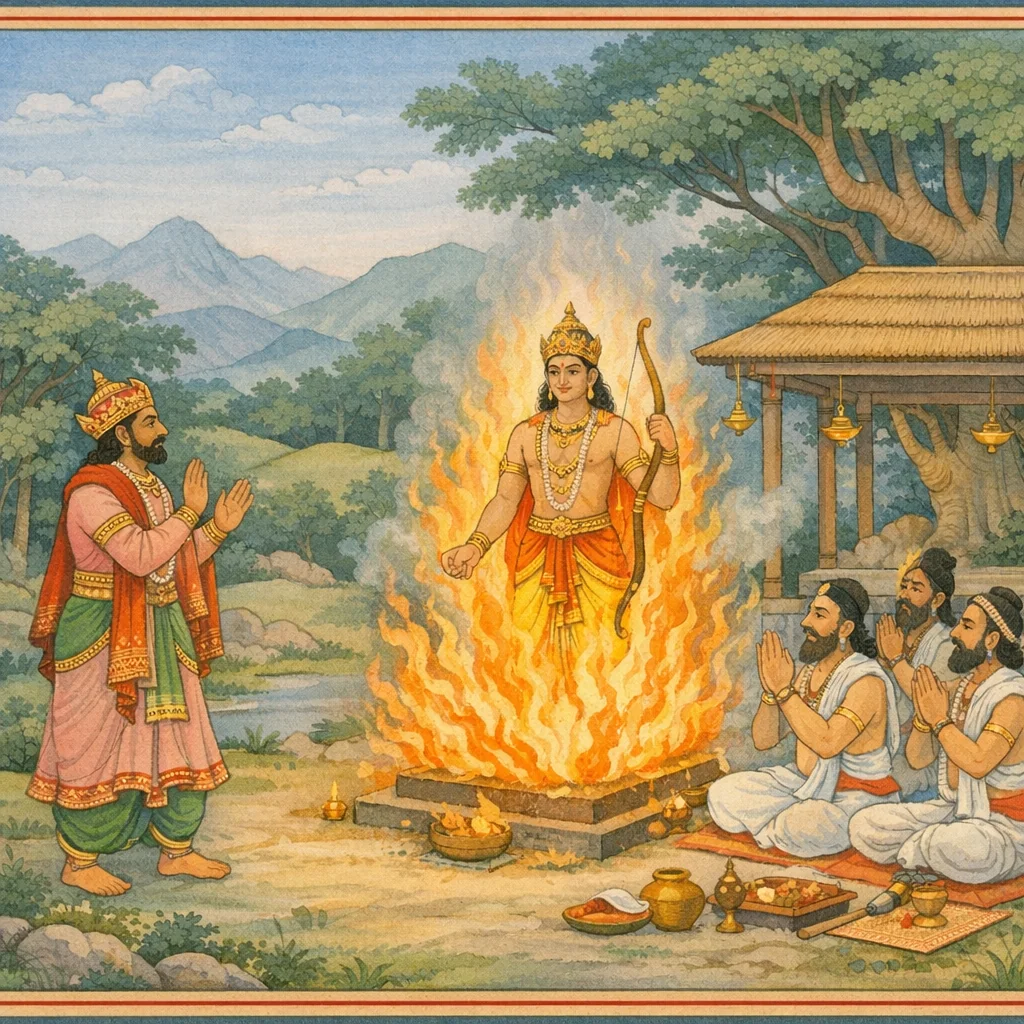
ब्राह्मण उवाच एवमुक््त्वा तु याजेन हुते हविषि संस्कृते । उत्तस्थौ पावकात् तस्मात् कुमारो देवसंनिभ:,ब्राह्मण कहता है--यों कहकर याजने उस संस्कारयुक्त हविष्यकी आहुति ज्यों ही अग्निमें डाली, त्यों ही उस अग्निसे देवताके समान तेजस्वी एक कुमार प्रकट हुआ
The Brāhmaṇa said: “Having spoken thus, as soon as Yāja offered the duly consecrated oblation into the fire, a radiant boy—shining like a god—arose from that very blaze.”
Verse 40
ज्वालावर्णो घोररूप: किरीटी वर्म चोत्तमम् | बिभ्रत् सखड्ग: सशरो धनुष्मान् विनदन् मुहुः,उसके अंगोंकी कान्ति अग्निकी ज्वालाके समान उद्धासित हो रही थी। उसका रूप भय उत्पन्न करनेवाला था। उसके माथेपर किरीट सुशोभित था। उसने अंगोंमें उत्तम कवच धारण कर रखा था। हाथोंमें खड्ग, बाण और धनुष धारण किये वह बार-बार गर्जना कर रहा था
The brāhmaṇa said: “He blazed with the hue of flaming fire. His appearance was terrifying. A crown shone upon his head, and he wore excellent armor upon his limbs. Bearing a sword, arrows, and a bow, he repeatedly roared aloud.”
Verse 41
सो<ध्यारोहद् रथवरं तेन च प्रययौ तदा । ततः प्रणेदु: पञ्जाला: प्रह्ृष्ठा: साधु साथ्विति,वह कुमार उसी समय एक श्रेष्ठ रथपर जा चढ़ा, मानो उसके द्वारा युद्धके लिये यात्रा कर रहा हो। यह देखकर पांचालोंको बड़ा हर्ष हुआ और वे जोर-जोरसे बोल उठे, “बहुत अच्छा', “बहुत अच्छा',
At once the young prince mounted an excellent chariot and set forth, as though riding out to war. Seeing this, the Pāñcālas were filled with delight and cried aloud, “Well done! Well done!”
Verse 42
हर्षाविष्टांस्ततश्वैतान् नेयं सेहे वसुंधरा । भयापहो राजपुत्र: पाउ्चालानां यशस्कर:,उस समय हर्षोल्लाससे भरे हुए इन पांचालोंका भार यह पृथ्वी नहीं सह सकी। आकाशमें कोई अदृश्य महाभूत इस प्रकार कहने लगा--“यह राजकुमार पांचालोंके भयको दूर करके उनके यशकी वृद्धि करनेवाला होगा। यह राजा द्रुपदका शोक दूर करनेवाला है। द्रोणाचार्यके वधके लिये ही इसका जन्म हुआ है'
Then, as the Pāñcālas were seized with joy, the earth herself could not bear their exultant weight. At that moment an unseen, sky-borne voice proclaimed: “This prince will remove the fear of the Pāñcālas and increase their fame. He will dispel King Drupada’s sorrow. He has been born for the slaying of Droṇācārya.”
Verse 43
राज्ञ: शोकापहो जात एष द्रोणवधाय वै । इत्युवाच महद् भूतमदृश्यं खेचरं तदा,उस समय हर्षोल्लाससे भरे हुए इन पांचालोंका भार यह पृथ्वी नहीं सह सकी। आकाशमें कोई अदृश्य महाभूत इस प्रकार कहने लगा--“यह राजकुमार पांचालोंके भयको दूर करके उनके यशकी वृद्धि करनेवाला होगा। यह राजा द्रुपदका शोक दूर करनेवाला है। द्रोणाचार्यके वधके लिये ही इसका जन्म हुआ है'
An unseen, sky-moving great being then proclaimed: “This child has been born to remove the king’s sorrow; indeed, he has come for the slaying of Droṇa.”
Verse 44
कुमारी चापि पाज्चाली वेदीमध्यात् समुत्थिता । सुभगा दर्शनीयड्री स्वसितायतलोचना,तत्पश्चात् यज्ञकी वेदीमेंसे एक कुमारी कन्या भी प्रकट हुई, जो पांचाली कहलायी। वह बड़ी सुन्दरी एवं सौभाग्यशालिनी थी। उसका एक-एक अंग देखने ही योग्य था। उसकी श्याम आँखें बड़ी-बड़ी थीं
Then, from the very midst of the sacrificial altar, a maiden arose—Pāñcālī. She was auspicious and radiant, every limb worthy of beholding; her eyes were large and elongated, and her gentle smile enhanced her beauty.
Verse 45
श्यामा पद्मपलाशाक्षी नीलकुज्चितमूर्थजा । ताम्रतुज़्नखी सुभ्रूश्षारूपीनपयोधरा,उसके शरीरकी कान्ति श्याम थी। नेत्र ऐसे जान पड़ते मानो खिले हुए कमलके दल हों। केश काले-काले और घुँघराले थे। नख उभरे हुए और लाल रंगके थे। भौंहें बड़ी सुन्दर थीं। दोनों उरोज स्थूल और मनोहर थे
The brāhmaṇa said: “She was dark-hued in complexion. Her eyes looked like the petals of a fully blossomed lotus. Her hair was black and curly. Her nails were prominent and coppery-red. Her eyebrows were exquisitely shaped, and her breasts were full and pleasing.”
Verse 46
मानुषं विग्रहं कृत्वा साक्षादमरवर्णिनी । नीलोत्पलसमो गन्धो यस्या: क्रोशात् प्रधावति,वह ऐसी जान पड़ती मानो साक्षात् देवी दुर्गा ही मानवशरीर धारण करके प्रकट हुई हों। उसके अंगोंसे नील कमलकी-सी सुगन्ध प्रकट होकर एक कोसतक चारों ओर फैल रही थी
Assuming a human form, she appeared with truly divine radiance, as if a goddess had manifested before their eyes. From her limbs there issued a fragrance like that of the blue lotus, spreading swiftly in all directions for a full krośa—marking her presence as auspicious and otherworldly, and inspiring reverence rather than mere curiosity.
Verse 47
या बिभर्ति परं रूप॑ यस्या नास्त्युपमा भुवि । देवदानवयक्षाणामीप्सितां देवरूपिणीम्,उसने परम सुन्दर रूप धारण कर रखा था। उस समय पृथ्वीपर उसके-जैसी सुन्दर स्त्री दूसरी नहीं थी। देवता, दानव और यक्ष भी उस देवोपम कन्याको पानेके लिये लालायित थे
The brāhmaṇa said: “She bore a supremely beautiful form, and on earth there was none comparable to her. Even the gods, the dānavas, and the yakṣas longed to obtain that maiden, whose beauty seemed divine.”
Verse 48
तां चापि जातां सुश्रोणीं वागुवाचाशरीरिणी । सर्वयोषिद्धरा कृष्णा निनीषु: क्षत्रियान् क्षयम्,सुन्दर कटिप्रदेशवाली उस कन्याके प्रकट होनेपर भी आकाशवाणी हुई--'इस कन्याका नाम कृष्णा है। यह समस्त युवतियोंमें श्रेष्ठ एवं सुन्दरी है और क्षत्रियोंका संहार करनेके लिये प्रकट हुई है
When that maiden—fair-hipped and newly born—appeared, a bodiless voice spoke from the sky: “Her name is Kṛṣṇā. She is the foremost among all young women, radiant in beauty, and she has manifested for the destruction of the Kṣatriyas.” The proclamation frames her birth not merely as an event of wonder, but as a portent: beauty and destiny here are bound to a larger moral and historical reckoning that will culminate in the downfall of warrior-kings.
Verse 49
सुरकार्यमियं काले करिष्यति सुमध्यमा । अस्या हेतो: कौरवाणां महतदुत्पत्स्यते भयम्,“यह सुमध्यमा समयपर देवताओंका कार्य सिद्ध करेगी। इसके कारण कौरवोंको बहुत बड़ा भय प्राप्त होगा"
“This fair-waisted lady will, at the proper time, accomplish a task meant for the gods. Because of her, a great fear will arise for the Kauravas.”
Verse 50
तच्छुत्वा सर्वपाञ्चाला: प्रणेदु: सिंहसड्घवत् । न चैतान् हर्षसम्पूर्णानियं सेहे वसुंधरा,वह आकाशवाणी सुनकर समस्त पांचाल सिंहोंके समुदायकी भाँति गर्जना करने लगे। उस समय हर्षमें भरे हुए उन पांचालोंका वेग पृथ्वी नहीं सह सकी
Hearing that proclamation, all the Pāñcālas roared like a gathered pride of lions. So overflowing were they with joy and impetuous energy that the very earth seemed unable to bear their surge.
Verse 51
तो दृष्टवा पार्षती याजं प्रपेदे वै सुतार्थिनी । न वै मदन्यां जननीं जानीयातामिमाविति,उन दोनों पुत्र और पुत्रीको देखकर पुत्रकी इच्छा रखनेवाली राजा पृषतकी पुत्रवधू महर्षि याजकी शरणमें गयी और बोली--“भगवन्! आप ऐसी कृपा करें, जिससे ये दोनों बच्चे मेरे सिवा और किसीको अपनी माता न समझें
Seeing the two children, the Pārṣatī—longing for a son—approached the sage Yāja for refuge and pleaded: “Revered one, show such compassion that these two may recognize no mother other than me.”
Verse 52
तथेत्युवाच तं याजो राज्ञ: प्रियचिकीर्षया । तयोश्व नामनी चक्रुर्द्धिजा: सम्पूर्णमानसा:,तब राजाका प्रिय करनेकी इच्छासे याजने कहा--'ऐसा ही होगा।/ उस समय सम्पूर्ण द्विजोंने सफल-मनोरथ होकर उन बालकोंके नामकरण किये
“So be it,” replied Yāja, the officiating priest, wishing to do what was dear to the king. Then the Brahmins, their hearts fully satisfied and their purpose fulfilled, performed the naming of the two children.
Verse 53
धृष्टत्वादत्यमर्षित्वाद् झुम्नादुत्सम्भवादपि | धृष्टद्युम्न: कुमारो<यं द्रुपदस्य भवत्विति,यह द्रुपदकुमार धृष्ट, अमर्षशील तथा द्युम्न (तेजोमय कवच-कुण्डल एवं क्षात्रतेज) आदिके साथ उत्पन्न होनेके कारण *धृष्टद्युम्न' नामसे प्रसिद्ध होगा
The Brahmin declared: “Because he is bold, because he is fiercely unyielding, and because he has arisen with blazing splendor, let this boy be known as Dhṛṣṭadyumna, the son of Drupada.”
Verse 54
कृष्णेत्येवाब्रुवन् कृष्णां कृष्णाभूत् सा हि वर्णत: । तथा तन्मिथुनं जज्ञे द्रपदस्य महामखे,तत्पश्चात् उन्होंने कुमारीका नाम कृष्णा रखा; क्योंकि वह शरीरसे कृष्ण (श्याम) वर्णकी थी। इस प्रकार ट्रपदके महान् यजञ्ञमें वे जुड़वीं संतानें उत्पन्न हुईं
They called the maiden “Kṛṣṇā,” and she indeed was dark-hued in complexion. Thus, in Drupada’s great sacrificial rite, that pair of twins was born.
Verse 55
धृष्टद्युम्न॑ तु पाउ्चाल्यमानीय स्वं निवेशनम् । उपाकरोदस्त्रहेतोर्भारद्वाज: प्रतापवान्,परम बुद्धिमान प्रतापी भरद्वाजनन्दन द्रोण यह सोचकर कि प्रारब्धके भावी विधानको टालना असम्भव है, पांचालराजकुमार धृष्टद्युम्मको अपने घर ले आये और उन्होंने उसे अस्त्र-विद्याकी शिक्षा देकर उसका बहुत बड़ा उपकार किया। द्रोणाचार्यने अपनी कीर्तिकी रक्षाके लिये वह उदारतापूर्ण कार्य किया
Then the mighty Bhāradvāja’s son, Droṇa—foreseeing that destiny’s ordained course cannot be averted—brought the Pāñcāla prince Dhṛṣṭadyumna to his own dwelling. For the sake of imparting the science of weapons, he rendered him a great service by training him in martial lore. Droṇa performed this generous act also to safeguard his own reputation, even though the future consequences were fraught with danger.
Verse 56
अमोक्षणीयं दैवं हि भावि मत्वा महामति: । तथा तत् कृतवान् द्रोण आत्मकीर्त्यनुरक्षणात्,परम बुद्धिमान प्रतापी भरद्वाजनन्दन द्रोण यह सोचकर कि प्रारब्धके भावी विधानको टालना असम्भव है, पांचालराजकुमार धृष्टद्युम्मको अपने घर ले आये और उन्होंने उसे अस्त्र-विद्याकी शिक्षा देकर उसका बहुत बड़ा उपकार किया। द्रोणाचार्यने अपनी कीर्तिकी रक्षाके लिये वह उदारतापूर्ण कार्य किया
The Brahmin said: Knowing that what is ordained by destiny and about to occur cannot be averted, the great-minded Droṇa acted accordingly. For the sake of safeguarding his own fame, he performed that deed—an act presented as generous, yet also shaped by concern for reputation.
Verse 166
(ब्राह्मण उवाच श्रुत्वा जतुगृहे वृत्तं ब्राह्मणा: सपुरोहिता: । पाज्चालराजं द्रुपदमिदं वचनमन्रुवन् ।। धार्तराष्ट्रा: सहामात्या मन्त्रयित्वा परस्परम् । पाण्डवानां विनाशाय मतिं चक्कुः सुदुष्कराम् ।। दुर्योधनेन प्रहित:ः पुरोचन इति श्रुत: । वारणावतमासाद्य कृत्वा जतुगृहं महत् ।। तस्मिन् गृहे सुविश्वस्तान् पाण्डवान् पृथया सह । अर्धरात्रे महाराज दग्धवान् स पुरोचन: ।। अग्निना तु स्वयमपि दग्धः क्षुद्रो नृशंसकृत् एतच्छुत्वा सुसंहृष्टो धृतराष्ट्र: सबान्धव: ।। श्रुत्वा तु पाण्डवान् दग्धान् धृतराष्ट्रोडम्बिकासुत: । एतावदुक्त्वा करुणं धृतराष्ट्रस्तु मारिष: ।। अल्पशोक: प्रह्ृष्टात्मा शशास विदुरं तदा | पाण्डवानां महाप्राज्ञ कुरु पिण्डोदकक्रियाम् ।। अद्य पाण्डु्हत: क्षत्त: पाण्डवानां विनाशने । तस्माद् भागीरथीं गत्वा कुरु पिण्डोदकक्रियाम् ।। अहो विधिवशादेव गतास्ते यमसादनम् । इत्युक्त्वा प्रारुदत् तत्र धृतराष्ट्र: ससौबल: ।। श्रुत्वा भीष्मेण विधिवत् कृतवानौर्ध्वदेहिकम् । पाण्डवानां विनाशाय कृतं कर्म दुरात्मना ।। एतत्कार्यस्य कर्ता तु न दृष्टो श्रुत: पुरा । एतद् वृत्तं महाराज पाण्डवान् प्रति नः श्रुतम् ।। श्रुत्वा तु वचन तेषां यज्ञसेनो महामति: । यथा तज्जनक: शोचेदौरसस्य विनाशने । तथातप्यत पाञ्चाल: पाण्डवानां विनाशने ।। समाहूय प्रकृतयः सहिता: सह बान्धवै: । कारुण्यादेव पाज्चाल: प्रोवाचेदं वचस्तदा ।। आगन्तुक ब्राह्मण कहता है--लाक्षागृहमें पाण्डवोंके साथ जो घटना घटित हुई थी, उसे सुनकर ब्राह्मणों तथा पुरोहितोंने पांचालराज द्रुपदसे इस प्रकार कहा--“राजन्! धृतराष्ट्रके पुत्रोंने अपने मन्त्रियोंक साथ परस्पर सलाह करके पाण्डवोंके विनाशका विचार कर लिया था। ऐसा क्रूरतापूर्ण विचार दूसरोंके लिये अत्यन्त कठिन है। दुर्योधनके भेजे हुए उसके पुरोचन नामक सेवकने वारणावत नगरमें जाकर एक विशाल लाक्षागृहका निर्माण कराया था। उस भवनमें पाण्डव अपनी माता कुन्तीके साथ पूर्ण विश्वस्त होकर रहते थे। महाराज! एक दिन आधी रातके समय पुरोचनने लाक्षागृहमें आग लगा दी। वह नीच और नृशंस पुरोचन स्वयं भी उसी आगमें जलकर भस्म हो गया। यह समाचार सुनकर कि 'पाण्डव जल गये” अम्बिकानन्दन धृतराष्ट्रको अपने भाई-बन्धुओंके साथ बड़ा हर्ष हुआ। धृतराष्ट्रकी आत्मा हर्षसे खिल उठी थी, तो भी ऊपरसे कुछ शोकका प्रदर्शन करते हुए उन्होंने विदुरजीसे बड़ी करुण भाषामें यह वृत्तान्त बताया और उन्हें आज्ञा दी कि “महामते! पाण्डवोंका श्राद्ध और तर्पण करो। विदुर! पाण्डवोंके मरनेसे मुझे ऐसा दुःख हुआ है मानो मेरे भाई पाण्डु आज ही स्वर्गवासी हुए हों। अतः गंगाजीके तटपर चलकर उनके लिये श्राद्ध और तर्पणकी व्यवस्था करो। अहो! भाग्यवश ही बेचारे पाण्डव यमलोकको चले गये।' यों कहकर धृतराष्ट्र और शकुनि फ़ूट-फ़ूटकर रोने लगे। भीष्मजीने यह समाचार सुनकर उनका विधिपूर्वक और्ध्वदैहिक संस्कार सम्पन्न किया है। इस प्रकार दुरात्मा दुर्योधनने पाण्डवोंके विनाशके लिये यह भयंकर षड़्यन्त्र किया था। आजसे पहले हमने किसीको ऐसा नहीं देखा या सुना था जो इस तरहका जघन्य कार्य कर सके। महाराज! पाण्डवोंके सम्बन्धमें यह वृत्तान्त हमारे सुननेमें आया है।' ब्राह्मण और पुरोहितका यह वचन सुनकर परम बुद्धिमान् राजा ट्रुपद शोकमें डूब गये। जैसे अपने सगे पुत्रकी मृत्यु होनेपर उसके पिताको शोक होता है उसी प्रकार पाण्डवोंके नष्ट होनेका समाचार सुनकर पांचालराजको पीड़ा हुई। उन्होंने अपने भाई-बन्धुओंके साथ समस्त प्रजाको बुलवाया और बड़ी करुणासे यह बात कही। हुपद उवाच अहो रूपमहो धैर्यमहो वीर्य च शिक्षितम् | चिन्तयामि दिवारात्रमर्जुनं प्रति बान्धवा: ।। भ्रातृभि: सहितो मात्रा सो5दहृत हुताशने । किमाश्चर्यमिदं लोके कालो हि दुरतिक्रम: ।। मिथ्याप्रतिज्ञो लोकेषु कि वदिष्यामि साम्प्रतम् । अन्तर्गतेन दुःखेन दहामानो दिवानिशम् । याजोपयाजोौ सत्कृत्य याचितौ तौ मयानघौ ।। भारद्वाजस्य हन्तारं देवीं चाप्यर्जुनस्य वै । लोकस्तद् वेद यच्चैव तथा याजेन वै श्रुतम् ।। याजेन पुत्रकामीयं हुत्वा चोत्पादितावुभौ । धृष्टय्युम्नश्व॒ कृष्णा च मम तुष्टिकरावुभौ ।। कि करिष्यामि ते नष्टा: पाण्डवा: पृथया सह । द्रपद बोले--बन्धुओ! अर्जुनका रूप अद्भुत था। उनका धैर्य आश्चर्यजनक था। उनका पराक्रम और उनकी अस्त्र-शिक्षा भी अलौकिक थी। मैं दिन-रात अर्जुनकी ही चिन्तामें डूबा रहता हूँ। हाय! वे अपने भाइयों और माताके साथ आगमें जल गये। संसारमें इससे बढ़कर आश्चर्यकी बात और क्या हो सकती है? सच है, कालका उल्लंघन करना अत्यन्त कठिन है। मेरी तो प्रतिज्ञा झूठी हो गयी। अब मैं लोगोंसे क्या कहूँगा। आन्तरिक दुःखसे दिन-रात दग्ध होता रहता हूँ। मैंने निष्पयाप याज और उपयाजका सत्कार करके उनसे दो संतानोंकी याचना की थी। एक तो ऐसा पुत्र माँगा, जो द्रोणाचार्यका वध कर सके और दूसरी ऐसी कन्याके लिये प्रार्थना की, जो वीर अर्जुनकी पटरानी बन सके। मेरे इस उद्देश्यको सब लोग जानते हैं और महर्षि याजने भी यही घोषित किया था। उन्होंने पुत्रेष्टियज्ञ करके धुृष्टद्युम्न और कृष्णाको उत्पन्न किया था। इन दोनों संतानोंको पाकर मुझे बड़ा संतोष हुआ। अब क्या करूँ? कुन्तीसहित पाण्डव तो नष्ट हो गये। ब्राह्मण उवाच इत्येवमुक्त्वा पाउचाल: शुशोच परमातुर: ।। दृष्टवा शोचन्तमत्यर्थ पाञज्चालगुरुरब्रवीत् । पुरोधा: सत्त्वसम्पन्न: सम्यग्विद्याशेषवान् ।। आगन्तुक ब्राह्मण कहता है--ऐसा कहकर पांचालराज ट्रुपद अत्यन्त दुःखी एवं शोकातुर हो गये। पांचालराजके गुरु बड़े सात््विक और विशिष्ट विद्वान् थे। उन्होंने राजाको भारी शोकमें डूबा देखकर कहा। गुरुर्वाच वृद्धानुशासने सक्ता: पाण्डवा धर्मचारिण: । तादृशा न विनश्यन्ति नैव यान्ति पराभवम् ।। मया दृष्टमिदं सत्यं शृणुष्व मनुजाधिप । ब्राह्मणै: कथितं सत्यं वेदेषु च मया श्रुतम् ।। बृहस्पतिमुखेनाथ पौलोम्या च पुरा श्रुतम् । नष्ट इन्द्रो बिसग्रन्थ्यामुपश्रुत्या तु दर्शितः ।। उपश्रुतिर्महाराज पाण्डवार्थ मया श्रुता । यत्र वा तत्र जीवन्ति पाण्डवास्ते न संशय: ।। गुरु बोले--महाराज! पाण्डवलोग बड़े-बूढ़ोंके आज्ञापालनमें तत्पर रहनेवाले तथा धर्मात्मा हैं। ऐसे लोग न तो नष्ट होते हैं और न पराजित ही होते हैं। नरेश्वर! मैंने जिस सत्यका साक्षात्कार किया है, वह सुनिये। ब्राह्मणोंने तो इस सत्यका प्रतिपादन किया ही है, वेदके मन्त्रोंमें भी मैंने इसका श्रवण किया है। पूर्वकालमें इन्द्राणीने बृहस्पतिजीके मुखसे उपश्रुतिकी महिमा सुनी थी। उत्तरायणकी अधिष्ठात्री देवी उपश्रुतिने ही अदृष्ट हुए इन्द्रका कमलनालकी ग्रन्थिमें दर्शन कराया था। महाराज! इसी प्रकार मैंने भी पाण्डवोंके विषयमें उपश्रुति सुन रखी है। वे पाण्डव कहीं-न-कहीं अवश्य जीवित हैं, इसमें संशय नहीं है। मया दृष्टानि लिड्डनि ध्रुवमेष्यन्ति पाण्डवा: । यन्निमित्तमिहायान्ति तच्छृणुष्व नराधिप ।। स्वयंवर: क्षत्रियाणां कन्यादाने प्रदर्शित: । स्वयंवरस्तु नगरे घुष्यतां राजसत्तम ।। यत्र वा निवसन्तस्ते पाण्डवा: पृथया सह । दूरस्था वा समीपस्था: स्वर्गस्था वापि पाण्डवा: ।। श्रुत्वा स्वयंवरं राजन् समेष्यन्ति न संशय: । तस्मात् स्वयंवरो राजन् घुष्यतां मा चिरं कृथा: ।। मैंने ऐसे (शुभ) चिह्न देखे हैं, जिनसे सूचित होता है कि पाण्डव यहाँ अवश्य पधारेंगे। नरेश्वर! वे जिस निमित्तसे यहाँ आ सकते हैं, वह सुनिये--क्षत्रियोंके लिये कन्यादानका श्रेष्ठ मार्ग स्वयंवर बताया गया है। नृपश्रेष्ठत आप सम्पूर्ण नगरमें स्वयंवरकी घोषणा करा दें। फिर पाण्डव अपनी माता कुन्तीके साथ दूर हों, निकट हों अथवा स्वर्गमें ही क्यों न हों--जहाँ कहीं भी होंगे, स्वयंवरका समाचार सुनकर यहाँ अवश्य आयेंगे, इसमें संशय नहीं है। अतः राजन! आप (सर्वत्र) स्वयंवरकी सूवना करा दें, इसमें विलम्ब न करें। ब्राह्मण उवाच श्रुत्वा पुरोहितेनोक्तं पाउ्चाल: प्रीतिमांस्तदा । घोषयामास नगरे द्रौपद्यास्तु स्वयंवरम् ।। पुष्यमासे तु रोहिण्यां शुक्लपक्षे शुभे तिथौ । दिवसै: पञ्चसप्तत्या भविष्यति स्वयंवर: ।। देवगन्धर्वयक्षाक्ष ऋषयश्न॒ तपोधना: । स्वयंवरं द्रष्टकामा गच्छन्त्येव न संशय: ।। तव पुत्रा महात्मानो दर्शनीया विशेषत: । यदृच्छया तु पाउ्चाली गच्छेद् वा मध्यमं पतिम् ।। को हि जानाति लोकेषु प्रजापतिविधिं परम् । तस्मात् सपुत्रा गच्छेथा ब्राह्माण्यै यदि रोचते ।। नित्यकालं सुभिक्षास्ते पज्चालास्तु तपोधने ।। यज्ञसेनस्तु राजासौ ब्रह्मण्य: सत्यसड्रर: । ब्रह्मण्या नागराश्षाथ ब्राह्मणाश्चातिथिप्रिया: ।। नित्यकालं प्रदास्यन्ति आमन्त्रणमयाचितम् ।। अहं च तत्र गच्छामि ममैभि: सह शिष्यकै: । एक्सार्था: प्रयाता: स्मो ब्राद्माण्यै यदि रोचते ।। आगन्तुक ब्राह्मण कहता है--पुरोहितकी बात सुनकर पंचालराजको बड़ी प्रसन्नता हुई। उन्होंने नगरमें द्रौपदीका स्वयंवर घोषित करा दिया। पौषमासके शुक्लपक्षमें शुभ तिथि (एकादशी)-को रोहिणी नक्षत्रमें वह स्वयंवर होगा, जिसके लिये आजसे पचहत्तर दिन शेष हैं। ब्राह्मणी (कुन्ती)! देवता, गन्धर्व, यक्ष और तपस्वी ऋषि भी स्वयंवर देखनेके लिये अवश्य जाते हैं। तुम्हारे सभी महात्मा पुत्र देखनेमें परम सुन्दर हैं। पंचालराजपुत्री कृष्णा इनमेंसे किसीको अपनी इच्छासे पति चुन सकती है अथवा तुम्हारे मँझले पुत्रको अपना पति बना सकती है। संसारमें विधाताके उत्तम विधानको कौन जान सकता है? अतः यदि मेरी बात तुम्हें अच्छी लगे, तो तुम अपने पुत्रोंके साथ पंचालदेशमें अवश्य जाओ। तपोधने! पंचालदेशमें सदा सुभिक्ष रहता है। राजा यज्ञसेन सत्यप्रतिज्ञ होनेके साथ ही ब्राह्मणोंके भक्त हैं। वहाँके नागरिक भी ब्राह्मणोंके प्रति श्रद्धा-भक्ति रखनेवाले हैं। उस नगरके ब्राह्मण भी अतिथियोंके बड़े प्रेमी हैं। वे प्रतिदिन बिना माँगे ही न्यौता देंगे। मैं भी अपने इन शिष्योंके साथ वहीं जाता हूँ। ब्राह्मणी! यदि ठीक जान पड़े तो चलो। हम सब लोग एक साथ ही वहाँ चले चलेंगे। वैशम्पायन उवाच एतावदुक्त्वा वचन ब्राह्मणो विरराम ह ।) वैशम्पायनजी कहते हैं--इतना कहकर वे ब्राह्मण चुप हो गये। इति श्रीमहाभारते आदिपर्वणि चैत्ररथपर्वणि द्रौपदीसम्भवे षट्षष्ट्यधिकशततमो<ध्याय:
Vaiśampāyana said: Hearing what had happened in the house of lac, the visiting brāhmaṇa, together with other brāhmaṇas and their priests, spoke to Drupada, king of the Pāñcālas: “The sons of Dhṛtarāṣṭra, after consulting with their ministers, formed a most difficult and wicked resolve—to destroy the Pāṇḍavas. Sent by Duryodhana, a servant named Purocana went to Vāraṇāvata and built a great house of lac. There, when the Pāṇḍavas were living in full trust along with Pṛthā (Kuntī), Purocana set it on fire at midnight. That vile and cruel man himself was also burned in the blaze. When Dhṛtarāṣṭra, son of Ambikā, heard the report that the Pāṇḍavas had been burned, he rejoiced with his kinsmen—though outwardly he staged a show of grief. With a heart secretly pleased and only a little sorrow displayed, he ordered Vidura: ‘O wise one, perform the piṇḍa-and-water rites for the Pāṇḍavas. Today it is as though Pāṇḍu has died again for me, since the Pāṇḍavas have perished. Therefore go to the Bhāgīrathī (Gaṅgā) and carry out the funerary offerings. Alas, by the force of fate they have gone to Yama’s abode.’ Saying this, Dhṛtarāṣṭra and Śakuni wept loudly. Bhīṣma, hearing the news, performed the proper post-funeral rites. Such was the dreadful deed contrived by the evil-minded for the destruction of the Pāṇḍavas—an act the speakers had never before seen or even heard of. On hearing these words, the great-minded Yajñasena (Drupada) was consumed by grief, as a father grieves for the loss of his own son. Summoning his officials and kinsmen, he spoke in compassion and sorrow: “Ah, Arjuna’s beauty! Ah, his steadiness! Ah, his valor and training! Day and night I think of Arjuna. And now he, with his brothers and mother, has been consumed by fire—what could be more astonishing? Yet Time is hard to overstep. My vow has become false; what shall I say to the world? Inward grief burns me day and night. I honored the blameless sages Yāja and Upayāja and begged for two children: a son who would slay Bhāradvāja’s son (Droṇa), and a daughter destined for Arjuna. The world knows this, and Yāja himself declared it. By the rite for obtaining a son, he brought forth Dhṛṣṭadyumna and Kṛṣṇā (Draupadī), both my delight. What shall I do now, if the Pāṇḍavas with Pṛthā are destroyed?” The brāhmaṇa continued: Having spoken thus, Drupada lamented in extreme distress. Seeing him grieve, the Pāñcāla preceptor—virtuous and fully learned—said: “The Pāṇḍavas are devoted to dharma and to the guidance of elders. Such men do not perish, nor do they fall into defeat. I have perceived this truth; hear it, O king. Brāhmaṇas affirm it, and I have heard it in the Vedas. Long ago, from Bṛhaspati’s mouth, Paulomī heard of the power of Upāśruti: by her, Indra—though hidden—was shown within the knot of a lotus-stalk. Likewise I have heard Upāśruti concerning the Pāṇḍavas: they are alive somewhere, without doubt. “I have seen auspicious signs: the Pāṇḍavas will surely come here. Hear the means by which they will come. For kṣatriyas, the best mode of giving a maiden is the svayaṃvara. Therefore, O best of kings, have a svayaṃvara proclaimed in the city. Whether the Pāṇḍavas are far away, nearby, or even (as people say) in heaven—on hearing of the svayaṃvara they will gather here, without doubt. Proclaim it quickly; do not delay.” Hearing the priest’s counsel, Drupada was pleased and had Draupadī’s svayaṃvara announced. It would take place in the month of Puṣya, under Rohiṇī, in the bright fortnight, on an auspicious lunar day—seventy-five days from then. Devas, gandharvas, yakṣas, and ascetic ṛṣis would surely come to see it. “Your sons are especially handsome; Pāñcālī may choose any of them, or perhaps the middle one—who can know the supreme ordinance of Prajāpati? If it pleases you, O brāhmaṇī (Kuntī), go there with your sons. Pāñcāla is ever prosperous; King Yajñasena is devoted to brāhmaṇas and true to his vows; the citizens and brāhmaṇas there love guests and will offer invitations unasked. I too will go with my students; if you approve, let us all travel together.” Vaiśampāyana said: Having spoken this much, the brāhmaṇa fell silent.
Frequently Asked Questions
Vasiṣṭha confronts whether grief justifies self-destruction; the narrative frames this as a dharma-sankat resolved by redirected responsibility toward ongoing teaching, protection, and lineage continuity.
The episode presents endurance as a disciplined response to loss: tapas and knowledge are not merely private attainments but forces that can reorient a life back toward duty and communal stability.
No explicit phalaśruti is stated here; the chapter’s meta-function is etiological and normative—linking sacred geography (Vipāśā, Śatadrū) to an ethical lesson about restraint and the preservation of continuity.