Adhyaya 162
संवरणस्य पतनं, सचिवोपचारः, वसिष्ठस्य सूर्योपगमनम् (Saṃvaraṇa’s Collapse, Ministerial Aid, and Vasiṣṭha’s Approach to Sūrya)
Upa-parva: Saṃvaraṇa–Tapatī Upākhyāna (Episode of King Saṃvaraṇa and Tapatī)
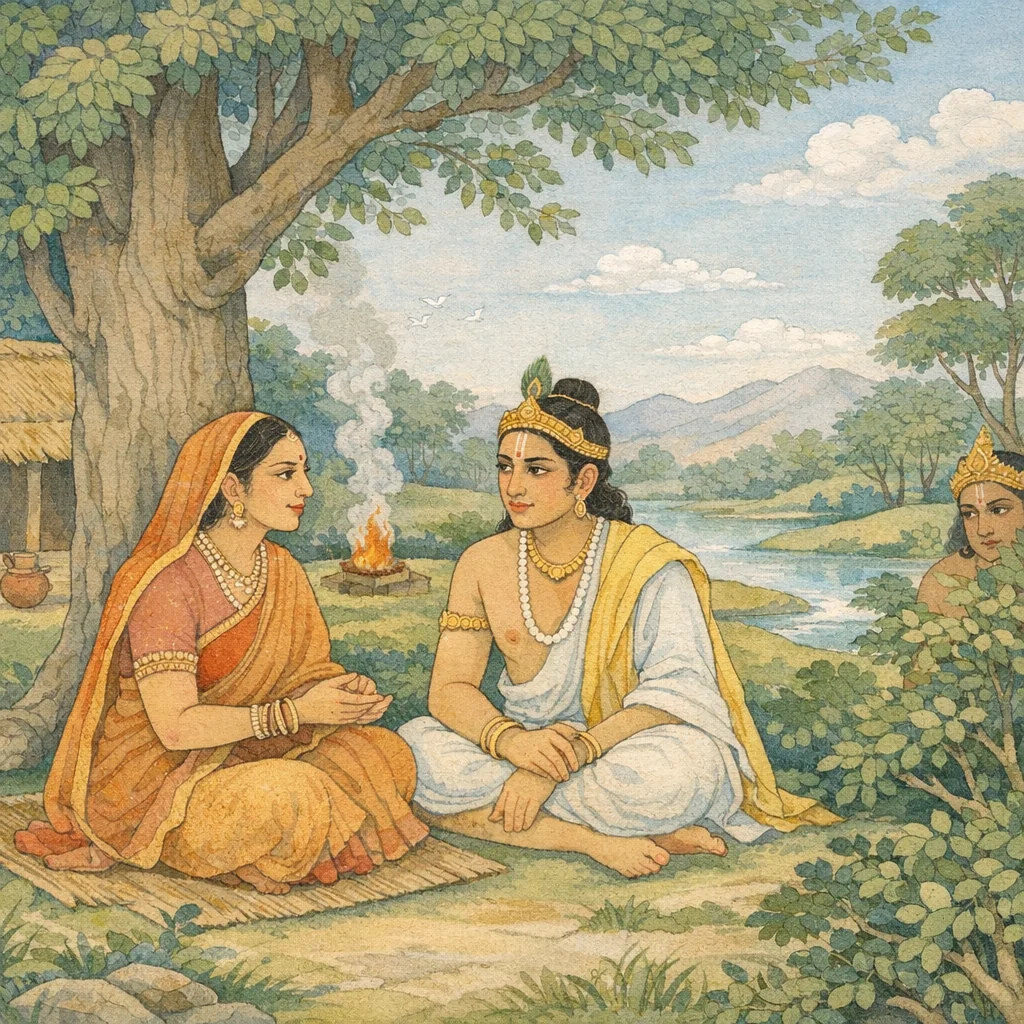
A Gandharva departs upward after speaking, and King Saṃvaraṇa collapses on the ground in the forest. His minister, arriving with attendants, sees the king fallen and reacts with alarm, then quickly approaches out of loyalty and affection. The minister lifts the king, reassures him with calming speech, and infers that the king is exhausted by hunger, thirst, and strain; he cools the king’s head with water scented like lotus, carefully preserving royal insignia. Regaining composure, Saṃvaraṇa dismisses his troops and remains with only the minister, then settles again at the mountain region (giriprastha). Purifying himself, he stands with joined hands and uplifted arms, intent on propitiating Sūrya, and mentally summons the sage Vasiṣṭha as purohita. After twelve days and nights of solitary discipline, Vasiṣṭha arrives, divinely discerning the king’s mind captured by Tapatī, and speaks with the aim of assisting him. In Saṃvaraṇa’s presence, Vasiṣṭha ascends to behold the Sun; identifying himself, he is welcomed by Vivasvān (Sūrya), who invites the sage to state his purpose—setting up the next phase of mediation.
Chapter Arc: भीमसेन के असामान्य हाव-भाव और आकृति से युधिष्ठिर भाँप लेते हैं कि कोई गुप्त, जोखिम भरा कार्य निश्चित हुआ है; वे एकान्त में कुन्ती से उसका भेद पूछते हैं। → कुन्ती का संकेत स्पष्ट होता जाता है—नगर को राक्षस-बक के कर से बचाने हेतु भीम को भेजने का निश्चय। युधिष्ठिर तर्क करते हैं कि ‘पराये पुत्र’ (ब्राह्मण-परिवार) के लिए ‘अपने पुत्र’ का त्याग लोक-धर्म-वेद के विरुद्ध है; वे भीम के पराक्रम पर राज्य-लाभ और कौरव-वध की आशा टिकाए हुए हैं, इसलिए इस त्याग को बुद्धि-भ्रंश मानने लगते हैं। → कुन्ती धर्म-नीति का कठोर, पर करुण तर्क रखती हैं—इस निर्णय से ‘दोनों अर्थ’ सिद्ध होंगे: शरणागत-रक्षा का महान धर्म भी और निवास/आश्रय का प्रत्युपकार भी। वे राजधर्म के उदाहरण (शरणागत शूद्र तक की रक्षा से कुल-यश/पुण्य) और व्यास-उपदेश का स्मरण कराकर अपने निश्चय को अडिग ठहराती हैं। → युधिष्ठिर कुन्ती की दृष्टि में ‘धर्म’ को केवल पुत्र-स्नेह नहीं, शरणागत-रक्षा और कृतज्ञता का व्यापक विधान समझते हैं; भीम को भेजने का निर्णय नैतिक आधार पाता है—यह त्याग नहीं, धर्म-पालन और लोक-रक्षा का उपाय है। → भीमसेन अब बक के पास जाने को प्रस्तुत है—अगला चरण राक्षस के साथ प्रत्यक्ष सामना और बक-वध की ओर बढ़ता है।
Shlokas
Verse 1
भीप्स््नश्शा ह््य भीि४्ाधइन्जण एकषष्ट्यधिकशततमो< ध्याय: भीमसेनको राक्षसके पास भेजनेके विषयमें युधिष्ठिर और कुन्तीकी बातचीत वैशम्पायन उवाच करिष्य इति भीमेन प्रतिज्ञातेडथ भारत । आजम्मुस्ते ततः सर्वे भैक्षमादाय पाण्डवा:,वैशम्पायनजी कहते हैं--जनमेजय! जब भीमसेनने यह प्रतिज्ञा कर ली कि “मैं इस कार्यको पूरा करूँगा', उसी समय पूर्वोक्त सब पाण्डव भिक्षा लेकर वहाँ आये
Vaiśampāyana said: “O descendant of Bharata (Janamejaya), when Bhīma had pledged, ‘I will accomplish this task,’ then, at that very moment, all the Pāṇḍavas arrived there, having brought the alms they had obtained.”
Verse 2
आकारेणैव त॑ ज्ञात्वा पाण्डुपुत्रो युधिष्ठिर: । रह: समुपविश्यैकस्तत: पप्रच्छ मातरम्,पाण्डुनन्दन युधिष्ठिने भीमसेनकी आकृतिसे ही समझ लिया कि आज ये कुछ करनेवाले हैं; फिर उन्होंने एकान्तमें अकेले बैठकर मातासे पूछा
Vaiśampāyana said: Reading it in his very bearing, Yudhiṣṭhira, Pāṇḍu’s son, understood that something was already set in motion. Then, seated alone with his mother in private, he questioned her—seeking clarity before action, and placing discretion and dharma above haste.
Verse 3
युधिछिर उवाच कि चिकीर्षत्ययं कर्म भीमो भीमपराक्रम: । भवत्यनुमते कच्चित् स्वयं वा कर्तुमिच्छति,युधिष्ठिर बोले--माँ! ये भयंकर पराक्रमी भीमसेन कौन-सा कार्य करना चाहते हैं? वे आपकी रायसे अथवा स्वयं ही कुछ करनेको उतारू हो रहे हैं?
Yudhiṣṭhira said: “Mother, what deed does this Bhīma—of dreadful might—intend to undertake? Is he acting with your approval, or is he himself determined to do something on his own?”
Verse 4
कुन्त्युवाच ममैव वचनादेष करिष्यति परंतप: । ब्राह्मणार्थे महत् कृत्यं मोक्षाय नगरस्य च,कुन्तीने कहा--बेटा! शत्रुओंको संतप्त करनेवाला भीमसेन मेरी ही आज्ञासे ब्राह्मणके हितके लिये तथा सम्पूर्ण नगरको संकटसे छुड़ानेके लिये आज एक महान कार्य करेगा
Kuntī said: “At my very command, this scorcher of foes will undertake a great deed—done for the welfare of a brāhmaṇa and to deliver the entire city from its peril.”
Verse 5
युधिछिर उवाच किमिदं साहसं तीक्ष्णं भवत्या दुष्करं कृतम् परित्यागं हि पुत्रस्य न प्रशंसन्ति साधव:,युधिष्ठिरने कहा--माँ! आपने यह असहा और दुष्कर साहस क्यों किया? साधु पुरुष अपने पुत्रके परित्यागको अच्छा नहीं बताते
Yudhiṣṭhira said: “Mother, why have you committed this harsh and difficult act of reckless daring? The righteous do not praise the abandonment of one’s own son.”
Verse 6
कथं परसुतस्यार्थे स्वसुतं त्यक्तुमिच्छसि । लोकवेददविरुद्ध हि पुत्रत्यागात् कृतं त्वया,दूसरेके बेटेके लिये आप अपने पुत्रको क्यों त्याग देना चाहती हैं? पुत्रका त्याग करके आपने लोक और वेद दोनोंके विरुद्ध कार्य किया है
Yudhiṣṭhira said: “How can you wish to abandon your own son for the sake of another woman’s child? By giving up your son you have acted in a way that stands opposed to both common moral order (loka) and the authority of the Veda.”
Verse 7
यस्य बाहू सम॒श्रित्य सुखं सर्वे शयामहे । राज्यं चापद्वतं क्षुद्रैराजिहीर्षामहे पुन:,जिसके बाहुबलका भरोसा करके हम सब लोग सुखसे सोते हैं और नीच शत्रुओंने जिस राज्यको हड़प लिया है, उसको पुनः वापस लेना चाहते हैं,
Yudhiṣṭhira said: “Relying on the strength of whose arms we all sleep in peace, we now seek to win back again the kingdom that petty men have seized away.”
Verse 8
यस्य दुर्योधनो वीर्य चिन्तयन्नमितौजस: । न शेते रजनी: सर्वा दुः:खाच्छकुनिना सह,जिस अमिततेजस्वी वीरके पराक्रमका चिन्तन करके शकुनिसहित दुर्योधनको दुःखके मारे सारी रात नींद नहीं आती थी,
Yudhiṣṭhira said: “Thinking over the prowess of that hero of immeasurable energy, Duryodhana—together with Śakuni—could not sleep through the nights, tormented by distress.”
Verse 9
यस्य वीरस्य वीर्येण मुक्ता जतुगृहाद् वयम् । अन्येभ्यश्वैव पापेभ्यो निहतश्न पुरोचन:,जिस वीरके बलसे हमलोग लाक्षागृह तथा दूसरे-दूसरे पापपूर्ण अत्याचारोंसे बच पाये और दुष्ट पुरोचन भी मारा गया,
Yudhiṣṭhira said: “By the valor of that hero we were delivered from the house of lac and from other sinful assaults as well; and the wicked Purocana too was slain.”
Verse 10
यस्य वीर्य समाश्रित्य वसुपूर्णा वसुन्धराम् । इमां मन्यामहे प्राप्तां निहत्य धृतराष्ट्रजानू,जिसके बल-पराक्रमका आश्रय लेकर हमलोग धृतराष्ट्रपुत्रोंको मारकर धन-धान्यसे सम्पन्न इस (सम्पूर्ण) पृथ्वीको अपने अधिकारमें आयी हुई ही मानते हैं, उस बलवान पुत्रके त्यागका निश्चय आपने किस बुद्धिसे किया है? क्या आप अनेक दु:खोंके कारण अपनी चेतना खो बैठी हैं? आपकी बुद्धि लुप्त हो गयी है
Yudhiṣṭhira said: “Relying on the prowess of that hero, we consider this earth—rich in wealth and grain—as already won by us, once the sons of Dhṛtarāṣṭra are slain. By what reasoning have you resolved to abandon that mighty son? Have you, under the weight of many sorrows, lost your clarity of mind—has your discernment failed?”
Verse 11
तस्य व्यवसितत्त्यागो बुद्धिमास्थाय कां त्वया । कच्चिन्नु दु:खैरबुद्धिस्ते विलुप्ता गतचेतस:,जिसके बल-पराक्रमका आश्रय लेकर हमलोग धृतराष्ट्रपुत्रोंको मारकर धन-धान्यसे सम्पन्न इस (सम्पूर्ण) पृथ्वीको अपने अधिकारमें आयी हुई ही मानते हैं, उस बलवान पुत्रके त्यागका निश्चय आपने किस बुद्धिसे किया है? क्या आप अनेक दु:खोंके कारण अपनी चेतना खो बैठी हैं? आपकी बुद्धि लुप्त हो गयी है
Yudhiṣṭhira said: “Relying on the strength and heroism of that mighty son, we deem the slaying of Dhṛtarāṣṭra’s sons and the winning of this prosperous earth to be already within our grasp. By what judgment, then, have you resolved to abandon him? Have repeated sorrows robbed you of clear awareness—has your mind become unsteady and your understanding been lost?”
Verse 12
कुन्त्युवाच युधिछिर न संतापस्त्वया कार्यो वृकोदरे । नचायं बुद्धिदौर्बल्याद् व्यवसाय: कृतो मया,कुन्तीने कहा--युथधिष्ठिर! तुम्हें भीमसेनके लिये चिन्ता नहीं करनी चाहिये। मैंने जो यह निश्चय किया है, वह बुद्धिकी दुर्बलतासे नहीं किया है
Kuntī said: “Yudhiṣṭhira, you should not give way to grief on account of Vṛkodara (Bhīma). The resolve I have taken is not born of weakness of understanding.”
Verse 13
इह विप्रस्य भवने वयं पुत्र सुखोषिता: । अज्ञाता धार्रराष्ट्राणां सत्कृता वीतमन्यव:,बेटा! हमलोग यहाँ इस ब्राह्मणके घरमें बड़े सुखसे रहे हैं। धृतराष्ट्रके पुत्रोंको हमारी कानों-कान खबर नहीं होने पायी है। इस घरमें हमारा इतना सत्कार हुआ है कि हमने अपने पिछले दुःख और क्रोधको भुला दिया है। पार्थ! ब्राह्मणके इस उपकारसे उऋण होनेका यही एक उपाय मुझे दिखायी दिया। मनुष्य वही है, जिसके प्रति किया हुआ उपकार नष्ट न हो (जो उपकारको भुला न दे)
Yudhiṣṭhira said: “Here, in this brāhmaṇa’s house, we sons have lived in comfort. The sons of Dhṛtarāṣṭra have not come to know of us at all. We have been so well honored in this home that our former suffering and anger have been set aside.”
Verse 14
तस्य प्रतिक्रिया पार्थ मयेयं प्रसमीक्षिता | एतावानेव पुरुष: कृतं यस्मिन् न नश्यति,बेटा! हमलोग यहाँ इस ब्राह्मणके घरमें बड़े सुखसे रहे हैं। धृतराष्ट्रके पुत्रोंको हमारी कानों-कान खबर नहीं होने पायी है। इस घरमें हमारा इतना सत्कार हुआ है कि हमने अपने पिछले दुःख और क्रोधको भुला दिया है। पार्थ! ब्राह्मणके इस उपकारसे उऋण होनेका यही एक उपाय मुझे दिखायी दिया। मनुष्य वही है, जिसके प्रति किया हुआ उपकार नष्ट न हो (जो उपकारको भुला न दे)
Yudhiṣṭhira said: “Pārtha, I have reflected on the proper return for his kindness. A person is truly worthy only to this extent: that a good deed done to him does not perish—he does not let gratitude be lost.”
Verse 15
यावच्च कुर्यादन्यो<स्य कुर्याद् बहुगुणं ततः । दृष्टवा भीमस्य विक्रान्तं तदा जतुगृहे महत् । हिडिम्बस्य वधाच्चैवं विश्वासो मे वृकोदरे,दूसरा मनुष्य उसके लिये जितना उपकार करे, उससे कई गुना अधिक प्रत्युपकार स्वयं उसके प्रति करना चाहिये। मैंने उस दिन लाक्षागृहमें भीमसेनका महान् पराक्रम देखा तथा हिडिम्बवधकी घटना भी मेरी आँखोंके सामने हुई। इससे भीमसेनपर मेरा पूरा विश्वास हो गया है
One should repay another’s kindness many times over. I myself witnessed Bhīma’s great prowess in the vast lac-house, and I saw with my own eyes the slaying of Hiḍimba. Therefore my trust in Vṛkodara (Bhīma) has become complete.
Verse 16
बाद्वोर्बलं हि भीमस्य नागायुतसमं महत् | येन यूयं गजप्रख्या निर्व्यूडा वारणावतात्,भीमका महान् बाहुबल दस हजार हाथियोंके समान है, जिससे वह हाथीके समान बलशाली तुम सब भाइयोंको वारणावत नगरसे ढोकर लाया है
Yudhiṣṭhira said: “Indeed, Bhīma’s mighty strength in his arms is as great as that of ten thousand elephants. By that very power he carried you brothers—elephant-like in prowess—out from Vāraṇāvata.”
Verse 17
वृकोदरेण सदृशो बलेनानयो न विद्यते । यो<भ्युदीयाद् युधि श्रेष्ठमपि वजधरं स्वयम्,भीमसेनके समान बलवान दूसरा कोई नहीं है। वह युद्धमें सर्वश्रेष्ठ वज्ञपाणि इन्द्रका भी सामना कर सकता है
Yudhiṣṭhira said: “No one else exists whose strength equals that of Vṛkodara. He could stand up in battle even against Vajradhara himself—Indra, the foremost of warriors.”
Verse 18
जातमात्र: पुरा चैव ममाड्कात् पतितो गिरौ । शरीरगौरवादस्य शिला गान्रैविंचूर्णिता,पहलेकी बात है, जब वह नवजात शिशुके रूपमें था, उसी समय मेरी गोदसे छूटकर पर्ववके शिखरपर गिर पड़ा था। जिस चट्टानपर यह गिरा, वह इसके शरीरकी गुरुताके कारण चूर-चूर हो गयी थी
Yudhiṣṭhira said: “Long ago, when he was only just born, he slipped from my lap and fell upon a mountain peak. By the sheer weight of his body, the rock on which he fell was shattered to pieces, as though crushed by his limbs.”
Verse 19
तदहं प्रज्ञया ज्ञात्वा बल॑ भीमस्य पाण्डव । प्रतिकार्ये च विप्रस्य तत: कृतवती मतिम्,अतः पाण्डुनन्दन! मैंने भीमसेनके बलको अपनी बुद्धिसे भलीभाँति समझकर तब ब्राह्मणके शत्रुरूपी राक्षससे बदला लेनेका निश्चय किया है
Having discerned with clear judgment the strength of Bhīma, O Pāṇḍava, I then resolved to exact due retaliation on behalf of the brāhmaṇa—repaying the man-eating rākṣasa who had become his enemy. The decision is framed as a measured, duty-bound response: protecting the vulnerable and restoring moral order rather than acting from mere anger.
Verse 20
नेदं लोभान्न चाज्ञानान्न च मोहाद् विनिश्चितम् | बुद्धिपूर्व तु धर्मस्य व्यवसाय: कृतो मया,मैंने न लोभसे, न अज्ञानसे और न मोहसे ऐसा विचार किया है, अपितु बुद्धिके द्वारा खूब सोच-समझकर विशुद्ध धर्मानुकूल निश्चय किया है
Yudhiṣṭhira said: “This resolve of mine was not formed out of greed, nor out of ignorance, nor out of delusion. Rather, after deliberate reflection and with the guidance of reason, I have made a firm decision that accords with pure dharma.”
Verse 21
अर्थो द्वावपि निष्पन्नौ युधिषछ्ठिर भविष्यत: । प्रतीकारश्न॒ वासस्य धर्मश्न॒ चरितो महान्,युधिष्ठिर! मेरे इस निश्चयसे दोनों प्रयोजन सिद्ध हो जायँगे। एक तो ब्राह्मणके यहाँ निवास करनेका ऋण चुक जायगा और दूसरा लाभ यह है कि ब्राह्मण और पुरवासियोंकी रक्षा होनेके कारण महान् धर्मका पालन हो जायगा
Yudhiṣṭhira said: “By this resolve of mine, both aims will be fulfilled. First, the obligation incurred by dwelling in the brāhmaṇa’s house will be repaid through due recompense; and second, by protecting the brāhmaṇa and the townspeople, a great act of dharma will be accomplished.”
Verse 22
यो ब्राह्मणस्य साहाय्य॑ कुर्यादर्थेषु कर्हिचित् । क्षत्रियः स शुभाललोकानाप्लुयादिति मे मति:,जो क्षत्रिय कभी ब्राह्मणके कार्योंमें सहायता करता है, वह उत्तम लोकोंको प्राप्त होता है--यह मेरा विश्वास है
Yudhiṣṭhira said: “Any kṣatriya who, at any time, offers assistance to a brāhmaṇa in his rightful affairs attains auspicious worlds—such is my conviction.”
Verse 23
क्षत्रियस्यैव कुर्वाण: क्षत्रियो वधमोक्षणम् | विपुलां कीर्तिमाप्रोति लोके5स्मिं क्ष परत्र च,यदि क्षत्रिय किसी क्षत्रियको ही प्राणसंकटसे मुक्त कर दे तो वह इस लोक और परलोकमें भी महान् यशका भागी होता है
Yudhiṣṭhira said: When a kṣatriya rescues a fellow kṣatriya from the peril of death, he gains abundant renown—both in this world and in the world beyond.
Verse 24
वैश्यस्यार्थे च साहाय्य॑ं कुर्वाण: क्षत्रियो भुवि । स सर्वेष्वपि लोकेषु प्रजा रज्जयते ध्रुवम्,जो क्षत्रिय इस भूतलपर वैश्यके कार्यमें सहायता पहुँचाता है, वह निश्चय ही सम्पूर्ण लोकोंमें प्रजाको प्रसन्न करनेवाला राजा होता है
Yudhiṣṭhira said: A kṣatriya who, upon the earth, lends assistance in the affairs and welfare of the vaiśya becomes, without doubt, a king who delights and satisfies the people in all worlds.
Verse 25
शूद्रं तु मोचयेद् राजा शरणार्थिनमागतम् । प्राप्नोतीह कुले जन्म सद्द्वव्ये राजपूजिते,इसी प्रकार जो राजा अपनी शरणमें आये हुए शूद्रको प्राणसंकटसे बचाता है, वह इस संसारमें उत्तम धन-धान्यसे सम्पन्न एवं राजाओंद्वारा सम्मानित श्रेष्ठ कुलमें जन्म लेता है
Likewise, the king who rescues a śūdra who has come seeking refuge from the peril of death attains, in this very world, birth in an excellent lineage—endowed with wealth and abundant grain, and honored by kings.
Verse 26
एवं मां भगवान् व्यास: पुरा पौरवनन्दन । प्रोवाचासुकरप्रज्ञस्तस्मादेवं चिकीर्षितम्,पौरववंशको आनन्दित करनेवाले युधिष्ठिर! इस प्रकार पूर्वकालमें दुर्लभ विवेक- विज्ञानसे सम्पन्न भगवान् व्यासने मुझसे कहा था; इसीलिये मैंने ऐसी चेष्टा की है
O delight of the Paurava line, thus did the venerable Vyāsa speak to me in former times. Endowed with rare discernment and true knowledge, he instructed me; therefore I have undertaken this course of action in accordance with that counsel.
Verse 161
इति श्रीमहाभारते आदिपर्वणि बकवधपर्वणि कुन्तीयुधिष्ठिरसंवादे एकषष्ट्यधिकशततमो< ध्याय:,इस प्रकार श्रीमह्या भारत आदिपर्वके अन्तर्गत बकवधपर्वमें कुन्ती-युधिष्िर-संवादविषयक एक सौ इकसठवाँ अध्याय पूरा हुआ
Thus ends the one-hundred-and-sixty-first chapter of the Ādi Parva of the Śrī Mahābhārata, within the section on the slaying of Baka, in the dialogue between Kuntī and Yudhiṣṭhira. The chapter closes by framing their exchange as a moral deliberation: how to act rightly under danger, balancing compassion for others with responsibility for one’s own family and the demands of dharma.
Frequently Asked Questions
The chapter presents a governance-centered dharma-sankat: a ruler’s personal emotional captivity (kāma-moha) undermines public function, requiring a balance between acknowledging human vulnerability and restoring royal responsibility.
Effective recovery from destabilizing desire is shown through layered supports—ethical companionship, practical care for the body, disciplined attention (tapas/ārādhana), and guidance from a qualified mediator—rather than impulsive action.
No explicit phalaśruti is stated here; the chapter’s meta-function is transitional, establishing the causal bridge from personal crisis to ritual-ascetic mediation, which advances the dynastic-etiological narrative.