Adhyaya 159
आर्जुन–गन्धर्वसंवादः (Arjuna–Gandharva Dialogue on Honor, Night-Power, and Purohita-Nīti)
Upa-parva: Arjuna–Gandharva Saṃvāda (Night-strength, Honor, and Purohita-Nīti Episode)
Arjuna asks a Gandharva to state why the group—described as brahma-vids—was previously harassed. The Gandharva replies that they lacked ritual markers (no sacred fires, no offerings, no brāhmaṇa leadership), and thus were subjected to his challenge. He then affirms that multiple classes of beings recount the Kuru lineage’s fame, and he testifies—by hearing from devarṣis and by personal observation—to the Pandavas’ exceptional pedigree and virtues (divine paternity, martial excellence, disciplined vows). Despite recognizing their superior mind and restraint, he explains that an affront witnessed in proximity to women is socially unbearable, and that nocturnal potency increases for his kind; anger motivated the encounter. Defeated by Arjuna, he attributes the outcome to Arjuna’s brahmacarya and regulated dharma. The discourse transitions into political doctrine: a ruler seeking prosperity, protection, and lasting sovereignty should appoint disciplined, truthful, Veda-and-ṣaḍaṅga-trained purohitas; mere valor and noble birth do not secure conquest, whereas brāhmaṇa-guided rule is sustainable.
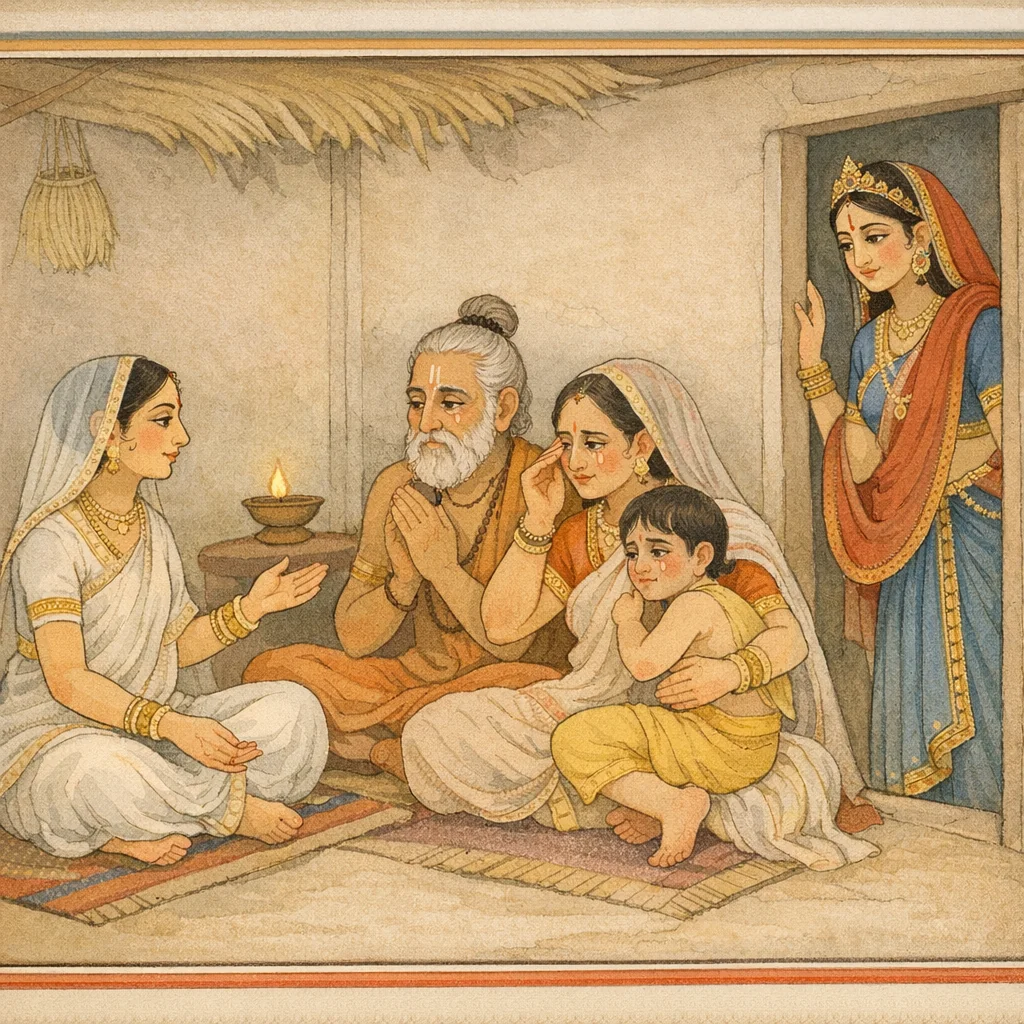
Chapter Arc: एक ब्राह्मण-गृह में करुण क्रंदन गूंजता है—राक्षस बक को दिए जाने वाले ‘बलि’ के लिए घर का कौन जाएगा, यह प्रश्न परिवार को अनाथ-सा रुला रहा है। → ब्राह्मण-कन्या विवेकपूर्ण, धर्म-आधारित वचनों से पिता-माता को रोकती है: वह कहती है कि पुत्र ‘आत्मा’ है, पत्नी ‘सखा’ है, पर संकट में पुत्री ही वह है जो परिवार को बचाने हेतु स्वयं को अर्पित कर सकती है; वह पिता से आग्रह करती है कि वे अपने प्राण और वंश-रक्षा करें, और उसे त्याग दें—क्योंकि यही धर्मोचित है। → सबके रुदन के बीच ब्राह्मण का नन्हा पुत्र भी बोल उठता है—बाल-वाणी में भी त्याग का साहस झलकता है; उसी क्षण कुन्ती ‘अब यही अवसर है’ जानकर आगे बढ़ती है और मृतप्राय आशा को वाणी से जीवित करती हुई हस्तक्षेप करती है। → कुन्ती परिवार के निकट जाकर उन्हें धैर्य देती है और संकेत देती है कि इस संकट का समाधान संभव है; परिवार के आत्म-त्याग के निर्णय को वह रोकने/पलटने की दिशा में ले जाती है। → कुन्ती के हस्तक्षेप के बाद प्रश्न अधर में रह जाता है—अब बक के पास कौन जाएगा, और कुन्ती किस उपाय से इस राक्षसी कर-प्रथा को तोड़ेगी?
Shlokas
Verse 1
अफ---रा+ >> अष्टपञ्चाशर्दाधिकशततमोब ध्याय: ब्राह्मण-कन्याके त्याग और विवेकपूर्ण वचन तथा कुन्तीका उन सबके पास जाना वैशम्पायन उवाच तयोर्दु:खितयोर्वाक्यमतिमात्र निशम्य तु । ततो दुःखपरीताज़्ी कन्या तावभ्यभाषत,वैशम्पायनजी कहते हैं-जनमेजय! दु:खमें डूबे हुए माता-पिताका यह (अत्यन्त शोकपूर्ण) वचन सुनकर कन्याके सम्पूर्ण अंगोंमें दुःख व्याप्त हो गया; उसने माता और पिता दोनोंसे कहा--
Vaiśampāyana said: O Janamejaya, hearing the exceedingly grief-laden words of her sorrow-stricken parents, the maiden found her whole being overwhelmed by distress; then she addressed both her mother and father.
Verse 2
किमेवं भृशदुः:खार्तो रोरूयेतामनाथवत् । ममापि श्रूयतां वाकयं श्रुत्वा च क्रियतां क्षमम्,“आप दोनों इस प्रकार अत्यन्त दुःखसे आतुर हो अनाथकी भाँति क्यों बार-बार रो रहे हैं? मेरी भी बात सुनिये और उसे सुनकर जो उचित जान पड़े, वह कीजिये
“Why are you two, overwhelmed by intense sorrow, wailing again and again like the helpless? Listen also to what I have to say; having heard it, do what is fitting and proper.”
Verse 3
धर्मतो<हं परित्याज्या युवयोर्नात्र संशय: । त्यक्तव्यां मां परित्यज्य त्राहि सर्व मयैकया,“इसमें संदेह नहीं कि एक-न-एक दिन आप दोनोंको धर्मतः मेरा परित्याग करना पड़ेगा। जब मैं त्याज्य ही हूँ, तब आज ही मुझे त्यागकर मुझ अकेलीके द्वारा इस समूचे कुलकी रक्षा कर लीजिये
“There is no doubt: one day, in accordance with dharma, you both will have to abandon me. Since I am one to be cast aside, then cast me aside this very day, and by me alone preserve and protect this entire lineage.”
Verse 4
इत्यर्थमिष्यते5पत्यं तारयिष्यति मामिति । अस्मिन्नुपस्थिते काले तरध्वं प्लववन्मया,'संतानकी इच्छा इसीलिये की जाती है कि यह मुझे संकटसे उबारेगी। अत: इस समय जो संकट उपस्थित हुआ है, उसमें नौकाकी भाँति मेरा उपयोग करके आपलोग शोकसागरसे पार हो जाइये
Vaiśampāyana said: “For this very purpose offspring is desired—thinking, ‘It will rescue me.’ Now that this critical time has arrived, cross over by making use of me as you would a boat, and pass beyond the ocean of grief.”
Verse 5
इह वा तारयेद् दुर्गादुत वा प्रेत्य भारत । सर्वथा तारयेत् पुत्र: पुत्र इत्युच्यते बुधै:,'जो पुत्र इस लोकमें दुर्गण संकटसे पार लगाये अथवा मृत्युके पश्चात् परलोकमें उद्धार करे--सब प्रकार पिताको तार दे, उसे ही दविद्वानोंने वास्तवमें पुत्र कहा है
Vaiśampāyana said: “O Bhārata, whether a son rescues his father here in this world from peril and hardship, or, after death, delivers him in the next world—one who saves his father in every way is truly called a ‘son’ by the wise.”
Verse 6
आकाडभक्षन्ते च दौहित्रान् मयि नित्यं पितामहा: । तत् स्वयं वै परित्रास्थे रक्षन्ती जीवितं पितु:,“पितरलोग मुझसे उत्पन्न होनेवाले दौहित्रसे अपने उद्धारकी सदा अभिलाषा रखते हैं, इसलिये मैं स्वयं ही पिताके जीवनकी रक्षा करती हुई उन सबका उद्धार करूँगी
Vaiśampāyana said: “The forefathers continually look to me for deliverance through the grandsons born of my line. Therefore I myself will act to secure that deliverance—by protecting my father’s life.”
Verse 7
भ्राता च मम बालो<यं गते लोकममुं त्वयि । अचिरेणैव कालेन विनश्येत न संशय:,“यदि आप परलोकवासी हो गये तो यह मेरा नन्हा-सा भाई थोड़े ही समयमें नष्ट हो जायगा, इसमें संशय नहीं है
Vaiśaṃpāyana said: “This little brother of mine is still a child. If you depart for yonder world, then in a very short time he will surely perish—of this there is no doubt.”
Verse 8
ताते5पि हि गते स्वर्ग विनष्टे च ममानुजे । पिण्ड: पितृणां व्युच्छिद्येत् तत् तेषां विप्रियं भवेत्,'पिता स्वर्गवासी हो जायेँ और मेरा भैया भी नष्ट हो जाय, तो पितरोंका पिण्ड ही लुप्त हो जायगा, जो उनके लिये बहुत ही अप्रिय होगा
Vaiśampāyana said: “If my father were to depart to heaven and my younger brother were also to perish, then the ancestral offering (piṇḍa) for the Pitṛs would be cut off. That would be deeply displeasing to them.”
Verse 9
पित्रा त्यक्ता तथा मात्रा भ्रात्रा चाहमसंशयम् । दुःखाद् दुःखतर प्राप्य म्रियेयमतथोचिता,“पिता, माता और भाई--तीनोंसे परित्यक्त होकर मैं एक दुःखसे दूसरे महान् दुःखमें पड़कर निश्चय ही मर जाऊँगी। यद्यपि मैं ऐसा दुःख भोगनेके योग्य नहीं हूँ, तथापि आप लोगोंके बिना मुझे वह सब भोगना ही पड़ेगा
Vaiśaṃpāyana said: “Abandoned by my father, and likewise by my mother and my brother—without any doubt—I shall pass from one sorrow into an even greater sorrow and die. Though I am not one who deserves such suffering, without you I will be forced to endure it all.”
Verse 10
त्वयि त्वरोगे निर्मुक्ते माता भ्राता च मे शिशु: । संतानश्लैव पिण्डश्न प्रतिष्ठास्यत्यसंशयम्,“यदि आप मृत्युके संकटसे मुक्त एवं नीरोग रहे तो मेरी माता, मेरा नन््हा-सा भाई, संतान-परम्परा और पिण्ड (श्राद्धकर्म)--ये सब स्थिर रहेंगे; इसमें संशय नहीं है
Vaiśaṃpāyana said: “If you are freed from this sudden illness and remain alive and healthy, then my mother, my little brother, our line of descendants, and the ancestral offerings (piṇḍa at śrāddha)—all these will stand secure. Of this there is no doubt.”
Verse 11
आत्मा पुत्र: सखा भार्या कृच्छों तु दुहिता किल । स कृच्छान्मोचयात्मानं मां च धर्मे नियोजय,“कहते हैं पुत्र अपना आत्मा है, पत्नी मित्र है; किंतु पुत्री निश्चय ही संकट है, अत: आप इस संकटसे अपनेको बचा लीजिये और मुझे भी धर्ममें लगाइये
Vaiśampāyana said: “A son is one’s very self; a wife is a companion and friend. But a daughter, it is said, becomes a source of grave anxiety. Therefore, free yourself from this distress, and also set me firmly on the path of dharma.”
Verse 12
अनाथा कृपणा बाला यत्रक्वचनगामिनी । भविष्यामि त्वया तात विहीना कृपणा सदा,“पिताजी! आपके बिना मैं सदाके लिये दीन और असहाय हो जाऊँगी, अनाथ और दयनीय समझी जाऊँगी। अरक्षित बालिका होनेके कारण मुझे जहाँ कहीं भी जानेके लिये विवश होना पड़ेगा
“Father, without you I shall become forever wretched and helpless—counted as an orphan, pitiable. As an unprotected young girl, I will be forced to go wherever I can, with no secure refuge.”
Verse 13
अथवाहं करिष्यामि कुलस्यास्य विमोचनम् | फलसंस्था भविष्यामि कृत्वा कर्म सुदुष्करम्,“अथवा मैं अपनेको मृत्युके मुखमें डालकर इस कुलको संकटसे छुड़ाऊँगी। यह अत्यन्त दुष्कर कर्म कर लेनेसे मेरी मृत्यु सफल हो जायगी
Vaiśampāyana said: “Or else I shall myself bring about the deliverance of this lineage. By accomplishing a deed most difficult, I will make my death meaningful—offering myself to the jaws of death so that this family may be freed from its peril.”
Verse 14
अथवा यास्यसे तत्र त्यक्त्वा मां द्विजसत्तम । पीडिताहं भविष्यामि तदवेक्षस्व मामपि,'द्विजश्रेष्ठ पिताजी! यदि आप मुझे त्यागकर स्वयं राक्षसके पास चले जायूँगे तो मैं बड़े दुःखमें पड़ जाऊँगी। अतः मेरी ओर भी देखिये
“Or if you will go there—abandoning me, O best of the twice-born—then I shall be left in anguish. Therefore, please consider me as well.”
Verse 15
तदस्मदर्थ धर्मार्थ प्रसवार्थ स सत्तम | आत्मानं परिरक्षस्व त्यक्तव्यां मां च संत्यज,“अत: हे साधुशिरोमणे! आप मेरे लिये, धर्मके लिये तथा संतानकी रक्षाके लिये भी अपनी रक्षा कीजिये और मुझे, जिसको एक दिन छोड़ना ही है, आज ही त्याग दीजिये
“Therefore, O best of the good: for my sake, for the sake of dharma, and for the sake of protecting the child to be born, protect yourself. And abandon me as well—me, who must in any case be left behind one day—leave me even now.”
Verse 16
अवश्यकरणीये च मा त्वां कालो5त्यगादयम् | कि त्वत: परम॑ दुःखं यद् वयं स्वर्गते त्वयि,“पिताजी! जो काम अवश्य करना है, उसका निश्चय करनेमें आपको अपना समय व्यर्थ नहीं जाने देना चाहिये (शीघ्र मेरा त्याग करके इस कुलकी रक्षा करनी चाहिये)। हमलोगोंके लिये इससे बढ़कर महान् दुःख और क्या होगा कि आपके स्वर्गवासी हो जानेपर हम दूसरोंसे अन्नकी भीख माँगते हुए कुत्तोंकी तरह इधर-उधर दौड़ते फिरें। यदि मुझे त्यागककर आप अपने भाई-बन्धुओंसहित इस क्लेशसे मुक्त हो नीरोग बने रहें तो मैं अमरलोकमें निवास करती हुई बहुत सुखी होऊँगी
Vaiśampāyana said: “And in a matter that must be done, do not let this time slip away from you. What greater sorrow could there be than this—that when you have gone to heaven, we should be forced to beg for food from others, wandering here and there like dogs?”
Verse 17
याचमाना: परादन्नं परिधावेमहि श्ववत् । त्वयि त्वरोगे निर्मुक्ते क्लेशादस्मात् सबान्धवे । अमृते वसती लोके भविष्यामि सुखान्विता,“पिताजी! जो काम अवश्य करना है, उसका निश्चय करनेमें आपको अपना समय व्यर्थ नहीं जाने देना चाहिये (शीघ्र मेरा त्याग करके इस कुलकी रक्षा करनी चाहिये)। हमलोगोंके लिये इससे बढ़कर महान् दुःख और क्या होगा कि आपके स्वर्गवासी हो जानेपर हम दूसरोंसे अन्नकी भीख माँगते हुए कुत्तोंकी तरह इधर-उधर दौड़ते फिरें। यदि मुझे त्यागककर आप अपने भाई-बन्धुओंसहित इस क्लेशसे मुक्त हो नीरोग बने रहें तो मैं अमरलोकमें निवास करती हुई बहुत सुखी होऊँगी
Vaiśaṃpāyana said: “If you depart for the sake of what must be done, do not waste time in hesitation. What greater misery could there be for us than this—that after you have gone to heaven we should run about like dogs, begging others for food? But if, by giving me up, you together with your kinsmen are freed from this affliction and become healthy, then I, dwelling in the immortal world, shall be filled with happiness.”
Verse 18
इतः प्रदाने देवाश्व॒ पितरश्रेति न श्रुतम् । त्वया दत्तेन तोयेन भविष्यन्ति हिताय वै,“यद्यपि ऐसे दानसे देवता और पितर प्रसन्न नहीं होते, ऐसा मैंने सुन रखा है, तथापि आपके द्वारा दी हुई जलांजलिसे वे प्रसन्न होकर अवश्य हमारा हित-साधन करनेवाले होंगे”
Vaiśampāyana said: “I have heard that by giving in this manner neither the gods nor the ancestors are truly satisfied. Yet, with the water-offering you have made, they will indeed be pleased and will surely act for our welfare.”
Verse 19
वैशग्पायन उवाच एवं बहुविधं तस्या निशम्य परिदेवितम् | पिता माता च सा चैव कन्या प्ररुरुदुस्त्रय:,वैशम्पायनजी कहते हैं--जनमेजय! इस तरह उस कन्याके मुखसे नाना प्रकारका विलाप सुनकर पिता-माता और वह कन्या तीनों फूट-फ़ूटकर रोने लगे
Vaiśampāyana said: “O Janamejaya, having heard the young maiden’s many-sided lament in this manner, her father, her mother, and the maiden herself—those three—broke down and wept aloud.”
Verse 20
ततः प्ररुदितान् सर्वान् निशम्याथ सुतस्तदा | उत्फुल्लनयनो बाल: कलमव्यक्तमब्रवीत्,तब उन सबको रोते देख ब्राह्मणका नन््हा-सा बालक उन सबकी ओर प्रफुल्ल नेत्रोंसे देखता हुआ तोतली भाषामें अस्पष्ट एवं मधुर वचन बोला--
Then, hearing everyone weeping, the little boy—his eyes bright and open—spoke at that moment in a child’s indistinct, lisping voice.
Verse 21
मा पिता रुद मा मातर्मा स्वसस्त्विति चाब्रवीत् । प्रहसन्निव सर्वास्तानेकेकमनुसर्पति,“पिताजी! न रोओ, माँ! न रोओ, बहिन! न रोओ, वह हँसता हुआ-सा प्रत्येकके पास जाता और सबसे यही बात कहता था। तदनन्तर उसने एक तिनका उठा लिया और अत्यन्त हर्षमें भरकर कहा--'मैं इसीसे उस नरभक्षी राक्षसको मार डालूँगा”
Vaiśaṃpāyana said: “Do not weep, Father; do not weep, Mother; do not weep, sisters,” he said. Smiling as though in play, he went from one to another among them all, repeating these words—calming their fear and steadying their hearts in the face of impending danger.
Verse 22
तत: स तृणमादाय प्रह्ृष्ट: पुनरब्रवीत् । अनेनाहं हनिष्यामि राक्षसं पुरुषादकम्,“पिताजी! न रोओ, माँ! न रोओ, बहिन! न रोओ, वह हँसता हुआ-सा प्रत्येकके पास जाता और सबसे यही बात कहता था। तदनन्तर उसने एक तिनका उठा लिया और अत्यन्त हर्षमें भरकर कहा--'मैं इसीसे उस नरभक्षी राक्षसको मार डालूँगा”
Then he picked up a blade of grass and, filled with joy, spoke again: “With this I shall slay the man-eating rākṣasa.”
Verse 23
तथापि तेषां दुःखेन परीतानां निशम्य तत् | बालस्य वाक्यमव्यक्तं हर्ष: समभवन्महान्,यद्यपि वे सब लोग दु:खमें डूबे हुए थे, तथापि उस बालककी अस्पष्ट तोतली बोली सुनकर उनके हृदयमें सहसा अत्यन्त प्रसन्नताकी लहर दौड़ गयी
Yet, though they were overwhelmed by sorrow, on hearing that child’s indistinct, lisping speech, a great joy suddenly arose in their hearts.
Verse 24
अयं काल इति ज्ञात्वा कुन्ती समुपसृत्य तान् । गतासूनमृतेनेव जीवयन्तीदमब्रवीत्,“अब यही अपनेको प्रकट करनेका अवसर है” यह जानकर कुन्तीदेवी उन सबके निकट गयीं और अपनी अमृतमयी वाणीसे उन मृतक (तुल्य) मानवोंको जीवन प्रदान करती हुई-सी बोलीं
Recognizing that this was the decisive moment, Kuntī approached them. With words as life-giving as nectar—reviving those who seemed as good as dead—she spoke: “Now is the time to reveal oneself.”
Verse 157
इस प्रकार श्रीमहाभारत आदिपव॑के अन्तर्गत बकवधपर्वमें ब्राह्मणीवाक्यविषयक एक सौ सत्तावनवाँ अध्याय पूरा हुआ
Thus concludes the one hundred and fifty-seventh chapter of the Bakavadha section within the Ādi Parva of the Śrī Mahābhārata, centered on the words of a brāhmaṇa woman.
Verse 158
इति श्रीमहाभारते आदिपर्वणि बकवधपर्वणि ब्राह्मणकन्यापुत्रवाक्ये अष्टपञज्चशदधिकशततमो< ध्याय:,इस प्रकार श्रीमह्याभारत आदिपर्वके अन्तर्गत बकवधपर्वमें ब्राह्मणकी कन्या और पुत्रके वचन-सम्बन्धी एक सौ अद्ठावनवाँ अध्याय पूरा हुआ
Thus, in the Śrī Mahābhārata, within the Ādi Parva, in the Bakavadha section, the chapter dealing with the words of the brāhmaṇa’s daughter and son comes to an end—this being the 158th chapter.
Frequently Asked Questions
The chapter juxtaposes personal restraint and ritual propriety against reactive honor: the Gandharva admits knowing the Pandavas’ excellence yet acting from anger and the perceived necessity to respond to public affront, raising the problem of when (or whether) honor justifies escalation.
Disciplined conduct (especially brahmacarya and regulated dharma) is portrayed as a decisive source of strength, while stable political success requires institutionalized ethical counsel—embodied in qualified purohitas—rather than reliance on force or pedigree alone.
No explicit phalaśruti is stated; the meta-instruction is implicit—linking victory and durable sovereignty to disciplined virtue and brāhmaṇa-guided governance, positioning the episode as normative counsel within the epic’s ethical archive.