Adhyaya 157
Vyāsa’s Counsel to the Concealed Pāṇḍavas; Śaṃkara’s Boon and the Predestination of Draupadī (Chapter 157)
Upa-parva: Draupadī-śaṃkara-vacana (Episode on the five-husbands boon and the Pāṇḍavas’ move toward Pāñcāla)
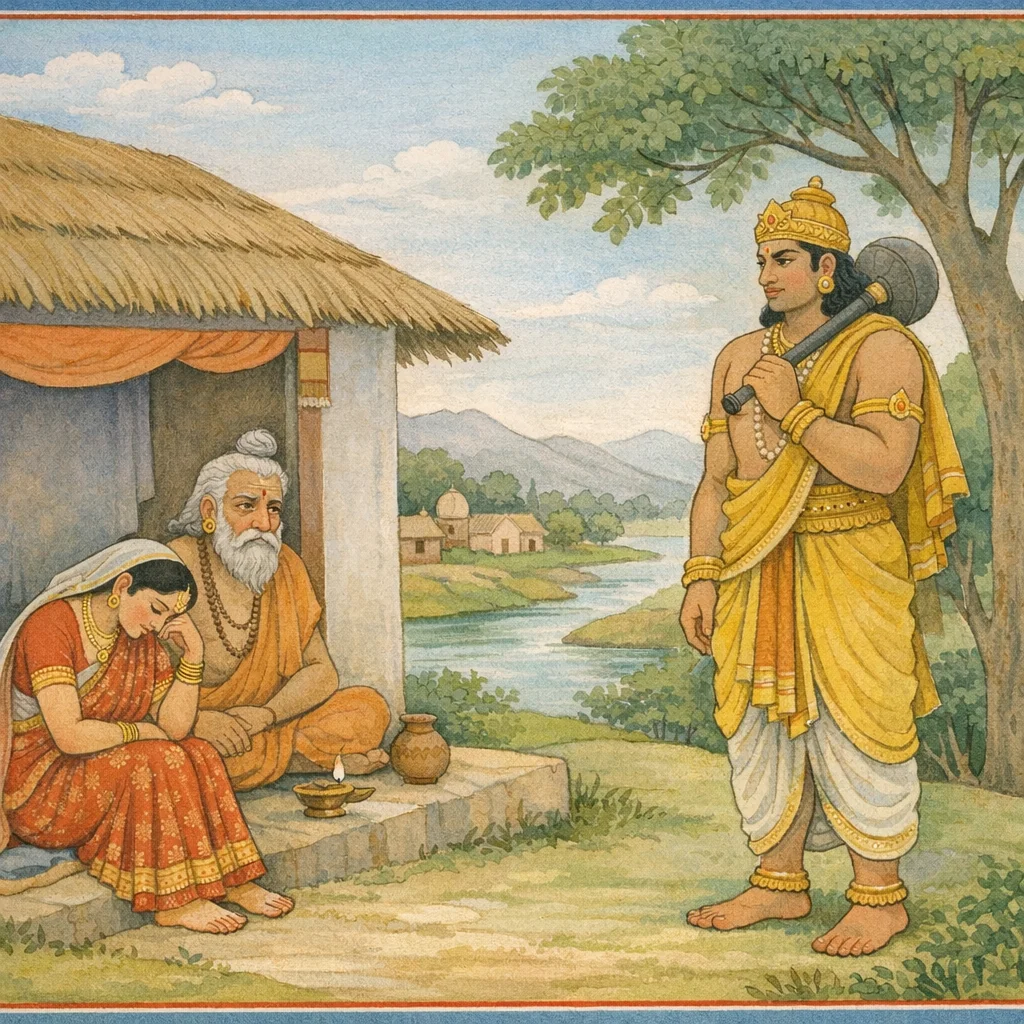
Vaiśaṃpāyana reports that while the Pāṇḍavas reside in concealment, Vyāsa (son of Satyavatī) arrives to see them. The brothers rise, greet him with reverence, and stand with joined hands. After being duly honored, Vyāsa inquires whether they continue to live according to dharma and whether their worship of worthy brāhmaṇas remains undiminished. He then introduces an illustrative account: a sage’s virtuous daughter, though beautiful, fails to obtain a husband due to prior actions and undertakes severe austerities to please Śaṃkara. Pleased, Śaṃkara offers a boon; she repeatedly asks for a husband endowed with all qualities. Śaṃkara declares that she will have five husbands, explaining that her repeated request occasions the fivefold result, to be realized in a subsequent embodiment. Vyāsa identifies her rebirth as Kṛṣṇā (Draupadī), born in Drupada’s lineage, designated as wife to the Pāṇḍavas. He instructs them to enter Pāñcāla, assuring their welfare upon reaching her. Having advised the brothers and addressed Kuntī, Vyāsa departs.
Chapter Arc: एकचक्रा नगरी में अज्ञातवास करते पाण्डव एक ब्राह्मण के घर ठहरते हैं; नगर-जीवन और भिक्षावृत्ति के बीच गृहस्थ-आश्रय की शान्ति के भीतर एक अनकहा भय धड़कता है। → पाण्डव प्रतिदिन भिक्षा लाकर ब्राह्मण-परिवार के साथ बाँटते हैं, पर कुन्ती देखती है कि गृहस्वामी का हृदय किसी अदृश्य दुःख से ‘मथा’ जा रहा है। वह भीम से कहती है कि इस परिवार का प्रिय कैसे किया जाए—क्योंकि उनके आश्रय में रहना केवल लेना नहीं, ऋण भी है। → ब्राह्मण की चिन्ता फूट पड़ती है: वह ऐसी आपदा में फँसा है जिसे अकेले पार नहीं कर सकता; वह अपने बन्धुओं सहित मर जाना भी श्रेय समझने लगता है, और किसी एक को त्यागना उसे नृशंस व निन्दनीय प्रतीत होता है। → अध्याय का अंत समाधान पर नहीं, समस्या के उद्घाटन पर टिकता है—कुन्ती की करुणा और भीम से संवाद के माध्यम से ‘उपकार-प्रतिदान’ की दिशा बनती है, पर संकट का स्वरूप अभी पूरी तरह सामने नहीं आता। → ब्राह्मण की आपदा क्या है, और पाण्डव—विशेषतः भीम—उसका भार कैसे उठाएँगे? अगले प्रसंग में संकट का नाम और मूल्य प्रकट होने को है।
Shlokas
Verse 1
ऑपनआक्रात बछ। 2 (बकवधपर्व) षट्पञज्चाशदधिकशततमो< ध्याय: ब्राह्मणपरिवारका कष्ट दूर करनेके लिये कुन्तीकी भीमसेनसे बातचीत तथा ब्राह्मणके चिन्तापूर्ण उद्गार जनमेजय उवाच एकचक्रां गतास्ते तु कुन्तीपुत्रा महारथा: । अत ऊर्ध्व॑ द्विजश्रेष्ठ किमकुर्वत पाण्डवा:,जनमेजयने पूछा--द्विजश्रेष्ठ! कुन्तीके महारथी पुत्र पाण्डव जब एकचक्रा नगरीमें पहुँच गये, उसके बाद उन्होंने क्या किया?
Janamejaya said: “O best of the twice-born, when Kuntī’s sons—the mighty chariot-warriors—had reached the city of Ekacakrā, what did the Pāṇḍavas do thereafter?”
Verse 2
वैशम्पायन उवाच एकचक्रां गतास्ते तु कुन्तीपुत्रा महारथा: । ऊषुर्नातिचिरं काल ब्राह्मणस्य निवेशने,वैशम्पायनजीने कहा--राजन्! एकचक्रा नगरीमें जाकर महारथी कुन्तीपुत्र थोड़े दिनोंतक एक ब्राह्मणके घरमें रहे
Vaiśampāyana said: The mighty chariot-warriors, the sons of Kuntī, went to Ekacakrā and for a short time lived in the dwelling of a brāhmaṇa.
Verse 3
रमणीयानि पश्यन्तो वनानि विविधानि च । पार्थिवानपि चोद्देशान् सरितश्न सरांसि च,जनमेजय! उस समय वे सभी पाण्डव भाँति-भाँतिके रमणीय वनों, सुन्दर भूभागों, सरिताओं और सरोवरोंका दर्शन करते हुए भिक्षाके द्वारा जीवन-निर्वाह करते थे। अपने उत्तम गुणोंके कारण वे सभी नागरिकोंके प्रीति-पात्र हो गये थे
Vaiśampāyana said: “O Janamejaya, the Pāṇḍavas, sustaining themselves by alms, journeyed on while beholding many delightful forests, fair tracts of land, rivers, and lakes. By the excellence of their conduct and virtues, they became dear to the hearts of the people.”
Verse 4
चेरुभैक्षं तदा ते तु सर्व एव विशाम्पते । बभूवुर्नागराणां च स्वैर्गुणै: प्रियदर्शना:,जनमेजय! उस समय वे सभी पाण्डव भाँति-भाँतिके रमणीय वनों, सुन्दर भूभागों, सरिताओं और सरोवरोंका दर्शन करते हुए भिक्षाके द्वारा जीवन-निर्वाह करते थे। अपने उत्तम गुणोंके कारण वे सभी नागरिकोंके प्रीति-पात्र हो गये थे
Vaiśampāyana said: At that time, O lord of the people, all of them lived by begging for alms. And, by their own excellent qualities, they became pleasing and dear to the townspeople—men whose very appearance inspired affection and respect.
Verse 5
(दर्शनीया द्विजा: शुद्धा देवगर्भोपमा: शुभा: | भैक्षानहश्वि राज्याह: सुकुमारास्तपस्विन: ।। सर्वलक्षणसम्पन्ना भैक्ष॑ ना्हन्ति नित्यश: । कार्यार्थिनश्चरन्तीति तर्कयन्त इति ब्रुवन् ।। बन्धूनामागमान्नित्यमुपचिन्त्य तु नागरा: । भाजनानि च पूर्णानि भक्ष्यभोज्यैरकारयन् ।। मौनव्रतेन संयुक्ता भैक्ष॑ गृह्लन्ति पाण्डवा: | माता चिरगतान् दृष्टवा शोचन्तीति च पाण्डवा: | त्वरमाणा निवर्तन्ते मातृगौरवयन्त्रिता: ।।) उन्हें देखकर नगरनिवासी आपसमें तर्क-वितर्क करते हुए इस प्रकारकी बातें करते थे --'ये ब्राह्मणलोग तो देखने ही योग्य हैं। इनके आचार-विचार शुद्ध एवं सुन्दर हैं। इनकी आकृति देवकुमारोंके समान जान पड़ती है। ये भीख माँगनेयोग्य नहीं, राज्य करनेके योग्य हैं। सुकुमार होते हुए भी तपस्यामें लगे हैं। इनमें सब प्रकारके शुभ लक्षण शोभा पाते हैं। ये कदापि भिक्षा ग्रहण करनेयोग्य नहीं हैं। शायद किसी कार्यवश भिक्षुकोंके वेशमें विचर रहे हैं।' वे नागरिक पाण्डवोंके आगमनको अपने बन्धुजनोंका ही आगमन मानकर उनके लिये भक्ष्य-भोज्य पदार्थोंसे भरे हुए पात्र तैयार रखते थे और मौनव्रतका पालन करनेवाले पाण्डव उनसे वह भिक्षा ग्रहण करते थे। हमें आये हुए बहुत देर हो गयी, इसलिये माताजी चिन्तामें पड़ी होंगी--यह सोचकर माताके गौरव-पाशमें बँधे हुए पाण्डव बड़ी उतावलीके साथ उनके पास लौट आते थे। निवेदयन्ति सम तदा कुन्त्या भैक्षं सदा निशि । तया विभक्तान् भागांस्ते भुज्जते सम पृथक् पृथक्,प्रतिदिन रात्रिके आरम्भमें भिक्षा लाकर वे माता कुन्तीको सौंप देते और वे बाँटकर जिसके लिये जितना हिस्सा देतीं, उतना ही पृथक्-पृथक् लेकर पाण्डवलोग भोजन करते थे
Vaiśampāyana said: “The townspeople, seeing them, reasoned among themselves: ‘These brahmins are truly worth beholding—pure in conduct and pleasing in appearance, like divine youths. They are not fit to beg; they are fit to rule. Though delicate, they are devoted to austerity. Endowed with every auspicious mark, they never seem meant for a beggar’s life; surely they wander in a mendicant guise for some purpose.’ Thinking of the Pāṇḍavas’ arrival as the arrival of their own kinsmen, the citizens had vessels prepared, filled with foods and delicacies. The Pāṇḍavas, observing a vow of silence, accepted that alms. Yet, reflecting, ‘We have been away long; Mother will be anxious,’ they would quickly return—held, as it were, by the bond of reverence for their mother. Then, at the beginning of each night, they would present the collected alms to Kuntī; and after she apportioned the shares, each of them ate separately the portion assigned to him.”
Verse 6
अर्ध ते भुञज्जते वीरा: सह मात्रा परंतपा: | अर्ध सर्वस्य भैक्षस्य भीमो भुड्क्ते महाबल:,वे चारों वीर परंतप पाण्डव अपनी माताके साथ आधी भिक्षाका उपयोग करते थे और सम्पूर्ण भिक्षाका आधा भाग अकेले महाबली भीमसेन खाते थे
Vaiśampāyana said: Those four hero brothers, scorcher of foes, would partake of one half of the alms together with their mother; and of the entire day’s begging, mighty-armed Bhīma alone would eat the other half.
Verse 7
तथा तु तेषां वसतां तस्मिन् राष्ट्र महात्मनाम् अतिचक्राम सुमहान् कालो5थ भरतर्षभ,भरतवंशशिरोमणे! इस प्रकार उस राष्ट्रमें निवास करते हुए महात्मा पाण्डवोंका बहुत समय बीत गया
Vaiśampāyana said: Thus, while those great-souled men were living in that kingdom, a very long time passed, O best of the Bharatas, crest-jewel of the Bharata lineage.
Verse 8
ततः कदाचित् भैक्षाय गतास्ते पुरुषर्षभा: । संगत्या भीमसेनस्तु तत्रास्ते पूृथया सह,तदनन्तर एक दिन नरश्रेष्ठ युधिष्ठिर आदि चार भाई भिक्षाके लिये गये; किंतु भीमसेन किसी कार्यविशेषके सम्बन्धसे कुन्तीके साथ वहाँ घरपर ही रह गये थे
Then, on one occasion, those bull-like men (the Pāṇḍava brothers) went out to seek alms. Bhīmasena, however, remained there at home together with Pṛthā (Kuntī), having stayed back for a particular reason.
Verse 9
अथार्तिजं महाशब्दं ब्राह्मणस्य निवेशने । भृशमुत्पतितं घोर कुन्ती शुश्राव भारत,भारत! उस दिन ब्राह्मणके घरमें सहसा बड़े जोरका भयानक आर्तनाद होने लगा, जिसे कुन्तीने सुना
Then, O Bhārata, Kuntī heard a great and dreadful cry of distress that suddenly arose with force within the Brahmin’s dwelling.
Verse 10
रोरूयमाणांस्तान् दृष्टवा परिदेवयतश्न सा । कारुण्यात् साधुभावाच्च कुन्ती राजन् न चक्षमे,राजन! उन ब्राह्मण-परिवारके लोगोंको बहुत रोते और विलाप करते देख कुन्तीदेवी अत्यन्त दयालुता तथा साधु-स्वभावके कारण सहन न कर सकीं
Vaiśampāyana said: Seeing those people wailing and lamenting, Kuntī—moved by compassion and by her gentle, virtuous disposition—could not bear it, O King.
Verse 11
मथ्यमानेन दुःखेन हृदयेन पृथा तदा । उवाच भीम॑ं कल्याणी कृपान्वितमिदं वच:,उस समय उनका दु:ख मानो कुन्तीदेवीके हृदयको मथे डालता था। अत: कल्याणमयी कुन्ती भीमसेनसे इस प्रकार करुणायुक्त वचन बोलीं--“बेटा! हमलोग इस ब्राह्मणके घरमें दुर्योधनसे अज्ञात रहकर बड़े सुखसे निवास करते हैं। यहाँ हमारा इतना सत्कार हुआ है कि हम अपने दुःख और दैन्यको भूल गये हैं
Vaiśaṃpāyana said: Then Pṛthā (Kuntī), her heart being churned by sorrow, spoke to Bhīma. The auspicious lady, moved by compassion, addressed him with these tender words.
Verse 12
वसाम सुसुखं पुत्र ब्राह्मणस्य निवेशने । अज्ञाता धार्तराष्ट्रस्य सत्कृता वीतमन्यव:,उस समय उनका दु:ख मानो कुन्तीदेवीके हृदयको मथे डालता था। अत: कल्याणमयी कुन्ती भीमसेनसे इस प्रकार करुणायुक्त वचन बोलीं--“बेटा! हमलोग इस ब्राह्मणके घरमें दुर्योधनसे अज्ञात रहकर बड़े सुखसे निवास करते हैं। यहाँ हमारा इतना सत्कार हुआ है कि हम अपने दुःख और दैन्यको भूल गये हैं
She said: “My son, we are living here in great comfort in the dwelling of this brāhmaṇa, remaining unknown to the son of Dhṛtarāṣṭra (Duryodhana). We have been so well honored that our resentment has subsided.”
Verse 13
सा चिन्तये सदा पुत्र ब्राह्मणस्यास्य कि न््वहम् | प्रियं कुर्यामिति गृहे यत् कुर्युरुषिता: सुखम्,“इसलिये पुत्र! मैं सदा यही सोचती रहती हूँ कि इस ब्राह्मणका मैं कौन-सा प्रिय कार्य करूँ, जिसे किसीके घरमें सुखपूर्वक रहनेवाले लोग किया करते हैं
She said, “My son, I constantly reflect on this: what pleasing service might I do for this brāhmaṇa—something that people, living comfortably in another’s house, ordinarily do to show gratitude?”
Verse 14
एतावान् पुरुषस्तात कृतं यस्मिन् न नश्यति । यावच्च कुर्यादन्यो<5स्य कुर्यादभ्यधिकं तत:,“तात! जिसके प्रति किया हुआ उपकार उसका बदला चुकाये बिना नष्ट नहीं होता, वही पुरुष है (और इतना ही उसका पौरुष--मानवता है कि) दूसरा मनुष्य उसके प्रति जितना उपकार करे, वह उससे भी अधिक उस मनुष्यका प्रत्युपकार कर दे
“Dear child, only so much may one be called a true man: that a good deed done toward him does not perish without return. And whatever kindness another shows him, he repays with an even greater kindness in response.”
Verse 15
तदिदं ब्राह्मणस्यास्य दुःखमापतितं ध्रुवम् । तत्रास्य यदि साहाय्यं कुर्यामुपकृतं भवेत्,“इस समय निश्चय ही इस ब्राह्मणपर कोई भारी दुःख आ पड़ा है। यदि उसमें मैं इसकी सहायता करूँ तो वास्तविक उपकार हो सकता है”
“Surely a grievous sorrow has befallen this brāhmaṇa. If I were to render him assistance in this situation, it would become a true act of help—a genuine benefaction.”
Verse 16
भीमसेन उवाच ज्ञायतामस्य यद् दुःखं यतश्नैव समुत्थितम् । विदित्वा व्यवसिष्यामि यद्यपि स्यात् सुदुष्करम्,भीमसेन बोले--माँ! पहले यह मालूम करो कि इस ब्राह्मणको क्या दुःख है और वह किस कारणसे प्राप्त हुआ है। जान लेनेपर अत्यन्त दुष्कर होगा, तो भी मैं इसका कष्ट दूर करनेके लिये उद्योग करूँगा
Bhīmasena said: “First, let it be ascertained what sorrow afflicts this brāhmaṇa and from what cause it has arisen. Once I know it, I will resolve to act—even if the remedy should prove exceedingly difficult—so that his suffering may be removed.”
Verse 17
वैशम्पायन उवाच एवं तौ कथयन्तौ च भूय: शुश्रुवतु: स्वनम् | आर्तिजं तस्य विप्रस्य सभार्यस्य विशाम्पते,वैशम्पायनजी कहते हैं--राजन! वे माँ-बेटे इस प्रकार बात कर ही रहे थे कि पुनः पत्नीसहित ब्राह्मणका आर्तनाद उनके कानोंमें पड़ा
Vaiśampāyana said: “O king, while that mother and son were speaking thus, they again heard a sound—the anguished cry of that brāhmaṇa, together with his wife.”
Verse 18
अन्त:पुरं ततस्तस्य ब्राह्मणस्य महात्मन: । विवेश त्वरिता कुन्ती बद्धवत्सेव सौरभी,तब कुन्तीदेवी तुरंत ही उस महात्मा ब्राह्मणके अन्तःपुरमें घुस गयीं--ठीक उसी तरह जैसे घरके भीतर बँधे हुए बछड़ेवाली गाय स्वयं ही उसके पास पहुँच जाती है
Then Kuntī, in haste, entered the inner apartments of that great-souled brāhmaṇa—like a cow whose calf is tethered, instinctively making her way straight to it.
Verse 19
ततस्तं ब्राह्म॒णं तत्र भार्यया च सुतेन च । दुहित्रा चैव सहितं ददर्शावनताननम्,भीतर जाकर दुन्तीने ब्राह्मणको वहाँ पत्नी, पुत्र और कन्याके साथ नीचे मुँह किये बैठे देखा
Then she saw there a brāhmaṇa, seated with his wife, his son, and his daughter, his face cast down.
Verse 20
ब्राह्मण उवाच धिगिदं जीवितं लोके गतसारमनर्थकम् | दुःखमूलं पराधीनं भृशमप्रियभागि च,ब्राह्मणदेवता कह रहे थे--जगत्के इस जीवनको धिक्कार है; क्योंकि यह सारहीन, निरर्थक, दुःखकी जड़, पराधीन और अत्यन्त अप्रियका भागी है
The Brahmin said: “Fie upon this life in the world—its essence is spent and it proves purposeless. It is a root of suffering, dependent on others, and a share in what is deeply unpleasant.”
Verse 21
जीविते परम दुःखं जीविते परमो ज्वर: । जीविते वर्तमानस्य दुःखानामागमो ध्रुव:,जीनेमें महान् दुःख है। जीवनकालमें बड़ी भारी चिन्ताका सामना करना पड़ता है। जिसने जीवन धारण कर रखा है, उसे दु:खोंकी प्राप्ति अवश्य होती है
The brāhmaṇa declares that mere living is itself a supreme sorrow, and that within life there is a burning fever of anxiety. For one who continues to exist in embodied life, the arrival of sufferings is certain.
Verse 22
आत्मा होको हि धर्मार्थों कामं चैव निषेवते | एतैश्व विप्रयोगोडपि दु:ःखं परमनन्तकम्,जीवात्मा अकेला ही धर्म, अर्थ और कामका सेवन करता है। इनका वियोग होना भी उसके लिये महान् और अनन्त दुःखका कारण होता है
The individual self alone experiences and pursues dharma, artha, and kāma. Therefore, separation from these—when one loses righteousness, prosperity, or desired enjoyments—becomes for that very self a supreme and seemingly endless source of sorrow.
Verse 23
आहु: केचित् परं मोक्ष स च नास्ति कथंचन | अर्थप्राप्ती तु नरक: कृत्स्न एवोपपद्यते,कुछ लोग चारों पुरुषार्थोमें मोक्षको ही सर्वोत्तम बतलाते हैं, किंतु वह भी मेरे लिये किसी प्रकार सुलभ नहीं है। अर्थकी प्राप्ति होनेपर तो नरकका सम्पूर्ण दुःख भोगना ही पड़ता है
Some declare liberation (mokṣa) to be the highest of human aims; yet for me it is not attainable in any way. And as for the gaining of wealth, it inevitably brings about the full experience of hellish suffering—because the pursuit and possession of riches so often bind one to wrongdoing and its consequences.
Verse 24
अर्थेप्सुता परं दुःखमर्थप्राप्ती ततो5धिकम् । जातस्नेहस्य चार्थेषु विप्रयोगे महत्तरम्,धनकी इच्छा सबसे बड़ा दु:ख है, किंतु धन प्राप्त करनेमें तो और भी अधिक दु:ख है और जिसकी धनमें आसक्ति हो गयी है-, उसे उस धनका वियोग होनेपर इतना महान् दुःख होता है, जिसकी कोई सीमा नहीं है
The Brahmin said: “The craving for wealth is itself a great sorrow; gaining wealth brings still greater hardship. And for one who has grown attached to possessions, separation from that wealth becomes a far more overwhelming grief.”
Verse 25
न हि योगं प्रपश्यामि येन मुच्येयमापद: । पुत्रदारेण वा सार्ध प्राद्रवेयमनामयम्,मुझे ऐसा कोई उपाय नहीं दिखायी देता, जिससे इस विपत्तिसे छुटकारा पा सकूँ अथवा पुत्र और स्त्रीके साथ किसी निरापद स्थानमें भाग चलूँ
The brāhmaṇa said: “I see no practicable means by which I might be freed from this calamity—nor do I see how I could flee to some safe, unharmed place together with my son and wife.”
Verse 26
यतितं वै मया पूर्व वेत्थ ब्राह्मणि तत् तथा । क्षेमं यतस्ततो गन्तुं त्वया तु मम न श्रुतम्,ब्राह्मणी! तुम इस बातको ठीक-ठीक जानती हो कि पहले तुम्हारे साथ किसी ऐसे स्थानमें चलनेके लिये जहाँ सब प्रकारसे अपना भला हो, मैंने प्रयत्न किया था; परंतु उस समय तुमने मेरी बात नहीं सुनी
The Brahmin said: “You know well that earlier I truly made the effort, O Brahmin woman, to lead you toward a place of safety and well-being. Yet at that time you did not heed my words, O lady.”
Verse 27
इह जाता विवृद्धास्मि पिता चापि ममेति वै । उक्तवत्यसि दुर्मेधे याच्यमाना मयासकृत्,मूठमते! मैं बार-बार तुमसे अन्यत्र चलनेके लिये अनुरोध करता। उस समय तुम कहने लगती थीं--“यहीं मेरा जन्म हुआ, यहीं बड़ी हुई तथा मेरे पिता भी यहीं रहते थे"
“I was born here and have grown up here; my father too is here—so you would say. O foolish-minded one, though I repeatedly pleaded with you to go elsewhere, you kept answering in this way.”
Verse 28
स्वर्गतोडपि पिता वृद्धस्तथा माता चिरं तव । बान्धवा भूतपूर्वाश्च तत्र वासे तु का रति:,अरी! तुम्हारे बूढ़े माता-पिता और पहलेके भाई-बन्धु जिसे छोड़कर बहुत दिन हुए स्वर्गलोकको चले गये, वहीं निवास करनेके लिये यह आसक्ति कैसी?
“Your aged father has long since gone to heaven, and so too your mother; and your former kinsmen have also departed. O enemy, what attachment can there be to dwelling in that very place?”
Verse 29
सो<यं ते बन्धुकामाया अशृण्वत्या वचो मम । बन्धुप्रणाश: सम्प्राप्तो भृशं॑ दुः:खकरो मम,तुमने बंधु-बान्धवोंके साथ रहनेकी इच्छा रखकर जो मेरी बात नहीं सुनी, उसीका यह फल है कि आज समस्त भाई-बंधुओंके विनाशकी घड़ी आ पहुँची है, जो मेरे लिये अत्यन्त दुःखका कारण है
Because you, driven by the desire to remain among your kinsmen, did not heed my words, this is the consequence: the hour of destruction for your relatives has now arrived—an event that brings me profound sorrow.
Verse 30
अथवा मद्विनाशो<यं न हि शक्ष्यामि कंचन । परित्यक्तुमहं बन्धुं स्वयं जीवन् नृशंसवत्,अथवा यह मेरे ही विनाशका समय है; क्योंकि मैं स्वयं जीवित रहकर क्रूर मनुष्यकी भाँति दूसरे किसी भाई-बंधुका त्याग नहीं कर सकूँगा
“Or else, this must be the hour of my own destruction; for I cannot bring myself to abandon any kinsman. While I still live, I will not cast off a relative like a pitiless man.”
Verse 31
सहधर्मचरीं दान्तां नित्यं मातृसमां मम । सखायं विद्िितां देवैर्नित्यं परमिकां गतिम्,प्रिये! तुम मेरी सहधर्मिणी और इन्द्रियोंकों संयममें रखनेवाली हो। सदा सावधान रहकर माताके समान मेरा पालन-पोषण करती हो। देवताओंने तुम्हें मेरी सखी (सहायिका) बनाया है। तुम सदा मेरी परम गति (सबसे बड़ा सहारा) हो
The Brahmin said: “Beloved, you are my companion in dharma—self-controlled and steadfast. Ever watchful, you care for and sustain me as a mother would. The gods themselves have appointed you as my friend and helper. You are always my highest refuge, my supreme support.”
Verse 32
पित्रा मात्रा च विहितां सदा गार्हस्थ्यभागिनीम् । वरयित्वा यथान्यायं मन्त्रवत् परिणीय च,तुम्हारे पिता-माताने तुम्हें सदाके लिये मेरे गृहस्थाश्रमकी अधिकारिणी बनाया है। मैंने विधिपूर्वक तुम्हारा वरण करके मन्त्रोच्चारणपूर्वक तुम्हारे साथ विवाह किया है
Your father and mother have ordained you to share, always, in my householder’s life. I chose you in due form, and with the proper rites and mantras I took you as my wife.
Verse 33
कुलीनां शीलसम्पन्नामपत्यजननीमपि । त्वामहं जीवितस्यार्थे साध्वीमनपकारिणीम्,तुम कुलीन, सुशीला और संतानवती हो, सती-साध्वी हो। तुमने कभी मेरा अपकार नहीं किया है। तुम नित्य मेरे अनुकूल चलनेवाली धर्मपत्नी हो। अतः मैं अपने जीवनकी रक्षाके लिये तुम्हें नहीं त्याग सकूँगा। फिर स्वयं ही अपने उस पुत्रका त्याग तो कैसे कर सकूँगा, जो अभी निरा बच्चा है, जिसने युवावस्थामें प्रवेश नहीं किया है तथा जिसके शरीरमें अभी जवानीके लक्षणतक नहीं प्रकट हुए हैं। साथ ही अपनी इस कन्याको कैसे त्याग दूँ, जिसे महात्मा ब्रह्माजीने उसके भावी पतिके लिये धरोहरके रूपमें मेरे यहाँ रख छोड़ा है? जिसके होनेसे मैं पितरोंके साथ दौहित्रजनित पुण्यलोकोंको पानेकी आशा रखता हूँ, उसी अपनी बालिकाको स्वयं ही जन्म देकर मैं मौतके मुखमें कैसे छोड़ सकता हूँ?
The Brahmin said: “You are of noble lineage, endowed with good conduct, and a mother of children. You are a virtuous wife who has never harmed me. For the sake of preserving my own life, I cannot abandon you—one who is righteous and ever favorable to me. And how could I, of my own will, abandon that son who is still only a child, who has not yet entered youth, in whose body the signs of manhood have not even appeared? Likewise, how could I abandon this daughter, whom the great Brahmā has, as it were, entrusted to my keeping for her future husband? Through her I hope to attain merit and worlds promised to the ancestors through a daughter’s son; having myself brought this little girl into being, how could I cast her into the jaws of death?”
Verse 34
परित्यक्तुं न शक्ष्यामि भार्या नित्यमनुव्रताम् । कुत एव परित्यक्तुं सुतं शक्ष्याम्पहं स्वयम्,तुम कुलीन, सुशीला और संतानवती हो, सती-साध्वी हो। तुमने कभी मेरा अपकार नहीं किया है। तुम नित्य मेरे अनुकूल चलनेवाली धर्मपत्नी हो। अतः मैं अपने जीवनकी रक्षाके लिये तुम्हें नहीं त्याग सकूँगा। फिर स्वयं ही अपने उस पुत्रका त्याग तो कैसे कर सकूँगा, जो अभी निरा बच्चा है, जिसने युवावस्थामें प्रवेश नहीं किया है तथा जिसके शरीरमें अभी जवानीके लक्षणतक नहीं प्रकट हुए हैं। साथ ही अपनी इस कन्याको कैसे त्याग दूँ, जिसे महात्मा ब्रह्माजीने उसके भावी पतिके लिये धरोहरके रूपमें मेरे यहाँ रख छोड़ा है? जिसके होनेसे मैं पितरोंके साथ दौहित्रजनित पुण्यलोकोंको पानेकी आशा रखता हूँ, उसी अपनी बालिकाको स्वयं ही जन्म देकर मैं मौतके मुखमें कैसे छोड़ सकता हूँ?
The Brahmin said: “I cannot abandon my wife, who is ever faithful and devoted to me. How, then, could I myself abandon my son?”
Verse 35
बालमप्राप्तवयसमजातव्यञ्जनाकृतिम् | भर्तुरर्थाय निक्षिप्तां न्यासं धात्रा महात्मना,तुम कुलीन, सुशीला और संतानवती हो, सती-साध्वी हो। तुमने कभी मेरा अपकार नहीं किया है। तुम नित्य मेरे अनुकूल चलनेवाली धर्मपत्नी हो। अतः मैं अपने जीवनकी रक्षाके लिये तुम्हें नहीं त्याग सकूँगा। फिर स्वयं ही अपने उस पुत्रका त्याग तो कैसे कर सकूँगा, जो अभी निरा बच्चा है, जिसने युवावस्थामें प्रवेश नहीं किया है तथा जिसके शरीरमें अभी जवानीके लक्षणतक नहीं प्रकट हुए हैं। साथ ही अपनी इस कन्याको कैसे त्याग दूँ, जिसे महात्मा ब्रह्माजीने उसके भावी पतिके लिये धरोहरके रूपमें मेरे यहाँ रख छोड़ा है? जिसके होनेसे मैं पितरोंके साथ दौहित्रजनित पुण्यलोकोंको पानेकी आशा रखता हूँ, उसी अपनी बालिकाको स्वयं ही जन्म देकर मैं मौतके मुखमें कैसे छोड़ सकता हूँ?
The Brahmin said: “How could I abandon my son—still a mere child, not yet of age, in whose body the marks of youth have not even appeared? And how could I abandon this daughter, whom the great Creator has entrusted to me as a sacred deposit for the sake of her future husband? To cast away, with my own hands, the very child I have begotten would be to throw her into the jaws of death.”
Verse 36
यया दौहित्रजॉल्लोकानाशंसे पितृभि: सह । स्वयमुत्पाद्य तां बालां कथमुत्स्रष्टमुत्सहे,तुम कुलीन, सुशीला और संतानवती हो, सती-साध्वी हो। तुमने कभी मेरा अपकार नहीं किया है। तुम नित्य मेरे अनुकूल चलनेवाली धर्मपत्नी हो। अतः मैं अपने जीवनकी रक्षाके लिये तुम्हें नहीं त्याग सकूँगा। फिर स्वयं ही अपने उस पुत्रका त्याग तो कैसे कर सकूँगा, जो अभी निरा बच्चा है, जिसने युवावस्थामें प्रवेश नहीं किया है तथा जिसके शरीरमें अभी जवानीके लक्षणतक नहीं प्रकट हुए हैं। साथ ही अपनी इस कन्याको कैसे त्याग दूँ, जिसे महात्मा ब्रह्माजीने उसके भावी पतिके लिये धरोहरके रूपमें मेरे यहाँ रख छोड़ा है? जिसके होनेसे मैं पितरोंके साथ दौहित्रजनित पुण्यलोकोंको पानेकी आशा रखता हूँ, उसी अपनी बालिकाको स्वयं ही जन्म देकर मैं मौतके मुखमें कैसे छोड़ सकता हूँ?
The Brahmin said: “Along with my forefathers I cherish the hope of attaining those blessed worlds that arise from having a daughter’s son. How, then, could I bring this little girl into being with my own body and yet find the heart to abandon her? To cast away one’s own child—especially a helpless young daughter who is the very ground of one’s ancestral hopes—would be a grievous breach of duty and compassion.”
Verse 37
मन्यन्ते केचिदथशिकं स्नेहं पुत्रे पितुर्नरा: । कन्यायां केचिदपरे मम तुल्यावुभौ स्मृतो,कुछ लोग ऐसा मानते हैं कि पिताका अधिक स्नेह पुत्रपर होता है तथा कुछ दूसरे लोग पुत्रीपर ही अधिक स्नेह बताते हैं; किंतु मेरे लिये तो दोनों ही समान हैं
Some people say that a father’s affection is greater for his son; others, however, claim it is greater for his daughter. But as far as I am concerned, both are regarded as equal.
Verse 38
यस्यां लोकाः प्रसूतिश्व स्थिता नित्यमथो सुखम् । अपापां तामहं बालां कथमुत्स्रष्टमुत्सहे,जिसपर पुण्यलोक, वंशपरम्परा और नित्य सुख--सब कुछ सदा निर्भर रहते हैं, उस निष्पाप बालिकाका परित्याग मैं कैसे कर सकता हूँ
Upon her depend the worlds of merit, the continuance of lineage, and abiding happiness. How could I bring myself to abandon that sinless young girl?
Verse 39
आत्मानमपि चोत्सृज्य तप्स्यामि परलोकग: । त्यक्ता होते मया व्यक्त नेह शक्ष्यन्ति जीवितुम्,अपनेको भी त्यागकर परलोकमें जानेपर मैं सदा इस बातके लिये संतप्त होता रहूँगा कि मेरे द्वारा त्यागे हुए ये बच्चे अवश्य ही यहाँ जीवित नहीं रह सकेंगे
“Even if I abandon my own life and depart to the next world, I will remain tormented by this thought: these children, clearly forsaken by me, will not be able to survive here.”
Verse 40
एषां चान्यतमत्यागो नृशंसो गर्लहितो बुध: । आत्मत्यागे कृते चेमे मरिष्यन्ति मया विना,इनमेंसे किसीका भी त्याग दिद्वानोंने निर्दयतापूर्ण तथा निन्दनीय बताया है और मेरे मर जानेपर ये सभी मेरे बिना मर जायूँगे
The brāhmaṇa said: “To abandon even one among these is cruel and condemned by the wise. And if I give up my own life, then these too will die without me.”
Verse 41
स कृच्छामहमापन्नो न शक्तस्तर्तुमापदम् । अहो धिक कां गतिं त्वद्य गमिष्यामि सबान्धव: । सर्वे: सह मृतं श्रेयो न च मे जीवितं क्षमम्,अहो! मैं बड़ी कठिन विपत्तिमें फँस गया हूँ। इससे पार होनेकी मुझमें शक्ति नहीं है। धिक््कार है इस जीवनको। हाय! मैं बन्धु-बान्धवोंके साथ आज किस गतिको प्राप्त होऊँगा? सबके साथ मर जाना ही अच्छा है। मेरा जीवित रहना कदापि उचित नहीं है
The brāhmaṇa said: “I have fallen into a grievous crisis and I have no strength to cross over this calamity. Fie on this life! Alas—what fate shall I reach today, together with my kinsmen? Better to die along with them; for my continuing to live is not fitting.”
Verse 156
इति श्रीमहाभारते आदिपर्वणि बकवधपर्वणि ब्राह्मणचिन्तायां षट्पञज्चाशदधिकशततमो<ध्याय:
Thus, in the Śrī Mahābhārata, within the Ādi Parva, in the section concerning the slaying of Baka, in the episode of the brāhmaṇa’s anxious deliberation, ends the one-hundred-and-fifty-sixth chapter.
Frequently Asked Questions
The narrative frames a dharma-sankat around desire and outcome: a single intention (seeking one ideal husband) becomes a multiple-result destiny due to repeated speech and divine boon logic, raising questions about agency, wording, and consequence.
The chapter emphasizes disciplined dharmic living, respect for the learned, and the principle that intentions, austerity, and especially repeated or imprecise petitions can generate binding outcomes across lifetimes.
No explicit phalaśruti is stated; the meta-function is etiological—providing a legitimizing causal explanation for Draupadī’s marital configuration within the epic’s dharma–karma framework.