Adhyaya 148
आदि पर्व — अध्याय 148: कुन्ती–ब्राह्मणसंवादः (दुःखमूल-प्रश्नः) / Kuntī and the Brahmin: Inquiry into the Root of Suffering
Upa-parva: Baka-vadha Upākhyāna (Episode of Baka and the Brahmin’s Distress)
Kuntī opens with an analytic question: she seeks the root (mūla) of the present duḥkha so that, once known, it might be reduced if reduction is possible (1.0). A brāhmaṇa affirms the propriety of her inquiry yet states a hard constraint: this suffering cannot be removed by ordinary human means (2.0). He then describes the proximate cause: near the city lives the powerful rākṣasa Baka, who dominates the region and is sustained by human flesh (3.0–4.0). Paradoxically, his presence functions as a deterrent against other external threats, so the townspeople experience safety from rival forces and hostile beings at the price of internal coercion (5.0). The community has instituted a fixed “payment”: a cartload of rice, two buffaloes, and one man delivered to Baka; households take turns over long intervals, making the burden periodic yet catastrophic for the chosen family (6.0–7.0). Attempts at liberation are punished by the killing and consumption of entire families (8.0). The brāhmaṇa critiques governance: the king is ineffective and cannot secure durable welfare (9.0–10.0). He reflects on the vulnerability of brāhmaṇas under such conditions and the dependence of social roles on protection and patronage (11.0–12.0). Finally, he discloses his personal crisis: his household’s turn has arrived; lacking wealth to substitute another person and unable to sacrifice friends, he sees no path and resolves to go with his kin to the rākṣasa, anticipating collective destruction (13.0–16.0).
Chapter Arc: वैशम्पायन जनमेजय को बताते हैं कि वाराणावत में पाण्डव एक वर्ष तक प्रसन्नचित्त रहकर भी भीतर-भीतर पुरोचन की चाल को भाँप चुके थे—लाक्षागृह की दीवारों के पीछे मृत्यु की गन्ध थी। → युधिष्ठिर धर्मबुद्धि से भाइयों को सावधान करते हैं कि पुरोचन उन्हें ‘सुविश्वस्त’ समझकर समय आने पर दग्ध करेगा; उसी बीच कुन्ती दान-बहाने रात्रि में ब्राह्मण-भोजन कराती हैं, और गुप्त तैयारी के साथ सुरंग-मार्ग का सहारा लेने का निश्चय पक्का होता है। → रात्रि में पाण्डव माता सहित सुरंग में शीघ्र प्रवेश करते हैं; उसी क्षण लाक्षागृह धधक उठता है—अग्नि का प्रचण्ड शब्द उठता है, नगर-जन जाग पड़ते हैं और जलते गृह को देखकर हाहाकार मचता है। → नगरवासी पुरोचन की बुद्धिहीन क्रूरता पर धिक्कार करते हैं—‘धृतराष्ट्र-पक्ष’ की नीति पर भी परोक्ष आक्षेप होता है; उधर भीम अपनी अद्भुत शक्ति से कुन्ती को कन्धे पर उठाकर, यमजों को अंक में लेकर, भाइयों को साथ लिए वायु-वेग से वन की ओर निकल पड़ता है, वृक्षों को उरसा तोड़ता और धरती को पद-प्रहार से विदीर्ण करता हुआ। → लाक्षागृह-दाह के बाद नगर को यही प्रतीत होता है कि पाण्डव भस्म हो गए—पर वास्तव में वे अज्ञात पथ से वन में प्रविष्ट हो चुके हैं; आगे उनका गुप्त जीवन और नए संकट प्रतीक्षा में हैं।
Shlokas
Verse 1
/ ऑपनआक्रात बछ। अकाल सप्तचत्वारिशर्दाधिकशततमोब ध्याय: लाक्षागृहका दाह और पाण्डवोंका सुरंगके रास्ते निकल जाना वैशम्पायन उवाच तांस्तु दृष्टया सुमनस: परिसंवत्सरोषितान् । विश्वस्तानिव संलक्ष्य हर्ष चक्रे पुरोचन:,वैशम्पायनजी कहते हैं--जनमेजय! पाण्डवोंको एक वर्षसे वहाँ प्रसन्नचित्त हो विश्वस्तकी तरह रहते हुए देख पुरोचनको बड़ा हर्ष हुआ। उसके इस प्रकार प्रसन्न होनेपर धर्मके ज्ञाता कुन्तीनन्दन युधिष्ठिरने भीमसेन, अर्जुन, नकुल और सहदेवसे इस प्रकार कहा --
Vaiśampāyana said: Seeing them cheerful and having lived there for a full year, and observing them as though they were unsuspecting and at ease, Purocana felt great delight. When the plotter thus rejoiced, Yudhiṣṭhira—Kuntī’s son, knower of dharma—spoke to Bhīmasena, Arjuna, Nakula, and Sahadeva as follows—
Verse 2
पुरोचने तथा हृष्टे कौन्तेयो5थ युधिष्ठिर: । भीमसेनार्जुनौ चोभौ यमौ प्रोवाच धर्मवित्,वैशम्पायनजी कहते हैं--जनमेजय! पाण्डवोंको एक वर्षसे वहाँ प्रसन्नचित्त हो विश्वस्तकी तरह रहते हुए देख पुरोचनको बड़ा हर्ष हुआ। उसके इस प्रकार प्रसन्न होनेपर धर्मके ज्ञाता कुन्तीनन्दन युधिष्ठिरने भीमसेन, अर्जुन, नकुल और सहदेवसे इस प्रकार कहा --
Vaiśampāyana said: When Purocana grew greatly delighted on seeing the Pāṇḍavas living there for a full year—content in mind and trusting, as though they were at home—then Yudhiṣṭhira, the son of Kuntī and knower of dharma, addressed Bhīmasena, Arjuna, and the twin brothers (Nakula and Sahadeva).
Verse 3
अस्मानयं सुविश्वस्तान् वेत्ति पाप: पुरोचन: । वज्चितो<यं नृशंसात्मा काल॑ मन्ये पलायने,“पापी पुरोचन हमलोगोंको पूर्ण विश्वस्त समझ रहा है। इस क्रूरको अबतक हमलोगोंने धोखा दिया है। अब मेरी रायमें हमारे भाग निकलनेका यह उपयुक्त अवसर आ गया है
Vaiśampāyana said: “That sinner Purocana thinks us completely unsuspecting and trusting. This cruel-hearted man has, in fact, been outwitted by us so far. Now, in my judgment, the time is ripe for escape.”
Verse 4
आयुधागारमादीप्य दग्ध्वा चैव पुरोचनम् | षट् प्राणिनो निधायेह द्रवामोडनभिलक्षिता:,“इस आयुधागारमें आग लगाकर पुरोचनको जला करके इसके भीतर छ: प्राणियोंको रखकर हम इस तरह भाग निकलें कि कोई हमें देख न सके”
Vaiśampāyana said: “Having set fire to the armoury and burned Purocana as well, let us place six living beings here and then escape in such a way that no one can recognize us.”
Verse 5
अथ दानापदेशेन कुन्ती ब्राह्णभोजनम् | चक्रे निशि महाराज आजम्मुस्तत्र योषित:,महाराज! तदनन्तर एक दिन रात्रिके समय कुन्तीने दान देनेके निमित्त ब्राह्मणग-भोजन कराया। उसमें बहुत-सी स्त्रियाँ भी आयी थीं। भारत! वे सब स्त्रियाँ इच्छानुसार घूम- फिरकर खा-पी लेनेके बाद कुन्तीदेवीसे आज्ञा ले रातमें फिर अपने-अपने घरोंको ही लौट गयीं
Vaiśampāyana said: Then, O great king, Kuntī arranged a meal for the brāhmaṇas at night, using the pretext of giving charity. Many women also came there. After eating and drinking to their satisfaction and moving about as they wished, those women took leave of Lady Kuntī and returned to their respective homes in the night.
Verse 6
ता विहृत्य यथाकामं भुक््त्वा पीत्वा च भारत । जम्मुर्निशि गृहानेव समनुज्ञाप्प माधवीम्,महाराज! तदनन्तर एक दिन रात्रिके समय कुन्तीने दान देनेके निमित्त ब्राह्मणग-भोजन कराया। उसमें बहुत-सी स्त्रियाँ भी आयी थीं। भारत! वे सब स्त्रियाँ इच्छानुसार घूम- फिरकर खा-पी लेनेके बाद कुन्तीदेवीसे आज्ञा ले रातमें फिर अपने-अपने घरोंको ही लौट गयीं
Vaiśaṃpāyana said: “O Bhārata, after enjoying themselves as they wished, and after eating and drinking, those women—having duly taken leave of Mādhavī (Kuntī)—went back at night to their own homes.”
Verse 7
निषादी पज्चपुत्रा तु तस्मिन् भोज्ये यदृच्छया । अन्नार्थिनी समभ्यागात् सपुत्रा कालचोदिता,परंतु दैवेच्छासे उस भोजके समय एक भीलनी अपने पाँच बेटोंके साथ वहाँ भोजनकी इच्छासे आयी, मानो कालने ही उसे प्रेरित करके वहाँ भेजा था। वह भीलनी मदिरा पीकर मतवाली हो चुकी थी। उसके पुत्र भी शराब पीकर मस्त थे। राजन! शराबके नशेमें बेहोश होनेके कारण अपने सब पुत्रोंके साथ वह उसी घरमें सो गयी। उस समय वह अपनी सुध- बुध खोकर मृतक-सी हो रही थी। रातमें जब सब लोग सो गये, उस समय सहसा बड़े जोरकी आँधी चली। तब भीमसेनने उस जगह आग लगा दी, जहाँ पुरोचन सो रहा था। फिर उन्होंने लाक्षागृहके प्रमुख द्वारपर आग लगायी
Vaiśampāyana said: By chance, at that time of feasting, a Niṣāda woman came there seeking food, accompanied by her five sons, as though driven by Time itself. In the unfolding of fate, her arrival becomes an unwitting instrument in the larger plot surrounding the lac-house, raising a stark ethical tension: the powerful pursue survival and strategy, while the vulnerable are swept into consequences they neither chose nor understood.
Verse 8
सा पीत्वा मदिरां मत्ता सपुत्रा मदविह्वला | सह सर्व: सुतै राजंस्तस्मिन्नेव निवेशने,परंतु दैवेच्छासे उस भोजके समय एक भीलनी अपने पाँच बेटोंके साथ वहाँ भोजनकी इच्छासे आयी, मानो कालने ही उसे प्रेरित करके वहाँ भेजा था। वह भीलनी मदिरा पीकर मतवाली हो चुकी थी। उसके पुत्र भी शराब पीकर मस्त थे। राजन! शराबके नशेमें बेहोश होनेके कारण अपने सब पुत्रोंके साथ वह उसी घरमें सो गयी। उस समय वह अपनी सुध- बुध खोकर मृतक-सी हो रही थी। रातमें जब सब लोग सो गये, उस समय सहसा बड़े जोरकी आँधी चली। तब भीमसेनने उस जगह आग लगा दी, जहाँ पुरोचन सो रहा था। फिर उन्होंने लाक्षागृहके प्रमुख द्वारपर आग लगायी
Vaiśampāyana said: Having drunk liquor, she became intoxicated; with her sons, she was reeling under the sway of drunkenness. O King, together with all her children, she lay down to sleep in that very dwelling. (In the surrounding narrative, fate brings a Niṣāda/Bhīl woman and her five sons to the lac-house; their intoxication and sleep become the immediate circumstance by which the Pāṇḍavas escape the intended arson, while the ethical tension of survival amid deceit and collateral death is set in motion.)
Verse 9
सुष्वाप विगतज्ञाना मृतकल्पा नराधिप । अथ प्रवाते तुमुले निशि सुप्ते जने तदा,परंतु दैवेच्छासे उस भोजके समय एक भीलनी अपने पाँच बेटोंके साथ वहाँ भोजनकी इच्छासे आयी, मानो कालने ही उसे प्रेरित करके वहाँ भेजा था। वह भीलनी मदिरा पीकर मतवाली हो चुकी थी। उसके पुत्र भी शराब पीकर मस्त थे। राजन! शराबके नशेमें बेहोश होनेके कारण अपने सब पुत्रोंके साथ वह उसी घरमें सो गयी। उस समय वह अपनी सुध- बुध खोकर मृतक-सी हो रही थी। रातमें जब सब लोग सो गये, उस समय सहसा बड़े जोरकी आँधी चली। तब भीमसेनने उस जगह आग लगा दी, जहाँ पुरोचन सो रहा था। फिर उन्होंने लाक्षागृहके प्रमुख द्वारपर आग लगायी
Vaiśampāyana said: O king, she fell asleep, her awareness gone, lying like one dead. Then, in the deep night when the people were asleep, a fierce wind began to blow. (In that very time, by the turn of fate, a Bhīl woman came there with her five sons seeking food, as though Death itself had driven her. Intoxicated with liquor, she and her sons, also drunk, slept in that house, senseless and as if lifeless. Taking advantage of the night and the storm, Bhīmasena set fire to the place where Purocana lay, and then ignited the main gate of the lac-house.)
Verse 10
तदुपादीपयद् भीम: शेते यत्र पुरोचन: । ततो जतुगृहद्वारं दीपयामास पाण्डव:,परंतु दैवेच्छासे उस भोजके समय एक भीलनी अपने पाँच बेटोंके साथ वहाँ भोजनकी इच्छासे आयी, मानो कालने ही उसे प्रेरित करके वहाँ भेजा था। वह भीलनी मदिरा पीकर मतवाली हो चुकी थी। उसके पुत्र भी शराब पीकर मस्त थे। राजन! शराबके नशेमें बेहोश होनेके कारण अपने सब पुत्रोंके साथ वह उसी घरमें सो गयी। उस समय वह अपनी सुध- बुध खोकर मृतक-सी हो रही थी। रातमें जब सब लोग सो गये, उस समय सहसा बड़े जोरकी आँधी चली। तब भीमसेनने उस जगह आग लगा दी, जहाँ पुरोचन सो रहा था। फिर उन्होंने लाक्षागृहके प्रमुख द्वारपर आग लगायी
Vaiśampāyana said: Then Bhīma set fire to the place where Purocana lay asleep. After that, the Pāṇḍava also ignited the main doorway of the lac-house. In the ethical frame of the episode, the act is presented as a strategic escape from a murderous plot, carried out at night when the enemy agent is vulnerable, ensuring the Pāṇḍavas’ survival against adharma-driven treachery.
Verse 11
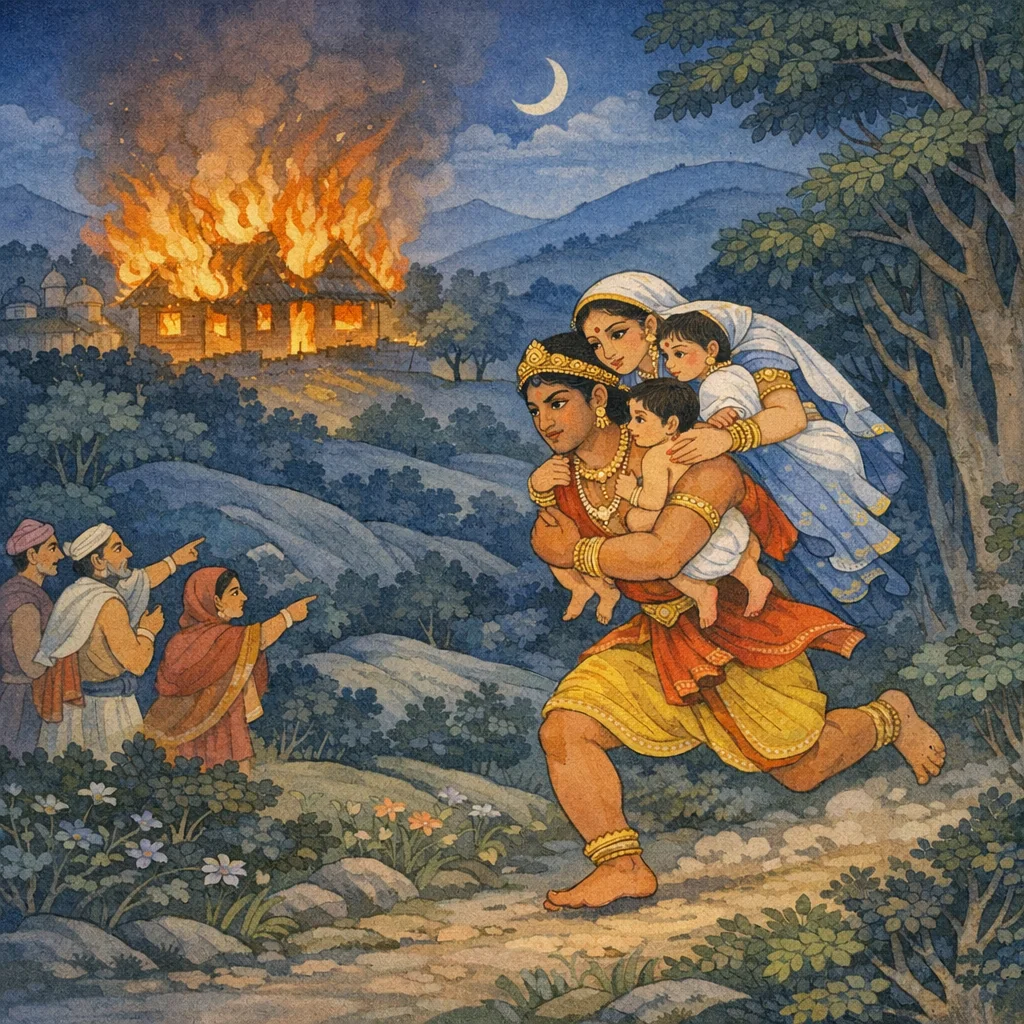
समन्ततो ददौ पश्चादग्निं तत्र निवेशने । ज्ञात्वा तु तद् गृहं सर्वमादीप्तं पाण्डुनन्दना:,इसके पश्चात् उन्होंने उस घरके चारों ओर आग लगा दी। जब वह सारा घर अग्निकी लपेटमें आ गया, तब यह जानकर शत्रुओंका दमन करनेवाले पाण्डव अपनी माताके साथ सुरंगमें घुस गये; फिर तो वहाँ अग्निकी भयंकर लपटें उठने लगीं, भीषण ताप फैल गया। घरको जलानेवाली उस आगका महान् चट-चट शब्द सुनायी देने लगा। इससे उस नगरका जनसमूह जाग उठा। उस घरको जलता देख पुरवासियोंके मुखपर दीनता छा गयी। वे व्याकुल होकर कहने लगे
Then, having gone around it, he set fire to the dwelling on all sides. When the sons of Pāṇḍu realized that the entire house had been engulfed in flames, they—intent on escaping their enemies’ plot—entered the tunnel together with their mother. Thereupon the blaze rose fiercely, heat spread everywhere, and the crackling roar of the fire consuming the house became audible, rousing the townspeople, who, seeing the house burning, were overcome with distress and began to cry out in agitation.
Verse 12
सुरड्भां विविशुस्तूर्ण मात्रा सार्थमरिंदमा: | ततः प्रताप: सुमहाञ्छब्दश्ैव विभावसो:,इसके पश्चात् उन्होंने उस घरके चारों ओर आग लगा दी। जब वह सारा घर अग्निकी लपेटमें आ गया, तब यह जानकर शत्रुओंका दमन करनेवाले पाण्डव अपनी माताके साथ सुरंगमें घुस गये; फिर तो वहाँ अग्निकी भयंकर लपटें उठने लगीं, भीषण ताप फैल गया। घरको जलानेवाली उस आगका महान् चट-चट शब्द सुनायी देने लगा। इससे उस नगरका जनसमूह जाग उठा। उस घरको जलता देख पुरवासियोंके मुखपर दीनता छा गयी। वे व्याकुल होकर कहने लगे
Vaiśaṃpāyana said: The foe-subduing Pāṇḍavas quickly entered the tunnel together with their mother. Thereupon the blaze grew exceedingly fierce, and the crackling roar of the fire became tremendous—signaling that the house had been fully seized by flames, as their escape plan took effect amid grave peril and calculated restraint.
Verse 13
प्रादुरासीत् तदा तेन बुबुधे स जनव्रज: । तदवेक्ष्य गृहं दीप्तमाहु: पौरा: कृशानना:,इसके पश्चात् उन्होंने उस घरके चारों ओर आग लगा दी। जब वह सारा घर अग्निकी लपेटमें आ गया, तब यह जानकर शत्रुओंका दमन करनेवाले पाण्डव अपनी माताके साथ सुरंगमें घुस गये; फिर तो वहाँ अग्निकी भयंकर लपटें उठने लगीं, भीषण ताप फैल गया। घरको जलानेवाली उस आगका महान् चट-चट शब्द सुनायी देने लगा। इससे उस नगरका जनसमूह जाग उठा। उस घरको जलता देख पुरवासियोंके मुखपर दीनता छा गयी। वे व्याकुल होकर कहने लगे
Then, because of that blaze, the fire flared up openly, and the townspeople were roused from sleep. Seeing the house burning brightly, the citizens—faces drawn with distress—cried out in anguish. The scene underscores the ethical horror of covert violence: an act meant to destroy hidden targets instead spreads fear and suffering through the wider community.
Verse 14
पौरा ऊचु. दुर्योधनप्रयुक्तेन पापेनाकृतबुद्धिना । गृहमात्मविनाशाय कारितं दाहितं च तत्,पुरवासी बोले--अहो! पुरोचनका अन्तःकरण अपने वशमें नहीं था। उस पापीने दुर्योधनकी आज्ञासे अपने ही विनाशके लिये इस घरको बनवाया और जला भी दिया! अहो! धिककार है, धुृतराष्ट्रकी बुद्धि बहुत बिगड़ गयी है, जिसने शुद्ध हृदयवाले पाण्डुपुत्रोंको शत्रुकी भाँति आगमें जला दिया
The townspeople said: “Urged on by Duryodhana, that sinful man of perverted judgment had this house built for his own destruction—and he has now burned it as well. Alas! Shame upon it: Dhṛtarāṣṭra’s understanding has become utterly corrupted, for he has caused the pure-hearted sons of Pāṇḍu to be burned in fire as though they were enemies.”
Verse 15
अहो धिग् धृतराष्ट्रस्थ बुद्धिनातिसमञ्जसा । यः शुचीन् पाण्डुदायादान् दाहयामास शत्रुवत्,पुरवासी बोले--अहो! पुरोचनका अन्तःकरण अपने वशमें नहीं था। उस पापीने दुर्योधनकी आज्ञासे अपने ही विनाशके लिये इस घरको बनवाया और जला भी दिया! अहो! धिककार है, धुृतराष्ट्रकी बुद्धि बहुत बिगड़ गयी है, जिसने शुद्ध हृदयवाले पाण्डुपुत्रोंको शत्रुकी भाँति आगमें जला दिया
Vaiśampāyana said: “Alas—shame upon that Dhṛtarāṣṭra-aligned counsel, so crooked and unsound! For it caused the pure-hearted heirs of Pāṇḍu to be burned like enemies.”
Verse 16
दिष्ट्या त्विदानीं पापात्मा दग्धो5यमतिदुर्मति: । अनागस: सुविश्वस्तान् यो ददाह नरोत्तमान्,सौभाग्यकी बात है कि यह अत्यन्त खोटी बुद्धिवाला पापात्मा पुरोचन भी इस समय दग्ध हो गया है, जिसने बिना किसी अपराधके अपने ऊपर पूर्ण विश्वास करनेवाले नरश्रेष्ठ पाण्डवोंको जला दिया है
By good fortune, this sinful, utterly wicked-minded man has now been burned. He is the one who set fire to the noble Pāṇḍavas—though they were innocent and had placed complete trust in him.
Verse 17
वैशम्पायन उवाच एवं ते विलपन्ति सम वारणावतका जना: । परिवार्य गृहं तच्च तस्थू रात्रौी समन््ततः,वैशम्पायनजी कहते हैं--जनमेजय! इस प्रकार वारणावतके लोग विलाप करने लगे। वे रातभर उस घरको चारों ओरसे घेरकर खड़े रहे
Vaiśampāyana said: “Thus the people of Vāraṇāvata lamented. Surrounding that house on all sides, they stood there through the night.”
Verse 18
पाण्डवाश्वापि ते सर्वे सह मात्रा सुदु:ःखिता: । बिलेन तेन निर्गत्य जम्मुर्दतमलक्षिता:,उधर समस्त पाण्डव भी अत्यन्त दुःखी हो अपनी माताके साथ सुरंगके मार्गसे निकलकर तुरंत ही दूर चले गये। उन्हें कोई भी देख न सका
Vaiśampāyana said: Then all those Pāṇḍavas, overwhelmed with grief, went out together with their mother through that tunnel and quickly departed far away, remaining unseen by anyone.
Verse 19
तेन निद्रोपरोधेन साध्वसेन च पाण्डवा: । न शेकु: सहसा गन्तुं सह मात्रा परंतपा:,नींद न ले सकनेके कारण आलस्य और भयसे युक्त परंतप पाण्डव अपनी माताके साथ जल्दी-जल्दी चल नहीं पाते थे
Because their sleep had been cut off, and because they were seized by anxiety and fear, the Pāṇḍavas—those scorcher of foes—were unable to move on quickly, even though they were together with their mother.
Verse 20
भीमसेनस्तु राजेन्द्र भीमवेगपराक्रम: । जगाम क्रातृनादाय सर्वान् मातरमेव च,राजेन्द्र! भयंकर वेग और पराक्रमवाले भीमसेन अपने सब भाइयों तथा माताको भी साथ लिये चल रहे थे। वे महान् बल और पराक्रमसे सम्पन्न थे। उन्होंने माताको तो कंधेपर चढ़ा लिया और नकुल-सहदेवको गोदमें उठा लिया तथा शेष दोनों भाइयोंको दोनों हाथोंसे पकड़कर उन्हें सहारा देते हुए चलने लगे
Vaiśampāyana said: “O king, Bhīmasena—terrible in speed and prowess—set out taking along all his brothers and his mother as well. Endowed with immense strength and valor, he lifted his mother onto his shoulder, took Nakula and Sahadeva into his arms, and, holding the remaining two brothers with both hands, supported them as he moved forward.”
Verse 21
स्कन्धमारोप्य जननीं यमावड्केन वीर्यवान् | पार्थो गृहीत्वा पाणिभ्यां भ्रातरौ सुमहाबल:,राजेन्द्र! भयंकर वेग और पराक्रमवाले भीमसेन अपने सब भाइयों तथा माताको भी साथ लिये चल रहे थे। वे महान् बल और पराक्रमसे सम्पन्न थे। उन्होंने माताको तो कंधेपर चढ़ा लिया और नकुल-सहदेवको गोदमें उठा लिया तथा शेष दोनों भाइयोंको दोनों हाथोंसे पकड़कर उन्हें सहारा देते हुए चलने लगे
Vaiśampāyana said: The mighty hero lifted his mother onto his shoulder. Carrying the twin sons of Yamā—Nakula and Sahadeva—in his arms, and holding the other two brothers by the hands, he pressed forward with formidable speed and strength, keeping the family together amid peril.
Verse 22
उरसा पादपान् भज्जन् महीं पद्भ्यां विदारयन् | स जगामाशु तेजस्वी वातरंहा वृकोदर:,तेजस्वी भीम वायुके समान वेगशाली थे। वे अपनी छातीके धक्केसे वृक्षोंकों तोड़ते और पैरोंकी ठोकरसे पृथ्वीको विदीर्ण करते हुए तीव्र गतिसे आगे बढ़े जा रहे थे
Vaiśampāyana said: Mighty Bhīma—Vṛkodara, swift as the wind—rushed forward at once. With the force of his chest he snapped trees, and with the удар of his feet he seemed to tear the earth itself, pressing on with fierce, unstoppable speed.
Verse 147
इति श्रीमहाभारते आदिपर्वणि जतुगृहपर्वणि जतुगृहदाहे सप्तचत्वारिंशदधिकशततमो<ध्याय:
Thus, in the Śrī Mahābhārata, within the Ādi Parva, in the section concerning the lac-house episode, concludes the one-hundred-and-forty-seventh chapter, describing the burning of the lac house.
Frequently Asked Questions
A household faces a coerced rotational obligation to surrender provisions and a person to preserve communal survival; the dilemma is whether compliance, substitution, or resistance best aligns with dharma when resistance invites broader retaliation.
The chapter models diagnostic ethics: before prescribing action, one must identify the root-cause structure of suffering (political failure, coercive power, and fear) and then evaluate what remedies are genuinely available within constraints.
No explicit phalaśruti appears in these verses; the passage functions as situational groundwork, establishing the ethical and civic context that motivates subsequent remedial action within the episode.