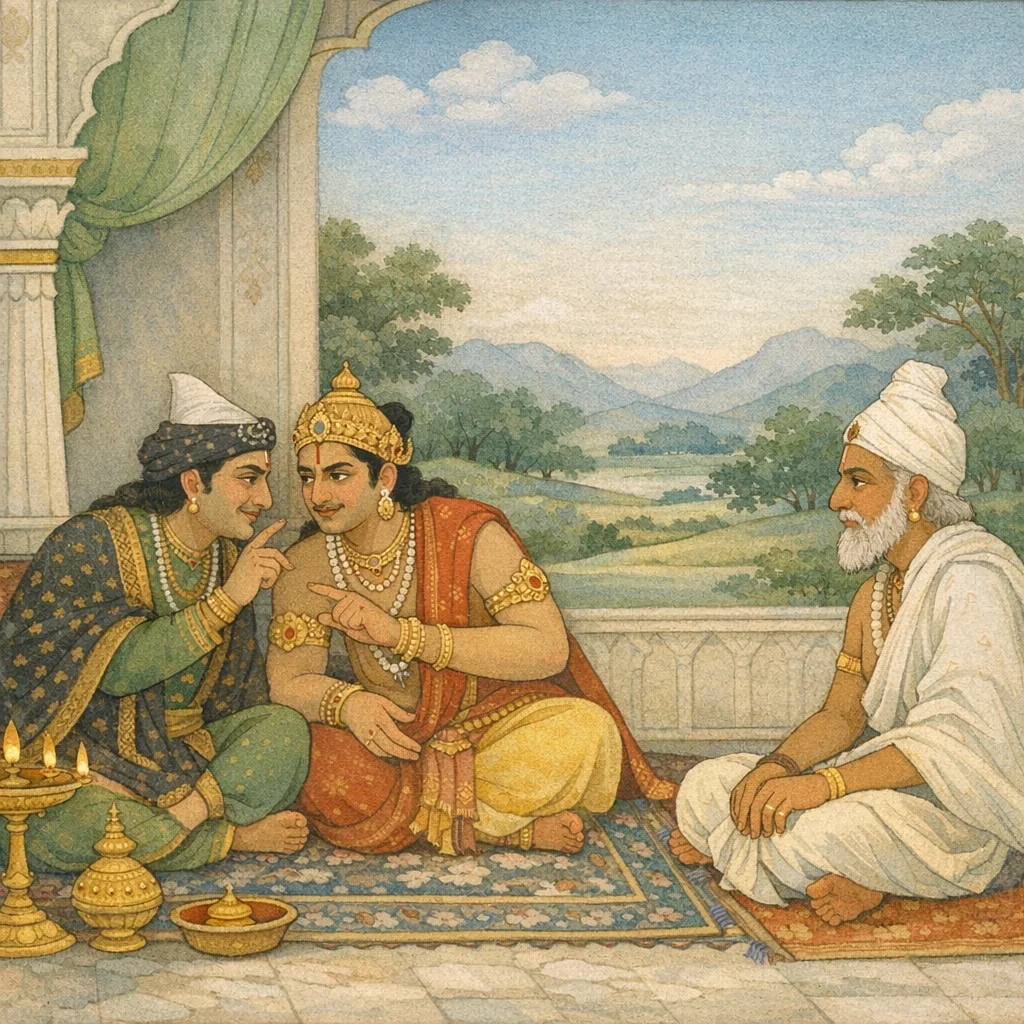
Adhyaya 141
Ādi-parva Adhyāya 141: Bhīma–Hiḍimba Confrontation and Protective Discourse
Upa-parva: Hiḍimba-vadha (Bhīma–Hiḍimba Saṃvāda and Forest Encounter Episode)
Vaiśaṃpāyana narrates Bhīmasena’s confrontation with the rākṣasa Hiḍimba. Seeing the aggressor enraged toward his sister Hiḍimbā, Bhīma responds with a controlled yet forceful ethical argument: the dispute should be directed toward him, not toward a woman, especially when the woman is not acting from autonomous intent but is described as compelled by Kāma (Anaṅga). Bhīma frames his stance as protective restraint and invites single combat, declaring intent to neutralize the threat and render the forest safe for human movement. Hiḍimba counters with intimidation and vows of retaliation, including threats against Bhīma and then others. The narrative shifts to action: Hiḍimba charges; Bhīma intercepts, seizes his arm, and drags him away to avoid waking his sleeping brothers. A prolonged struggle follows, likened to maddened elephants; trees and vines are broken in the melee. The commotion finally awakens the Pāṇḍavas, who, with their mother, observe Hiḍimbā standing before them as the conflict continues off to the side.
Chapter Arc: हस्तिनापुर के भीतर ‘त्रिवर्ग’—प्रभु-शक्ति, उत्साह-शक्ति और मन्त्र-शक्ति—की चर्चा के साथ राजनीति का कठोर यथार्थ उभरता है; उसी पृष्ठभूमि में शकुनि-दुर्योधन की गुप्त चालें पाण्डवों के विरुद्ध आकार लेने लगती हैं। → शकुनि और दुर्योधन धृतराष्ट्र से अनुमति लेकर कुन्ती और उसके पुत्रों को ‘दहने’ (जतुगृह-षड्यंत्र) की बुद्धि रचते हैं। विदुर, जो तत्त्वदर्शी और भाव-ज्ञाता हैं, उनके हाव-भाव से दुष्ट-मन की योजना भाँप लेते हैं और पाण्डव-हित में पलायन का उपाय मन में निश्चित करते हैं। → विदुर का अंतर्ज्ञान निर्णायक बनता है—वह संकेतों से समझ लेते हैं कि पाण्डवों के लिए राजधानी में रहना मृत्यु का निमंत्रण है; इसी क्षण ‘रक्षा’ बनाम ‘राज-आज्ञा’ का संघर्ष तीव्रतम हो उठता है। → धृतराष्ट्र तक समाचार पहुँचते हैं; शोक और औपचारिकताओं का वातावरण बनता है—प्रेतकार्य/श्राद्ध आदि कर्म बान्धवों सहित किए जाते हैं, जिनमें विदुर और भीष्म भी सम्मिलित दिखते हैं। नगरवासी पाण्डवों के गुणों का स्मरण कर सभाओं में उनकी प्रशंसा करते हैं—लोक-हृदय में पाण्डवों के प्रति स्नेह और विश्वास स्थिर रहता है। → कर्ण और शकुनि सहित दुर्योधन-पक्ष अनेक ‘अशभ्य’ उपायों से पाण्डव-वध की योजना आगे भी जारी रखते हैं—अगला पग कौन-सा होगा, यह अनिश्चित और भयावह है।
Shlokas
Verse 1
ऑपन-माजल बछ। जज: ३. तीन प्रकारकी शक्तियाँ ही यहाँ त्रिवर्ग कही गयी हैं। उनके नाम ये हैं--प्रभुशक्ति (ऐश्वर्यशक्ति), उत्साहशक्ति और मन्त्रशक्ति। दुर्ग आदिपर आक्रमण करके शत्रुकी ऐश्वर्यशक्तिका नाश करे। विश्वसनीय व्यक्तियोंद्वारा अपने उत्कर्षका वर्णन कराकर शत्रुको तेजोहीन बनाना, उसके उत्साह एवं साहसको घटा देना ही उत्साहशक्तिका नाश करना है। गुप्तचरोंद्वारा उनकी गुप्त मन्त्रणाको प्रकट कर देना ही मन्त्रशक्तिका नाश करना है। २. अमात्य, राष्ट्र, दुर्ग, कोष और सेना--ये पाँच प्रकृतियाँ ही पंचवर्ग हैं। 3. साम, दान, भेद, दण्ड, उदबन्धन, विषप्रयोग और आग लगाना--शत्रुको वशमें करने या दबानेके ये सात साधन ही सप्तवर्ग हैं। - इन बाधाओंको श्लोक ७० में स्पष्ट किया गया है। (जतुगृहपर्व) चत्वारिंशदाधिकशततमो< ध्याय: पाण्डवोंके प्रति ना अनुराग देखकर दुर्योधनकी न्ता वैशम्पायन उवाच ततः सुबलपुत्रस्तु राजा दुर्योधनश्व ह । दुःशासनश्न कर्णश्न दुष्ट मन्त्रममन्त्रयन्,वैशम्पायनजी कहते हैं--जनमेजय! तदनन्तर सुबलपुत्र शकुनि, राजा दुर्योधन दुःशासन और कर्णने (आपसमें) एक दुष्टतापूर्ण गुप्त सलाह की। उन्होंने कुरुनन्दन महाराज धुृतराष्ट्रसे आज्ञा लेकर पुत्रोंसहित कुन्तीकों आगमें जला डालनेका विचार किया
Vaiśampāyana said: Then Śakuni, son of Subala, along with King Duryodhana, and also Duḥśāsana and Karṇa, held a secret consultation of wicked intent. In the ethical frame of the epic, this marks a deliberate turn from dharma toward deceitful policy—planning harm through clandestine counsel rather than open, righteous conduct.
Verse 2
ते कौरव्यमनुज्ञाप्य धृतराष्ट्रं नराधिपम् । दहने तु सपुत्राया: कुन्त्या बुद्धिमकारयन्,वैशम्पायनजी कहते हैं--जनमेजय! तदनन्तर सुबलपुत्र शकुनि, राजा दुर्योधन दुःशासन और कर्णने (आपसमें) एक दुष्टतापूर्ण गुप्त सलाह की। उन्होंने कुरुनन्दन महाराज धुृतराष्ट्रसे आज्ञा लेकर पुत्रोंसहित कुन्तीकों आगमें जला डालनेका विचार किया
Vaiśampāyana said: Having obtained the assent of Dhṛtarāṣṭra, lord of men, those Kauravas set their minds upon a plan—to have Kuntī, together with her sons, burned in a fire. The verse underscores a deliberate, clandestine turn toward adharma: political permission is sought, but the intended act is morally ruinous and driven by envy and fear of rightful claim.
Verse 3
तेषामिज्धितभावज्ञो विदुरस्तत्त्वदर्शिवान् । आकारेण च त॑ मन्त्र बुबुधे दुष्टचेतसाम्,तत्वज्ञानी विदुर उनकी चेष्टाओंसे उनके मनका भाव समझ गये और उनकी आकृतिसे ही उन दुष्टोंकी गुप्त मन्त्रणाका भी उन्होंने पता लगा लिया
Vaiśampāyana said: Vidura, keen in discerning the intentions that had arisen in them and endowed with true insight, understood—merely from their outward bearing—the secret counsel of those wicked-minded men. Thus, by reading conduct and expression, he perceived the hidden plot forming beneath their words.
Verse 4
ततो विदिततवेद्यात्मा पाण्डवानां हिते रत: । पलायने मतिं चक्रे कुन्त्या: पुत्र: सहानघ:,विदुरजीने मन-ही-मन जाननेयोग्य सभी बातें जान लीं। वे सदा पाण्डवोंके हितमें संलग्न रहते थे, अतः निष्पाप विदुरने यही निश्चय किया कि कुन्ती अपने पुत्रोंके साथ यहाँसे भाग जाय
Then Vidura, having inwardly grasped all that was to be known and ever devoted to the welfare of the Pāṇḍavas, set his mind upon flight. Thus the blameless Vidura resolved that Kuntī should escape from there together with her sons.
Verse 5
ततो वातसहां नावं यन्त्रयुक्तां पताकिनीम् । ऊर्मिक्षमां दृढां कृत्वा कुन्तीमिदमुवाच ह,उन्होंने एक सुदृढ़ नाव बनवायी, जिसे चलानेके लिये उसमें यन्त्र- लगाया गया था। वह वायुके वेग और लहरोंके थपेड़ोंका सामना करनेमें समर्थ थी। उसमें झंडियाँ और पताकाएँ फहरा रही थीं। उस नावको तैयार कराके विदुरजीने कुन्तीसे कहा--
Then he had a sturdy boat made—fitted with mechanisms for its operation, adorned with flags, able to withstand the force of the wind and the удар of the waves. When the boat was ready, Vidura addressed Kuntī with these words—
Verse 6
एष जात: कुलस्यास्य कीर्तिवंशप्रणाशन: । धृतराष्ट्र: परीतात्मा धर्म त्यजति शाश्वतम्,“देवि! राजा धृतराष्ट्र इस कुरुकुलकी कीर्ति एवं वंशपरम्पराका नाश करनेवाले पैदा हुए हैं। इनका चित्त पुत्रोंके प्रति ममतासे व्याप्त हुआ है, इसलिये ये सनातन धर्मका त्याग कर रहे हैं। शुभे! जलके मार्गमें यह नाव तैयार है, जो हवा और लहरोंके वेगको भलीभाँति सह सकती है। इसीके द्वारा (कहीं अन्यत्र जाकर) तुम पुत्रोंसहित मौतकी फाँसीसे छूट सकोगी”
Vaiśampāyana said: “This Dhṛtarāṣṭra has been born as one who will bring about the ruin of this lineage’s fame and hereditary line. His inner being is wholly possessed by attachment to his sons; therefore he is abandoning the eternal dharma.”
Verse 7
इयं वारिपथे युक्ता तरज्भरपवनक्षमा । नौर्यया मृत्युपाशात् त्वं सपुत्रा मोक्ष्यसे शुभे,“देवि! राजा धृतराष्ट्र इस कुरुकुलकी कीर्ति एवं वंशपरम्पराका नाश करनेवाले पैदा हुए हैं। इनका चित्त पुत्रोंके प्रति ममतासे व्याप्त हुआ है, इसलिये ये सनातन धर्मका त्याग कर रहे हैं। शुभे! जलके मार्गमें यह नाव तैयार है, जो हवा और लहरोंके वेगको भलीभाँति सह सकती है। इसीके द्वारा (कहीं अन्यत्र जाकर) तुम पुत्रोंसहित मौतकी फाँसीसे छूट सकोगी”
Vaiśampāyana said: “O auspicious lady, here is a boat made ready for the waterway, capable of enduring the force of wind and the burden of waves. By means of this boat you, together with your sons, will be freed from the noose of death.”
Verse 8
तच्छुत्वा व्यथिता कुन्ती पुत्रै: सह यशस्विनी । नावमारुहा गड़ायां प्रययौ भरतर्षभ,भरतश्रेष्ठ यह बात सुनकर यशस्विनी कुन्तीको बड़ी व्यथा हुई। वे पुत्रोंसहित (वारणावतके लाक्षागृहसे बचकर) नावपर जा चढ़ीं और गंगाजीकी धारापर यात्रा करने लगीं
Vaiśampāyana said: Hearing this, the illustrious Kuntī was deeply distressed. Taking her sons with her, she boarded a boat and set out along the current of the Gaṅgā—an urgent flight to preserve life and uphold her duty as their protector.
Verse 9
ततो विदुरवाक्येन नावं विक्षिप्य पाण्डवा: । धनं चादाय तैर्दत्तमरिष्ट प्राविशन् वनम्,तदनन्तर विदुरजीके कहनेसे पाण्डवोंने नावको वहीं डुबा दिया और उन कौरवोंके दिये हुए धनको लेकर विघ्न-बाधाओंसे रहित वनमें प्रवेश किया
Then, acting on Vidura’s counsel, the Pāṇḍavas disposed of the boat and, taking the wealth that had been given to them, entered the forest unharmed—moving forward with prudent secrecy and without inviting further obstacles.
Verse 10
निषादी पज्चपुत्रा तु जातुषे तत्र वेश्मनि । कारणाभ्यागता दग्धा सह पुत्रैरनागसा,वारणावतके उस लाक्षागृहमें निषाद जातिकी एक स्त्री किसी कारणवश अपने पाँच पुत्रोंके साथ आकर ठहर गयी थी। वह बेचारी निरपराध होनेपर भी उसमें पुत्रोंसहित जलकर भस्म हो गयी
In that lac-house at Vāraṇāvata, a woman of the Niṣāda people had come there for some reason and stayed with her five sons. Though innocent, she was burned there along with her children and was reduced to ashes.
Verse 11
स च म्लेच्छाधम: पापो दग्धस्तत्र पुरोचन: । वज्चिताश्न दुरात्मानो धार्तराष्ट्रा: सहानुगा:,म्लेच्छोंमें (भी) नीच पापी पुरोचन भी उसी घरमें जल मरा और धृतराष्ट्रके दुरात्मा पुत्र अपने सेवकोंसहित धोखा खा गये
Vaiśampāyana said: There, the vile and sinful Purocana—base among the mlecchas—was burned to death in that very house. And the wicked sons of Dhṛtarāṣṭra, along with their followers, were deceived—reaping the consequence of their own treachery.
Verse 12
अविज्ञाता महात्मानो जनानामक्षतास्तथा । जनन्या सह कौन्तेया मुक्ता विदुरमन्त्रिता:,विदुरकी सलाहके अनुसार काम करनेवाले महात्मा कुन्तीपुत्र अपनी माताके साथ मृत्युसे बच गये। उन्हें किसी प्रकारकी क्षति नहीं पहुँची। साधारण लोगोंको उनके जीवित रहनेकी बात ज्ञात न हो सकी
Vaiśampāyana said: Acting on Vidura’s counsel, the noble sons of Kuntī, together with their mother, escaped death. They remained unharmed, and their survival was not known to the common people—thus their safety and future course could be secured without interference.
Verse 13
ततस्तस्मिन् पुरे लोका नगरे वारणावते । दृष्टवा जतुगृहं दग्धमन्वशोचन्त दु:ःखिता:,तदनन्तर वारणावत नगरमें वहाँके लोगोंने लाक्षागृहको दग्ध हुआ देख (अत्यन्त) दुःखी हो पाण्डवोंके लिये (बड़ा) शोक किया
Vaiśampāyana said: Then, in that city—at Vāraṇāvata—the townspeople, seeing the house of lac burned down, were overwhelmed with grief and lamented deeply for the Pāṇḍavas.
Verse 14
राज्ञे च प्रेषयामासुर्य थावृत्तं निवेदितुम् । संवृत्तस्ते महान् काम: पाण्डवान् दग्धवानसि,तथा राजा धृतराष्ट्रके पास यथावत् समाचार कहनेके लिये किसीको भेजकर कहलाया --“कुरुनन्दन! तुम्हारा महान् मनोरथ पूरा हो गया। पाण्डवोंको तुमने जला दिया। अब तुम कृतार्थ हो जाओ और पुत्रोंके साथ राज्य भोगो।” यह सुनकर पुत्रसहित धृतराष्ट्र शोकमग्न हो गये
They also sent a messenger to the king to report the events exactly as they had occurred: “O descendant of Kuru, your great desire has been fulfilled—you have burned the Pāṇḍavas. Now consider your purpose achieved and enjoy the kingdom together with your sons.” Hearing this message, Dhṛtarāṣṭra, along with his sons, was overwhelmed by grief.
Verse 15
सकामो भव कौरव्य भुड्क्ष्व राज्यं सपुत्रक: । तच्छुत्वा धृतराष्ट्रस्तु सह पुत्रेण शोचयन्,तथा राजा धृतराष्ट्रके पास यथावत् समाचार कहनेके लिये किसीको भेजकर कहलाया --“कुरुनन्दन! तुम्हारा महान् मनोरथ पूरा हो गया। पाण्डवोंको तुमने जला दिया। अब तुम कृतार्थ हो जाओ और पुत्रोंके साथ राज्य भोगो।” यह सुनकर पुत्रसहित धृतराष्ट्र शोकमग्न हो गये
Vaiśampāyana said: “O Kaurava prince, your desire is fulfilled; enjoy the kingdom together with your sons.” Hearing this message, Dhṛtarāṣṭra—along with his son—fell into grief.
Verse 16
प्रेतकार्याणि च तथा चकार सह बान्धवै: । पाण्डवानां तथा क्षत्ता भीष्मश्न कुरुसत्तम:,उन्होंने, विदुरजीने तथा कुरुकुलशिरोमणि भीष्मजीने भी भाई-बन्धुओंके साथ (पुत्तल-विधिसे) पाण्डवोंके प्रेतकार्य (दाह और श्राद्ध आदि) सम्पन्न किये
Vaiśampāyana said: In the same manner, the funerary rites were duly performed. Vidura, the chamberlain, and Bhīṣma—the foremost of the Kurus—together with the kinsmen, carried out for the Pāṇḍavas the prescribed rites for the departed, including cremation and the subsequent śrāddha offerings.
Verse 17
जनमेजय उवाच पुनर्विस्तरश: श्रोतुमिच्छामि द्विजसत्तम । दाहं जतुगृहस्यैव पाण्डवानां च मोक्षणम्,जनमेजय बोले--विप्रवर! मैं लाक्षागृहके जलने और पाण्डवोंके उससे बच जानेका वृत्तान्त पुनः विस्तारसे सुनना चाहता हूँ
Janamejaya said: “O best of Brahmins, I wish to hear again, in fuller detail, the account of the burning of the lac-house and of how the Pāṇḍavas escaped from it.”
Verse 18
सुनृशंसमिदं कर्म तेषां क्रूरोपसंहितम् । कीर्तयस्व यथावृत्तं परं कौतूहलं मम,क्रूर कणिकके उपदेशसे किया हुआ कौरवोंका यह कर्म अत्यन्त निर्दयतापूर्ण था। आप उसका ठीक-ठीक वर्णन कीजिये। मुझे यह सब सुननेके लिये बड़ी उत्कण्ठा हो रही है
Janamejaya said: “This deed of theirs was utterly pitiless, framed in cruelty. Tell it exactly as it happened; my curiosity to hear the full account is intense.”
Verse 19
वैशम्पायन उवाच शृणु विस्तरशो राजन् वदतो मे परंतप । दाहं जतुगृहस्यैतत् पाण्डवानां च मोक्षणम्,वैशम्पायनजीने कहा--शत्रुओंको संताप देनेवाले नरेश! मैं लाक्षागृहके जलने और पाण्डवोंके उससे बच जानेका वृत्तान्त विस्तारपूर्वक कहता हूँ, सुनो
Vaiśampāyana said: O King, scorcher of foes, listen as I recount in detail—the burning of the lac-house and the Pāṇḍavas’ deliverance from it.
Verse 20
प्राणाधिकं भीमसेनं कृतविद्यं धनंजयम् । दुर्योधनो लक्षयित्वा पर्यतप्यत दुर्मना:,भीमसेनको सबसे अधिक बलवान् और अर्जुनको अस्त्र-विद्यामें सबसे श्रेष्ठ देखकर दुर्योधन सदा संतप्त होता रहता था। उसके मनमें बड़ा दुःख था
Vaiśampāyana said: Seeing Bhīmasena as surpassing others in sheer life-force and strength, and Dhanañjaya (Arjuna) as accomplished and foremost in the science of weapons, Duryodhana, his mind turned dark, was continually tormented within—consumed by grief and envy at their excellence.
Verse 21
तब सूर्यपुत्र कर्ण और सुबलकुमार शकुनि आदि अनेक उपायोंसे पाण्डवोंको मार डालनेकी इच्छा करने लगे
Then Karṇa, the son of the Sun, and Śakuni, the son of Subala, along with others, began to devise many stratagems, driven by the desire to kill the Pāṇḍavas.
Verse 22
पाण्डवा अपि तत् सर्व प्रतिचक्रुर्यथागतम् । उद्धावनमकुर्वन्तो विदुरस्यथ मते स्थिता:,पाण्डवोंने भी जब जैसा संकट आया, सबका निवारण किया और विदुरकी सलाह मानकर वे कौरवोंके षड़यन्त्रका कभी भंडाफोड़ नहीं करते थे
Vaiśampāyana said: The Pāṇḍavas too met every situation as it came, countering each difficulty appropriately. Yet, following Vidura’s counsel, they did not raise an alarm or expose the Kauravas’ schemes—choosing restraint and prudence over open confrontation.
Verse 23
गुणै: समुदितान् दृष्टवा पौरा: पाण्डुसुतांस्तदा । कथयांचक्रिरे तेषां गुणान् संसत्सु भारत,भारत! उन दिनों पाण्डवोंको सर्वगुणसम्पन्न देख नगरके निवासी भरी सभाओंमें उनके सदगुणोंकी प्रशंसा करते थे
Seeing the sons of Pāṇḍu endowed with many virtues, the townspeople at that time began to speak of their qualities in public assemblies, O Bhārata—praising their excellence before gathered society.
Verse 24
राज्यप्राप्तिं च सम्प्राप्तं ज्येष्ठं पाण्डुसुतं तदा । कथयन्ति सम सम्भूय चत्वरेषु सभासु च,वे जहाँ कहीं चौराहोंपर और सभाओंमें इकट्ठे होते वहीं पाण्डुके ज्येष्ठ पुत्र युधिष्ठिरको राज्यप्राप्तिके योग्य बताते थे
And wherever they gathered—at crossroads and in assembly halls—they would speak together, declaring that Yudhiṣṭhira, Pāṇḍu’s eldest son, was fit to attain the kingdom.
Verse 25
प्रज्ञाचक्षुरचक्षुष्टवाद् धृतराष्ट्रो जनेश्वर: । राज्यं न प्राप्तवान् पूर्व स कथं नृपतिर्भवेत्,वे कहते, 'प्रज्ञाचक्षु महाराज धृतराष्ट्र नेत्रहीन होनेके कारण जब पहले ही राज्य न पा सके, तब (अब) वे कैसे राजा हो सकते हैं
They said: “Dhṛtarāṣṭra, though a lord among men, is ‘one whose sight is wisdom’ because he is physically blind. Since earlier he did not obtain the kingdom on account of that blindness, how could he now become king?”
Verse 26
तथा शांतनवो भीष्म: सत्यसंधो महाव्रत: । प्रत्याख्याय पुरा राज्यं नस जातु ग्रहीष्यति,“महान् व्रतका पालन करनेवाले शंतनुनन्दन भीष्म तो सत्यप्रतिज्ञ हैं। वे पहले ही राज्य ठुकरा चुके हैं, अत: अब उसे कदापि ग्रहण न करेंगे
“So too Bhīṣma, the son of Śantanu—steadfast in truth and firm in his great vow—having long ago renounced the kingship, will never, under any circumstance, accept it again.”
Verse 27
ते वयं पाण्डवज्येष्ठं तरुणं वृद्धशीलिनम् । अभिषिज्चाम साध्वद्य सत्यकारुण्यवेदिनम्,'पाण्डवोंके बड़े भाई युधिष्ठिर यद्यपि अभी तरुण हैं, तो भी उनका शील-स्वभाव वृद्धोंके समान है। वे सत्यवादी, दयालु और वेदवेत्ता हैं; अतः अब हमलोग उन्हींका विधिपूर्वक राज्याभिषेक करें
“Let us today duly consecrate the eldest of the Pāṇḍavas—though young in years, he bears the conduct and steadiness of the aged. He is devoted to truth, knows compassion, and is learned in the Veda; therefore, let us perform his royal anointing according to proper rite.”
Verse 28
स हि भीष्म शांतनवं धृतराष्ट्रं च धर्मवित् । सपुत्रं विविधैभोंगिर्योजयिष्यति पूजयन्,“महाराज युधिष्ठिर बड़े धर्मज्ञ हैं। वे शंतनुनन्दन भीष्म तथा पुत्रोंसहित धृतराष्ट्रका आदर करते हुए उन्हें नाना प्रकारके भोगोंसे सम्पन्न रखेंगे”
Vaiśampāyana said: “For Yudhiṣṭhira is truly a knower of dharma. Honouring Bhīṣma, the son of Śantanu, and Dhṛtarāṣṭra together with his sons, he will ensure that they are provided for with many kinds of comforts and enjoyments.”
Verse 29
तेषां दुर्योधन: श्रुत्वा तानि वाक्यानि जल्पताम् । युधिष्ठिरानुरक्तानां पर्यतप्यत दुर्मति:,युधिष्ठिरमें अनुरक्त हो उपर्युक्त उदगार प्रकट करनेवाले लोगोंकी बातें सुनकर खोटी बुद्धिवाला दुर्योधन भीतर-ही-भीतर जलने लगा
Hearing those words being spoken by people devoted to Yudhiṣṭhira, the ill-minded Duryodhana was inwardly scorched with jealousy and distress.
Verse 30
स तप्यमानो दुष्टात्मा तेषां वाचो न चक्षमे । ईर्ष्यया चापि संतप्तो धृतराष्ट्रमुपागमत्,इस प्रकार संतप्त हुआ वह दुष्टात्मा लोगोंकी बातोंको सहन न कर सका। वह ईर्ष्याकी आगसे जलता हुआ धृतराष्ट्रके पास आया
Tormented within, that wicked-minded man could not endure their words. Burning with jealousy, he went to Dhṛtarāṣṭra.
Verse 31
ततो विरहितं दृष्टवा पितरं प्रतिपूज्य सः । पौरानुरागसंतप्त: पश्चादिदमभाषत,वहाँ अपने पिताको अकेला पाकर पुरवासियोंके युधिष्ठिरविषयक अनुरागसे दुःखी हुए दुर्योधनने पहले पिताके प्रति आदर प्रदर्शित किया। तत्पश्चात् इस प्रकार कहा
Then, seeing his father alone, he first paid him due respect. Distressed by the townspeople’s growing affection for Yudhiṣṭhira, Duryodhana thereafter spoke as follows.
Verse 32
दुर्योधन उवाच श्रुता मे जल्पतां तात पौराणामशिवा गिर: । त्वामनादृत्य भीष्म च पतिमिच्छन्ति पाण्डवम्,दुर्योधन बोला--'पिताजी! मैंने परस्पर वार्तालाप करते हुए पुरवासियोंके मुखसे (बड़ी) अशुभ बातें सुनी हैं। वे आपका और भीष्मजीका अनादर करके पाण्डुनन्दन युधिष्ठिरको राजा बनाना चाहते हैं
Duryodhana said: “Father, I have heard the townspeople, as they talk among themselves, uttering ominous words. Disregarding you and Bhīṣma, they wish to have the Pāṇḍava (Yudhiṣṭhira) as their lord and king.”
Verse 33
मतमेतच्च भीष्मस्य न स राज्यं बुभुक्षति । अस्माकं तु परां पीडां चिकीर्षन्ति पुरे जना:,भीष्मजी तो इस बातको मान लेंगे; क्योंकि वे स्वयं राज्य भोगना नहीं चाहते। परंतु नगरके लोग हमारे लिये बहुत बड़े कष्टका आयोजन करना चाहते हैं
Duryodhana said: “This, indeed, is Bhīṣma’s view—and he will accept it, for he himself has no desire to enjoy kingship. But the people of the city are intent on bringing great distress upon us.”
Verse 34
पितृतः प्राप्तवान् राज्यं पाण्डुरात्मगुणै: पुरा । त्वमन्धगुणसंयोगात् प्राप्तं राज्यं न लब्धवान्,पाण्डुने अपने सदगुणोंके कारण पितासे राज्य प्राप्त कर लिया और आप अंधे होनेके कारण अधिकारप्राप्त राज्यको भी नहीं पा सके
Duryodhana said: “Formerly, Pāṇḍu obtained the kingdom from his father by virtue of his own excellence. But you, because of the condition of blindness that has attached itself to you, did not obtain the kingdom even though it was rightfully yours.”
Verse 35
स एष पाण्डोर्दायाद्य॑ यदि प्राप्रोति पाण्डव: । तस्य पुत्रो ध्रुवं प्राप्तस्तस्य तस्यापि चापर:,यदि ये पाण्डुकुमार युधिष्छिर पाण्डुके राज्यको, जिसका उत्तराधिकारी पुत्र ही होता है, प्राप्त कर लेते हैं तो निश्चय ही उनके बाद उनका पुत्र ही इस राज्यका अधिकारी होगा और उसके बाद पुनः उसीकी पुत्रपरम्परामें दूसरे-दूसरे लोग इसके अधिकारी होते जायूँगे
Duryodhana said: “If this Pāṇḍava—Pāṇḍu’s rightful heir—should obtain the kingdom, then surely his son will inherit it after him; and after that, yet another in that same line. Thus, the sovereignty will pass on through their successive sons, generation after generation.”
Verse 36
22 तट 50 ाक० 0 का] ३०९! 2458 450)) ८ पके 6 8 0 20003 न ते वयं राजवंशेन हीना: सह सुतैरपि । अवज्ञाता भविष्यामो लोकस्य जगतीपते,महाराज! ऐसी दशामें हमलोग अपने पुत्रोंसहित राजपरम्परासे वंचित होनेके कारण सब लोगोंकी अव-हेलनाके पात्र बन जायँगे
O great king, lord of the earth, if we are deprived of the royal lineage and succession, then we—together with our sons—will become objects of public contempt.
Verse 37
सततं निरयं प्राप्ता: परपिण्डोपजीविन: । न भवेम यथा राजंस्तथा नीतिर्विधीयताम्,राजन! आप कोई ऐसी नीति काममें लाइये, जिससे हमें दूसरोंके दिये हुए अन्नसे गुजारा करके सदा नरकतुल्य कष्ट न भोगना पड़े
Duryodhana said: “Those who live on another’s portion are continually consigned to a hell-like condition. O King, let a policy be devised so that we may not have to subsist on food given by others and thus endure suffering as though in hell.”
Verse 38
यदि त्वं हि पुरा राजन्निदं राज्यमवाप्तवान् | ध्रुवं प्राप्स्याम च वयं राज्यमप्यवशे जने,राजन्! यदि पहले ही आपने यह राज्य पा लिया होता तो आज हम अवश्य ही इसे प्राप्त कर लेते; फिर तो लोगोंका कोई वश नहीं चलता
Duryodhana said: “O King, if you had obtained this kingdom earlier, then surely we too would have secured the kingdom today. In that case, O King, the people would not have been beyond our control.”
Verse 139
इस प्रकार श्रीमहाभारत आदिपव॑के अन्तर्गत सम्भवपर्वमें काणिकवाक्यविषयक एक यौ उनन््तालीसवाँ अध्याय पूरा हुआ
Thus ends the forty-ninth chapter (one less than fifty) in the Sambhava Parva, within the Ādi Parva of the Śrī Mahābhārata, dealing with Kāṇika’s counsel.
Verse 140
इति श्रीमहाभारते आदिपर्वणि जतुगृहपर्वणि दुर्योधनेष्यायां चत्वारिंशदधिकशततमो< ध्याय:,इस प्रकार श्रीमह्याभारत आदिपर्वके अन्तर्गत जदुय॒ृहपर्वमें दुर्योधनकी ईष्याविषयक एक सौ चालीसवाँ अध्याय पूरा हुआ
Thus ends, in the Śrī Mahābhārata, within the Ādi Parva, the section concerning the Lac House (Jatugṛha), the one-hundred-and-fortieth chapter, dealing with Duryodhana’s jealousy.
Verse 231
ततो वैकर्तन: कर्ण: शकुनिश्चापि सौबल: । अनेकैरशभ्युपायैस्ते जिघांसन्ति सम पाण्डवान्
Then Karṇa, the son of the charioteer (Vaikartana), and Śakuni of the Saubala line, resorting to many base and improper stratagems, kept seeking to kill the Pāṇḍavas.
Frequently Asked Questions
The dilemma is how to respond to a predatory threat while maintaining restraint: Bhīma insists violence be directed toward the male aggressor and not toward Hiḍimbā, emphasizing non-harm to a woman amid conflict and prioritizing protection of dependents.
Force is portrayed as legitimate when governed by duty and discrimination (viveka): protective action should minimize unjust targets, control escalation, and subordinate personal anger to the safeguarding of others.
No explicit phalaśruti appears in this passage. Its meta-function is narrative: it exemplifies dharma-in-action (protective restraint plus decisive response) and advances the forest-episode arc by transitioning from verbal reasoning to controlled engagement.