Adhyaya 14
आस्तीककथाप्रारम्भः — Beginning of the Āstīka Narrative (Kadrū–Vinatā, Aruṇa and Garuḍa Origins)
Upa-parva: Āstīkopākhyāna (The Episode of Āstīka) — within Ādi Parva
Śaunaka requests that Sauti recount the Āstīka narrative in fuller detail, praising the clarity and sweetness of his diction and asking him to transmit what he heard from his father. Sauti begins by describing an ancient divine-age account: the sisters Kadrū and Vinatā, daughters in Prajāpati’s line, become wives of Kaśyapa and receive boons. Kadrū requests a thousand equally radiant nāga sons; Vinatā requests two sons surpassing Kadrū’s in strength and splendor. After long gestation, Kadrū produces many eggs from which nāgas emerge after five hundred years, while Vinatā’s two eggs do not yield visible offspring. Motivated by desire for a son and social comparison, Vinatā breaks one egg prematurely and finds Aruṇa, formed only in the upper half. Aruṇa, angered by the premature act, curses Vinatā to become a servant for five hundred years to the rival with whom she competes, yet prophesies that her later-born son will free her—provided she does not similarly damage the second egg. Aruṇa then becomes associated with the dawn (seen at daybreak). In due time Garuḍa is born, characterized as the destroyer of serpents, and immediately ascends into the sky, seeking the food ordained for him by the Creator.
Chapter Arc: यायावर-वृत्ति में विचरते महातपा जरत्कारु पितरों की आज्ञा स्मरण कर वन में कन्या-भिक्षा के लिए पुकारते हैं—पर शर्त है: पत्नी ‘सनाम्नी’ हो, अर्थात् नाम में भी ‘जरत्कारु’ ही हो। → पितृऋण और तपोव्रत के बीच उनका कठोर संकल्प टकराता है: विवाह करना है, पर केवल उसी स्थिति में जो उनके नियम को भंग न करे। यह शर्त दुर्लभ है; पुकार तीन बार धीमे-धीमे गूँजती है, मानो नियति की परीक्षा हो। → नागराज वासुकि स्वयं अपनी बहिन को लेकर उपस्थित होते हैं। जरत्कारु सीधे पूछते हैं—‘तेरी बहिन का नाम क्या है?’ और वासुकि उत्तर देते हैं: ‘जरत्कारो जरत्कारुः—यह मेरी अनुजा स्वसा है; इसे पत्नी-रूप में स्वीकार कीजिए।’ → वासुकि विधिपूर्वक कन्या का दान करते हैं और जरत्कारु वैदिक विधि से उसे पत्नी रूप में ग्रहण करते हैं—पितरों की आज्ञा पूरी होने का मार्ग खुलता है और नाग-वंश के उद्धार की आशा बँधती है। → विवाह तो हुआ, पर तपस्वी पति की कठोर शर्तों और भविष्य में उत्पन्न होने वाले संतान-धर्म (आस्तीक) की भूमिका अभी शेष है।
Shlokas
Verse 1
नक्शा न () आज अनन- ३. यायावरका अर्थ है सदा विचरनेवाला मुनि। मुनिवृत्तिसे रहते हुए सदा इधर-उधर घूमते रहनेवाले गृहस्थ ब्राह्मणोंक एक समूहविशेषकी यायावर संज्ञा है। ये लोग एक गाँवमें एक रातसे अधिक नहीं ठहरते और पक्षमें एक बार अन्निहोत्र करते हैं। पक्षहोम सम्प्रदायकी प्रवृत्ति इन्हींसे हुई है। इनके विषयमें भारद्वाजका वचन इस प्रकार मिलता है-- यायावरा नाम ब्राह्मणा आसंस्ते अर्धमासादग्निहोत्रमजुह्नन् । यायावरलोग घूमते-घूमते जहाँ संध्या हो जाती है वहीं ठहर जाते हैं। २. यहाँ भूलोक ही गड्ढा है। स्वर्गवासी पितरोंको जो नीचे गिरनेका भय लगा रहता है उसीको सूचित करनेके लिये यह कहा गया है कि उनके पैर ऊपर थे और सिर नीचे। काल ही चूहा है और वंशपरम्परा ही वीरणस्तम्ब (खस नामक तिनकोंका समुदाय) है। उस वंशमें केवल जरत्कारु बच गये थे और अन्य सब पुरुष कालके अधीन हो चुके थे। यही व्यक्त करनेके लिये चूहेके द्वारा तिनकोंके समुदायको सब ओरसे खाया हुआ बताया गया है। जरत्कारुके विवाह न करनेसे उस वंशका वह शेष अंश भी नष्ट होना चाहता था। इसीलिये पितर व्याकुल थे और जरत्कारुको इसका बोध करानेके लिये उन्होंने इस प्रकार दर्शन दिया था। चतुर्दशो 5 ध्याय: जरत्कारुद्वारा वासुकिकी बहिनका पाणिग्रहण सौतिरुवाच ततो निवेशाय तदा स वि्र: संशितव्रत: । महीं चचार दारार्थी न च दारानविन्दत,उग्रश्रवाजी कहते हैं--तदनन्तर वे कठोर व्रतका पालन करनेवाले ब्राह्मण भार्याकी प्राप्तिके लिये इच्छुक होकर पृथ्वीपर सब ओर विचरने लगे; किंतु उन्हें पत्नीकी उपलब्धि नहीं हुई
Sauti said: Thereafter, that brāhmaṇa—steadfast in his austere vows—wandered over the earth seeking a wife, yet he did not obtain a spouse. The verse underscores the tension between ascetic restraint and the dharmic necessity of household life for sustaining lineage and fulfilling obligations to ancestors.
Verse 2
स कदाचिद् वन गत्वा विप्र: पितृवच: स्मरन् । चुक्रोश कन्याभिक्षार्थी तिस्रो वाच: शनैरिव,एक दिन किसी वनमें जाकर विप्रवर जरत्कारुने पितरोंक वचनका स्मरण करके कन्याकी भिक्षाके लिये तीन बार धीरे-धीरे पुकार लगायी--“कोई भिक्षारूपमें कन्या दे जाय”
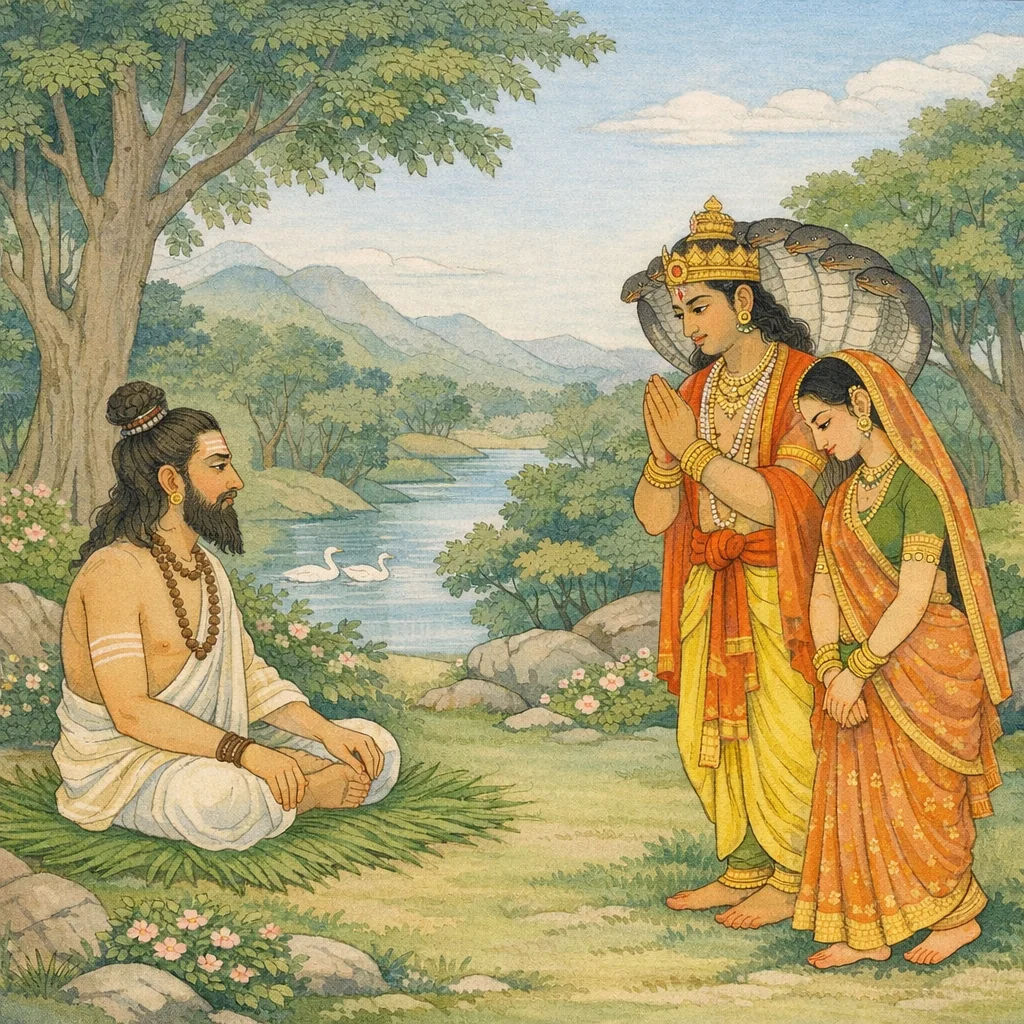
Once, the brahmin Jaratkāru went into a forest. Remembering the command of his forefathers, and seeking a maiden as alms for marriage, he called out softly three times, asking whether anyone would give a girl in charity. The episode frames marriage not as personal indulgence but as a duty undertaken to honor ancestral obligation and sustain the lineage.
Verse 3
त॑ वासुकि: प्रत्यगृह्नादुद्यम्य भगिनीं तदा । नसतां प्रतिजग्राह न सनाम्नीति चिन्तयन्,इसी समय नागराज वासुकि अपनी बहिनको लेकर मुनिकी सेवामें उपस्थित हो गये और बोले, “यह भिक्षा ग्रहण कीजिये।” किंतु उन्होंने यह सोचकर कि शायद यह मेरे-जैसे नामवाली न हो, उसे तत्काल ग्रहण नहीं किया
Śaunaka said: Then Vāsuki, the lord of the Nāgas, lifted up his sister and brought her forward as an offering of service. He urged the sage to accept her; yet the sage did not immediately receive the gift, reflecting with caution that she might not be the one who truly bore the destined name. The moment highlights a moral tension between accepting what is offered and ensuring that one’s action accords with truth and the intended vow.
Verse 4
सनाम्नीं चोद्यतां भार्या गृह्लीयामिति तस्य हि । मनो निविष्टमभवज्जरत्कारोर्महात्मन:,उन महात्मा जरत्कारुका मन इस बातपर स्थिर हो गया था कि मेरे-जैसे नामवाली कन्या यदि उपलब्ध हो तो उसीको पत्नीरूपमें ग्रहण करूँ:
Śaunaka said: The great-souled Jaratkāru’s mind became firmly resolved on this: “If a maiden bearing the same name as mine is offered, I shall accept her as my wife.” The statement underscores a deliberate, vow-like restraint—marriage is not pursued for pleasure or status, but as a duty undertaken only under a specific, ethically binding condition.
Verse 5
तमुवाच महाप्राज्ञो जरत्कारुर्महातपा: । किंनाम्नी भगिनीयं ते ब्रूहि सत्यं भुजंगम,ऐसा निश्चय करके परम बुद्धिमान् एवं महान् तपस्वी जरत्कारुने पूछा--'नागराज! सच-सच बताओ, तुम्हारी इस बहिनका क्या नाम है?”
Then the highly wise and great ascetic Jaratkāru addressed him: “O serpent-lord, tell me truthfully—what is the name of your sister?” By insisting on truth, Jaratkāru signals that the proposed alliance must rest on clarity and honesty, not on concealment or impulse.
Verse 6
वायुकिरुवाच जरत्कारो जरत्कारु: स्वसेयमनुजा मम | प्रतिगृह्नीष्व भार्यार्थे मया दत्तां सुमध्यमाम् । त्वदर्थ रक्षिता पूर्व प्रतीच्छेमां द्विजोत्तम,वासुकिने कहा--जरत्कारो! यह मेरी छोटी बहिन जरत्कारु नामसे ही प्रसिद्ध है। इस सुन्दर कटिप्रदेशवाली कुमारीको पत्नी बनानेके लिये मैंने स्वयं आपकी सेवामें समर्पित किया है। इसे स्वीकार कीजिये। द्विजश्रेष्ठी यह बहुत पहलेसे आपहीके लिये सुरक्षित रखी गयी है, अतः इसे ग्रहण करें
Vāyuki said: “O Jaratkāru, this is my own younger sister, known by the name Jaratkāru. I myself offer her to you to be received as your wife—she is slender-waisted and worthy. She has long been kept and protected for your sake alone; therefore, O best of twice-born, accept her.”
Verse 7
एवमुक्त्वा ततः प्रादाद् भार्यार्थे वरवर्णिनीम् । सचतां प्रतिजग्राह विधिदृष्टेन कर्मणा,ऐसा कहकर वासुकिने वह सुन्दरी कन्या मुनिको पत्नीरूपमें प्रदान की। मुनिने भी शास्त्रीय विधिके अनुसार उसका पाणिग्रहण किया
Having spoken thus, Vāsuki then gave that fair-complexioned maiden to the sage as a wife. The sage, in turn, accepted her in marriage, performing the act of taking her hand according to the rites prescribed by sacred law.
Verse 14
इति श्रीमहाभारते आदिपर्वणि आस्तीकपर्वणि वासुकिस्वसृवरणे चतुर्दशो5ध्याय:
Thus, in the Śrī Mahābhārata, within the Ādi Parva—specifically in the Āstīka section—this concludes the fourteenth chapter, concerning the choosing (as bride) of Vāsuki’s sister.
Frequently Asked Questions
Vinatā faces a dharma-sankat between patient adherence to prescribed maturation (protecting the intended boon) and an impatient, rivalry-driven intervention; her choice to break the egg early prioritizes immediate gratification over long-term responsibility.
The chapter instructs that outcomes linked to vows/boons require disciplined timing; impatience and comparison distort judgment, while speech-acts (especially curses and promises) function as binding ethical instruments with enduring effects.
No explicit phalaśruti is stated in these verses; the meta-commentary operates implicitly through the framing request—Sauti’s faithful transmission of what he heard—emphasizing accurate lineage of narration and the instructive value (āyuṣya) of the account.