Adhyaya 137
Jatugṛha-dāhānantara-vṛttāntaḥ (Aftermath of the Lac House Fire)
Upa-parva: Jatugṛha-dāha Parva (The Lac House Burning Episode)
Vaiśaṃpāyana reports that, after the night passes, the townspeople arrive swiftly to see the Pāṇḍavas. They attempt to extinguish the blaze and observe the lac house burned, along with Purocana. Public outcry attributes the act to Duryodhana, with suspicion extending to Dhṛtarāṣṭra’s foreknowledge and to senior figures’ failure to restrain wrongdoing. Amid the search, they notice the burned Niṣādī woman and her five sons; a concealed tunnel entrance, covered by dust and unnoticed by others, is referenced through the digger’s activity. Messengers report to Dhṛtarāṣṭra that the Pāṇḍavas and Purocana have perished. Dhṛtarāṣṭra laments, orders immediate dispatch to Vāraṇāvata, and instructs that funerary honors and memorial constructions be performed for the presumed dead, including Kuntī. He performs udaka rites, while the Kauravas grieve; Vidura’s restrained sorrow is noted as informed by deeper knowledge. In parallel, the Pāṇḍavas have already left Vāraṇāvata quickly, moving south by night using the stars for navigation, entering a dense forest. Exhausted, thirsty, and disoriented, they appeal to Bhīma; at Yudhiṣṭhira’s request, Bhīma lifts Kuntī and his brothers and carries them onward to maintain concealment and safety.
Chapter Arc: रंगभूमि में अस्त्र-प्रदर्शन की धूम के बीच कर्ण का तेजस्वी प्रवेश—और उसी क्षण उसकी जाति पर उठता प्रश्न, जो वीरता को भी कठघरे में खड़ा कर देता है। → कर्ण धनुष उठाकर अर्जुन को ललकारता है; सभा में कौतूहल और प्रतिस्पर्धा उफनती है। तभी अधिरथ (रथसारथि) का आगमन होता है; कर्ण पितृ-गौरव से बँधकर धनुष त्यागता, सिंहासन से उतरकर प्रणाम करता है। भीमसेन उसे ‘सूतपुत्र’ मानकर उपहास-भरे वचन कहता है; दर्शक दलों में बँटकर ‘अर्जुन-कर्ण-दुर्योधन’ के नाम पुकारते हैं। → अधिरथ के सामने कर्ण का विनय—धनुष छोड़कर शिर झुकाना—और उसी विनय को सभा द्वारा ‘नीच कुल’ का प्रमाण मानकर तिरस्कार में बदल देना; इसी क्षण दुर्योधन कर्ण को मित्र-रूप में पाकर निर्भय होता है और कर्ण की प्रतिष्ठा का प्रश्न राजनीतिक रंग ले लेता है। → कर्ण अपने शस्त्र-परिश्रम और आत्मविश्वास के बल पर दुर्योधन से संवाद करता है; सभा में यह धारणा जमती है कि धनुर्धरों में कर्ण की तुलना का कोई नहीं—और दुर्योधन-कर्ण की मैत्री सार्वजनिक रूप से दृढ़ हो जाती है, जिससे अर्जुन-पक्ष का गर्व और कौरव-पक्ष की आकांक्षा दोनों तीव्र होते हैं। → प्रतिभा बनाम जन्म का यह संघर्ष अब राजसत्ता और भविष्य की शत्रुता में कैसे बदलेगा—और कर्ण किस पक्ष का ध्वज बनेगा?
Shlokas
Verse 1
इस प्रकार श्रीमह्या भारत आदिपव॑ीके अन्तर्गत सम्भवपर्वमें कर्णके राज्याथिषेकसे सम्बन्ध रखनेवाला एक सौ पैंतीसवाँ अध्याय प्रा हुआ ॥/ १३५ ॥। (दाक्षिणात्य अधिक पाठके २६ श्लोक मिलाकर कुल ४३३ “लोक हैं) न२््च्य्निनाय्ि श््य नी्-नत्तज्स षट्त्रिशर्दाधिकशततमो< ध्याय: भीमसेनके द्वारा कर्णका तिरस्कार और दुर्योधनद्वारा उसका सम्मान वैशम्पायन उवाच ततः स्रस्तोत्तरपट: सप्रस्वेद: सवेपथु: । विवेशाधिरथो रऊझूं यष्टिप्राणो ह्वयन्निव,वैशम्पायनजी कहते हैं--जनमेजय! तदनन्तर लाठी ही जिसका सहारा था, वह अधिरथ कर्णको पुकारता हुआ-सा काँपता-काँपता रंगभूमिमें आया। उसकी चादर खिसककर गिर पड़ी थी और वह पसीनेसे लथपथ हो रहा था
Vaiśampāyana said: Then Adhiratha entered the arena—his upper cloth slipped down, drenched in sweat, and trembling. Leaning on a staff as though it were his very life, he came in calling out, as if summoning Karṇa. The scene underscores the vulnerability of an aged charioteer-father and the human cost beneath public displays of honor and rivalry.
Verse 2
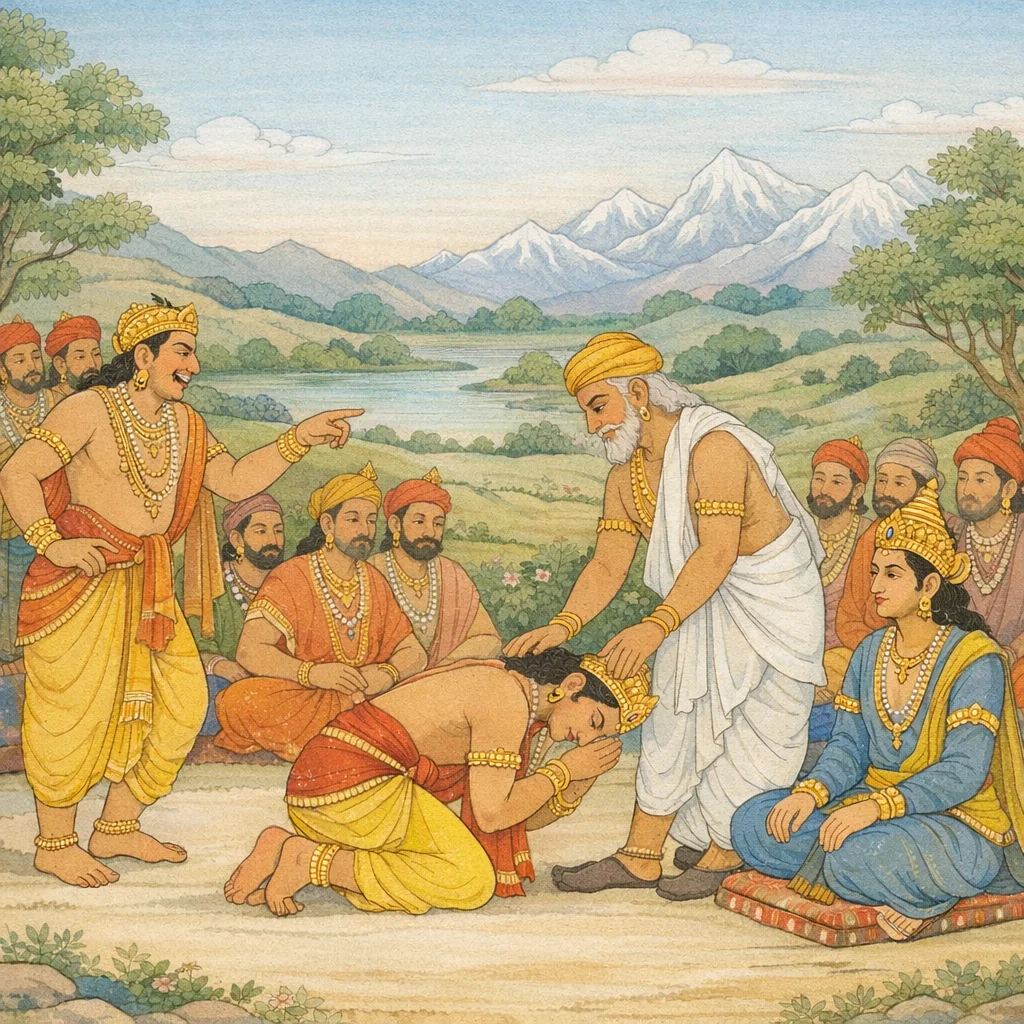
तमालोक्य धनुस्त्यक्त्वा पितृगौरवयन्त्रित: । कर्णोडभिषेकार्दशिरा: शिरसा समवन्दत,पिताके गौरवसे बँधा हुआ कर्ण अधिरथको देखते ही धनुष त्यागकर सिंहासनसे नीचे उतर आया। उसका मस्तक अभिषेकके जलसे भीगा हुआ था। उसी दशामें उसने अधिरथके चरणोंमें सिर रखकर प्रणाम किया
Karṇa, restrained by reverence for his father, the moment he saw Adhiratha cast aside his bow and came down from the throne. His head was still wet with the water of consecration. Even so, he bowed with his head at Adhiratha’s feet and paid homage.
Verse 3
ततः पादाववच्छाद्य पटान्तेन ससम्भ्रम: । पुत्रेति परिपूर्णार्थमब्रवीद् रथसारथि:,अधिरथने अपने दोनों पैरोंको कपड़ेके छोरसे छिपा लिया और “बेटा! बेटा!” पुकारते हुए अपनेको कृतार्थ समझा
Then, in sudden agitation, the charioteer covered his feet with the edge of his cloth and, crying out “Son! Son!”, felt his purpose fulfilled—his heart satisfied by the simple claim of fatherhood and the acceptance of the child before him.
Verse 4
परिष्वज्य च तस्याथ मूर्धानं स््नेहविक्लव: । अंगराज्याभिषेकार्द्रम श्रुभि: सिषिचे पुन:,उसने स्नेहसे विह्लल होकर कर्णको हृदयसे लगा लिया और अंगदेशके राज्यपर अभिषेक होनेसे भीगे हुए उसके मस्तकको आँसुओंसे पुनः: अभिषिक्त कर दिया
Vaiśampāyana said: Overcome with affection, he embraced him and then, with tears, once again anointed his head—already wet from the consecration to the kingship of Aṅga—thereby sealing the political act with a deeply personal bond of love and acceptance.
Verse 5
त॑ दृष्टवा सूतपुत्रो5यमिति संचिन्त्य पाण्डव: । भीमसेनस्तदा वाक्यमतब्रवीत् प्रहसन्निव,अधिरथको देखकर पाण्डुकुमार भीमसेन यह समझ गये कि कर्ण सूतपुत्र है; फिर तो वे हँसते हुए-से बोले--
Seeing him, the Pāṇḍava Bhīmasena reflected, “This is the son of a sūta (charioteer).” Then, as if laughing, he spoke—setting the scene for a pointed, status-based taunt, where social identity and honor are wielded as weapons in the rising rivalry.
Verse 6
न त्वमर्हसि पार्थेन सूतपुत्र रणे वधम् । कुलस्य सदृशस्तूर्ण प्रतोदो गृह्मुतां त्वया,“अरे ओ सूतपुत्र! तू तो अर्जुनके हाथसे मरने-योग्य भी नहीं है। तुझे तो शीघ्र ही चाबुक हाथमें लेना चाहिये; क्योंकि यही तेरे कुलके अनुरूप है
Vaiśampāyana said: “O son of a sūta (charioteer), you are not fit to be slain in battle by Pārtha (Arjuna). Quickly take up the whip instead—for that is what befits your lineage.”
Verse 7
अड्डराज्यं च ना्हस्त्वमुपभोक्तुं नराधम । था हुताशसमीपस्थं पुरोडाशमिवाध्वरे,“नराधम! जैसे यज्ञमें अग्निके समीप रखे हुए पुरोडाशको कुत्ता नहीं पा सकता, उसी प्रकार तू भी अंगदेशका राज्य भोगनेयोग्य नहीं है”
Vaiśampāyana said: “Wretch among men, you are not fit to enjoy the kingdom of Aṅga. Just as a dog cannot lay claim to the sacrificial puroḍāśa placed near the sacred fire during a rite, so too are you unworthy of that royal enjoyment.”
Verse 8
एवमुक्तस्तत: कर्ण: किंचित्प्रस्फुरिताधर: । गगनस्थं विनि:श्वस्य दिवाकरमुदैक्षत,भीमसेनके यों कहनेपर क्रोधके मारे कर्णका होठ कुछ काँपने लगा और उसने लंबी साँस लेकर आकाशमण्डलमें स्थित भगवान् सूर्यकी ओर देखा
Thus addressed, Karṇa’s lower lip quivered slightly in restrained anger. Drawing a long breath, he lifted his gaze to the Sun stationed in the sky—turning inward toward his divine source, as if to steady himself and gather resolve before replying.
Verse 9
ततो दुर्योधन: कोपादुत्पपात महाबल: । भ्रातृपड्मवनात् तस्मान्मदोत्कट इव द्विप:,इसी समय महाबली दुर्योधन कुपित हो मदोन्मत्त गजराजकी भाँति भ्रातृसमूहरूपी कमलवनसे उछलकर बाहर निकल आया
Then mighty Duryodhana, inflamed with anger, sprang up. Like an elephant in rut bursting forth, he leapt out from that lotus-grove of brothers—his own circle of kinsmen—his pride and fury surging beyond restraint, setting the stage for further discord.
Verse 10
सो<ब्रवीद् भीमकर्माणं भीमसेनमवस्थितम् । वृकोदर न युक्त ते वचन वक्तुमीदूशम्,उसने वहाँ खड़े हुए भयंकर कर्म करनेवाले भीमसेनसे कहा--“वृकोदर! तुम्हें ऐसी बात नहीं कहनी चाहिये”
He addressed Bhīmasena, who stood there famed for his formidable deeds, saying: “Vṛkodara, it is not proper for you to utter such words.”
Verse 11
क्षत्रियाणां बल॑ ज्येष्ठं योद्धव्यं क्षत्रबन्धुना । शूराणां च नदीनां च दुर्विदा: प्रभवा: किल,'क्षत्रियोंमें बलकी ही प्रधानता है। बलवान होनेपर क्षत्रबन्धु (हीन क्षत्रिय)-से भी युद्ध करना चाहिये (अथवा मुझ क्षत्रियका मित्र होनेके कारण कर्णके साथ तुम्हें युद्ध करना चाहिये)। शूरवीरों और नदियोंकी उत्पत्तिके वास्तविक कारणको जान लेना बहुत कठिन है
Vaiśampāyana said: “Among kṣatriyas, strength is held to be the foremost qualification. Therefore, when the occasion demands, battle is to be joined even with one deemed a mere ‘kṣatrabandhu’—a kṣatriya only in name. Indeed, the true origins of heroes and of rivers are said to be difficult to discern.”
Verse 12
सलिलादुत्थितो वल्लियेन व्याप्तं चराचरम् । दधीचस्यास्थितो वज्ं कृतं दानवसूदनम्,“जिसने सम्पूर्ण चराचर जगतको व्याप्त कर रखा है, वह तेजस्वी अग्नि जलसे प्रकट हुआ है। दानवोंका संहार करनेवाला वज्र महर्षि दधीचिकी हड्डियोंसे निर्मित हुआ है
Vaiśampāyana said: From the waters arose that radiant Fire which pervades the entire moving and unmoving world. And the demon-slaying thunderbolt (vajra) was fashioned from the bones of the sage Dadhīci.
Verse 13
आग्नेय: कृत्तिकापुत्रो रौद्रो गाज़ेय इत्यपि | श्रूयते भगवान् देव: सर्वगुह्ममयों गुहः,“सुना जाता है, सर्वगुह्म॒स्वरूप भगवान् स्कन्ददेव अग्नि, कृत्तिका, रुद्र तथा गंगा--इन सबके पुत्र हैं
Vaiśampāyana said: The Blessed Lord Guha (Skanda) is also heard of as the son of Agni, as the son of the Kṛttikās, as Rudra’s offspring, and as Gaṅgā’s son.
Verse 14
क्षत्रियेभ्यश्व ये जाता ब्राह्मणास्ते च ते श्रुता: । विश्वामित्रप्रभूतयः प्राप्ता ब्रह्म॒त्वमव्ययम्,'कितने ही ब्राह्मण क्षत्रियोंसे उत्पन्न हुए हैं, उनका नाम तुमने भी सुना ही होगा तथा विश्वामित्र आदि क्षत्रिय भी अक्षय ब्राह्मणत्वको प्राप्त हो चुके हैं
Vaiśaṃpāyana said: “You have surely heard of many Brāhmaṇas who were born from Kṣatriya lineages; and likewise Kṣatriyas such as Viśvāmitra and others attained the imperishable state of Brahmanhood.”
Verse 15
आचार्य: कलशाज्जातो द्रोण: शस्त्रभूतां वर: । गौतमस्यान्ववाये च शरस्तम्बाच्च गौतम:,“समस्त शस्त्रधारियोंमें श्रेष्ठ हमारे आचार्य द्रोणका जन्म कलशसे हुआ है। महर्षि गौतमके कुलमें कृपाचार्यकी उत्पत्ति भी सरकंडोंके समूहसे हुई है
Vaiśampāyana said: “Our preceptor Droṇa—foremost among those who embody the science of weapons—was born from a water-pot. And in the lineage of Gautama as well, Gautama (Kṛpa) arose from a clump of reeds.”
Verse 16
भवतां च यथा जन्म तदप्यागमितं मया । सकुण्डलं सकवचं सर्वलक्षणलक्षितम् | कथमादित्यसदृशं मृगी व्यात्रं जनिष्यति,“तुम सब भाइयोंका जन्म जिस प्रकार हुआ है, वह भी मुझे अच्छी तरह मालूम है। समस्त शुभ लक्षणोंसे सुशोभित तथा कुण्डल और कवचके साथ उत्पन्न हुआ सूर्यके समान तेजस्वी कर्ण किसी सूत जातिकी स्त्रीका पुत्र कैसे हो सकता है। क्या कोई हरिणी अपने पेटसे बाघ पैदा कर सकती है?
Vaiśampāyana said: “I also know well how you brothers were born. And I know this too: Karṇa, radiant like the sun, was born already bearing earrings and armor, marked with every auspicious sign. How could one so sun-like be the son of a woman of the sūta community? Can a doe ever give birth to a tiger?”
Verse 17
(कथमादित्यसंकाशं सूतो5मुं जनयिष्यति । एवं क्षत्रगुणैर्युक्ते शूरं समितिशो भनम् ।।) पृथिवीराज्यमहों<यं नाड्रराज्यं नरेश्वर: । अनेन बाहुवीर्येण मया चाज्ञानुवर्तिना,“इस सूर्य-सदृश तेजस्वी वीरको, जो इस प्रकार क्षत्रियोचित गुणोंसे सम्पन्न तथा समरांगणको सुशोभित करनेवाला है, कोई सूत जातिका मनुष्य कैसे उत्पन्न कर सकता है? राजा कर्ण अपने इस बाहुबलसे तथा मुझ-जैसे आज्ञापालक मित्रकी सहायतासे अंग- देशका ही नहीं, समूची पृथ्वीका राज्य पानेका अधिकारी है
Vaiśampāyana said: “How could a man of the sūta order beget this hero, radiant like the sun—endowed with the very qualities of a kṣatriya and adorning the battlefield? Indeed, this lord of men deserves not merely the kingdom of Aṅga, but sovereignty over the whole earth—by the strength of his own arms, and with the support of me, his obedient follower.”
Verse 18
यस्य वा मनुजस्येद॑ न क्षान्तं मद्विचेष्टितम् रथमारुहा[ पद्धयां स विनामयतु कार्मुकम्,“जिस मनुष्यसे मेरा यह बर्ताव नहीं सहा जाता हो, वह रथपर चढ़कर पैरोंसे अपने धनुषको नवावे--हमारे साथ युद्धके लिये तैयार हो जाय”
Vaiśampāyana said: “If any man cannot endure this conduct of mine, let him mount his chariot and, pressing with his feet, bend his bow—let him make himself ready to fight us.”
Verse 19
ततः सर्वस्य रज्गस्य हाहाकारो महानभूत् । साधुवादानुसम्बद्धः सूर्य श्षास्तमुपागमत्,यह सुनकर समूचे रंगमण्डपमें दुर्योधनको मिलने-वाले साधुवादके साथ ही (युद्धकी सम्भावनासे) महान् हाहाकार मच गया। इतनेमें ही सूर्यदेव अस्ताचलको चले गये
Then a great uproar arose throughout the entire arena—mingled with cries and the applause of approval (directed toward Duryodhana), and shadowed by the looming possibility of conflict. Meanwhile, the Sun went down, setting toward the western horizon.
Verse 20
ततो दुर्योधन: कर्णमालम्ब्याग्रकरे नृप: । दीपिकाग्निकृतालोकस्तस्माद् रड्भाद् विनिर्यया,तब दुर्योधन कर्णके हाथकी अगुलियाँ पकड़कर मशालकी रोशनी करा उस रंगभूमिसे बाहर निकल गया
Then King Duryodhana, taking Karṇa by the fingers of his hand, went out from that arena, his path lit by the flame of a torch.
Verse 21
पाण्डवाश्व सहद्रोणा: सकृपाश्न विशाम्पते । भीष्मेण सहिता: सर्वे ययु: स्वं स््व॑ं निवेशनम्,राजन! समस्त पाण्डव भी द्रोण, कृपाचार्य और भीष्मजीके साथ अपने-अपने निवासस्थानको चल दिये
Vaiśampāyana said: “O lord of the people, all the Pāṇḍavas—together with Droṇa and with Kṛpa—accompanied by Bhīṣma, departed, each to his own residence.”
Verse 22
अर्जुनेति जन: वलच्चित् कश्चित् कर्णेति भारत । वद्िद् दुर्योधनेत्येवं ब्रुवन्त: प्रस्थितास्तदा,भारत! उस समय दर्शकोंमेंसे कोई अर्जुनकी, कोई कर्णकी और कोई दुर्योधनकी प्रशंसा करते हुए चले गये
Vaiśampāyana said: “O Bhārata, at that time the spectators departed, some acclaiming ‘Arjuna!’, some ‘Karna!’, and others saying ‘Duryodhana!’ Thus they went away.”
Verse 23
कुन्त्याश्व प्रत्यभिज्ञाय दिव्यलक्षणसूचितम् । पुत्रमज्ेश्वरं स्नेहाच्छन्ना प्रीतिरजायत,दिव्य लक्षणोंसे लक्षित अपने पुत्र अंगराज कर्णको पहचानकर कुन्तीके मनमें बड़ी प्रसन्नता हुई; किंतु वह दूसरोंपर प्रकट न हुई
Vaiśampāyana said: Recognizing the divine signs that indicated it, Kuntī understood them to point to her own son. Out of maternal affection, a deep joy arose within her—yet she kept that happiness concealed, revealing it to none.
Verse 24
दुर्योधनस्थापि तदा कर्णमासाद्य पार्थिव | भयमर्जुनसंजातं क्षिप्रमन््तरधीयत,जनमेजय! उस समय कर्णको मित्रके रूपमें पाकर दुर्योधनका भी अर्जुनसे होनेवाला भय शीघ्र दूर हो गया
Vaiśampāyana said: O King Janamejaya, at that time even Duryodhana—having found Karṇa at his side as a friend—quickly became free of the fear that had arisen in him because of Arjuna.
Verse 25
स चापि वीर: कृतशस्त्रनिश्रम: परेण साम्नाभ्यवदत् सुयोधनम् । युधिष्ठटिरस्याप्यभवत् तदा मति- न कर्णतुल्यो5स्ति धनुर्धर: क्षितो,वीरवर कर्णने शस्त्रोंके अभ्यासमें बड़ा परिश्रम किया था, वह भी दुर्योधनके साथ परम स्नेह और सान्त्वनापूर्ण बातें करने लगा। उस समय युधिष्ठिरको भी यह विश्वास हो गया कि इस पृथ्वीपर कर्णके समान धनुर्धर कोई नहीं है
Vaiśampāyana said: That heroic warrior, who had labored long in the practice of arms, addressed Suyodhana with the highest courtesy and with conciliatory, heart-soothing words. Then even Yudhiṣṭhira became convinced that on this earth there was no archer equal to Karṇa—an acknowledgment of prowess that also foreshadowed the grave moral weight such power would bear in the conflict to come.
Verse 136
इति श्रीमहाभारते आदिपर्वणि सम्भवपर्वणि अस्त्रदर्शने षट्त्रिंयधिकशततमो<्ध्याय:
Thus ends the one-hundred-and-thirty-sixth chapter of the Sambhava section within the Ādi Parva of the revered Mahābhārata, known as “The Display of Weapons.”
Frequently Asked Questions
The chapter contrasts public dharmic expectation (accountability and protection of kin) with courtly ambiguity and indirect harm, raising the dilemma of how responsibility is assigned when violence is executed through intermediaries and misinformation.
It illustrates that ethical order depends not only on stated norms but on enforcement and restraint; when institutions fail to check covert wrongdoing, survival may require disciplined concealment and coordinated mutual protection.
No explicit phalaśruti appears here; the chapter functions as narrative-ethical documentation, emphasizing causality (karma in the sense of consequential action) and the interpretive gap between appearance (presumed deaths) and reality (escape).