Adhyaya 13
आस्तीक-उपाख्यान-प्रस्तावः | Introduction to the Āstīka Narrative
Upa-parva: Āstīkopākhyāna (The Narrative of Āstīka)
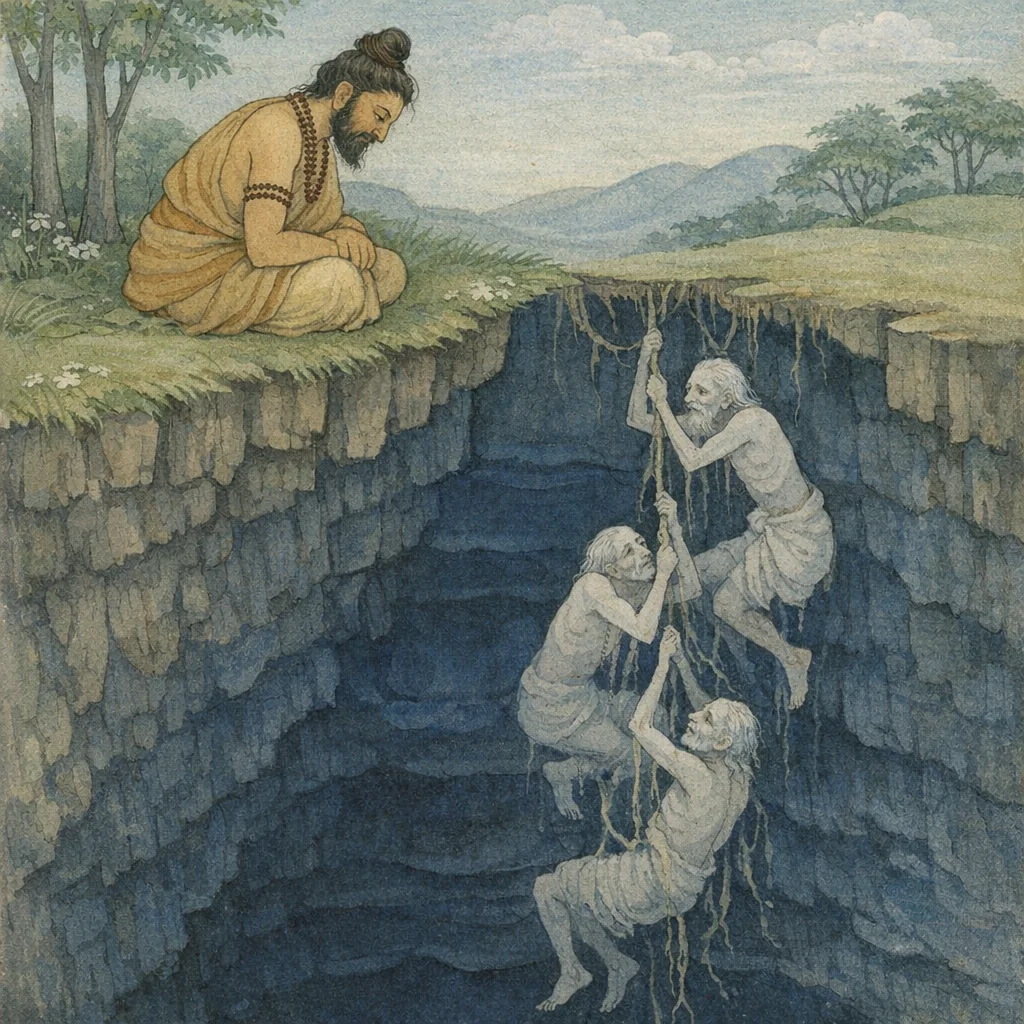
Chapter 13.0 opens with Śaunaka’s interrogatives: why King Janamejaya undertook the sarpasatra intended to exterminate serpents, and why the eminent brahmin Āstīka intervened to release the Nāgas from the sacrificial fire. Sauti positions the response as the well-known Āstīka-ākhyāna, authenticated through the Vyāsa lineage and previously transmitted by his father Lomaharṣaṇa. The chapter then transitions from frame-question to origin story: Jaratkāru is described as an austere ascetic; he encounters his ancestors suspended in a pit, imperiled because lineage has not continued. They instruct him that progeny is necessary for their welfare, and he agrees to marry only under specific conditions, including a spouse of the same name and obtained without coercive acquisition. Vāsuki offers his sister Jaratkāru (by name), motivated by a prior curse upon the Nāgas and the need for pacification. The marriage produces Āstīka, characterized as a learned, disciplined figure whose later role is to neutralize the destructive endpoint of Janamejaya’s ritual while also fulfilling ancestral obligations. The chapter concludes with Sauti indicating that the Āstīka narrative has been recounted in due order and invites the next inquiry.
Chapter Arc: शौनक ऋषि सूत उग्रश्रवा से पूछते हैं—जिस आस्तीक ने सर्पों को अग्नि से छुड़ाया, वह कौन था, किसका पुत्र था, और जनमेजय का सर्पसत्र क्यों आरम्भ हुआ? → सूत कथा को पीछे ले जाकर तपोबल-सम्पन्न यायावर मुनि जरत्कारु का परिचय देते हैं। पृथ्वी-पर्यटन के बीच वह अपने पितरों को महागर्त में उलटे लटके, पाद-ऊर्ध्व, मुख-अधो देखता है—उनका जीवन-धागा क्षीण है और वंश-परम्परा टूटने से वे संकट में हैं। पितर उससे विवाह और संतान की याचना करते हैं; पर जरत्कारु वैराग्य, दरिद्रता और भिक्षावृत्ति का हवाला देकर विवाह-बंधन से बचना चाहता है। → पितरों की करुण पुकार के सामने जरत्कारु प्रतिज्ञा करता है कि वह केवल उसी स्त्री से विवाह करेगा जो ‘जरत्कारु’ नाम की ही हो और जो उसे बिना मूल्य/दहेज के प्राप्त हो—क्योंकि वह स्वयं दरिद्र है और किसी पर भार नहीं डालना चाहता। वह स्पष्ट करता है कि उसी पत्नी के गर्भ से उत्पन्न संतान पितरों का उद्धार करेगी और उन्हें शाश्वत स्थान दिलाएगी। → जरत्कारु पितरों के उद्धार-हेतु विवाह के लिए उद्यत होता है, पर अपनी कठोर शर्तों के साथ। सूत संकेत देता है कि यह संकल्प आगे चलकर आस्तीक के जन्म और सर्पसत्र-निवारण की कड़ी बनेगा। → सूत आगे की विस्तृत कथा का वचन देता है—अब यह बताया जाएगा कि ‘जरत्कारु’ नाम की कन्या कहाँ से मिली, विवाह कैसे हुआ, और आस्तीक कैसे उत्पन्न होकर सर्पसत्र को रोकने में समर्थ हुआ।
Shlokas
Verse 1
ऑपनआक्रात बछ। अ--क्ाज (आस्तीकपर्व) त्रयोदशो 5 ध्याय: जरत्कारुका अपने पितरोंके अनुरोधसे विवाहके लिये उद्यत होना शौनक उवाच किमर्थ राजशार्दूल: स राजा जनमेजय: । सर्पसत्रेण सर्पाणां गतो<न्तं तद् वदस्व मे
Śaunaka said: “For what reason did that king Janamejaya—foremost among kings—carry the serpent-sacrifice (sarpasatra) to the point of destroying the serpents? Tell me that.”
Verse 2
निखिलेन यथातत्त्वं सौते सर्वमशेषत: । आस्तीकक्ष द्विजश्रेष्ठ: किमर्थ जपतां वर:
Śaunaka said: “O Sauti, tell us completely—exactly as it truly is, leaving nothing out—why Āstīka, the foremost among Brahmins, the best of those devoted to sacred recitation, came to be known and praised.”
Verse 3
मोक्षयामास भुजगानू् प्रदीप्तादू वसुरेतस: । कस्य पुत्र: स राजासीत् सर्पसत्रं य आहरत्
Śaunaka asked: “That king—born of the fiery seed of Vasu—who released the serpents from the blazing peril: whose son was he? And who was the one that instituted the serpent-sacrifice (sarpasatra)?”
Verse 4
सच द्विजातिप्रवर: कस्य पुत्रोडभिधत्स्व मे । शौनकजीने पूछा--सूतजी! राजाओंमें श्रेष्ठ जनमेजयने किसलिये सर्पसत्रद्वारा सर्पोका अन्त किया? यह प्रसंग मुझसे कहिये। सूतनन्दन! इस विषयकी सब बातोंका यथार्थरूपसे वर्णन कीजिये। जप-यज्ञ करनेवाले पुरुषोंमें श्रेष्ठ विप्रवर आस्तीकने किसलिये सर्पोंको प्रज्वलित अग्निमें जलनेसे बचाया और वे राजा जनमेजय, जिन्होंने सर्पसत्रका आयोजन किया था, किसके पुत्र थे? तथा द्विजवंशशिरोमणि आस्तीक भी किसके पुत्र थे? यह मुझे बताइये ।। १ ३३ || सौतिर्वाच महदाख्यानमास्तीकं यथैतत् प्रोच्यते द्विज
Śaunaka said: “And that foremost among the twice-born—whose son was he? Tell me.” In context, Śaunaka presses Sauti to clarify the lineage behind the pivotal figures of the serpent-sacrifice: who King Janamejaya was descended from, and whose son Āstīka was—the brahmin whose intervention restrained the destructive momentum of the rite and restored a dharmic balance between royal vengeance and compassionate restraint.
Verse 5
शौनक उवाच श्रोतुमिच्छाम्यशेषेण कथामेतां मनोरमाम्
Śaunaka said: “I wish to hear, in full and without omission, this delightful and captivating narrative.”
Verse 6
सौतिर्वाच इतिहासमिमं विप्रा: पुराणं परिचक्षते,उग्रश्रवाजीने कहा--शौनकजी! ब्राह्मणलोग इस इतिहासको बहुत पुराना बताते हैं। पहले मेरे पिता लोमहर्षणजीने, जो व्यासजीके मेधावी शिष्य थे, ऋषियोंके पूछनेपर साक्षात् श्रीकृष्णद्वैधायन (व्यास)-के कहे हुए इस इतिहासका नैमिषारण्यवासी ब्राह्मणोंके समुदायमें वर्णन किया था। उन्हींके मुखसे सुनकर मैं भी इसका यथावत् वर्णन करता हूँ
Sauti said: “O Brahmins, this narrative is spoken of as an ancient Purāṇa-like history. O Śaunaka, the Brahmins declare this account to be exceedingly old. Formerly my father Lomaharṣaṇa—an intelligent disciple of Vyāsa—when questioned by the sages, recited in the assembly of the Naimiṣa Forest Brahmins this very history as it was spoken by Śrī Kṛṣṇa Dvaipāyana (Vyāsa) himself. Having heard it from his mouth, I too now relate it faithfully, in due order.”
Verse 7
कृष्णद्वैपायनप्रोक्तं नैमिषारण्यवासिषु | पूर्व प्रचोदित: सूत: पिता मे लोमहर्षण:,उग्रश्रवाजीने कहा--शौनकजी! ब्राह्मणलोग इस इतिहासको बहुत पुराना बताते हैं। पहले मेरे पिता लोमहर्षणजीने, जो व्यासजीके मेधावी शिष्य थे, ऋषियोंके पूछनेपर साक्षात् श्रीकृष्णद्वैधायन (व्यास)-के कहे हुए इस इतिहासका नैमिषारण्यवासी ब्राह्मणोंके समुदायमें वर्णन किया था। उन्हींके मुखसे सुनकर मैं भी इसका यथावत् वर्णन करता हूँ
Śaunaka said: “This sacred history was spoken by Kṛṣṇa Dvaipāyana (Vyāsa) and was recited among the residents of the Naimiṣa forest. Formerly, at the urging of the sages, my father Lomaharṣaṇa—the Sūta—narrated this very account as it had been declared by Vyāsa. Having heard it from his mouth, I too relate it faithfully.”
Verse 8
शिष्यो व्यासस्य मेधावी ब्राह्मणेष्विदमुक्तवान् | तस्मादहमुपश्रुत्य प्रवक्ष्यामि यथातथम्,उग्रश्रवाजीने कहा--शौनकजी! ब्राह्मणलोग इस इतिहासको बहुत पुराना बताते हैं। पहले मेरे पिता लोमहर्षणजीने, जो व्यासजीके मेधावी शिष्य थे, ऋषियोंके पूछनेपर साक्षात् श्रीकृष्णद्वैधायन (व्यास)-के कहे हुए इस इतिहासका नैमिषारण्यवासी ब्राह्मणोंके समुदायमें वर्णन किया था। उन्हींके मुखसे सुनकर मैं भी इसका यथावत् वर्णन करता हूँ
The wise disciple of Vyāsa spoke this account among the Brāhmaṇas. Therefore, having heard it in that authentic lineage, I shall now relate it exactly as it was—faithfully preserving the received tradition.
Verse 9
इदमास्तीकमाख्यान॑ तुभ्यं शौनक पृच्छते । कथयिष्याम्यशेषेण सर्वपापप्रणाशनम्,शौनकजी! यह आस्तीक मुनिका उपाख्यान सब पापोंका नाश करनेवाला है। आपके पूछनेपर मैं इसका पूरा-पूरा वर्णन कर रहा हूँ
“This account concerning Āstīka is being asked of me by you, O Śaunaka. I shall relate it to you in full—an account that brings about the destruction of all sins.”
Verse 10
आस्तीकस्य पिता हासीत् प्रजापतिसम: प्रभु: । ब्रह्मचारी यताहारस्तपस्युग्रे रत: सदा,आस्तीकके पिता प्रजापतिके समान प्रभावशाली थे। ब्रह्मचारी होनेके साथ ही उन्होंने आहारपर भी संयम कर लिया था। वे सदा उग्र तपस्यामें संलग्न रहते थे
Śaunaka said: Āstīka’s father was a powerful man, comparable to a Prajāpati in stature. Living as a celibate student and restraining his food, he remained constantly devoted to severe austerities—an image of disciplined self-mastery and spiritual authority.
Verse 11
जरत्कारुरिति ख्यात ऊर्ध्वरेता महातपा: । यायावराणां प्रवरो धर्मज्ञ: संशितव्रत:,उनका नाम था जरत्कारु। वे ऊर्ध्विता और महान् ऋषि थे। यायावरोंमें+ उनका स्थान सबसे ऊँचा था। वे धर्मके ज्ञाता थे। एक समय तपोबलसे सम्पन्न उन महाभाग जरत्कारने यात्रा प्रारम्भ की। वे मुनि-वृत्तिसे रहते हुए जहाँ शाम होती वहीं डेरा डाल देते थे
Śaunaka said: “He was renowned by the name Jaratkāru—an ascetic of great austerity, steadfast in celibate discipline. Among the wandering mendicant sages (yāyāvaras) he was foremost, a knower of dharma and one whose vows were firmly restrained.”
Verse 12
स कदाचिन्महाभागस्तपोबलसमन्वित: । चचार पृथिवीं सर्वा यत्रसायंगृहो मुनि:,उनका नाम था जरत्कारु। वे ऊर्ध्विता और महान् ऋषि थे। यायावरोंमें+ उनका स्थान सबसे ऊँचा था। वे धर्मके ज्ञाता थे। एक समय तपोबलसे सम्पन्न उन महाभाग जरत्कारने यात्रा प्रारम्भ की। वे मुनि-वृत्तिसे रहते हुए जहाँ शाम होती वहीं डेरा डाल देते थे
Once, that illustrious sage—endowed with the power born of austerity—wandered over the whole earth. Living by the discipline of a muni, he would make his evening dwelling wherever nightfall found him.
Verse 13
तीर्थेषु च समाप्लावं कुर्वन्नटति सर्वश: । चरन् दीक्षां महातेजा दुश्चरामकृतात्मभि:,वे सब तीर्थोमें स्नान करते हुए घूमते थे। उन महातेजस्वी मुनिने कठोर व्रतोंकी ऐसी दीक्षा लेकर यात्रा प्रारम्भ की थी, जो अजितेन्द्रिय पुरुषोंके लिये अत्यन्त दुःसाध्य थी इति श्रीमहा भारते आदिपर्वणि आस्तीकपर्वणि जरत्कारुतत्पितृसंवादे त्रयोदशो 5 ध्याय: इस प्रकार श्रीमह्या भारत आदिपव॑के अन्तर्गत आस्तीकपर्वमें जरत्कारु तथा उनके पितरोंका संवाद नामक तेरहवाँ अध्याय पूरा हुआ
Śaunaka said: “He wandered everywhere, performing full ritual baths at the sacred fords. That mighty ascetic had set out on his journey under a consecrated discipline of severe vows—an observance exceedingly difficult for those who have not mastered themselves.”
Verse 14
वायुभक्षो निराहार: शुष्यन्ननिमिषो मुनि: । इतस्तत: परिचरन् दीप्तपावकसप्रभ:,वे कभी वायु पीकर रहते और कभी भोजनका सर्वथा त्याग करके अपने शरीरको सुखाते रहते थे। उन महर्षिने निद्रापर भी विजय प्राप्त कर ली थी, इसलिये उनकी पलक नहीं लगती थी। इधर-उधर विचरण करते हुए वे प्रज्वलित अग्निके समान तेजस्वी जान पड़ते थे। घूमते-घूमते किसी समय उन्होंने अपने पितामहोंको देखा जो ऊपरको पैर और नीचेको सिर किये एक विशाल गड्ढेमें लटक रहे थे
Śaunaka said: The sage lived on air, or else renounced food entirely, drying his body through austerity. Having conquered sleep, he remained unblinking. Roaming here and there, he appeared radiant like a blazing fire.
Verse 15
अटमान: कदाचित् स्वान् स ददर्श पितामहान् । लम्बमानान् महागर्ते पादैरूर्ध्वैरवाड्मुखान्,वे कभी वायु पीकर रहते और कभी भोजनका सर्वथा त्याग करके अपने शरीरको सुखाते रहते थे। उन महर्षिने निद्रापर भी विजय प्राप्त कर ली थी, इसलिये उनकी पलक नहीं लगती थी। इधर-उधर विचरण करते हुए वे प्रज्वलित अग्निके समान तेजस्वी जान पड़ते थे। घूमते-घूमते किसी समय उन्होंने अपने पितामहोंको देखा जो ऊपरको पैर और नीचेको सिर किये एक विशाल गड्ढेमें लटक रहे थे
Śaunaka said: While wandering about, he once beheld his own forefathers—his grandfathers—hanging in a vast pit, their feet turned upward and their faces downward.
Verse 16
तानब्रवीत् स दृष्टवैव जरत्कारु: पितामहान् । के भवन्तो5वलम्बन्ते गर्ते हास्मिन्नधोमुखा:,उन्हें देखते ही जरत्कारुने उनसे पूछा--“आपलोग कौन हैं, जो इस गड़ढेमें नीचेको मुख किये लटक रहे हैं
As soon as he saw them, Jaratkāru addressed those forefathers: “Who are you, hanging suspended in this pit, with your faces turned downward?”
Verse 17
वीरणस्तम्बके लग्ना: सर्वतः परिभक्षिते | मूषकेन निगूढेन गर्तेडस्मिन् नित्यवासिना,“आप जिस वीरणस्तम्ब (खस नामक तिनकोंके समूह) -को पकड़कर लटक रहे हैं, उसे इस गड़ढेमें गुप्तरूपसे नित्य निवास करनेवाले चूहेने सब ओरसे प्राय: खा लिया है”
Śaunaka said: “The clump of vīraṇa-grass to which you are clinging has been almost entirely gnawed away on all sides by a hidden mouse that lives perpetually in this pit.”
Verse 18
3 पितर ऊचु. यायावरा नाम वयमृषय: संशितव्रता: । संतानप्रक्षयाद् ब्रद्मुनज्नधो गच्छाम मेदिनीम्,पितर बोले--ब्रह्मम! हमलोग कठोर व्रतका पालन करनेवाले यायावर नामक मुनि हैं। अपनी संतान-परम्पराका नाश होनेसे हम नीचे--पृथ्वीपर गिरना चाहते हैं
The Pitṛs said: “O Brahman, we are sages known as Yāyāvaras, steadfast in austere vows. Because our line of descendants has been cut off, we are falling downwards—toward the earth.”
Verse 19
अस्माकं संततिस्त्वेको जरत्कारुरिति स्मृत: । मन्दभाग्यो5ल््पभाग्यानां तप एव समास्थित:,हमारी एक संतति बच गयी है, जिसका नाम है जरत्कारु। हम भाग्यहीनोंकी वह अभागी संतान केवल तपस्यामें ही संलग्न है
Śaunaka said: “Of our lineage, only one descendant remains, remembered by the name Jaratkāru. Ill-fated—born among the scantily fortunate—he has taken his stand solely in austerity.”
Verse 20
न स पुत्राञउ्जनयितु दारान् मूढश्चिकीर्षति । तेन लम्बामहे गर्ते संतानस्य क्षयादिह,वह मूढ़ पुत्र उत्पन्न करनेके लिये किसी स्त्रीसे विवाह करना नहीं चाहता है। अत: वंशपरम्पराका विनाश होनेसे हम यहाँ इस गड्ढेमें लटक रहे हैं। हमारी रक्षा करनेवाला वह वंशधर मौजूद है, तो भी पापकर्मी मनुष्योंकी भाँति हम अनाथ हो गये हैं। साधुशिरोमणे! तुम कौन हो जो हमारे बन्धु-बान्धवोंकी भाँति हमलोगोंकी इस दयनीय दशाके लिये शोक कर रहे हो? ब्रह्म! हम यह जानना चाहते हैं कि तुम कौन हो जो आत्मीयकी भाँति यहाँ हमारे पास खड़े हो? सत्पुरुषोंमें श्रेष्ठ हम शोचनीय प्राणियोंके लिये तुम क्यों शोकमग्न होते हो
He, deluded, does not wish to take a wife in order to beget sons. Therefore, because the line of descendants is being cut off, we are left hanging here in this pit. Though a protector of the lineage exists, we have become like the helpless—like sinners bereft of refuge. O best of the virtuous! Who are you, grieving for our wretched condition as if you were our own kinsman? O Brahman, we wish to know who you are, standing here near us with the concern of a relative—why do you mourn for us, pitiable beings?
Verse 21
अनाथास्तेन नाथेन यया दुष्कृतिनस्तथा | कस्त्वं बन्धुरिवास्माकमनुशोचसि सत्तम,वह मूढ़ पुत्र उत्पन्न करनेके लिये किसी स्त्रीसे विवाह करना नहीं चाहता है। अत: वंशपरम्पराका विनाश होनेसे हम यहाँ इस गड्ढेमें लटक रहे हैं। हमारी रक्षा करनेवाला वह वंशधर मौजूद है, तो भी पापकर्मी मनुष्योंकी भाँति हम अनाथ हो गये हैं। साधुशिरोमणे! तुम कौन हो जो हमारे बन्धु-बान्धवोंकी भाँति हमलोगोंकी इस दयनीय दशाके लिये शोक कर रहे हो? ब्रह्म! हम यह जानना चाहते हैं कि तुम कौन हो जो आत्मीयकी भाँति यहाँ हमारे पास खड़े हो? सत्पुरुषोंमें श्रेष्ठ हम शोचनीय प्राणियोंके लिये तुम क्यों शोकमग्न होते हो
Śaunaka said: “Though we have a protector, we have become like the unprotected—like sinful men brought to ruin by their own misdeeds. O best of the good, who are you, that you grieve for us as if you were our kinsman?”
Verse 22
ज्ञातुमिच्छामहे ब्रह्मनू को भवानिह नः स्थित: । किमर्थ चैव न: शोच्याननुशोचसि सत्तम,वह मूढ़ पुत्र उत्पन्न करनेके लिये किसी स्त्रीसे विवाह करना नहीं चाहता है। अत: वंशपरम्पराका विनाश होनेसे हम यहाँ इस गड्ढेमें लटक रहे हैं। हमारी रक्षा करनेवाला वह वंशधर मौजूद है, तो भी पापकर्मी मनुष्योंकी भाँति हम अनाथ हो गये हैं। साधुशिरोमणे! तुम कौन हो जो हमारे बन्धु-बान्धवोंकी भाँति हमलोगोंकी इस दयनीय दशाके लिये शोक कर रहे हो? ब्रह्म! हम यह जानना चाहते हैं कि तुम कौन हो जो आत्मीयकी भाँति यहाँ हमारे पास खड़े हो? सत्पुरुषोंमें श्रेष्ठ हम शोचनीय प्राणियोंके लिये तुम क्यों शोकमग्न होते हो
Śaunaka said: “O Brahman, we wish to know—who are you, standing here among us? And for what reason do you, O best of the good, grieve in sympathy for us who are truly pitiable?”
Verse 23
जरत्कारुर्वाच मम पूर्वे भवन्तो वै पितर: सपितामहा: । ब्रूत कि करवाण्यद्य जरत्कारुरहं स्वयम्,जरत्कारुने कहा--महात्माओ! आपलोग मेरे ही पितामह और पूर्वज पितृगण हैं। स्वयं मैं ही जरत्कारु हूँ। बताइये, आज आपकी क्या सेवा करूँ?
Jaratkāru said: “You are indeed my forefathers—my fathers and grandfathers. Tell me what I should do today. I myself am Jaratkāru; instruct me how I may serve you.”
Verse 24
पितर ऊचु. यतस्व यत्नवांस्तात संतानाय कुलस्य नः । आत्मनोडर्थेडस्मदर्थे च धर्म इत्येव वा विभो,पितर बोले--तात! तुम हमारे कुलकी संतान-परम्पराको बनाये रखनेके लिये निरन्तर यत्नशील रहकर विवाहके लिये प्रयत्न करो। प्रभो! तुम अपने लिये, हमारे लिये अथवा धर्मका पालन हो, इस उद्देश्यसे पुत्रकी उत्पत्तिके लिये यत्न करो
The Pitṛs said: “Dear child, exert yourself with steady effort to secure offspring so that our lineage may continue. O mighty one, strive to beget a son—whether for your own sake, for our sake, or simply because it is dharma.”
Verse 25
न हि धर्मफलैस्तात न तपोभि: सुसंचितै: । तां गतिं प्राप्तुवन्तीह पुत्रिणो यां व्रजन्ति वै,तात! पुत्रवाले मनुष्य इस लोकमें जिस उत्तम गतिको प्राप्त होते हैं, उसे अन्य लोग धर्मानुकूल फल देनेवाले भलीभाँति संचित किये हुए तपसे भी नहीं पाते
Śaunaka said: “Dear child, in this world that exalted state which men blessed with sons attain is not reached by others even through the merit-bearing fruits of dharma, nor even by austerities amassed in great abundance.”
Verse 26
तद् दारग्रहणे यत्नं संतत्यां च मन: कुरु । पुत्रकास्मन्नियोगात् त्वमेतन्न: परमं हितम्,अतः बेटा! तुम हमारी आज्ञासे विवाह करनेका प्रयत्न करो और संतानोत्पादनकी ओर ध्यान दो। यही हमारे लिये सर्वोत्तम हितकी बात होगी
Therefore, make your effort toward taking a wife, and set your mind also on begetting offspring. O son, in accordance with our injunction, do this—this, for us, is the highest good.
Verse 27
जरत्कारुस्वाच न दारान् वै करिष्ये5हं न धनं जीवितार्थत: । भवतां तु हितार्थाय करिष्ये दारसंग्रहम्,जरत्कारुने कहा--पितामहगण! मैंने अपने मनमें यह निश्चय कर लिया था कि मैं जीवनके सुख-भोगके लिये कभी न तो पत्नीका परिग्रह करूँगा और न धनका संग्रह ही; परंतु यदि ऐसा करनेसे आपलोगोंका हित होता है तो उसके लिये अवश्य विवाह कर लूँगा
Jaratkāru said: “I had resolved that, for the sake of my own life and its enjoyments, I would neither take a wife nor accumulate wealth. Yet, if your welfare depends upon it, then for that purpose I will indeed accept marriage.”
Verse 28
समयेन च कर्ताहमनेन विधिपूर्वकम् | तथा यद्युपलप्स्यामि करिष्ये नान्यथा हाहम्,किंतु एक शर्तके साथ मुझे विधिपूर्वक विवाह करना है। यदि उस शर्तके अनुसार किसी कुमारी कन्याको पाऊँगा, तभी उससे विवाह करूँगा, अन्यथा विवाह करूँगा ही नहीं
I shall perform the marriage at the proper time and strictly according to the prescribed rites. Yet I will do so only if I obtain a maiden who meets this stipulated condition; otherwise, I will not marry at all—never in any other way.
Verse 29
सनाम्नी या भवित्री मे दित्सिता चैव बन्धुभि: | भैक्ष्यवत्तामहं कन्यामुपयंस्ये विधानतः,(वह शर्त यों है--) जिस कनन््याका नाम मेरे नामके ही समान हो, जिसे उसके भाई-बन्धु स्वयं मुझे देनेकी इच्छासे रखते हों और जो भिक्षाकी भाँति स्वयं प्राप्त हुई हो, उसी कन्याका मैं शास्त्रीय विधिके अनुसार पाणिग्रहण करूँगा
Śaunaka said: “I will accept in marriage, according to the scriptural rule, only that maiden whose name matches my own, whom her kinsmen themselves are willing to give to me, and who comes to me as though obtained like alms—unsought and freely offered.”
Verse 30
दरिद्राय हि मे भार्या को दास्यति विशेषत: । प्रतिग्रहीष्ये भिक्षां तु यदि कश्चित् प्रदास्यति,विशेष बात तो यह है कि मैं दरिद्र हूँ, भला मुझे माँगनेपर भी कौन अपनी कन्या पत्नीरूपमें प्रदान करेगा? इसलिये मेरा विचार है कि यदि कोई भिक्षाके तौरपर अपनी कन्या देगा तो उसे ग्रहण करूँगा
Śaunaka said: “I am poor; who, especially, would give me a wife—who would offer his daughter in marriage? Therefore I have resolved that if someone gives (a daughter) as alms, I will accept her.”
Verse 31
पितामहो! मैं इसी प्रकार, इसी विधिसे विवाहके लिये सदा प्रयत्न करता रहूँगा। इसके विपरीत कुछ नहीं करूँगा
“Grandfather, I shall continue to strive always for marriage in just this manner and by this very proper procedure. I will do nothing contrary to this.”
Verse 32
तत्र चोत्पत्स्यते जन्तुर्भवतां तारणाय वै | शाश्वतं स्थानमासाद्य मोदन्तां पितरो मम,इस प्रकार मिली हुई पत्नीके गर्भसे यदि कोई प्राणी जन्म लेगा तो वह आपलोगोंका उद्धार करेगा, अत: आप मेरे पितर अपने सनातन स्थानपर जाकर वहाँ प्रसन्नतापूर्वक रहें
From that union a being will indeed be born for your deliverance. Therefore, may my Pitṛs attain their eternal abode and dwell there in contentment—released from anxiety, assured that the line will continue and the ancestral debt will be repaid.
Verse 33
एवं दारक्रियाहेतो: प्रयतिष्ये पितामहा: । अनेन विधिना शश्रृन्न करिष्येडहमन्यथा
“Thus, for the sake of performing the rites connected with marriage, I shall strive, O grandsires. I will carry it out in this very manner and not otherwise.”
Verse 43
सर्वमेतदशेषेण शृणु मे वदतां वर । उग्रश्रवाजीने कहा-ब्रह्मन! आस्तीकका उपाख्यान बहुत बड़ा है। वक्ताओंमें श्रेष्ठ! यह प्रसंग जैसे कहा जाता है, वह सब पूरा-पूरा सुनो
Śaunaka says: “O Ugraśravas, best among speakers, tell me everything without omission. O Brāhmaṇa, the tale of Āstīka is extensive. O foremost of narrators, recount this episode exactly as it is traditionally heard, so that I may hear it in full.”
Verse 53
आस्तीकस्य पुराणर्षेब्राह्मणस्य यशस्विन: । शौनकजीने कहा--सूतनन्दन! पुरातन ऋषि एवं यशस्वी ब्राह्मण आस्तीककी इस मनोरम कथाको मैं पूर्णरूपसे सुनना चाहता हूँ
Śaunaka said: “O son of Sūta, I wish to hear in full this delightful account of Āstīka—the ancient seer and illustrious brāhmaṇa.”
Frequently Asked Questions
The dilemma is the reconciliation of ascetic intent with social and ancestral duty: Jaratkāru’s commitment to renunciation conflicts with the requirement to generate progeny to prevent ancestral decline, forcing a conditional, rule-bound entry into household life.
Ethical action is multi-obligational: personal discipline (tapas) does not automatically discharge duties to ancestors and social continuity, and legitimate restraint can redirect even ritually sanctioned actions away from disproportionate harm.
A formal phalaśruti is not presented here; the chapter’s meta-commentary appears instead as transmission-credentialing—Sauti’s emphasis on authoritative lineage (Vyāsa → Lomaharṣaṇa → Sauti) and the framing claim that the Āstīka narrative explains the cessation of a catastrophic ritual trajectory.